
REVIEW · KRAKOW CITY HIGHLIGHTS & SIGHTSEEING
1 Hour Traditional Gondola Sightseeing Vistula River Cruise
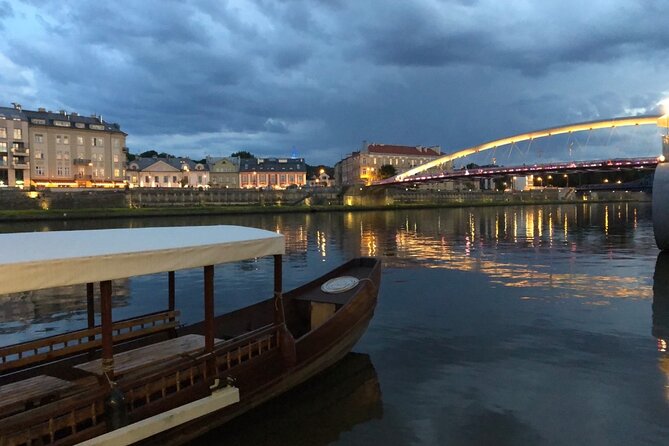
One hour on the Vistula feels like a reset. This wooden gondola cruise glides past Kraków’s riverfront sights, with onboard commentary that helps you read what you’re seeing along the water. You start in Kazimierz at Barka Mauretania and end back there, so it’s easy to plug into your day.
I especially like the calm, unhurried pace—just right for getting a new angle on the city without burning half a day. I also love the onboard setup: a small traditional boat, plenty of time to sit and look, and clear audio that points out what matters as you pass bridges, churches, and the castle area.
The main consideration is simple: Kraków’s biggest landmarks are not all right on the river. In this short hour, you’ll focus on riverfront highlights—Wawel is the star view, but the rest is more about context than a full list of top sights.
In This Review
- Key things to know before you go
- One hour on a wooden gondola: what you really get
- Boarding at Barka Mauretania in Kazimierz (and where to sit)
- The Vistula route: Kazimierz bridges, Wawel views, and river landmarks
- Start by crossing the Vistula’s oldest road bridge
- Church on the Rock and the Three Millennium Altar
- Grunwaldzki Bridge: where the river gets busy in a modern way
- Wawel Hill and the Royal Castle: the main star view
- Dębnicki Bridge: a mid-century engineering marker
- Churches, monastery grounds, and where the river turns greener
- Zwierzyniec and Salwator: green stretches between the rivers
- The Rudawa River: a drinking-water tributary
- Norbertan Sisters monastery: a faith landmark with a motto
- Manggha Japanese Art Center and Podgórze’s layered identity
- Dębniki: where crafts and leather dyes mattered
- Manggha Center of Japanese Art: a modern wave shape on the Vistula
- Podgórze: flint, Paleolithic roots, and a newer district identity
- Father Bernatek’s footbridge and the Kazimierz-to-Podgórze love-story bridge
- A footbridge built where an older bridge once stood
- Museum of Tadeusz Kantor: the power-plant shell
- Back to Kazimierz for the ending
- Comfort, audio, blankets, and why the price feels fair
- Who should book this Vistula cruise (and who might skip it)
- Should you book this Vistula cruise?
- FAQ
- How long is the Vistula River cruise?
- Where does the cruise start and end?
- What is included in the ticket price?
- Is there food or drinks included?
- What kind of boat is it?
- Is there a restroom on the boat?
- How big is the group?
- Do I need to print anything?
- Is the commentary available in English?
- Can I cancel for a full refund?
Key things to know before you go
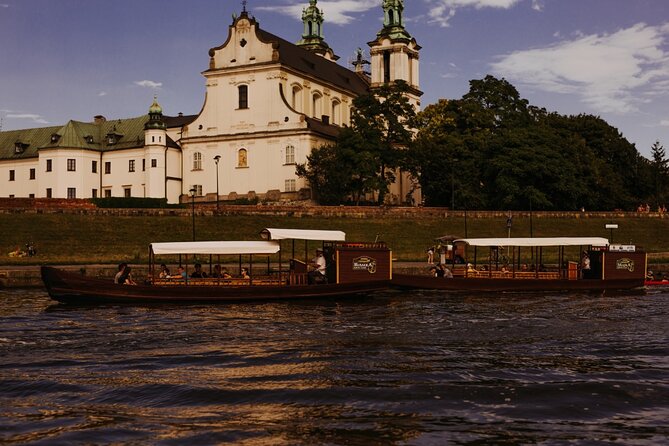
- Traditional wood boat feel: Built in the style of Polish folk river craft, using spruce or oak patterns and modern wood preservation for safety.
- Small-group vibe: Up to 24 travelers, on a 12-person style gondola boat.
- Top-deck sightlines: If you can, plan to sit up on the top deck for the best views.
- Audio commentary in Polish-English: Helpful as the boat passes landmarks and bridges.
- Bring a plan for bathroom breaks: There’s no restroom on the boat.
- Great value for an hour: You pay less than a sit-down tour but get a guided view of a long stretch of the river.
The whole city in one go: more highlights runs
- Krakow: City Sightseeing Tour by Electric Golf Cart
★ 4.5 · 3,264 reviews - Krakow: City Sightseeing Tour Eco Electric Buggy Golf Cart
★ 4.7 · 3,143 reviews - Krakow: Sightseeing Cruise by Vistula River
★ 4.1 · 1,897 reviews
One hour on a wooden gondola: what you really get
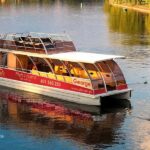
This cruise is built for a specific kind of travel day: the kind where you want something scenic, guided, and low-effort. The boat is a traditional-style wooden gondola (12-person style), and that matters more than it sounds. It keeps the mood intimate and old-world—less like a big sightseeing bus, more like a relaxed river ride.
You’re also not stuck guessing what you’re looking at. You get Polish-English audio commentary as the boat moves, which helps you connect names to buildings, bridges, and neighborhoods. That’s especially useful on the Vistula, where you can spot something impressive but still wonder what it is and why it’s important.
And at 1 hour (approx.), it’s the right length for Kraków. You get a meaningful slice of the city’s geography—especially the bend around Wawel—without turning the day into logistics.
Boarding at Barka Mauretania in Kazimierz (and where to sit)
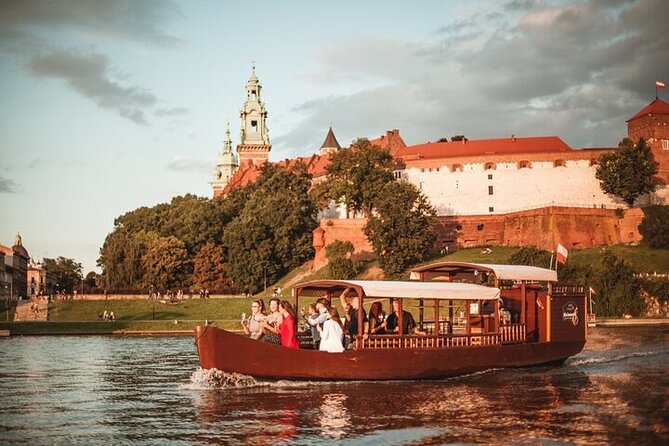
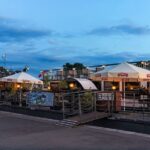
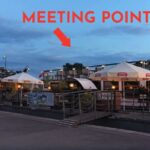
You board and end at the same spot: Barka Mauretania, Bulwar Kurlandzki 137/7 in Kazimierz. That’s a big plus. You don’t have to figure out a second pickup point later, and you can combine this with a stroll in Kazimierz afterward.
Timing can matter for comfort and views. At busy moments, I’d arrive early so you can choose good seating—people tend to prefer the top deck, where sightlines are better and the river feels closer. The boat’s compact size makes it easy to move, but if you show up at the last second, you might get stuck with less ideal angles.
Also, check what you need for weather. The cruise is relaxing even in the rain, but you’ll want something warm if conditions are chilly. Some departures provide blankets, which is a nice touch if the air is damp along the river.
The Vistula route: Kazimierz bridges, Wawel views, and river landmarks
This cruise follows a classic Vistula loop through Kraków’s most photogenic stretch. It’s not just scenery—it’s an easy way to understand how the city is shaped by the river.
Back on the Vistula: other river cruises
- Kraków: Evening or Night River Cruise★ 4.0 · 7,386 reviews
- Krakow: Day or Night Vistula River Cruise with Audio Guide★ 4.5 · 1,303 reviews
- Krakow: 1-Hour Evening Vistula River Cruise★ 4.1 · 952 reviews
- Krakow: Sightseeing Cruise on Vistula River with Audio Guide★ 4.4 · 480 reviews
Start by crossing the Vistula’s oldest road bridge
You begin in Kazimierz, then head past the historic bridge connecting Kazimierz and Podgórze. This crossing is notable because it’s the oldest complete road bridge in Kraków over the Vistula that still stands today. From the water, you get a clear sense of how these two districts relate—each bank feels like its own chapter of the city.
Church on the Rock and the Three Millennium Altar
Next comes a landmark that looks dramatic from the water: Church On the Rock dedicated to St. Michael and St. Stanislaus. What I like about this stop is that it’s not only the church exterior—it also connects you with something specific inside the church garden: the Three Millennium Altar. If you’re the kind of traveler who likes details (and not just big icons), this is a highlight.
Grunwaldzki Bridge: where the river gets busy in a modern way
As you continue, the Grunwaldzki Bridge comes into view. It connects Old Town with Podgórze, and there are water tram stops on both banks near the bridge. Even if you’re not taking a tram today, seeing that setup helps you understand how the river functions as a transport corridor, not just a scenic backdrop.
Wawel Hill and the Royal Castle: the main star view
Then you hit the big reason many people choose this cruise: Wawel Hill and the Royal Castle. Wawel sits in a bend of the Vistula, right in the heart of Kraków’s strongest historic core. From the water, you don’t just see the castle—you see its setting, the way the river curves around it like a natural moat.
If you’re trying to pick a single “must see” view from the cruise, make it this stretch. It’s also one of the few moments where the river gives you an angle that’s hard to replicate from streets.
Dębnicki Bridge: a mid-century engineering marker
After Wawel, the route passes the Dębnicki Bridge, which in its current form dates to 1951. It’s 157 meters long and 19 meters wide, supported on two spans. This stop feels like a reminder that the city isn’t frozen in the past—people still build and adjust how the river is crossed.
Churches, monastery grounds, and where the river turns greener
The second half of the cruise shifts from heavy icons to quieter textures: religious buildings, green spaces, and riverside neighborhoods that change character as you move.
Zwierzyniec and Salwator: green stretches between the rivers
You’ll pass Zwierzyniec, a district that stretches between the Vistula and the Rudawa rivers and is described as one of the greenest parts of Kraków. That matters because it helps you feel the Vistula as a working ecosystem, not only a sightseeing strip.
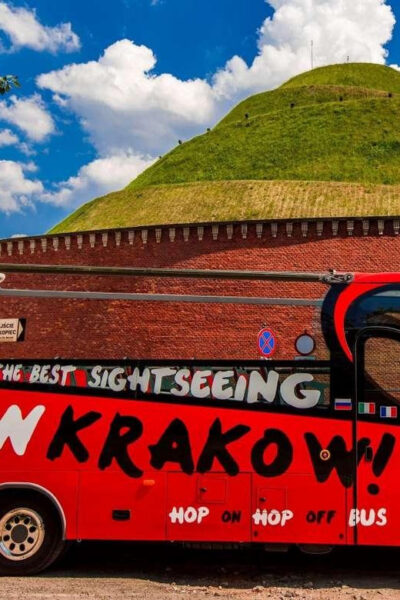
Then comes Salwator, tied to the former Zwierzyniec village. One of the most recognizable landmarks here is the Kościuszko Mound, which you can pick out in this calmer, less central part of the river corridor.
The Rudawa River: a drinking-water tributary
You also pass the Rudawa River, the left tributary of the Vistula. It’s listed as one of Kraków’s drinking water sources. From the boat, you don’t need to think about water systems like a hydrologist, but it adds a useful reality check: this river connects daily life, not just heritage.
Norbertan Sisters monastery: a faith landmark with a motto
You’ll see the Monastery of the Norbertan Sisters. The current building appearance is linked to major 17th-century reconstruction, and the order’s motto is One heart, one soul in God. This is the kind of detail audio commentary helps with—otherwise, monasteries can look like background architecture until you learn what to look for.
Manggha Japanese Art Center and Podgórze’s layered identity
As you continue, the cruise starts mixing cultures and eras in a way that feels very Kraków.
Dębniki: where crafts and leather dyes mattered
The boat passes through the area of Dębniki, tied to a former village and its crafts: people made tannins for dressing leather and dyes for fabric. This is one of those sections that can feel “less famous” than Wawel—but that’s exactly why it works on a river tour. You’re picking up the city’s economic story, not only its postcard highlights.
Manggha Center of Japanese Art: a modern wave shape on the Vistula
Next is the Manggha Center of Japanese Art, a modern building whose shape resembles a wave of the Vistula. Even if you don’t go inside, seeing it from the water gives you a strong sense of Kraków’s cultural mix: historic city, then a modern structure that visually fits the river.
Podgórze: flint, Paleolithic roots, and a newer district identity
You also reach Podgórze, the right-bank part of Kraków founded at the end of the 18th century. The area’s flint deposits helped explain human settlement stretching back to Paleolithic and Neolithic periods, and a Slavic settlement developed from the 7th century. On the cruise, you don’t get a classroom lesson—but the audio helps connect the dots between the present-day neighborhood and its deeper timeline.
Father Bernatek’s footbridge and the Kazimierz-to-Podgórze love-story bridge
This is a section I’d put at the top of the “photo stops” list.
A footbridge built where an older bridge once stood
You pass Father Bernatek’s footbridge, a pedestrian and bicycle crossing over the Vistula connecting Kazimierz with Podgórze. The key detail: it was built on the site of the former Podgórze Bridge. That kind of layering matters in cities like Kraków, where new structures often sit on older foundations.
It’s also become known as a bridge of lovers, which gives the crossing a human, contemporary vibe after centuries of architecture and monastic walls along the river.
Museum of Tadeusz Kantor: the power-plant shell
Near that area, you’ll see the Museum of Tadeusz Kantor, located in the former Podgórze power plant building. If modern art and theater are part of your interests, this is an interesting visual link: an industrial shell repurposed for culture.
Back to Kazimierz for the ending
Finally, the boat brings you back to where you started. In Kazimierz, remember this is also a district with long-running Jewish and Christian cultural ties, shaped by its history as an independent city south of Kraków. Even without stepping inside any museum, the cruise helps you understand why Kazimierz and Podgórze feel like distinct neighborhoods rather than one continuous Old Town block.
Comfort, audio, blankets, and why the price feels fair
The price is $17.80 per person for about an hour on the river. That’s a pretty strong deal for what you get. You’re paying for (1) a guided audio track in Polish-English, (2) a unique viewpoint of Wawel and multiple bridges, and (3) a boat that keeps the experience from feeling like mass transportation.
What I’d call the value sweet spot here is the time-to-reward ratio. Kraków can be intense: churches, squares, castles, and walking. This gives you a breather without cutting you off from the city’s major sights.
Onboard comfort comes in a few practical ways:
- You sit in a small wooden gondola style setup.
- Many people prefer the top deck, which also keeps you closer to the passing landmarks.
- Some departures include blankets, which helps if weather changes quickly.
Audio commentary is another big factor. A common win in this kind of cruise is that audio can either be too loud or too vague. Here, the narration is set up to guide you along the route, and multiple language options are built in (Polish-English). If you like traveling with your eyes open, that pairing is a real win.
One small reality check: there’s no restroom on the boat. If you want to feel relaxed, use facilities at the dock before boarding and treat the hour as a clean, focused window.
Who should book this Vistula cruise (and who might skip it)
This cruise fits best if you:
- Want Wawel views without spending the whole afternoon climbing stairs.
- Prefer a guided, sit-down format with minimal planning.
- Like the idea of seeing neighborhoods like Kazimierz and Podgórze from the river’s perspective.
- Want a break day that still feels like a highlight.
You might skip it if:
- You’re looking for a cruise that replaces a full sightseeing day. With only an hour, this is about riverfront interpretation, not visiting every major landmark.
- You strongly need restroom access during the ride.
Should you book this Vistula cruise?
Yes, I’d book it if you’re doing Kraków for classic landmarks and you also want an easy “new angle” experience. This one works because it’s short, guided, and visually focused on the Vistula bend where Wawel dominates the view.
I’d also choose it early in your planning if you like using tours as orientation. After an hour on the river, the city’s layout—Kazimierz to Podgórze, bridges, and the castle area—starts to make much more sense.
If you’re on the fence, pick the slot that matches your energy: this is a relaxing ride meant to break up your walking day, not to replace it.
FAQ
How long is the Vistula River cruise?
It runs for about 1 hour.
Where does the cruise start and end?
You board at Barka Mauretania on Bulwar Kurlandzki 137/7 in Kraków, and the cruise ends back at the same meeting point.
What is included in the ticket price?
The ticket includes the 1-hour Vistula River cruise and a Polish-English audioguide commentary.
Is there food or drinks included?
Coffee and/or tea are not included. You can have drinks around the boarding area since the cruise starts from Mauretania Barque.
What kind of boat is it?
It’s a traditional wooden gondola-riverboat, built entirely of wood following historical patterns, with modern wood preservation and safe construction.
Is there a restroom on the boat?
No restroom is available on the boat, so it’s best to use facilities at the dock before boarding.
How big is the group?
The tour has a maximum of 24 travelers.
Do I need to print anything?
No. It’s a mobile ticket.
Is the commentary available in English?
Yes. The audioguide is Polish-English.
Can I cancel for a full refund?
Free cancellation is available up to 24 hours in advance for a full refund.
More Tour Reviews in Krakow
Out on the Vistula
The City in a Day, More Ways

Just added: fresh Krakow reviews
Krakow City Highlights & Sightseeing, compared.
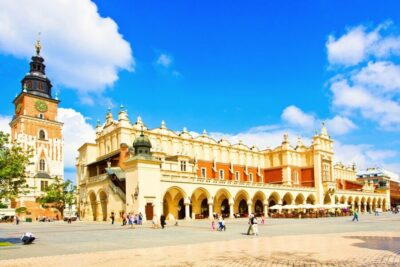 ★ 4.5City Sightseeing Tour by Electric Golf CartFrom $133,264 reviews
 ★ 4.7City Sightseeing Tour Eco Electric Buggy Golf CartFrom $133,143 reviews
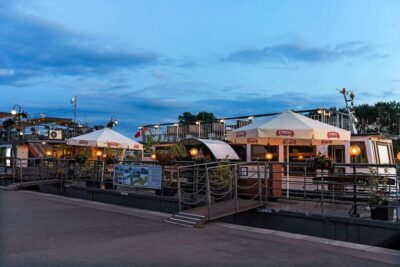 ★ 4.1Sightseeing Cruise by Vistula RiverFrom $201,897 reviews
 ★ 4.7Extended City Sightseeing Tour – Eco Buggy Golf CartFrom $13794 reviews
 ★ 5.0Highlights of Krakow Bike Tour – Small groupFrom $36662 reviews
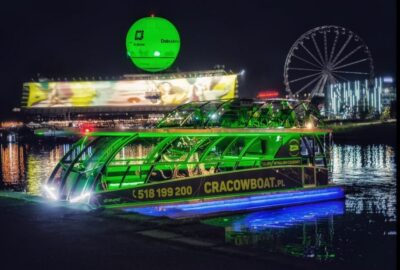 ★ 4.4Sightseeing Cruise on Vistula River with Audio GuideFrom $26480 reviews
 ★ 4.4Electric Car Sightseeing TourFrom $25450 reviews
 ★ 5.0Guided City Tour by Golf Buggy (with hotel pickup)From $53426 reviews
Browse the lists this tour appears in