
REVIEW · AUSCHWITZ-BIRKENAU MEMORIAL TOURS
Auschwitz Birkenau Tour with Pickup and Lunch
One stop breaks your heart. This Auschwitz-Birkenau tour pairs round-trip minivan pickup from Krakow with headsets so you don’t miss key details as you walk the sites. The big trade-off is pace: the group moves steadily, and if you fall behind, audio can get spotty and it may be harder to keep up.
I like how the day is structured around two clear moments: Auschwitz I (the prison camp) and Auschwitz II-Birkenau (the massive “death camp”). The lunch box is also a practical win, so you’re not hunting for food while you’re emotionally wrecked and trying to stay on schedule. Still, plan for a long day with restricted eating inside the museum areas, so you’ll want to manage water and timing as the day goes.
This is a hard, serious visit, handled with a professional guide and a small group size (up to 30). If you get one of the guides named in past groups—like Marcin, Magdalena, or Evalina—you can expect a tone that treats the site with dignity and care, not tour-bus energy.
In This Review
- Key things I’d plan around
- Price and what you’re really paying for
- How the day is paced: from Krakow pickup to two camps
- Entering Auschwitz I: the iron gate and Block 11
- Auschwitz I to Birkenau transfer: what changes and why
- Birkenau: seeing scale without losing your footing
- Lunch box: good planning, but timing can be unpredictable
- Headsets and guide clarity: why this matters in Auschwitz
- Getting from Krakow: minivan comfort and pickup reality
- Who this tour is best for
- Should you book this Auschwitz-Birkenau tour?
- FAQ
- FAQ
- How long does the Auschwitz-Birkenau tour take?
- Does this tour include Auschwitz admission?
- Is lunch provided?
- Do I get pickup in Krakow?
- Are headsets provided?
- What language is the tour offered in?
- How large is the group?
- Can I cancel for a full refund?
Key things I’d plan around
- Headsets are included, which helps you hear the guide in crowded, echoey areas.
- Auschwitz I and Auschwitz II are both covered, so you see how the system worked across two different sites.
- Lunch box is provided with vegan/vegetarian options, so you don’t arrive hungry or unprepared.
- Minivan transfers are included, which saves you from navigating trains or taxis on your own.
- Timing can feel tight, especially if you need extra pauses for walking speed or breaks.
Other guided visits to the Auschwitz-Birkenau Memorial
- From Krakow: Auschwitz-Birkenau Guided Tour & Hotel Pickup
★ 4.5 · 33,358 reviews - From Krakow: Auschwitz-Birkenau Guided Tour & Hotel Pickup
★ 4.5 · 29,340 reviews - Krakow: Auschwitz Guided Tour with Optional Hotel Pickup
★ 4.5 · 15,280 reviews
Price and what you’re really paying for
At about $71.08 per person, this tour sits in the middle of what most Auschwitz outings cost. The value isn’t only the ticket—it’s the full package of logistics: transportation from Krakow, a guide, headsets, and a pre-packed lunch box.
Here’s how I’d think about it. You’re paying to reduce decisions. Getting to Auschwitz on your own is doable, but on a day like this you want fewer moving parts: fewer chances to miss directions, fewer language surprises, and fewer “where do we meet again?” moments. With pickup and a minivan, the day starts smoother—and that matters when you’re already bracing emotionally.
Still, there’s a reality check. Even with pickup included, some days run late or start from a parking area instead of exactly in front of your hotel. The site itself controls a lot of the timing once you arrive, so the best “price win” is when everything runs like clockwork. When it doesn’t, the tour still may be worth it for the guide and structured route—but you’ll want to go in with flexibility.
How the day is paced: from Krakow pickup to two camps
The visit covers two big sections: Auschwitz I at the main memorial site, then the transfer to Auschwitz II-Birkenau. The full experience is listed at roughly 4 to 7 hours, but in practice you should treat it like a long half-day where walking and waiting both take time.
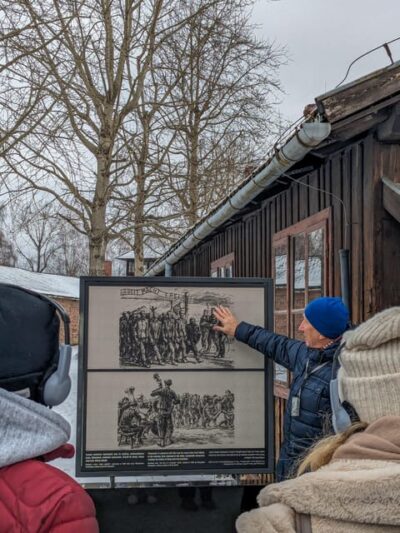
A key detail: you’re not just dropped off and left to wander. The tour is guided, with headsets supplied so your group can hear instructions and context while moving through sensitive areas.
You’ll also be dealing with “site flow.” Auschwitz is not a place where you can slow down freely. The route is structured, and your group will likely move from stop to stop on a schedule. That’s respectful, but it can be tough if you prefer a slower pace, need frequent breaks, or have mobility constraints.
Entering Auschwitz I: the iron gate and Block 11
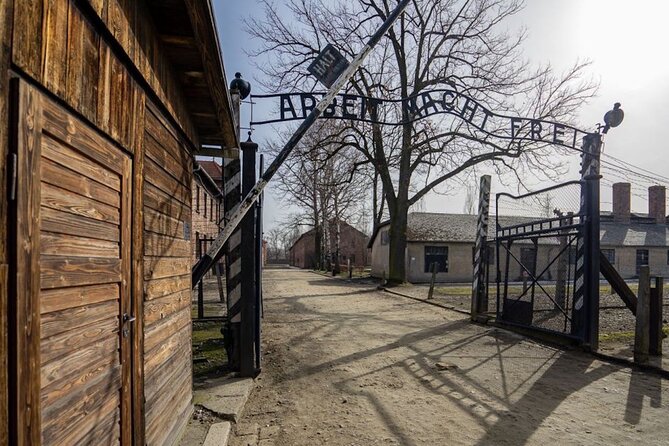
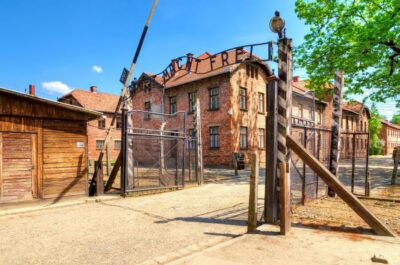
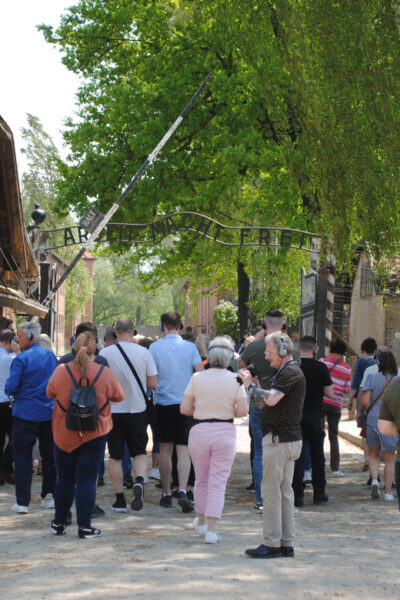
Your first major stop is Panstowe Muzeum Auschwitz-Birkenau—the Auschwitz I camp area. This is where you’ll see the iron gate slogan Arbeit Macht Frei as you enter. It’s the kind of moment that doesn’t just look historical; it feels like a warning from the past.
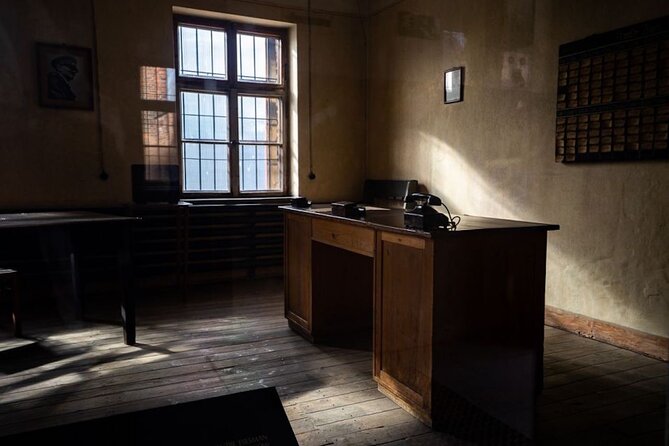
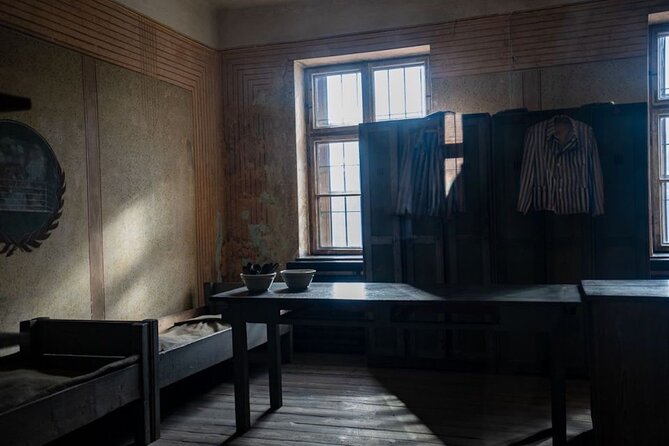
From there, you’ll move through Auschwitz I’s preserved camp layout, including brick barracks that held prisoners. One of the most chilling parts of this tour focuses on Block 11, often described as a prison within the prison. Here, the tour explains the brutal system of punishment and the special facilities used to terrorize detainees. It also covers the first attempts to kill people using Zyklon B, which is one of the facts you can’t really process until someone places it in context.
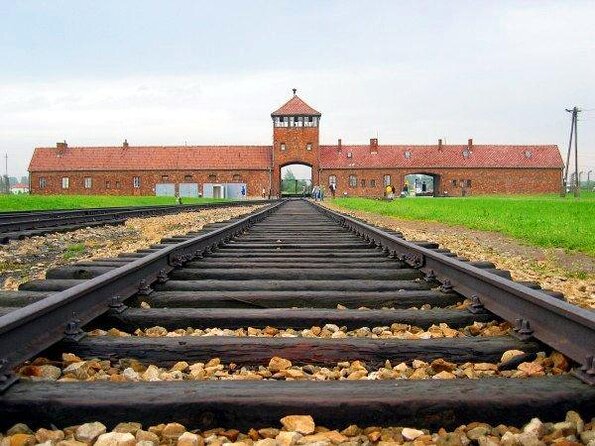
If you’re trying to prepare mentally, this is the part to read slowly—because later, when you go to Birkenau, everything will look bigger, farther, and harder to grasp with scale. Auschwitz I teaches you how the machinery worked in a more contained space. Auschwitz II shows what that machinery looked like when it was scaled up.
Practical note: this is also where you’ll hear the guide most clearly if you stay with the group. One common issue in past days is headset signal dropping when people get too far behind. So if you can, keep your position steady.
A few more Krakow trips worth putting on the shortlist
- Krakow: Auschwitz-Birkenau Guided Tour with Pickup & Lunch★ 4.5 · 9,800 reviews
- Krakow: Auschwitz-Birkenau Guided Tour Pickup/Lunch Options★ 4.5 · 9,057 reviews
- Krakow: Auschwitz Guided Tour with Pickup and Optional Lunch★ 4.4 · 2,649 reviews
- Krakow: Auschwitz-Birkenau & Wieliczka Salt Mine with Lunch★ 4.1 · 214 reviews
Auschwitz I to Birkenau transfer: what changes and why
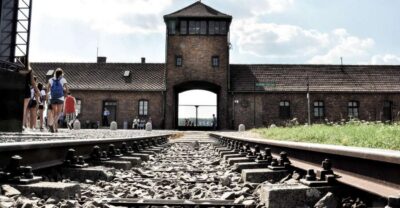
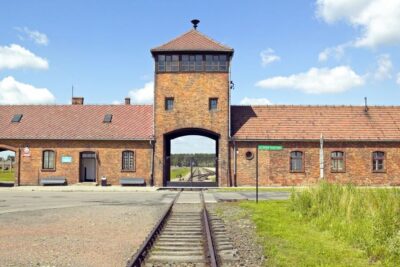
After Auschwitz I, you transfer by air-conditioned minivan to Auschwitz II-Birkenau. Birkenau is vastly larger—so much larger that it changes how you interpret the site.
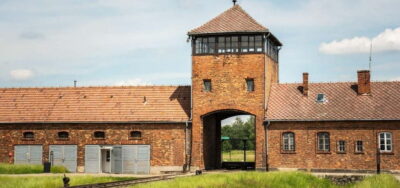
This is where your guide’s framing matters. Auschwitz II-Birkenau is described as the largest of the death camps, and the tour covers how over 1,100,000 people were murdered there. Seeing the open layouts, the long distances, and the remaining structures gives you a different kind of understanding than Auschwitz I. It’s not just “more of the same.” It’s the system expanded, industrialized in space and process.
You’ll end your visit at the memorial area where you can pay respects to the victims of Nazi genocide. That ending matters because it shifts you from “tour mode” into a more human, reflective moment.
Birkenau: seeing scale without losing your footing
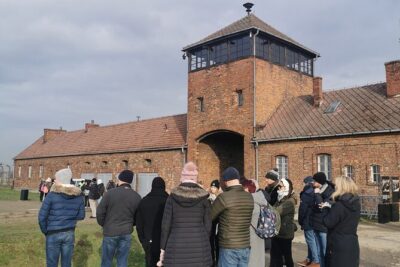
At Birkenau, expect more walking, more open space, and more of a “long view” feeling. The ground can feel uneven, and the route can require you to keep moving even when your brain wants to stop and stare.
This is also where practical issues show up. If you’re using a mobility aid or you have trouble maintaining pace, it can affect both your experience and the group’s audio. In past groups, people using mobility scooters were sometimes disappointed by how quickly the group had to keep going and by how audio and visibility worked when the guide was positioned ahead.
If you’re sensitive to pacing, I’d plan your expectations like this: you’re not visiting as a solo slow wanderer. You’re visiting as part of a scheduled group with a clear route and limited time in each area.
The upside is that Birkenau is often the most visually overwhelming part for first-timers. Even if you don’t understand everything instantly, the scale hits you in a real way—especially when your guide connects it back to what you saw in Auschwitz I.
Lunch box: good planning, but timing can be unpredictable
Here’s one of the most practical pieces of this tour: a lunch box is included, with meat, vegetarian, and vegan options. Each lunch box is listed as:
- 2 sandwiches
- an apple
- a dark chocolate wafer
- still mineral water (0.5 l)
- tissue and a paper bag
That’s enough to keep you going for a day that can feel physically draining.
But you should also know how this often plays out in real life. On longer, tightly scheduled visits, lunch timing can vary. Some people have received lunch later than expected. And inside museum buildings, people have noted restrictions—meaning you may not be able to eat and drink during certain indoor parts of the tour.
So my advice is simple:
- Treat the lunch box as your “food insurance.”
- If you get water in your hand early, drink some. Waiting can happen.
- Don’t plan on finishing your lunch slowly inside the sites. Save time for toilets and quick bites.
If you’re pregnant, managing a medical condition, or just need more time to move and pause, this matters. The guide may be excellent, but the day still depends on group movement and site rules.
Headsets and guide clarity: why this matters in Auschwitz
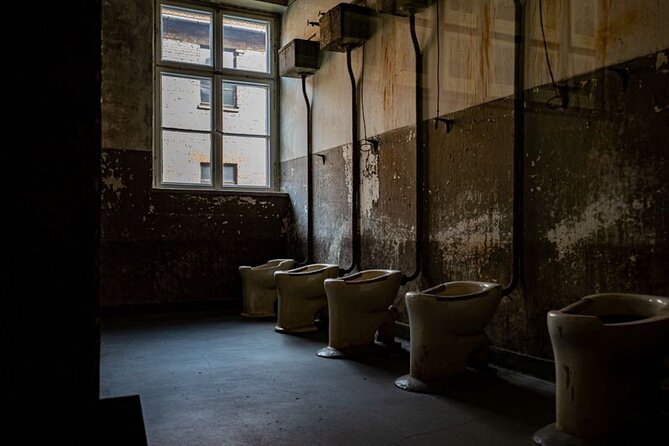
Auschwitz isn’t quiet. Crowds, hallways, and the natural acoustics of camp structures make it easy to miss a key sentence. That’s why I’m glad this tour includes headsets—because it’s meant to solve the biggest “language/audio” problem on group tours.
The catch: the headset only helps if you can stay reasonably near the group and within working range. If you drift too far behind, some people have found the signal gets weak. And if the guide keeps moving forward, it can make it harder to both hear and see.
This is also where guide tone becomes important. Multiple guides are mentioned in feedback as handling the subject with compassion and respect—names like Marcin, Magdalena, Evalina, and tour companions associated with the experience. If the guide speaks clearly and keeps the pacing fair, your entire day feels more bearable, even though the content is unbearable.
Getting from Krakow: minivan comfort and pickup reality
This tour includes round-trip transfers from Krakow, using an air-conditioned minivan, plus pickup and drop-off from designated points. If you choose hotel pickup, the tour will arrange that as well—though some hotels have limited bus access, so the “closest possible parking point” can be a short walk from your door.
One thing I appreciate about this setup is that it reduces friction. You’re not figuring out schedules, ticket machines, or the logistics of getting everyone back together at the end of a long visit.
Still, timing can be imperfect. In past experiences, some groups started later than the time they booked, or they had to wait for the pickup. When that happens, it can feel like your day gets stolen—especially if you had other plans in Krakow. The best way to protect yourself is to keep the rest of your day light: assume you’ll be back later than you hoped.
As for the ride itself, comfort seems to vary by vehicle and group size. One person described squeezing into a back row and not being able to stretch comfortably. Another described a smaller group in a comfortable minivan. So while transfers are included, your comfort depends on how the day’s group distribution looks.
Who this tour is best for
This experience is best if you want:
- a structured, guided route across both camps
- headsets so you can follow the narration
- pre-arranged transport from Krakow
- a provided lunch box so you’re not scrambling for food
It’s also a decent fit for first-timers who want the major highlights without decision fatigue.
If you’re not comfortable with steady walking and limited pauses, you should think twice. Auschwitz requires movement through a set route, and the combination of walking, waiting, and audio distance can make a tough day even harder. People using mobility scooters have sometimes found the pace and positioning challenging.
If you travel with kids, note that children must be accompanied by an adult.
Should you book this Auschwitz-Birkenau tour?
If you want a guided route with pickup, headsets, and lunch handled for you, I think this is the kind of tour that makes sense. The biggest strengths are practical: transportation from Krakow, headsets for clarity, and a lunch box so you’re not managing food on the fly.
But don’t pretend it’s smooth sailing. The day can run long, pickup timing can shift, and lunch timing can be later than you’d expect. And because the sites are designed to be visited in a controlled flow, the pace may not match everyone’s needs.
My rule of thumb: book it if you value structure and want someone to guide the meaning of what you’re seeing. Skip it or shop carefully if you need very flexible pacing, frequent breaks, or if transport comfort is a major factor for you.
FAQ
FAQ
How long does the Auschwitz-Birkenau tour take?
The duration is listed as about 4 to 7 hours.
Does this tour include Auschwitz admission?
Yes. An admission ticket is included.
Is lunch provided?
Yes. A lunch box is included, with meat, vegetarian, and vegan options, plus water.
Do I get pickup in Krakow?
Pickup is offered. If chosen, you get hotel pickup, and otherwise pickup is from designated meeting points.
Are headsets provided?
Yes. Headsets are included to help you hear the guide clearly.
What language is the tour offered in?
The tour is offered in English.
How large is the group?
The maximum group size is 30 travelers.
Can I cancel for a full refund?
Yes. You can cancel up to 24 hours in advance for a full refund.
More Tours in Krakow
More Tour Reviews in Krakow
Visiting the Auschwitz-Birkenau Memorial

Just added: fresh Krakow reviews

Auschwitz-Birkenau Memorial Tours, compared.
 ★ 4.5Auschwitz-Birkenau Guided Tour & Hotel PickupFrom $2133,358 reviews
★ 4.5Auschwitz-Birkenau Guided Tour & Hotel PickupFrom $2129,340 reviews
★ 4.5Auschwitz-Birkenau Guided Tour & Hotel PickupFrom $2133,358 reviews
★ 4.5Auschwitz-Birkenau Guided Tour & Hotel PickupFrom $2129,340 reviews
 ★ 4.5Auschwitz Guided Tour with Optional Hotel PickupFrom $6915,280 reviews
 ★ 4.5Auschwitz-Birkenau Guided Tour with Pickup & LunchFrom $219,800 reviews
 ★ 4.5Auschwitz-Birkenau Guided Tour Pickup/Lunch OptionsFrom $2009,057 reviews
 ★ 4.7Auschwitz-Birkenau and Salt Mine Guided TourFrom $549,020 reviews
 ★ 5.0Krakow to Auschwitz Birkenau Guided Tour with Transfer and TicketFrom $368,197 reviews
 ★ 4.0Auschwitz Birkenau Tour with TransferFrom $216,134 reviews
Browse the lists this tour appears in