
REVIEW · AUSCHWITZ-BIRKENAU MEMORIAL TOURS
Auschwitz-Birkenau Tour with Private Transport Altenative Tour
Seven hours, one heavy lesson. This private Auschwitz-Birkenau alternative tour uses door-to-door pickup from Krakow and keeps your group in one car, which matters when you’re heading to a place where time, pacing, and focus are everything.
I like that it visits Auschwitz sites that connect the dots across the broader camp system, not just one fenced area.
I also like that lunch is included, so you’re not scrambling for food before or after a visit that drains you. The day is structured around multiple memorial zones, so you get a clearer sense of how the Auschwitz network operated.
One catch to plan around: entrance to Auschwitz I and Auschwitz II-Birkenau main camps is not included. Also, entry timing can shift, which can change how long you actually have inside specific ticketed areas.
In This Review
- Key takeaways before you go
- Private Auschwitz-Birkenau transport from Krakow: what your money buys
- The route that explains the Auschwitz system, not just one fenced area
- Stop 1 in Oświęcim: final victims, mass grave, and the “camp extension”
- Stop 2 in Brzezinka: crematoriums, ramps, and punishment locations
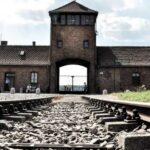
- Birkenau’s “Interest Zone,” Death Gate, and the main SS barracks
- Auschwitz III (Monowitz): Sauna building, disinfection, and the scale of forced labor
- Lunch included: how to keep your day from falling apart
- When private tickets and timing get tricky
- Group size and guiding style: what to expect inside the memorials
- Who should book this Monowitz-inclusive Auschwitz day, and who might reconsider
- Price and value: is $455.34 per person fair for this route?
- Should you book this Auschwitz-Birkenau alternative tour?
- FAQ
- Is pickup included for this tour?
- What time does pickup happen?
- Is lunch included?
- Is the tour only for my group?
- Is the tour in English?
- Does the price include entrance to Auschwitz I and Auschwitz II-Birkenau main camps?
- Which sites are included besides Birkenau?
- How long is the tour?
- What level of fitness do I need?
- Can I cancel for a full refund?
Key takeaways before you go
- Private transport means you won’t share the vehicle with strangers.
- Lunch included helps you keep your energy steady for the emotional heavy lifting ahead.
- Auschwitz III (Monowitz) is part of the route, giving you more of the full camp-system picture.
- You’ll see specific Birkenau and Auschwitz structures tied to selection, punishment, and execution.
- Oświęcim and Brzezinka are both covered in one day, so you’re not hopping around on separate tours.
- Auschwitz I and Auschwitz II main-camp entrance is not included, so budget for that possibility.
Other guided visits to the Auschwitz-Birkenau Memorial
- From Krakow: Auschwitz-Birkenau Guided Tour & Hotel Pickup
★ 4.5 · 33,358 reviews - From Krakow: Auschwitz-Birkenau Guided Tour & Hotel Pickup
★ 4.5 · 29,340 reviews - Krakow: Auschwitz Guided Tour with Optional Hotel Pickup
★ 4.5 · 15,280 reviews
Private Auschwitz-Birkenau transport from Krakow: what your money buys
At $455.34 per person for a private-transport day, you’re paying for control. That means pickup from your address in Kraków and a round-trip drive that’s designed for an all-day memorial visit. The operator says pickup can happen sometime between 7:00 AM and 1:30 PM, and you’ll be told the exact time the day before by WhatsApp/email/text.
That private car piece is not just comfort. It can also mean less stress. When you’re traveling to Auschwitz-Birkenau, you don’t want a day that starts with confusion, extra waiting, or finding each other in a crowded meeting spot. A door-to-door approach helps you get your bearings fast.
That said, one practical note: you’re going early, and sometimes early can get very early. I’ve seen reports of pickup time changes with little warning. So if you’re the type who relies on a tight morning routine, build in buffer time the day before and keep your phone notifications on.
The route that explains the Auschwitz system, not just one fenced area
This is billed as an alternative route: you’ll visit multiple memorial locations and key Auschwitz sites, including Auschwitz III (Monowitz). Instead of only focusing on one “main camp” view, the plan connects different parts of the machinery—administration, prisoner processing, punishment, and extermination.
The emotional impact of Auschwitz is real, and it doesn’t care about your schedule. What you can control is how much you try to pack into a single day. Here, you’re getting a structured overview across sites, with guided time at each stop. The duration is about 7 hours, so you’re not stuck for a full marathon day—but it is still a long, draining block of time.
The biggest value is that you’re not only learning names and dates. You’re seeing places tied to the way people were separated, moved, punished, and processed. Even if you already know the basics, the physical layout and specific locations make the information sharper and more grounded.
Stop 1 in Oświęcim: final victims, mass grave, and the “camp extension”
You start in Oświęcim, at the memorial for the final victims of Auschwitz. This section helps you understand what happened in the last phase of the camp—especially during the final months and the chaos of evacuation.
Two details matter here:
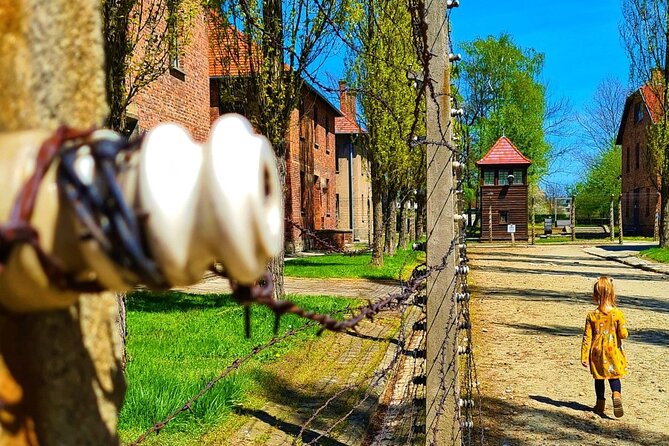
- You’ll see a mass grave of 700 prisoners who were shot during the camp evacuation in January 1945.
- You’ll also explore the so-called camp extension, which is tied to new SS barracks, the last women’s camp, and a site of the final public execution.
Why this stop works: it brings the story closer to the end, when the system was collapsing but the violence was still ongoing. It also moves you beyond the most famous structures and into the less “postcard-known” parts of Auschwitz—exactly where many people’s understanding feels thin.
A consideration: this portion can be intense because it’s explicitly focused on the final victims and final executions. If you’re someone who prefers a gradual emotional ramp-up, plan to take quiet breaks during the walk and don’t be afraid to pause. Your guide will keep moving, but you can control your own pace.
A few more Krakow trips worth putting on the shortlist
- Krakow Airport Private Transfer★ 5.0 · 2,227 reviews
- Private Departure Transfer: Krakow City To Krakow Airport Balice★ 4.5 · 367 reviews
- Legendary Private Nowa Huta Communism Tour with Crazy Guides★ 5.0 · 262 reviews
- From Krakow: Auschwitz-Birkenau and Salt Mine with Private Transfer★ 5.0 · 247 reviews
Stop 2 in Brzezinka: crematoriums, ramps, and punishment locations
Next is Birkenau (Brzezinka), where the tour focuses on several core pieces of how the camp operated.
You’ll visit places such as:
- the first crematorium and gas chamber
- the former villa of the camp commandant
- gravel pits, tied to punishment and execution for clergy and members of the Polish intelligentsia
The itinerary also includes stops at key pre-war and transitional structures that were repurposed by the SS. That includes the pre-war theater later used for Zyklon B storage, plus the Polish Ramp (the first prisoner transport platform) and the Old Jewish Ramp, which was a main selection site for European Jews.
Why this mix is valuable: it shows how ordinary buildings and practical infrastructure were taken over and weaponized. Seeing the commandant’s villa side-by-side with selection and punishment sites underlines the horrifying imbalance of power. And ramps and selection areas help you understand that Auschwitz wasn’t only about buildings—it was about decisions made at specific points in time.
A drawback to consider: some of these stops are concentrated, with museum guiding and short transit segments. If you want lots of unstructured time to read every sign slowly, this route may feel paced. Still, for many people it’s the right pace for one day—enough to understand the logic without dragging the day into exhaustion.
Birkenau’s “Interest Zone,” Death Gate, and the main SS barracks
After the earlier Birkenau stops, you’ll learn about the Interest Zone using maps and aerial photographs from 1944. This part matters because it shifts the story from the camp fences to the wider geography controlled and exploited around Auschwitz.
Then you’ll see:
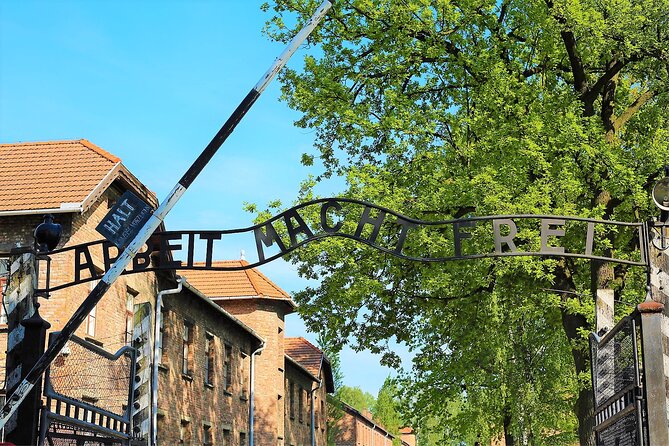
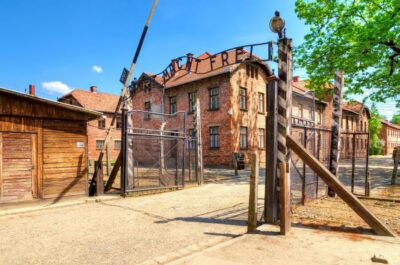
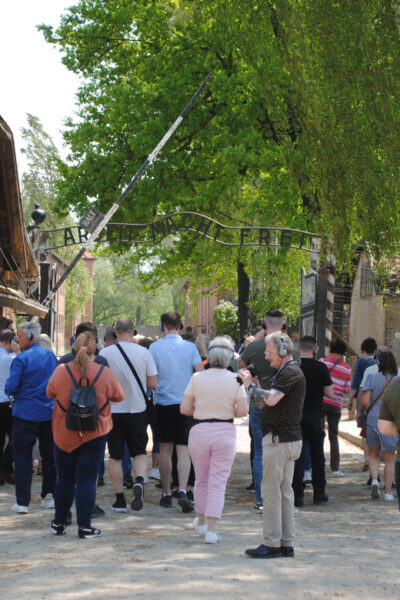
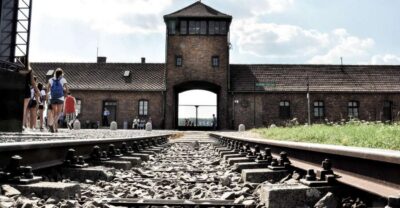
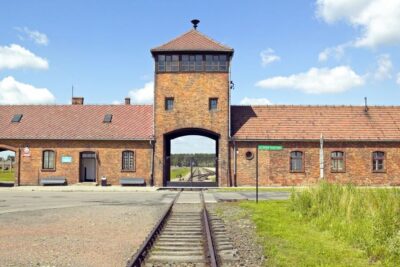
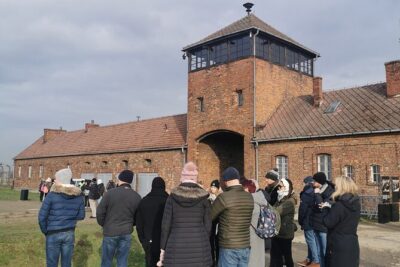
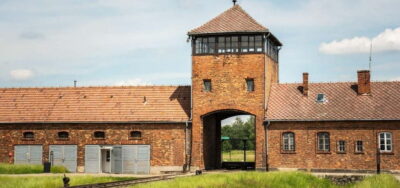
- the Death Gate
- the main SS barracks
- parts tied to the extermination zone, including Bunker 1 (Red House) and Bunker 2 (White House)
- remains of dressing rooms for victims
- a cemetery of Soviet POWs
This sequence helps you connect the camp’s daily layout with its larger “system function.” Death Gate is a powerful visual landmark, but the maps and photo interpretation give it context: why that area mattered, and how the camp’s reach extended outward.
Practical consideration: this portion includes multiple sight points, and some of them can feel close together even when the day is structured. Wear comfortable shoes and don’t plan to do heavy photography work—focus on reading and absorbing. Your brain will need time to process, especially after the earlier ramp and execution-area stops.
Auschwitz III (Monowitz): Sauna building, disinfection, and the scale of forced labor
The day doesn’t stop at the big names. The tour includes Memoriale Auschwitz III (Monowitz), which helps you understand that Auschwitz was not only about mass killing—it was also a labor-and-processing machine.
You’ll view the Sauna building, used for prisoner disinfection and belongings processing, and then the tour ends at the memorial to victims of Auschwitz-Monowitz.
Why Monowitz matters: it broadens your understanding of Auschwitz’s total system. People often walk away from Auschwitz-Birkenau remembering the extermination process most clearly, but Monowitz gives you a bigger view of how the SS kept control, processed people, and extracted labor within the camp network.
Time-wise, this stop is shorter on the schedule (listed at about 30 minutes in the tour outline). That doesn’t mean it’s minor—just that it’s treated like the closing “scale and system” piece. If you’ve already planned to do additional memorial reading on your own later, this ending works well.
Lunch included: how to keep your day from falling apart
You don’t have to think about finding lunch during the middle of the visit. Lunch is included, and that simple detail can save you from a common problem: after an emotionally intense morning, people end up either skipping food or eating something poorly timed.
I like that this tour includes lunch because it lets you stay consistent with energy and hydration. You’ll still feel drained, but you’re less likely to reach that shaky, overwhelmed point where your decision-making goes off the rails.
A practical tip: bring a light layer. The drive is outdoors, the walk is on paved paths and memorial grounds, and the day can run with a mix of waiting and moving. Even if the weather looks fine, temperatures near open areas can surprise you.
When private tickets and timing get tricky
A central detail in the tour info: entrance to Auschwitz I and Auschwitz II-Birkenau main camps is not included. That’s not a small note. If you’re expecting a one-price, everything-covered day inside the most famous sections, you need to verify what you must purchase separately.
Also, timing can vary in real life. I’ve seen at least one account where ticketing wasn’t secured until the morning, which compressed time in the entry window. Another report described a pickup time change from an expected early departure to something much earlier, with uncertainty about refunds.
So here’s the sensible approach:
- Keep a flexible morning plan and treat the day before as your “final check” day.
- Confirm which areas require separate entrance tickets for your exact booking.
- If timing changes would really disrupt your day, consider booking further in advance or choosing a more all-inclusive ticket package.
This isn’t to scare you off. It’s to help you avoid being blindsided on a day when it’s hard to fix problems quickly.
Group size and guiding style: what to expect inside the memorials
This is a private tour, meaning only your group participates. That’s a big deal at Auschwitz-Birkenau, where the “right” amount of time and attention can’t be forced into a one-size-fits-all bus schedule.
Guiding style may also vary. One standout report mentioned museum staff guiding and described excellent organization and a driver named Daniel, including a car that was immaculate and a caring refreshment stop after. Another account noted that sometimes you may use camp guides as part of a larger group plan, which can change pace and tone.
What that means for you: expect structured guidance, but also expect that pacing can be determined by the memorial itself. Bring patience. Ask questions when you have them, but accept that some areas are tightly managed.
Who should book this Monowitz-inclusive Auschwitz day, and who might reconsider
This tour fits best if you want:
- Private door-to-door transport from Kraków
- A day that includes Auschwitz III (Monowitz), not just the headline locations
- A route that connects selection and processing points across the system
It might be less ideal if:
- You’re counting on full main-camp access to Auschwitz I and Auschwitz II without paying anything extra, because entrance to those main camps is listed as not included.
- You’re very sensitive to early starts and schedule changes, since pickup times can shift.
Physical fitness matters too. The tour notes moderate physical fitness is required. You don’t need to be a marathon runner, but you should be ready for walking, standing, and moving between sites on a memorial day.
Price and value: is $455.34 per person fair for this route?
Let’s be honest. $455.34 per person is not cheap for Kraków. You’re paying for the private transport element, plus guided time and lunch. For many people, that’s exactly what makes the day manageable: one vehicle, no sharing, and a route built around specific memorial stops.
The value becomes clearer if you compare your alternatives:
- If you’re traveling as a couple or small group and want fewer scheduling headaches, private transport can be worth it.
- If you’re traveling solo and are comfortable with public connections or group tours, you may find cheaper options.
But the deciding factor is entrance tickets. Since Auschwitz I and Auschwitz II main-camp entrance is not included, your total cost might rise once you add what you need for the areas you’re expecting to enter. That doesn’t make the tour “bad.” It just means you should plan your budget correctly.
Should you book this Auschwitz-Birkenau alternative tour?
I’d book it if you want a structured Auschwitz day that goes beyond the obvious highlights and includes Auschwitz III (Monowitz). I also think it’s a smart choice if you like the idea of private pickup and lunch included, because it removes stress from a day that already has enough emotional weight.
I’d think twice if your ideal day depends on fully included main-camp entrances at one fixed price, with no ticket add-ons. In that case, double-check what’s included for Auschwitz I and Auschwitz II main camps, and make sure you’ll still be satisfied even if entry timing changes.
If you want a memorial visit that’s organized, focused, and built to show the system rather than just one snapshot, this route makes a lot of sense.
FAQ
Is pickup included for this tour?
Yes. Pickup is offered from your address in Kraków, and you should provide the address when booking.
What time does pickup happen?
Pickup time can be arranged between 7:00 AM and 1:30 PM, but the exact time is not guaranteed and you’ll be informed the day before via WhatsApp/email/text.
Is lunch included?
Yes, lunch is included.
Is the tour only for my group?
Yes. This is a private tour, so only your group participates and you don’t share the vehicle.
Is the tour in English?
Yes, it is offered in English.
Does the price include entrance to Auschwitz I and Auschwitz II-Birkenau main camps?
No. Entrance to Auschwitz I and Auschwitz II-Birkenau main camps is not included in the price.
Which sites are included besides Birkenau?
The tour includes visiting Auschwitz-Monowitz (Auschwitz III) and also explores Auschwitz-related areas such as the camp extension and memorials for final victims.
How long is the tour?
It runs about 7 hours (approx.).
What level of fitness do I need?
You should have a moderate physical fitness level.
Can I cancel for a full refund?
Free cancellation is offered. You can cancel up to 24 hours in advance for a full refund, and changes less than 24 hours before the start time are not accepted.
More Tours in Krakow
More Tour Reviews in Krakow
Visiting the Auschwitz-Birkenau Memorial
Just added: fresh Krakow reviews
Auschwitz-Birkenau Memorial Tours, compared.
 ★ 4.5Auschwitz-Birkenau Guided Tour & Hotel PickupFrom $2133,358 reviews
★ 4.5Auschwitz-Birkenau Guided Tour & Hotel PickupFrom $2129,340 reviews
★ 4.5Auschwitz-Birkenau Guided Tour & Hotel PickupFrom $2133,358 reviews
★ 4.5Auschwitz-Birkenau Guided Tour & Hotel PickupFrom $2129,340 reviews
 ★ 4.5Auschwitz Guided Tour with Optional Hotel PickupFrom $6915,280 reviews
 ★ 4.5Auschwitz-Birkenau Guided Tour with Pickup & LunchFrom $219,800 reviews
 ★ 4.5Auschwitz-Birkenau Guided Tour Pickup/Lunch OptionsFrom $2009,057 reviews
 ★ 4.7Auschwitz-Birkenau and Salt Mine Guided TourFrom $549,020 reviews
 ★ 5.0Krakow to Auschwitz Birkenau Guided Tour with Transfer and TicketFrom $368,197 reviews
 ★ 4.0Auschwitz Birkenau Tour with TransferFrom $216,134 reviews
Browse the lists this tour appears in