
REVIEW · AUSCHWITZ-BIRKENAU MEMORIAL TOURS
Day Tour to Auschwitz Birkenau Museum with Transportation
Auschwitz in one day needs smart planning. This tour pairs round-trip transport with skip-the-line admission and a paced visit that keeps you from wasting precious hours.
I especially like how it builds understanding as you go: you get a guidebook with the route plus a documentary on the way. You’ll also be guided through Auschwitz I with headsets, while still having room to move through the exhibits at your own speed.
One thing to consider: timings can be tight, and the camps involve uneven dirt paths and a strict ID check at the entrance. If you’re easily stressed by schedule changes, plan to arrive calm and early-minded.
In This Review
- Key things that make this day tour work
- Auschwitz-Birkenau from Krakow: what you’re actually buying
- Stop 1 at the Judenrampe: a lesser-known piece of the story
- Auschwitz I: entering through the gate and reading the site at your pace
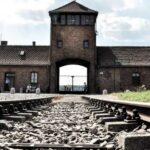
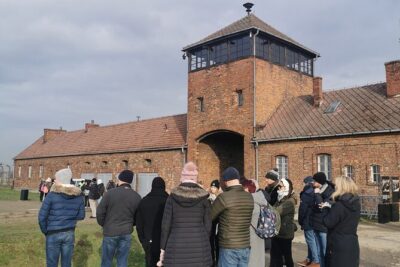
- Birkenau (Auschwitz II) and the historical gate: the scale hits hardest here
- Headsets, guidebook route, and that on-the-bus documentary
- Group size and why it matters more than you think
- Transportation and timing: what a 7-hour day can feel like
- The tough logistics checklist you should not skip
- Price and value: $40.85 worth it?
- The strongest “feel” of this tour: context plus a workable pace
- Who should book this Auschwitz-Birkenau day tour?
- Should you book it?
- FAQ
- Is round-trip transportation included?
- Where do I meet the tour?
- Does this tour include skip-the-line tickets?
- Do I need a passport or ID?
- Is food included?
- Will I have a live guide?
- How big is the group?
- Is this tour only in English?
- Is cancellation free?
Key things that make this day tour work
- Skip-the-line entry to Auschwitz I and Auschwitz II saves you from waiting in line
- Headsets in Auschwitz I help you hear the story clearly without crowd noise taking over
- A self-guided pace inside the sites lets you slow down where you need to
- A quieter extra stop at the Judenrampe adds context beyond the most famous locations
- Small group size (up to 30) matches the museum’s own regulation for comfort
- Real-world logistics included like air-conditioned transport and a documented route guide
Other guided visits to the Auschwitz-Birkenau Memorial
- From Krakow: Auschwitz-Birkenau Guided Tour & Hotel Pickup
★ 4.5 · 33,358 reviews - From Krakow: Auschwitz-Birkenau Guided Tour & Hotel Pickup
★ 4.5 · 29,340 reviews - Krakow: Auschwitz Guided Tour with Optional Hotel Pickup
★ 4.5 · 15,280 reviews
Auschwitz-Birkenau from Krakow: what you’re actually buying
This is a classic Krakow-to-Auschwitz day-trip setup: you meet at a central hotel, hop into an air-conditioned vehicle, and get round-trip transport back to the same spot. The big value is that you’re not improvising on the day. You’re not hunting for tickets at the last minute. And you’re not trying to line up your own timeline between Auschwitz I and Auschwitz II.
The other major value is what’s included with admission. You get skip-the-line entry tickets for Auschwitz I and Auschwitz II, plus a guidebook in your language that lays out the route and provides detailed context. That matters because Auschwitz isn’t something you can just skim. The details are everywhere, and your attention will be pulled in many directions. Having a structured path helps you keep your footing—literally and emotionally.
The duration is listed at about 7 hours, which is long enough to do both major camps without turning it into a quick drive-by. It’s still compact enough that you won’t have a full second day to return. So you’ll want to be ready to focus, take breaks when needed, and let the information come in steadily.
Stop 1 at the Judenrampe: a lesser-known piece of the story
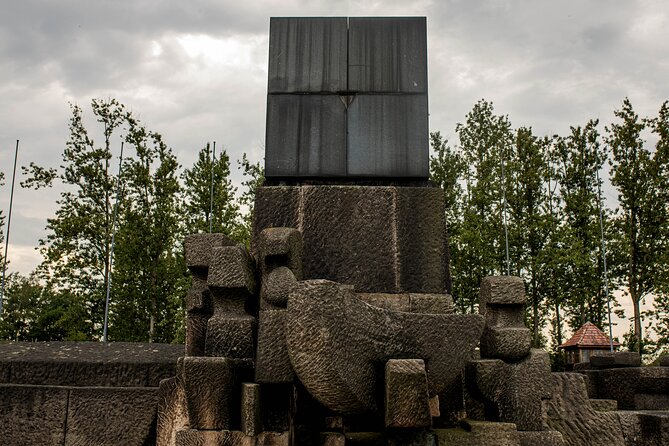
Your day begins with the Judenrampe, a railway unloading platform used during Holocaust deportations between 1942 and 1944. It sits between Auschwitz I and Auschwitz II, so it’s a useful first “frame” for what you’re about to see.
Today, this memorial area includes commemorative plaques honoring victims. It doesn’t get as much mainstream attention as the larger, more famous sights around Birkenau, but it fills in a crucial piece: the machinery of deportation didn’t start at the gas chambers. It started with forced transport and unloading—people arriving to be processed through a system designed to destroy them.
This stop is only about 30 minutes, and it’s listed as admission free. That’s a good length. It gives you context early without turning the day into a long series of brief stops. If you appreciate small, specific historical details, this is one of the more meaningful components of the itinerary.
Auschwitz I: entering through the gate and reading the site at your pace
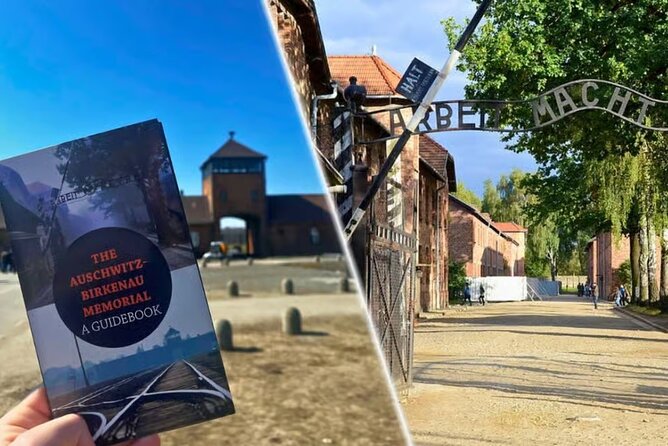
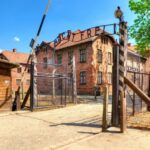
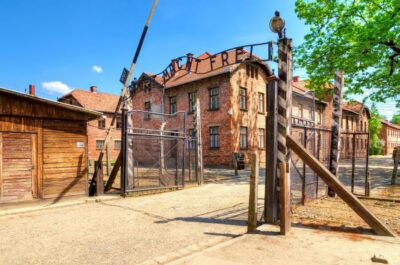
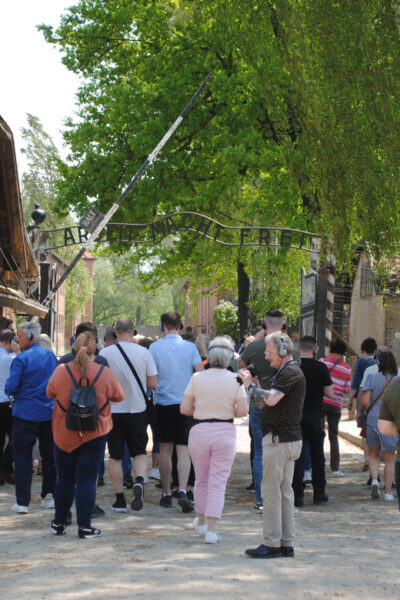
Auschwitz I is the heart of the day’s structure: first you walk through the gate of Auschwitz I, the main camp. You’ll pass under the infamous sign Arbeit Macht Frei (Work Makes You Free). Even if you’ve read about it, walking through it shifts the whole experience from information to reality.
The visit here typically lasts about two hours, and you’ll use a headset so you can hear the guide clearly. That headset detail is a practical win. In a place this quiet and serious, you don’t want to guess what the person beside you is hearing, or miss key explanations because you’re standing too far back.
You’ll explore original wooden barracks, fortified walls, barbed wire fences, and then the grim core of the camp’s function—gas chambers and crematoria. The way the tour is structured makes sense: it doesn’t just throw you into the most talked-about structures first. It helps you understand scale and organization, then moves toward the mechanisms of mass killing.
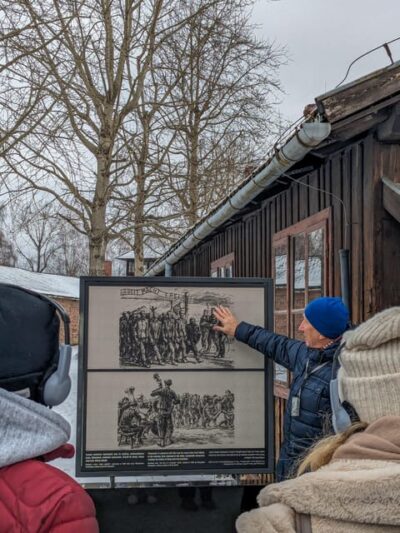
A key point for your expectations: the tour emphasizes a slow, self-guided way to move through exhibits. In practice, that means you’re not stuck staring at one person the whole time. You can spend more time where something catches your attention, and less time where you already have the context from the guidebook. That flexibility is one reason these Auschwitz day trips feel more respectful than the “see everything fast” versions.
A few more Krakow trips worth putting on the shortlist
- Auschwitz-Birkenau Museum and Memorial Guided Tour from Krakow★ 4.5 · 1,510 reviews
- Krakow: Rynek Underground Museum Guided Tour★ 4.6 · 1,122 reviews
- Krakow: City Card with Public Transport and Museums★ 3.9 · 675 reviews
- Krakow Schindler’s Factory Museum Guided Tour in English★ 4.5 · 650 reviews
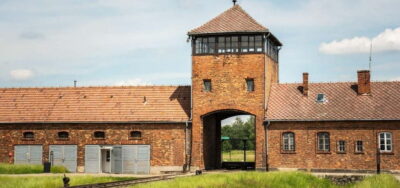
Birkenau (Auschwitz II) and the historical gate: the scale hits hardest here
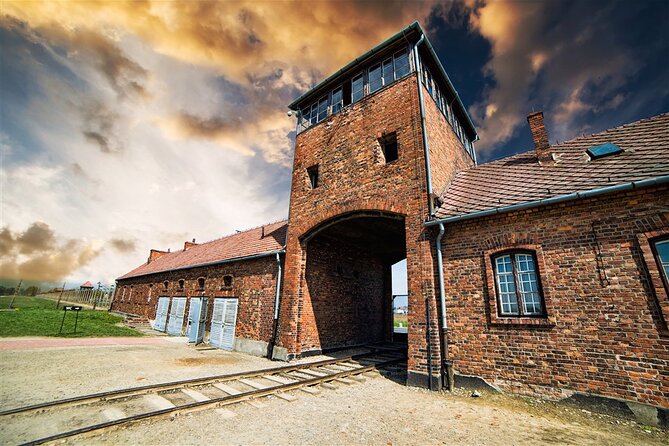
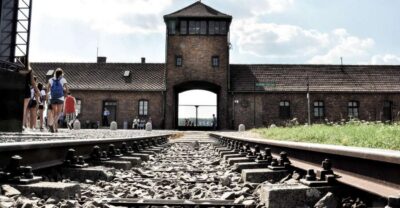
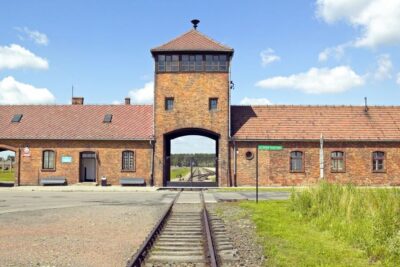
After Auschwitz I, you move to Birkenau (Auschwitz II), located in the village of Brzezinka. The camps are close enough that the tour has you there quickly—listed as about 3 minutes away.
Birkenau is described as the largest camp and built and operated with the sole purpose of making Europe Judenrein (free of Jews). The camp was constructed in 1941 under orders from SS commander Heinrich Himmler and could hold around 90,000 prisoners. That number is one of those facts your brain can say out loud, but your body absorbs it only when you’re standing inside the space and realizing what that “system” must have required.
This portion lasts about 30 minutes, with admission included. It’s not long, and you should know that upfront. Even so, your guide narrative matters here. You’ll hear about brutal living conditions, the selection process, and pseudo-scientific medical experiments carried out by Nazi doctors, including Josef Mengele. The tour also includes a closing liberation story: gates opened on January 27, 1945 by soldiers from the 60th Army of the First Ukrainian Front.
Because the time at Birkenau is shorter than Auschwitz I, you’ll want to choose what you want to focus on. If you’re the type who likes to read everything you see, the 30 minutes can feel compressed. If you’re okay with an overview plus the guidebook to continue learning later, it can work well.
Headsets, guidebook route, and that on-the-bus documentary
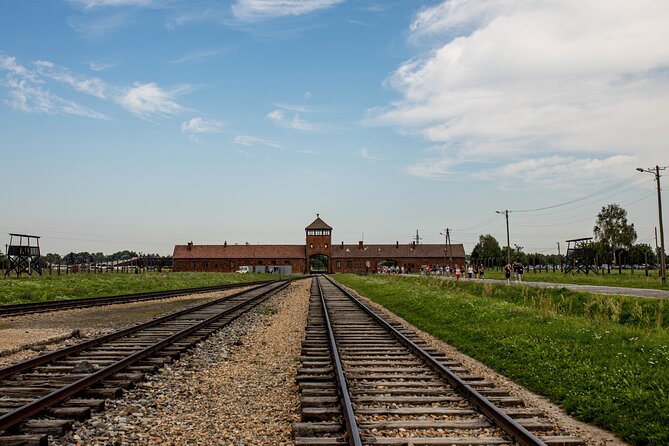
Even though this is a day trip, the format tries to keep you from being lost. You get a guidebook with your route and detailed description, and at Auschwitz I you’re supported by headsets so the spoken context stays audible.
There’s also a documentary movie called The liberation of Auschwitz shown on the way to the museum. One practical caution: films shown on buses can be hard to watch from every seat. Depending on your position, subtitles may be difficult to see. I’d rather you come prepared with the mindset that the documentary is there to add context, not replace what you’ll read and see on site.
Group size and why it matters more than you think
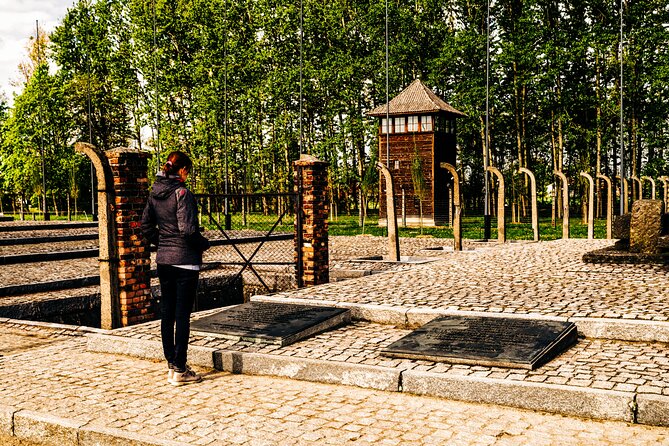
The tour caps the group at 30 travelers, matching museum regulations for comfort. That’s not just a nice-to-have detail. At Auschwitz, crowd control affects your ability to think and your ability to hear the headset guidance when you need it most.
A group of 30 is big enough that you’ll still feel “the tour world” around you, but small enough that you’re less likely to get swallowed by a moving wall of people. You’ll still need patience. But the size improves the odds that you can step aside, read, and regroup without feeling rushed every minute.
Transportation and timing: what a 7-hour day can feel like
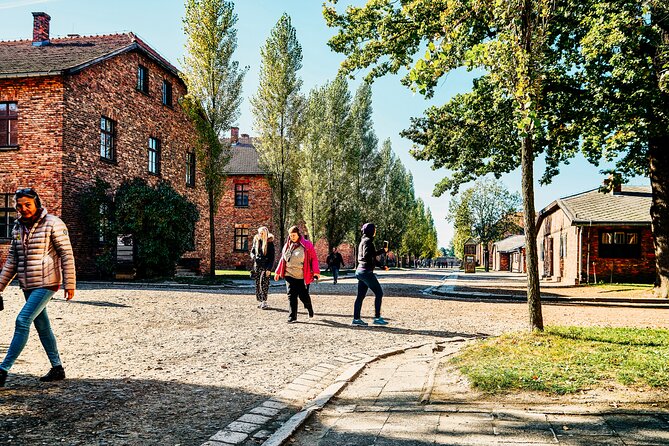
Round-trip transport is included by air-conditioned vehicle. The meeting point is the Radisson Blu Hotel, Krakow (Floriana Straszewskiego 17). The activity ends back at the meeting point, so you’re not scrambling for the last leg.
The timing is where the day can be either smooth or stressful. Auschwitz visits depend on museum entry slots, and those can affect departures and ticket times. Even if a tour is well planned, the museum sets the schedule constraints.
So here’s the practical advice: keep your day flexible. Give yourself margin for check-in and walking. If you’re the kind of traveler who likes exact minute-by-minute plans, know that Auschwitz day trips can shift. It doesn’t mean the experience falls apart—it just means you should stay calm and trust the route.
The tough logistics checklist you should not skip
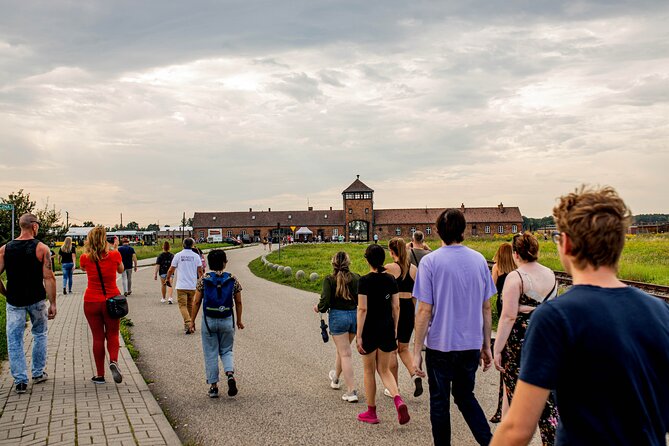
Auschwitz runs on rules. This tour explicitly notes a few that can affect whether you even get in.
Bring your passport or ID. Personal details must be confirmed at the entrance to the museum. If you forget it, you may be denied entry.
Plan your bag. There’s a maximum size for carry-on luggage listed as 11.8 x 7.8 x 3.9 inches (30 x 20 x 10 cm). Larger luggage can be left in the car.
Wear shoes for dirt tracks. The tour notes that in the camps there are mostly dirt tracks, which can cause minor difficulties for strollers. Even if you’re not bringing a stroller, this is a reminder that footwear and traction matter.
Photography is generally allowed with a few clearly indicated exceptions. The tour also notes photos/filming in Wieliczka Salt Mine require an extra pass—but that’s separate from this Auschwitz-only day.
And finally: behavior matters. The camps require visitors to behave appropriately and respectfully. That sounds obvious, but it’s worth repeating because the environment expects it from everyone.
Price and value: $40.85 worth it?
At $40.85 per person, this looks like a budget-friendly way to tackle both Auschwitz I and Auschwitz II from Krakow. The real question is whether it’s “cheap” or “good value.”
Here’s why it can feel like good value:
- Skip-the-line access is included for both main camps, which saves waiting time.
- Admission is included, so you’re not paying separate ticket costs on top of transport.
- You also get a guidebook and a documentary context piece.
- Transportation and insurance are part of the package.
Could it feel like less value? Only if the day’s schedule tightness doesn’t match your learning style. If you want lots of uninterrupted time for reading and revisiting details, a 7-hour window with a shorter Birkenau segment may leave you wishing for more hours. In that case, you might prefer a different format with more time on site.
Still, for a one-day visit where you want structure, transport, and admissions handled, this price point is hard to beat.
The strongest “feel” of this tour: context plus a workable pace
What I think makes this day trip work is the combination of support and freedom.
You get enough structure to stay oriented: headset guidance in Auschwitz I, plus a route guidebook. Then you get enough breathing room to move at your own pace inside the exhibits. That matters because Auschwitz is the kind of place where you might need a minute to process something, then read more carefully when you’re ready.
The tour also tries to expand your understanding beyond the biggest headlines. Starting with Judenrampe gives you deportation context before you reach the best-known camp features. And then Birkenau connects that context to the massive scale and procedures.
If you end up with a strong guide—one English-speaking guide named Wojtek is mentioned as especially knowledgeable in at least one departure—that can make the explanations click even more, especially for the most complex parts like selection processes and medical experiments.
Who should book this Auschwitz-Birkenau day tour?
This tour fits you best if:
- You want easy, direct transport from Krakow with admissions sorted.
- You prefer a mix of guidance and self-paced exploring.
- You’d rather trust a set route than build your own timing.
- You want the day to be efficient without feeling like a sprint.
It might be less ideal if:
- You get stressed by schedule changes tied to entry slots.
- You strongly prefer long, unhurried time at Birkenau.
- You need lots of reassurance and detailed pre-trip communication to feel comfortable traveling alone or with limited language.
Should you book it?
I’d book this if you want a structured, budget-friendly way to do Auschwitz I and Auschwitz II in one day from Krakow, with skip-the-line entry and built-in context through headsets, a guidebook, and a short documentary.
If timing uncertainty would wreck your day, you should factor in that museum entry windows can shift, and the Auschwitz day schedule is never fully under your control. Plan your morning with calm energy, bring your passport/ID, and pack within the carry-on rules. Do that, and this becomes a practical, respectful way to see the full arc of the camps in a single trip.
FAQ
Is round-trip transportation included?
Yes. You’ll have round-trip transport by air-conditioned vehicle, and the tour ends back at the meeting point.
Where do I meet the tour?
The start point is the Radisson Blu Hotel, Krakow, Floriana Straszewskiego 17, 31-101 Kraków. The tour ends back at the same meeting point.
Does this tour include skip-the-line tickets?
Yes. Skip-the-line entrance tickets are included for Auschwitz 1 and Auschwitz 2, and admission is included for those stops.
Do I need a passport or ID?
Yes. You must bring your passport or ID because personal details are required to be confirmed at the museum entrance.
Is food included?
No. Food and drinks are not included.
Will I have a live guide?
The tour details list live guide as not included. During the Auschwitz I portion, you will use headsets to hear the guide clearly, and you’ll also have a guidebook with the route and detailed description.
How big is the group?
The maximum group size is 30 travelers, and the Auschwitz visit is also described as having a group size limited to 30.
Is this tour only in English?
Yes. The tour is offered in English.
Is cancellation free?
Yes. You can cancel for a full refund up to 24 hours in advance of the experience start time.
More Tours in Krakow
More Tour Reviews in Krakow
Visiting the Auschwitz-Birkenau Memorial
Just added: fresh Krakow reviews
Auschwitz-Birkenau Memorial Tours, compared.
 ★ 4.5Auschwitz-Birkenau Guided Tour & Hotel PickupFrom $2133,358 reviews
★ 4.5Auschwitz-Birkenau Guided Tour & Hotel PickupFrom $2129,340 reviews
★ 4.5Auschwitz-Birkenau Guided Tour & Hotel PickupFrom $2133,358 reviews
★ 4.5Auschwitz-Birkenau Guided Tour & Hotel PickupFrom $2129,340 reviews
 ★ 4.5Auschwitz Guided Tour with Optional Hotel PickupFrom $6915,280 reviews
 ★ 4.5Auschwitz-Birkenau Guided Tour with Pickup & LunchFrom $219,800 reviews
 ★ 4.5Auschwitz-Birkenau Guided Tour Pickup/Lunch OptionsFrom $2009,057 reviews
 ★ 4.7Auschwitz-Birkenau and Salt Mine Guided TourFrom $549,020 reviews
 ★ 5.0Krakow to Auschwitz Birkenau Guided Tour with Transfer and TicketFrom $368,197 reviews
 ★ 4.0Auschwitz Birkenau Tour with TransferFrom $216,134 reviews
Browse the lists this tour appears in