
REVIEW · AUSCHWITZ-BIRKENAU MEMORIAL TOURS
Exclusive Small Group Auschwitz-Birkenau Guided Tour from Krakow
Practical days need clarity, not chaos. This Auschwitz-Birkenau small-group guided trip from Krakow is built for fast entry and a structured visit that covers Auschwitz I and Birkenau in one long, meaningful day.
What I like most is the guided time on site with a professional educator, and the effort put into hearing comfort with headsets for groups of 10+. There’s also packed lunch included, so you’re not scrambling when the day gets heavy.
One consideration: the experience is respectful and serious, but it’s still a long day (about 7.5 hours), with only short breaks. Also, while the tour is marketed as small, the overall cap can reach up to 20 people, and you may share the site with other groups running at the same time.
In This Review
- Key Things That Make This Tour Work
- Auschwitz-Birkenau From Krakow: How the Day Flows
- Price and What You’re Really Paying For
- Getting There: Van Transfer and Early Morning Reality
- Skip-the-Line Entry and the First Moments at Auschwitz I
- Auschwitz I Highlights: Barracks, Bathhouse, Crematorium, Death Wall
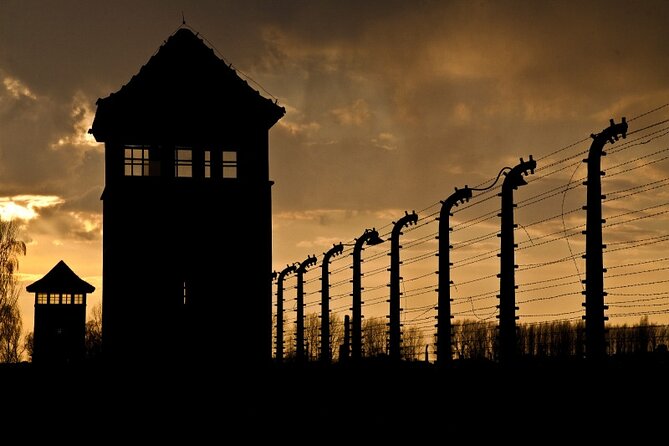
- Birkenau Experience: Ramps, Watchtowers, and the Scale of the System
- Lunch, Breaks, and the Built-In Time for Reflection
- Comfort Rules: Dress Code, ID, and Staying Within the Museum Rules
- Who This Tour Fits Best (And Who Should Rethink It)
- My Booking Verdict: Should You Choose This Auschwitz-Birkenau Tour?
- FAQ
- How long is the tour and how much time is spent at Auschwitz and Birkenau?
- Does the tour include skip-the-line entry?
- What’s included for food and breaks?
- Is there a dress code?
- Do I need ID or a passport?
- Is this tour suitable for children?
Key Things That Make This Tour Work
- Skip-the-line entry so you can start seeing the grounds sooner rather than waiting outside.
- A licensed guided tour in both Auschwitz I and Auschwitz II-Birkenau, totaling up to about 3.5 hours on site.
- Headsets included for clearer listening in a site where voices can easily get lost.
- Round-trip shared van/minibus from Krakow’s Old Town area (and possibly nearer your hotel).
- A packed lunch and short planned pauses so you can keep moving without constant stops.
- Dress code + ID checks planned for, which matters on a visit like this.
Other guided visits to the Auschwitz-Birkenau Memorial
- From Krakow: Auschwitz-Birkenau Guided Tour & Hotel Pickup
★ 4.5 · 33,358 reviews - From Krakow: Auschwitz-Birkenau Guided Tour & Hotel Pickup
★ 4.5 · 29,340 reviews - Krakow: Auschwitz Guided Tour with Optional Hotel Pickup
★ 4.5 · 15,280 reviews
Auschwitz-Birkenau From Krakow: How the Day Flows
This is an early-start, one-day plan with a simple goal: get you into Auschwitz quickly, then keep you on track as the day moves from Auschwitz I to Birkenau. From Krakow, you ride out by comfortable van or minibus with a return trip back to the city center at the end.
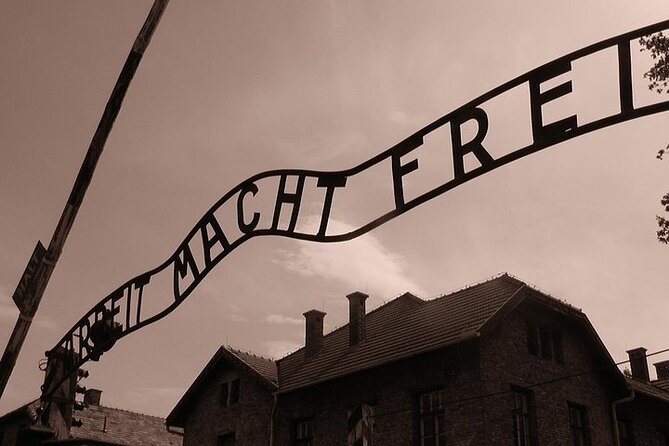
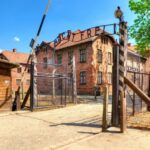
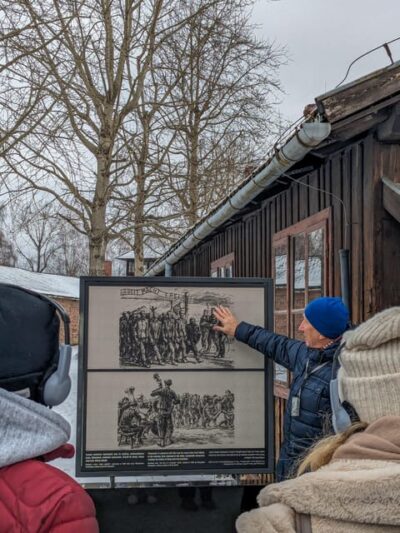
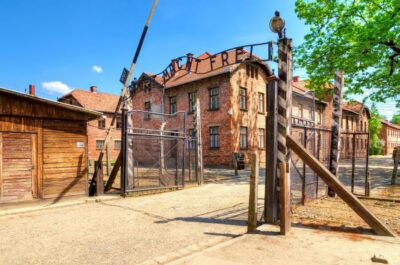
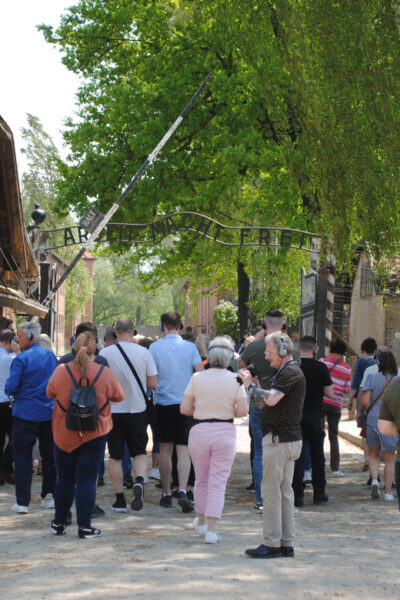
On the ground, you’re not just wandering. You get a structured route with your guide taking you through the major places people come to see: the main entrance area with the famous motto sign, original barracks and key structures at Auschwitz I, then the larger, more open and harder-to-grasp scale of Birkenau. The visit includes an on-site museum component with photographs, documents, and personal items.
Your pace is guided but not hurried. Breaks are kept short (no longer than 10 minutes), which helps maintain the flow of the tour. If you’re the type who likes to stop and re-read every wall label, plan to accept that you’ll be moving as a group—though you do get a bit of free time later for reflection.
Price and What You’re Really Paying For
At $168.10 per person, you’re paying for three things that matter a lot on this route: entry speed, licensed guiding, and logistics handled end-to-end.
Skip-the-line tickets are the big value lever. On days when security lines are long, that time savings can make the difference between settling in emotionally and starting the visit with frustration. This tour is set up so you can head straight inside once you arrive, instead of spending your limited on-site time waiting.
The second value piece is the professional educator time—up to about 3.5 hours total on site split between Auschwitz and Birkenau. That’s not just “stand here and read the sign” guiding. The intent is to explain how the camps worked, how they relate to WWII-era Poland and persecution of Jewish people, and why certain places are significant.
Finally, you get practical comforts bundled in: air-conditioned transfer, a packed lunch, and headsets to help you hear your guide clearly. In a day like this, those small comforts stop you from fighting the logistics while you’re trying to take everything in.
Getting There: Van Transfer and Early Morning Reality
The day starts in Krakow’s Old Town area, where you meet your guide and the small group. Pickup is near the Old Town or, if possible, closer to your hotel. You’ll want to have a realistic plan for an early departure—some schedules have been reported as starting around 6:00am—so set your alarm for the conservative option.
The ride out takes you from “vacation mode” into serious territory fast. Some groups receive a short video or briefing during the drive, which can help set the tone before you step into the camps.
A quick note on comfort: the tour is all-weather and requires moderate physical fitness. You’ll be walking on uneven ground and through outdoor spaces at Auschwitz and Birkenau. Pack for layers and wind changes, even in warmer months.
Also, keep an eye on your timing for the first stop. Even when everything runs smoothly, this is the type of excursion where missing the meeting window can snowball into stress. Arrive early at the pickup point, even if it feels like overkill.
A few more Krakow trips worth putting on the shortlist
- Krakow: Auschwitz-Birkenau Guided Tour with Pickup & Lunch★ 4.5 · 9,800 reviews
- Krakow: Auschwitz-Birkenau Guided Tour Pickup/Lunch Options★ 4.5 · 9,057 reviews
- Krakow: Auschwitz-Birkenau and Salt Mine Guided Tour★ 4.7 · 9,020 reviews
- Krakow to Auschwitz Birkenau Guided Tour with Transfer and Ticket★ 5.0 · 8,197 reviews
Skip-the-Line Entry and the First Moments at Auschwitz I
Once you arrive at the Auschwitz State Museum area, the tour’s “skip-the-line” setup matters immediately. You’re able to head inside and begin with guidance rather than waiting for the group behind the queue.
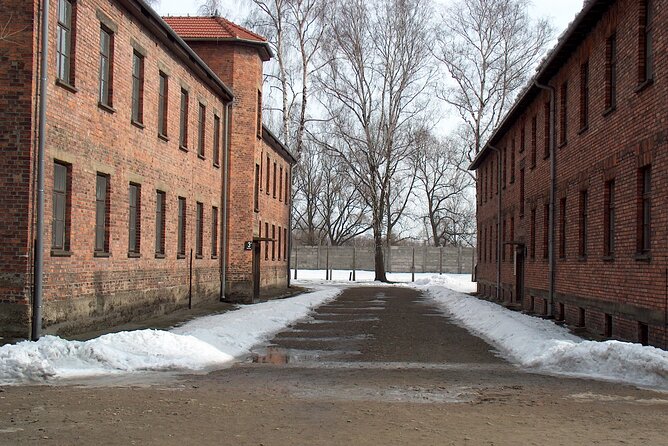
At Auschwitz I, expect a tour built around key originals: barracks, the bathhouse area, the watchtower, and the memorial and evidence sites tied to the camp system. The route generally includes passing under the main entrance sign area before moving through structures that help you understand how prisoners were confined and processed.
This is also where your guide’s approach really affects your experience. Many guides for this tour style don’t just recite dates. They connect the places to the human reality of what happened. In the feedback you’ll see, the guide quality gets called out again and again for being informative and careful, with an emphasis on compassion rather than shock.
For hearing, the tour includes headsets for group sizes of 10 and above. That’s a practical detail that improves the visit. Auschwitz spaces can be noisy, and your ability to follow the guide’s explanations depends on being able to hear them.
Auschwitz I Highlights: Barracks, Bathhouse, Crematorium, Death Wall
Auschwitz I is the part many people mentally picture first. Your guided time there is designed to show the camp as a functioning system, not just a memorial site.
Here’s what you can expect in the Auschwitz I portion:
- Original wooden barracks that help you grasp confinement and overcrowding
- The bathhouse area, tied to the way prisoners were treated and processed
- The watchtower, which is part of how the camp was controlled and surveilled
- Sites tied to extermination infrastructure, including the crematorium and gas chamber areas
- The Death Wall, which is a stark, documented place in the camp’s history
- An on-site museum component with photos, documents, and personal items
This is heavy material, so the best way to get value is to let your guide’s structure do the work. Instead of trying to memorize every term, you’ll get a better result by following the logic of the route: how different buildings relate to daily prison life, confinement, selection, and killing.
Keep in mind: time on site is fixed. The tour gives guided time up to about two hours at Auschwitz before transferring to Birkenau. That means you’ll get a strong overview, not an unlimited self-paced wander.
Birkenau Experience: Ramps, Watchtowers, and the Scale of the System
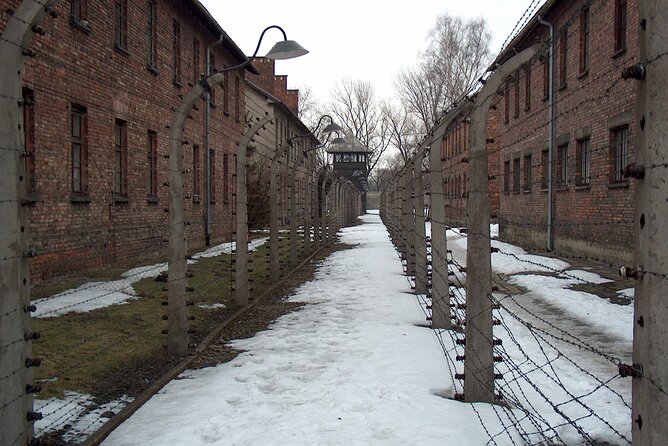
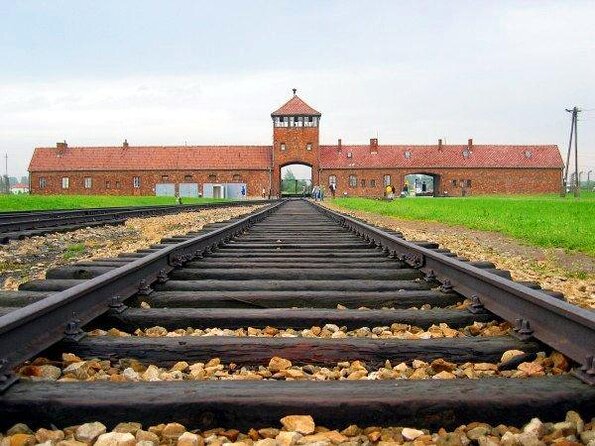
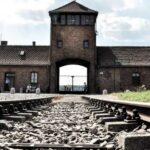
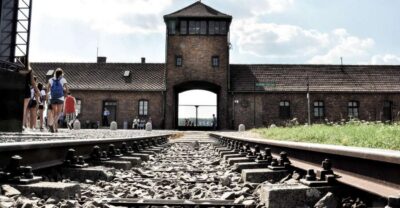
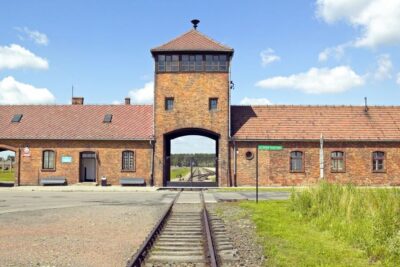
After Auschwitz I, you transfer to Auschwitz II-Birkenau. This shift is crucial because Birkenau’s scale changes what your brain expects. If Auschwitz I feels like a contained, enclosed camp system, Birkenau feels bigger, more exposed, and harder to “take in” as a whole.
Your Birkenau portion is about 1 hour 20 minutes with guided stops focused on:
- Original barracks
- Unloading ramps (the places associated with arrivals)
- Watchtowers
- Mass extermination-related areas, shown in the context of the broader camp system
Because of the open-air nature of Birkenau, conditions can change fast. Plan for wind, sun, and cold shifts. The tour runs in all weather conditions, so dress appropriately.
Also, this part of the day is where group listening can become harder. Other groups run simultaneous tours, and the site is huge. That’s exactly why headsets help. If you want to hear every detail, keep your headset volume comfortable and don’t be afraid to adjust as you change walking speed or direction.
If you’re someone who feels overwhelmed easily, give yourself permission to absorb slowly. The guide’s job is to explain what you’re seeing, so you don’t need to force your own pace.
Lunch, Breaks, and the Built-In Time for Reflection
The day includes packed lunch, which is one of those details that quietly improves everything. You won’t be stuck hunting for food in the middle of a complicated day, and you can eat without leaving the tour rhythm.
Breaks are limited (no longer than 10 minutes). That’s not ideal if you love long rests, but it keeps the tour on schedule so you don’t lose guided time between Auschwitz and Birkenau.
There’s also an extra layer that can be surprisingly helpful: the tour allows up to 30 minutes of additional free time tied to parking fees. That can give you a moment to reflect, use a bookstore, or just step away and reset your thoughts.
In some cases, groups have reported receiving additional small items like water and a snack during the day. Don’t count on it as your meal plan, but it’s a nice bonus when it happens.
Comfort Rules: Dress Code, ID, and Staying Within the Museum Rules
This tour includes museum admission and licensed guiding, but entry is not casual. The Auschwitz museum requires a dress code: no shorts or sleeveless tops. If you arrive dressed too casually, you risk refused entry. This rule is easy to solve—just plan clothing that covers your arms and legs.
You also must bring valid ID or passport for entry. This is not a “nice to have.” Have it on you, not back in your luggage.
Physical comfort matters more than you might think. The tour notes a moderate physical fitness level requirement. Expect uneven walking surfaces, long outdoor stretches, and standing time when your guide stops to explain key points.
Finally, pack smart for the day:
- Layers for temperature shifts and wind
- Comfortable walking shoes
- Your ID/passport ready to show
- A small day bag for water (even if your lunch is packed)
Who This Tour Fits Best (And Who Should Rethink It)
This is a good choice if you want a guided structure that covers both Auschwitz I and Birkenau in one go. The small-group goal helps keep the experience personal, and the headsets improve your ability to follow the educator without yelling over crowds.
It’s especially suitable if:
- You care about hearing context and history explained clearly
- You want skip-the-line convenience from Krakow
- You prefer a group size that feels closer to a class than a busload
- You like having lunch and transport handled so you can focus on the visit
It may not fit as well if:
- You need very long breaks or lots of downtime (breaks are short)
- You don’t want to follow the dress code and ID requirements
- You’re bringing children under 14; the tour notes it’s not recommended for that age group
If you’re traveling with mobility concerns, consider your own comfort level carefully, since the itinerary involves walking and outdoor sections.
My Booking Verdict: Should You Choose This Auschwitz-Birkenau Tour?
If your priority is a structured, guided visit with skip-the-line entry and practical comforts (headsets, packed lunch, transfer), this is a solid option. The guiding approach—clear explanations, careful framing, and an emphasis on compassion—shows up strongly in feedback, and that matters on a site this intense.
I’d choose it if you want to avoid logistics stress and get into the camps without wasting your time in lines. I’d also feel good about it if you’re the type who wants to understand the system behind what happened, not just see the key locations.
I’d think twice if you’re extremely sensitive to crowds on-site or if you need long breaks, since the day is planned with short pauses and other groups may be present at the same time. But with the headsets and guided structure, most people can keep a clear thread of what’s being shown and why.
Bottom line: for Krakow, this is a well-built day trip that trades “self-paced freedom” for a smoother, more listenable experience—exactly what you want when the topic is heavy and the time matters.
FAQ
How long is the tour and how much time is spent at Auschwitz and Birkenau?
The total tour time is about 7 hours 30 minutes. On site, you get up to about 3.5 hours of guided time with a professional educator, including time at Auschwitz I and then Birkenau.
Does the tour include skip-the-line entry?
Yes. You have prepaid skip-the-line tickets so you can enter directly and begin the guided portion without long waiting.
What’s included for food and breaks?
A packed lunch is included. Breaks are no longer than 10 minutes, and you also have up to 30 minutes of additional free time during the tour.
Is there a dress code?
Yes. You must not wear shorts or sleeveless tops. If you don’t follow the dress code, you may risk being refused entry.
Do I need ID or a passport?
Yes. Each traveler must have a valid ID or passport for museum entry.
Is this tour suitable for children?
Children must be accompanied by an adult, and the tour notes it is not recommended for children under age 14.
More Tours in Krakow
More Tour Reviews in Krakow
Visiting the Auschwitz-Birkenau Memorial
Just added: fresh Krakow reviews
Auschwitz-Birkenau Memorial Tours, compared.
 ★ 4.5Auschwitz-Birkenau Guided Tour & Hotel PickupFrom $2133,358 reviews
★ 4.5Auschwitz-Birkenau Guided Tour & Hotel PickupFrom $2129,340 reviews
★ 4.5Auschwitz-Birkenau Guided Tour & Hotel PickupFrom $2133,358 reviews
★ 4.5Auschwitz-Birkenau Guided Tour & Hotel PickupFrom $2129,340 reviews
 ★ 4.5Auschwitz Guided Tour with Optional Hotel PickupFrom $6915,280 reviews
 ★ 4.5Auschwitz-Birkenau Guided Tour with Pickup & LunchFrom $219,800 reviews
 ★ 4.5Auschwitz-Birkenau Guided Tour Pickup/Lunch OptionsFrom $2009,057 reviews
 ★ 4.7Auschwitz-Birkenau and Salt Mine Guided TourFrom $549,020 reviews
 ★ 5.0Krakow to Auschwitz Birkenau Guided Tour with Transfer and TicketFrom $368,197 reviews
 ★ 4.0Auschwitz Birkenau Tour with TransferFrom $216,134 reviews
Browse the lists this tour appears in