
REVIEW · AUSCHWITZ-BIRKENAU MEMORIAL TOURS
From Krakow: Auschwitz-Birkenau Full-Day Guided Tour
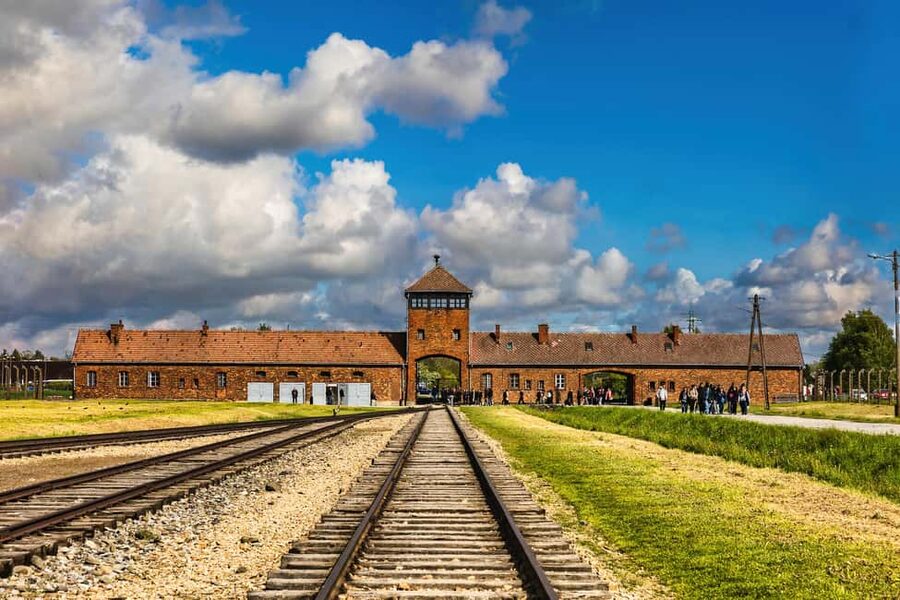
Auschwitz-Birkenau isn’t something you rush. This full-day trip from Krakow takes you into both camps with a licensed guide, moving from the Auschwitz I gate area to the much larger Auschwitz II Birkenau—so you can connect the dots instead of just ticking off locations.
What I like most is the structure: you get a guided walkthrough of Auschwitz I (with time built in before and after) and then a guided visit at Birkenau, plus headsets so you can hear the guide clearly without craning your neck. The second thing I really value is the travel setup—an air-conditioned minivan, pickup/drop-off, and entrance fees handled—so you’re not scrambling once you arrive.
One consideration: this visit is heavy. The memorial sets the pacing, breaks, and tour flow, and the whole day involves a lot of walking on museum grounds. Also, preferred tour times aren’t guaranteed, and the tour is non-refundable once booked.
In This Review
- Key Things to Know Before You Go
- From Krakow to Auschwitz: How the Day Actually Moves
- Auschwitz I: The Gate, the Barracks, and Block 11
- The Short Transfer and Break: Time to Reset Before Birkenau
- Auschwitz II Birkenau: Seeing the Scale of the Camp
- Value and Practical Logistics: Is $89 a Fair Deal?
- Tour Timing, Rules, and What Can Go Wrong (So You Can Avoid It)
- What the Guides Do Best (And Why It Matters Here)
- Who This Tour Fits Best
- Should You Book This Auschwitz-Birkenau Day Trip?
- FAQ
- How long is the Auschwitz-Birkenau full-day tour from Krakow?
- What is the price per person for this tour?
- Is pickup from my accommodation included?
- Do I need to buy tickets in advance?
- Which camps are visited and are the tours guided?
- What languages are available for the live guide?
- What do I need to bring for entry?
- Are there dress code rules?
- Is this tour suitable for children?
- Can the tour time change before the visit?
Key Things to Know Before You Go
- Two guided stops, not one: Auschwitz I first, then Auschwitz II Birkenau.
- Headsets included so you can follow the guide without shouting over crowds.
- Time built in for breathing room between the two camps and before returning to Krakow.
- Your name must match your ID at entry, or they may refuse you.
- Museum rules are strict: no sleeveless shirts, and bag size limits apply.
- Tours are guided by memorial pacing, so exact timings can shift slightly.
Other guided visits to the Auschwitz-Birkenau Memorial
- From Krakow: Auschwitz-Birkenau Guided Tour & Hotel Pickup
★ 4.5 · 33,358 reviews - From Krakow: Auschwitz-Birkenau Guided Tour & Hotel Pickup
★ 4.5 · 29,340 reviews - Krakow: Auschwitz Guided Tour with Optional Hotel Pickup
★ 4.5 · 15,280 reviews
From Krakow to Auschwitz: How the Day Actually Moves
This is a straightforward day trip: you leave Krakow by air-conditioned minivan and spend the bulk of the day inside the Auschwitz-Birkenau Memorial Museum site. The time commitment is about 7 hours total, with travel taking roughly 1.5 hours each way. That matters because you’re not just “going there”—you’re setting aside an entire block of your day for a place that demands your attention.
Pickup is available from your accommodation in Krakow, and drop-off is handled at multiple points back in the city. That can save you time and stress, especially if you don’t want to figure out how to get to a meeting spot on your own. The pace is mostly controlled by logistics: drive time, two guided museum segments, and shorter breaks in between.
A useful mindset here is to treat this like a careful guided learning day rather than a sightseeing loop. If you’re the type who gets antsy without an itinerary, you’ll likely feel calmer because the order is set: Auschwitz I first, then the drive to Birkenau.
One practical note: tour times can shift. If the memorial changes the preferred slot, the operator will contact you the day before to confirm a new time. Since tickets are non-refundable, it’s smart to plan the rest of your Krakow schedule with some flexibility.
Auschwitz I: The Gate, the Barracks, and Block 11
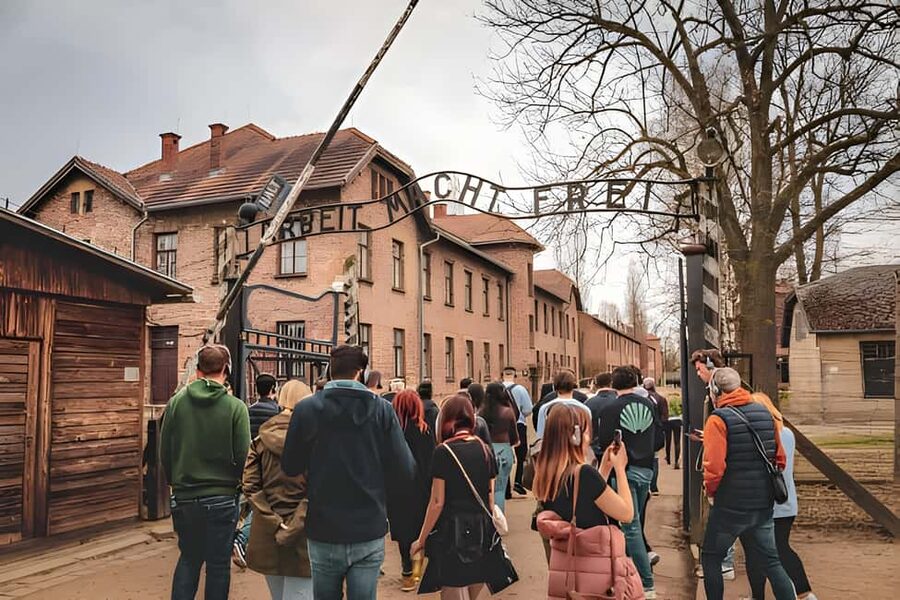
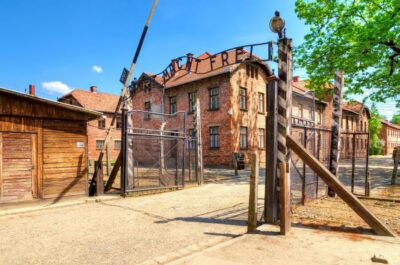
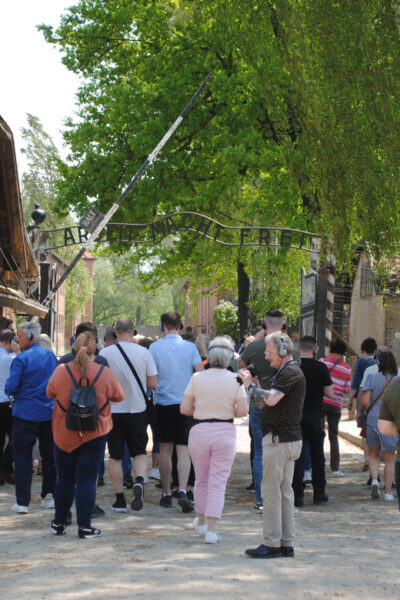
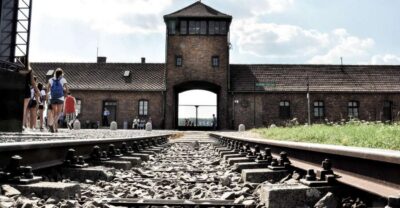
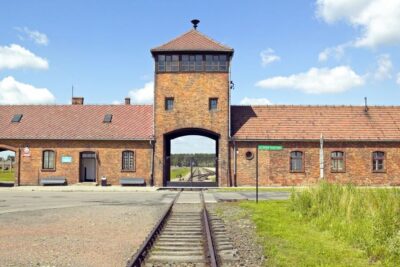
Auschwitz I is where you first get your bearings. You’ll travel from Krakow to Oświęcim area, then enter the Auschwitz I camp area with a licensed guide. The entrance itself is unforgettable: you’ll see the iron gate with the slogan Arbeit Macht Frei (Work Sets You Free). Even if you know the name “Auschwitz” already, standing there changes how the words land in your body.
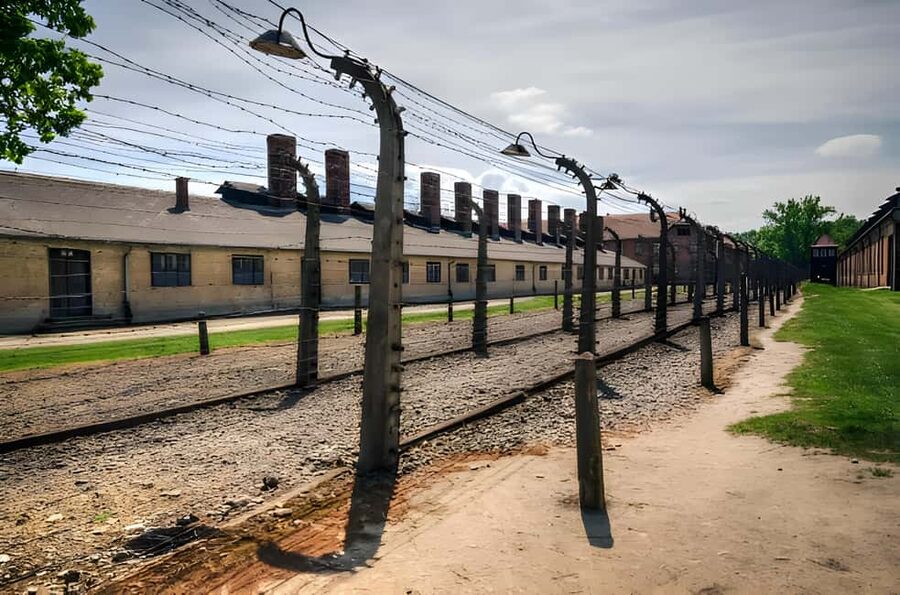
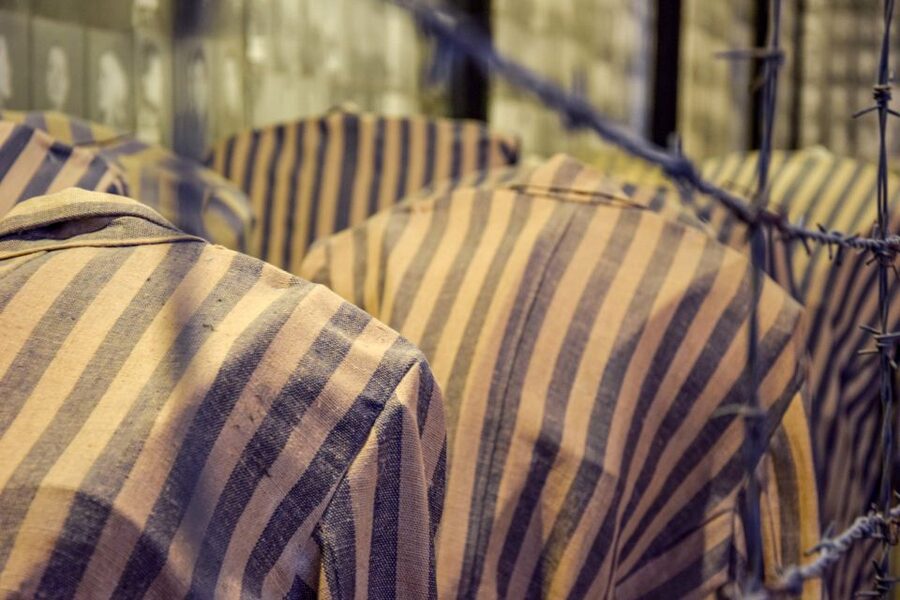
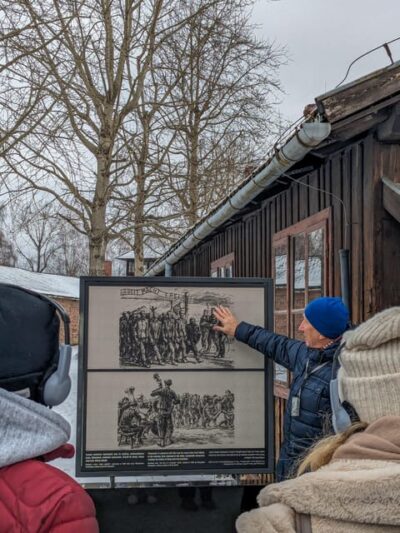
From there, you’ll walk through brick barracks that were used to hold hundreds of thousands of victims of the Holocaust. The guided portion here is about 105 minutes, which is long enough for real context. The guide doesn’t just point at buildings; the goal is understanding how the camp functioned—where people were housed, how the camp system was organized, and what to notice while you’re there.
The most intense part of Auschwitz I for many visitors is Block 11, often described as a prison within the prison. This is where special torture chambers were located and where different punishments were inflicted on prisoners. You’ll also learn about early extermination attempts involving Zyklon B and about the facilities that remain standing—specifically the crematorium and gas chamber at the end of the camp area.
What you’ll appreciate here is that the guide’s job is to connect the place to the human reality. When a licensed guide explains why certain areas matter—rather than treating it like a photo stop—you end up remembering more than the architecture.
If you’re sensitive to graphic themes, give yourself permission to move slowly. You can pause, step to the side, and take breaks during the built-in rhythm of the visit. The memorial site will guide the pacing, but you’re still in control of how long you stay with each scene.
The Short Transfer and Break: Time to Reset Before Birkenau
After Auschwitz I, the day moves quickly but not carelessly. You’ll take a short minivan transfer—about 10 minutes—and then you’ll get a break period before Birkenau. That break time is around 20 minutes.
Why this matters: Birkenau is larger, more open, and more spread out. If you show up tired or rushed from Auschwitz I, you’ll miss details. Those quick pauses give your brain a chance to recalibrate between the most concentrated parts of the experience.
Also, bring water and use the restroom when you can. One small habit that helps: don’t wait until you feel desperate. You’re walking, you’re standing for explanations, and winter or summer conditions can drain you faster than you expect.
A few more Krakow trips worth putting on the shortlist
- Krakow: Auschwitz-Birkenau Guided Tour with Pickup & Lunch★ 4.5 · 9,800 reviews
- Krakow: Auschwitz-Birkenau Guided Tour Pickup/Lunch Options★ 4.5 · 9,057 reviews
- Krakow: Auschwitz-Birkenau and Salt Mine Guided Tour★ 4.7 · 9,020 reviews
- Krakow to Auschwitz Birkenau Guided Tour with Transfer and Ticket★ 5.0 · 8,197 reviews
Auschwitz II Birkenau: Seeing the Scale of the Camp
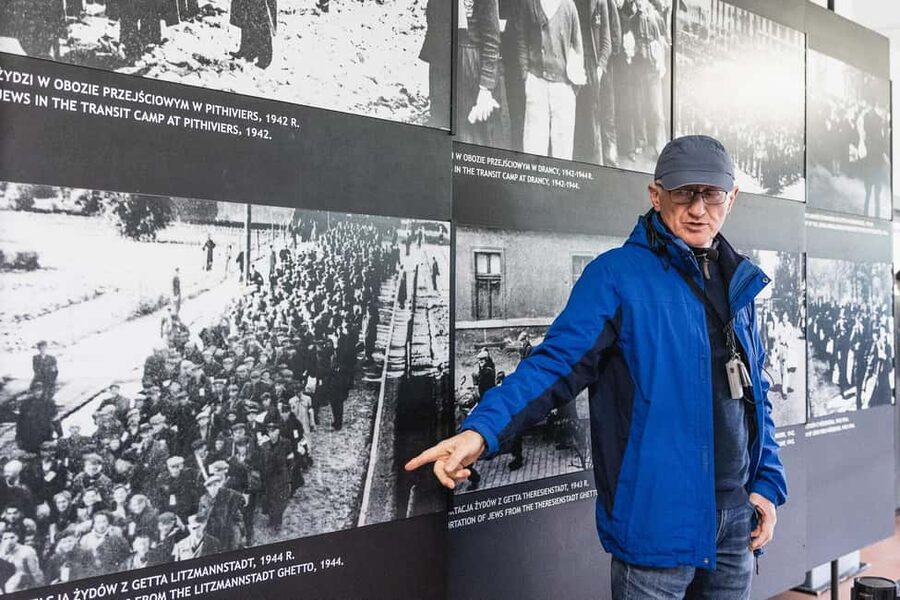
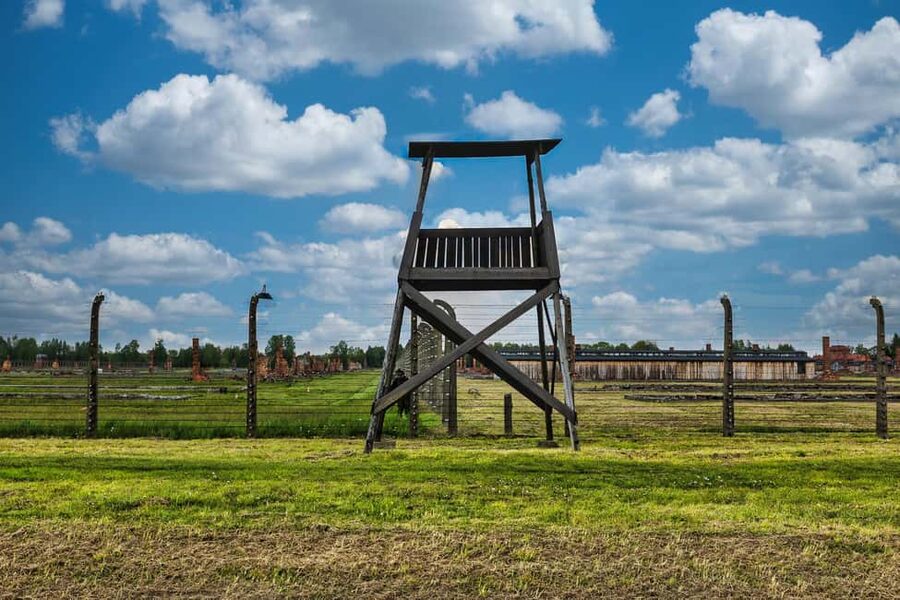
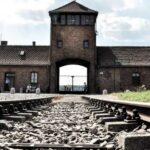
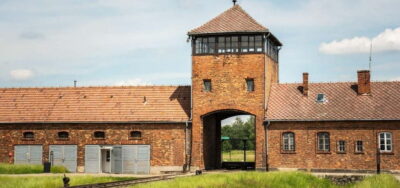
Then you head to Auschwitz II – Birkenau, the larger and more expansive part of the complex. This is the section that often hits people hardest, not because of a single building, but because of scale. Birkenau was about 25 times larger than Auschwitz I, and it was the largest concentration camp. More than 1 million people died here.
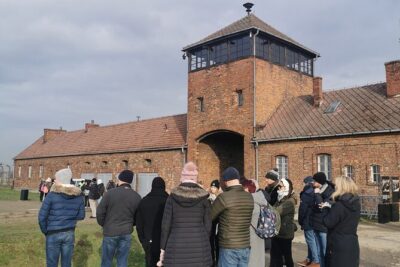
The guided tour at Birkenau is about 1.5 hours. That time gives you room to understand the layout rather than just walking through random sections. Your guide will help you interpret what you’re seeing: how the camp was set up, how prisoners were processed, and why the geography and structures mattered.
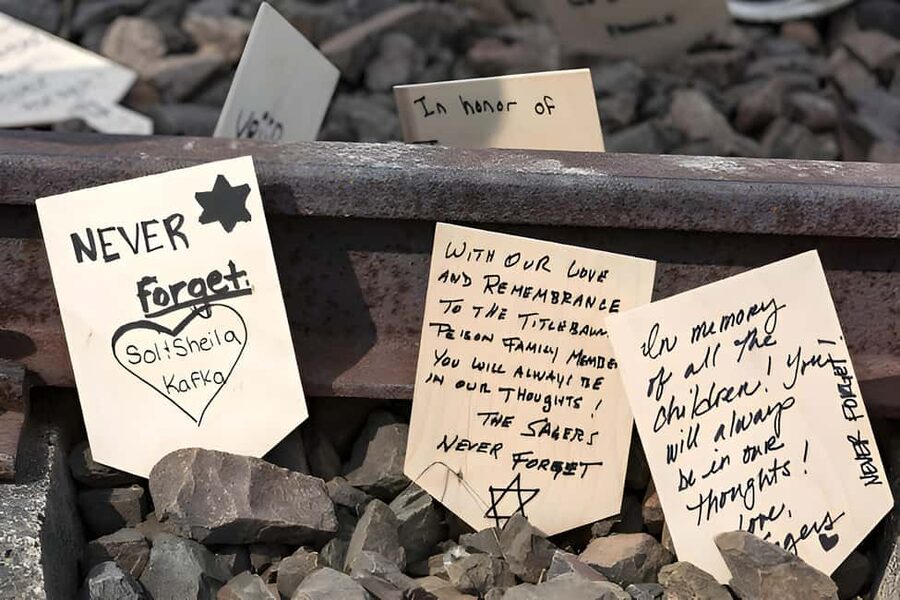
At the end, you’ll finish at the Memorial and have a moment to pay your respects to the victims of the genocide before heading back to Krakow.
A good way to approach Birkenau is to let your eyes travel systematically. Look for how pathways connect, notice how open spaces relate to confined areas, and listen for the guide’s cues about what to focus on. If you skip that listening portion and only look around, the site can start to feel like a maze of ruins. With the guidance, the place becomes clearer and more meaningful.
Value and Practical Logistics: Is $89 a Fair Deal?
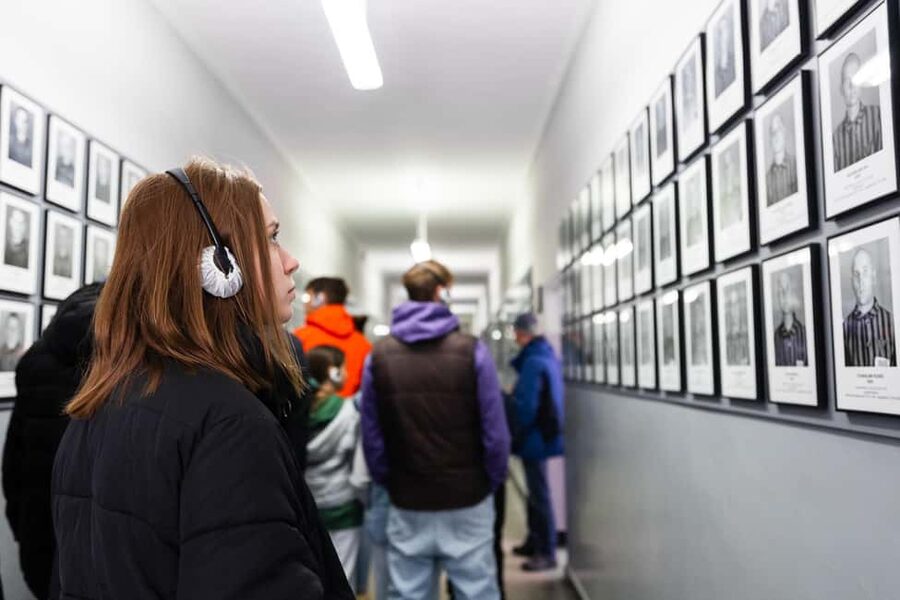
At $89 per person, this trip sits in the “serious but not luxury” range for Krakow day trips. What you’re paying for is not just transportation—it’s the full package of getting inside efficiently and understanding what you’re seeing.
Here’s what’s included that makes the value make sense:
- Pickup and drop-off in Krakow
- Air-conditioned minivan transport
- Entrance fees handled
- A local guide (licensed; live guided tour)
- Headsets
- A booklet in multiple languages
You’re also getting the benefit of skip the ticket line. In a place with strict visitor flow, that time savings is real.
If you tried to assemble this yourself, you’d likely spend time coordinating transport, tickets, timing, and interpretation. The guide is what turns “a location” into something you can actually process. And the headsets matter because they help you stay engaged instead of trying to hear over background noise.
Is it worth it for everyone? If your goal is only quick photos, you may feel the cost doesn’t match. If your goal is a structured, respectful day with context, it’s strong value.
Tour Timing, Rules, and What Can Go Wrong (So You Can Avoid It)
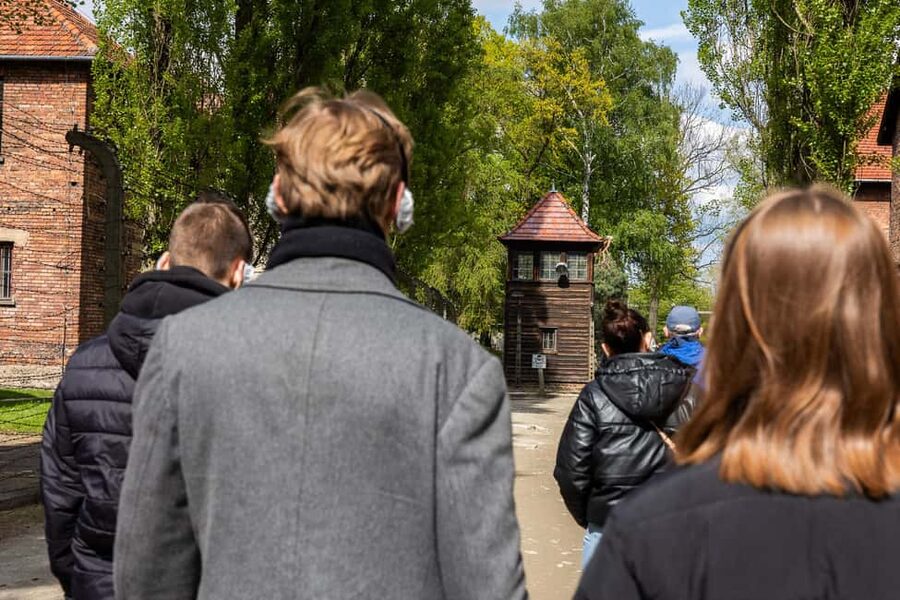
There are a few rules here that can genuinely affect your day, so take them seriously.
First: ID matching. Auschwitz entry requires providing your full name and contact details as part of booking. Entrance can be refused if your booking name doesn’t match your ID name exactly. Bring your passport or ID card, and double-check spellings.
Second: dress code. Sleeveless shirts are not allowed. It sounds simple, but it’s one of those rules that can ruin your plans if you show up unprepared. A light layer can be your friend even in mild weather.
Third: bags. Bags larger than 20x30x10 cm are not allowed in the Auschwitz museum. That means you’ll want a compact bag or plan to travel light. If you’re used to carrying a tote everywhere, practice downscaling at home.
Fourth: pacing and timing changes. The memorial controls how the tours run. Preferred tour time may change and isn’t guaranteed. If it changes, the operator contacts you the day before, and that time change doesn’t qualify for a refund.
Finally: there are prohibited items. Alcohol and drugs are not allowed, and explosive substances are not allowed either. Keep it simple.
One more “don’t make it harder” tip: arrive ready to follow instructions fast. Security processes are part of the place, and they work better when you’re prepared.
What the Guides Do Best (And Why It Matters Here)
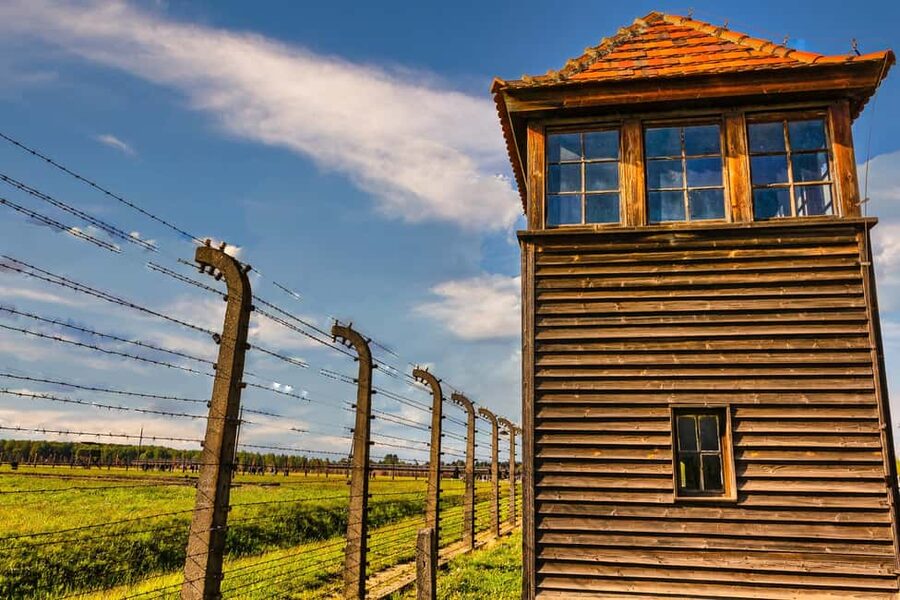
In camps like this, the guide’s role isn’t about facts for their own sake—it’s about how those facts land. A strong guide helps you listen, absorb, and understand without turning the visit into a checklist.
The tours run with licensed guidance, and the operator supports multiple languages: German, English, and French. That language range is practical for international visitors, and it also affects how much you can remember later.
Headsets included is a big deal. When you’re in a somber, rule-based environment, you don’t want to lose the narration because you’re too far from the group or you can’t hear clearly. Clear audio makes it easier to stay focused.
The day is also built for respectful flow: walking through key areas, pausing at meaningful points, then moving on. For many visitors, the best guides balance structure with sensitivity—explaining what you’re seeing while still honoring what the site represents.
Who This Tour Fits Best
This is not a casual “history highlights” stop. It’s a full-day, emotionally intense visit with strict rules and significant walking. It’s not recommended for children under 14.
So who should book it?
- Adults and teens who want a guided, respectful visit to Auschwitz I and Auschwitz II
- People who prefer organized logistics over figuring out transport and timing on their own
- Visitors who value a clear narrative and clear hearing (thanks to headsets)
If you’re traveling with mobility concerns, you’ll want to think carefully. The information you have here doesn’t specify accessibility options, but it does confirm a lot of walking and memorial-paced movement. In that case, it’s wise to contact the provider with your specific needs before booking.
Should You Book This Auschwitz-Birkenau Day Trip?
I think you should book it if you want your day to be handled responsibly and you want context while you’re there. The combination of air-conditioned transport, pickup/drop-off, entrance fees, skip-the-line entry, and headsets removes a lot of the friction that can steal energy from a visit like this.
Skip it only if you know you can’t handle the emotional weight of Auschwitz-Birkenau or if you need a flexible, low-walking tour. This is a place that asks for your attention, not a place to snack, wander, and wing it.
If you do book, pack light, bring your ID, wear something that meets the rules, and plan your Krakow schedule with a little buffer in case your preferred time shifts. Then show up ready to learn—and to be profoundly moved.
FAQ
How long is the Auschwitz-Birkenau full-day tour from Krakow?
The duration is about 7 hours.
What is the price per person for this tour?
The price is $89 per person.
Is pickup from my accommodation included?
Pickup is available and included for accommodation in Krakow (pickup is optional depending on the option you choose).
Do I need to buy tickets in advance?
Entrance fees are included, and you skip the ticket line.
Which camps are visited and are the tours guided?
You visit Auschwitz I first and then Auschwitz II (Birkenau). Both have guided tours.
What languages are available for the live guide?
The live tour guide is offered in German, English, and French.
What do I need to bring for entry?
Bring your passport or ID card.
Are there dress code rules?
Yes. Sleeveless shirts are not allowed.
Is this tour suitable for children?
It’s not recommended for children under 14.
Can the tour time change before the visit?
Yes. Preferred tour time may change and isn’t guaranteed, and the operator will contact you the day before to confirm the new time.
More Tours in Krakow
More Tour Reviews in Krakow
Visiting the Auschwitz-Birkenau Memorial
Just added: fresh Krakow reviews
Auschwitz-Birkenau Memorial Tours, compared.
 ★ 4.5Auschwitz-Birkenau Guided Tour & Hotel PickupFrom $2133,358 reviews
★ 4.5Auschwitz-Birkenau Guided Tour & Hotel PickupFrom $2129,340 reviews
★ 4.5Auschwitz-Birkenau Guided Tour & Hotel PickupFrom $2133,358 reviews
★ 4.5Auschwitz-Birkenau Guided Tour & Hotel PickupFrom $2129,340 reviews
 ★ 4.5Auschwitz Guided Tour with Optional Hotel PickupFrom $6915,280 reviews
 ★ 4.5Auschwitz-Birkenau Guided Tour with Pickup & LunchFrom $219,800 reviews
 ★ 4.5Auschwitz-Birkenau Guided Tour Pickup/Lunch OptionsFrom $2009,057 reviews
 ★ 4.7Auschwitz-Birkenau and Salt Mine Guided TourFrom $549,020 reviews
 ★ 5.0Krakow to Auschwitz Birkenau Guided Tour with Transfer and TicketFrom $368,197 reviews
 ★ 4.0Auschwitz Birkenau Tour with TransferFrom $216,134 reviews
Browse the lists this tour appears in