
REVIEW · AUSCHWITZ-BIRKENAU MEMORIAL TOURS
From Krakow: Auschwitz-Birkenau & Wieliczka Salt Mine Tour
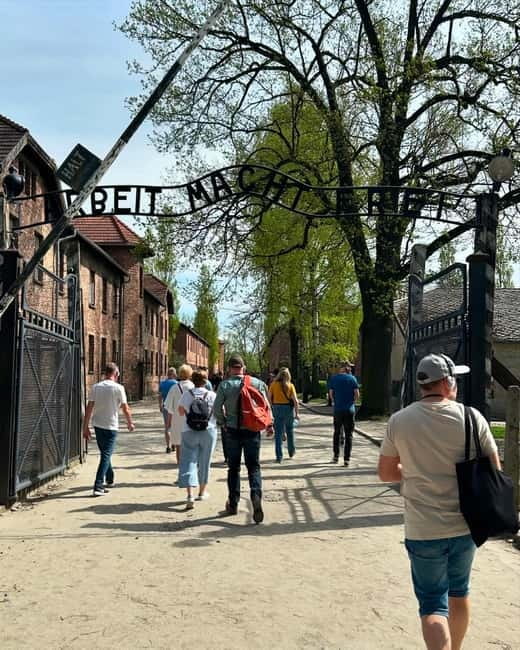
Morning can start dark and heavy. This is one day that packs in two UNESCO World Heritage Sites—Auschwitz-Birkenau and the Wieliczka Salt Mine—with a professional guide and clear audio via included headsets. I like the straightforward pacing: you first handle the solemn Auschwitz visit, then you drop 135 meters underground to a very different kind of history. One thing to plan for: the day is long, and the pickup timing can be very early depending on the start schedule.
What makes this tour especially useful is that you get a guided approach to both places, not a self-guided shuffle. You’ll also have the logistics handled: air-conditioned transport, hotel/meeting-point pickup (when selected), admission included, and ticket-line time saved. Still, Auschwitz is emotionally intense, and the salt mine isn’t ideal if you have claustrophobia—you’re descending into tight underground spaces.
In This Review
- Key things to know before you go
- A one-day UNESCO double: Auschwitz-Birkenau first, salt mine second
- Auschwitz-Birkenau: what the guided visit should help you understand
- The quiet necessities: how to handle timing, feelings, and behavior rules
- Wieliczka Salt Mine: 135 meters down, and why the underground part feels different
- Guides, headsets, and why audio matters more than you think
- Transportation from Krakow: the comfort of a single van-and-bus plan
- What’s included, what’s not, and how to budget like a local
- What to bring (and what to leave home)
- Who this tour is best for (and who should skip it)
- Should you book this Krakow Auschwitz-Birkenau and Wieliczka tour?
- FAQ
- How long is the Krakow tour?
- How much does the tour cost?
- Does the tour include pickup and drop-off in Krakow?
- Are tickets and admission included?
- Do I need to bring my own headset?
- Is food included?
- Are there restrictions on photography and bags?
- What should I wear and bring?
- Is this tour suitable for children or people with mobility/space concerns?
- Is the tour guided in English?
- Are there any timing or emotional considerations?
Key things to know before you go
- Hotel pickup and drop-off in Krakow (when selected), plus air-conditioned transport for the long drive
- Headsets included so you can actually hear the guide at both sites
- Auschwitz guided museum visit plus context for what you’re seeing (and why it matters)
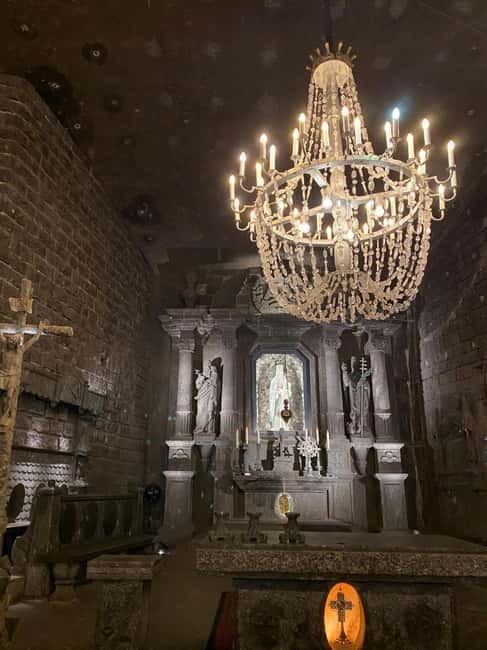
- Wieliczka descent to 135 meters underground with a guided tour of chambers, lakes, and salt carvings
- Flash photography is prohibited, and backpacks aren’t allowed inside the museums (storage is available)
- A day that can start very early—double-check your confirmed pickup time
Other guided visits to the Auschwitz-Birkenau Memorial
- From Krakow: Auschwitz-Birkenau Guided Tour & Hotel Pickup
★ 4.5 · 33,358 reviews - From Krakow: Auschwitz-Birkenau Guided Tour & Hotel Pickup
★ 4.5 · 29,340 reviews - Krakow: Auschwitz Guided Tour with Optional Hotel Pickup
★ 4.5 · 15,280 reviews
A one-day UNESCO double: Auschwitz-Birkenau first, salt mine second
This is the kind of tour that saves you from tough decision-making. Instead of figuring out two separate trips and timing the transport yourself, you’re on a single, guided route that hits two major UNESCO sites in 12 hours from Krakow. The order matters: Auschwitz-Birkenau comes first, when you’re fresh enough to take in the scale and details with the guide’s structure. Then you shift gears and head to Wieliczka, where the atmosphere changes dramatically—cooler air, salt walls, and carved rooms that feel almost theatrical, even though it’s still very much about history.
Why that sequencing is smart: Auschwitz requires mental focus and time. Even if you only think you need a few hours, you often end up wanting the extra guidance to understand what each area represents. Starting with Auschwitz also gives you daylight for the drive back, rather than ending the day as you’re emotionally and physically tired.
If you’re thinking about value, this tour bundles the big-ticket pieces: admission to both sites, professional guiding at each location, and transportation with headsets. You still need to handle food on your own, but the heavy lifting of access and audio is taken care of.
Auschwitz-Birkenau: what the guided visit should help you understand
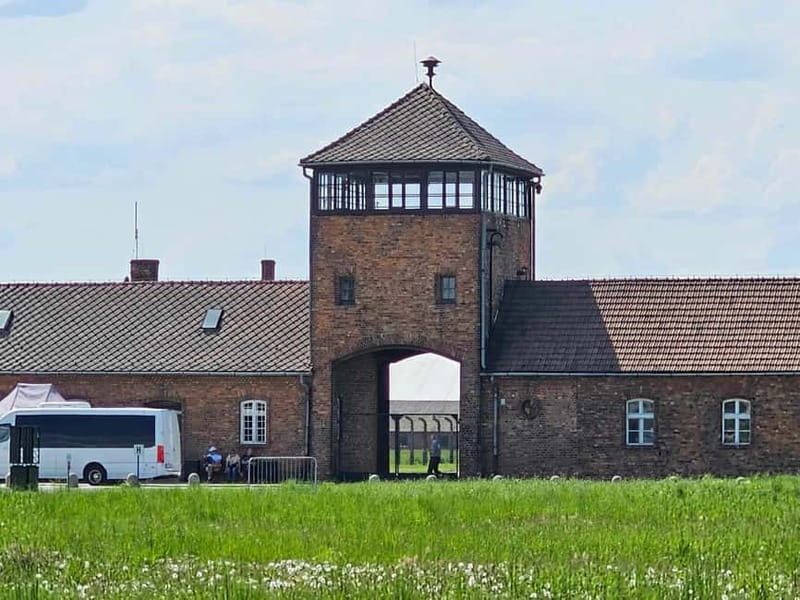
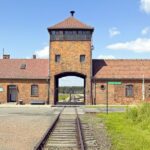
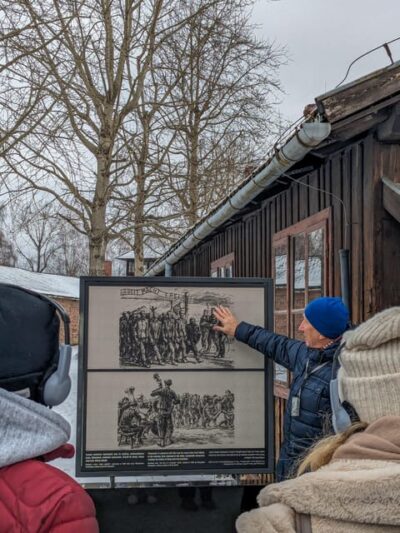
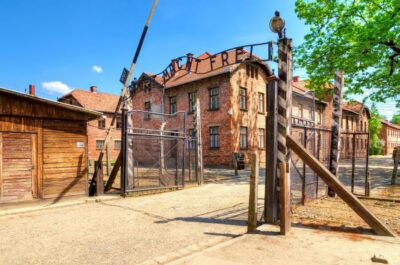
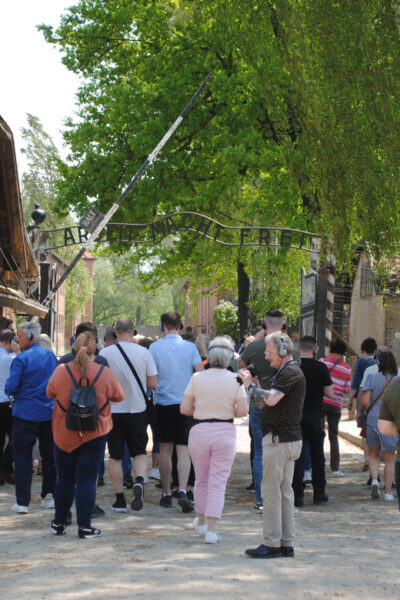
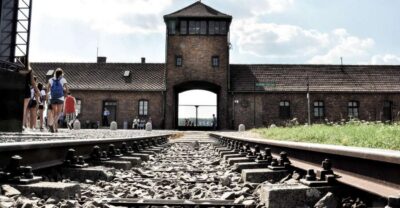
Auschwitz-Birkenau is not just a museum stop. It’s a memorial, and the experience has a set rhythm controlled by memorial staff. In practical terms, that means you’ll follow the path and timing the site sets, not your own pace. The tour description also flags something important: it’s recommended you prepare emotionally before you go. That’s not just a generic warning. Auschwitz is one of those places where your brain keeps trying to calculate what you’re seeing. Having the guide to frame it helps you stay oriented.
From a logistics standpoint, this tour includes a guided museum visit and admission, with headsets so you can hear clearly even when groups spread out. You’ll learn about the camp’s history and its significance as a symbol of the Holocaust. The museum was created in 1947, and it became a UNESCO World Heritage Site in 1979—those milestones help you understand how the site shifted from war-era reality to remembrance and education.
What I’d emphasize for your planning: wear comfortable shoes. There’s a lot of walking, and surfaces can vary from paved areas to ground-level paths. Dress for cold-weather layers too, since early starts and outdoor stretches are common on structured days like this.
One possible drawback to keep in mind: the pace and duration at Auschwitz are determined by memorial staff, and the tour provider can’t control breaks or how long you’ll spend in specific sections. If you’re the type who hates “being on someone else’s clock,” this is a good moment to practice flexibility.
The quiet necessities: how to handle timing, feelings, and behavior rules
This isn’t a tour that feels casual, even though the travel mechanics are smooth. Auschwitz has rules that you’ll want to respect so your day doesn’t get complicated. Flash photography is prohibited, and you should avoid bringing items that won’t be allowed inside. The tour notes also mention that larger bags and backpacks aren’t allowed inside the museum, though storage is available.
That matters because you don’t want to arrive under stress and then spend precious time at the entrance dealing with bag issues. Instead, plan to travel light. If you need a bag, keep it small enough for the rules that are stated, and use storage when necessary.
There’s also a timing consideration that showed up in customer feedback: pickup can be extremely early depending on the start time. One example given was a change from an originally planned 6 a.m. pickup to a much earlier time. You can’t ignore that. The best move is simple: treat your confirmed pickup time as the truth. Plan on being ready well before it.
More ways down into the Wieliczka salt mine
- Krakow: Wieliczka Salt Mine Tour with Entry Ticket★ 4.6 · 10,927 reviews
- From Krakow: Wieliczka Salt Mine Tour★ 4.6 · 9,393 reviews
- Krakow: Wieliczka Salt Mine Fast-Track Ticket & Guided Tour★ 4.5 · 5,872 reviews
- Day Trip: Auschwitz-Birkenau and Wieliczka Salt Mine from Krakow★ 4.5 · 4,282 reviews
Wieliczka Salt Mine: 135 meters down, and why the underground part feels different
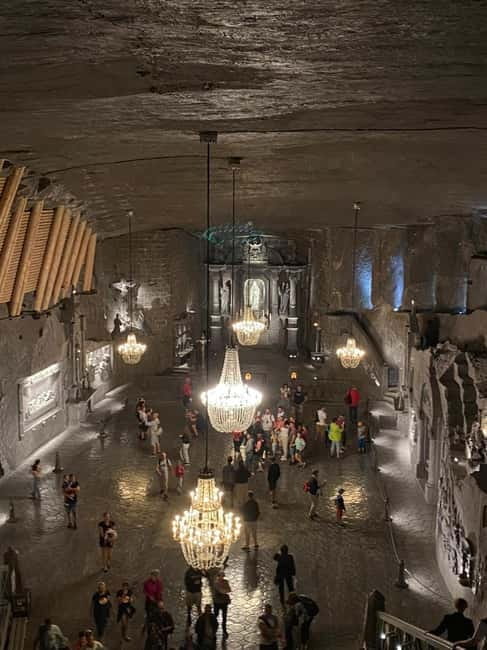
After Auschwitz, you’ll drive to the Wieliczka Salt Mine and go underground with a professional guide. The headline detail is dramatic: you descend 135 meters. That number is more than trivia—it signals the kind of environment you’ll be entering: cooler, darker, and distinctly underground. The tour explicitly recommends warm clothing, because the temperature below is lower.
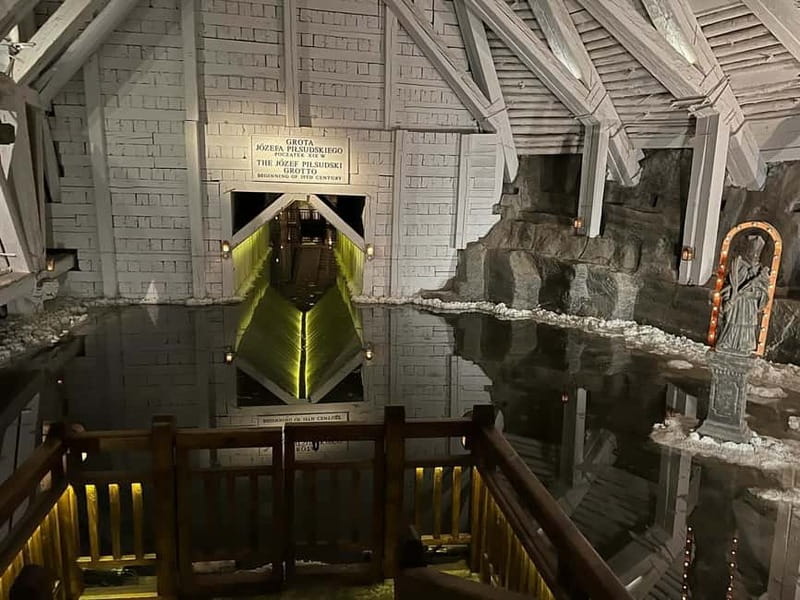
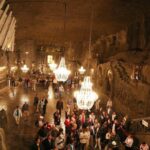
What you’ll see underground is one of the big reasons this tour is worth it. You’re not just walking past tunnels. The guided visit includes chambers carved in salt, underground lakes, majestic wooden structures, and unique salt sculptures. Those elements give you a sense of scale and craftsmanship, and they help you understand how the mine functioned over time.
The UNESCO angle is also part of the experience. Wieliczka was inscribed on the UNESCO World Heritage List in 1978, and a guided explanation helps you connect the artistry you see with the larger story of mining and human effort.
A practical note if you’re sensitive to enclosed spaces: the tour isn’t suitable for people with claustrophobia. Even if you feel okay at the surface, descending underground and spending time inside carved passageways can be psychologically challenging. If this is even a maybe, don’t treat it lightly.
Guides, headsets, and why audio matters more than you think
One of the most underrated inclusions on long guided days is headsets. When you’re at Auschwitz and then at a site like Wieliczka, it’s easy to end up stuck behind someone taller or turned away from the guide’s voice. Headsets help you follow the narrative without craning or guessing.
The tour also includes professional guides at both places, in English. That means you’re not piecing together fragments from signage. Instead, the guide’s structure helps you connect what you’re seeing to the story being told—important at Auschwitz, where context is everything, and helpful at Wieliczka, where the explanations can turn odd shapes of salt into meaningful features.
You may also find that the driver helps with timing when possible. For example, one driver named Marlena was described as arranging earlier entrance into the salt mine for the group when she could. Even when that’s not guaranteed, it’s a good reminder: be friendly, be punctual, and ask questions. A good driver will know how the day flows.
Transportation from Krakow: the comfort of a single van-and-bus plan
A 12-hour day works best when transport is dependable. This tour provides transportation by air-conditioned car and bus between Krakow, Auschwitz-Birkenau, and the Wieliczka Salt Mine. The included pickup and drop-off in Krakow also matters because it reduces the stress of finding meeting points at the end of a long day.
Still, plan for the long drive. Early starts mean you’ll likely be tired by the time you reach the salt mine. Comfort helps—bring a light layer, keep water accessible, and don’t count on stopping for food whenever you want. The tour is structured, and the stops you get are built around the official site timing.
What’s included, what’s not, and how to budget like a local
Here’s the value math in plain terms. For $279 per person, you’re getting admission to both Auschwitz-Birkenau Museum and the Wieliczka Salt Mine, guided tours at each, professional guide support, headsets, and round-trip transportation from Krakow with pickup/drop-off (when selected). Those are the big costs you’d otherwise pay separately.
What you won’t get is food and drinks. The tour notes say food and drinks are not allowed inside the museum, so your best strategy is to eat before you go into the sites and keep snacks for outside time if you’re permitted where you stop. If you budget only for entrance tickets, you’d miss that reality—so plan a full day meal plan.
Also, this tour includes admission and skip-the-ticket-line handling. That’s a practical time saver at busy times, especially when you’re dealing with a schedule that can’t easily be moved.
What to bring (and what to leave home)
This day is manageable if you pack smart. The tour’s guidance is clear, and it’s worth following:
Bring
- Comfortable shoes (a lot of walking)
- Warm clothing (it gets colder underground)
- Water
- Weather-appropriate clothing
- Passport or ID card (a copy is accepted)
Leave / avoid
- Flash photography (not allowed)
- Backpacks or larger bags inside the museums (storage is available)
If you want to travel with less hassle, go for a small day bag you can keep controlled and keep out of the no-go areas. At Auschwitz in particular, you don’t want to be fumbling when you’re tired and focused on the experience.
Who this tour is best for (and who should skip it)
This tour is a strong fit for adults who want a well-organized day hitting two UNESCO sites with guided context. It’s also a good choice if you’d rather let someone else manage the route, audio, and ticket-admission parts.
It’s not suitable for:
- Children under 10
- People with claustrophobia
- Wheelchair users
Even if you fall into one of those categories but feel “borderline okay,” take the written restrictions seriously. Wieliczka’s underground spaces and Auschwitz’s structured walkways are not places where you’ll want to negotiate your comfort on the fly.
If you’re the type who likes facts, structure, and a clear plan, this is your day. If you prefer total freedom to wander at your own tempo, you may feel constrained because the sites set the pace.
Should you book this Krakow Auschwitz-Birkenau and Wieliczka tour?
I’d book it if you want two UNESCO highlights without turning your day into a transportation and ticket puzzle. The inclusion set is practical—admission, guides, headsets, and Krakow pickup/drop-off—plus you get a clear order that starts with Auschwitz and then moves to Wieliczka. The guided approach is especially valuable at Auschwitz, where context and pacing can make the experience easier to understand, even though it’s still heavy.
I’d think twice if:
- You’re sensitive to long days with early departures and fixed site pacing
- You have claustrophobia
- You don’t like rules about bags and photography
If you’re comfortable with the emotional weight of Auschwitz, and you’re ready for a chilly underground experience, this is a solid use of a day in Krakow—one that trades stress for structure and gives you a guided way to see two big, historically important places in the same trip.
FAQ
How long is the Krakow tour?
The duration is listed as 12 hours.
How much does the tour cost?
The price is listed as $279 per person.
Does the tour include pickup and drop-off in Krakow?
Pickup and drop-off are included if you select that option and provide your pickup address when reserving.
Are tickets and admission included?
Yes. Admission to both Auschwitz Birkenau Museum and the Wieliczka Salt Mine is included.
Do I need to bring my own headset?
No. Headsets are included so you can hear the guide clearly.
Is food included?
No. Food and drinks are not included, and food and drinks are not allowed inside the museums.
Are there restrictions on photography and bags?
Flash photography is not allowed. Backpacks and larger bags are not allowed inside the museum, but storage is available.
What should I wear and bring?
Bring comfortable shoes, warm clothing, and water. Also bring a passport or ID card (a copy is accepted).
Is this tour suitable for children or people with mobility/space concerns?
It’s not suitable for children under 10, people with claustrophobia, or wheelchair users.
Is the tour guided in English?
Yes. The live tour guide is English.
Are there any timing or emotional considerations?
The pace is determined by staff of the memorial site, and the tour recommends preparing emotionally for Auschwitz-Birkenau due to the sensitive nature of the site.
More Tour Reviews in Krakow

More of the Wieliczka Salt Mine

Visiting the Auschwitz-Birkenau Memorial

Just added: fresh Krakow reviews
Auschwitz-Birkenau Memorial Tours, compared.
 ★ 4.5Auschwitz-Birkenau Guided Tour & Hotel PickupFrom $2133,358 reviews
★ 4.5Auschwitz-Birkenau Guided Tour & Hotel PickupFrom $2129,340 reviews
★ 4.5Auschwitz-Birkenau Guided Tour & Hotel PickupFrom $2133,358 reviews
★ 4.5Auschwitz-Birkenau Guided Tour & Hotel PickupFrom $2129,340 reviews
 ★ 4.5Auschwitz Guided Tour with Optional Hotel PickupFrom $6915,280 reviews
 ★ 4.5Auschwitz-Birkenau Guided Tour with Pickup & LunchFrom $219,800 reviews
 ★ 4.5Auschwitz-Birkenau Guided Tour Pickup/Lunch OptionsFrom $2009,057 reviews
 ★ 4.7Auschwitz-Birkenau and Salt Mine Guided TourFrom $549,020 reviews
 ★ 5.0Krakow to Auschwitz Birkenau Guided Tour with Transfer and TicketFrom $368,197 reviews
 ★ 4.0Auschwitz Birkenau Tour with TransferFrom $216,134 reviews
Browse the lists this tour appears in