
REVIEW · KRAKOW GOLF CART & ELECTRIC CAR TOURS
Krakow Guided Tour by Electric Golf Cart
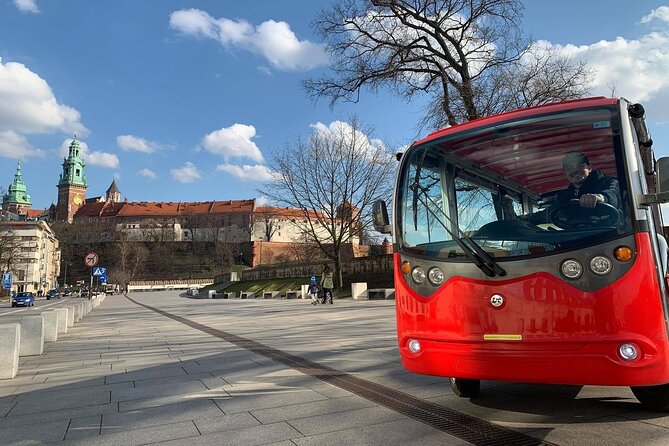
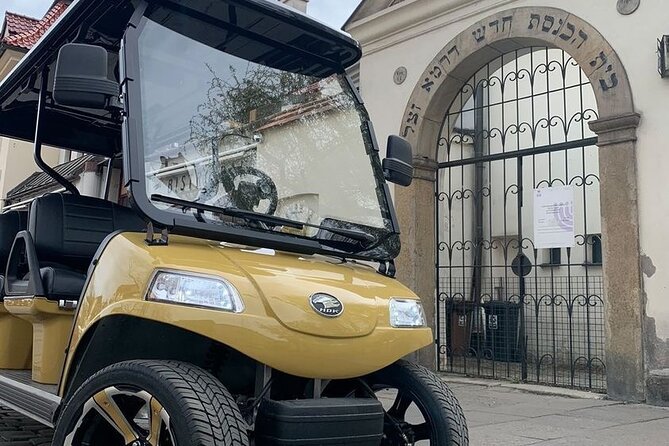
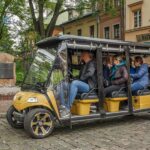
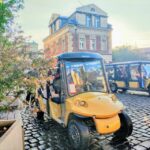
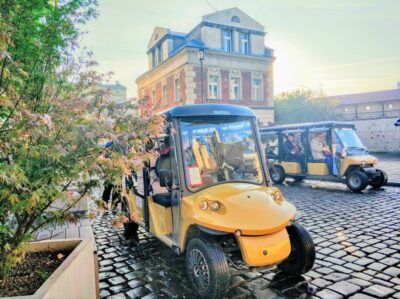
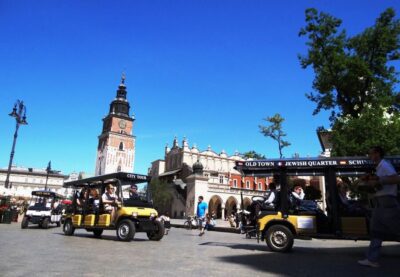
Cultural Krakow rolls by quietly. This electric golf cart tour strings together WWII memory spots, Kazimierz synagogue exteriors, and big-name sights in about 90 minutes. You get an English driver plus an English audio guide, and the ride stays easy even when the topics are heavy.
I especially love the photo-friendly pacing and the way the guide can slow down for just a few extra minutes. In the reviews, drivers like Philippe and Andrzej are called out for clear explanations and for going beyond the prerecorded track.
One thing to keep in mind: much of what you see is from the cart, because no admission is included for several key stops like the castle and synagogues. If you want hands-on museum time inside every site, this format may feel limiting.
In This Review
- Key points to know before you ride
- How the electric golf cart makes Krakow sightseeing easier
- Schindler’s Factory drive-by and the start of Krakow’s WWII map
- Market Square, zapiekanki, and the Kazimierz synagogue exteriors you can’t enter
- Podgórze stops: the ghetto wall stretch and the Eagle Pharmacy story
- Church on the Rock (Skałka) and Corpus Christi: major sites without ticket friction
- Kazimierz synagogue highlights: what you’ll see and what you won’t
- Krakus Mound, the Barbican, and Matejko Square for a strong closing
- What you should know before you book (so it feels smooth)
- Should you book the Krakow electric golf cart guided tour?
Key points to know before you ride
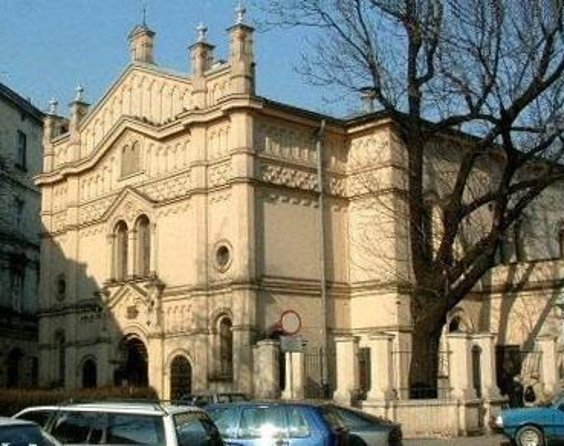
- Electric golf cart comfort: you move through the city with less walking than a classic sightseeing loop, and some carts come with blankets in cooler weather.
- English-led storytelling: you’re not stuck with only audio; the driver can add extra context and answer questions.
- Photo stops are part of the plan: you can ask for quick stops and more time for pictures, especially at major landmarks.
- Some stops are view-only: Wawel and the synagogues are not entered during the tour, so plan for exterior viewing plus commentary.
- A real food break option: the driver can help you stop near Market Square for zapiekanki (the Polish open-faced mushroom-and-cheese snack).
- Tight timing with many stops: it’s efficient, but that means you’ll be sightseeing at a “see-and-absorb” pace, not a “linger all day” pace.
More of the Old Town at electric-cart pace
- Krakow: City Sightseeing Tour by Electric Golf Cart
★ 4.5 · 3,264 reviews - Krakow: City Sightseeing Tour Eco Electric Buggy Golf Cart
★ 4.7 · 3,143 reviews - Krakow: Extended City Sightseeing Tour – Eco Buggy Golf Cart
★ 4.7 · 794 reviews
How the electric golf cart makes Krakow sightseeing easier
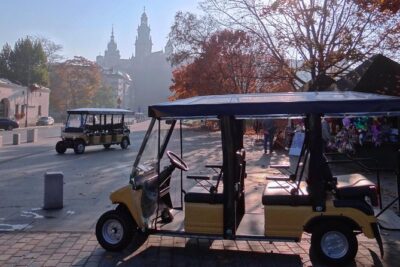
This tour is built around a simple idea: get you from place to place quickly, with fewer cobblestone hassles than you’d get on foot. The ride time is about 1 hour 30 minutes to 2 hours, so it works well on a day when you still want time for lunch or a separate self-guided walk afterward.
The format also helps you focus. When you’re bouncing between neighborhoods, a golf cart keeps the route flowing while the guide connects the dots for you—especially important in Krakow, where different layers of history sit close together.
Cost is $37.99 per person, and the value is in the guide-led route, photo time, and efficient coverage. Since admission tickets are not included for most stops, you’re paying mainly for transportation plus storytelling, not for entry fees. If you like guided context and want to see a lot without doing a stack of ticketed museums, this is a strong match.
Group size is kept reasonable (up to 47 travelers). That matters because the guide needs to manage traffic and stops, and a larger crowd can slow down photo time. You’ll also get a mobile ticket, and confirmation is sent at booking.
Finally, you should note the tour runs in English, with both an English-speaking driver and an English audio guide available during the route.
Schindler’s Factory drive-by and the start of Krakow’s WWII map
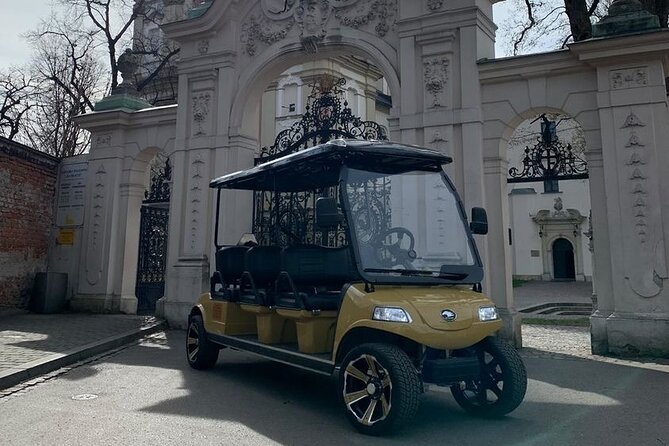
The tour’s first major stop is Fabryka Emalia Oskara Schindlera. The key detail here is what you do not do: you drive through the area associated with Schindler’s Factory without admission. That means you won’t be inside a museum as part of this specific tour, but you’ll still get the historical framing through the guide.
Right after that, the route takes you through Ghetto Heroes Square (Plac Bohaterów Getta), a place tied to executions and displacement during the liquidation of the Kraków Ghetto in 1943. The square’s name matters here. It was renamed to commemorate what happened in 1943, and the tour uses that to anchor the story before you head into more Jewish-quarter sights.
This is one of those moments where the “no-ticket” approach can still work well. When you’re not inside a museum, you need the guide to set the scene—so you can understand why you’re looking at what you’re looking at. With this tour, the guide’s narration is doing that job early, so you don’t leave the day feeling like you just drove past plaques.
Practical tip: these WWII portions can feel emotionally intense. If you prefer a lighter tone for your first day, consider pairing this with something more casual later that evening, so you don’t end up switching straight into dinner with a heavy headspace.
Market Square, zapiekanki, and the Kazimierz synagogue exteriors you can’t enter
Next you move toward Market Square and the city’s central flow. The route crosses the square, and the guide can (if you ask) stop for the so-called best snack in Krakow: zapiekanki. You typically get 5 to 10 minutes to buy and grab something quick.
This snack stop is more than food. It’s a good way to break the schedule without turning the whole tour into a long detour. You get a local taste, and you can stay focused on the rest of the route without needing a full restaurant plan.
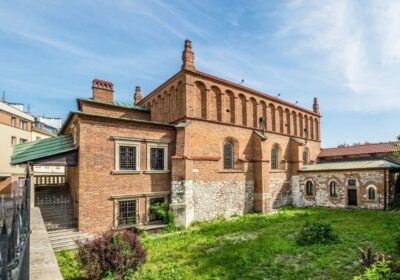
After that, the tour shifts fully into Kazimierz and synagogue landmarks—mostly from the outside. You pass the Old Synagogue (Synagoga Stara), described as the oldest synagogue building still standing in Poland, also known as the Alta Shul. You also pass the Kupa Synagogue (Synagoga Kupa), established in 1643.
Here’s the key “format reality”: the tour notes that it’s not possible to enter the synagogue buildings. So your experience is exterior viewing plus narration, not interior touring. If you want to go inside, you’ll need a separate ticketed synagogue visit or a museum-focused plan.
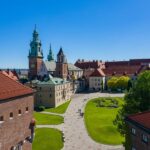
The same pattern continues with the Wawel Royal Castle. You see the castle and Wawel Hill from the golf cart, but you don’t enter. For many people, that’s still a win—Wawel is dramatic even from outside—but it does change what kind of value you’re getting from your time.
Between Wawel and the next religious stops, you also pass Plac Wolnica, once laid out to match the size and grandeur of Krakow’s Main Market Square. The tour uses the square’s dimensions and its role as a major marketplace space to explain how Kazimierz functioned as a historic hub.
Why this works: even without entering buildings, the drive-by storytelling helps you understand how neighborhoods were organized—market, community institutions, and religious spaces tied to everyday life.
A few more Krakow trips worth putting on the shortlist
- Krakow: Auschwitz-Birkenau Guided Tour with Pickup & Lunch★ 4.5 · 9,800 reviews
- Krakow: Auschwitz-Birkenau Guided Tour Pickup/Lunch Options★ 4.5 · 9,057 reviews
- Krakow: Auschwitz-Birkenau and Salt Mine Guided Tour★ 4.7 · 9,020 reviews
- Krakow to Auschwitz Birkenau Guided Tour with Transfer and Ticket★ 5.0 · 8,197 reviews
Podgórze stops: the ghetto wall stretch and the Eagle Pharmacy story
As you head toward Church of St. Joseph (Kościół św. Józefa), one of the most important “see it in front of you” moments arrives: a 12-metre stretch of the original ghetto wall. The tour points you to this memorial section, with a commemorative plaque in Hebrew and Polish.
This is one of the tour’s strengths because it’s tangible. You’re not just listening to a story; you’re looking at a physical remnant tied to displacement and the final journey to death camps. It’s a small area in terms of space, but the significance is immense, and the guide’s narration helps you read it properly.
Nearby, the route also includes the story connected to the Eagle Pharmacy Museum (located at number 18 on what was formerly Maly Rynek, then Plac Zgody). The tour narration focuses on the owner, Jozef Pankiewicz, and later Tadeusz Pankiewicz, plus how the pharmacy served both Polish and Jewish customers before the war.
This part gets personal, not just historical. During the German-imposed ghetto system in Podgórze, the pharmacy is described as the only one within the ghetto borders, and its proprietor is described as the only Pole with rights to stay in the ghetto. That’s the kind of detail that makes the route feel more human—less like a list of dates.
The church stop is noted as free admission, which is good news for your budget. It also means your time here isn’t blocked by ticket lines.
Church on the Rock (Skałka) and Corpus Christi: major sites without ticket friction
Now the tour turns toward sacred Krakow with Church on the Rock (Kosciol na Skalce), also known as Skałka. It’s free to view as part of the tour. Even though you’re not going into a museum during the cart ride, you’ll hear the story tied to the small rock outcrop and the Pauline monastery there.
The narration includes the death of Bishop Stanislaus of Szczepanów in 1079, placed in the context of King Bolesław II the Bold and the later consequences that led to canonization. It’s a quick stop, but it’s useful because it connects a landmark you can see with a specific political-religious moment in Polish history.
From there, you reach Corpus Christi Church (Kosciol Bozego Ciala), also noted as free admission. The tour description highlights the church’s construction in stages from 1340 to about the mid-15th century, its original purpose as a monastery church, and the presence of a monastic cemetery.
There’s also a historical administrative point: in 1404, King Władysław II Jagiełło gave the church to the Canons Regular of the Lateran, brought in from Kłodzko. Again, this is one of those “you wouldn’t know this on your own” details unless someone explains it while you’re there.
What to watch: both of these stops are short. So if church architecture is a main priority for you, you might want to circle back on another day for a longer look.
Kazimierz synagogue highlights: what you’ll see and what you won’t
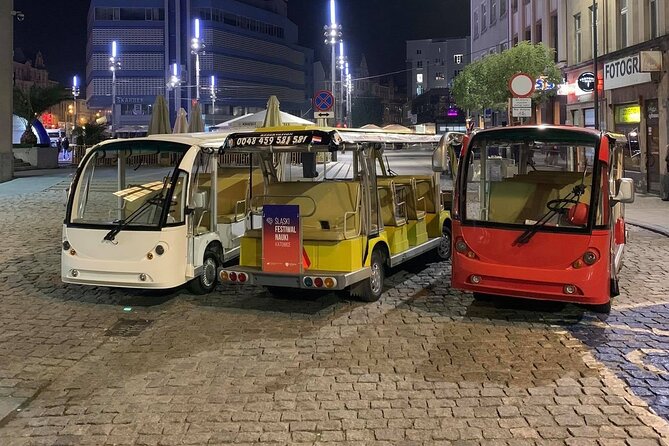
The middle of the tour spends real time connecting you to Kazimierz synagogue landmarks. The important note: during this experience, it’s not possible to enter the synagogues. So you’ll view them from outside and take in the guide’s explanation of what each one represents.
You’ll pass the Tempel Synagogue, described as a major worship site and a center of Jewish culture with concerts and meetings (especially during the Festival). Next comes the Izaak Synagogue (Synagoga Izaaka) from 1644, named for Izaak Jakubowicz, a banker to King Ladislaus IV and designed by Italian-born architect Francesco Olivierri.
After that, the route includes the High Synagogue, an inactive Orthodox synagogue from the 16th century. The tour notes it’s called the Tall Synagogue because of its height and because the prayer hall was upstairs. The guide uses that to explain how architecture served community needs and identity.
You’ll also pass the Wolf Popper Synagogue (Synagoga Poppera / Bociana), described as one of the most splendid houses of prayer in the old Jewish quarter of Kazimierz. The narration includes details about the entrance decoration with openwork doors showing four animals (eagle, leopard, lion, and buck deer) and what they symbolized. It also mentions the building’s later use as a bookshop and art gallery in the women’s area upstairs.
During this same stretch, the tour narration also shares a biographical thread tied to Augusta – Gitte (Gitel) Shaindel Rubinstein and mentions that philosopher Martin Buber was her cousin. That’s a good example of how the tour is not only about stone and dates; it tries to put real people behind the city’s story.
Finally, you reach Remuh Synagogue (Synagoga Remu). This one is also tied to Rabbi Moses Isserles (ReMA), and the tour notes that Remuh is the smallest of the historic synagogues in Kazimierz and is one of two active synagogues in the city. Admission isn’t included here, and again, you’re not entering during the tour, but the guide’s context helps you understand why this building still matters today.
If you’re choosing between formats: this electric cart route is best when you want a fast, guided overview of many landmarks. If your top goal is interior viewing, you’ll probably want to book separate synagogue or museum tickets.
Krakus Mound, the Barbican, and Matejko Square for a strong closing
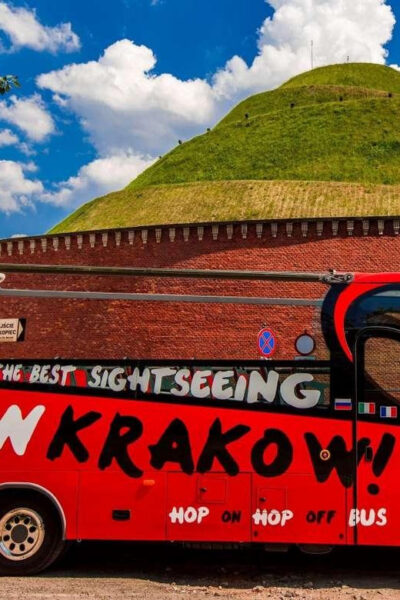
The last stretch shifts to a lighter pace and better city views. Krakus Mound (kopiec Krakusa) is free and typically gives you about 20 minutes. The tour allows you to go up the hill and see the panorama of Krakow.
The mound’s story is explained through Krakus legend and the idea of creating a hill to rule over the landscape. Even if you don’t care about legends, the practical value is the same: you get open-air perspective and a break from the tight urban streets.
After the view, the tour passes the Barbican, described as a medieval defensive construction component connected to city fortifications. You get about 1 minute here—more a quick “see it, know it” stop than a time to explore.
Then you reach Matejko Square for a quick look at the Grunwald Monument, an equestrian statue of King Władysław II Jagiełło. The tour description includes details about its erection for the 500th anniversary of the Battle of Grunwald and its later destruction and reconstruction. You also see the Tomb of the Unknown Soldier, noted as being in front of the monument.
This ending works well because it returns to a more public, less somber theme after the ghetto and synagogue-heavy middle.
What you should know before you book (so it feels smooth)
First, pack for a short, efficient schedule. This tour includes time for photos, and you can ask for quick extra stops, but it’s still a compact route. Also remember that bottled water and snacks are not included. The zapiekanki break is optional and you’ll buy the snack yourself.
Second, be ready for the format limit: several top landmarks are not entered. Wawel and the synagogues are view-only during this tour. So treat it like a guided route that helps you understand what you’re seeing, not like a museum ticket bundle.
Third, manage expectations around pickup points. One of the reviews flagged a changed pickup location that caused a delay. I’d handle this by checking your exact meeting instructions right before you go, so you’re standing in the right place from the start.
Finally, lean into the guide’s flexibility. In the reviews, the drivers are praised for being accommodating with short extra picture stops and for taking the time to explain history. If there’s a spot you want to linger near, ask early—don’t assume it will happen automatically.
Should you book the Krakow electric golf cart guided tour?
Book it if you want an easy, guided way to cover a lot of Krakow in under two hours, especially if you like history explained while you’re moving. It’s a strong choice for first-time visitors, for people who don’t want to manage multiple ticketed entries, and for anyone who appreciates context over checklists.
Skip or supplement it if your priority is interior access—like going into synagogues or the castle—because this tour is built for exterior viewing. It’s also a good idea to pair it with a separate plan if you want deeper museum time.
If you’re the kind of traveler who enjoys asking questions and getting a thoughtful response, this route can feel especially rewarding. The combination of electric-cart comfort, English storytelling, and practical photo stops makes Krakow feel understandable fast—even when the topics are challenging.
If you want, tell me your travel dates and what you care about most (WWII history, Jewish heritage, architecture, food), and I’ll suggest how to pair this with one or two ticketed add-ons for the best day.
More Tours in Krakow
More Tour Reviews in Krakow
The Old Town by Electric Cart
Just added: fresh Krakow reviews
Krakow Golf Cart & Electric Car Tours, compared.
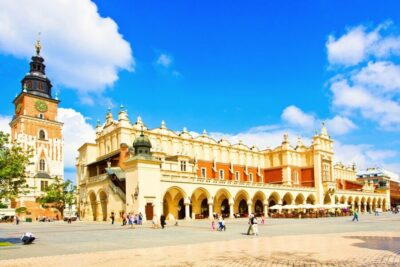 ★ 4.5City Sightseeing Tour by Electric Golf CartFrom $133,264 reviews
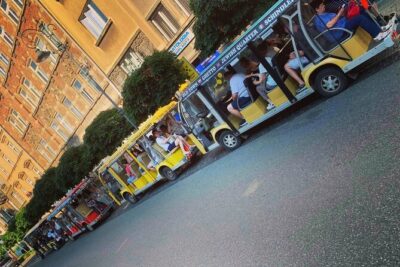 ★ 4.7City Sightseeing Tour Eco Electric Buggy Golf CartFrom $133,143 reviews
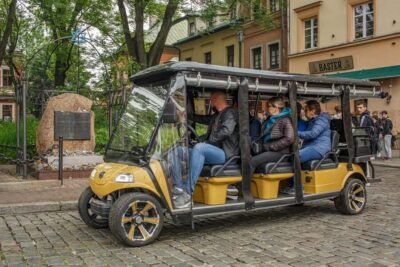 ★ 4.7Extended City Sightseeing Tour – Eco Buggy Golf CartFrom $13794 reviews
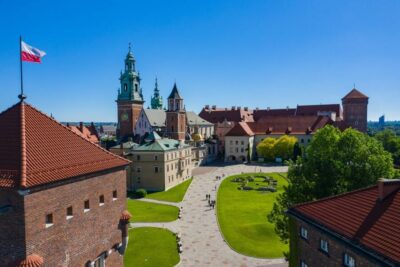 ★ 4.4Electric Car Sightseeing TourFrom $25450 reviews
 ★ 4.6Jewish Quarter and Ghetto Electric Golf Cart TourFrom $34348 reviews
★ 4.5City Sightseeing Tour Eco Electric Buggy Golf CartFrom $28311 reviews
★ 4.6Jewish Quarter and Ghetto Electric Golf Cart TourFrom $34348 reviews
★ 4.5City Sightseeing Tour Eco Electric Buggy Golf CartFrom $28311 reviews
 ★ 5.0Krakow Grand City Tour by golf cart – All 3 districtsFrom $27311 reviews
 ★ 4.9City Tour by Electric Golf CartFrom $36310 reviews
Browse the lists this tour appears in