
REVIEW · TOURS
Kraków Holocaust Tour
Kraków’s ghetto feels real, not staged. This tour is compelling because the area survived in near-original form, so you walk through the same streets and institutional spaces that still echo the Nazi occupation period. I like that it covers the entire Jewish ghetto and not just a few highlight stops, and I also like how the guide is a history and geography graduate who keeps the story grounded in how the system worked. One thing to consider: it’s emotionally heavy, so if you prefer lighter sightseeing, this might feel like a lot in just two hours.
The biggest practical upside is that you get a full “map in your head” fast: how the Nazis structured life inside the ghetto and what daily routines looked like under that control. The pharmacy museum stop, the Pharmacy under the Eagle, is a strong finish because it ties the broader story to a specific, memorable place. Still, you should wear comfortable shoes, because even a short tour covers enough walking to matter.
In This Review
- Key moments you’ll actually care about
- First stop: why this part of Kraków hits differently
- The guide and approach: Spanish, focused, and built for clarity
- Walking the ghetto wall fragments and the story they signal
- Ghetto Heroes Square (Square of Chairs): a landmark you’ll remember
- Key institutions and everyday control: how the system worked
- Old doors and the “small details” that carry big meaning
- Why the pharmacy museum finish matters: the Pharmacy under the Eagle
- Price and value: $16 for two hours with a historian
- Who this tour suits best (and who should skip it)
- Practical tips before you go
- Should you book the Kraków Holocaust Tour?
- FAQ
- How long is the Kraków Holocaust Tour?
- How much does the tour cost?
- What language is the guide?
- Where do we meet?
- Is the tour wheelchair accessible?
- What should I bring?
- Is food or drinks included?
Key moments you’ll actually care about
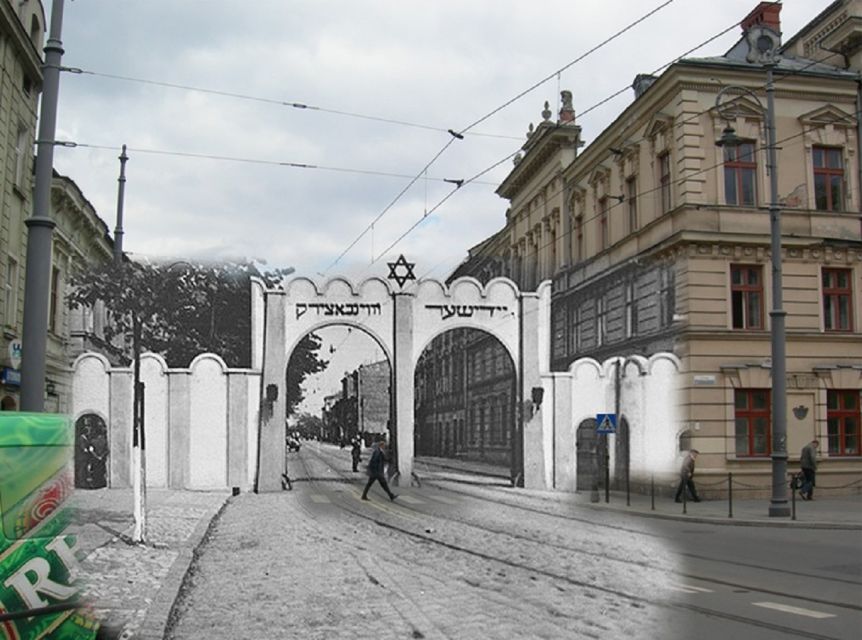
- Near-original ghetto streets and buildings help you understand what life looked like from the ground level
- A tour of the entire ghetto means fewer gaps in the story and less guesswork afterward
- Wall fragments and the Square of Chairs give you physical landmarks for moments of resistance and suffering
- Hands-on explanation of the ghetto system: purpose, organization, and how it controlled daily life
- Stops connected to institutions, like Judenrats, hospitals, a prison, factories, and orphanages
- Pharmacy under the Eagle as a museum-style conclusion that sticks
Weighing this one up? Here is how it sits next to a few Krakow trips travellers book most.
- From Krakow: Auschwitz-Birkenau Guided Tour & Hotel Pickup
★ 4.5 · 33,358 reviews - From Krakow: Auschwitz-Birkenau Guided Tour & Hotel Pickup
★ 4.5 · 29,340 reviews - Krakow: Auschwitz Guided Tour with Optional Hotel Pickup
★ 4.5 · 15,280 reviews
First stop: why this part of Kraków hits differently
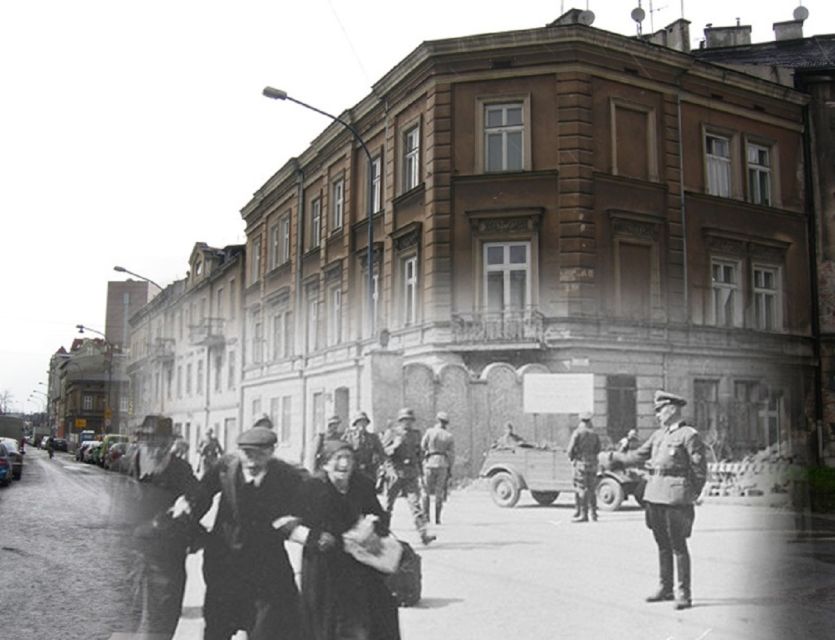
Kraków’s Jewish ghetto isn’t just a historical area. A large part of it has remained in almost the same appearance as at the end of the war, including many houses and important organizational buildings. When the setting still looks like 1941–1943, the story doesn’t have to rely on imagination. You can point to spaces and say, in effect, this is what the physical world was like when Nazi policies were tightening day by day.
That sense of place is exactly why this tour works. You’re not only learning facts; you’re learning them where the facts happened. I especially appreciate when a guide doesn’t rush past the “why.” Here, the tour focuses on what the ghettos were for during the Nazi occupation and what characteristics Kraków shared with other ghettos in Poland, so you leave with context rather than a list of sad scenes.
The guide and approach: Spanish, focused, and built for clarity
This is a live guided tour in Spanish led by a guide with a background in geography and history. The reviews you’ll find for this experience repeatedly flag that the guide is not only informed but also makes the talk easy to follow and not overly dry. That matters, because Holocaust history can become repetitive if it’s delivered as a sequence of dates and locations.
What you want is structure: an explanation of purpose, an explanation of system, then real-world examples tied to specific spots. This tour does that by walking through the ghetto’s main physical and institutional elements—walls, squares, organizational buildings, and the sites where community life was strained and managed.
Walking the ghetto wall fragments and the story they signal
One of the first things you’ll see on the ground is the two fragments of the wall. Even if they look small compared to what a full barrier would have been, they’re powerful because they’re physical leftovers—proof that the space was enclosed and controlled. Walls don’t just block movement; they also define identity and vulnerability. When a guide points out what the barrier meant for daily life, you start to understand why “inside” and “outside” became such a brutal divide.
Practical note: don’t treat wall fragments like static monuments. Let the guide’s framing do the work. If you ask yourself what you’d do if your routes were limited, you’ll get more out of the walk than if you only look and move on.
- Krakow: Wieliczka Salt Mine Tour with Entry Ticket★ 4.6 · 10,927 reviews
- Krakow–Zakopane: Cable Car, Chocholow Baths, Cheese & Vodka★ 5.0 · 10,720 reviews
- Krakow: Auschwitz-Birkenau Guided Tour with Pickup & Lunch★ 4.5 · 9,800 reviews
- From Krakow: Wieliczka Salt Mine Tour★ 4.6 · 9,393 reviews
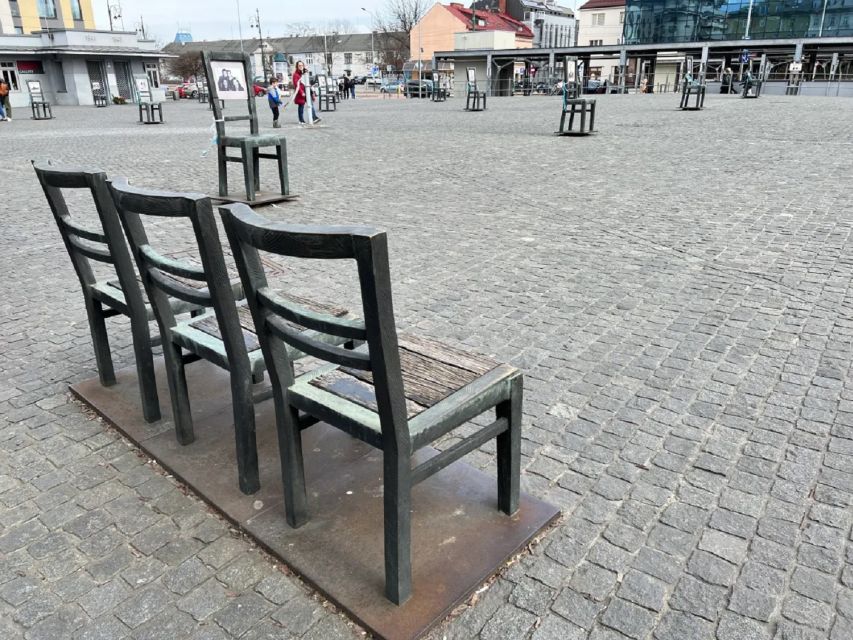
Ghetto Heroes Square (Square of Chairs): a landmark you’ll remember
Another key stop is Ghetto Heroes Square, also known as the Square of Chairs. This is the kind of place that often makes people stop and get quiet—not because it demands dramatic acting, but because it gives you a focal point. Landmarks like this help you keep the story from blurring into a long street walk.
Why it matters: when you’re learning about persecution and resistance, you need anchor points for meaning. Squares and memorial-shaped spaces are designed for reflection, and a good guide helps you connect the symbolism to what was happening nearby in the ghetto’s daily life.
Key institutions and everyday control: how the system worked
The tour does something I value a lot: it explains the ghetto as an organized system, not a vague idea. As you move through the area, you’ll encounter the types of places where Nazis controlled the population through administration and infrastructure. Expect stops connected to:
- Judenrats (internal Jewish councils forced into complex roles under Nazi rule)
- Labor organizations that shaped how people were assigned work
- Hospitals and a prison, showing how health and punishment were tied into the system
- Synagogue and factories, showing community life alongside economic extraction
- Orphanages, reminding you that children’s lives were not spared by the regime’s brutality
- Important buildings linked to intellectual meetings, resistance, and police agencies
The value here is that you see how the ghetto’s structure touched everything: planning, labor, health, worship, education for children, and enforcement. Instead of learning a general description of Nazi policy, you watch the system take shape block by block.
A possible drawback: in two hours, the tour can only cover so much. Even so, the advantage is that it’s an in-depth walk of the entire ghetto layout. If you want super detailed biographies of specific individuals, you might need a longer follow-up elsewhere. But for understanding how the ghetto functioned day to day, this length is efficient.
Old doors and the “small details” that carry big meaning
The tour also includes the location of old doors. That might sound minor until you realize how gates and access points define life in a controlled space. Doors are thresholds: where people enter, where they’re checked, where separation becomes routine.
When you stand at places like this, you start thinking about the daily rhythms the Nazis imposed—movement that wasn’t free, access that depended on rules, and the way ordinary life shrank into permission and paperwork.
Why the pharmacy museum finish matters: the Pharmacy under the Eagle
You’ll end with a visit to the famous Pharmacy under the Eagle, described as one of the city’s most important museums on this subject. Ending here is smart because museums can slow you down and help you process what you just walked through.
The ghetto system was built for control and exploitation. A museum stop gives you a chance to connect the broader story to tangible artifacts and a specific site. Even if you already know some background, the pharmacy setting helps many visitors feel how survival, scarcity, and everyday problem-solving played out under extreme pressure.
If you’re deciding whether to add time for museum viewing after the walk, I’d suggest giving yourself that chance. A good guide can point you toward what to notice, but time on your own helps the details land.
Price and value: $16 for two hours with a historian
At $16 per person for a 2-hour tour, this is priced like a budget activity—but it doesn’t feel cheap in content. You’re paying for two things that are hard to replicate on your own:
First, you get a structured route through the entire ghetto, not just a few photo-friendly corners. Second, you get an explanation of how the Nazi ghetto system worked, led by a guide trained in history and geography.
Is it the only way to learn Kraków’s ghetto story? No. But it’s a good value if you want a guided overview that actually ties physical locations to the logic of the occupation. In other words: you’re buying clarity, not just walking.
One practical consideration: the tour doesn’t include food or drinks. If you’re combining this with other Kraków sights, plan a meal before or after so you don’t lose energy mid-story.
Who this tour suits best (and who should skip it)
This is ideal if you want:
- A fast, coherent understanding of how the Kraków ghetto operated
- A guided walk that covers the full area, with multiple institution-type stops
- Spanish language comfort and a guided historical explanation that stays organized
You might think twice if:
- You’re in Kraków for light, easy sightseeing. This tour deals with persecution, suffering, and control.
- You need a super long, specialty deep-dive on individual events. This is strong for system and layout, but it’s still only two hours.
For most people, though, it’s a high-impact way to understand why Kraków’s ghetto area is considered one of the best-preserved places to learn how Nazi thought shaped real geography.
Practical tips before you go
- Wear comfortable shoes. The ghetto streets can be tiring even on a short tour.
- Bring a pace that matches the topic. If you need moments to catch your breath or process, plan to do so.
- Since it’s Spanish, check that you’re comfortable following live narration at walking speed.
- The meeting point uses a visual cue: the guide will carry a gray umbrella. It’s an easy way to find the group.
Should you book the Kraków Holocaust Tour?
If you want a tour that respects the full geography of Kraków’s Jewish ghetto and explains how the system worked, I think this is a smart booking. The biggest reasons: it’s designed as a complete ghetto overview, it uses the preserved setting for impact, and the guide approach (history + geography, with strong clarity) helps you process the material without getting lost.
Book it if you’re ready for a serious, structured visit that covers far more than typical quick stops. Skip it only if you’re looking for entertainment-style sightseeing or you know you’re not up for emotionally heavy history right now.
FAQ
How long is the Kraków Holocaust Tour?
It lasts 2 hours.
How much does the tour cost?
The price is $16 per person.
What language is the guide?
The live guide speaks Spanish.
Where do we meet?
The meeting point is identified by the guide carrying a gray umbrella.
Is the tour wheelchair accessible?
Yes, the tour is listed as wheelchair accessible.
What should I bring?
Wear comfortable shoes.
Is food or drinks included?
No. Food and drinks are not included.
More Tours in Krakow
More Tour Reviews in Krakow

Just added: fresh Krakow reviews
Tours, compared.
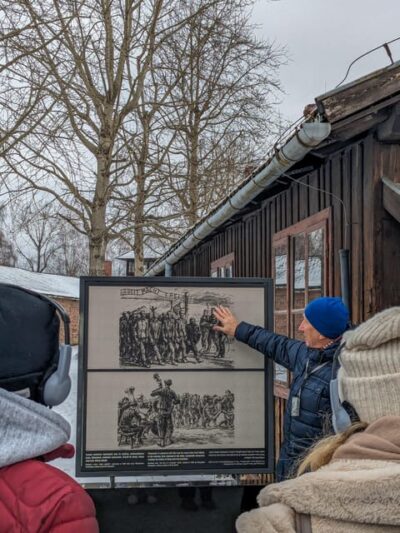 ★ 4.5Auschwitz-Birkenau Guided Tour & Hotel PickupFrom $2133,358 reviews
★ 4.5Auschwitz-Birkenau Guided Tour & Hotel PickupFrom $2129,340 reviews
★ 4.5Auschwitz-Birkenau Guided Tour & Hotel PickupFrom $2133,358 reviews
★ 4.5Auschwitz-Birkenau Guided Tour & Hotel PickupFrom $2129,340 reviews
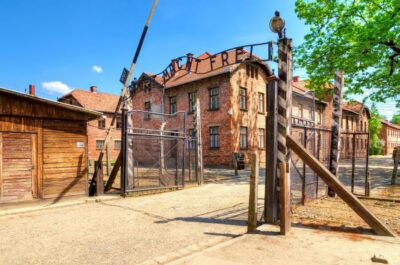 ★ 4.5Auschwitz Guided Tour with Optional Hotel PickupFrom $6915,280 reviews
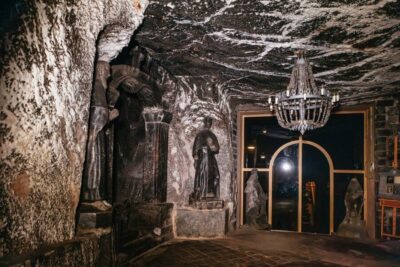 ★ 4.6Wieliczka Salt Mine Tour with Entry TicketFrom $3310,927 reviews
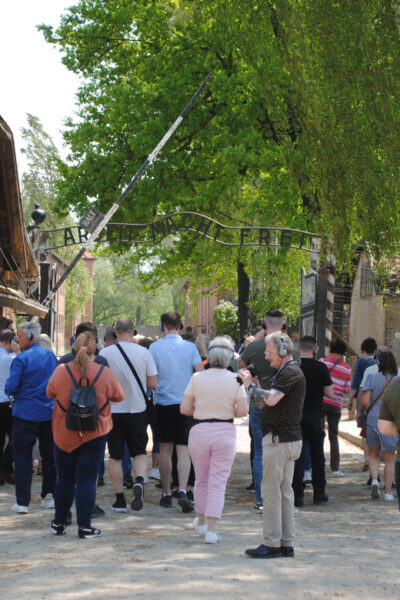 ★ 4.5Auschwitz-Birkenau Guided Tour with Pickup & LunchFrom $219,800 reviews
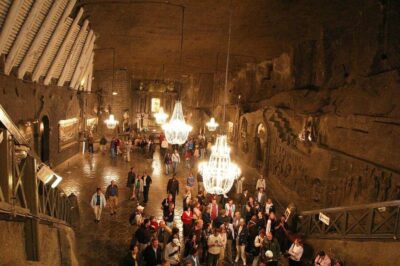 ★ 4.6Wieliczka Salt Mine TourFrom $339,393 reviews
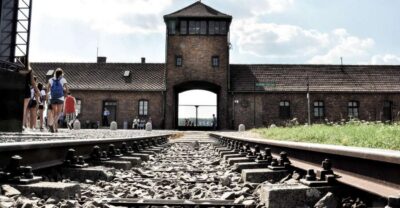 ★ 4.5Auschwitz-Birkenau Guided Tour Pickup/Lunch OptionsFrom $2009,057 reviews
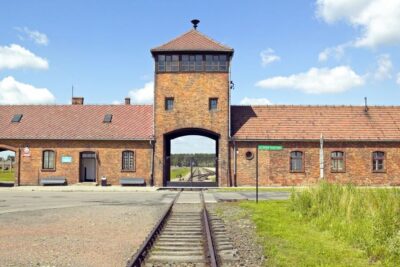 ★ 4.7Auschwitz-Birkenau and Salt Mine Guided TourFrom $549,020 reviews