
Gliding through Krakow beats walking every time; this electric car tour strings together Old Town UNESCO sights, Kazimierz, and optional WWII areas with a smooth ride. You also get an English-speaking driver plus a licensed-guide style commentary through an audio system, so you’re not just looking at buildings—you’re understanding them as you pass.
I love the way this tour fits real schedules. In 1–2 hours, you can aim for Old Town border monuments, spend time on the Kazimierz Jewish Quarter, and, if you want, include Podgórze’s ghetto area—then you’re dropped back at your hotel or another central spot on request.
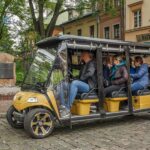
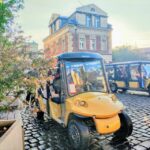
One thing to consider: the car is small and enclosed like a compact golf-cart setup, so photo opportunities can be tighter from inside, and the experience leans on headset commentary rather than long stops.
In This Review
- Key things you’ll notice right away
- Electric Car Sightseeing in Krakow: Smooth, Efficient, and Actually Useful
- Hotel Pick-Up and Drop-Off: Why This Tour Feels Less Like a Production
- UNESCO Old Town Monuments: What You Get From Barbakan to Wawel
- Getting Your Bearings in Krakow: How the Route Helps You Remember the City
- Kazimierz Jewish Quarter: Synagogues, Cobblestones, and Pre-War Streets
- Podgórze District and the WWII Ghetto Area: A Serious Add-On
- 1–2 Hours, Your Way: How to Choose What You’ll Actually See
- Price and Value: Is $153 per Group Worth It?
- What I’d Bring and How I’d Prepare
- Who This Tour Suits Best (and Who Might Prefer Another Style)
- Should You Book This Krakow Electric Car Private City Tour?
- FAQ
- How long is the Krakow Private City Tour by Electric Car?
- What parts of Krakow does the tour cover?
- Is hotel pick-up included?
- What languages are available on the audio guide?
- Is this tour private?
- Can I cancel for a full refund?
Key things you’ll notice right away
- UNESCO Old Town sights on a short route: Barbakan, Florian’s Gate, and Wawel Castel area views from the city streets
- Licensed-guide commentary via audio: clear explanations as you move, not just a printed script
- Kazimierz Jewish Quarter focus: synagogues, pre-war houses, and cobblestone lanes in one planned block
- Optional WWII Podgórze stop: you can add the ghetto-location district if your timing allows
- English driver, multilingual audio guide: Spanish, French, German, Italian, Polish, Russian, Swedish, plus English
- Private or small-group pacing: designed for up to 4 per group, with flexibility on what you see
The whole city in one go: more highlights runs
- Krakow: City Sightseeing Tour by Electric Golf Cart
★ 4.5 · 3,264 reviews - Krakow: City Sightseeing Tour Eco Electric Buggy Golf Cart
★ 4.7 · 3,143 reviews - Krakow: Sightseeing Cruise by Vistula River
★ 4.1 · 1,897 reviews
Electric Car Sightseeing in Krakow: Smooth, Efficient, and Actually Useful
Krakow’s center rewards slow wandering—no doubt. But if you only have a limited window, an electric-car city tour is a smart cheat code. You still get street-level views, but you’re not spending your energy climbing hills or weaving through crowds. The pace feels calm and practical, which matters when you’re trying to cover a lot without turning your day into a sprint.
What really makes this work is the combination of movement plus commentary. You’ll ride through key areas around the Old Town, and the audio guide system helps you connect what you’re seeing—gates, walls, monuments, and royal-era architecture—with what those buildings meant. Instead of collecting random landmarks, you get a thread.
Another plus: the car setup keeps it easy to focus on people and buildings while you’re traveling. You’re not waiting at every corner for a walking-only guide rhythm. And because it’s private or small-group, you can usually steer toward your priorities—Old Town monuments, Jewish history in Kazimierz, or the WWII ghetto district in Podgórze.
Hotel Pick-Up and Drop-Off: Why This Tour Feels Less Like a Production
I like tours that start and end where you already are. With this one, you get hotel pick-up and drop-off, plus you can ask to be left back in the city center. That sounds like a small detail, but it changes how the day feels. You don’t burn time relocating to a meeting point, and you don’t have to “plan your plan” around transit.
Once you’re in the car, the English-speaking driver keeps everything moving. Then the audio commentary (in your selected language) handles the historical explanations. If you prefer a quieter ride, you can let the headset do the work. If you like questions, the driver can still be your human interface.
Also, it’s built for short stays. This matters in Krakow, where your energy can disappear fast if you pack too much into one day. A 1–2 hour window is long enough to get context, but short enough that you still have flexibility afterward—maybe for a meal, a museum, or simply walking where the route left you curious.
UNESCO Old Town Monuments: What You Get From Barbakan to Wawel
The Old Town piece of this tour is about recognition. You’ll pass or view major structures tied to the city’s UNESCO core and Krakow’s medieval and Renaissance glow. In a short time, you’ll connect the “Krakow look” you’ve seen in photos to real street layouts and defensive-era architecture.
Here’s what to expect along the Old Town border concept:
- Barbakan: a fortified structure that sets the tone for Krakow’s old defensive mindset
- Florian’s Gate: one of the city’s signature entry points and a key landmark people use as a visual anchor
- Grunwald Monument: a major city monument that helps you place Krakow in the broader national story
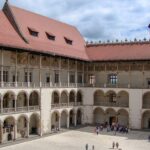
- Wawel Castel area: the royal vibe—when you see the surroundings around Wawel Castle, the scale of Krakow’s historical importance hits fast
- Planty Park: the green ring that frames the Old Town area and gives you a sense of how the city grew outward
The big value here is that you learn what you’re looking at while you’re looking at it. When you only walk, it’s easy to see impressive things but miss the “why.” When you ride with commentary, the landmarks start to make sense as a system: gates and walls for protection, monuments for identity, royal sites for power.
The main drawback is also part of the trade: because you’re not doing long stops at each landmark, you won’t get the same up-close photo time you’d have on a walking tour. I’d still treat this as the best first pass if you want context fast.
Just your group: more private Krakow days
- Skip-the-Line Wawel Castle Chambers Private Tour★ 4.7 · 262 reviews
- Krakow: Old Town Highlights Private Walking Tour★ 4.9 · 79 reviews
- Auschwitz Birkenau: Complete Private Tour★ 4.5 · 51 reviews
- Krakow Private Walking Tour★ 5.0 · 44 reviews
Getting Your Bearings in Krakow: How the Route Helps You Remember the City
Even if you don’t know Krakow’s history yet, this route is designed to build memory hooks. You pass key points that are easy to re-find later. When you finish, you’ll have mental landmarks: gates, walls, Wawel’s presence, and the Old Town ring around the center.
This matters because Krakow can feel like a maze until you connect a few big references. If you’ve ever wandered and thought, I’m sure this looks familiar, that’s what you’re trying to avoid. With a tour like this, you’re setting yourself up for the rest of your time in town.
One extra practical detail: headsets can make the ride feel very focused. If you’re the kind of traveler who likes to keep your eyes on the street instead of reading every sign, you’ll probably appreciate that the commentary is steady as you move. You’re free to look up at stonework, gates, and city lines while the explanation comes through clearly.
Kazimierz Jewish Quarter: Synagogues, Cobblestones, and Pre-War Streets
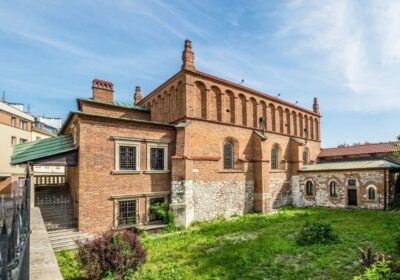
Kazimierz is where this tour turns from “architecture and monuments” into “place and people.” You’ll go into the Kazimierz district (the Jewish Quarter area) where Jewish heritage was preserved, and you’ll get to admire synagogues, preserved pre-war houses, and old cobblestone streets.
This is one of the most important choices you can make on the tour. You could rush Old Town highlights, but Kazimierz is what often gives visitors the feeling that Krakow isn’t just a pretty old city—it’s a layered one.
What you should watch for while you’re there:
- Synagogues and religious architecture: even from street level, they help you understand how community life was structured
- Pre-war houses: preserved buildings that keep the scale and texture of daily life present
- Cobblestone streets: they change the walking rhythm, and you’ll feel how movement through the neighborhood shaped the atmosphere
The tour format also helps keep you respectful of the subject. You’re not wandering randomly. You’re guided into the right area with commentary prepared by a licensed guide, so you can focus on the story rather than guessing at meanings.
I’ll note a practical point: with this kind of transit-heavy tour, you may not cover every lane in Kazimierz. But you’ll still get the sense of where the neighborhood sits in Krakow’s larger story—and that’s what makes a short visit work.
Podgórze District and the WWII Ghetto Area: A Serious Add-On
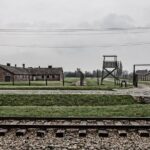
If you want the WWII context, you can choose to go to Podgórze District, the area where Krakow’s ghetto was located during World War II. This part isn’t optional in the sense that the facts are important, but it’s optional in the sense that your route choice can include it based on your time and emotional readiness.
Why this addition can be powerful: it places the story of Krakow’s Jewish community into geography. Kazimierz connects to preserved heritage, while Podgórze connects to what happened during the war. Together, you get a more complete picture of continuity and rupture.
When you’re adding this stop, treat it as a focus, not a checkbox. You’ll likely want a calmer mindset as you move through the district. If your goal is memory-making, this is the portion where you’ll come away carrying something that’s less visual and more reflective.
1–2 Hours, Your Way: How to Choose What You’ll Actually See
The duration is flexible: the tour runs 1–2 hours, and you can choose your destinations at will. That’s a big deal, because Krakow has enough to see that it’s easy to come home feeling like you sprinted the city rather than explored it.
Here’s how I’d choose based on what you want most:
- If you have limited time: prioritize Old Town UNESCO monuments and the Wawel area. This gives you fast context and easy anchors for later walking.
- If you care about history beyond the postcard: make Kazimierz the priority. Let the Jewish Quarter portion set the tone for your Krakow day.
- If you want both heritage and wartime geography: include Kazimierz plus the Podgórze ghetto-location district, but keep an eye on your time so you’re not rushing.
Also, don’t underestimate how helpful it is to have an English-speaking driver and audio commentary working together. You get fluid movement, but you’re still learning while you go.
Price and Value: Is $153 per Group Worth It?
The price is $153 per group up to 4, with hotel pick-up/drop-off and electric-car transportation included. On paper, that can feel like a lot—until you compare what’s bundled: a private ride, an English-speaking driver, and a licensed-guide style commentary with an audio guide in multiple languages.
Here’s how the value shakes out:
- If you’re traveling with 1–3 people: the per-person cost gets more reasonable fast.
- You’re paying for time-saving and structure. In Krakow, that means fewer wasted minutes figuring out routes and more minutes seeing the key areas you actually care about.
- You’re getting a guided explanation in your chosen language, which is often the hardest part to assemble on your own when you’re short on time.
I’d treat this tour as a “first day” or “half-day reset” type of experience. It helps you understand the city quickly, then you can choose to walk deeper afterward—on your own terms—where something truly caught your attention.
What I’d Bring and How I’d Prepare
This isn’t a hiking tour, so you don’t need outdoor gear. But you should think about comfort and visibility.
A couple practical notes from the spirit of past experiences:
- Headset usage: expect the tour to be driven by audio commentary. Bring an open mind and let the narration guide your attention.
- Weather comfort: it can get chilly in shoulder seasons, and some tours have included blankets for comfort. If you’re visiting in colder months, dress accordingly.
- Photography expectations: if you’re counting on lots of window shots, remember the car is compact and enclosed. Plan to capture key views when you can, and don’t assume every landmark will feel photo-friendly from inside.
If you care about photos, I’d also keep your expectations realistic. This is about guided orientation and history, not replacing a long walking photo tour.
Who This Tour Suits Best (and Who Might Prefer Another Style)
This tour fits best if:
- you’re short on time and want to cover major areas efficiently
- you prefer structured guidance with audio commentary
- you want both Old Town UNESCO monuments and a focused look at Kazimierz
- you like the idea of adding Podgórze for WWII context without organizing it yourself
You might prefer a different format if:
- you want long stops at every monument and maximum time for photos
- you’re the type who wants to wander freely without a planned route and headset commentary
For many people, though, this hits a sweet spot: you get informed views without burning an entire day.
Should You Book This Krakow Electric Car Private City Tour?
Yes, if you want a smart, time-friendly way to understand Krakow rather than just pass through it. This is a strong choice for first-time visitors who need a clear sense of the city’s major areas—Old Town UNESCO monuments, Kazimierz’s Jewish Quarter atmosphere, and the option to include Podgórze’s WWII ghetto-location district.
I’d especially recommend it if you’re traveling in a group of up to 4, because the private format and hotel pick-up/drop-off make the value feel more grounded. And if you like learning through clear commentary while you move, the audio guide setup will likely feel made for your style.
If your priority is maximum walking time and lots of stop-and-shoot photo moments, then balance your expectations. But as an efficient orientation and storytelling tour, it’s a solid pick.
FAQ
How long is the Krakow Private City Tour by Electric Car?
The duration is 1 to 2 hours, depending on the route and destinations you choose. You can check availability for specific start times.
What parts of Krakow does the tour cover?
You can see UNESCO Old Town monuments such as Barbakan, Florian’s Gate, and the Wawel Castle area, plus Planty Park. You can also visit the Kazimierz Jewish Quarter and optionally Podgórze District, connected to the WWII ghetto area.
Is hotel pick-up included?
Yes. Hotel pick-up and drop-off are included, and you can request drop-off at any location in the city center.
What languages are available on the audio guide?
The audio guide is included with multiple language options, including Spanish, English, French, German, Italian, Polish, Russian, and Swedish.
Is this tour private?
It’s offered as private or small groups. The price listed is for a group up to 4.
Can I cancel for a full refund?
Yes. Free cancellation is available up to 24 hours in advance for a full refund.
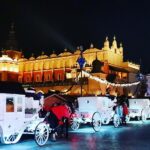
The Old Town by Electric Cart
Private Krakow: More Options
The City in a Day, More Ways


Just added: fresh Krakow reviews
Krakow City Highlights & Sightseeing, compared.
 ★ 4.5City Sightseeing Tour by Electric Golf CartFrom $133,264 reviews
 ★ 4.7City Sightseeing Tour Eco Electric Buggy Golf CartFrom $133,143 reviews
 ★ 4.1Sightseeing Cruise by Vistula RiverFrom $201,897 reviews
 ★ 4.7Extended City Sightseeing Tour – Eco Buggy Golf CartFrom $13794 reviews
 ★ 5.0Highlights of Krakow Bike Tour – Small groupFrom $36662 reviews
 ★ 4.4Sightseeing Cruise on Vistula River with Audio GuideFrom $26480 reviews
 ★ 4.4Electric Car Sightseeing TourFrom $25450 reviews
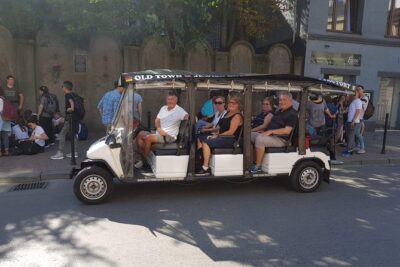 ★ 5.0Guided City Tour by Golf Buggy (with hotel pickup)From $53426 reviews
Browse the lists this tour appears in