
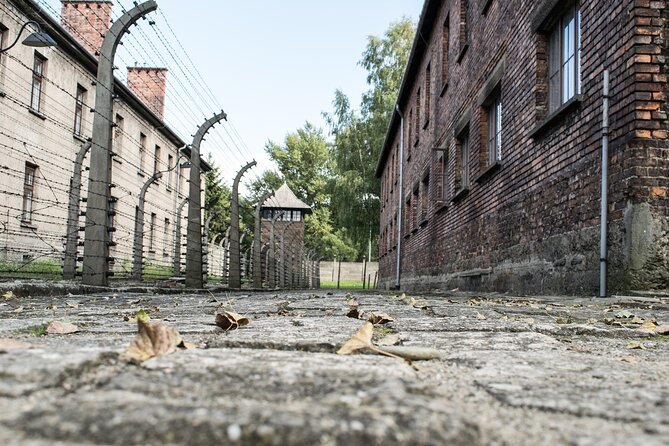
REVIEW · AUSCHWITZ-BIRKENAU MEMORIAL TOURS
Krakow to Auschwitz Birkenau Guided Tour with Ticket and Transfer
Auschwitz demands structure, not improvising. This guided day trip from Krakow gets you to Auschwitz I and Birkenau with a professional guide plus transport, so you can focus on what you’re seeing. I like that the day is built around the two key areas, not just a quick drive-by.
Two things I genuinely like: the hotel pickup and drop-off that helps you avoid the stress of public transport, and the headset that makes it easier to keep up with the guide’s explanations. For a place where details matter, those small comforts are more useful than they sound.
One drawback to plan around: the pickup time window is wide and can shift based on museum availability, which means some departures can be very early. If you’re traveling from elsewhere, or you hate waiting in the cold, this is the part that can make or break the day.
In This Review
- Key points at a glance
- Krakow to Auschwitz: what you’re really buying
- Pickup timing and the “early morning” reality
- Auschwitz I: the guided structure that helps you make sense of it
- Birkenau (Auschwitz II): why the last hour feels different
- The skip-the-line promise: what to do with that
- Small details that make the day easier (or harder)
- Who should book this Auschwitz tour from Krakow?
- Should you book this tour or choose another option?
- FAQ
- Is hotel pickup and drop-off included?
- Does the tour include Auschwitz and Birkenau tickets?
- How long will the visit take?
- What’s the baggage limit for entering the museum?
- Do I need ID and my full name for entry?
- Is food provided?
Key points at a glance
- Hotel pickup, drop-off, and AC minivan reduce logistics on a long, emotional day
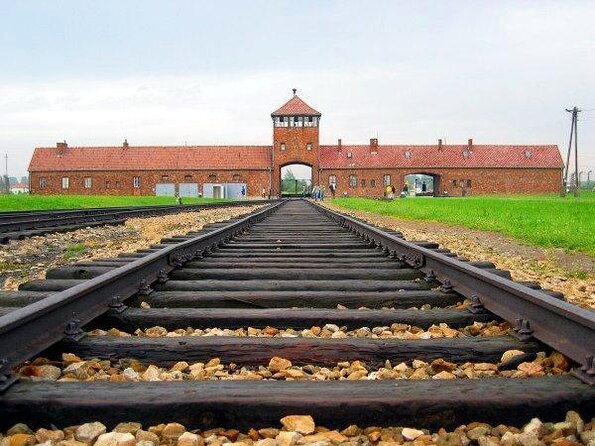
- Two guided segments: about 2 hours at Auschwitz I, then about 1 hour at Birkenau
- Headsets included so you can hear your guide clearly while walking and standing
- Outdoor time is heavy (especially at Birkenau), so dress for cold weather
- ID and participant names matter for museum entry
- Skip-the-line is promised, but you should still be ready to wait if ticketing gets complicated
Other guided visits to the Auschwitz-Birkenau Memorial
- From Krakow: Auschwitz-Birkenau Guided Tour & Hotel Pickup
★ 4.5 · 33,358 reviews - From Krakow: Auschwitz-Birkenau Guided Tour & Hotel Pickup
★ 4.5 · 29,340 reviews - Krakow: Auschwitz Guided Tour with Optional Hotel Pickup
★ 4.5 · 15,280 reviews
Krakow to Auschwitz: what you’re really buying
This is a long day built for convenience. You’re dealing with roughly 65 km each way, which is about 1 hour 30 minutes of driving time under normal conditions. That matters because you’re not just going to a museum—you’re crossing into a heavily controlled site where getting there on time is the easy part. The harder part is managing the emotional weight and the crowds.
The transport is air-conditioned and typically in a shared vehicle (minivan, sometimes a larger van). I like that the day isn’t built around you navigating transfers and timetables in Krakow first. Instead, you start with someone organizing the move from hotel to museum and back.
The tour also includes a professional guide and tickets in the package. That’s important because Auschwitz-Birkenau tours involve strict entry procedures and fixed visiting areas. When it works smoothly, you get a guided framework for both camps, rather than piecing things together alone.
One more practical angle: the group limit is up to 30 people. That’s not tiny, but it’s small enough that the guide can still manage pacing and logistics for the group without turning it into a moving crowd.
Pickup timing and the “early morning” reality
Here’s the truth you should build your plans around: pickup times can be early. The tour operator says pickup happens between 5:30am and 2:30pm, depending on museum availability. Even when you choose a timeslot, it’s not a guarantee. The final pickup time is shared at least 12 hours prior, but it can still shift because the museum can change visiting times.
If you select an early start, you may end up with a long waiting stretch before the museum opens. The guidance you’ll want to remember is that waiting can be 2 to 4 hours when the pickup is early.
Old Town Krakow also has a traffic-restricted pattern. Some hotels inside the restricted area can’t be served directly by the vehicle, so you may be picked up at the closest possible point instead of at your front door. That’s not unusual in European city centers, but it’s a detail worth respecting if you’re counting on exact curbside pickup.
Your meeting point—if you don’t share your accommodation address—is Floriana Straszewskiego 14, 33-332 Kraków. And one more thing to keep in mind: there’s a stated maximum baggage allowance for what you bring into the museum (30 x 20 x 10 cm, roughly A4 size). If you travel with a bigger bag, you’ll need to use the option to leave it in the locked vehicle parked near the museum while you’re inside.
Auschwitz I: the guided structure that helps you make sense of it
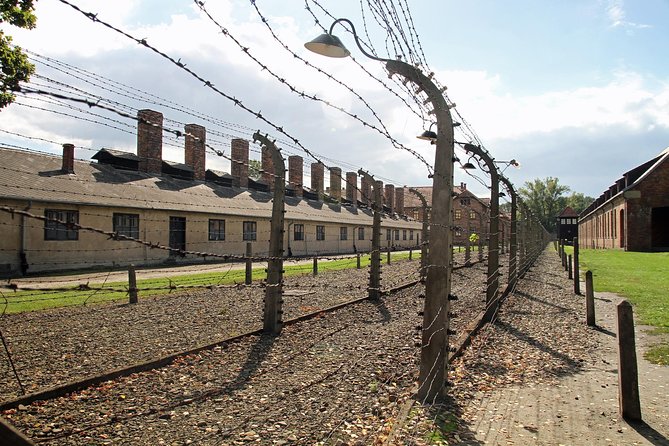
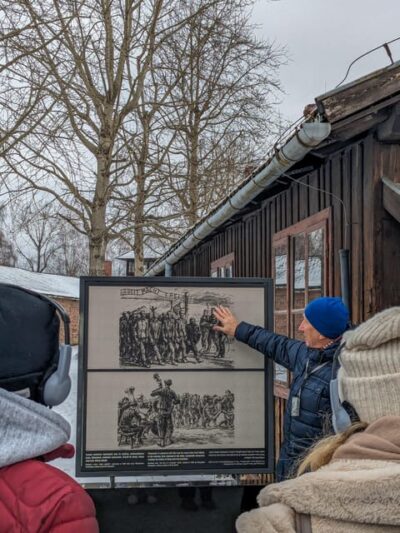
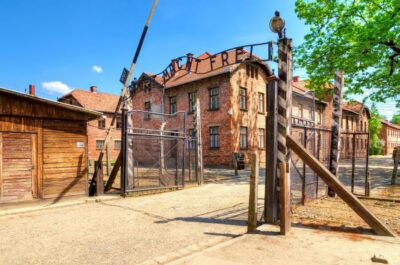
Auschwitz I is the part where the concentration camp system is laid out most clearly. Your time here is about 2 hours with the guide, and that’s a good length for a first visit. You’re not walking it like a casual sightseeing loop. You’re moving through preserved barracks, exhibition spaces, and historical markers that need context to land.
This is also where the headset becomes genuinely helpful. You’ll be walking, stopping, and standing in spaces where it’s easy to lose the guide if sound carries poorly. With a headset, you can focus on the explanations instead of playing musical-chairs with comprehension.
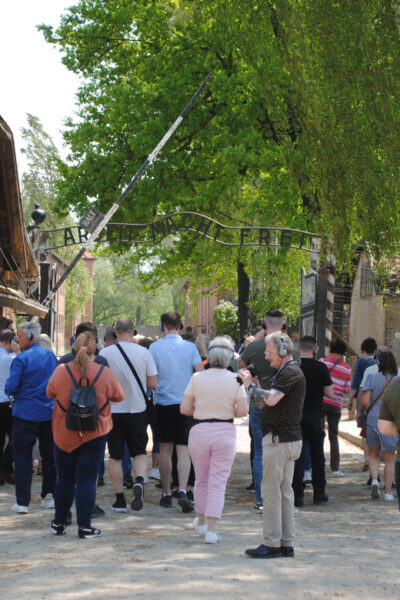
The pace can’t be your pace. The tour notes make it clear that because of the daily volume of visitors, you keep up with the group schedule. I see that as a fair trade for Auschwitz. You get less freedom to linger, but you avoid the frustrating chaos of trying to do this alone while the site controls entry timing.
Another practical note: museum entry requires full names for participants, and you’ll also need ID documents to verify. Plan for this before the morning. It’s not a “maybe” requirement. It’s a hard requirement for entry, and without it, security can refuse access.
A few more Krakow trips worth putting on the shortlist
- Krakow: Wieliczka Salt Mine Tour with Entry Ticket★ 4.6 · 10,927 reviews
- Krakow to Auschwitz Birkenau Guided Tour with Transfer and Ticket★ 5.0 · 8,197 reviews
- Krakow: Wieliczka Salt Mine Fast-Track Ticket & Guided Tour★ 4.5 · 5,872 reviews
- Auschwitz Birkenau Guided Tour with Ticket Hotel Pickup Small Van★ 5.0 · 4,769 reviews
Birkenau (Auschwitz II): why the last hour feels different
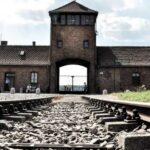
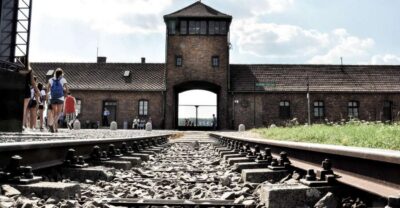
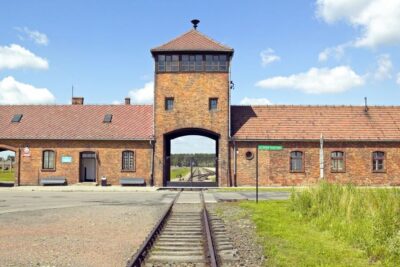
After Auschwitz I, you get a short break—about 10 minutes—and then you transfer by bus to Birkenau. Your time in Birkenau is about 1 hour with the same guide. That hour is often the most physically challenging part, mainly because Birkenau is outdoors and the walking can be exposed.
The tour is set up so you spend up to 70% of the day outdoors, with Birkenau especially exposed. That’s why weather clothing is not optional. If it’s cold, you’ll feel it fast during waiting, and you’ll feel it again while moving between areas.
This is also where the emotional tone shifts. Auschwitz I can feel like you’re learning a detailed history in a more “contained” space. Birkenau often feels like scale hits you all at once. The guided explanations are what help that scale become understandable instead of just overwhelming.
Even if the tour is structured, I’d still tell you to manage your expectations: you can’t fully absorb everything in an hour. The aim here is meaning, not mastery. If you want more time to slow down, you’ll need to do that with separate options on a later visit. This tour is designed for coverage.
The skip-the-line promise: what to do with that
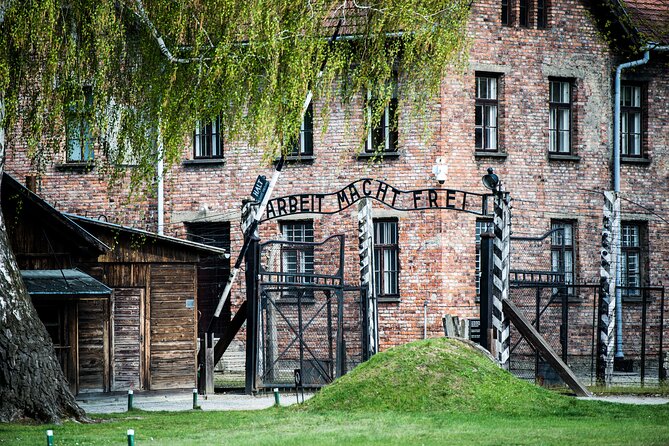
The tour package says you’ll have tickets included and that there is no queuing or waiting time, with a guarantee to skip long lines. That’s the marketing pitch. But you should take it as a best-case scenario, not a certainty.
In practice, you should plan for the possibility of ticketing lines or waiting if entry logistics don’t flow exactly as advertised. Some people describe scenarios where they still waited outside before moving into the museum process. When you’re dealing with winter cold and early arrivals, waiting can be miserable fast.
So my advice is simple: don’t gamble on comfort. Treat this like a day where you might stand outside longer than you planned. Bring layers. Add gloves. Wear shoes that handle slush and cold stone. The difference between tolerable waiting and miserable waiting is often 10 minutes of preparation.
Also, the tour guidance warns that museum operations can change due to the site’s situation and visiting schedule management. That’s why your pickup time is approximate. The operator may adjust timing, and the tour day can reshape around museum availability.
Small details that make the day easier (or harder)
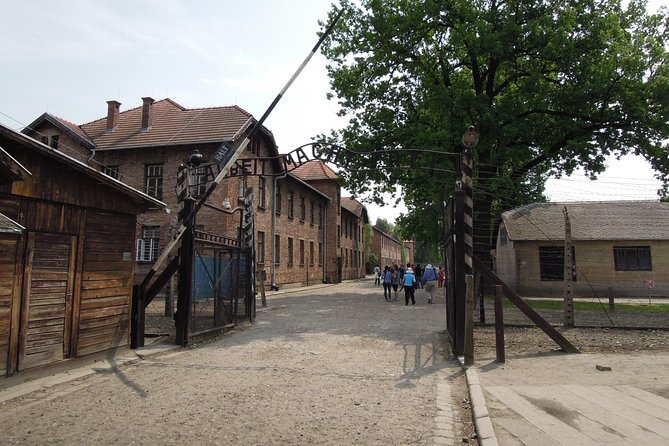
A few details here are easy to miss, but they shape the day.
Food and drinks aren’t included. You’ll need to plan on snacks or a meal strategy, especially since waiting can happen before the museum opens and you may not have time for a long sit-down lunch. If you rely on food being provided, you might end up scrambling.
Luggage size is limited for what you can bring into the museum: 30 x 20 x 10 cm. If your bag is larger, you’ll leave it in the locked vehicle while you’re away. That means you should pack a small day-bag mindset: ID, a warm layer, water if allowed, and your essentials. Don’t bring a suitcase expecting it to come inside.
Language can matter. The tour is offered in English, and a headset helps you hear. Still, it’s worth knowing that in some situations, language availability can affect what actually happens during the day. If you only speak English and you’re counting on an English guide at both camps, consider that as a risk point when the museum schedule changes.
Finally, this is a maximum-30 group. That’s manageable, but it’s still a crowd-managed day. Expect that you’ll follow the group and that your ability to “wander and think” on your own schedule is limited.
Who should book this Auschwitz tour from Krakow?
This tour style is a strong fit if you want a guided, structured visit and you don’t want to solve transportation and timing on your own. You’ll likely enjoy it most if:
- you’re short on time in Krakow and want one organized day
- you prefer not to deal with public transport and transfers
- you value a professional guide’s explanations at both Auschwitz I and Birkenau
- you’re okay with early mornings and fixed pacing
I’d be more cautious if any of these apply:
- you have tight plans the same day (late trains, flights, or strict check-out timelines)
- you’re not comfortable standing outside in cold weather
- you need maximum flexibility to adjust your schedule on the spot
- you’re sensitive to schedule changes (pickup times can be moved due to museum availability)
One more factor: group tours are designed for coverage. If your goal is maximum reflection time, you might find a guided group schedule leaves you wanting more space to slow down.
Should you book this tour or choose another option?
If you book, do it with eyes open. The value is clear: transport plus guided interpretation plus comfort features like headsets. That’s the kind of package that makes a first-time visit easier to manage.
But the biggest decision point is logistics risk. The pickup time window and museum schedule flexibility can turn a chosen plan into an ultra-early start. If your travel buffer is tight, or if waiting in cold conditions would be a real problem for you, you should seriously weigh alternatives that offer more stable pickup timing—or plan to visit with museum-entry methods that match your schedule better.
My bottom line: book if structure helps you and you can handle early mornings and outdoor time. Skip it if schedule rigidity is your priority, because this day can demand patience even when things run well.
FAQ
Is hotel pickup and drop-off included?
Yes. The tour includes pickup from your accommodation area in Krakow and returns you back to the same meeting point or closest pickup point if your hotel is in a restricted traffic zone.
Does the tour include Auschwitz and Birkenau tickets?
Tickets are included in the tour package, and the tour is described as having no queuing or waiting time. However, you should still be prepared for the day’s timing to depend on museum availability.
How long will the visit take?
The full experience is about 8 to 12 hours. You’ll spend around 2 hours at Auschwitz I and about 1 hour at Birkenau, plus travel and short breaks.
What’s the baggage limit for entering the museum?
Your bag must fit within 30 x 20 x 10 cm (about A4 size). Bigger items can be left in the locked bus parked near the museum while you’re inside.
Do I need ID and my full name for entry?
Yes. You need valid ID documents, and the tour provider requires full names of all participants for museum entry verification.
Is food provided?
No. Food and drinks are not included, so plan for snacks or a meal on your own.
If you want, tell me your planned pickup timeslot and whether you’re traveling from another city the same day—I can help you think through whether this one works with your schedule.
More Tours in Krakow
More Tour Reviews in Krakow
Visiting the Auschwitz-Birkenau Memorial
Just added: fresh Krakow reviews

Auschwitz-Birkenau Memorial Tours, compared.
 ★ 4.5Auschwitz-Birkenau Guided Tour & Hotel PickupFrom $2133,358 reviews
★ 4.5Auschwitz-Birkenau Guided Tour & Hotel PickupFrom $2129,340 reviews
★ 4.5Auschwitz-Birkenau Guided Tour & Hotel PickupFrom $2133,358 reviews
★ 4.5Auschwitz-Birkenau Guided Tour & Hotel PickupFrom $2129,340 reviews
 ★ 4.5Auschwitz Guided Tour with Optional Hotel PickupFrom $6915,280 reviews
 ★ 4.5Auschwitz-Birkenau Guided Tour with Pickup & LunchFrom $219,800 reviews
 ★ 4.5Auschwitz-Birkenau Guided Tour Pickup/Lunch OptionsFrom $2009,057 reviews
 ★ 4.7Auschwitz-Birkenau and Salt Mine Guided TourFrom $549,020 reviews
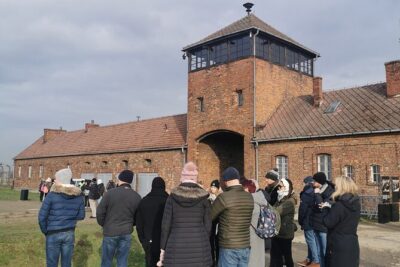 ★ 5.0Krakow to Auschwitz Birkenau Guided Tour with Transfer and TicketFrom $368,197 reviews
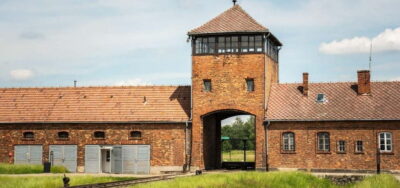 ★ 4.0Auschwitz Birkenau Tour with TransferFrom $216,134 reviews
Browse the lists this tour appears in