
REVIEW · AUSCHWITZ-BIRKENAU MEMORIAL TOURS
Self-Guided Tour of Auschwitz-Birkenau Museum with Transportation
Auschwitz grabs you fast. This self-guided Auschwitz-Birkenau day trip from Krakow stands out because you get skip-the-line entrance and round-trip transportation, which cuts out a lot of annoying time-wasting. I like that you can set your own pace with a route-based guidebook, and I also appreciate the headset audio during Auschwitz I so you are not straining to hear a spoken narration. One caution: the schedule is tight, and if you run into entry delays or you arrive close to closing time, you may feel rushed—especially at Birkenau.
The ride is part of the experience too. On the way in, you watch the documentary movie The liberation of Auschwitz, then you spend the rest of the day in quiet, focused memorial spaces. There is no live guide for the whole route, so you’ll rely on the materials provided and your own timing.
In This Review
- Key things that shape this Auschwitz-Birkenau tour
- Getting from Krakow to Auschwitz without burning your day
- Price and value: what $40.51 really buys
- How self-guided works here: guidebook, headset, and your pace
- Stop 1: The Judenrampe memorial stop between Auschwitz I and II
- Stop 2: Auschwitz I through the gate, barracks, and headset audio
- Stop 3: Birkenau (Auschwitz II) and the story of selections and liberation
- What I like most about this setup (and what to watch)
- Practical tips for your Auschwitz-Birkenau day trip from Krakow
- Who should book this tour?
- Should you book this Auschwitz-Birkenau tour?
- FAQ
- How long is the Auschwitz-Birkenau self-guided tour?
- What time does the tour start and where do I meet?
- Is transportation included?
- Are entrance tickets included?
- Is there a live guide during the visit?
- Will there be English materials?
- What’s included on the way to the museum?
- Is food or drinks included?
- How big is the group?
Key things that shape this Auschwitz-Birkenau tour
- Skip-the-line entry for Auschwitz I and Auschwitz II means less waiting in key queues
- Round-trip transfers from Krakow keep the logistics simple for a long day
- Self-guided walking with headset audio at Auschwitz I helps you move at your own speed
- A smaller group size (up to 30) can make the experience feel more manageable
- The Judenrampe stop adds a lesser-known piece of the deportation story
Other guided visits to the Auschwitz-Birkenau Memorial
- From Krakow: Auschwitz-Birkenau Guided Tour & Hotel Pickup
★ 4.5 · 33,358 reviews - From Krakow: Auschwitz-Birkenau Guided Tour & Hotel Pickup
★ 4.5 · 29,340 reviews - Krakow: Auschwitz Guided Tour with Optional Hotel Pickup
★ 4.5 · 15,280 reviews
Getting from Krakow to Auschwitz without burning your day
This is built for travelers who want a direct, low-stress way to reach Auschwitz-Birkenau. Your day starts with pickup at the Radisson Blu Hotel, Krakow (Floriana Straszewskiego 17), with the tour beginning at 2:30 pm and ending back at the same place. That matters because you do not have to solve trains, buses, or confusing last-mile routes right when you are mentally preparing for a heavy visit.
The round-trip transportation is a real value add at this price point. With a day like this, the cost is not just money—it’s also energy. When the transport is handled, you can focus on the memorial.
Also, it helps that the group is capped at 30 travelers. Even though the tour is self-guided, you still feel the difference between a cramped bus ride and a more controlled group size.
If you do one thing for your future self, it’s this: go in expecting that the day’s timing depends on museum operations. In practice, you may be asked to wait outside before entry even with skip-the-line tickets. I recommend you plan mentally for that possibility and keep your day flexible.
Price and value: what $40.51 really buys
At $40.51 per person, you are not paying for a private guide who follows you the entire time. You are paying for the essentials that usually add up fast: round-trip transportation plus skip-the-line admission tickets for both Auschwitz I and Auschwitz II, along with a route guidebook and the documentary video on the way in.
That’s the key trade-off. If you want a live expert guiding every question, this setup may feel too self-directed. But if you want structured access to the sites while still moving at your own pace, this is good value.
Food is not included, so you’ll want to plan something simple before pickup or bring snacks if that fits the day. The tour also runs about 7 hours, which is long enough to feel like a full day, but short enough that you cannot dawdle everywhere.
How self-guided works here: guidebook, headset, and your pace
Self-guided can mean “good luck.” Here, it’s more guided than that.
You’ll get a guidebook in your language with the route and detailed description. That is important because Auschwitz-Birkenau is huge, and it’s easy to get lost in facts unless someone gives you a clear path. You also hear audio through a headset during Auschwitz I, so you can listen clearly while walking through the main camp.
A practical point: self-guided does not mean self-timed. You still have scheduled blocks at each stop. That’s why preparation helps. Before you head out, decide how you want to use the time: do you want to prioritize museum buildings first, or memorial areas first? Then stick to your plan when the day feels overwhelming.
One more heads-up: the materials described for the tour do not always land perfectly in the right hands. If your listing promises a guidebook and you arrive without one, don’t panic—just ask right away with your group and operator contacts so you can get what you need to keep your pace. That one step can save a lot of frustration.
A few more Krakow trips worth putting on the shortlist
- Krakow: Auschwitz-Birkenau Guided Tour with Pickup & Lunch★ 4.5 · 9,800 reviews
- Krakow: Auschwitz-Birkenau Guided Tour Pickup/Lunch Options★ 4.5 · 9,057 reviews
- Krakow: Auschwitz-Birkenau and Salt Mine Guided Tour★ 4.7 · 9,020 reviews
- Krakow to Auschwitz Birkenau Guided Tour with Transfer and Ticket★ 5.0 · 8,197 reviews
Stop 1: The Judenrampe memorial stop between Auschwitz I and II
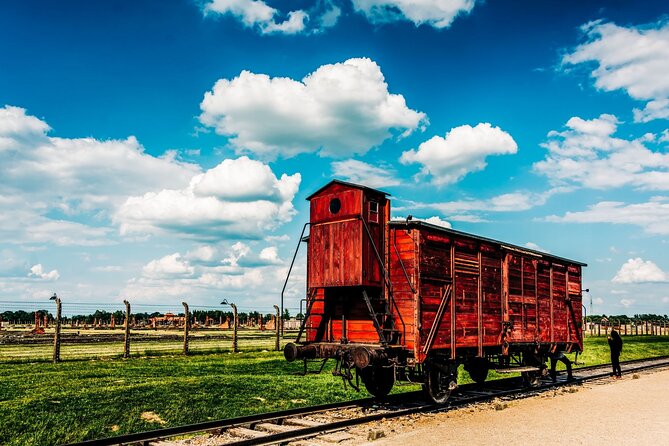
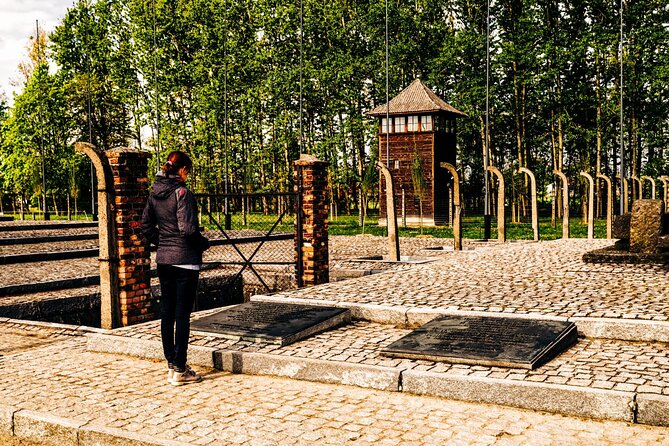
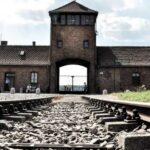
The first stop is the Judenrampe, a railway unloading platform used during the Holocaust for deportations between 1942 and 1944. It sits between Auschwitz I and Auschwitz II, and it is a powerful reminder that much of the machinery of genocide relied on logistics—rails, schedules, and forced movements.
This is a memorial site today, with commemorative plaques, and it’s also shorter than the other stops (about 30 minutes). That time limit is intentional: the Judenrampe is not where you linger for long museum-style exploration. It’s where you shift your understanding. Most people fixate on the most famous imagery, but the Judenrampe emphasizes something quieter and harder to absorb: the deportation process itself.
If you like context, this stop helps. It connects the dots between what happens inside the camps and what happens before people ever reach them. Even in a short window, you can feel that difference.
Stop 2: Auschwitz I through the gate, barracks, and headset audio
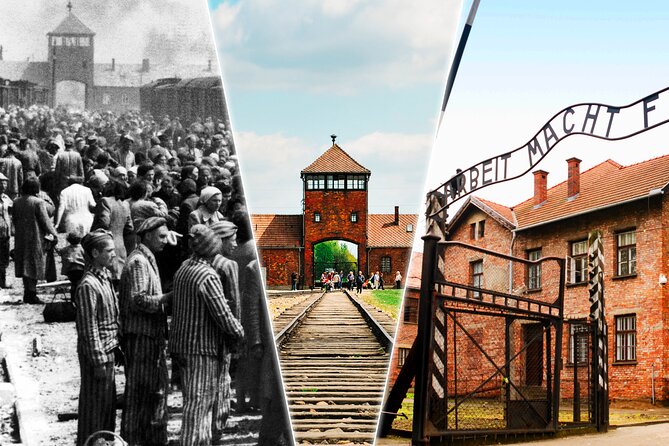
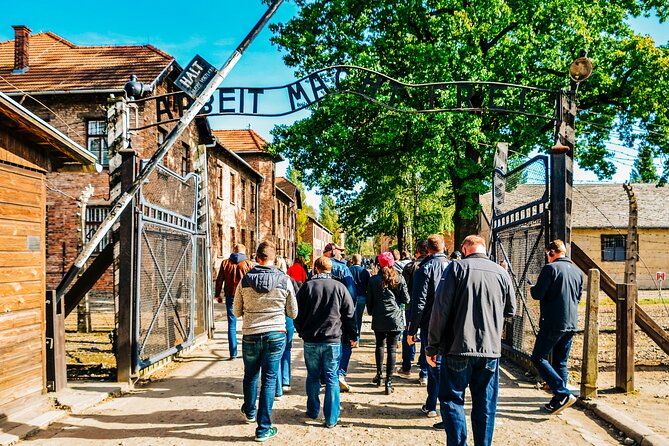
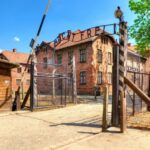
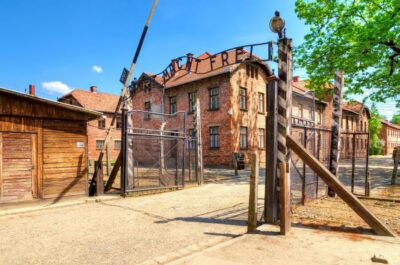
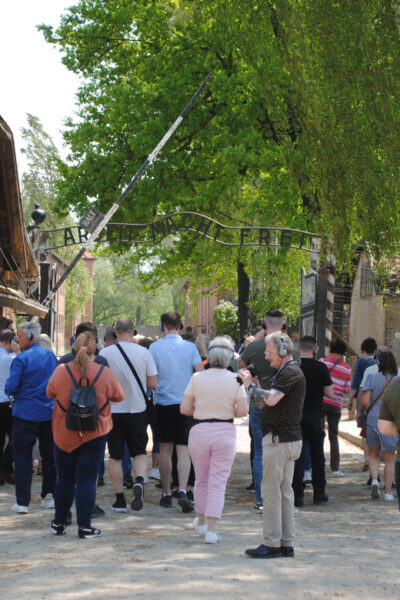
Auschwitz I is where your brain starts trying to measure scale, and nothing fits neatly. You’ll walk through the camp gate area and pass under the sign Arbeit Macht Frei. It’s impossible not to notice it. Even if you’ve read about Auschwitz before, seeing the structure in person brings a brutal kind of clarity.
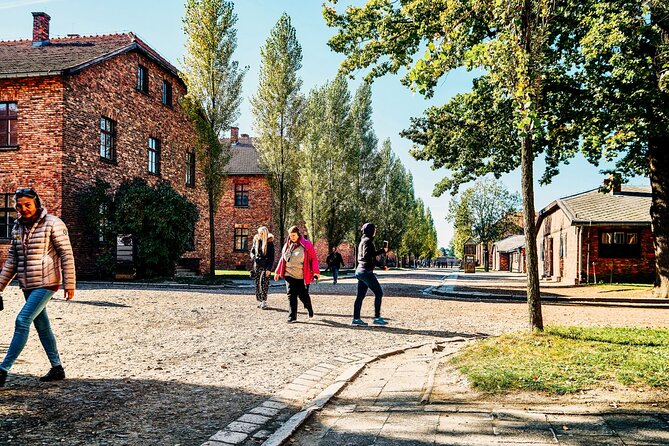
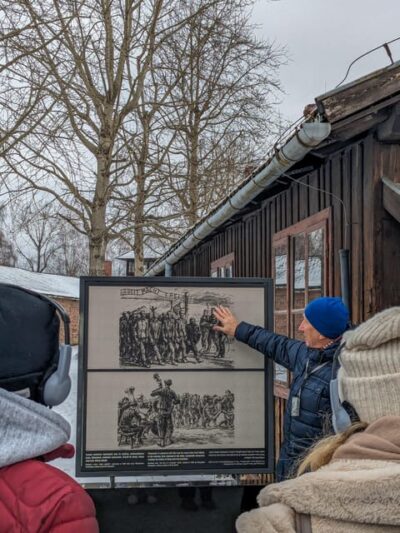
From here, your visit is set up for a fairly steady pace. This portion typically lasts about two hours, and you’ll use a headset so the narration is clear as you move through key areas. That matters because the main camp layout can feel confusing at first. Audio guidance helps you understand where you are and why each area matters.
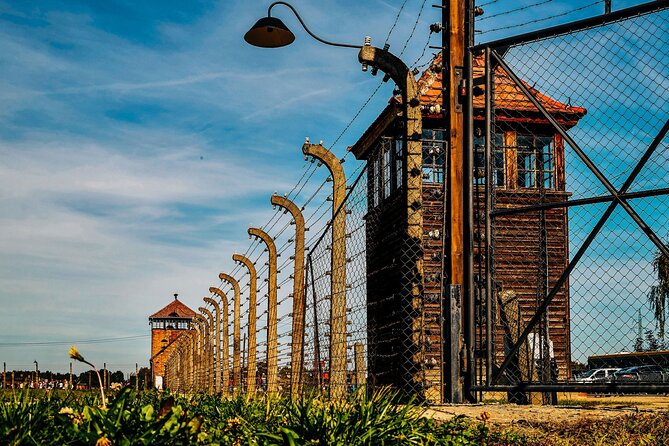
Expect to see original wooden barracks, fortified walls, barbed wire fencing, plus structures connected to gas chambers and crematoria. The point is not just to look. The point is to understand what the camp system was designed to do.
Two practical notes based on how timing can play out:
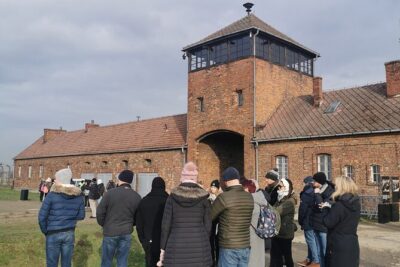
- Plan for the possibility of a wait at the start if your ticket entry time doesn’t match your arrival time. When this happens, you can end up standing outside longer than you expected.
- Once you’re inside, stay flexible with your priorities. If you spend too long in one building early, you might feel rushed later when the schedule compresses.
Also, because there’s no live guide for everything, use the headset moments well. If there’s a section that feels confusing, don’t just skim it. Stop for 30 seconds, re-listen, and let the explanation line up with what you’re seeing.
Stop 3: Birkenau (Auschwitz II) and the story of selections and liberation
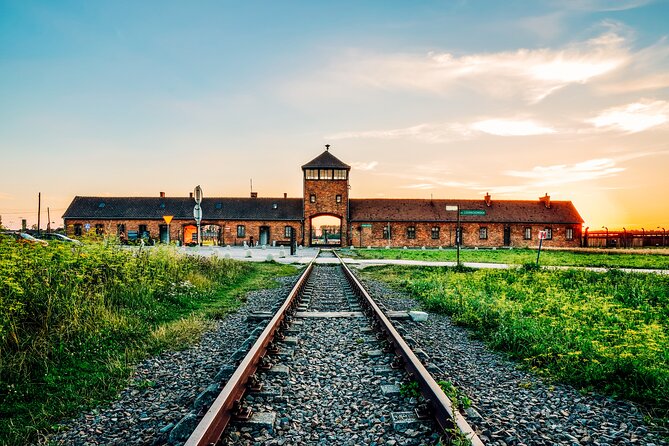
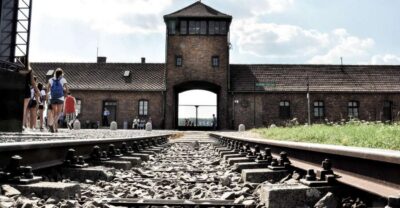
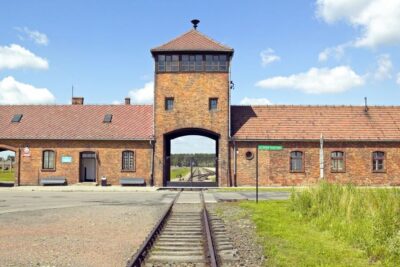
Birkenau is the larger camp, and it’s where scale hits harder. You’ll transfer from Auschwitz I to Birkenau in only a short ride (about 3 minutes), so you do not waste much time commuting between the two sites.
Birkenau (Auschwitz II) was built with the goal of making Europe Judenrein and it held around 90,000 prisoners. That number is staggering, but what really sticks is the way the site layout communicates process: selection, confinement, exploitation, and systematic murder.
Your time at Birkenau is about 30 minutes, and you’ll continue with the guided narrative through your materials. You’ll hear about brutal living conditions, the cruel selection process, and pseudo-scientific medical experiments carried out by Nazi doctors, including Josef Mengele.
Then the tour concludes with a liberation story: on January 27, 1945, soldiers from the 60th Army of the First Ukrainian Front opened the gates of Auschwitz. That ending matters because it pulls you out of description mode and into a historical arc: what happened, how it ended, and why genocide must never be repeated.
Here’s where timing becomes personal. Birkenau has a lot of ground to cover. If you reach it close to closing time, you can feel cheated out of seeing everything you hoped to see. I strongly recommend you confirm the closing timeline with your operator before you start moving from site to site. Build slack. You’ll thank yourself later.
What I like most about this setup (and what to watch)
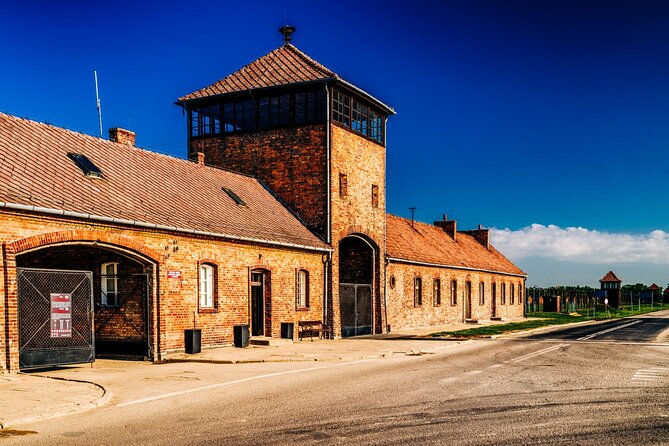
I like that this tour gives you the structure that self-guided travelers often miss: organized entry, a clear route, and headset audio in Auschwitz I. I also like that the transport takes pressure off you. When your emotions are running high, it’s not the time to negotiate buses.
I also think the Judenrampe stop is a smart addition. It’s short, but it adds a necessary layer. If you only visit Auschwitz I and Birkenau, you may feel like you missed part of the deportation pathway. The ramp helps connect the story.
The drawback is the most obvious one: no live guide. If you have lots of questions, or you want deeper explanations of the specific objects you see, you’ll be relying on the guidebook and audio. And because time at each site is limited, you may not be able to do the careful, slow reading you might prefer.
Finally, keep an eye on communication. If your day has a tight turnaround back to Krakow, clarify entry times, expected waiting time, and what happens if you arrive later than planned. Small gaps can snowball into rushed viewing.
Practical tips for your Auschwitz-Birkenau day trip from Krakow
Here are the things that make the day go smoother, without changing what you see.
- Wear comfortable shoes with good traction. The site includes outdoor walking and standing.
- Dress in layers. Indoors and outdoors can feel different fast.
- Bring water and a simple snack plan. Food and drinks are not included.
- Use the headset moments well at Auschwitz I. That’s your best structured explanation time.
- If you’re sensitive to crowds, aim to move steadily rather than pausing in the busiest choke points.
And one emotional tip: you do not need to force yourself to understand everything at once. Your goal is to witness, remember, and absorb at your own pace. The self-guided format can help with that—if you plan your time like an adult.
Who should book this tour?
Book this if you want:
- Round-trip transport from central Krakow
- Skip-the-line entry to both Auschwitz I and Auschwitz II
- A self-paced visit with guided audio support (headset at Auschwitz I) and a guidebook
- A smaller group size (up to 30)
Consider a different format if you want:
- A full live guide for questions and deeper interpretation throughout the day
- More time at Birkenau than a short stop can provide
Should you book this Auschwitz-Birkenau tour?
I think this is a solid choice for the right traveler. If you want access without the headache of transportation and queues—and you’re okay using a guidebook plus headset rather than a live expert—this tour offers clear value for the money and a sensible route through two essential memorial sites, plus the Judenrampe.
But if you hate feeling rushed, or you know you’ll want lots of extra explanation, be cautious. Your best move is to confirm entry timing and the day’s closing window before you count on seeing everything.
If you handle time expectations well, you’ll get what matters most: a direct, respectful Auschwitz-Birkenau visit with enough structure to help you see the whole story.
FAQ
How long is the Auschwitz-Birkenau self-guided tour?
It’s listed as about 7 hours (approx.).
What time does the tour start and where do I meet?
The start time is 2:30 pm, and the meeting point is Radisson Blu Hotel, Krakow (Floriana Straszewskiego 17, 31-101 Kraków).
Is transportation included?
Yes. Round-trip transportation is included.
Are entrance tickets included?
Yes. Skip-the-line entrance tickets for Auschwitz I and Auschwitz II are included.
Is there a live guide during the visit?
No. The tour is self-guided with a guidebook and headset audio (headset during Auschwitz I), but it does not include a live guide.
Will there be English materials?
Yes. The experience is offered in English, and you receive a guidebook in your language with the route and description.
What’s included on the way to the museum?
A documentary movie called The liberation of Auschwitz is included on the way.
Is food or drinks included?
No. Food and drinks are not included.
How big is the group?
The maximum group size is 30 travelers.
More Tours in Krakow
More Tour Reviews in Krakow
Visiting the Auschwitz-Birkenau Memorial
Just added: fresh Krakow reviews
Auschwitz-Birkenau Memorial Tours, compared.
 ★ 4.5Auschwitz-Birkenau Guided Tour & Hotel PickupFrom $2133,358 reviews
★ 4.5Auschwitz-Birkenau Guided Tour & Hotel PickupFrom $2129,340 reviews
★ 4.5Auschwitz-Birkenau Guided Tour & Hotel PickupFrom $2133,358 reviews
★ 4.5Auschwitz-Birkenau Guided Tour & Hotel PickupFrom $2129,340 reviews
 ★ 4.5Auschwitz Guided Tour with Optional Hotel PickupFrom $6915,280 reviews
 ★ 4.5Auschwitz-Birkenau Guided Tour with Pickup & LunchFrom $219,800 reviews
 ★ 4.5Auschwitz-Birkenau Guided Tour Pickup/Lunch OptionsFrom $2009,057 reviews
 ★ 4.7Auschwitz-Birkenau and Salt Mine Guided TourFrom $549,020 reviews
 ★ 5.0Krakow to Auschwitz Birkenau Guided Tour with Transfer and TicketFrom $368,197 reviews
 ★ 4.0Auschwitz Birkenau Tour with TransferFrom $216,134 reviews
Browse the lists this tour appears in