
Two camps, one unforgettable lesson.
This Auschwitz-Birkenau day trip from Krakow is interesting because you get an English guide and the freedom to choose how long you stay in each area, using the provided maps. I especially like the way the guide explains what you’re seeing in Auschwitz I and then helps you make sense of the scale at Birkenau, without rushing you. One consideration: it’s a long, heavy day, and the walking on uneven ground means it’s not recommended for people with walking problems.
You’ll ride out in a comfortable, air-conditioned van with pickup offered, then settle into the camps for several hours. There’s also a break mid-day, which can be helpful when your brain is absorbing something intense. With a maximum of 50 travelers, it’s big enough to feel efficient but not so huge that you’ll get totally lost in the crowd.
In This Review
- Key things to know before you go
- From Krakow to Auschwitz-Birkenau: why this format works
- The 9-hour schedule: pickup, travel, breaks, and on-site time
- Auschwitz I: the permanent exhibition route and original artifacts
- Birkenau: ruins, barracks remnants, ramp, and crematorium areas
- How the English guide and maps help you make sense fast
- Transport and the in-between restaurant stop
- Price and value at $138.44 per person
- Weather, footwear, and your body’s limits
- Should you book this Auschwitz-Birkenau tour?
- FAQ
- What camps are included in the tour?
- Is the guide provided in English?
- How long is the tour from start to finish?
- How much time do I spend in each camp?
- Is admission included in the price?
- Is pickup offered from Krakow?
- Is this tour suitable if I have walking problems?
- Can I cancel for a full refund?
Key things to know before you go
- Flexible time inside Auschwitz I and Birkenau so you can slow down where you need to
- English guide + provided guidebooks with maps for better orientation
- A practical 9-hour day with a comfortable van ride from Krakow
- A mid-day restaurant stop that breaks the day up more than you expect
- Small enough group size (up to 50) while still keeping it organized
Other guided visits to the Auschwitz-Birkenau Memorial
- From Krakow: Auschwitz-Birkenau Guided Tour & Hotel Pickup
★ 4.5 · 33,358 reviews - From Krakow: Auschwitz-Birkenau Guided Tour & Hotel Pickup
★ 4.5 · 29,340 reviews - Krakow: Auschwitz Guided Tour with Optional Hotel Pickup
★ 4.5 · 15,280 reviews
From Krakow to Auschwitz-Birkenau: why this format works
A lot of Auschwitz tours feel like a race. This one is designed to feel more like a careful route through two different realities: Auschwitz I, where you can focus on the camp’s preserved structures and exhibits, and Birkenau, where the ground and ruins show the scale of what happened.
The biggest value here is how the visit is structured. Your guide gives clear information about both camps, but you’re not locked into a minute-by-minute script. That matters because some people want to read every label and stand longer at specific spots. Others need to move faster because they’re overwhelmed. You get room for that.
I also like the straightforward setup: transport from Krakow, time in both camps, and an on-the-ground guide who helps you interpret what you’re looking at. If you’ve never been before, this kind of explanation turns the experience from a list of sights into something you can actually follow.
The 9-hour schedule: pickup, travel, breaks, and on-site time
This is an all-day outing—about 9 hours in total. The ride from Krakow takes roughly 1.5 hours each way (give or take traffic), and there’s a short break when you arrive before you start the museum route.
Once you’re inside the first camp, you’ll spend time at Auschwitz I through the permanent exhibition located in former prisoner barracks. After that, you head to Birkenau, where you’ll have about 2 hours to take in the area.
The whole on-site block is around 5 hours, which is a sensible middle ground. You get enough time to see the key sections without feeling like you missed half the story. And because the guide lets you manage your own pacing within that framework, you won’t feel like you’re only seeing quick snapshots.
One practical note: this is a day where timing matters. Some departures have been known to shift pick-up timing or rearrange logistics. So I’d strongly suggest you confirm your pick-up details the day before and keep an eye on messages so you don’t lose time waiting around.
Auschwitz I: the permanent exhibition route and original artifacts
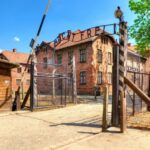
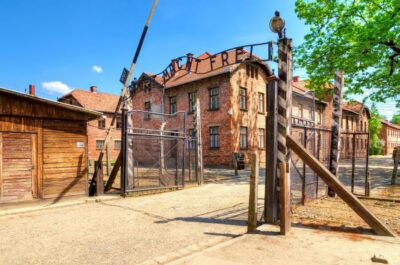
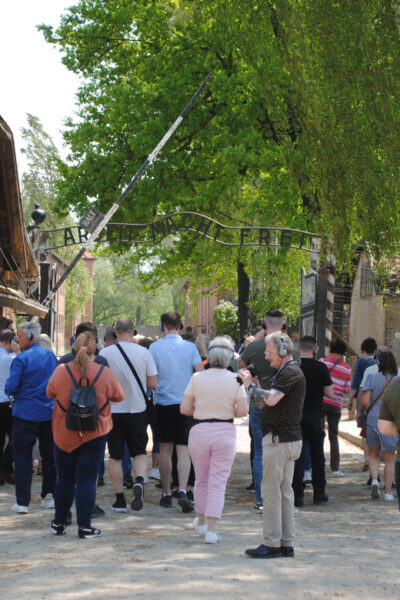
Auschwitz I is where you start building context. Here, you follow a route through the permanent exhibition set in former prisoners’ barracks. That location detail isn’t just “interesting”—it changes how the exhibits hit you. You’re not looking at a theme park version. You’re walking through spaces that were part of how the system operated.
What helps most is that your English guide explains the exhibits as you go. Instead of reading everything alone and guessing what matters, you get a guided thread. That’s especially valuable if you don’t know the timeline or the camp’s internal purpose.
You’ll also see original items associated with former prisoners. The effect is different from replicas. When you’re looking at real objects that belonged to people, it’s harder to treat what you’re seeing as distant history. The guide’s explanations help you hold onto what each object represents, not just that it exists.
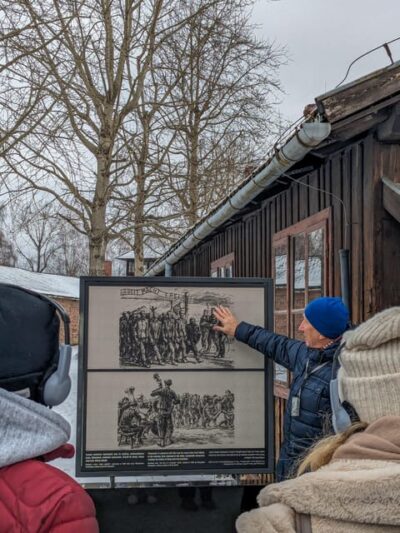
The only drawback: Auschwitz I can feel emotionally intense fast. Even with a guide, you may want to pause and step back when the information becomes too heavy. The good news is that your tour design allows you to manage time on-site rather than being forced onward immediately.
A few more Krakow trips worth putting on the shortlist
- Krakow: Auschwitz-Birkenau Guided Tour with Pickup & Lunch★ 4.5 · 9,800 reviews
- Krakow: Auschwitz-Birkenau Guided Tour Pickup/Lunch Options★ 4.5 · 9,057 reviews
- Krakow: Auschwitz-Birkenau and Salt Mine Guided Tour★ 4.7 · 9,020 reviews
- Krakow to Auschwitz Birkenau Guided Tour with Transfer and Ticket★ 5.0 · 8,197 reviews
Birkenau: ruins, barracks remnants, ramp, and crematorium areas
Birkenau is the camp that often hits people in a different way. Auschwitz I can feel like a set of buildings and exhibits; Birkenau spreads out across a much wider space, and you experience it more through scale and remains.
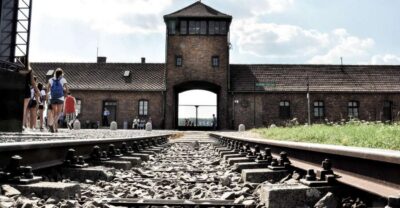
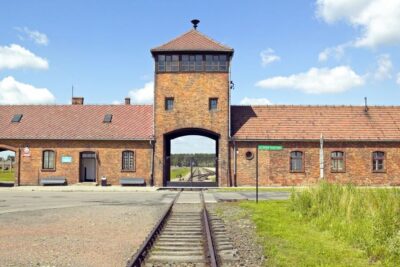
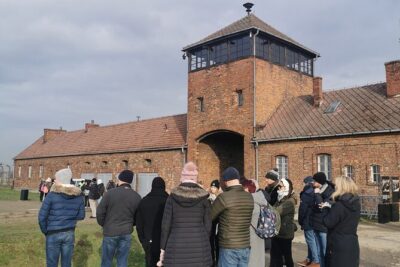
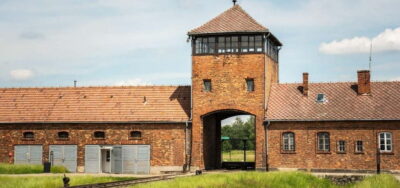
In your Birkenau portion (about 2 hours), you’ll see remnants of numerous barracks, as well as crematorium areas and the unloading ramp. The unloading ramp is one of the most difficult spots to visit, because it connects the landscape to the arrival process. With an English guide, you’re less likely to get lost and more likely to understand why each ruin is positioned where it is.
This is where pacing becomes crucial. If you spend all your energy sprinting through the big sights, you lose what makes Birkenau powerful: the ability to see how the system worked across distance and space. If you slow down—stopping when your brain needs a break—you’ll likely come away with more clarity.
A practical tip: the ground can be uneven and you may be standing for long stretches. Wear shoes you trust. Plan for weather too, because you’ll be outside during parts of Birkenau.
How the English guide and maps help you make sense fast
I love it when a guide does two jobs at once: explain what you’re seeing and help you navigate the emotional weight without turning it into a lecture.
With this tour, you get an English guide who provides the information you need for the two camps. You’re also given guidebooks with maps of both camps, which is a major help. When you’re in a complex site, maps aren’t “nice to have.” They’re how you keep your bearings so you don’t bounce between locations randomly.
One review specifically praised a guide named Pavel (Pablo) for giving precise, punctual information and offering plenty of patience while answering questions. That’s a great sign because it suggests the tour team isn’t just reciting facts—they’re there to support your understanding while you’re walking the grounds.
Here’s how you can use the format in your favor:
- Start with the guide’s explanation, but don’t feel bad about lingering where you need time.
- Use the maps to check where you are before you take off to the next stop.
- Ask questions when you’re confused. If your guide can answer clearly, you’ll get more meaning out of every turn.
Transport and the in-between restaurant stop
The van ride is air-conditioned, which matters on a long day. You’re also not dealing with ticketing logistics alone at every step, because the tour includes a planned route through the day.
There’s typically a restaurant stop in between the two camp visits. For some people, this makes the day smoother: food, toilets, and a reset before you go back into the camps again. One positive note from an earlier experience described the halfway restaurant as well-organized and the food as delicious, with the driver helping keep things calm.
If you’re someone who hates sitting down during heavy days, you might prefer quicker snacks rather than a full meal. But even then, having a break scheduled can help you last the full time without getting shaky or dehydrated.
Price and value at $138.44 per person
At $138.44 per person, this trip doesn’t feel cheap on paper. But when you compare what’s included, the price starts to make sense for a Krakow-based day tour.
You’re paying for:
- Round-trip transport in a comfortable van with pickup offered
- An English guide who supports your understanding at both camps
- Admission ticket inclusion
- A structured day that covers both Auschwitz I and Birkenau in about 5 hours of site time
The value is strongest if you’re a first-time visitor and want your experience to be more than self-guided wandering. The guide explanations plus maps help you convert your time into understanding, which is what makes the day worthwhile.
The best way to think about the cost: you’re paying for your time to be guided and organized so you can spend your energy on seeing and learning, not on logistics.
Weather, footwear, and your body’s limits
This is one of those tours where your physical setup matters as much as your mental readiness. The tour notes moderate physical fitness and says it is not recommended for travelers with walking problems.
Even if you’re generally fit, expect:
- Long walking segments across uneven outdoor areas
- Standing time while you read, look, and absorb the guide’s context
- The need for steady footing in cooler or wet conditions
Wear shoes with grip and support. Bring layers, because weather can change, and you’ll be outside for parts of the day. If you know you need frequent breaks, plan to take them. This is not a day to prove endurance.
Also, give yourself permission to pace emotionally. You may find you need to stop more than you expected. The tour’s flexible time approach makes that possible.
Should you book this Auschwitz-Birkenau tour?
I’d book this option if you want:
- An English guide and a clear way to understand Auschwitz I and Birkenau
- The chance to control your pacing with flexible time inside the sites
- Transport and admission handled so you can focus on the experience
I’d think twice if:
- You have serious mobility limits or difficulty with walking and uneven ground
- You hate long days and tight schedules, because this is still about 9 hours total even with the time-management approach
- You’re very sensitive to pick-up timing and want a departure that is guaranteed clock-perfect. Confirm details ahead of time.
If you’re visiting from Krakow for your first Auschwitz day, this is a solid, practical choice. The best version of it comes when you treat the day as a careful route—use the guide, use the maps, and slow down when you need to.
FAQ
What camps are included in the tour?
The tour covers Auschwitz I and Auschwitz II Birkenau.
Is the guide provided in English?
Yes, the tour is described as having an English guide.
How long is the tour from start to finish?
It runs for approximately 9 hours.
How much time do I spend in each camp?
You’ll spend time in Auschwitz I through the permanent exhibition, and then about 2 hours at Birkenau. The total time at both sites is around 5 hours.
Is admission included in the price?
Yes, the admission ticket is included.
Is pickup offered from Krakow?
Yes, pickup is offered.
Is this tour suitable if I have walking problems?
It is not recommended for travelers with walking problems, and it requires moderate physical fitness.
Can I cancel for a full refund?
Yes. You can cancel up to 24 hours in advance for a full refund.
More Guided in Krakow

More Tour Reviews in Krakow
Visiting the Auschwitz-Birkenau Memorial
Just added: fresh Krakow reviews
Auschwitz-Birkenau Memorial Tours, compared.
 ★ 4.5Auschwitz-Birkenau Guided Tour & Hotel PickupFrom $2133,358 reviews
★ 4.5Auschwitz-Birkenau Guided Tour & Hotel PickupFrom $2129,340 reviews
★ 4.5Auschwitz-Birkenau Guided Tour & Hotel PickupFrom $2133,358 reviews
★ 4.5Auschwitz-Birkenau Guided Tour & Hotel PickupFrom $2129,340 reviews
 ★ 4.5Auschwitz Guided Tour with Optional Hotel PickupFrom $6915,280 reviews
 ★ 4.5Auschwitz-Birkenau Guided Tour with Pickup & LunchFrom $219,800 reviews
 ★ 4.5Auschwitz-Birkenau Guided Tour Pickup/Lunch OptionsFrom $2009,057 reviews
 ★ 4.7Auschwitz-Birkenau and Salt Mine Guided TourFrom $549,020 reviews
 ★ 5.0Krakow to Auschwitz Birkenau Guided Tour with Transfer and TicketFrom $368,197 reviews
 ★ 4.0Auschwitz Birkenau Tour with TransferFrom $216,134 reviews
Browse the lists this tour appears in