REVIEW · KRAKÓW
WOMAI Cracow – Into the darkness experience
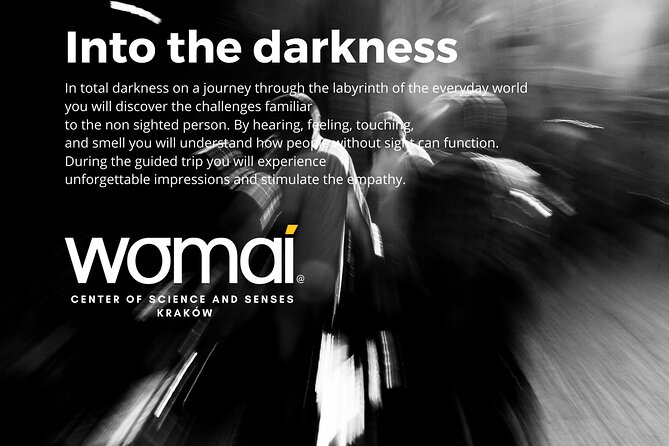
Darkness turns daily tasks into a challenge. In WOMAI’s Into the Darkness experience, you’ll step into total darkness for about an hour, guided by a blind guide who helps you experience everyday actions through your other senses. What I like most is the way the whole session feels practical, not just theatrical, and how it finishes with time to ask questions and learn about braille.
One thing to think hard about first: it’s not a good fit if you struggle with claustrophobia, hearing problems, or significant mobility limitations. The experience also asks for a moderate physical fitness level, so plan on standing and moving a bit during the session.
In This Review
- Key highlights to know before you go
- WOMAI in Krakow: a one-hour reality check you can actually use
- Entering the darkness: what the experience feels like in practice
- The blind guide experience: support, safety, and a human lesson
- The ending: why the braille part makes it more than a stunt
- Duration, pace, and what to expect during the hour
- Price in context: paying for empathy, guidance, and learning
- Logistics in Krakow: timing, tickets, and getting there
- Who should book (and who should skip) for the right reasons
- Should you book WOMAI Into the Darkness in Krakow?
- FAQ
- How long is the WOMAI Into the Darkness experience?
- Is the experience available in English?
- Do I need to print my ticket?
- Is it easy to reach using public transportation?
- What physical requirements should I expect?
- Who should avoid booking?
- Can I cancel for free?
Key highlights to know before you go
- Total darkness for about an hour: you’ll navigate and do simple tasks without sight.
- Guided by a blind specialist: you’re supported by a guide throughout the darker part.
- English-speaking experience: helpful if you’re visiting Krakow without Polish.
- Questions and braille at the end: the experience doesn’t stop at the shock moment.
- Not for severe claustrophobia or major mobility/hearing needs: read this carefully before booking.
Weighing this one up? Here is how it sits next to a few Krakow trips travellers book most.
- From Krakow: Auschwitz-Birkenau Guided Tour & Hotel Pickup
★ 4.5 · 33,358 reviews - From Krakow: Auschwitz-Birkenau Guided Tour & Hotel Pickup
★ 4.5 · 29,340 reviews - Krakow: Auschwitz Guided Tour with Optional Hotel Pickup
★ 4.5 · 15,280 reviews
WOMAI in Krakow: a one-hour reality check you can actually use
In Krakow, you can fill your day with churches, food halls, and museum hours. This is different. WOMAI’s Into the Darkness is built around one simple idea: what happens if one of your senses disappears? Not as a science demo. As a lived experience you can understand in your gut.
The format is refreshingly short. You’re looking at roughly one hour total, so it’s easy to slot into a travel schedule without turning your whole day into an endurance test. And because it’s offered in English, you’re not forced into guessing what the experience means while you’re already dealing with a new environment.
This is the kind of activity that hits a sweet spot for many people: it’s accessible enough in time and structure to do on vacation, yet intense enough to change how you think about daily life for blind and partially sighted people.
Entering the darkness: what the experience feels like in practice
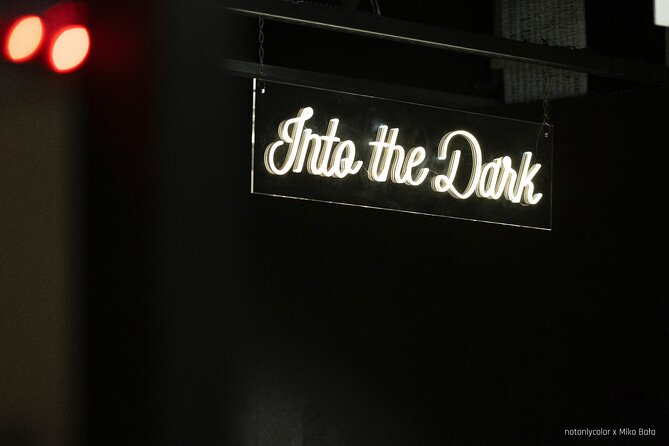
Once you start, the core of the experience is straightforward: you move through a world where sight is removed. You’re guided by a blind guide who leads you into the world of total darkness. The whole point is to see how your other senses take over—hearing, touch, and spatial awareness.
You’re not just standing in a dark room listening to instructions. You’ll be taken through a range of activities connected to everyday tasks, so your brain can’t hide behind imagination. The difference is that you’re forced to rely on cues other than sight, including the guide’s guidance and the feel of what’s around you.
One detail that matters: the feeling of being alone can show up fast. In total darkness, you may not be able to sense objects or people in front of you the way you’re used to. That’s unsettling for some people, and totally enlightening for others. Either way, it’s part of the point: it gives you a real taste of how much structure sight provides in normal life.
And yes, you’ll likely notice how your listening changes. Many people start by trying to “look” with their ears and hands. Over time, your attention sharpens. Sounds and textures become more meaningful. Your body starts building a map from non-visual information.
The blind guide experience: support, safety, and a human lesson

A big reason this tour gets such strong marks is the guide role. You’re not thrown into darkness with a set of confusing rules. A blind guide takes you through the experience and helps you handle everyday tasks in a safe way.
That human guidance matters for two reasons:
- You’re learning something real, not just panicking. The guide’s presence gives you a reference point and keeps the experience from turning into pure overwhelm.
- You can ask questions while it’s still fresh. The session includes Q&A time, and that’s where the value really sticks. Instead of leaving with only a weird feeling, you get explanations tied to what you just lived.
You should also expect that communication will feel different in darkness. The experience is not recommended for people with hearing problems, which is a strong hint that sound and verbal cues play a key role during the session. So if your hearing is a challenge, I’d treat that warning as a deal-breaker, not a suggestion.
- Krakow: Wieliczka Salt Mine Tour with Entry Ticket★ 4.6 · 10,927 reviews
- Krakow–Zakopane: Cable Car, Chocholow Baths, Cheese & Vodka★ 5.0 · 10,720 reviews
- Krakow: Auschwitz-Birkenau Guided Tour with Pickup & Lunch★ 4.5 · 9,800 reviews
- From Krakow: Wieliczka Salt Mine Tour★ 4.6 · 9,393 reviews
The ending: why the braille part makes it more than a stunt
The last piece is what separates this from a one-off “wow moment.” At the end, you get time to ask questions, and you’re taught about braille.
That ending matters because it translates the experience into something practical. You’re not just left thinking, That was intense. You’re left thinking, I understand a tiny piece of how someone communicates every day without sight.
Even if you only learn the basics, the braille segment gives your brain a tool to connect the dots. It turns empathy into knowledge you can carry home. It also makes the experience feel respectful rather than sensational.
So if you’re the type of traveler who likes experiences with a takeaway, this is one reason you’ll probably feel satisfied even if the darkness was emotionally intense.
Duration, pace, and what to expect during the hour
Plan for about one hour in total. That’s a quick window, which is why it’s popular. You’ll likely move through the session in a sequence: guidance into darkness, then activities using senses other than sight, then the wrap-up with Q&A and braille.
Because the total time is short, you don’t need to be a fitness fanatic. But you do need to be ready for the basic physical demands of moving around with a guide and staying engaged. The experience asks for a moderate physical fitness level, so if you know you’ll struggle to stand or move briefly, take that seriously.
Also, the experience is offered in English, so your understanding shouldn’t depend on finding someone to translate in the moment. That’s a comfort factor when you’re learning in a sensory-limited environment.
Price in context: paying for empathy, guidance, and learning
At $17.33 per person, this is priced like an accessible activity for visitors. You’re paying for a guided, one-hour experience with trained staff, plus the educational wrap-up (Q&A and braille).
What makes the value feel real is the structure: it’s not a passive show. You participate, rely on other senses, and then get a chance to understand what you experienced. That combo—experience + explanation—makes the price easier to justify than many more expensive “tourist spectacle” activities that don’t teach you anything afterward.
I’d also think about opportunity cost. In Krakow, one hour can be a museum room or a long coffee stop. This is one hour that changes how you perceive everyday life. For many people, that’s a strong trade.
One more point: a “free cancellation” window exists up to a certain cutoff, which reduces risk if your schedule shifts. Just don’t leave it to the last minute.
Logistics in Krakow: timing, tickets, and getting there
This experience is near public transportation, which is what you want in a city like Krakow—easy to reach without burning time on complex routes.
You’ll use a mobile ticket, which is convenient for travelers who prefer not to carry paper. You’ll also receive confirmation around the time of booking unless you book very close to departure (within a few hours), in which case confirmation happens as soon as possible subject to availability.
If you’re traveling in high season or on busy weekends, don’t treat this like a last-minute option. It’s often booked around 18 days in advance on average, which suggests it’s a steady product people plan into their days.
Who should book (and who should skip) for the right reasons
This is one of those experiences where fit matters as much as curiosity. Here’s how I’d decide:
You’ll likely love it if:
- You want a unique, hands-on learning experience in Krakow.
- You’re comfortable following instructions and staying focused while your senses change.
- You like activities that end with understanding, not just shock.
- You’re okay with not seeing your surroundings for about an hour.
You should skip it if:
- You have severe claustrophobia (darkness can feel enclosed even when it isn’t).
- You have hearing problems (the experience is explicitly not recommended).
- You have significant mobility disabilities (also not recommended).
- You want something purely visual and low-stress.
If you’re unsure, lean toward the cautious side. The whole point is to experience limitations safely, and that only works when you can handle the conditions.
Should you book WOMAI Into the Darkness in Krakow?
If you’re looking for something more meaningful than another photo-stop, this is a strong yes. The session is short, it’s guided, and the ending with braille and Q&A gives it staying power in your memory.
Book it if you’re curious about how senses shape everyday life and you want a lesson you can actually carry home. Skip it if claustrophobia, mobility needs, or hearing challenges make sensory conditions stressful for you.
My practical verdict: this is excellent value for travelers who want a genuine empathy-and-learning experience, not just entertainment.
FAQ
How long is the WOMAI Into the Darkness experience?
It runs for about 1 hour.
Is the experience available in English?
Yes, it’s offered in English.
Do I need to print my ticket?
No. You’ll have a mobile ticket.
Is it easy to reach using public transportation?
Yes, it’s listed as being near public transportation.
What physical requirements should I expect?
You should have a moderate physical fitness level.
Who should avoid booking?
It’s not recommended for people with hearing problems, significant mobility disabilities, or severe claustrophobia.
Can I cancel for free?
Yes. You can cancel up to 24 hours before the experience for a full refund.