
REVIEW · OLD TOWN & MAIN SQUARE TOURS
Katowice Old Town Walking Tour
Border stories in brick walls. This Katowice Old Town walk gives you a clear sense of Silesian identity—from shifting borders to the faith and architecture that grew there—while still keeping it fun and human. I especially like the mix of landmark stops and street-level scenes (markets, squares, everyday hangouts), and I like how the route uses buildings to explain why this region feels different. One thing to think about: it’s a proper 6.5 km walk, so plan on comfy shoes and pace yourself.
A big plus is the guide experience. In the reviews, the name Malwina comes up with praise for being well-prepared and responsive, and you can feel how much better the story lands when it’s guided. The tour also lists free admission at the main stops, so your money goes to guidance and time—not repeated ticket lines. If you’re short on time in Katowice, this is a tight, well-timed way to get your bearings fast.
In This Review
- Key highlights
- A 3-hour 6.5 km walk through Silesia’s “mixed” identity
- Starting at Silesian Theatre and the Market Square reset
- Kosciol Mariacki: what outside beauty and inside art teach you
- Academy of Music in Katowice: culture that stays serious
- Silesian Parliament and the story of autonomy
- A local theater stop: why informal culture matters
- Cathedral of Christ the King: Catholic outside, Protestant inside
- Stawowa and Miarka Square: tenements, the old school, and street character
- Silesian Insurgents’ Monument: three uprisings, one visual focal point
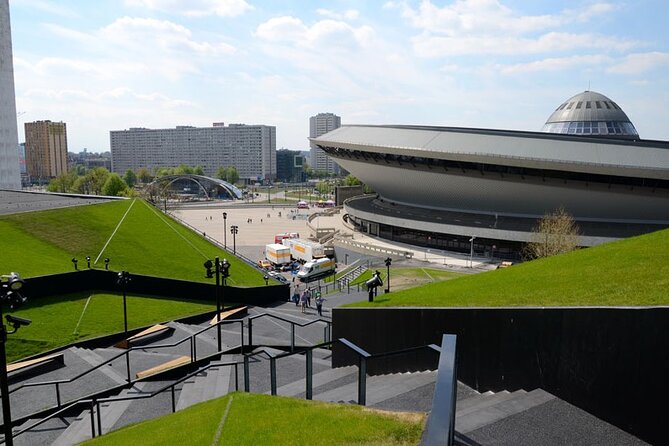
- Spodek: the modern symbol that completes the arc
- Price and value: what $81.62 buys you here
- Who should book this tour
- Should you book Katowice Old Town Walking Tour?
- FAQ
- How long is the Katowice Old Town Walking Tour?
- Where does the tour start and end?
- Is this tour private, and is it offered in English?
- How much walking is involved, and what fitness level is needed?
- Are the admissions at the stops included?
- Are service animals allowed?
- What if the weather is bad or I need to cancel?
Key highlights
- A private, English-speaking route that fits your group
- 6.5 km walked in about 3 hours, with frequent photo-and-story stops
- Market Square to Spodek, mapped like a story instead of a checklist
- Churches and institutions that show Silesia’s mixed cultural roots
- Monuments that connect daily life to major 20th-century events
- Listed free entry for the featured stops
Around the Rynek and the Cloth Hall, a few more
- Old Town Krakow & Wawel Castle Walking Tour
★ 5.0 · 1,508 reviews - Krakow: Bike Tour of Old Town, Jewish Quarter and the Ghetto
★ 4.9 · 1,155 reviews - Krakow: The Old Town Walking Tour
★ 4.8 · 794 reviews
A 3-hour 6.5 km walk through Silesia’s “mixed” identity
This tour is designed for people who want more than pretty facades. You’ll move through Katowice’s Old Town and see how one region can carry multiple influences at once—Slavic roots, German ties, Catholic and Protestant presence, and later political change.
It runs about 3 hours and covers roughly 6.5 km. That’s not “sit on a bench” sightseeing. It’s a steady walk with short segments, so you’ll be switching between fresh streetscapes and tight bursts of context. If you like to understand what you’re looking at—why a building looks the way it does—this format works well.
The route also loops back to the starting point. You don’t have to keep re-planning your day after the tour ends.
Starting at Silesian Theatre and the Market Square reset
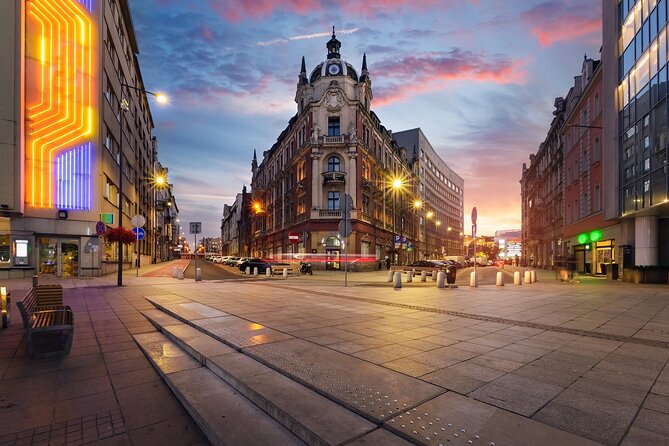
You begin at Silesian Theatre near the Rynek area, at Rynek 10. This matters because it puts you in the city center right away, with the “old and new” vibe the tour is trying to capture.
From there, your first stop is Market Square, where the tour balances big-city landmarks with street texture. You’ll also hear about the Silesian Theater area, plus shopping buildings tied to the communistic-era look—named Skarbek and Zenit. The tour frames these as more than architecture. They’re part of how the city lived through different political eras.
And you get an extra layer at the same time: the tour nudges you toward the local rhythm of eating and drinking—what the description calls Silesia’s party and an out-and-about venue. Even if you don’t stop for a meal, you’ll at least understand the “why” behind the social atmosphere around the square.
Practical note: this first stretch is where you should decide how much you want to snack or sip. If you’re the type who likes to keep momentum, you can plan to eat later. If you like a quick coffee break, this is a good spot to do it before you get deeper into churches and monuments.
Kosciol Mariacki: what outside beauty and inside art teach you
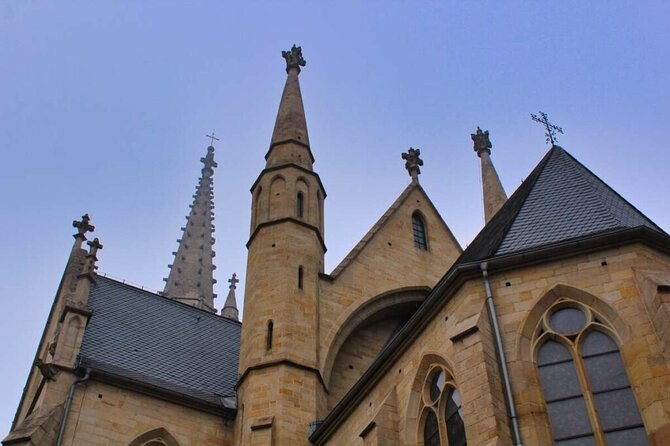
Next comes Immaculate Conception Catholic Church (Kosciol Mariacki). Outside, it’s described as breath-taking architecture, which is a fair warning: don’t rush your photos. These stops are short, so if you want a good look, give yourself a few moments to slow down.
Inside, the tour focuses on artworks by top Polish artists. That’s a key reason to include this church in an Old Town walking tour. You’re not just seeing stonework; you’re seeing how cultural identity gets expressed through art.
This is also where the tour’s bigger theme starts to click. Even before you reach the later “faith contrast” stop, you’ll feel how religion and region connect here—Catholic foundations, artistic identity, and a sense of continuity through time.
If you’re sensitive to crowds, go a little calmly in here. Short stops mean the group can arrive together, and churches can get busy depending on timing.
On foot through the Old Town, more guided walks
- Old Town Krakow & Wawel Castle Walking Tour★ 5.0 · 1,508 reviews
- Creepy Krakow: 2-Hour City Walking Tour★ 4.7 · 1,131 reviews
- Krakow: The Old Town Walking Tour★ 4.8 · 794 reviews
- Krakow: Kazimierz Jewish Quarter Walking Tour★ 4.8 · 571 reviews
Academy of Music in Katowice: culture that stays serious
Then you hit Academy of Music in Katowice, described as the most prestigious music academy in Poland. Even though your time at this stop is brief, it’s a useful pivot: the tour isn’t only about churches and monuments. It also points you to how Katowice keeps producing culture.
Think of it like this: monuments tell you what a city remembers. A music academy tells you what a city trains.
This one is mostly a “see and situate” stop—good for travelers who enjoy getting a quick sense of local institutions without a long museum detour.
Silesian Parliament and the story of autonomy
At Silesian Parliament, you’re looking at the former seat of parliament for the Autonomous Silesia Region. This is the kind of stop that’s short on minutes but long on meaning.
Silesia’s political story is often the missing piece when people only focus on buildings. Here, the tour gives you the frame: this region wasn’t just a place on a map; it had its own political structure and identity.
If you like learning how borders and governance shape everyday life, this stop is a good match. It also sets up the later monument moments, so the uprisings and memorials don’t feel random. They feel connected.
A local theater stop: why informal culture matters
The itinerary includes a “local’s favourite theater” with an informal vibe. Even without extra details in the description, the point is clear: Katowice isn’t only grand monuments and religious architecture. It has casual cultural life too.
This stop is valuable because it breaks the pattern. After parliament and church stops, you need a breath—something more human. A theater, even when you only pass by, communicates that people gather here for stories, not only for worship or politics.
If you’re a planner type, you might want to check the theater’s schedule before your tour day. The tour description doesn’t promise anything specific, so treat it as a nudge to explore local events.
Cathedral of Christ the King: Catholic outside, Protestant inside
One of the standout conceptual stops is the Cathedral of Christ the King. The tour describes it as Catholic-like on the outside but Protestant-like inside. That contrast is not a random design quirk. The tour explains it as reflecting the mixed origins of the Silesia region and its spirituality.
I like this stop because it turns architecture into a lesson. You’re taught to look for differences rather than assuming one tradition dominates. It’s also a strong example of why Silesia can feel complicated in a meaningful way—not messy, just layered.
The “mixed” story connects to what you’re hearing across the tour, including how Silesia shifted between different rulers and cultural influences. In the reviews, the guide’s explanation of Silesia changing hands between Slavs and Germans is called out as especially interesting. Stops like this cathedral help that political history make sense emotionally and visually.
Practical tip: cathedral interiors can require a bit more time for viewing details. Your stop is about 10 minutes, so focus on the contrast the tour highlights—how the interior atmosphere differs from the outside impression.
Stawowa and Miarka Square: tenements, the old school, and street character
Now you shift into street-level Katowice. You pass through Miarka Square, Dworcowa street, and 3 maja street, then head to Stawowa.
This part of the walk is about atmosphere and everyday heritage:
- You get to appreciate 19th-century tenements
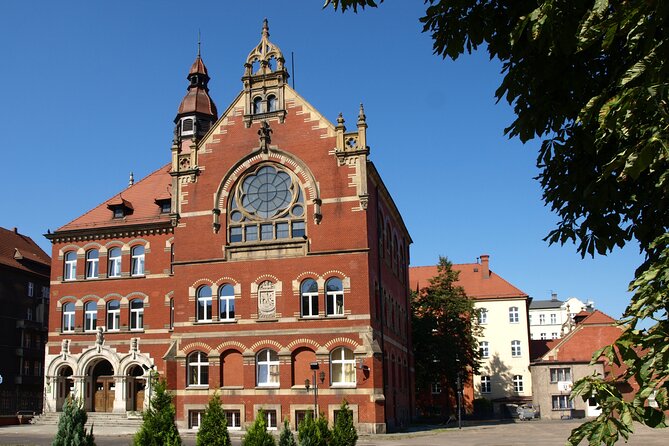
- You can see the oldest high-school in Katowice
- You get a sense of how the city’s education and daily life evolved over time
Short stops like this can become photo-and-go. But when the guide keeps the story attached, the old apartment blocks and street corners stop being background. They become part of why Katowice feels like more than a stopover city.
The tour also includes a monument commemorating Silesian scouts opposing Nazis in 1939. Memorials like this can be heavy. The value here is that they’re not just plopped in; they’re part of the route’s “memory map.” You’ll connect it to the later monument commemorating uprisings too.
And Stawowa is described as a venue for art exhibitions, international meetups, and other events. That’s a helpful reminder: history isn’t only stored in museums. It can sit in the middle of a place where people still show up.
If you’re traveling with family, this section is often more tolerable for kids than churches—because you’re looking at streets, buildings, and public spaces.
Silesian Insurgents’ Monument: three uprisings, one visual focal point
Next is the Silesian Insurgents’ Monument (Pomnik Powstańców Śląskich). The tour marks it as a commemoration of three Silesian uprisings.
This is one of those stops where you don’t need a long explanation to feel the weight of what you’re seeing. But you do benefit from the guided framing—what these uprisings were, and why they mattered for the region’s identity.
If you’re trying to understand Katowice through the lens of Silesia’s story, this monument is a turning point. It connects the earlier governance and autonomy theme with the later city symbol.
Spodek: the modern symbol that completes the arc
Finally, you reach Spodek, described as the symbol of the city. This is a great ending stop because it gives you a “present-day Katowice” view after walking through layers of past.
Spodek works as a finishing beat: you end on something instantly recognizable, so you leave with a mental image you can anchor to. It also makes sense emotionally—if you’re learning how identity shifts over time, ending with a modern symbol feels right.
Your tour ends back at the meeting point, so you can easily continue your own day plan: coffee, food, or hopping to another neighborhood.
Price and value: what $81.62 buys you here
At $81.62 per person for about 3 hours, the price might look steep if you compare it to a self-guided walk. But value isn’t just about how many buildings you see. It’s about how fast you understand them.
This tour is private, and it’s offered in English. That matters because you’re not sharing interpretation with strangers, and the route’s tight timing depends on good pacing from the guide. Your money is buying:
- curated order (so stops connect logically)
- interpretation (so architecture becomes understandable)
- time saved (you’re getting a ready-made walking story)
The tour description also lists free admission tickets at each major stop. That’s another value point: you’re not paying extra to get into the sights the tour is pointing out.
If you’re traveling as a duo or solo, the “private” angle can make the cost feel more reasonable compared to larger-group tours. If you’re the type who likes history but doesn’t want to read for three days before your trip, this format is a good deal.
Who should book this tour
This is a strong fit if you want:
- a guided walk that explains why Silesia feels layered
- practical timing (3 hours, not an all-day commitment)
- frequent short stops that keep you moving and learning
- a private English guide setup, not a large crowd experience
It’s less ideal if:
- you dislike walking (it’s 6.5 km)
- you need long sit-down breaks between stops
- you’re expecting museum-level time at each location (this is designed for overview and context)
Should you book Katowice Old Town Walking Tour?
Yes, if you want a compact, guided route that turns Katowice’s buildings and monuments into one coherent story. I’d book it if your goal is to understand Silesia’s identity—political shifts, mixed spirituality, and how memory shows up in the streets.
Skip it only if walking 6.5 km in about 3 hours sounds like a chore or if your schedule can’t handle weather changes. Otherwise, it’s a smart way to get oriented and still feel like you learned something real.
FAQ
How long is the Katowice Old Town Walking Tour?
The tour lasts about 3 hours.
Where does the tour start and end?
It starts at Silesian Theatre, Rynek 10, 40-003 Katowice, Poland, and ends back at the meeting point.
Is this tour private, and is it offered in English?
Yes, it’s a private tour/activity, and it’s offered in English.
How much walking is involved, and what fitness level is needed?
You’ll walk about 6.5 km, and the tour asks for a moderate physical fitness level.
Are the admissions at the stops included?
The tour lists admission tickets as free for the featured stops.
Are service animals allowed?
Yes, service animals are allowed.
What if the weather is bad or I need to cancel?
The experience requires good weather. You can cancel for a full refund if you cancel at least 24 hours in advance; if you cancel less than 24 hours before the start time, you won’t receive a refund.
More Tour Reviews in Krakow

More Guided Walks Through Town


More Around the Main Square

Just added: fresh Krakow reviews
Old Town & Main Square Tours, compared.
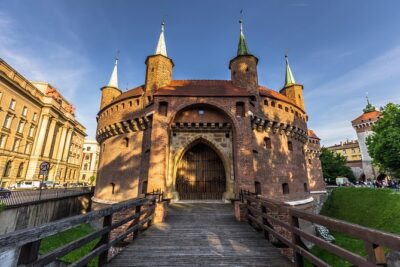 ★ 5.0Old Town Krakow & Wawel Castle Walking TourFrom $261,508 reviews
 ★ 4.9Bike Tour of Old Town, Jewish Quarter and the GhettoFrom $371,155 reviews
 ★ 4.8The Old Town Walking TourFrom $19794 reviews
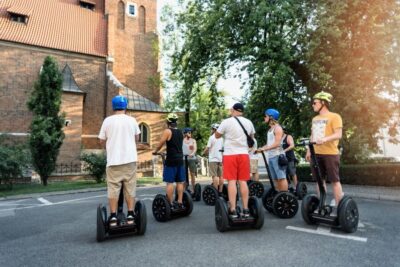 ★ 4.7Old Town Guided Segway TourFrom $55756 reviews
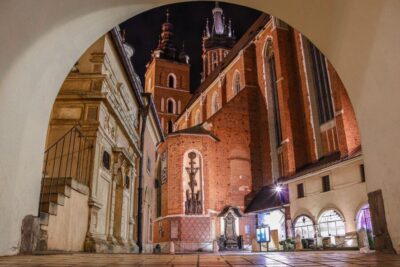 ★ 4.8Old Town & Wawel Castle Walking Tour in EnglishFrom $26532 reviews
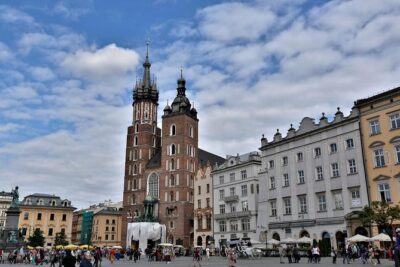 ★ 4.5Krakow Old Town Guided Walking TourFrom $33438 reviews
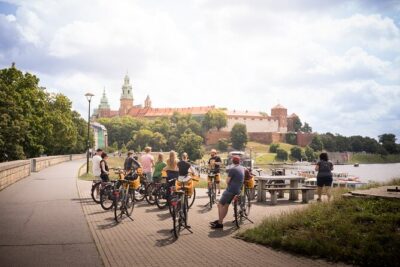 ★ 5.0Full Bike Tour – the Old Town, Jewish Qtr & the Ghetto NEW BIKESFrom $35437 reviews
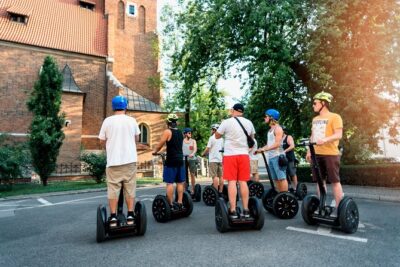 ★ 5.0Krakow Old Town Segway Tour 2hr with Training, Safety Gear, GuideFrom $57435 reviews
Browse the lists this tour appears in