
REVIEW · KAZIMIERZ & JEWISH HERITAGE TOURS
Krakow: Bike Tour of Old Town, Jewish Quarter and the Ghetto
Krakow changes when you pedal through it. I really like the way this tour strings together Old Town + Kazimierz + the ghetto area into one ride, and I love the Schindler’s List film stops that give you context for places you might otherwise only skim past. One possible drawback: since entrance tickets aren’t included, you’re mostly looking from the outside, not going inside every site.
It runs about 3.5 hours with 25 stops, a safety briefing first, and a 30-minute break to recharge and regroup. The bikes are provided, the group stays kept small for an easier experience, and you’ll ride with an English-speaking guide who brings the story to life at a pace that works for real people—not just marathon riders.
In This Review
- Key highlights worth knowing before you go
- Why biking Krakow is such a smart way to start
- Finding the meeting point and getting on the bikes
- Old Town power sequence: Main Market Square to Wawel
- Kazimierz streets: where the city’s Jewish life becomes visible
- Schindler’s List passage and the ghetto story in motion
- The guides make it: humor, pace, and keeping the group together
- Duration, energy level, and what you should bring
- Price and value: what $37 buys you (and what it doesn’t)
- Should you book this Krakow bike tour of Old Town, Kazimierz, and the ghetto?
- FAQ
- How long is the Krakow bike tour, and what’s the typical pacing?
- Where do I meet, and are there multiple start points?
- What’s included in the tour price?
- Are entrance tickets included for the sights?
- Is the tour suitable for anyone who can’t ride a bike?
- Will I have a chance to rest during the tour?
Key highlights worth knowing before you go
- 25 stops in one loop covering Old Town, Kazimierz, and WWII ghetto sites without feeling rushed.
- Schindler’s List film locations tied to what happened here during the Second World War.
- Kazimierz street-level highlights including Szeroka Street and plac Nowy.
- A planned 30-minute break around the Schindler’s List area so you can rest and refuel.
- Electric-bike time (about 15 minutes) mixed into the Main Market Square segment.
- A small-group, English guide experience that helps you keep up and stay oriented.
Deeper into Kazimierz and its Jewish heritage
- Krakow: Schindler’s Factory & Ghetto Guided Tour
★ 4.7 · 1,694 reviews - Krakow: Jewish Quarter and Former Ghetto Tour
★ 4.9 · 1,441 reviews - Krakow: Bike Tour of Old Town, Jewish Quarter and the Ghetto
★ 4.9 · 1,155 reviews
Why biking Krakow is such a smart way to start
Krakow is built for “see a lot, then pick favorites.” With a bike tour like this, you get the quick overview first—then later you can return on foot or by tram to linger where you care most. It’s also a practical way to cover ground fast: Old Town and the Jewish quarter are close enough for a loop, but far enough that walking alone can leave you tired and time-crunched.
What I like about the format is the balance of photo stops and guided time. You get repeated chances to stop, look, and take pictures, instead of one long uninterrupted ride. That matters in a city like Krakow, where the details—gates, courtyards, bridges, and street corners—are often the whole point.
The pacing is built for a mixed crowd too. Reviews include groups ranging from early teens up through older adults, which usually means the ride isn’t some “spin class” fantasy. You still should expect cobbles in places and a bit of effort over river crossings, but the route is planned for straightforward cycling through quieter/pedestrian-friendly streets.
Finding the meeting point and getting on the bikes
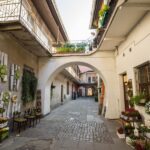
You’ll meet at the tour office inside a courtyard. To get there, enter through the gate marked Chicago music club. That may sound oddly specific, but it’s exactly the kind of detail that prevents 10 minutes of wandering in circles right before a tour.
There are also two starting location options tied to the bike shop area (one at Sławkowska 11, and another at the Old Town shop listing). If you’re booking close to your arrival time, I’d treat this as your checklist: confirm which pickup you’re using, arrive a touch early, and be ready to roll.
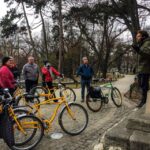
Once you’re kitted up, you’ll start with a safety briefing. That’s useful because even when a city feels bike-friendly, it helps to know the rules of the road for your exact route. From reviews, the bikes are generally in good condition, and people mention features like baskets that help you carry water, a jacket, or your camera without juggling everything on your handlebars.
If you want a helmet, ask. One rider noted helmets were available on request, and it’s the kind of small comfort that can make a long ride feel easier.
Old Town power sequence: Main Market Square to Wawel
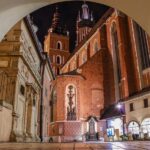
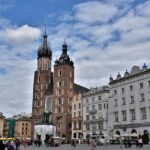
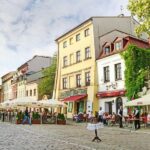
The tour begins in Old Town, starting at the core sights where Krakow’s “postcard” version overlaps with the real city. Your first big stop is the Main Market Square. You’ll get a guided moment there, plus some time to shoot photos. Expect you’ll also get an electric-bike ride segment here, which is a nice trick for reducing stress when the group is getting going and traffic is most chaotic.
From there, it moves quickly through landmarks that define the city’s layout:
- Juliusz Słowacki Theatre: a photo stop that frames Krakow’s cultural side beyond churches and squares.
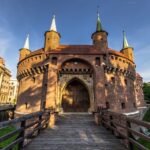
- Florian Gate: a classic Old Town entry point—this is the kind of structure that helps you understand why Krakow feels like a city of layers and walls.
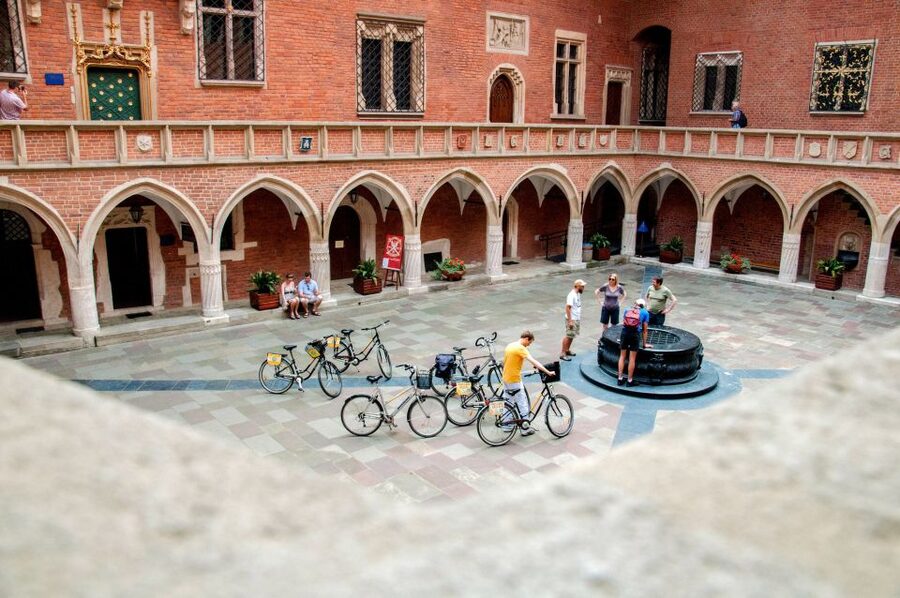
- Jagiellonian University: you’ll stop for a guided look and photo moment. It’s not just a pretty campus stop—it anchors Krakow as a long-lived academic center, not only a medieval relic.
You’ll also see Bishop’s Palace (photo + guided time). Even if you don’t memorize every architectural detail, these stops help your brain build a mental map: who lived where, who had influence, and how the city’s power lined up with its geography.
Then comes the Vistula Krakow segment for scenic river views and a guided route through the way you ride between major points. It’s a breather stop in the middle of the “big-city” section, so you can reset your posture and enjoy the open sightlines.
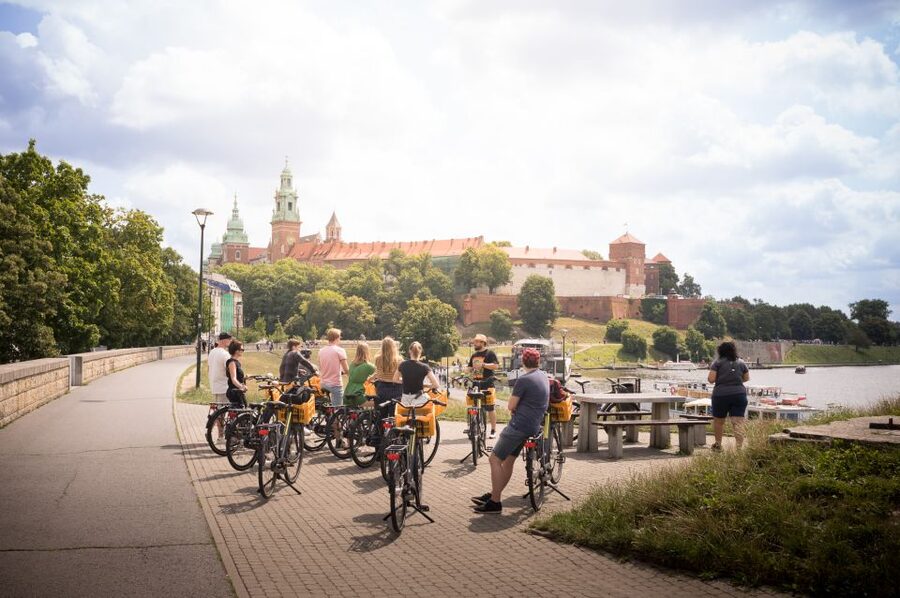
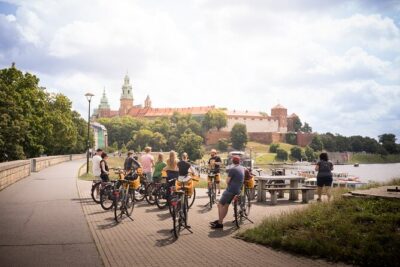
Finally, the big-ticket transition: Wawel Royal Castle and the Wawel Dragon Statue. You’ll get photo and guided time here, and the stop works because it’s both iconic and anchoring. Even if you’ve seen Wawel in photos, seeing it while you’re actively moving gives you better spatial context—how it sits above the river and how the Old Town wraps toward it.
Around the Rynek and the Cloth Hall, a few more
- Krakow: Bike Tour of Old Town, Jewish Quarter and the Ghetto★ 4.9 · 1,155 reviews
- Krakow: The Old Town Walking Tour★ 4.8 · 794 reviews
- Krakow: Old Town Guided Segway Tour★ 4.7 · 756 reviews
- Kraków: Old Town & Wawel Castle Walking Tour in English★ 4.8 · 532 reviews
Kazimierz streets: where the city’s Jewish life becomes visible
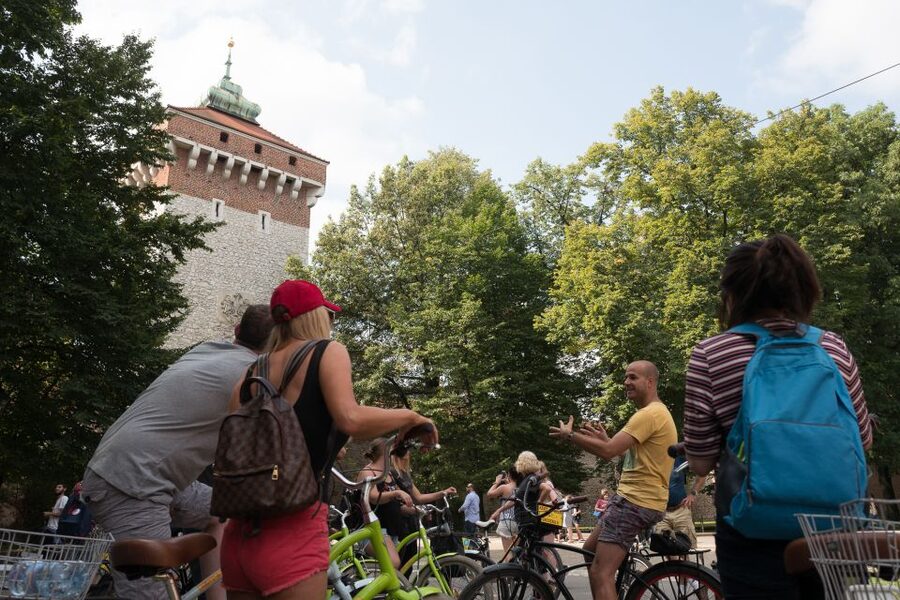
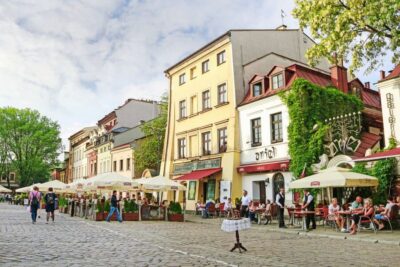
After the royal/Old Town cluster, the route flows toward Kazimierz, the district most closely tied to Jewish Krakow. The ride still includes guided stops and photo moments, but the vibe shifts: streets feel more human-sized, and your attention goes from monuments to neighborhoods.
Stops you’ll cover in this stretch include:
- Kazimierz itself, with a guided photo stop that sets context before you go deeper.
- plac Nowy, a square that’s easy to picture as a daily-life hub.
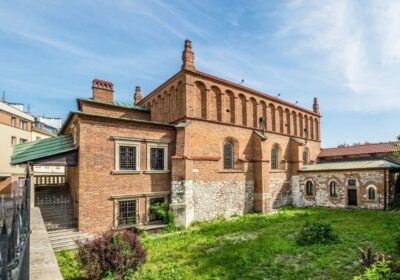
- Szeroka Street, a key axis in the area, worth slowing down for because it’s where the city’s identity shows up in everyday space rather than only in one famous building.
- Father Bernatek’s Bridge, a short stop that’s only a moment on the bike route—but visually it can be a strong “connect-the-two-sides” marker.
One thing I appreciate about cycling through Kazimierz is how it keeps you from getting stuck at one viewpoint. Walking can make you feel like you’re always arriving; biking makes you feel like you’re traveling through. That’s helpful when you’re trying to understand a district as an area, not just a list of stops.
Also, take your time with photos here. The stops are short, but you get more than one “look” if you pay attention to the guide’s timing and the moments they call out.
Schindler’s List passage and the ghetto story in motion
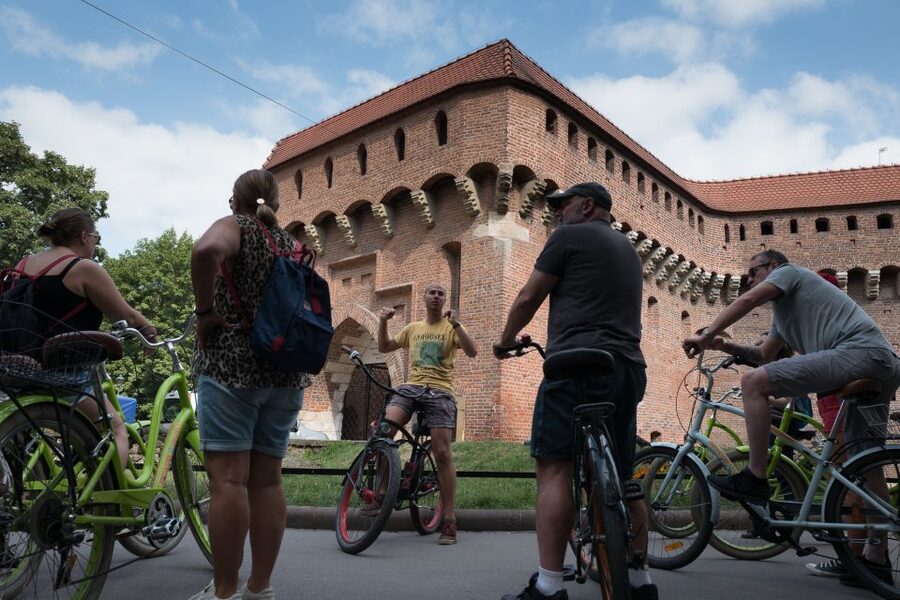
This is the section where the ride becomes more than sightseeing. You’ll have a Schindler’s List Passage stop that includes a break time plus photo and guided explanation. That break matters because the subject is heavy, and giving everyone a chance to pause makes the tour feel more respectful and less rushed.
Then the itinerary continues into WWII-linked locations tied to the former ghetto area. You’ll see Ghetto Heroes Square and Oskar Schindler’s Factory as photo and guided stops.
A helpful way to think about these stops is that they’re arranged as a story arc:
- First you’re oriented with filming locations that people recognize.
- Then you connect those cinematic memories to the geography of what happened here.
- Finally, you move toward sites linked to rescue and survival narratives.
Because entrance tickets aren’t part of the package, plan on learning through the guide’s pointing, timing, and context rather than through on-site museum time. If you’re the type who likes to linger inside exhibits, you might want to schedule a separate visit later.
Still, even just riding and stopping at these locations can do a lot for your understanding—especially if it’s your first time in Krakow or your first time engaging this part of history in Poland. The bike format also helps you avoid the feeling of “one sad stop then back on the street.” You get the story as a sequence.
The guides make it: humor, pace, and keeping the group together
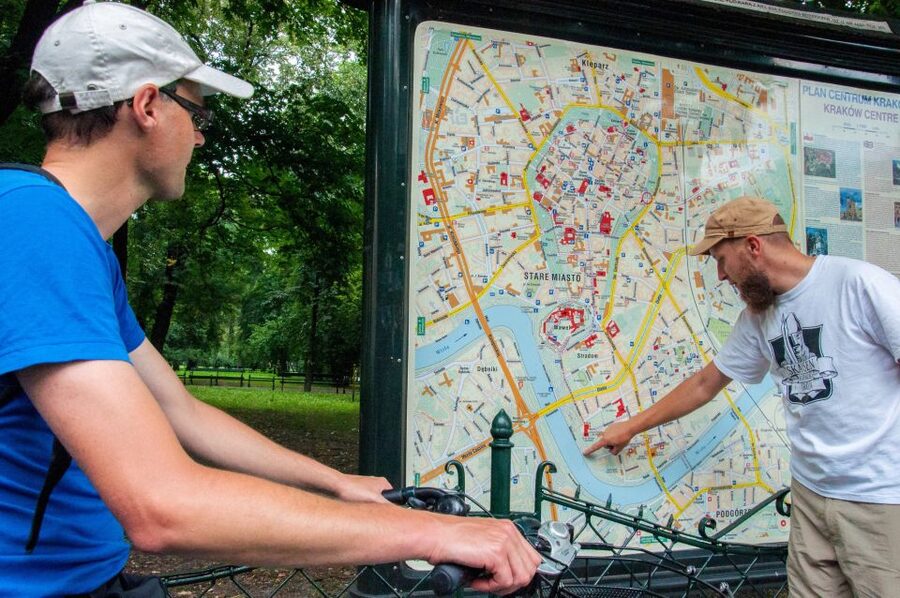
This tour has a strong reputation for guides who can hold a group’s attention. Names that show up repeatedly in bookings include Christopher, Tomasz/Thomaz, Michael, and Krzysztof. Different guides, same pattern: clear English, good storytelling, and a pace that keeps everyone together.
One reason this matters on a bike tour is simple: if the guide is sharp and organized, you don’t spend your time guessing where to go or waiting at the wrong corner. Reviews also mention guides making sure bikes feel comfortable and that riders don’t get lost.
You’ll feel this most during the ride transitions—when the group moves from square to gate to university to river views, and then later from Old Town into Kazimierz. A good guide makes those changes feel smooth, not like “now we’re somewhere else.” One rider even noted routes through pedestrian or quiet roads, which is exactly what you hope for when you want cycling to feel easy rather than stressful.
Pacing-wise, most feedback points to an easy ride plan with just one “pay attention” moment: the river bridge segment. It’s not portrayed as a deal-breaker, but it’s worth taking slowly and not treating it like a race.
Duration, energy level, and what you should bring
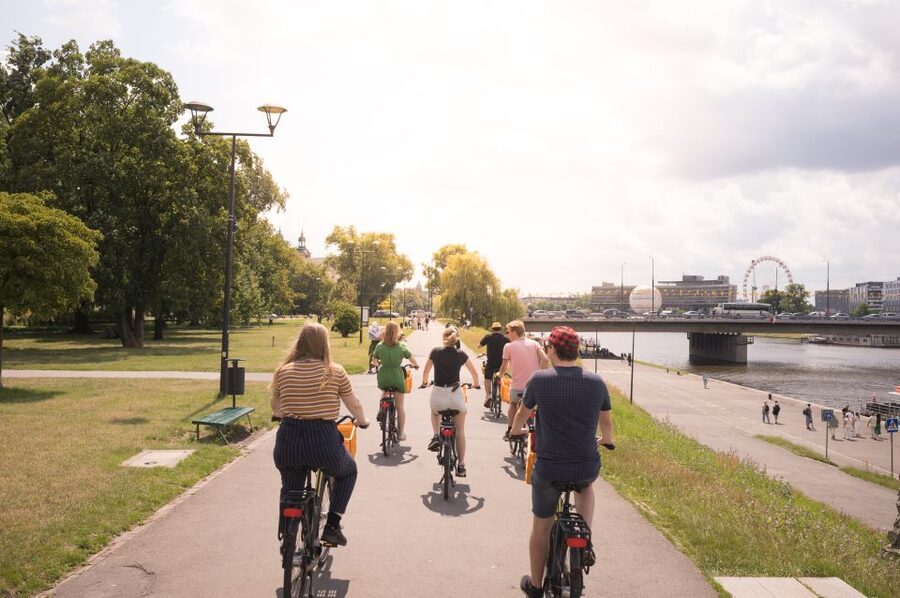
At 210 minutes (about three and a half hours), this tour sits in the sweet spot. It’s long enough to cover a real stretch of the city, but short enough that you shouldn’t feel wrecked by dinner.
Here’s what you should plan around:
- You start with a safety briefing.
- You’ll have photo and guided stops throughout.
- There’s a 30-minute break around the Schindler’s List area for rest and refreshments (though refreshments themselves aren’t included).
- You’ll finish with drop-off back near Sławkowska 11 / the tour base area.
The route is described as flat and easy in general terms, which makes this a good choice if you’re new to biking in European cities. Still, be ready for cobbles at times and for steady, controlled riding over the river bridge area.
What to bring: water, a light layer, and a camera strap or small bag that works on the bike. Since entrance tickets aren’t included, there’s no need to carry ticket wallets for specific museums—but you may want to bring cash or a card for snacks afterward.
If you’re sensitive to the darker parts of Krakow’s WWII story, it can help to go in with the right mindset. This tour does include guided explanations at ghetto-related stops, and it also builds in a rest break, which is one practical way the tour handles the emotional weight.
Price and value: what $37 buys you (and what it doesn’t)
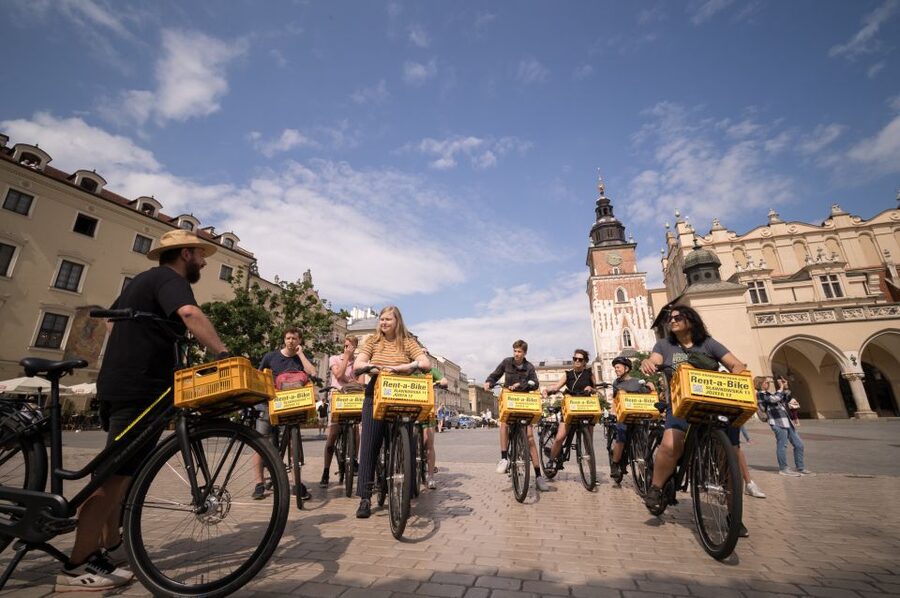
At about $37 per person for roughly 3.5 hours, you’re paying for a setup that’s hard to replicate on your own: bikes, an English-speaking guide, and the structure of a carefully planned route with 25 stops. You’re also covered by a safe cyclist insurance package, which is a small line item that can make a big difference in peace of mind.
For value, two details matter most:
- The guide time. If you’ve ever tried to self-tour Jewish Krakow and WWII sites, you know how much context you miss without a storyteller. Here, the guide supplies that context and keeps the sequence understandable.
- The bike coverage. Cycling between distant points in a historic city is faster than walking, and it keeps you moving through neighborhoods rather than just arriving at monuments.
What’s not included: refreshments and entrance tickets. So if you’re the type who wants to step inside major sites or museums, you’ll need to pay separately for that. But if your goal is to see the main sights, get orientation, and understand the story behind key locations, this price usually feels fair.
One more “value” factor from reviews: people consistently describe the bike tour as a highlight when they’re on a short stay. If it’s your first day, this can function like your Krakow map—helping you decide what to revisit on your own later.
Should you book this Krakow bike tour of Old Town, Kazimierz, and the ghetto?
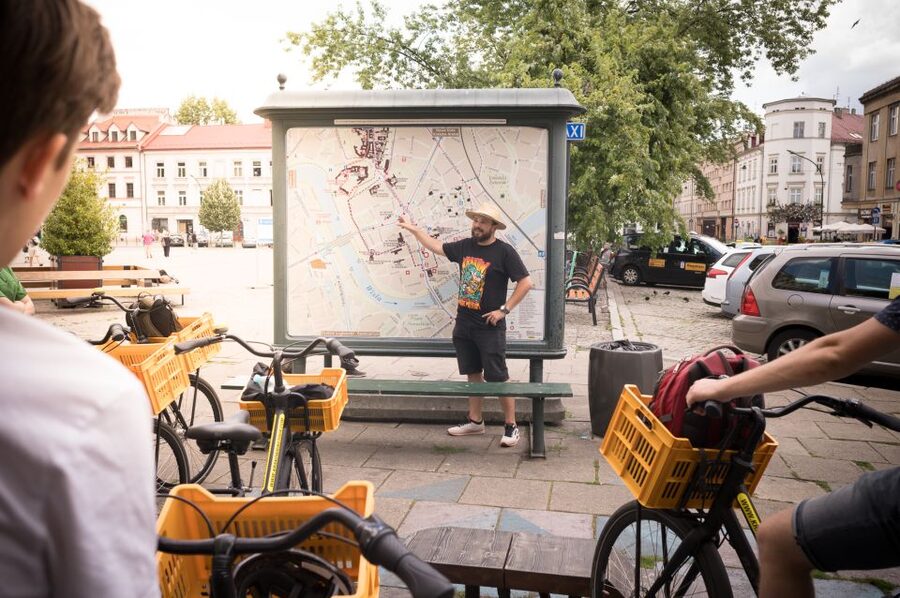
Book it if you want a fast, guided overview that mixes classic Krakow sights with Jewish quarter and ghetto history, all from a bike seat. It’s especially appealing when you like the idea of photo stops + short guided lessons and you want someone to connect the dots between film locations and real-world history. The small-group feel and the strong guide reviews are also a good sign for first-timers.
Skip it if you can’t ride a bike, need mobility accessibility accommodations, or you’re traveling with a very young child (the tour isn’t suitable for babies under 1 year). Also skip it if your priority is entering museums and historic interiors—entrance tickets aren’t part of the package, so your experience will be mostly exterior viewing and interpretive storytelling.
If you’re still deciding, my practical advice is to use it as your orientation tour. Get your bearings fast, capture the key sights, and then plan your deeper returns based on what hits you most—Old Town for architecture, Kazimierz for neighborhood rhythm, or the WWII ghetto sites for historical context.
FAQ
How long is the Krakow bike tour, and what’s the typical pacing?
The tour lasts about 210 minutes (around 3.5 hours). It includes a safety briefing, multiple photo and guided stops, and a 30-minute break to rest and regroup.
Where do I meet, and are there multiple start points?
You meet at the tour office inside the courtyard of the building, reached by entering through the gate with a sign Chicago music club. The activity lists two starting location options, including Sławkowska 11 and an Old Town bike shop.
What’s included in the tour price?
The price includes the bikes and an insurance package for safe cyclists. You’ll also have a live English-speaking guide.
Are entrance tickets included for the sights?
No. Entrance tickets are not included, so you should plan on viewing and learning at stops rather than expecting museum entry with this ticket.
Is the tour suitable for anyone who can’t ride a bike?
No. It’s not suitable for people who can’t ride a bike, and it’s also not suitable for people with mobility impairments.
Will I have a chance to rest during the tour?
Yes. There is a 30-minute break built into the schedule, including time around the Schindler’s List Passage area for refreshments and regrouping.
Krakow on Two Wheels

More Around the Main Square

More of Jewish Kazimierz
Just added: fresh Krakow reviews
Kazimierz & Jewish Heritage Tours, compared.
 ★ 4.7Schindler’s Factory & Ghetto Guided TourFrom $571,694 reviews
 ★ 4.9Jewish Quarter and Former Ghetto TourFrom $191,441 reviews
 ★ 4.8Kazimierz Jewish Quarter Walking TourFrom $27571 reviews
 ★ 4.8Kazimierz, Schindler’s Factory & Ghetto Guided TourFrom $81460 reviews
 ★ 5.0Full Bike Tour – the Old Town, Jewish Qtr & the Ghetto NEW BIKESFrom $35437 reviews
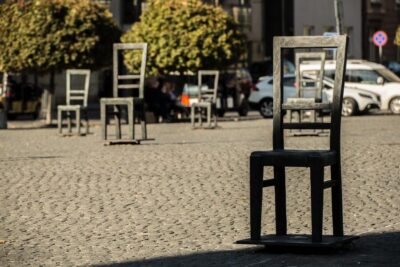 ★ 4.6Jewish Ghetto Walking TourFrom $11349 reviews
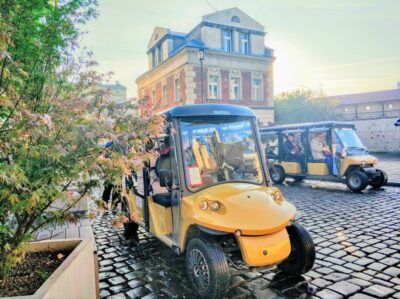 ★ 4.6Jewish Quarter and Ghetto Electric Golf Cart TourFrom $34348 reviews
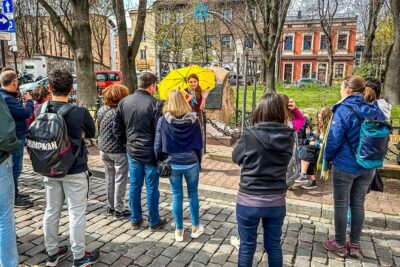 ★ 5.0Jewish Krakow Walking TourFrom $26307 reviews
Browse the lists this tour appears in