
REVIEW · OLD TOWN & MAIN SQUARE TOURS
Krakauer old town tour
Krakow’s center almost feels untouched. This 150-minute old town tour threads you through one of Europe’s best-preserved cores, part of UNESCO’s heritage, while you connect the sights to the stories that made Krakow matter. I especially like how the route keeps you focused on big landmarks like the Wawel area and the UNESCO Old Town without turning it into a lecture marathon.
I also like the way the guide turns buildings into people and legends. You’ll hear about kings and power, plus the famous Wawel dragon story, and you’ll step into places tied to early university life like Collegium Maius. One thing to consider: the pacing is built for efficiency, and if you prefer slow, linger-long photos, you may feel the schedule is a bit tight.
Good news: the tour runs in any weather with a roof option if it rains or turns cold. The main language is German, so it’s best if you’re comfortable following in that language (or at least picking up the essentials).
In This Review
- Key Things You’ll Notice on This Krakow Old Town Tour
- Krakow Old Town That Still Reads Like a Story
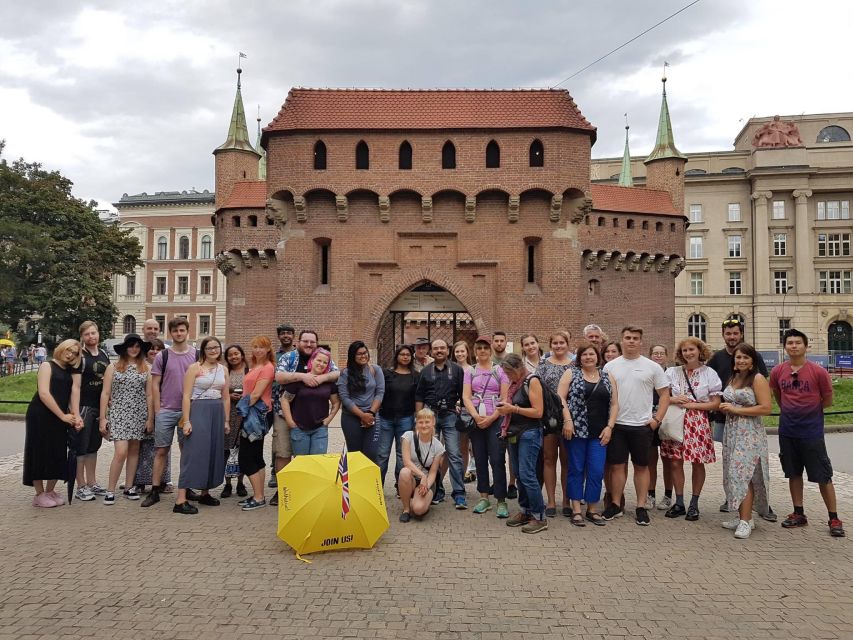
- Meeting Point and First Orientation Between Barbakan and St. Florianstor
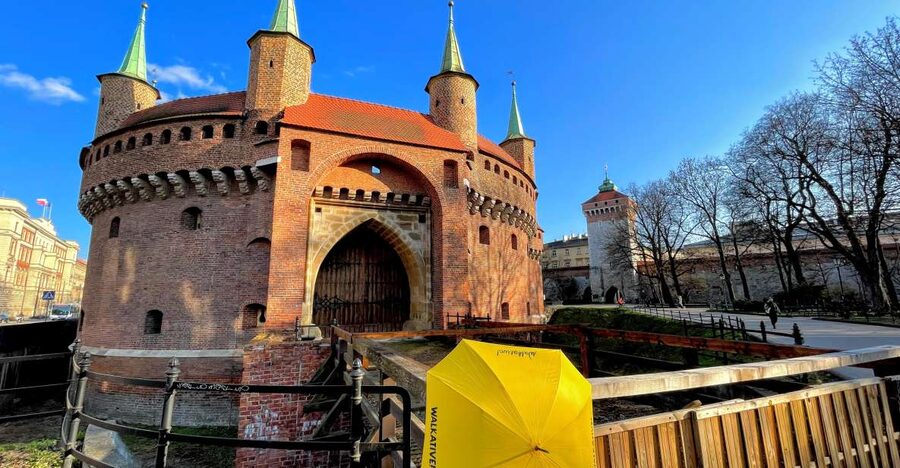
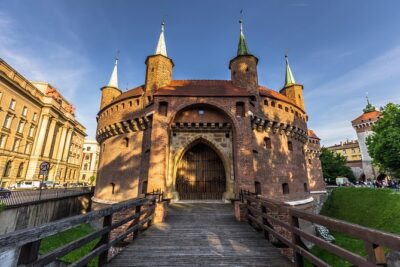
- Medieval Defenses: City Walls and the Barbican
- The Main Market and Tuchhalle: Where Commerce Met Power
- St. Mary’s Basilica and the Trumpeter: Faith With a Character
- Collegium Maius: Krakow’s University Roots in Central Europe
- Archbishop’s Palace and the Papal Window
- Wawel Hill, Cathedral Area, and the Castle Courtyard
- The Wawel Dragon: Legend You Can Actually Feel
- Value and Price: What $26 Buys You for 150 Minutes
- Pace, Group Feel, and How to Get the Best Experience
- Should You Book the Krakauer Old Town Tour?
- FAQ
- How long is the Krakauer Old Town Tour?
- What sites are included during the tour?
- Where do we meet for the tour?
- Is the tour really in German?
- Does the tour run in bad weather?
- Is the tour wheelchair accessible?
Key Things You’ll Notice on This Krakow Old Town Tour
- UNESCO Old Town and Wawel on the same loop, so you get context instead of random sightseeing
- Royal Route highlights like St. Mary’s Basilica and Krakow’s main market, explained in story form
- Medieval fortifications including the city walls and the Barbican, not just churches and palaces
- Collegium Maius plus university-era connections, including references tied to Copernicus
- Wawel Hill experiences, from the cathedral area/courtyard views to the legend of the dragon
Around the Rynek and the Cloth Hall, a few more
- Old Town Krakow & Wawel Castle Walking Tour
★ 5.0 · 1,508 reviews - Krakow: Bike Tour of Old Town, Jewish Quarter and the Ghetto
★ 4.9 · 1,155 reviews - Krakow: The Old Town Walking Tour
★ 4.8 · 794 reviews
Krakow Old Town That Still Reads Like a Story
There’s a reason Krakow’s Old Town feels different from many “pretty old cities.” The streets and landmark positions are so intact that you don’t just see history—you can use it to understand the city’s layout and priorities. On this tour, you start getting the big picture quickly: Krakow grew into a power center, and its main stages of life—rule, faith, learning, defense—show up in the same walkable space.
The tour’s format is built around that idea. Instead of handing you a checklist, the guide gives you the connecting tissue between sites. That’s what makes it more satisfying than snapping photos and moving on.
If you like architecture but also want meaning, this approach fits you well. You’ll be told why certain buildings mattered, how power worked, and why specific legends still stick around in public imagination.
Meeting Point and First Orientation Between Barbakan and St. Florianstor
You’ll meet at a small spot between the Barbakan and St. Florianstor, the medieval gateway into the city. That’s a smart starting point because it puts you immediately in the “how Krakow guarded itself” mindset before you jump into the heart of the center.
From there, your first minutes are about getting oriented. You’ll see part of the city’s defensive story right away, which also helps later when you’re looking at the layout of the Old Town.
Practical tip: arrive a few minutes early so you can settle and start listening without a scramble. This is the kind of walking tour where the timing is part of the value.
Medieval Defenses: City Walls and the Barbican
One of my favorite parts of many old-town tours is when they step beyond the postcard churches and show the “infrastructure of protection.” Here, you get medieval city walls and the Barbican in the mix.
This matters because it changes how you interpret everything else. When you see how Krakow defended itself, palaces and churches stop feeling like isolated masterpieces and start looking like components in a bigger system: authority at the top, faith at the center, and defense around the perimeter.
You’ll get explanations of what those fortifications were for, and you’ll also learn how the city’s planning shaped movement through the Old Town.
If you’re the type who gets excited by walls, gates, and the logic of old defenses, you’ll likely enjoy this section more than you expect.
- Krakow: Wieliczka Salt Mine Tour with Entry Ticket★ 4.6 · 10,927 reviews
- Krakow–Zakopane: Cable Car, Chocholow Baths, Cheese & Vodka★ 5.0 · 10,720 reviews
- Krakow: Auschwitz-Birkenau Guided Tour with Pickup & Lunch★ 4.5 · 9,800 reviews
- From Krakow: Wieliczka Salt Mine Tour★ 4.6 · 9,393 reviews
The Main Market and Tuchhalle: Where Commerce Met Power
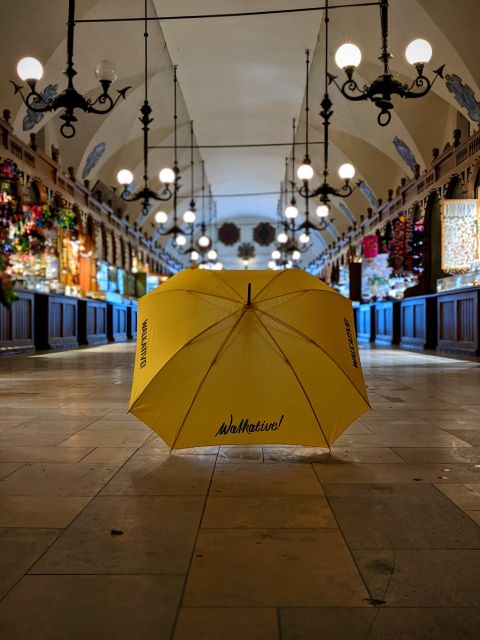
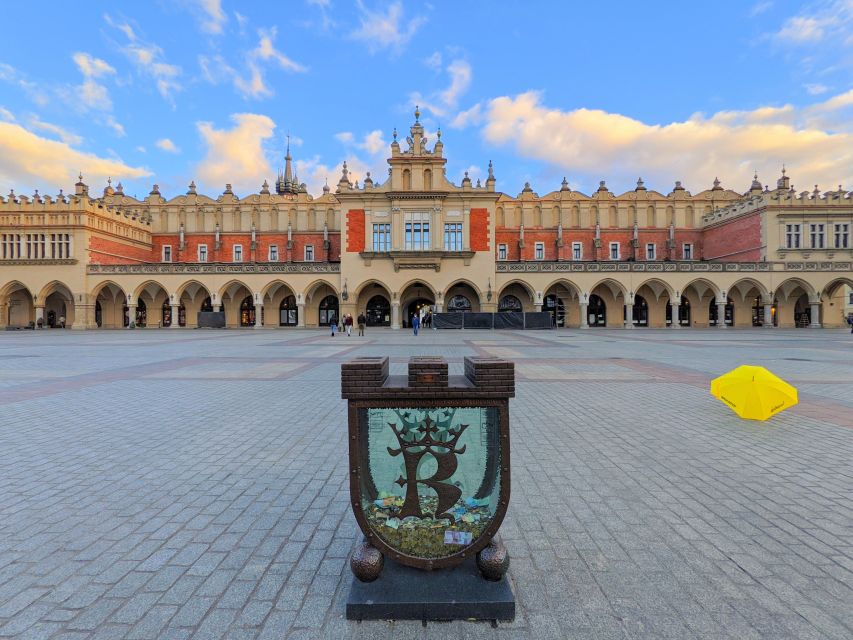
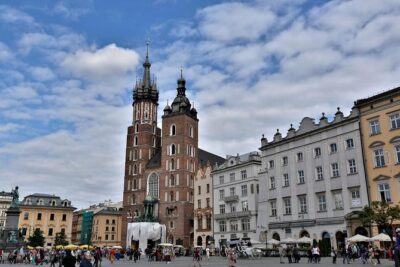
Next you move into the busy main market and the Tuchhalle. This is the spot where you can feel the city’s rhythm: the market wasn’t just economic life, it was also public life.
The tour ties the market to the larger story of Krakow’s importance—especially its role as a key European capital at its peak. That’s what makes the market section more useful: you’re not just standing in the “main square,” you’re learning why this area kept pulling everything toward it.
One practical note: the market area can get crowded. If you want photos without people in them, you’ll have to accept some waiting or choose angles quickly when your group has a moment.
St. Mary’s Basilica and the Trumpeter: Faith With a Character
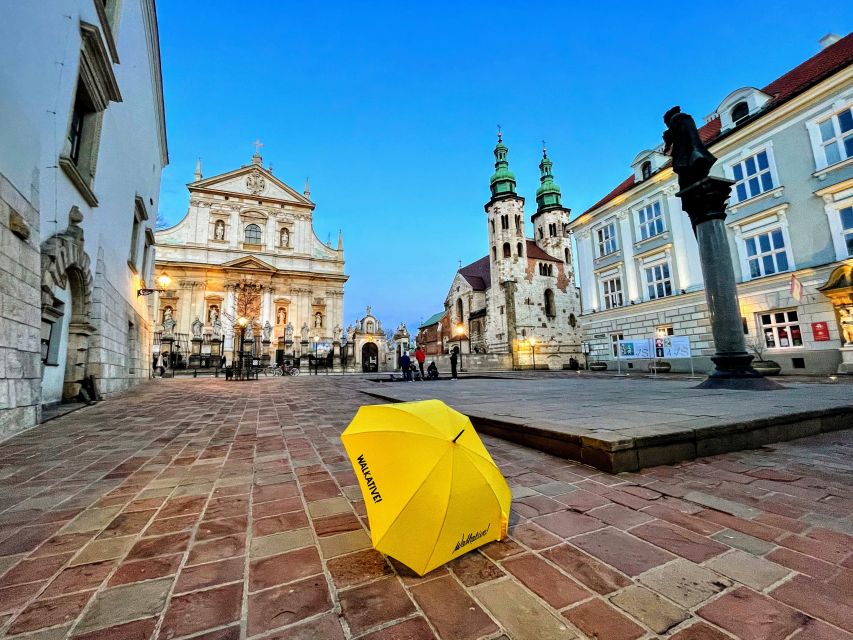
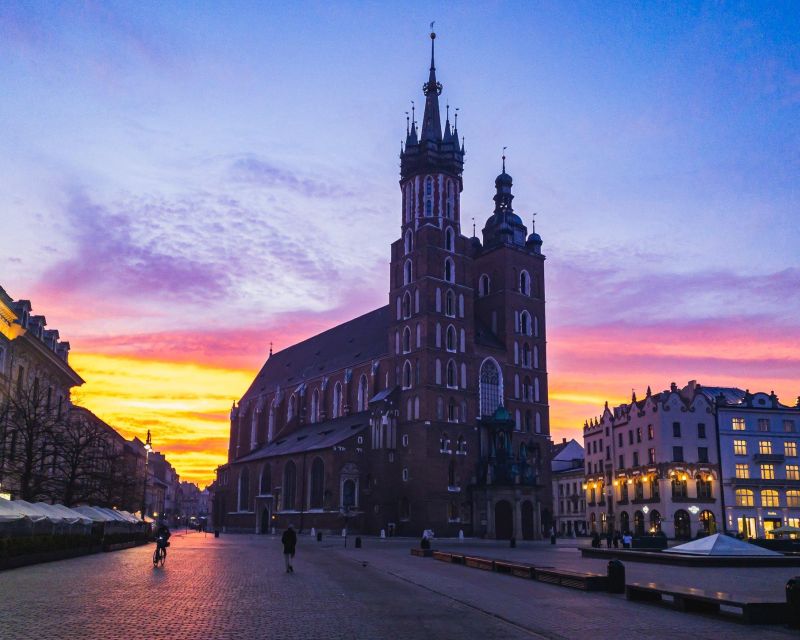
St. Mary’s Basilica is a must-stop in Krakow for good reason, and this tour uses it to teach you the difference between “seeing a church” and understanding what a church meant here. You’ll get to know the basilica and its famous trumpeter feature.
This is one of those moments where the story form really helps. You remember the visual because it’s tied to a recognizable detail, and you understand why it’s part of Krakow’s identity, not just a decorative stop.
Even if you’re not a “church person,” this section tends to land well because it’s grounded in the city’s everyday cultural life, not only religious architecture.
Collegium Maius: Krakow’s University Roots in Central Europe
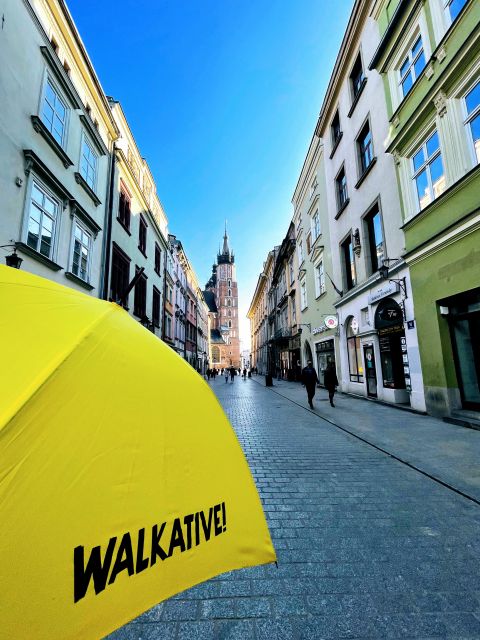
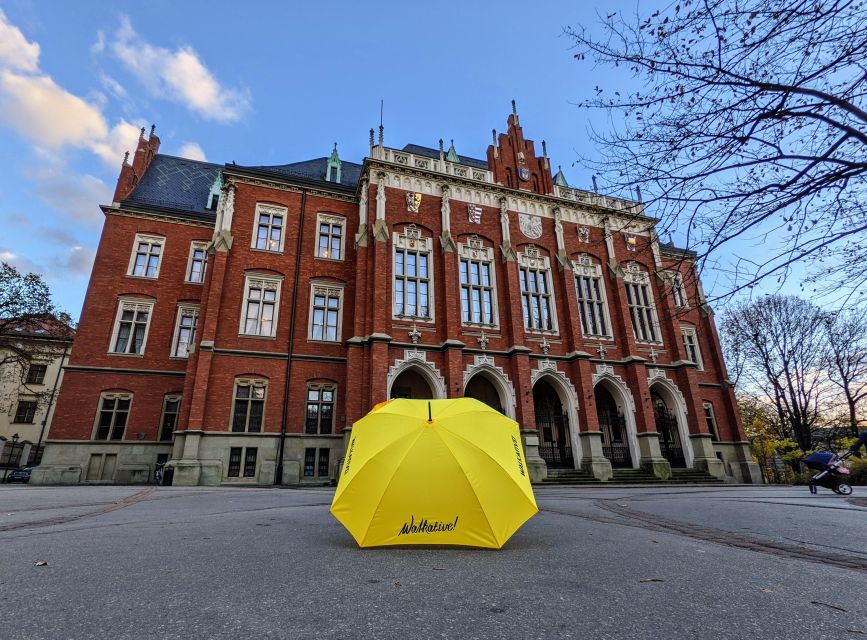
Collegium Maius is where you get a different kind of history—thinking, learning, and the intellectual status of Krakow. It’s described as the oldest building of the oldest university in Central and East Europe, and the tour treats it as more than a pretty façade.
This part also brings in a fascinating connection: Copernicus is mentioned as having gone through these streets. That helps you connect the physical city to the timeline of European science and scholarship.
What I like about adding Collegium Maius to an old town walk is that it makes the city feel “active,” like ideas traveled here, not just armies and kings. If you like history that includes brains, not only battles, this stop will be a highlight.
Archbishop’s Palace and the Papal Window
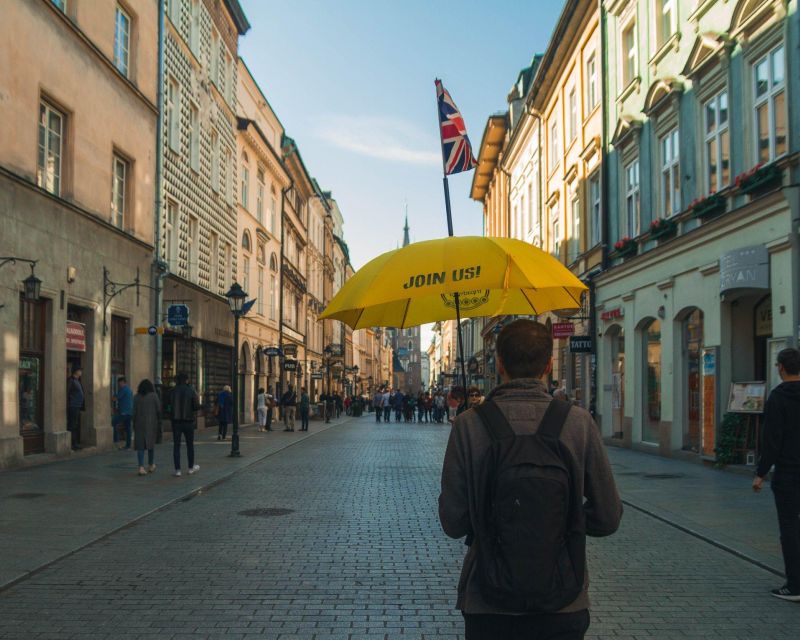
Then you move to the Archbishopric Palace and the papal window associated with Johannes Paul II. This is a strong example of how the tour links politics, religion, and public ceremony in one area.
Even if you know the name Johannes Paul II already, you’ll likely appreciate the way the tour frames why a particular window matters. In cities like Krakow, small architectural details can carry big meaning because they’re built into moments people actually witnessed.
This stop also gives you a change of pace from squares and churches. It’s more “power and symbolism,” and you end up seeing the Old Town as a stage where major events played out.
Wawel Hill, Cathedral Area, and the Castle Courtyard
Wawel Hill is the emotional center of this tour. You’ll see the cathedral area and the castle courtyard from the angles your route allows, and you’ll connect the Wawel complex to Krakow’s long-standing role as a seat of authority.
This is where the royal-route idea becomes real. The tour doesn’t treat Wawel as a single photo spot—it ties it back to the city’s earlier importance and to the way rule and belief shaped the landscape.
A practical consideration: Wawel’s area can involve extra walking and standing while groups regroup. If you’re sensitive to stairs or long uphill stretches, plan for a comfortable pace and take breaks when your guide pauses.
The Wawel Dragon: Legend You Can Actually Feel
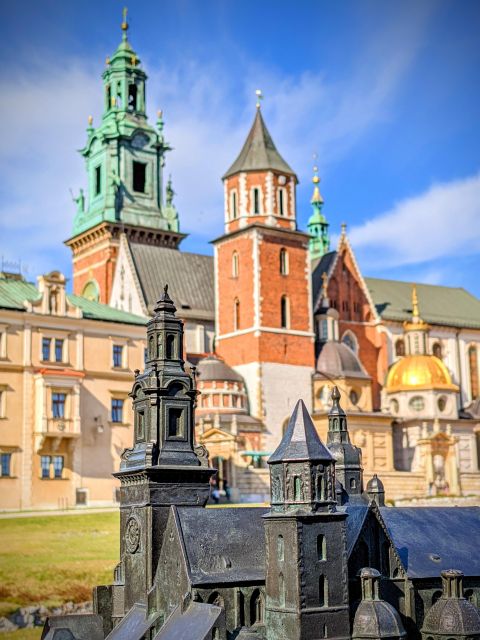
Yes, the dragon. But here’s the useful way to think about it: legends like the Wawel dragon survive because they attach meaning to a physical place. On this tour, you’ll get the story alongside your Wawel sights, so it doesn’t feel like a random novelty.
This section tends to be memorable because it’s vivid and because it breaks up the “royals and relics” rhythm. It’s a story people can repeat, and the guide uses that to keep the tour lively.
If you’re traveling with kids or you just want a little lift in the middle of history talk, this stop does the job.
Value and Price: What $26 Buys You for 150 Minutes
At $26 per person for about 150 minutes, you’re paying for three main things: a structured story, a local guide, and access to specific sites. The tour includes a visit to Collegium Maius and the Wawel King’s Palace area, plus guidance that connects the dots across the Old Town.
That matters because Krakow’s center can be easy to “see wrong.” Without context, you might walk from one landmark to the next and miss why they’re connected. Here, the guide’s job is to help you read the city.
The other value piece is language and continuity. The tour is in German, and that can be a drawback if you don’t follow well—but if you can, you’ll likely feel the tour moving as one coherent narrative instead of a series of separate stops.
I’d say this is good value if you want meaning, not only monuments. If you want total freedom and long stays at single sites, you might find it better to mix self-guided time with a shorter paid route.
Pace, Group Feel, and How to Get the Best Experience
The tour is designed to cover a lot in a fixed window, and that can create a “keep moving” rhythm. Some people appreciate the efficiency; others might find it a bit quick if they like to linger for photos or slow reading.
Here’s how to make it work for you:
- Bring comfortable shoes and accept that you’ll be on your feet for the full 150 minutes.
- If you want extra photos, do them during your guide’s natural pause points rather than stopping mid-walk.
- If you’re a slow museum-type person, pick a couple of anchor stops—Wawel, St. Mary’s, or Collegium Maius—and let the rest be about learning the connections.
Also, this tour runs in any weather and finds a roof if it rains or gets cold. That’s practical, because Krakow weather can change fast, and you don’t want your day to get derailed.
Should You Book the Krakauer Old Town Tour?
Book it if you want a structured walk through Krakow’s UNESCO Old Town and you like history told through real places—market, basilica, university buildings, and Wawel. It’s especially worth it when you value guidance that turns monuments into stories (kings, dragons, palaces, and the big civic-religious events tied to Krakow).
I’d pass or adjust your expectations if you only want a slow personal stroll, or if German doesn’t work for you. In that case, you may spend too much effort translating in your head, and you’ll lose the flow the tour is built on.
If you can follow the guide and you’re game for a focused 150-minute loop, this is a solid, cost-effective way to understand Krakow instead of just touring it.
FAQ
How long is the Krakauer Old Town Tour?
The tour lasts 150 minutes (about 2 hours 30 minutes).
What sites are included during the tour?
You’ll visit Collegium Maius and the Wawel King’s Palace, plus you’ll see Wawel Hill (cathedral and castle courtyard), the main market with the Tuchhalle, St. Mary’s Basilica, the Archbishopric Palace with the papal window, and the Wawel dragon area.
Where do we meet for the tour?
The meeting point is a small place between the Barbakan and St. Florianstor (the medieval entrance to the city).
Is the tour really in German?
Yes. The live tour guide language is German.
Does the tour run in bad weather?
It takes place in any weather. If it rains or becomes cold, the group finds a roof.
Is the tour wheelchair accessible?
Yes, the tour is listed as wheelchair accessible.
More Tours in Krakow
More Tour Reviews in Krakow
More Around the Main Square


Just added: fresh Krakow reviews
Old Town & Main Square Tours, compared.
 ★ 5.0Old Town Krakow & Wawel Castle Walking TourFrom $261,508 reviews
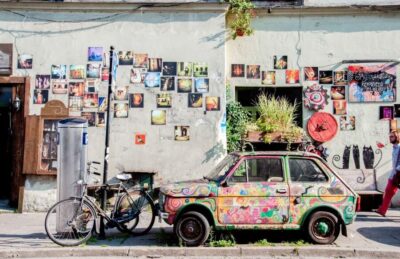 ★ 4.9Bike Tour of Old Town, Jewish Quarter and the GhettoFrom $371,155 reviews
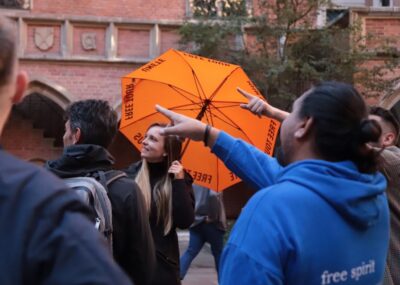 ★ 4.8The Old Town Walking TourFrom $19794 reviews
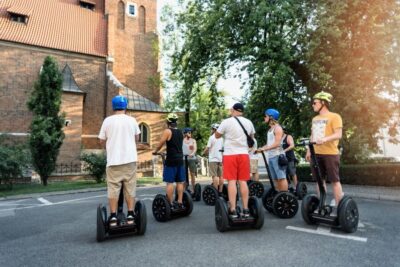 ★ 4.7Old Town Guided Segway TourFrom $55756 reviews
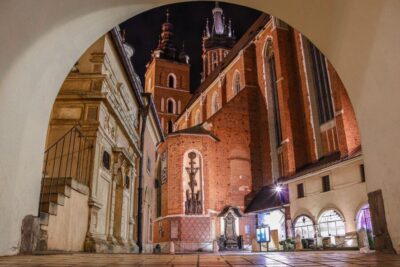 ★ 4.8Old Town & Wawel Castle Walking Tour in EnglishFrom $26532 reviews
 ★ 4.5Krakow Old Town Guided Walking TourFrom $33438 reviews
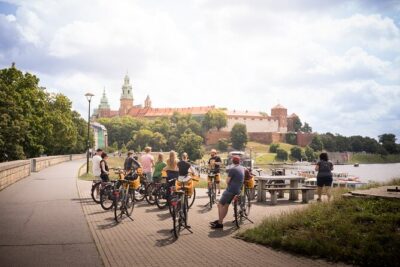 ★ 5.0Full Bike Tour – the Old Town, Jewish Qtr & the Ghetto NEW BIKESFrom $35437 reviews
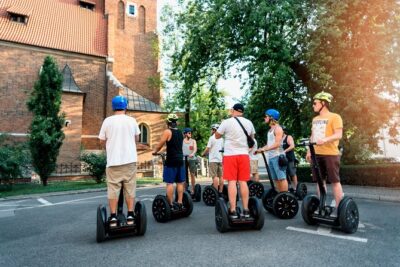 ★ 5.0Krakow Old Town Segway Tour 2hr with Training, Safety Gear, GuideFrom $57435 reviews
Browse the lists this tour appears in