
REVIEW · KRAKOW MUSEUMS & GALLERIES
Krakow: Czartoryski Museum Guided Tour in italian
Leonardo da Vinci is the star, but the story runs deeper. This Czartoryski Museum guided tour in Italian gives you the context behind one of Europe’s most famous portraits—plus a look at the broader collection in a smart, time-managed visit. I especially liked how the guide ties art to real events, and how the museum experience stays easy to follow even when rooms feel tight.
The main thing to watch is that museum spaces can be close and crowded, so the group size is limited; if you dislike close quarters, arrive ready to move carefully and keep your patience handy.
In This Review
- Key things I’d clock before you go
- Why the Czartoryski Collection Starts With Leonardo’s Lady with an Ermine
- Meeting in the Cloisters: Finding the Tour and What 90 Minutes Feels Like
- Inside the Museum Rooms: How the Guide Connects Paintings and Polish History
- The da Vinci Journey You’ll Want to Tell Friends About
- What You Get for the Price: When $16 Makes Sense
- Italian-Language Touring: Best Fit and What to Watch
- When Things Go Sideways: A Realistic Risk Check
- Should You Book This Italian Guided Tour?
- FAQ
- What’s the duration of the Czartoryski Museum guided tour in Italian?
- Where do I meet the guide?
- Is the tour guided live, or is it an audio option?
- What’s included with the ticket price?
- What language is the tour guide?
- Is the museum visit wheelchair accessible?
Key things I’d clock before you go
- Lady with an Ermine storytelling: the guide explains what you see and what the painting has survived
- Italian live guide: you get real-time answers, not just a script on a screen
- Small-group flow: the museum layout is tight, so you won’t be stuck shoulder-to-shoulder forever
- Czartoryski collection context: it’s not only one canvas, the surrounding works matter too
- 90 minutes that actually fit: long enough to learn, short enough to keep your energy
More gallery hours, from the Lady with an Ermine on
- Krakow: Czartoryski Museum Guided Tour in italian
★ 4.1 · 170 reviews - Lady with an Ermine: Czartoryski Museum – Entrance with CityPass
★ 4.5 · 52 reviews - Museo Czartoryski: Visita in italiano e salta la fila
★ 4.3 · 39 reviews
Why the Czartoryski Collection Starts With Leonardo’s Lady with an Ermine
If you’ve ever looked at Leonardo’s Lady with an Ermine online, you already know it has presence. What surprised me is how much of that presence comes from the painting’s long life, not just its technique. The tour’s core focus is the da Vinci portrait of Cecilia Gallerani, and the way the guide frames it helps you notice details you’d otherwise miss.
Here’s the big idea: you’re not only seeing an artwork. You’re watching a chain of beliefs, myths, and moves made by real people over centuries. The museum tells a story that starts with uncertainty around ownership, then shifts into expert disbelief, then follows the painting through upheaval—damage, looting, and changing control—until it ends up back where visitors can finally see it again.
One detail the guide emphasizes is how the portrait is linked to Cecilia’s youth. Even centuries ago, the model wrote that her appearance had changed so much that people might not believe it was her. On top of that, there’s the emotional read: the symbol of the burning love between two people, along with the sense that beauty fades fast. That mix—beauty plus fragility—is exactly why the painting keeps pulling people in.
Meeting in the Cloisters: Finding the Tour and What 90 Minutes Feels Like
The tour meets in the museum cloisters at the bar tables near the cartoon of the Lady with an Ermine. It’s a very specific landmark, which is helpful when you’re arriving in Krakow with your brain full of logistics. The length is 90 minutes, and that timing matters here: the museum rooms aren’t designed for marathon walking.
You should also know the group size is limited because the museum space can be very close in many places. That’s a positive for comfort and clarity. In a tight museum, big groups turn art viewing into a speed test. A smaller group makes it easier to hear the guide, rotate through rooms, and actually look at works without constantly getting shoved aside.
Plan to arrive with a calm pace. You’ll want time to orient yourself at the meeting point and settle in before the guide starts connecting the dots.
Inside the Museum Rooms: How the Guide Connects Paintings and Polish History
Once you’re inside, the tour approach is more useful than it sounds. The museum’s Czartoryski collection can feel overwhelming if you’re wandering alone, especially if you’re not sure what you’re meant to notice. The live guide helps you do two things quickly: understand why certain works are here, and learn how to read the collection as a whole.
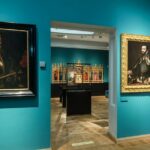
You’ll spend time in the Museum of the Collection Museum spaces as the guide moves you from the most famous anchor to supporting works. The point isn’t just to name paintings. It’s to show you how the collection grew, why it mattered, and why it was worth protecting. When that context clicks, the artworks stop feeling like random frames on walls.
This is also where a live guide pays off. In a smaller collection space, you can ask follow-up questions and get immediate clarification in Italian—something a self-guided plan can’t really match. If Italian is your strong language (or you’re practicing), this tour style makes learning feel practical instead of academic.
A few more Krakow trips worth putting on the shortlist
- Krakow: Auschwitz-Birkenau Guided Tour with Pickup & Lunch★ 4.5 · 9,800 reviews
- Krakow: Auschwitz-Birkenau Guided Tour Pickup/Lunch Options★ 4.5 · 9,057 reviews
- Krakow: Auschwitz-Birkenau and Salt Mine Guided Tour★ 4.7 · 9,020 reviews
- Krakow to Auschwitz Birkenau Guided Tour with Transfer and Ticket★ 5.0 · 8,197 reviews
The da Vinci Journey You’ll Want to Tell Friends About
The story the guide shares around the Lady with an Ermine is dramatic, and not in a Hollywood way—more in a real-world way, with money, institutions, and forced change. One of the key chapters is how the Czartoryski collection was secured and returned to public view.
Here’s the outline the guide covers: the Ministry of Culture purchased the Czartoryski collection owned by Prince Adam Karol Czartoryski for about 500 million zloties. That purchase made it possible to finish the renovation of buildings belonging to the Czartoryski Principles Museum and reopen them to visitors. The result is that the painting returned to its museum after a period of disruption, so it could be seen again by the public.
The tour also emphasizes why the painting’s path made scholars talk. World experts apparently didn’t believe such a famous work could be housed in a Polish collection. That conflict between reputation and location is a fascinating lens: it forces you to think about how art history is shaped by access, archives, and power—not just brushstrokes.
And then there’s the long arc of survival: evacuation, looting, damage, nationalization, re-privatization, and later sale. Even if you only catch the gist, you come away with a clearer sense of why museums aren’t neutral rooms. They’re storage for culture under constant pressure.
Finally, the guide connects value to significance. The painting is described as the most expensive work of art in the Polish collection, with an estimated value around 1.3 billion zloties. That kind of number can feel abstract until you realize it ties back to the same question you’re really asking in the gallery: why was this protected at all?
What You Get for the Price: When $16 Makes Sense
The price is about $16 per person, with entry tickets and a live guide included. That’s the part that often determines whether an Italian tour is worth it. If you were paying separately for museum entry and then trying to navigate the collection without context, the savings might not feel that big.
Here, the value is the combination:
- Skip the ticket line, so you lose less time waiting
- Live guide, so you’re not stuck translating labels
- 90 minutes, which is enough time to learn the big story and still finish feeling fresh
There’s also the group-size reality. In a tight museum, a guide helps you see more quality in less time. You’re paying for direction, not just access.
Could you DIY the museum? Sure. But if you’re there for Leonardo and you want the “how we got here” story, the guided format saves you effort and boosts what you remember later.
Italian-Language Touring: Best Fit and What to Watch
This tour is conducted in Italian, which is good news if you speak the language comfortably or want to practice with real, visual references. The experience is designed around a live explanation, so you’ll likely stay engaged if you can follow spoken Italian at a normal pace.
The reviews you’ll see for this tour strongly point to the same theme: the guide can make the visit feel easy and lively. One guide name that came through clearly is Sofia, described as exceptional—solar and funny, with explanations that made the visit interesting and lighter in tone. That matters, because Leonardo’s story can be heavy, and a good guide helps you carry it without feeling like you’re sitting through a lecture.
One practical consideration: if you’re the kind of visitor who wants technical art analysis—materials, method, or deeper breakdowns of specific works—you might wish for more technical detail. That’s a fair preference, and it just means you should go in ready for a narrative-focused tour rather than an ultra-technical critique.
When Things Go Sideways: A Realistic Risk Check
No tour is risk-free. One negative experience in the feedback involves a situation where a guide did not show up, with the visitor ending up paying extra for an audio option. That’s not the norm you want, but it’s the kind of risk you should acknowledge when you’re planning around a specific time slot.
If you book, I’d treat this as a normal travel rule: keep your expectations flexible and double-check the day-of details. If something feels off at the start, address it quickly rather than trying to power through alone.
Also, because the guide is live and the museum spaces are close, you’ll feel the difference immediately if the guide is late or missing. That’s why it’s smart to arrive a few minutes early and be ready to start on time.
Should You Book This Italian Guided Tour?
Yes, I’d book it if you want more than viewing. The Lady with an Ermine is the headline, but the tour is strongest when you care about the painting’s journey and the way the Czartoryski collection fits into Polish cultural life. The live guide format, the tight 90-minute length, and the skip-the-line value make it a practical choice for a Krakow day that’s already packed.
I’d skip or rethink it if:
- you don’t speak Italian and aren’t comfortable following a live explanation
- you want heavy technical art analysis rather than story-driven guidance
- you’re highly sensitive to crowds and prefer very spacious, slow museum wandering
If you’re visiting Krakow for the first time and you want one high-impact museum experience that turns a famous painting into a real story you can explain, this Italian-guided Czartoryski Museum tour is an easy yes. Just make sure you’re ready for a compact, guided pace—and you’ll get a lot out of it.
FAQ
What’s the duration of the Czartoryski Museum guided tour in Italian?
The tour lasts 90 minutes.
Where do I meet the guide?
Meet at the bar tables near the cartoon of the Lady with an Ermine in the museum cloisters.
Is the tour guided live, or is it an audio option?
It includes a live guide and museum entry tickets.
What’s included with the ticket price?
You get entry tickets to the museum plus a live guide, and you skip the ticket line.
What language is the tour guide?
The live tour guide speaks Italian.
Is the museum visit wheelchair accessible?
Yes, it is listed as wheelchair accessible.
More Tours in Krakow


More Tour Reviews in Krakow

Krakow Indoors: More Museums


Just added: fresh Krakow reviews


Krakow Museums & Galleries, compared.
 ★ 3.4Czartoryski Museum Entry Ticket with Museum PassFrom $27196 reviews
 ★ 4.5Lady with an Ermine: Czartoryski Museum – Entrance with CityPassFrom $2752 reviews
 ★ 4.3Museo Czartoryski: Visita in italiano e salta la filaFrom $4739 reviews
 ★ 4.4MOCAK Museum of Contemporary Art Entry TicketFrom $2723 reviews
 ★ 4.0Czartoryski Museum Guided Tour in EnglishFrom $2221 reviews
Browse the lists this tour appears in