
REVIEW · KRAKOW BIKE & E-BIKE TOURS
Krakow: Hidden Bike Tour
This bike tour is one of the smartest ways to understand Krakow’s modern story. You’ll trade the usual photo stops for WWII and its aftermath, guided by a local who connects the history to the streets you’re riding. It’s not just facts on a page; it’s places plus people, told with emotion and context.
I really like the pace—slow and relaxed on quality bikes—because it makes room for the stories to land. I also love that the focus is outside the typical center, with stops in Podgórze and a beautiful park area that many visitors miss. One thing to consider: you’ll climb a hill on foot for a viewpoint, so it won’t feel great if you’re not comfortable walking or you have mobility limits.
In This Review
- Key things to know before you pedal
- Why biking works so well for WWII storytelling in Krakow
- Your guide: the difference between facts and meaning
- Beyond the main center: parks, statues, and a viewpoint
- What you’re really learning: Poland during the darkest years and after
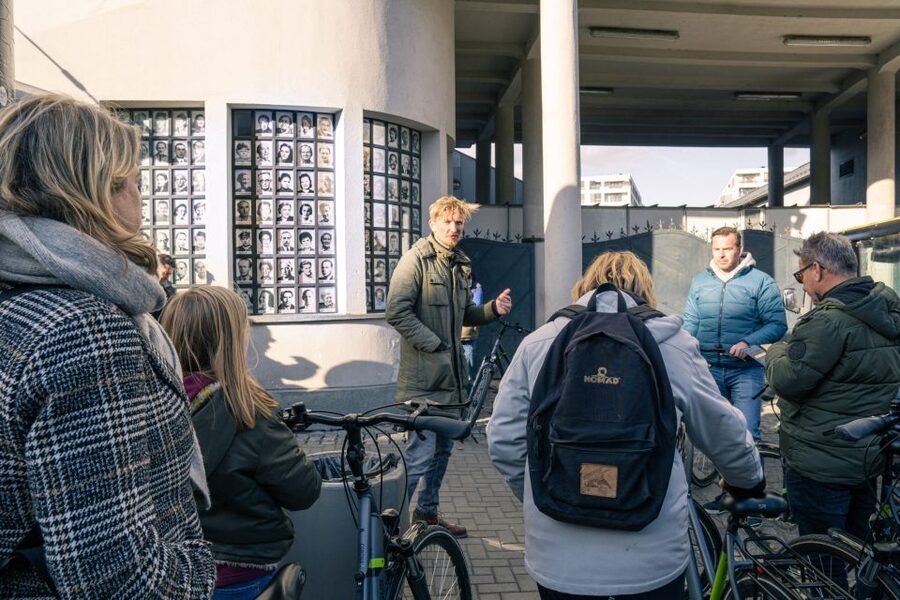
- Podgórze by bike: Jewish cemetery, Schindler’s factory, and the old ghetto area
- The Jewish cemetery: memory you can’t fake
- Schindler’s factory area: history with a pulse
- The former Jewish ghetto area: seeing how communities were shaped
- How the tour fits with other Krakow must-dos
- Bikes, timing, and what to wear for a 3-hour ride
- Price and value: what $41 buys you here
- Who should book—and who should skip
- Should you book the Hidden Krakow Bike Tour?
- FAQ
- How long is the Krakow Hidden Bike Tour?
- What places are included on the tour?
- What language is the guide?
- What’s included in the price?
- Does the tour include food, drinks, or an e-bike?
- Is the tour suitable for people with mobility impairments?
Key things to know before you pedal
- WWII focus, not the usual Old Town route: you’ll see what shaped Poland during and after the war, especially around Podgórze.
- A local Dutch guide tells the stories slowly and clearly: expect passion, context, and time at key stops.
- Less touristy routes outside the city center: the tour includes a scenic park area with statues and WWII memorial storytelling.
- Quality bikes and a relaxed rhythm: you ride at a calm pace, not a workout race.
- A hill climb by foot: you’ll stop and walk up to reach the best viewpoint.
- No e-bike option: plan on standard bicycles.
More of the city by bike, at your own speed
- Krakow: Bike Tour of Old Town, Jewish Quarter and the Ghetto
★ 4.9 · 1,155 reviews - Highlights of Krakow Bike Tour – Small group
★ 5.0 · 662 reviews - Full Bike Tour – the Old Town, Jewish Qtr & the Ghetto NEW BIKES
★ 5.0 · 437 reviews
Why biking works so well for WWII storytelling in Krakow
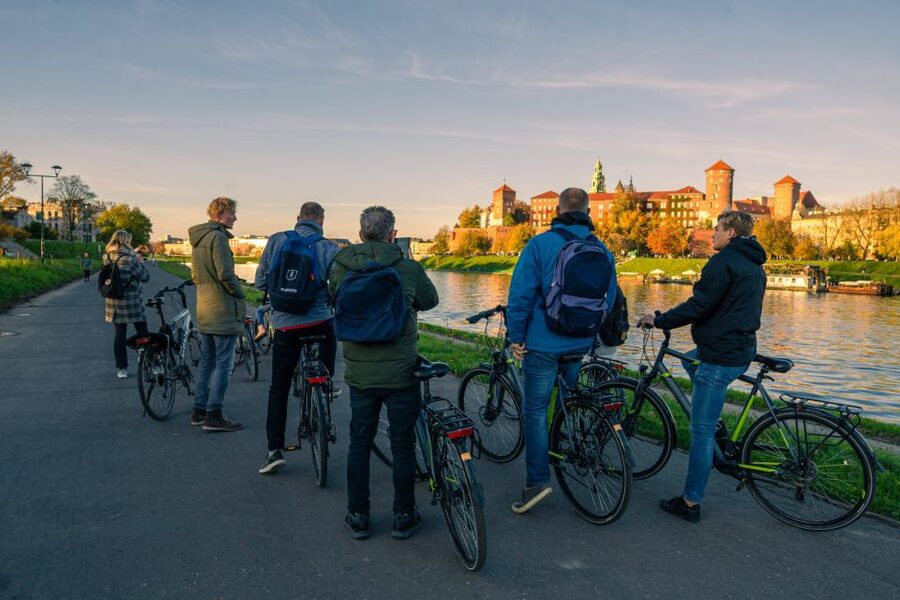
Krakow can feel like two cities at once: postcard streets in the center, and then the neighborhoods where history becomes more personal. This Hidden Bike Tour helps you bridge that gap. You’ll travel by bike, so the distance doesn’t drain your energy, but the stops are still grounded in real places.
Because the tour is WWII and Poland afterward, your senses get hooked in a different way. You’re not only looking at monuments; you’re moving through the areas where those events and consequences played out. That flow—ride, pause, hear the story, ride again—makes the experience easier to process.
Your guide: the difference between facts and meaning
The quality here is tied to the guide. It’s led by an expert local guide (Dutch, with English or German options depending on your preference), and the emphasis is on telling stories in a way that feels human. In reviews, Dutch guides like Brian/Bryan get praised for enthusiasm, for taking their time at each stop, and for explaining things without rushing.
You’ll also notice the tour’s emotional balance. The stories include hope, pride, and sorrow, so it doesn’t turn into a one-note history lesson. Instead, you get the sense of how people tried to live and endure, and how Poland’s later years were shaped by what happened during the war.
Beyond the main center: parks, statues, and a viewpoint
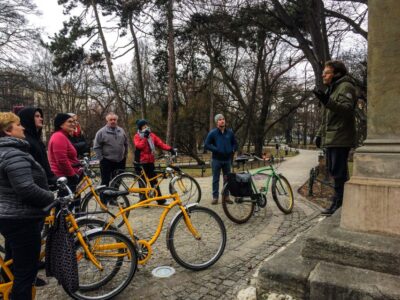
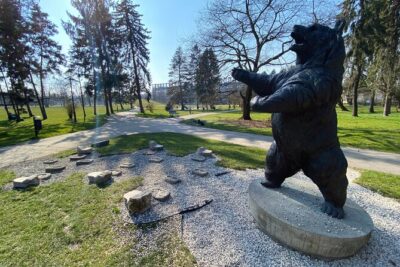
One of the best parts of this tour is that it doesn’t keep you glued to the classic sightseeing loop. The stories are told outside the city center, including in a beautiful park that’s full of statues connected to Polish heroes and WWII memories.
This matters because parks and memorial spaces often get skipped when you’re moving fast through a city. Here, you get the chance to slow down and understand why the place looks the way it does—statues aren’t decoration in this context. They’re reminders of people whose names and actions became part of the country’s identity.
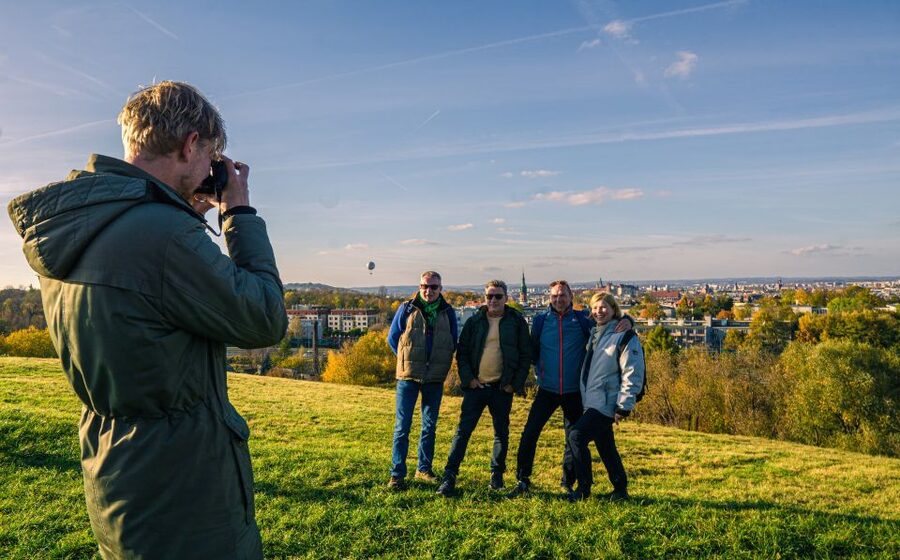
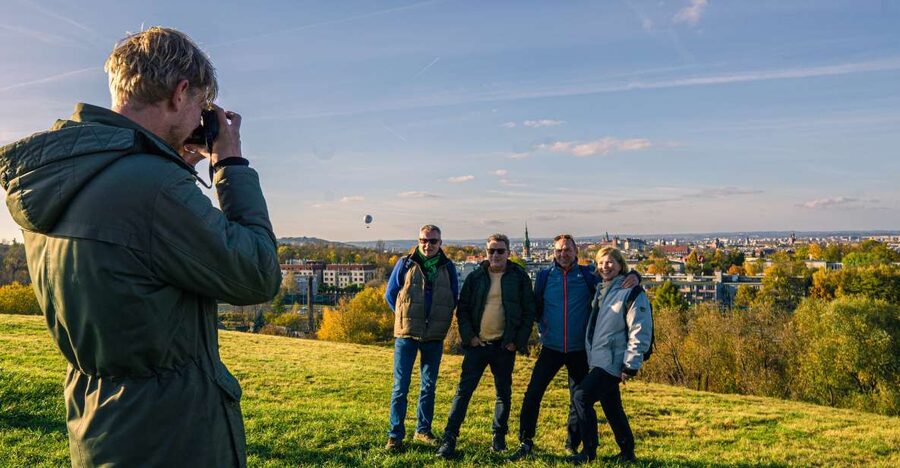
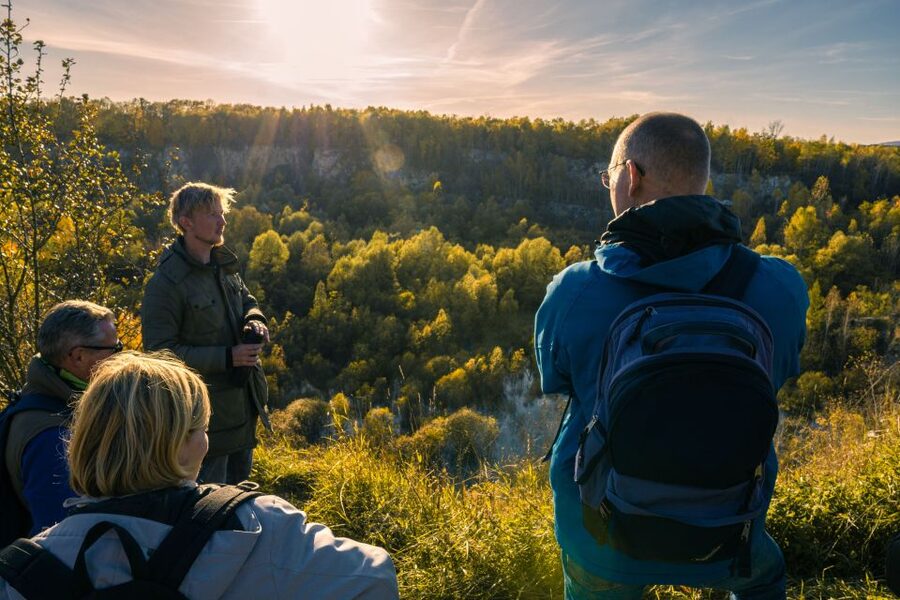
You should also plan for the physical side. The tour includes a hill you climb on foot to reach a viewpoint over the city. It’s not described as a long hike, but it’s real walking, so if you’re expecting everything to be fully seated, adjust your expectations.
A few more Krakow trips worth putting on the shortlist
- Complete Cracow Bike Tour (small group of maximum 15 people!)★ 5.0 · 1,322 reviews
- Highlights of Krakow Bike Tour – Small group★ 5.0 · 662 reviews
- Full Bike Tour – the Old Town, Jewish Qtr & the Ghetto NEW BIKES★ 5.0 · 437 reviews
- Krakow: Highlights of Krakow Bike Tour – Small Group★ 4.9 · 421 reviews
What you’re really learning: Poland during the darkest years and after
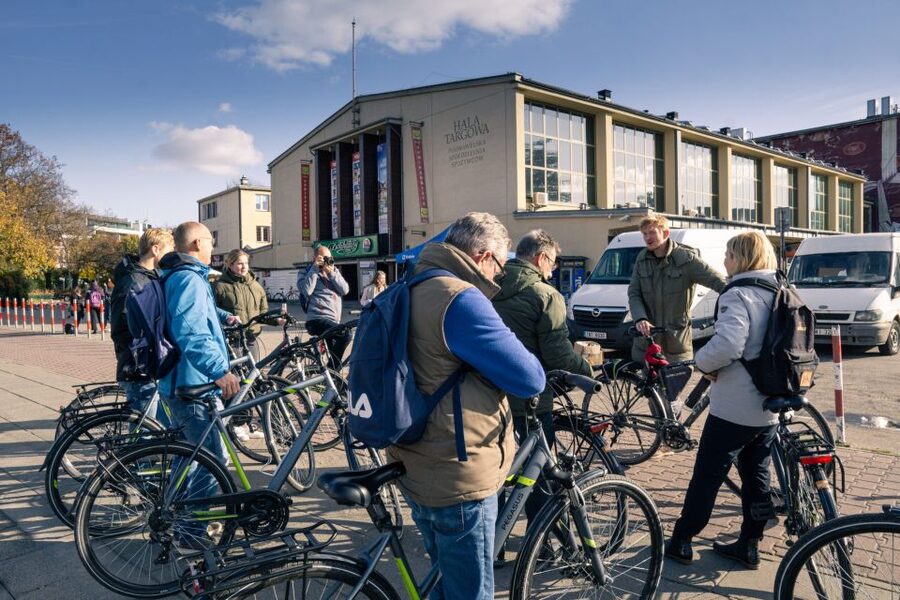
This tour’s theme is WWII and what happened to Poland afterward, and it connects several layers of history at once. You’ll hear about Polish heroes and victims, and you’ll learn how those wartime events shaped the way Polish communities developed in the years that followed.
One detail I found especially interesting is the way the guide expands the story beyond Poland’s borders. The tour highlights how Poland played a major role in the liberation of the Netherlands and Italy. That’s the kind of connection you don’t always get in a Krakow-only itinerary, and it gives you a broader map of how the war affected Europe.
Also, the tour design helps you avoid turning history into a checklist. You’ll likely leave with fewer “I saw that” moments and more “I understand why that place matters” moments. That’s the practical value: you’ll connect locations to meaning, instead of collecting names.
Podgórze by bike: Jewish cemetery, Schindler’s factory, and the old ghetto area
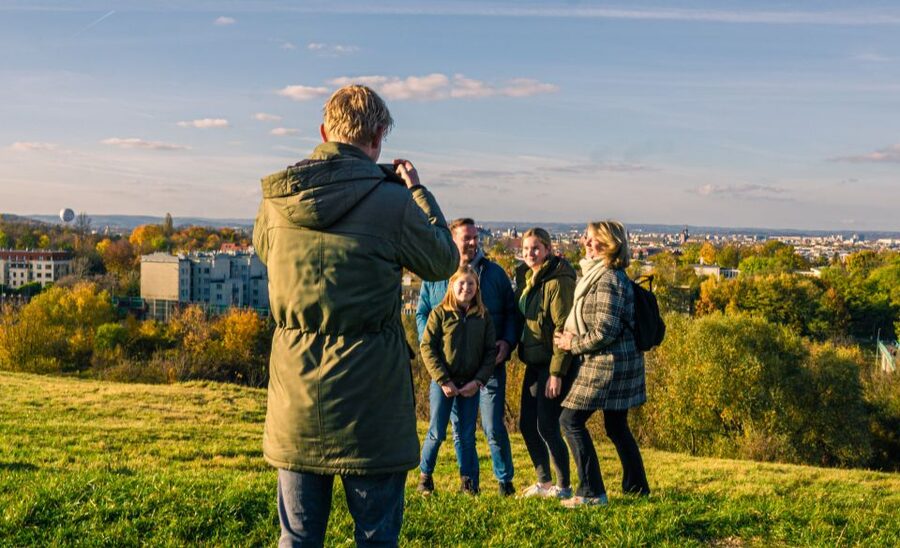
Podgórze is where this tour gets heavy, in the best way—thoughtful and grounded. After you get your bearings away from the main center, you’ll enter a district where the war’s impact is built into the geography and the landmarks.
Here are the key stops you’ll experience, and what makes each one important:
The Jewish cemetery: memory you can’t fake
You’ll visit a Jewish cemetery, which is one of those places that stops you mid-thought. Cemeteries carry a different kind of historical weight than museums. Even if you only spend a short time there, the atmosphere makes the stories feel personal instead of abstract.
If you like history that respects the human scale, this stop will likely be the moment that stays with you.
Schindler’s factory area: history with a pulse
The tour also includes Schindler’s factory. This is a place connected with survival and moral choices during the darkest period. You’re not just hearing about events—you’re seeing the district where those stories became real.
The bicycle format keeps you moving, but the stop itself is where the tour’s tone shifts. Expect your guide to connect the site to the people and decisions behind it, not just the headline facts.
The former Jewish ghetto area: seeing how communities were shaped
You’ll visit the former Jewish ghetto area as part of Podgórze. This stop is powerful because it frames the war as something that reshaped neighborhoods, daily life, and communities. You can look around and understand the “before and after” feeling.
It’s also where you’ll benefit most from a guide who explains context clearly. Without that support, you might read the area like scenery. With it, you can see how the ghetto’s existence fit into the larger WWII machinery.
How the tour fits with other Krakow must-dos
If you’re also planning an Auschwitz visit, this tour pairs really well. It gives you a Krakow-centered understanding of WWII and Polish culture, so Auschwitz doesn’t feel like an isolated experience far away.
It also helps that this tour does not overlap with the other “complete” bike tour options that focus on the Old Town (Stare Miasto) and the Jewish Quarter (Kazimierz). So you’re not repeating the same streets. You’re getting a different side of Krakow’s story—one that feels more like the city’s aftermath and aftermath’s geography.
Bikes, timing, and what to wear for a 3-hour ride
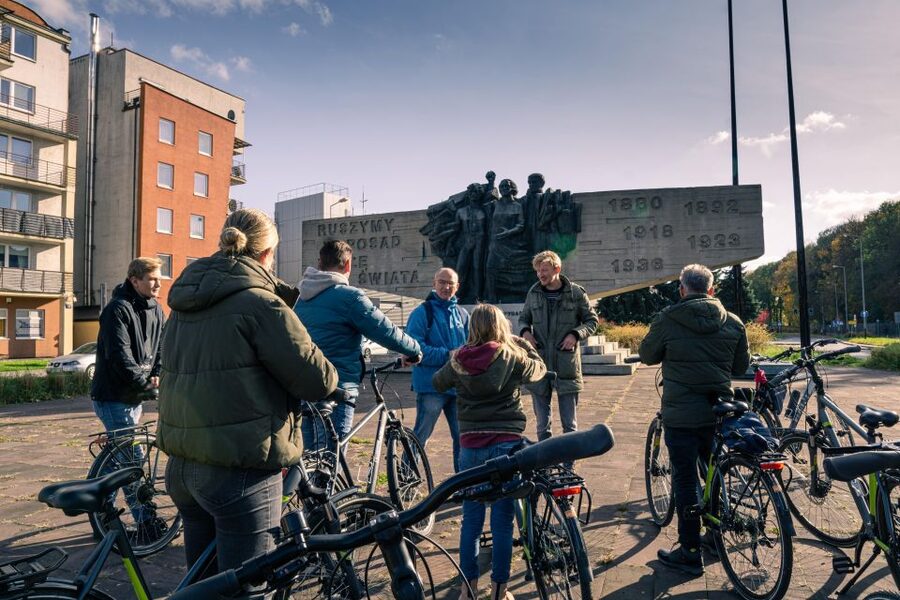
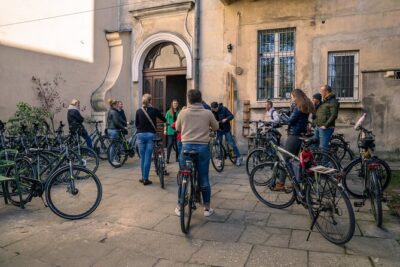
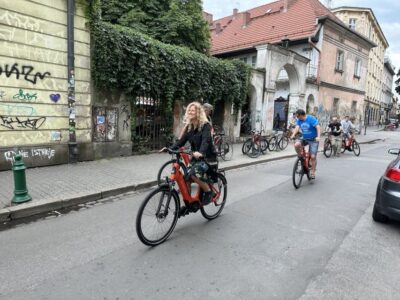
This is a 3-hour tour with a relaxed and slow paced ride, using top quality bicycles. That combination is a big deal. When bikes are comfortable and the pace is calm, you can actually pay attention to what your guide is saying.
Helmets are provided if requested, and you might get a poncho if required. Since weather in Krakow can change fast, I’d treat rain gear like part of the plan, even if the tour provides a poncho.
And one practical note: you won’t get food or drinks included. If you’re doing this after arriving in town, consider eating beforehand so you can focus on the stories instead of your hunger.
Finally, there’s no e-bike option listed. Standard bicycles are part of the deal, so if you’re sensitive about hills or distance, this hill you walk up matters more than you might think.
Price and value: what $41 buys you here
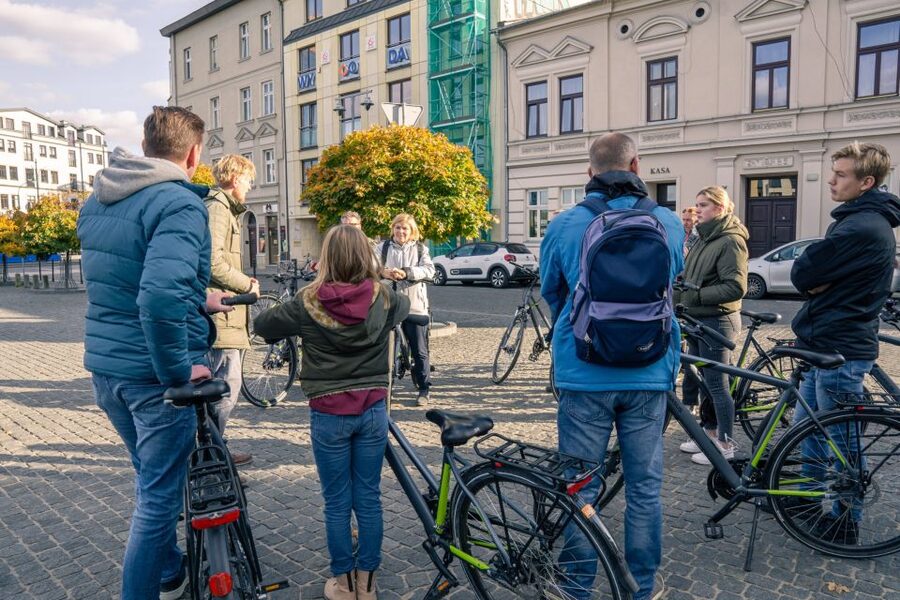
At $41 per person for a 3-hour guided bike tour, the value comes down to three things: guide quality, real-world locations, and time.
First, you’re paying for an expert local guide who tells the story in context, not just someone reading off an app. Reviews highlight guides who take their time at stops and explain history clearly, which is exactly what makes a WWII-focused tour worth it.
Second, you’re paying to reach parts of Krakow that are harder to stitch together on your own in a satisfying way. A park with memorial statues and a district like Podgórze connected to cemetery and ghetto sites isn’t a “wander and hope” kind of plan. The bike route and timing help you see the right pieces without wasting your day.
Third, the length is just right for this theme. Three hours is long enough to build understanding and still short enough that the emotion doesn’t turn into fatigue.
If you want a “standard highlights” version of Krakow, you’ll find lots of options. If you want the kind of tour where places explain themselves through stories, this one looks like good value.
Who should book—and who should skip
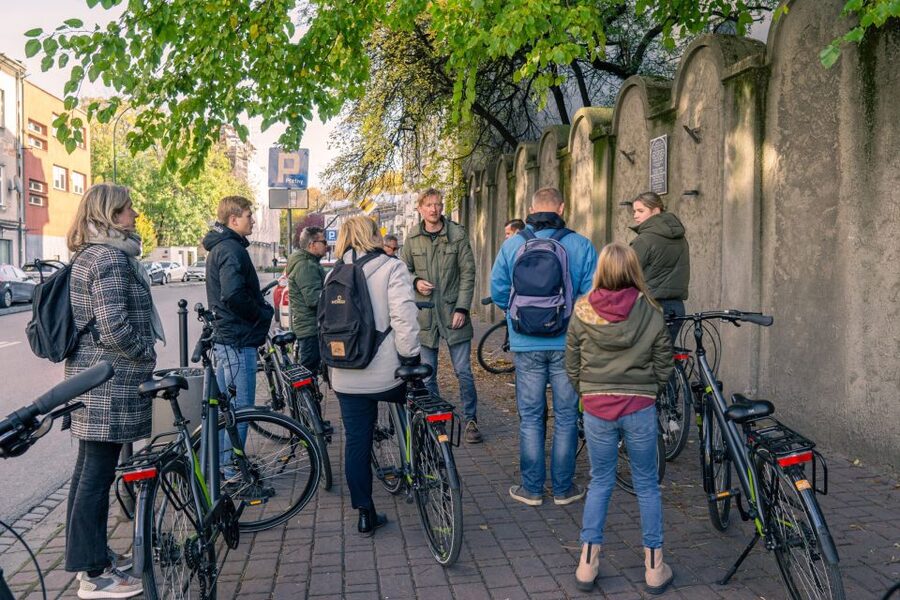
This tour is a great fit if you want more than sightseeing photos. You should book if you care about WWII-era history, you like guided context, and you enjoy routes that go beyond the most obvious tourist track.
It’s also good for visitors who plan to see Auschwitz or other WWII sites, because it helps you connect Krakow’s local story to the wider European narrative. The Dutch connection is a smart bonus if you’re from the Netherlands or you simply like cross-border historical context.
Skip it if you have mobility impairments or if you find hills on foot difficult. The tour explicitly includes a hill climb by foot to reach a viewpoint, so it’s not designed for fully limited movement.
Also, keep your expectations realistic about comfort: it’s a bike tour with standard bikes, no e-bike option, and it includes memorial-style stops where you’ll want a respectful mindset.
Should you book the Hidden Krakow Bike Tour?
If you’re choosing between a quick “highlights” day and something that feels more personal, I’d lean toward booking this. The combination of quality bikes, a Dutch guide, and the focused WWII route through Podgórze makes it a strong way to understand Krakow in a deeper, more human way.
You just need to be ready for two things: the emotional subject matter and the hill you’ll walk up for the viewpoint. If those fit your travel style, this is the kind of tour that doesn’t fade after the next photo stop.
FAQ
How long is the Krakow Hidden Bike Tour?
It lasts about 3 hours.
What places are included on the tour?
You ride to WWII-focused places outside the city center, including a park area with statues of Polish heroes, and stops in Podgórze such as a Jewish cemetery, Schindler’s factory, and the former Jewish ghetto.
What language is the guide?
The guide is available in Dutch, and you can also request an English or German speaking guide depending on your preference.
What’s included in the price?
You get a quality bicycle and a tour guide. Helmets are included if requested, and ponchos are provided if required.
Does the tour include food, drinks, or an e-bike?
Food and drinks are not included. An e-bike option is not included either.
Is the tour suitable for people with mobility impairments?
No, it is not suitable for people with mobility impairments.
More Tours in Krakow
More Tour Reviews in Krakow
Krakow on Two Wheels

Just added: fresh Krakow reviews
Krakow Bike & E-Bike Tours, compared.
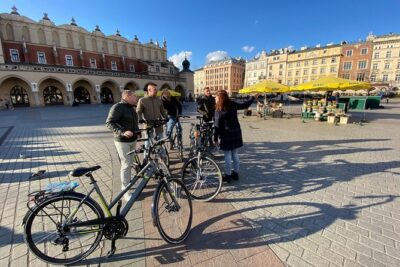 ★ 5.0Complete Cracow Bike Tour (small group of maximum 15 people!)From $391,322 reviews
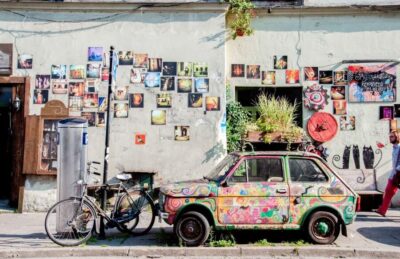 ★ 4.9Bike Tour of Old Town, Jewish Quarter and the GhettoFrom $371,155 reviews
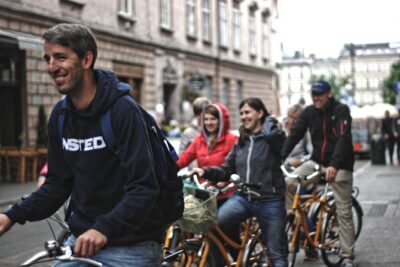 ★ 5.0Highlights of Krakow Bike Tour – Small groupFrom $36662 reviews
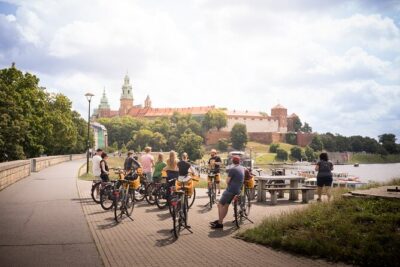 ★ 5.0Full Bike Tour – the Old Town, Jewish Qtr & the Ghetto NEW BIKESFrom $35437 reviews
 ★ 4.9Highlights of Krakow Bike Tour – Small GroupFrom $39421 reviews
 ★ 5.0Hidden Krakow Bike TourFrom $39275 reviews
 ★ 5.0Private Bike Tour in KrakowFrom $151152 reviews
 ★ 4.83-Hour Small Group Tour on E-BikeFrom $62135 reviews
Browse the lists this tour appears in