

REVIEW · MUSEUMS
Krakow: Into the Darkness Exhibition with a Blind Guide
One hour, total darkness, big lessons. At WOMAI Science and Senses Center in Krakow, you step into total darkness with a blind guide, then learn through sound, texture, and smell in a way that’s genuinely unforgettable. The only real drawback to plan for is that you go fully unplugged and fully dark, so if darkness makes you anxious, this might not feel comfortable.
The payoff is how personal it feels even though it’s an organized exhibit. Guides like Sylwia, Martyna, and Pawel have different styles, but the common thread is calm explanations and kindness, which helps you relax fast and ask questions without feeling awkward.
This is also not a casual walk-through. It’s a guided, sensory-focused experience limited to small groups (8 people), and it isn’t suitable for everyone, including children under 9, people with mobility impairments, and hearing-impaired people.
In This Review
- Key Highlights I’d Prioritize
- WOMAI Science and Senses Center: Pawia 34 Before You Go Dark
- Into the Darkness: Your 1-Hour Guided Walk in Total Black
- Meet Guides Sylwia, Martyna, and Pawel: Why the Human Touch Changes Everything
- The Sensory Test: Sound, Texture, and Smell Take Over
- What You Learn Beyond the Exhibit Walls
- Rules in Total Darkness: What You Must Leave Out
- Small Group Format (Up to 8): Why This Is Not a Crowded Show
- English Live Guide: How Communication Works
- Price and Value: What $10 Buys You in Krakow
- Who Should Book This (and Who Might Reconsider)
- Planning Tips That Make the Hour Smoother
- Should You Book Into the Darkness at WOMAI?
- FAQ
- How long is the Into the Darkness tour in Krakow?
- Where does the tour start?
- What is the price per person?
- Is the tour guided in English?
- Are electronic devices allowed during the experience?
- What items are not allowed (besides electronics)?
- Is it refundable if my plans change?
Key Highlights I’d Prioritize

- A blind guide leads the whole experience so the learning stays practical, not performative
- Sound, texture, and smell become your navigation system when sight is gone
- Small-group format (up to 8) keeps the guide interactions meaningful
- Multiple mini-scenarios in darkness make the hour feel fast
- Time to ask questions at the end about assistive tech and everyday situations
A few more Krakow trips worth putting on the shortlist
- From Krakow: Auschwitz-Birkenau Guided Tour & Hotel Pickup
★ 4.5 · 33,358 reviews - From Krakow: Auschwitz-Birkenau Guided Tour & Hotel Pickup
★ 4.5 · 29,340 reviews - Krakow: Auschwitz Guided Tour with Optional Hotel Pickup
★ 4.5 · 15,280 reviews
WOMAI Science and Senses Center: Pawia 34 Before You Go Dark
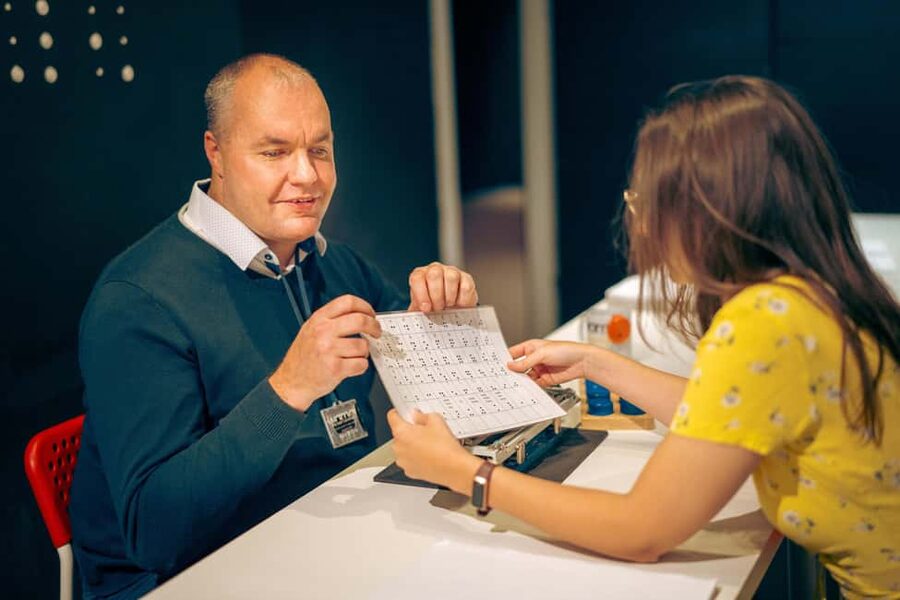
The “Into the Darkness” experience runs out of the WOMAI Science and Senses Center on Pawia 34. The entrance is directly from the street, which is helpful when you’re arriving in Krakow and don’t want to search for a hidden door.
I like this setup because you can keep things simple. You meet, you listen, you get the rules, and then you’re off. There’s no “museum tour fatigue” and no bouncing between unrelated exhibits for hours. This is one focused hour built around a single idea: what life feels like when your eyes can’t do the job.
You should arrive early. The requirement is at least 10 minutes before the scheduled start, which gives you time to settle in and get the briefing before the darkness begins. If you’re the type who hates rushing, build in a small buffer.
Into the Darkness: Your 1-Hour Guided Walk in Total Black
The core of the program is straightforward: you join a guided tour lasting 1 hour, and you enter total darkness with a blind guide. That hour is the product, and it’s designed to feel like a shift in perspective, not just entertainment.
What makes it work is the way the guide steers your attention. Once the lights are off, you stop thinking about what you can’t see and start using what’s available: how sounds behave in a space, how textures give you boundaries, and how smells add meaning to what’s happening around you. The result is often surprisingly emotional, because your brain has to do the work it normally skips.
From the experience style, you can expect different “moments” inside the exhibit. The guides lead you through scenarios where your senses get tested in small, real-life-like ways. Many people find they can’t even track the passage of time properly, because you’re constantly recalibrating.
And yes, it’s guided the entire time. A blind guide isn’t just there for safety; the guide becomes your interpretation layer. That’s why the guide matters so much.
Meet Guides Sylwia, Martyna, and Pawel: Why the Human Touch Changes Everything
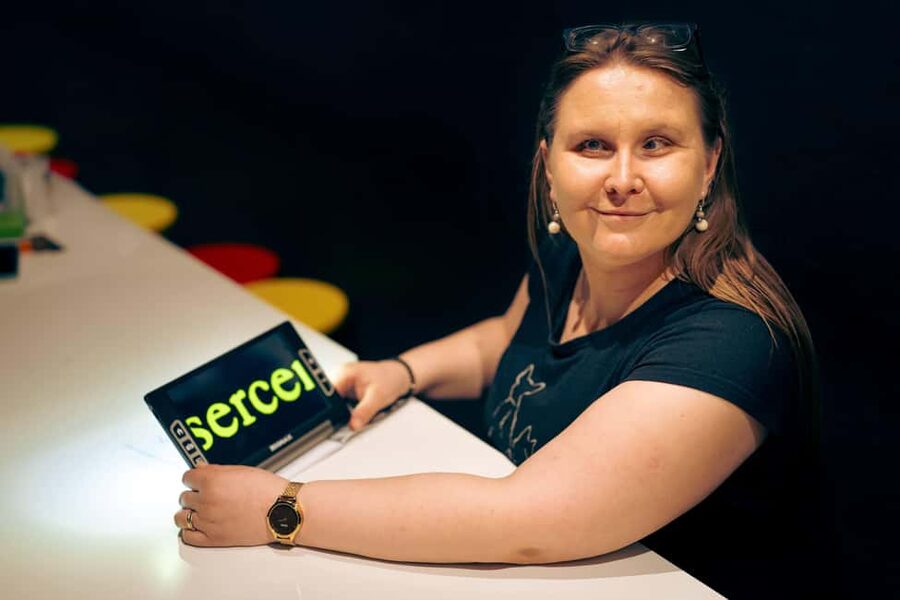
In a sensory exhibit, the guide is half the experience. In the feedback, names keep showing up for a reason: Sylwia, Martyna, and Pawel were praised for calm explanations and kindness, and for making people feel looked after rather than put on the spot.
This matters for you because darkness can make people jumpy. A calm guide reduces that. They help you understand what’s expected, they keep instructions clear, and they make space for you to ask questions. That’s a big difference between feeling like you’re being tested and feeling like you’re being taught.
Martyna, for example, is repeatedly described as friendly and warm, and people specifically noted how comfortable they felt. Pawel is described with a calm, pleasant way of explaining and guiding. Sylwia is highlighted for kindness.
When the guide is strong, the exhibit becomes more than a gimmick. It turns into empathy you can actually explain to your friends later.
A few more Krakow trips worth putting on the shortlist
- Auschwitz-Birkenau Museum and Memorial Guided Tour from Krakow★ 4.5 · 1,510 reviews
- Krakow: Rynek Underground Museum Guided Tour★ 4.6 · 1,122 reviews
- Krakow: City Card with Public Transport and Museums★ 3.9 · 675 reviews
- Krakow Schindler’s Factory Museum Guided Tour in English★ 4.5 · 650 reviews
The Sensory Test: Sound, Texture, and Smell Take Over
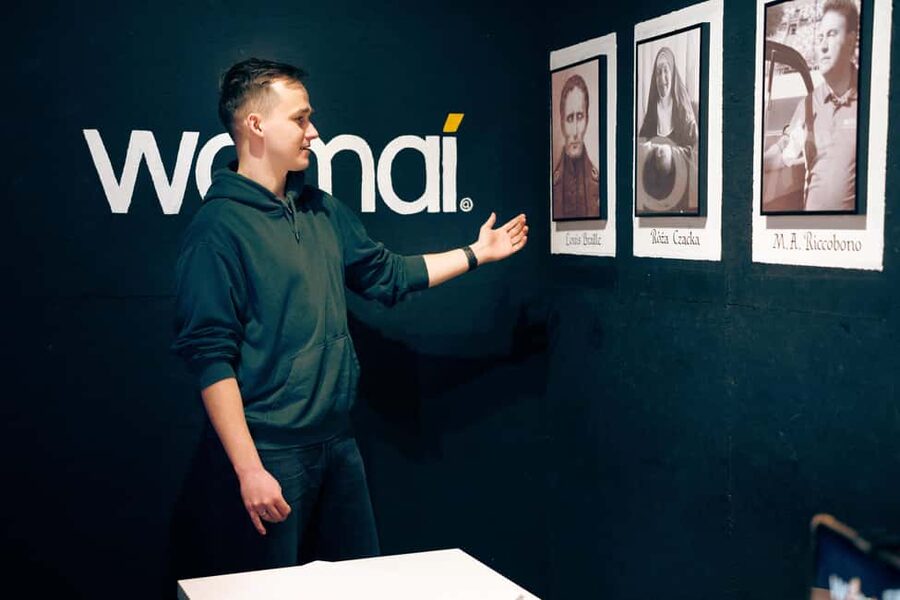
The exhibit theme is built on one key idea: without sight, everything else becomes louder. Not louder in volume, just louder in importance.
Here’s what you’re really practicing during the darkness hour:
- Listening for direction and distance: sounds help you build a mental map
- Touch for boundaries and objects: textures can mean different things when sight is gone
- Smell for context: scents can signal what kind of place or situation you’re in
I love this approach because it’s not just dramatic lighting. It’s a structured reminder that perception is built, not automatic. When sight disappears, the brain grabs other data fast, and you start noticing details you normally ignore.
You’ll likely find that the hardest part isn’t the darkness itself. It’s the sudden responsibility to interpret the world accurately with partial information. That’s exactly why the hour can feel intense in a good way.
What You Learn Beyond the Exhibit Walls
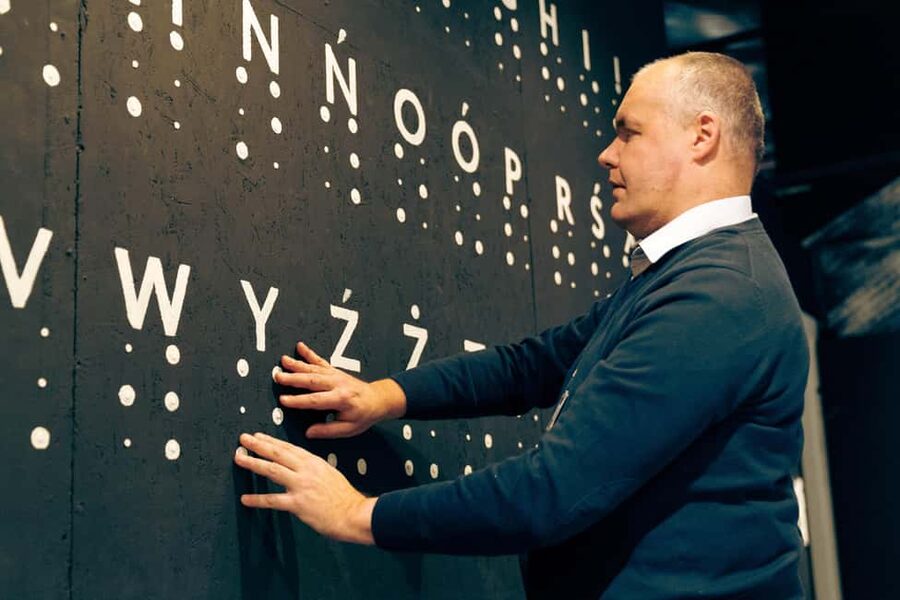
“Into the Darkness” isn’t only about the black-room thrill. You’re meant to leave with practical understanding about everyday situations for people with visual disabilities.
A big part of the experience is the chance to ask questions while the guide is there. The program is set up so you can raise what’s troubling you and get answers. People are also guided to learn about accessories and technologies that help with visual disabilities.
That Q-and-A element is where the experience becomes useful, not just memorable. You go from feeling things in your body to understanding them in your mind. And because you’ve just experienced the sensory limitations firsthand, your questions will feel more specific and your answers will actually land.
Even if you think you already get it, the hour often corrects assumptions. It can be a wake-up call about how much daily life depends on sight-based shortcuts.
Rules in Total Darkness: What You Must Leave Out
This is the part I’d treat as non-negotiable, because breaking the rules can mean you’re stuck outside the experience or you have to adjust on the fly.
You cannot bring:
- Flash photography
- Backpacks or bags
- Electronic devices
- Flashlight
You also shouldn’t wear light-up shoes or other items that emit light. The reason is simple: the exhibit depends on true darkness.
Practical advice for your prep:
- Plan to bring only what you truly need for check-in (since electronic devices are not allowed during the experience).
- Avoid anything with visible LEDs or reflective light effects.
- If you’re unsure about a specific item, leave it behind rather than guessing.
Small Group Format (Up to 8): Why This Is Not a Crowded Show
The tour is limited to a small group, capped at 8 participants. That’s important because “total darkness” doesn’t scale well. When it’s crowded, guides can’t respond quickly, and you lose that safe, coached feeling.
In a small group, your guide can:
- give clearer instructions,
- notice if someone looks overwhelmed,
- help you reset during the experience,
- and leave enough time for questions afterward.
This also changes the vibe. It feels like you and your group are doing something serious and human, not watching a performance from the back row.
English Live Guide: How Communication Works
The tour includes a live English guide. That matters because in darkness, you don’t just need translation accuracy. You need rhythm and calm wording.
From the guide feedback, the strongest sessions were described as calm and pleasant. That style tends to work well when you can’t see what’s coming next, because your brain relies on tone and timing.
If you’re comfortable with everyday English and can follow instructions, you should be fine.
Price and Value: What $10 Buys You in Krakow
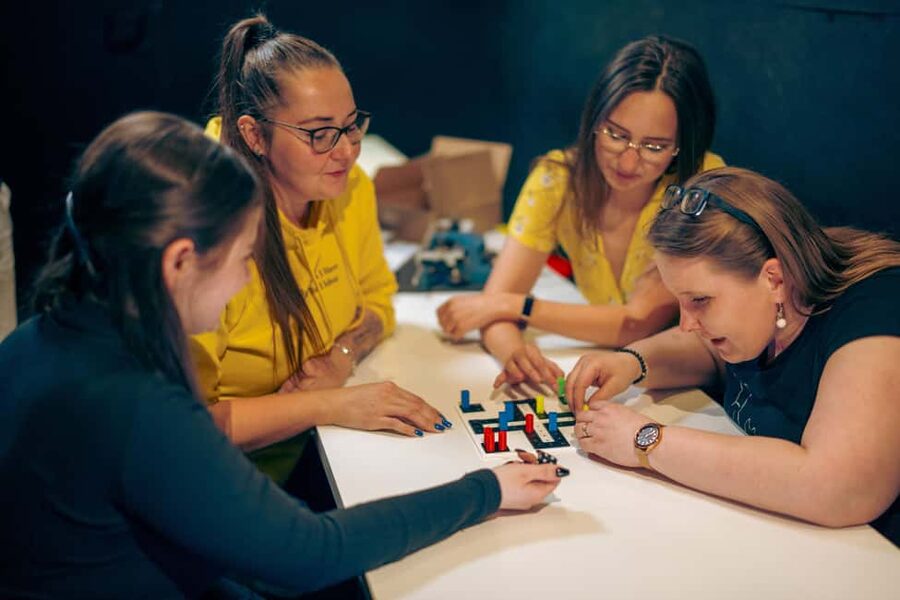
The price is listed at $10 per person for a 1-hour experience. For a guided, small-group program centered on total sensory deprivation and real guidance from trained blind guides, that’s strong value.
You’re paying for:
- structured time with a guide,
- an immersive environment where your senses are actively used,
- and the chance to ask questions about assistive technology and daily life.
The biggest value isn’t just the novelty. It’s the combination of experience + explanation. You don’t just leave confused or impressed. You leave with a clearer mental picture of how sight impacts daily routines.
Also, because it’s only 1 hour, it’s easy to fit into a travel day without sacrificing half your afternoon.
Who Should Book This (and Who Might Reconsider)
This experience is best for people who like hands-on learning, sensory experiences, and empathy-building that feels grounded rather than abstract.
You should seriously consider booking if:
- you enjoy guided activities more than self-guided museum wandering,
- you want a new perspective on how everyday tasks work without sight,
- you’re open to being fully in the moment for the full hour.
You should reconsider if:
- you’re traveling with children under 9,
- you have mobility impairments,
- you’re hearing-impaired (the program is listed as not suitable for hearing-impaired people),
- or darkness makes you feel anxious or trapped.
Planning Tips That Make the Hour Smoother
Here’s what I’d do to set yourself up for success:
- Arrive 10 minutes early so you’re not rushed when instructions start.
- Wear dark, non-light-emitting clothing. Avoid anything with blinking or glowing features.
- Leave backpacks, bags, and electronics behind.
- Mentally switch your goal from entertainment to learning. Your brain tends to cooperate better when it knows what you’re doing.
And when the guide invites questions, ask at least one. Even if you think you already know the answer, the guide can help connect the dots between what you felt in darkness and what happens in everyday life.
Should You Book Into the Darkness at WOMAI?
I think you should book this if you want one highly focused experience in Krakow that changes how you interpret the world. The format is simple: a 1-hour guided tour in total darkness with a blind guide, capped at 8 people, with time to ask questions afterward. The cost is modest, and the value is in the perspective shift plus practical understanding.
I wouldn’t book it if you strongly dislike darkness, need mobility accommodations, or rely on hearing in a way that can’t be supported in this format. In those cases, you’ll likely be fighting the environment rather than learning from it.
If you’re on the fence, here’s the deciding question I use: do you want to spend an hour testing your senses and leaving with real empathy you can explain? If yes, this is an excellent choice.
FAQ
How long is the Into the Darkness tour in Krakow?
The guided tour lasts 1 hour.
Where does the tour start?
The meeting point is WOMAI Science and Senses Center, Pawia 34, with an entrance directly from the street.
What is the price per person?
The price is listed as $10 per person.
Is the tour guided in English?
Yes, it includes a live English tour guide.
Are electronic devices allowed during the experience?
No. Electronic devices are not allowed.
What items are not allowed (besides electronics)?
Backpacks, bags, flash photography, and flashlights are not allowed.
Is it refundable if my plans change?
Yes. You have free cancellation up to 24 hours in advance for a full refund.
More Museums in Krakow




More Guided in Krakow



More Tour Reviews in Krakow


Just added: fresh Krakow reviews





Museums, compared.
 ★ 4.5Auschwitz-Birkenau Museum and Memorial Guided Tour from KrakowFrom $831,510 reviews
 ★ 4.6Rynek Underground Museum Guided TourFrom $341,122 reviews
 ★ 3.9City Card with Public Transport and MuseumsFrom $36675 reviews
 ★ 4.5Krakow Schindler’s Factory Museum Guided Tour in EnglishFrom $47650 reviews
 ★ 3.6Auschwitz Birkenau Museum Guided Tour with PickupFrom $8544 reviews
 ★ 4.5Museum of illusions Entry TicketFrom $20521 reviews
 ★ 5.0Auschwitz-Birkenau Tour & Museum Expert GuideFrom $30498 reviews
 ★ 4.4Kościuszko Mound Entry Ticket with ExhibitionsFrom $10399 reviews
Browse the lists this tour appears in