

REVIEW · MUSEUMS
Krakow: Museum of Living Butterflies 2+1
Butterflies turn a museum visit into something you can actually feel. At the Museum of Living Butterflies in Krakow, I love how the exhibits mix real living color with clear explanations, and how you walk away with a better grasp of how butterfly life works.
One thing to keep in mind: the museum is wheelchair accessible in most areas, but some sections may be tougher if you have mobility limits, and you’ll still be doing a fair bit of walking.
In This Review
- Quick take: what makes this visit so good
- Key highlights you should care about
- Your self-paced visit in Krakow’s butterfly world
- What you’ll see: global species and butterfly activity by time of day
- Butterfly life cycle lessons that actually stick
- Anatomy for non-scientists: wing scales and what creates color
- Photographing butterflies: get colorful shots without flash
- Biodiversity in plain language: why conservation matters here
- Duration and pacing: how long should you plan?
- Value check: $36 per group up to 3
- Who this fits best in Krakow
- Should you book? My decision guide
- FAQ
- Is there a guided tour included?
- How much does the Butterfly Museum cost?
- How long is the experience valid?
- Are you allowed to take photos inside?
- Can I use flash when photographing the butterflies?
- What’s included with admission?
- Do I need to buy food or drinks separately?
- Is the museum wheelchair accessible?
- What should I wear for the visit?
- What kind of group size should I expect?
Quick take: what makes this visit so good

If you like animals and hands-on learning vibes, you’ll probably enjoy this. You get access to all exhibition areas, plenty of chances to photograph the butterflies, and a strong focus on why biodiversity matters.
The photos are a major draw, but you’ll need to plan for one rule: no flash photography inside.
A few more Krakow trips worth putting on the shortlist
- Auschwitz-Birkenau Museum and Memorial Guided Tour from Krakow
★ 4.5 · 1,510 reviews - Krakow: Rynek Underground Museum Guided Tour
★ 4.6 · 1,122 reviews - Krakow: City Card with Public Transport and Museums
★ 3.9 · 675 reviews
Key highlights you should care about
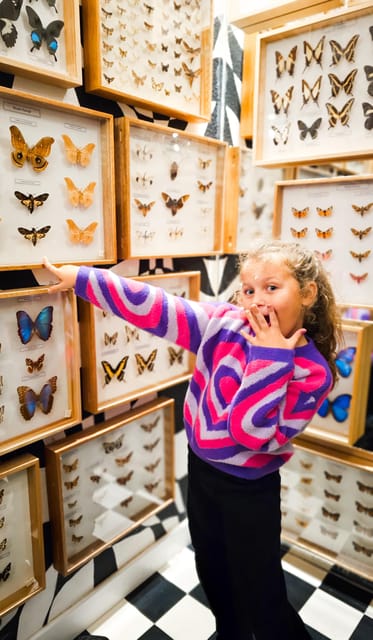
- Living butterfly exhibits that make the science feel real
- Worldwide species collection, not just local insects
- Learning butterfly life cycle, anatomy, and wing coloring
- Spotting butterflies active in daytime vs. nighttime
- Photo opportunities designed for visitors, with a no-flash rule
- Clear emphasis on preserving biodiversity and protecting ecosystems
Your self-paced visit in Krakow’s butterfly world
This experience is built around one simple idea: you don’t need to rush. It’s a one-day ticket with starting times that depend on availability, and it’s designed for a small group of up to 3 people. That size matters. In a place filled with delicate creatures, you tend to get better viewing and calmer movement when you’re not fighting crowds.
Also, you’re not paying for a formal guided tour here. Guided tours aren’t included, so you explore on your own through the exhibitions. For some people, that’s perfect. You can linger where the butterflies catch your eye, and you can skip what doesn’t interest you. For others, you might miss having someone point out the details. If you like structure, you’ll want to go in with a light plan: focus first on the life cycle and wing explanations, then work your way through the species exhibits.
The museum is in Lesser Poland (Krakow area), and the overall pacing is museum pacing: expect time on your feet. Comfortable shoes are worth packing even if you’re only staying for a short visit.
What you’ll see: global species and butterfly activity by time of day

The heart of the visit is the butterfly collection. You’ll admire butterflies from all over the world, alongside local and exotic species. For me, the value isn’t just that the butterflies look beautiful. It’s that the museum helps you notice differences that are easy to miss when you only see one type in real life.
A useful detail is that you can encounter both kinds:
- butterflies that are active during the day
- butterflies that are active during the night
That’s an important learning point because it connects butterfly appearance to behavior. It also changes how you approach viewing. In other words, don’t assume the museum will look the same throughout your visit. Some species will be easier to spot depending on when you’re there and what’s active in the moment.
And yes, you’ll likely spend time just watching. The museum experience is built to let you slow down and observe. When you’re standing still, you start to see patterns—how they move, where they pause, and how their wing shapes and colors affect how they blend into their surroundings.
- Krakow: Wieliczka Salt Mine Tour with Entry Ticket★ 4.6 · 10,927 reviews
- Krakow–Zakopane: Cable Car, Chocholow Baths, Cheese & Vodka★ 5.0 · 10,720 reviews
- Krakow: Auschwitz-Birkenau Guided Tour with Pickup & Lunch★ 4.5 · 9,800 reviews
- From Krakow: Wieliczka Salt Mine Tour★ 4.6 · 9,393 reviews
Butterfly life cycle lessons that actually stick
Most butterfly exhibits teach the basics. This one goes further by walking you through the life cycle and key traits tied to each stage. Even if you already know the word metamorphosis, you may not have connected it to the look of the adult butterfly the way this museum does.
You’ll learn about:
- the overall life cycle stages
- how butterfly anatomy supports survival
- and how coloring and patterns play a role in the ecosystem
What I like is the cause-and-effect feel. It’s not just facts on a wall. You see butterflies in the living exhibits, then you learn why those same features matter. That connection helps the information stick long after your ticket time ends.
If you’re traveling with kids or teens, this is a strong stop. It turns a familiar animal into a real science topic—without feeling like a lecture hall.
Anatomy for non-scientists: wing scales and what creates color
The museum also focuses on the Lepidoptera group, which includes butterflies and moths. You’ll learn how their wings are covered in tiny scales, and that detail explains a lot about why butterfly patterns look the way they do.
Here’s the practical payoff for your visit: once you understand that wings are made of scale-covered surfaces, the coloring becomes less random and more logical. You start to notice:
- fine pattern lines and texture differences
- how wings can look different depending on angle and lighting
- why two butterflies that seem similar might show different patterning
Even if you don’t remember every technical term, you’ll come away with a better mental model. And that makes the photos and observations more satisfying, because you’re not just collecting images—you’re understanding what you’re seeing.
Photographing butterflies: get colorful shots without flash
Photography is allowed, which is great because butterflies are often the kind of subject you want to bring home. But there’s one clear rule: flash photography is not allowed inside the museum.
That affects your approach. Without flash, you’ll rely on the museum lighting and your camera settings. If you’re using a phone, try steadying your hands and selecting a moment when a butterfly pauses. If you’re using a camera, use whatever indoor-friendly settings your device offers, but keep in mind that the main constraint is the butterflies’ movement and low light, not permission.
A small tip that helps in almost any butterfly setting: keep your shooting expectations realistic. You’re not controlling the butterflies, so aim for short bursts of patience instead of big long stretches of chasing. The goal is a crisp shot of wings at the right angle, not a perfectly framed portrait.
Because the exhibits are photo-friendly and you’re allowed to take pictures, this is one of those museum visits where your camera doesn’t feel like an interruption. It’s part of the fun—just follow the no-flash rule.
Biodiversity in plain language: why conservation matters here
What ties the whole museum together is the conservation message. You’ll learn about the importance of preserving the diversity of the butterfly world, and the educational initiatives are clearly part of the experience.
This is valuable because butterflies aren’t just pretty. They’re connected to ecosystems—pollination, food webs, and habitat health. When biodiversity declines, butterfly populations can take a hit too. The museum uses the living exhibits to make that lesson feel less abstract.
I also appreciate the tone implied by the exhibits: it’s not fear-based. It’s more like, pay attention, learn the basics, then understand why protection matters. For many people, that shifts a visit from entertainment into something with meaning.
If you like animal-focused museums that teach without turning your day into a textbook, this is a good match.
Duration and pacing: how long should you plan?
The ticket is valid for 1 day, with starting times depending on availability. Since there’s no guided tour included, your time inside is mostly about how long you want to linger.
If you’re a slow museum walker—watch first, read second—you might find you want more time than a quick stop. If you prefer scanning and photos, you can likely move through faster, because everything is accessible and organized as exhibitions you can explore freely.
My practical advice: plan for about a half-day to a full day in your schedule buffer, especially if you want photos. Even if you only stay for the most interesting sections, butterflies tend to reward patience.
Value check: $36 per group up to 3
The price is listed as $36 per group up to 3, which is a smarter deal than it looks at first glance if you’re traveling with a companion. For one person, you’re paying a straightforward museum admission. For two or three people, you split the cost while still getting the same full access to exhibition areas.
Also, your ticket includes:
- admission to the Butterfly Museum
- access to all exhibition areas
- opportunity to take photographs
That’s important value because it means you’re not paying extra to see the full range. If you were doing this with a guide, you’d likely pay more, but guided tours aren’t included here. So the value is in self-guided freedom plus admission plus photo access.
In short: if you want a calm, science-meets-nature experience in Krakow, this is priced like a focused attraction—not like a premium tour package.
Who this fits best in Krakow
This visit is a great choice if you:
- love animals and want a learning-focused stop
- enjoy hands-on observation (watching butterflies move)
- want a family-friendly museum that doesn’t feel overly serious
- care about photography and want permission to take pictures (no flash)
It’s also a solid option if you’re traveling with mixed ages, because the museum supports both quick viewing and deeper reading about the life cycle and wing details.
It might be less ideal if you:
- strongly prefer guided explanations with a set route
- need a very low-walking experience (you’ll likely walk more than you expect in a museum)
- feel frustrated by indoor photo limits like the no-flash rule
Should you book? My decision guide
Book this if you want a visually stunning, educational break in Krakow with small-group energy and full access to exhibitions. The combination of living butterflies, explanations about life cycle and anatomy, plus photography permission makes it one of those experiences where you get more than one kind of payoff.
Skip it only if you’re not into animals or you want a heavily guided itinerary. Since there’s no guided tour included, your enjoyment will depend on whether you’re comfortable exploring at your own pace.
If your Krakow day needs one calm, colorful stop that mixes science and wonder, this is an easy yes.
FAQ
Is there a guided tour included?
Guided tours are not included. You’ll visit the exhibitions on your own.
How much does the Butterfly Museum cost?
The price is listed as $36 per group up to 3 participants.
How long is the experience valid?
Your ticket is valid for 1 day. Starting times depend on availability.
Are you allowed to take photos inside?
Yes, the experience includes an opportunity to take photographs.
Can I use flash when photographing the butterflies?
No. Flash photography is not allowed inside the museum.
What’s included with admission?
Admission includes access to all exhibition areas and the opportunity to take photographs.
Do I need to buy food or drinks separately?
Food and beverages are not included.
Is the museum wheelchair accessible?
The museum is wheelchair accessible in most areas, but some sections may be challenging for those with mobility impairments.
What should I wear for the visit?
Wear comfortable shoes, since there is a lot of walking involved.
What kind of group size should I expect?
It’s a small group limited to 3 participants.
More Museums in Krakow





More Tour Reviews in Krakow




Just added: fresh Krakow reviews





Museums, compared.
 ★ 4.5Auschwitz-Birkenau Museum and Memorial Guided Tour from KrakowFrom $831,510 reviews
 ★ 4.6Rynek Underground Museum Guided TourFrom $341,122 reviews
 ★ 3.9City Card with Public Transport and MuseumsFrom $36675 reviews
 ★ 4.5Krakow Schindler’s Factory Museum Guided Tour in EnglishFrom $47650 reviews
 ★ 3.6Auschwitz Birkenau Museum Guided Tour with PickupFrom $8544 reviews
 ★ 4.5Museum of illusions Entry TicketFrom $20521 reviews
 ★ 5.0Auschwitz-Birkenau Tour & Museum Expert GuideFrom $30498 reviews
 ★ 4.4Kościuszko Mound Entry Ticket with ExhibitionsFrom $10399 reviews
Browse the lists this tour appears in