
REVIEW · KRAKOW FOOD & PIEROGI TOURS
Krakow: Pierogi Power Cooking Class with Marta
Pierogi taste better when you make them. This Krakow pierogi cooking class is a friendly, hands-on session in Marta’s home in Salwator, with a warm start (tea or coffee) and real instruction on Polish dumplings. I especially like the do-it-yourself dough and filling part, plus how the class ends with a proper homemade dessert. One consideration: the experience isn’t suitable for people with food allergies, since you’ll be making and eating the dishes on site.
You get a full 3 hours of learning and eating: dough, filling, cooking, and then cheesecake with salty caramel. At $80 per person, it’s not a budget snack—yet it can feel like good value because you leave with technique you can actually repeat at home, not just a full plate.
In This Review
- Key things to know before you go
- Pierogi Power in Salwator: What Makes This Class Feel Special
- Getting to ul. Władysława Anczyca 11 / 5 without Stress
- Welcome Tea, Aprons, and the Polish Food Backstory
- Making Pierogi Dough: The Skill You’ll Actually Reuse
- Filling Time: Learning How Polish Flavor Gets Packed In
- Cooking and Eating: From Raw Dumplings to a Real Meal
- Cheesecake with Salty Caramel: The Sweet Finish That Isn’t an Afterthought
- Price and Value: Is $80 Worth It?
- When to Book Around the Kościuszko Mound Views
- Who This Krakow Pierogi Class Suits Best
- Should You Book Marta’s Pierogi Power Class?
- FAQ
- How long is the cooking class?
- Where is the meeting location in Krakow?
- How do I get there from Rynek Główny?
- Will the instructor speak English?
- What will I make and eat during the class?
- What’s included in the price?
- What should I bring and wear?
- Is it suitable for food allergies?
Key things to know before you go
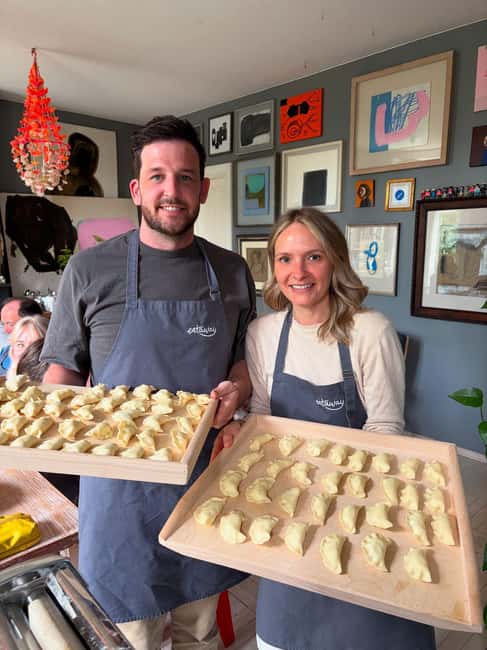
- Warm welcome in a private kitchen with tea or coffee before you start cooking
- Aprons and one station per guest, so you can work hands-on (not just watch)
- Dough and filling from scratch, with help at every step
- Cook and eat together, so you get the full pierogi experience in one sitting
- Homemade cheesecake with salty caramel, finished with fresh coffee or tea
Still hungry? More pierogi, milk bars and market stalls
- Krakow: Tipsy Polish Food Tour With History, Pierogi & Shots
★ 4.9 · 439 reviews - Pierogi Cooking Class with Market Shopping and Local Snacks
★ 5.0 · 343 reviews - Krakow: Street Food Walking Tour
★ 4.8 · 285 reviews
Pierogi Power in Salwator: What Makes This Class Feel Special
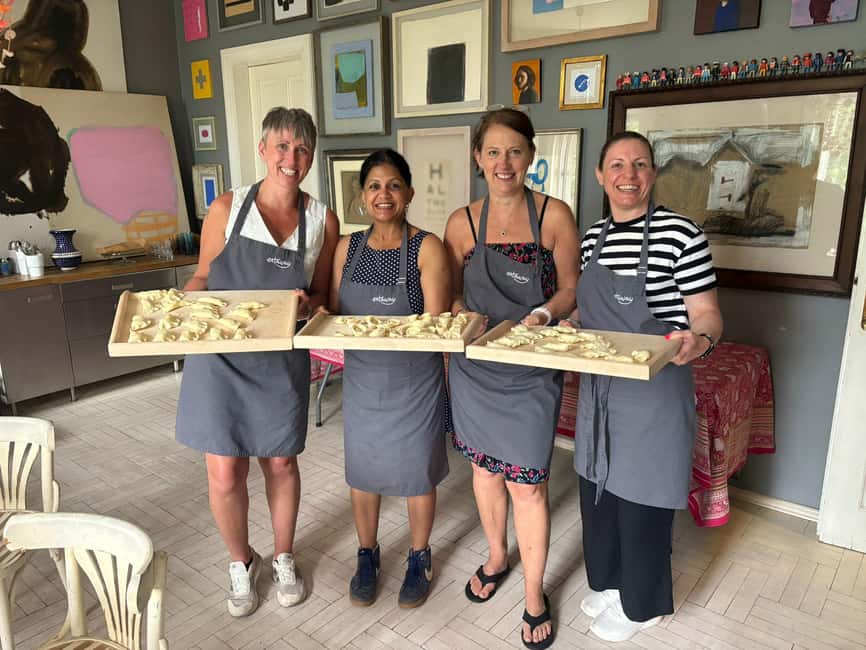
If you’ve ever eaten pierogi and wondered how anyone gets them so tender and flavorful, this is the class for that question. Marta runs the session in English and keeps it practical, starting with what Polish cuisine is about and then going right into the work of making dumplings you can recognize and repeat.
The biggest win is that you’re not just assembling from shortcuts. You’re learning how to make the dough and the filling, and you’re doing it at your own board with guidance throughout. That combination turns pierogi from a menu item into a skill.
And location matters. Salwator is one of Krakow’s prettiest and most historical-feeling areas, and the class takes place in Marta’s home there. You’re not bouncing between tourist stops all day—you’re settling into a real neighborhood routine.
One more thing I appreciate: you finish by eating what you made. Too many food classes end with a lecture and a tiny sample. Here, you’ll have plenty to go around.
Getting to ul. Władysława Anczyca 11 / 5 without Stress
The class address is ul. Władysława Anczyca 11 / 5 (building number 11, apartment 5). It’s straightforward to reach, but there’s one detail to plan for: you’ll do a short uphill walk at the end.
From Rynek Głowny, you have two easy options:
- Taxi: about 10 minutes
- Tram: choose tram 1, 2, or 6 heading to Salwator, then ride to the stop after Salwator Pętla (the last stop where trams turn back). After that, it’s about a 4-minute uphill walk to the apartment.
If you’re the type who likes to arrive early to settle in, build in a few extra minutes—apartments can mean you’ll want time to get oriented and find the correct entry. Comfortable shoes help for that last stretch up the hill.
Also note: transportation isn’t included, so factor that into your schedule. The good news is that the route is easy enough that you’re unlikely to get stuck trying to figure out Krakow transit mid-class.
Welcome Tea, Aprons, and the Polish Food Backstory
Your class starts with a welcome drink of tea or coffee. It’s a small thing, but it sets the tone: you’re not rushed, and you’re in a kitchen environment right away.
Then it’s aprons on, and Marta guides you into the story of Polish cuisine—especially the place pierogi hold in that story. The history isn’t just trivia. It helps you understand why pierogi are treated like a classic comfort food, and why technique and filling balance matter.
This is also where you get the feel for the process. You’ll learn what the dough and filling should look and taste like as you work, so you’re not guessing. I like this approach because it reduces that moment many cooking classes create—the one where you realize you’re doing something “wrong” but nobody explains what to correct.
Since Marta teaches in English, you can ask questions without playing kitchen charades. If you learn best by talking through steps, this format should suit you.
Aprons on: more Polish kitchens to cook in
- Krakow Pierogi Cooking Class with Market Visit & Home-Cooked Meal★ 5.0 · 212 reviews
- Pierogi Cooking Class: Mastering the Art of Polish Dumplings★ 5.0 · 129 reviews
- Krakow: Pierogi Home Cooking Class★ 5.0 · 23 reviews
- Krakow Pierogi Cooking Class★ 4.9 · 16 reviews
Making Pierogi Dough: The Skill You’ll Actually Reuse
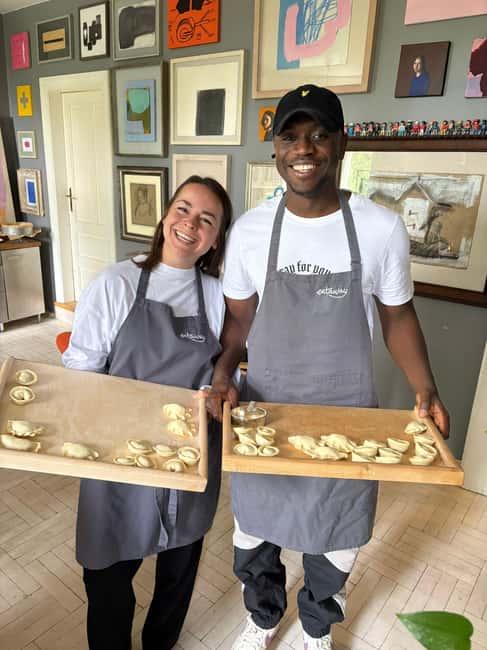
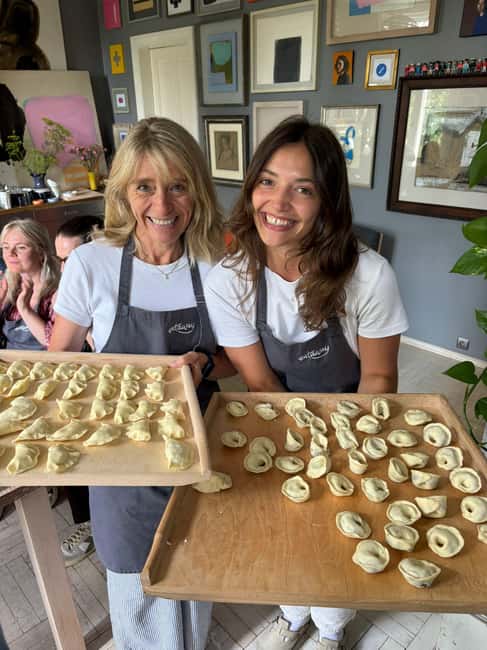
Pierogi start with dough, and this class treats dough-making as the core lesson. You’ll prepare the dough and filling from scratch, and each guest gets their own setup so you can work directly at your station.
What I think you’ll value here is the focus on achieving that special flavor through technique. Marta talks through the history and iconic nature of pierogi, but then you get to the practical part: how you shape the dough, how you handle it, and how you build the filling so everything cooks up right.
Even if you’ve cooked before, working with dumpling dough is its own game. The dough needs to be workable and forgiving, and the filling needs to stay balanced once cooked. Having help at every stage matters because pierogi are simple on paper but easy to mess up if you miss tiny details.
Wear comfortable clothes, because you’ll be hands-on. You don’t need anything fancy. Just expect that you’ll get flour on you at some point, because you’re making real food in a real kitchen.
Filling Time: Learning How Polish Flavor Gets Packed In
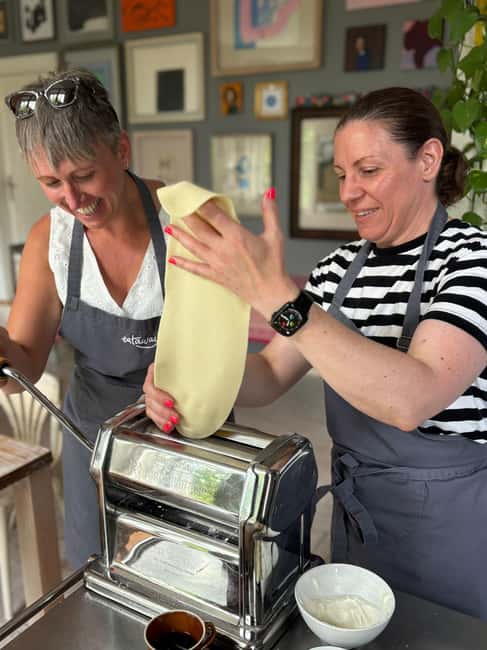
Filling is where pierogi stop being generic and become unmistakably Polish. In this class, you’ll work on dough and filling together, discovering the secrets of the flavor that makes pierogi so addictive.
Because you’ll be making the filling from scratch, you’re learning how thickness, seasoning, and portioning affect the final result. In other words, you’re training your senses. You’ll start to recognize when the filling looks right and when it needs adjusting.
One helpful detail: you’re assisted throughout. That means you can ask questions while you’re working, not after. If you’re worried about being slow, don’t be. The pace is meant for learning, and the setup is built around hands-on participation rather than watching someone else do everything.
Depending on the session, you may make multiple types of pierogi. For example, one verified session involved making three types of pierogi, and everyone ate together afterward with soup and salad alongside. Even if your exact mix differs, the key point stays the same: you’re learning more than one step of the pierogi process in a way that carries over to home cooking.
Cooking and Eating: From Raw Dumplings to a Real Meal
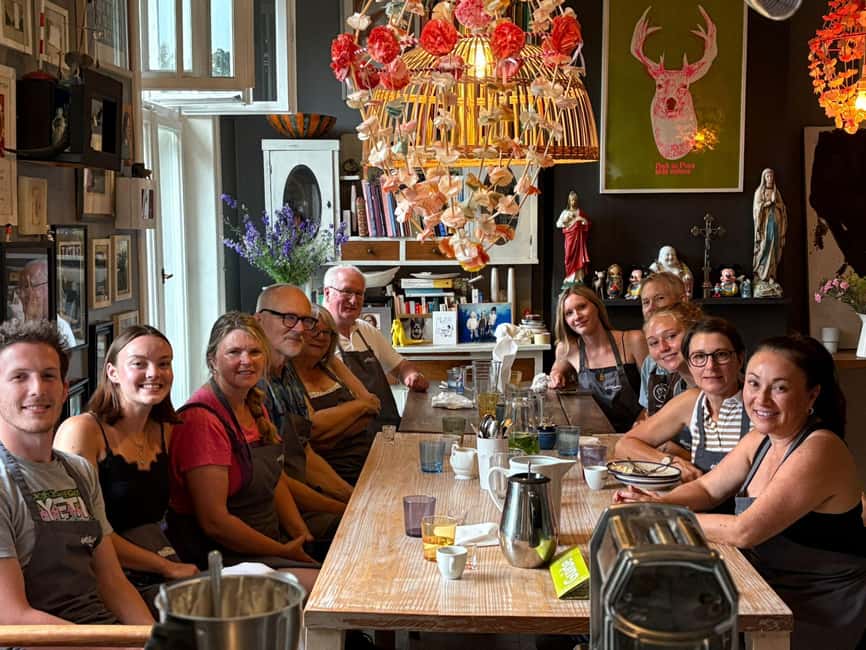
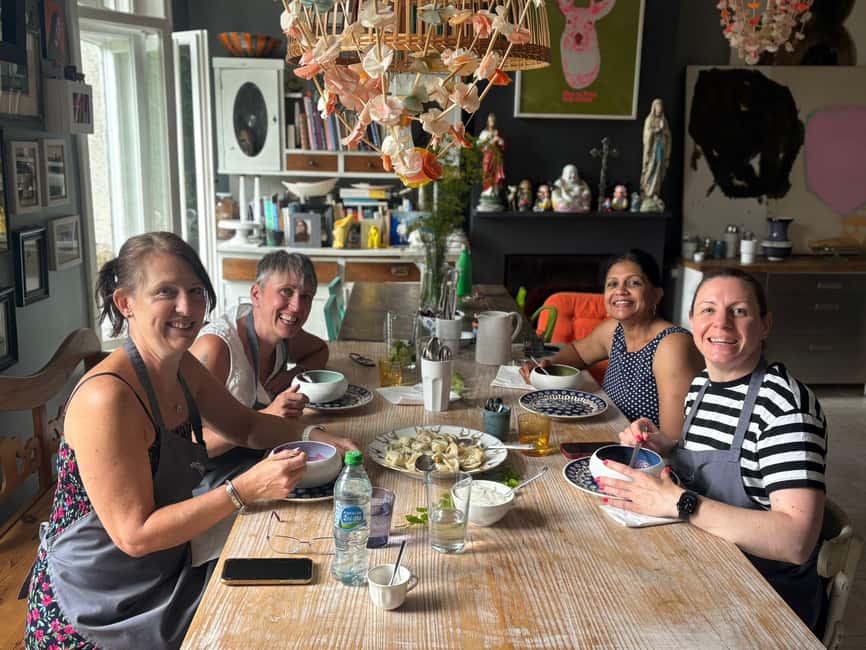
Once your dumplings are ready, you cook them and enjoy them together. This is where the class feels like a meal, not a workshop. You’ll sit down as your pierogi come together, and there’s plenty to eat.
I like that the class doesn’t treat tasting as an afterthought. Pierogi are best when hot, cooked through, and matched with the right sides. You’ll get that full feedback loop: make them, cook them, then eat what you made.
As a practical note, you’ll likely leave hungry in the best way. You’re making dumplings and eating them right away, and the experience is designed so no one is left without enough food.
In at least one recent session, the pierogi were served with soup and salad, which makes the meal feel extra complete. If that’s the format you get, it’s a nice touch—pairing hot dumplings with lighter sides helps you taste the filling without it becoming heavy.
Cheesecake with Salty Caramel: The Sweet Finish That Isn’t an Afterthought
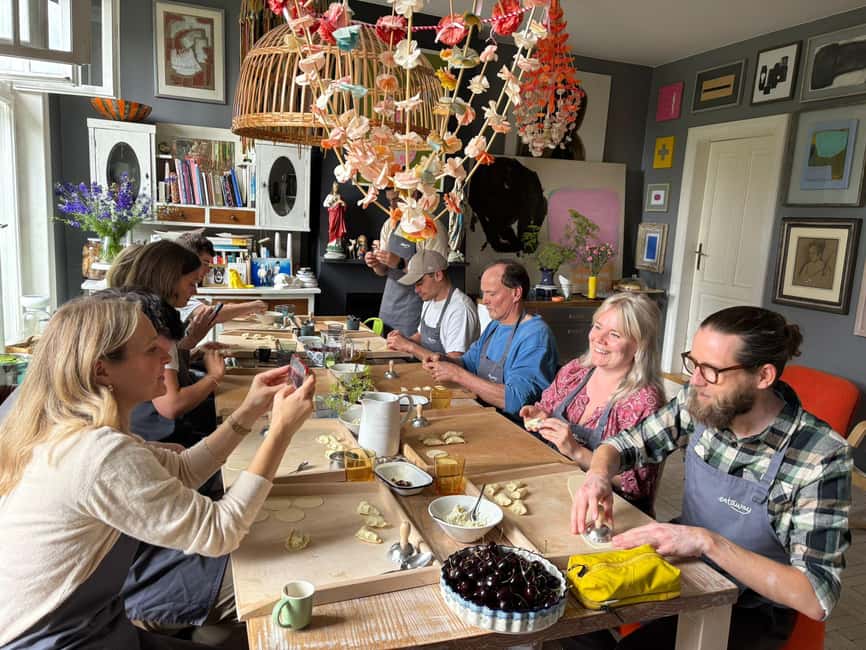
Class dessert is homemade cheesecake with salty caramel sauce. That sounds like a simple ending, but it matters because pierogi sessions can get one-note if the dessert is too mild.
Here, the salty caramel gives you that sweet-salty contrast that keeps the flavor interesting after a savory meal. You’ll enjoy it together with fresh coffee or tea, which is a nice way to slow down at the end.
I also appreciate the pacing: after hands-on cooking, you get a sit-down moment. It turns the event from pure labor into a satisfying experience you remember for the flavors—not just for the technique.
And because Marta is hosting in a home kitchen, the whole finish feels informal in a good way. You’re not standing over a buffet with a paper plate. You’re sharing a dessert and a drink at the end of a class built around real food.
Price and Value: Is $80 Worth It?
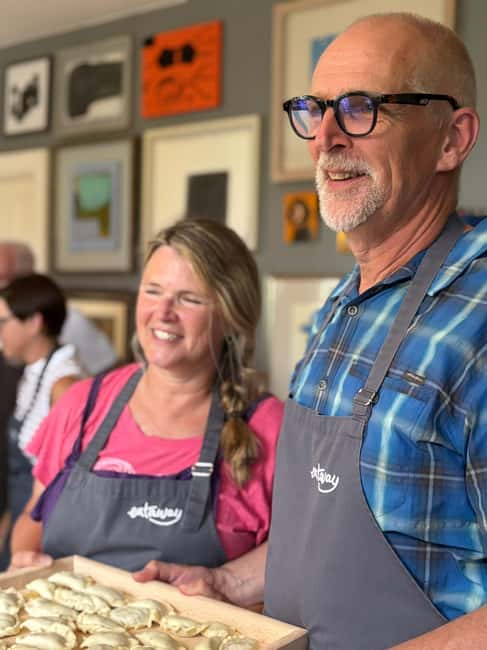
At $80 per person for a 3-hour class, the price isn’t “cheap,” and it shouldn’t be compared to a quick street-food stop. This is a paid cooking lesson that includes ingredients, instructor time, equipment like boards and aprons, and the full meal experience (pierogi plus dessert and drinks).
For me, the value comes down to two things:
- You do the work yourself: dough, filling, and forming steps (with help)
- You eat the results: pierogi and homemade cheesecake, plus tea/coffee
That combination is what makes the cost feel fair. You’re not paying only for food. You’re paying for technique and a guided path to repeat it later at home.
If you’re someone who likes to cook and wants more than a tasting experience, this is likely a strong fit. If you’re only chasing a one-time taste of Polish comfort food, you might find it pricier than a standard meal. But if your goal is skills plus flavor, it’s easier to justify.
When to Book Around the Kościuszko Mound Views
One of the smartest perks here is the timing. After or before your class, you can visit Kościuszko Mound. It’s one of Krakow’s most popular sites, and you get views over the city.
That’s an excellent pairing because the class is about real-life Polish food, and the mound visit gives you a classic Krakow panorama. It also helps your day feel balanced: you get both neighborhood calm (Salwator) and an iconic viewpoint.
If you want a simple plan, I’d schedule your class for part of the day when you’re already thinking about sightseeing, then use the mound either as an easy pre-walk or a post-class reward.
Who This Krakow Pierogi Class Suits Best
This class fits well if you want:
- hands-on instruction on pierogi dough and filling
- a cozy, local-kitchen feel in Krakow
- an experience in English that’s still practical and food-focused
- a full meal plus dessert, not just a small sample
It may not suit you if:
- you have food allergies, since participants will be making and eating the dishes
- you want a big-group “show” style tour, since it’s hosted in a private home setting
If you’re traveling as a couple, a small group of friends, or solo and you like learning by doing, this style of class is a strong choice.
Also, bring comfortable clothes. You’ll be working with dough and likely doing some flour-smudged cleanup—comfort beats fashion here.
Should You Book Marta’s Pierogi Power Class?
Book it if you want to leave Krakow with actual pierogi skills, not just memories of a plate. The mix of hands-on cooking, home-style hospitality, and a satisfying meal-and-dessert ending is a solid reason to choose this over a more passive food tour.
Skip it if allergies are part of your needs. And if you only want a quick bite and zero cooking effort, you may be happier with a restaurant meal and a separate sightseeing plan.
If you’re on the fence, here’s my simple decision rule: if you enjoy cooking or you like learning how food is made, this class is a good use of your time. If you mainly want convenience, look at other options.
FAQ
How long is the cooking class?
The class runs for 3 hours.
Where is the meeting location in Krakow?
It’s at ul. Władysława Anczyca 11 / 5 (apartment 5 in building 11). The location is in the Salwator area.
How do I get there from Rynek Główny?
You can take a taxi (about 10 minutes) or tram 1, 2, or 6 toward Salwator. Get off at the stop after Salwator Pętla (the final stop where trams turn around), then walk about 4 minutes uphill.
Will the instructor speak English?
Yes. The instructor is English-speaking.
What will I make and eat during the class?
You’ll make pierogi dough and filling from scratch, cook the pierogi, and eat them together. There’s also homemade cheesecake with salty caramel sauce, plus coffee or tea.
What’s included in the price?
Included: welcome drink (tea and coffee), aprons, the cooking class, pierogi making, homemade cheesecake with salty caramel sauce, and fresh coffee or tea.
What should I bring and wear?
Wear comfortable clothes. The class is held in a private home where you’ll be making and eating pierogi.
Is it suitable for food allergies?
No. The activity is not suitable for people with food allergies.
More Tour Reviews in Krakow


Cook It Yourself: More Classes

Eat Your Way Round Krakow

Just added: fresh Krakow reviews


Krakow Food & Pierogi Tours, compared.
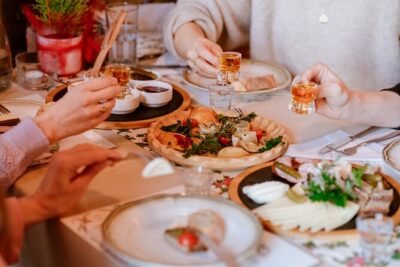 ★ 5.0Krakow Food Tasting Tour with Delicious PolandFrom $1051,032 reviews
 ★ 4.9Tipsy Polish Food Tour With History, Pierogi & ShotsFrom $44439 reviews
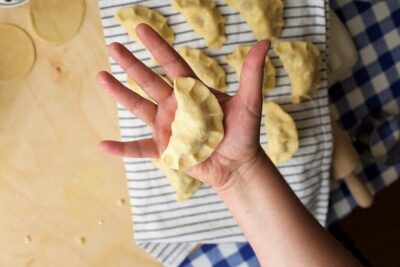 ★ 5.0Pierogi Cooking Class with Market Shopping and Local SnacksFrom $83343 reviews
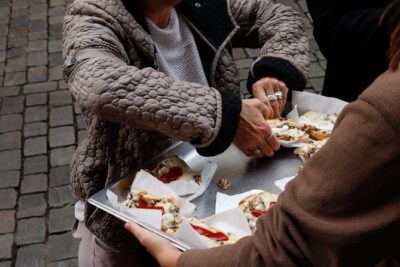 ★ 4.8Street Food Walking TourFrom $35285 reviews
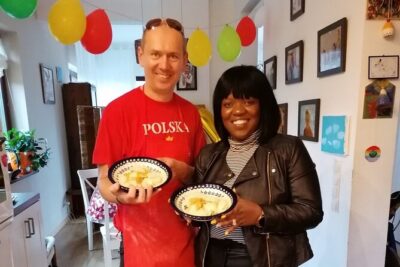 ★ 5.0Krakow Pierogi Cooking Class with Market Visit & Home-Cooked MealFrom $114212 reviews
 ★ 5.0Half-Day Krakow Food Tour in Old Town and KazimierzFrom $109186 reviews
 ★ 5.0Food Tour of 10 Tastings with Pierogi, Vodka & MoreFrom $105169 reviews
 ★ 5.0Krakow Food Tour by Foot: Polish Tastings in Old Town & KazimierzFrom $114138 reviews
Browse the lists this tour appears in