
Kraków under your feet is darker than you expect. This 3-hour Kraków Underground Museum & Old Town tour mixes skip-the-line history underground with a guided walk through the city’s crime-and-punishment legends above. I love the way the Rynek Underground Museum turns everyday medieval life into something you can actually picture, and I also like the guided narrative that links locations like St. Mary’s Basilica, the Reformed Monastery, and the Main Square into one continuous story.
The tour’s format makes it easy to follow even when the subject matter gets heavy: reconstructions, artifacts, and multimedia setups underground, then street-level stops where the guide explains how fear and superstition shaped public life. One consideration: the second half is outdoors and the stories can be graphic, so it’s not a great fit for kids under 12 (and you’ll want warm layers for evening temperatures).
On my read of recent experiences, the biggest difference tends to come down to the guide’s pacing. One English run with Poline was strong on murder and executioner stories, but another guide was spoken quickly enough that you might miss details if you’re not fully locked in.
In This Review
- Quick take: what makes this dark tour work
- Underground first: the Rynek Underground Museum’s real payoff
- How the guide narration changes what you see
- What you’ll notice underground (even if you’re not a museum person)
- Reemerge at St. Mary’s Basilica: crime history in a familiar landmark
- Walking Szpitalna and Floriańska: streets that held consequences
- Reformed Monastery stop: mummies, undergrounds, and the Death Bell
- Alchemists and haunted palaces: when fear meets curiosity
- Executioners and torture instruments: justice in the open air
- Price and timing: is $51 for 3 hours worth it?
- Practical expectations before you go
- Should you book the Kraków Underground Museum and Terrifying Dark Tour?
- FAQ
- How long is the Kraków Underground Museum & Old Town Terrifying Dark Tour?
- Where do we meet the guide?
- What does the price include?
- Is transportation included?
- What language is the tour conducted in?
- Is there an age limit?
- Do I need to buy tickets in advance?
- What’s the main underground attraction?
- What should I do if I’m late?
- What if my plans change?
Quick take: what makes this dark tour work
- Skip-the-line access to the Rynek Underground Museum saves time right at the Main Market Square.
- Nearly 4,000 square meters underground means real walking, not a short “peek.”
- Medieval burials, trade routes, and artifacts connect the city’s daily rhythm to its underworld.
- St. Mary’s Basilica cemetery stop reframes the church as part of the punishment system.
- Reformed Monastery and the Death Bell add spooky layers without losing historical grounding.
- Executioners and torture-instrument finale brings public justice to the Main Square.
Around the Rynek and the Cloth Hall, a few more
- Old Town Krakow & Wawel Castle Walking Tour
★ 5.0 · 1,508 reviews - Krakow: Bike Tour of Old Town, Jewish Quarter and the Ghetto
★ 4.9 · 1,155 reviews - Krakow: The Old Town Walking Tour
★ 4.8 · 794 reviews
Underground first: the Rynek Underground Museum’s real payoff
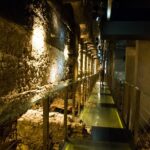
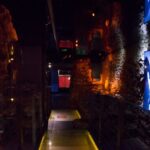
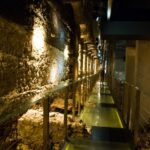
You start beneath Kraków’s Main Market Square, and that change in level is more than theatrical. The Rynek Underground Museum is built to show how the medieval city worked on the ground you’re now walking above. Instead of treating the basement-level remains like leftovers, the tour uses the underground paths, merchant-stall reconstructions, and archaeological traces to make the city’s economy and daily life feel physical.
What I like most is that you’re not just looking at one room of artifacts. You’re walking through a bigger system—nearly 4,000 square meters of underground space—so your brain naturally maps how trade and movement shaped the market. You’ll see elements tied to 11th-century burials, plus traces of older streets and artifacts that point to Kraków as a busy trade hub in Central Europe.
The museum also leans on multimedia. You might encounter holograms, touchscreens, and films that recreate the noise and motion of medieval Kraków—merchants calling, carts creaking, crowds moving. That blend matters if you don’t want a museum lecture. It’s a history tour that helps your imagination do the connecting.
How the guide narration changes what you see
This is where a tour lives or dies: the guide’s storytelling. With a licensed expert guide leading in English, you’re getting a guided thread that ties underground evidence to specific above-ground places later.
In one recent English experience, Poline was noted for being well informed on murder and executioner stories. That’s the exact skill you want here: you’re walking through locations that can sound like spooky legends if you don’t know what’s behind the words.
There’s one practical note. Some guides speak fast, which can make it harder to process details, especially if you’re picking up names and dates while also looking down at reconstructions. If you’re the type who likes to fully absorb every stop, keep your attention turned up for the first part; the underground segment sets the tone and vocabulary for the street walk.
What you’ll notice underground (even if you’re not a museum person)
Even if you’re not usually into archaeology, the Rynek Underground Museum has a way of making objects feel useful. Here’s the kind of value you’re buying with the skip-the-line ticket and the guide:
You’ll track how the market functioned—how merchants and travelers moved through the city center. You’ll also see reconstructions and artifacts that show medieval routine wasn’t neat and tidy. It involved hard living, frequent illness, crowded streets, and a justice system that didn’t hide behind paperwork.
You’ll also get the “how did people live here?” part. The tour description points to recreated bustle using multimedia, but you’ll still be standing in real underground remains: the preserved traces and archaeological remains beneath your shoes. That mix is why the museum feels different from a standard exhibit.
A small consideration: the underground spaces are dark and enclosed, so if you’re sensitive to low light or tight-feeling rooms, plan to move slowly and take breaks when you need them.
Below the square: more of the Underground
- Krakow: Rynek Underground Museum Guided Tour★ 4.6 · 1,122 reviews
- Krakow: Rynek Underground Museum Skip-the-line Guided Tour★ 4.7 · 138 reviews
- Krakow: Rynek Underground Museum Skip-the-line Guided Tour★ 4.5 · 101 reviews
- Krakow: Rynek Underground Guided Tour with Skip-the-Line★ 4.4 · 55 reviews
Reemerge at St. Mary’s Basilica: crime history in a familiar landmark
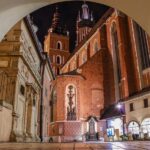
When you come back above ground, St. Mary’s Basilica stops feeling like only a pretty landmark. The tour uses the setting to explain the city’s darker habits—standing on the site of an old cemetery and learning how wrongdoers were punished in medieval Kraków.
This is one of the more effective moments of the whole itinerary because it reframes a place you likely already photographed. Instead of thinking of the church purely in terms of architecture, you understand it as part of a social system: where burials, fear, and punishment intersected.
If you’ve ever wondered why medieval European city centers can feel emotionally intense, this kind of explanation is the answer. People didn’t separate sacred spaces from the realities of control. The tour keeps that connection clear without turning the story into shock value only.
Walking Szpitalna and Floriańska: streets that held consequences
Next you walk the streets where the guide places Kraków’s infamous crimes. The route includes passes down Szpitalna and Floriańska, and the tone shifts into narrative: murderers, betrayal, superstition, and unsolved mysteries.
The value here isn’t that you get a list of crimes. It’s that you get location-based context. You’re seeing cobblestones and alleyways that once carried people under threat—so the stories feel grounded rather than abstract.
A practical tip: keep pace with the guide and listen for place cues. Street names and turns matter in a story like this. If you miss a reference, you might feel lost when the guide connects the next stop to the previous one.
Reformed Monastery stop: mummies, undergrounds, and the Death Bell
The tour then heads into the Reformed Monastery area with stories tied to its hidden undergrounds and preserved mummies. You’ll also hear about the “Death Bell,” once rung for the dying.
This part works because it’s not only spooky. The guide frames it as a window into how the city handled death—who was buried where, how suffering was managed, and how public life responded when someone was at the edge.
Just be honest with yourself here. If you’re squeamish about death-related themes, you’ll want to mentally prepare. The tour is billed as a terrifying dark experience, and this segment leans into that. Still, the stories are explained through the lens of historical practice, which makes it easier to tolerate than pure horror.
Alchemists and haunted palaces: when fear meets curiosity
Next comes a different flavor of darkness: alchemists, curses, and haunted townhouses and palaces. The guide follows a trail of Kraków legends about experiments and lingering spirits—stories passed down through generations.
This stop is a good reminder that medieval fear wasn’t only about crime. It was also about belief—about what people thought science could do, what they thought hidden knowledge would cost, and what happened when experiments went wrong.
I like this part because it adds atmosphere without replacing history. You still feel like you’re learning why the city’s stories stuck, not just watching a sequence of ghost tales.
Executioners and torture instruments: justice in the open air
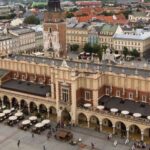
The tour ends at a powerful location for this subject: the Main Square. Here you learn about the city’s executioners and the tools of torment used on prisoners—plus how punishment was once public spectacle.
This finale can hit hard because it puts the reality of medieval justice in the middle of a place many people now experience as charming and postcard-ready. The guide’s job here is crucial: to explain the system behind the cruelty, not just describe the instruments.
If you want a single “aha” moment, this is it. You see how the Main Square functioned not only as a market but also as a stage for power. After walking through basilicas, monasteries, and secret-underworld spaces, ending here gives the tour a satisfying shape.
Price and timing: is $51 for 3 hours worth it?
At $51 per person for about 3 hours, you’re paying for three main things: a licensed guide, skip-the-line access to the Rynek Underground Museum, and a guided route that links underground exhibits to specific Old Town sites.
Is it cheap? No. But it’s not overpriced for what it includes. The skip-the-line portion matters in a busy central area. And the underground museum itself is only “small” on paper; once you start walking through the underground paths and reconstructions, the time starts to feel justified.
You also get a narrative pay-off. Many Kraków tours pick one theme—architecture, history, or nightlife-style storytelling. This combines medieval everyday life underground with punishment and crime above, so you get more than one type of value in the same outing.
The other timing detail to keep in mind: the tour is only one language (English). If you don’t speak English well enough to track quick explanations, you may feel rushed instead of informed.
Practical expectations before you go
A few details will help your experience feel smooth:
- Arrive about 10 minutes early. If the group departs, latecomers can’t join and tickets can’t be refunded.
- Plan for an English-only format.
- Children under 12 aren’t suitable for this tour.
- Transportation to and from attractions isn’t included, so build in walking time or local transit as needed.
Also, wear shoes you trust. The tour is built on walking—especially with a street section that includes narrow alleys and cobbled surfaces.
Should you book the Kraków Underground Museum and Terrifying Dark Tour?
I think you should book this tour if you want Kraków to feel more like a story you can follow than a checklist. If you like museum stops, this offers a strong underground anchor with reconstructions, artifacts, and multimedia. If you like guided legends, the Old Town walk keeps the spooky theme tied to specific locations rather than random ghost lore.
You might skip it if you want light entertainment or you’re uncomfortable with death-and-punishment content. And if you struggle with fast-paced English narration, consider that the guide pace can vary—one Poline-led run focused sharply on murder and executioners, while another guide was harder to track because the delivery felt rapid.
If your sweet spot is: history with teeth, crime with context, and a city-center experience you’ll remember, this is a good fit.
FAQ
How long is the Kraków Underground Museum & Old Town Terrifying Dark Tour?
The tour lasts 3 hours.
Where do we meet the guide?
Meet near the entrance to the Rynek Underground Museum. The guide holds an excursions.city sign.
What does the price include?
You get a licensed expert guide and skip-the-line admission to the Rynek Underground Museum.
Is transportation included?
No. Transportation to/from attractions is not included.
What language is the tour conducted in?
The tour is offered in English only.
Is there an age limit?
Yes. It’s not suitable for children under 12.
Do I need to buy tickets in advance?
The tour includes skip-the-line admission to the Rynek Underground Museum, and you reserve a spot for the guided experience.
What’s the main underground attraction?
You visit the Rynek Underground Museum, exploring underground paths, reconstructions, artifacts, and archaeological remains beneath Kraków’s Main Market Square.
What should I do if I’m late?
You should arrive about 10 minutes before. Once the group has departed, latecomers can’t join, and tickets can’t be refunded.
What if my plans change?
You can cancel up to 24 hours in advance for a full refund, and you can also reserve and pay later (book now, pay nothing today).
More Tour Reviews in Krakow

Under the Rynek: More to See
More Around the Main Square


Just added: fresh Krakow reviews

Old Town & Main Square Tours, compared.
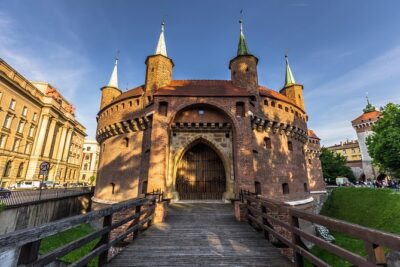 ★ 5.0Old Town Krakow & Wawel Castle Walking TourFrom $261,508 reviews
 ★ 4.9Bike Tour of Old Town, Jewish Quarter and the GhettoFrom $371,155 reviews
 ★ 4.8The Old Town Walking TourFrom $19794 reviews
 ★ 4.7Old Town Guided Segway TourFrom $55756 reviews
 ★ 4.8Old Town & Wawel Castle Walking Tour in EnglishFrom $26532 reviews
 ★ 4.5Krakow Old Town Guided Walking TourFrom $33438 reviews
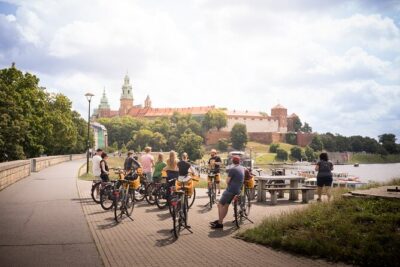 ★ 5.0Full Bike Tour – the Old Town, Jewish Qtr & the Ghetto NEW BIKESFrom $35437 reviews
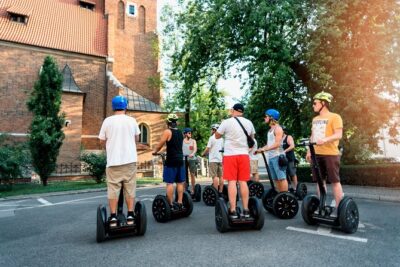 ★ 5.0Krakow Old Town Segway Tour 2hr with Training, Safety Gear, GuideFrom $57435 reviews
Browse the lists this tour appears in