
REVIEW · KRAKOW PRIVATE TOURS
Lesser Poland Wooden Architecture Trail UNESCO Private Tour from Krakow
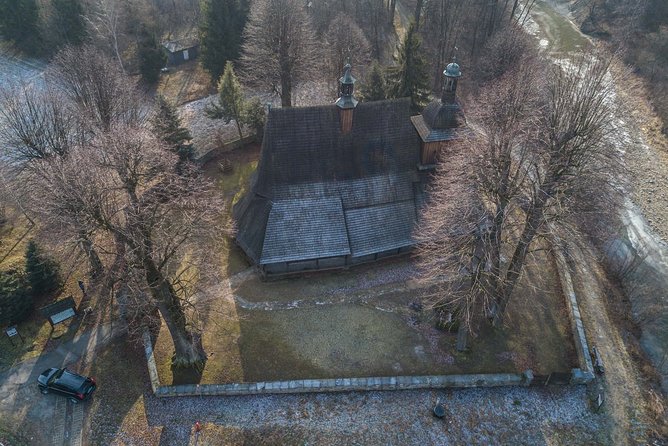
Wooden churches are not just pretty buildings. They explain how people in southern Lesser Poland made faith and community work using wood, not stone. I like the UNESCO World Heritage connection at Lipnica Murowana (St. Leonard’s) and I also like that this tour includes several denominations and styles, from late Gothic to Lemko Greek Catholic traditions. The only real catch is time: this is a long day (about 10 to 12 hours) with quick stops, so you need to be ready for 30-minute church visits rather than lingering.
The tour works best when you’re open to a guided pace. With hotel pickup and a climate-controlled mini-bus, you can focus on the details—like wood joinery, roof shapes, and how the churches were designed to fit local needs—without worrying about transit. In one excellent private-tour review, the guide Maciej even adjusted the rhythm based on the group’s preferences, and that kind of flexibility is a big part of the value here. I do want to flag one more practical point: food and drinks are not included, though there is typically a lunch break.
In This Review
- Key highlights and what actually matters
- Lesser Poland Wooden Architecture: what you’re really seeing
- Price and value: why $299.53 can make sense
- Pickup, timing, and the rhythm of a 10–12 hour day
- Stop 1: Lipnica Murowana and St. Leonard’s Church (UNESCO)
- Stop 2: Kościół Nawiedzenia Najświętszej Maryi Panny (15th century)
- Stop 3: Binarowa’s Church of St. Michael the Archangel
- Stop 4: Sękowa’s St. Philip and St. James, the Pearl of Beskid Niski
- Stop 5: Owczary’s Greek Catholic Church of Protection of Our Most Holy Lady
- Stop 6: Kwiaton’s Church of St. Parasceve
- What the guide really adds (and why it’s worth it)
- Food, drinks, and the lunch timing you should expect
- Best for whom: you’ll enjoy this if…
- Should you book the Lesser Poland Wooden Architecture Trail tour?
- FAQ
- What is the duration of the Lesser Poland Wooden Architecture Trail UNESCO Private Tour?
- How much does the tour cost?
- Is hotel pickup and drop-off included?
- What churches or stops are included on the route?
- Are entrance fees included?
- Do I get a guide, and is the tour in English?
- Is food included?
- Where do I meet for the tour?
- When is the pickup window?
- Is this tour private?
Key highlights and what actually matters
- UNESCO-listed wooden church architecture focused on southern Lesser Poland
- Multiple stops in a single route, with 30-minute visits so you see more in less time
- Pick-up and drop-off from your Krakow accommodation, plus A/C mini-bus comfort
- A real “why this style” story, connecting geography, materials, and local builders
- Roman Catholic and Greek Catholic churches side by side, showing how different communities expressed similar needs
- Guide-led interior access when available, plus free entries listed for each stop
Just your group: more private Krakow days
- Skip-the-Line Wawel Castle Chambers Private Tour
★ 4.7 · 262 reviews - Auschwitz Private Tour
★ 5.0 · 124 reviews - Krakow: Old Town Highlights Private Walking Tour
★ 4.9 · 79 reviews
Lesser Poland Wooden Architecture: what you’re really seeing
This tour is about more than “old wooden buildings.” You’re stepping into a regional building tradition where timber wasn’t a compromise—it was the plan. In the Lesser Poland area, wood allowed builders to create large interior spaces, craft ornate details, and move faster than stone construction, especially when communities needed places for worship, meetings, and identity.
What makes the day rewarding is the way the guide connects form to function. You’ll notice patterns: steep roofs, specific layout choices, and decorative elements that weren’t just for decoration. They helped with rain and snow loads, supported tall interior spaces, and gave each church a recognizable local character.
And because this route includes Roman Catholic churches plus a Greek Catholic (Lemko) church, you also get a sense of how culture traveled alongside building techniques. Same material world, different liturgical traditions and artistic choices.
Price and value: why $299.53 can make sense
At about $299.53 per person, this tour isn’t “cheap,” but it’s also not trying to be a mass-market bus ride. You’re paying for a private group experience, hotel pickup and drop-off, a professional guide, and transport in an air-conditioned mini-bus. Entrance fees are included too, and the listed stops show free admission tickets for the churches on the route.
For me, the key value test is simple: do you save time and thinking by having it planned for you? Here, yes. You’re bundling several church visits in one day with an expert to point out what to look for—so you’re not just taking photos and guessing.
If you’re traveling as a couple or small group, group discounts can help even more. One practical note: this tour is commonly booked about 45 days in advance on average, so if you have fixed dates, it’s smart to lock it in early.
Pickup, timing, and the rhythm of a 10–12 hour day
The tour operates on Wednesday through Sunday with an opening window that gives you morning pickup options (7:00 AM–8:00 AM). That timing matters because wooden churches often depend on daylight and opening hours, and the route includes multiple visits back-to-back.
A typical visit at each stop is about 30 minutes. That’s enough time to get your bearings inside, look at the key features the guide highlights, and keep moving. If you prefer slow travel, you’ll still likely enjoy it—just know you’re choosing efficiency over wandering.
The mini-bus and hotel pick-up are more than convenience. They remove the hassle of finding parking, navigating rural roads, and figuring out which church to see next. On a day like this, that’s a real quality-of-life win.
A few more Krakow trips worth putting on the shortlist
- Krakow Airport Private Transfer★ 5.0 · 2,227 reviews
- Private Departure Transfer: Krakow City To Krakow Airport Balice★ 4.5 · 367 reviews
- Legendary Private Nowa Huta Communism Tour with Crazy Guides★ 5.0 · 262 reviews
- From Krakow: Auschwitz-Birkenau and Salt Mine with Private Transfer★ 5.0 · 247 reviews
Stop 1: Lipnica Murowana and St. Leonard’s Church (UNESCO)
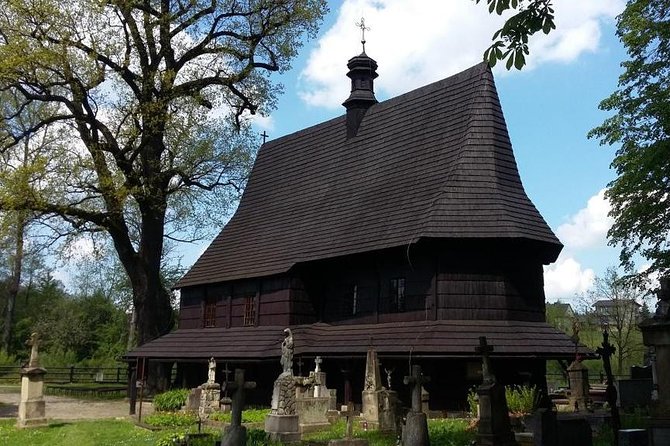
You start in Lipnica Murowana at the church of St. Leonard, built at the end of the 15th century. This is one of the six wooden churches in southern Lesser Poland that are part of the UNESCO World Heritage listing.
This stop is your foundation stop. It sets the theme for the whole day: how wood architecture reached a high level of sophistication and why it became a defining feature of the region. When you arrive, you’ll want to give the exterior roofline and structure a quick scan before you head inside. The big shapes tell you how the church was built to handle local weather and stand through time.
One advantage here is that admission is listed as free, and the stop is time-boxed at about 30 minutes, so you don’t feel trapped. The main drawback is that if you love one church deeply, this format can feel fast. Still, the rest of the day is where the comparison pays off.
Stop 2: Kościół Nawiedzenia Najświętszej Maryi Panny (15th century)
Next up is the wooden church of Kościół p.w. Nawiedzenia Najświętszej Maryi Panny (15th century). This is another Roman Catholic wooden church, and it helps you see how the same broad wooden building idea can produce different visual effects.
In a short visit, the trick is to look for differences as much as similarities. Notice how the design handles the interior space: where the key focus points are, what stands out in structure and ornament, and how the church’s layout supports worship.
Because admission is listed as free and the visit is about 30 minutes, you can enjoy this stop without feeling like you’re losing the day. If you’re the kind of traveler who always reads every sign, you might need to speed up slightly. If you like listening for the guide’s key points, this stop is a good match.
Stop 3: Binarowa’s Church of St. Michael the Archangel
Then you move to Binarowa for the Church of St. Michael the Archangel. This stop is known as one of the most valuable examples of late Gothic architecture in Poland, and it’s a strong pivot from “timber village church” into “important architectural statement.”
Here, Gothic details matter—especially in how the church feels taller, sharper, and more structured in its visual language. Even in a brief visit, you should be able to spot the character of late Gothic rather than just the wooden material.
If you’re going on this tour mainly to understand craftsmanship, this is one of the stops where the guide’s interpretation will likely click for you. It’s also a good mental reset: you’ve seen two wooden churches in Lipnica-style tradition, and now you see how late Gothic influence shows up in that world.
Stop 4: Sękowa’s St. Philip and St. James, the Pearl of Beskid Niski
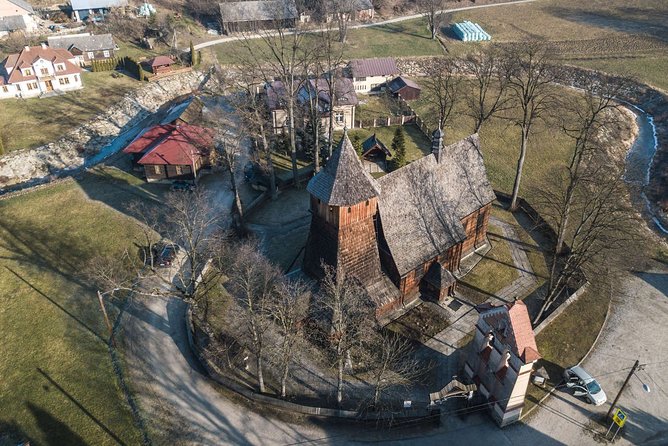
In the village of Sękowa, you’ll visit the Church of St. Philip and St. James the Apostles, built at the beginning of the 15th century. This church is called the Pearl of Beskid Niski—and that nickname is doing work. It signals that people in this region truly treat the church as a standout.
This stop is often where the “wow” factor hits. The route is structured, so you build understanding first, then the day gives you a church that feels like it’s meant to be remembered. You’ll likely spend time comparing exterior and interior feel: what changes in light, how the wood framing affects the visual rhythm, and which features the guide points out as signature.
Admission is listed as free, and again you get around 30 minutes. If your group wants to see more than the listed route, the guide can adjust the pace—one strong review described a guide asking the group about how many churches to aim for, with up to 8–9 possible depending on preferences. That flexibility is a real benefit if you’re hungry for more.
Stop 5: Owczary’s Greek Catholic Church of Protection of Our Most Holy Lady
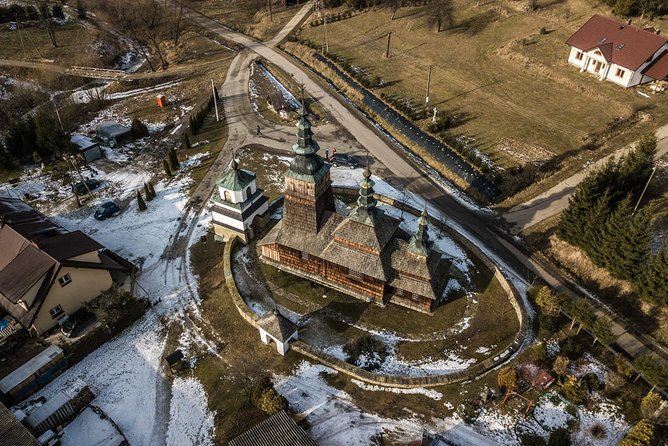
Then you switch traditions with the Greek Catholic Church of Protection of Our Most Holy Lady in Owczary (a Lemko tserkov). It was erected in the mid-17th century, and it’s listed as one of the oldest Lemko churches in this tradition.
This is the stop that can change how you think about “wooden church architecture.” Here, you see how a community’s faith practices and cultural identity shape the building style, even when the surrounding material world is similar. You’re not just collecting churches—you’re comparing how different groups built sacred space.
Because the visit time is short (about 30 minutes) and admission is listed as free, the goal is to notice the differences the guide highlights and not try to understand every detail on your own. If you’re fascinated by religious art and community history, this is a great time to ask the guide what to watch for.
Stop 6: Kwiaton’s Church of St. Parasceve
The final listed church stop is the Church of St. Parasceve in Kwiaton. This is described as one of the most beautiful wooden churches in Lesser Poland, and the wording here is a hint: this stop is often where the day’s visual payoff comes together.
By now, you’ve trained your eye. You know to check the structure, the way the church holds its shape, and how decoration supports meaning instead of being random. So even if you don’t go inside for long, you can still recognize what makes this one special.
This stop works well as a close because it leaves you with enough time to absorb the day’s theme. If you’ve been photographing everything, you’ll start seeing patterns rather than just objects, and that’s when the tour becomes more than a checklist.
What the guide really adds (and why it’s worth it)
A private tour lives or dies on the guide. In this case, the experience is built around a professional guide service, and one excellent review singled out the guide Maciej for being organized and engaging. The guide also asked the group about pace—how many churches to aim for—so you’re not stuck with a rigid plan if you want more or less intensity.
That matters because wooden churches can feel similar if you’re just scanning from the door. A good guide keeps you focused on what’s actually different: the architectural choices, the regional reasons behind the materials, and the historical connections tied to each site.
Also, the guide’s job is practical. Several churches can be visited inside, and the guide helps you time your entry. Where an audio guide is an option, you’ll have the choice to use it or lean on the live guide—either way, you’ll spend less time guessing and more time learning.
Food, drinks, and the lunch timing you should expect
Food and drinks are not included, so plan your own meals. The tour does include time for a lunch break—about one hour in at least one well-rated experience—and that can be a nice moment to try Polish traditional dishes at a village restaurant.
Here’s the practical way to handle it:
- Think about your dietary needs early so you’re not stuck trying to improvise when the group is moving.
- Keep an eye on timing if you’re buying snacks or drinks outside the lunch stop. The day is structured, and you’ll be happier if you don’t run late.
If you’re the kind of traveler who likes to graze, bring a small snack along. You’ll still enjoy the lunch stop, but you won’t feel pressured.
Best for whom: you’ll enjoy this if…
This tour fits travelers who like architecture, craftsmanship, and regional culture, not just postcard sightseeing. If you’re the type who enjoys comparing buildings and learning the “why,” you’ll get a lot out of the way the route is designed.
It’s also a good choice if you’re short on time in Krakow but want a meaningful day trip. The hotel pickup and drop-off do the heavy lifting, and the day format helps you see multiple wooden churches without stress.
On the other hand, if you want long, quiet hours inside each church—or you hate structured schedules—then you might find 30-minute visits a little tight. You can still get value, but you’ll have to accept the pace as part of the deal.
Should you book the Lesser Poland Wooden Architecture Trail tour?
Book it if:
- you want UNESCO-linked wooden church architecture in one efficient day
- you care about how materials and geography shaped what you see
- you like guided interpretation and clear timing
- you’re traveling in a group that benefits from private logistics (especially with hotel pickup)
Skip it or rethink if:
- you want lots of free time at each stop with no “move to the next church” rhythm
- you don’t plan to budget for lunch and drinks (since meals aren’t included)
- you’re sensitive to early morning starts (pickup runs 7:00–8:00 AM on tour days)
If you’re excited by the idea of comparing multiple churches—Roman Catholic and Greek Catholic—while someone explains the logic behind the design, this is a solid value use of a Krakow day. It’s not just a drive through the countryside. It’s a structured lesson in how wood became art and identity.
FAQ
What is the duration of the Lesser Poland Wooden Architecture Trail UNESCO Private Tour?
It runs about 10 to 12 hours, depending on the day and how the schedule flows.
How much does the tour cost?
The price is listed as $299.53 per person.
Is hotel pickup and drop-off included?
Yes. You’re picked up from your accommodation in Krakow and returned there at the end.
What churches or stops are included on the route?
The listed stops are St. Leonard’s in Lipnica Murowana, a wooden church of the Visitation of the Blessed Virgin Mary, the Church of St. Michael the Archangel in Binarowa, St. Philip and St. James in Sękowa (Pearl of Beskid Niski), the Greek Catholic Church of Protection of Our Most Holy Lady in Owczary, and the Church of St. Parasceve in Kwiaton.
Are entrance fees included?
Yes. Entrance fees are included, and each listed stop shows free admission tickets.
Do I get a guide, and is the tour in English?
Yes. A professional guide is included, and the tour is offered in English.
Is food included?
No. Food and drinks are not included, though there is typically time for a lunch break.
Where do I meet for the tour?
The start meeting point is Kiss&Ride ZyblikiewiczaMikołaja Zyblikiewicza 2, 31-029 Kraków, Poland, and the tour ends back at the meeting point.
When is the pickup window?
Pickup is listed for Wednesday through Sunday, 7:00 AM to 8:00 AM.
Is this tour private?
Yes. It’s described as a private tour/activity, with only your group participating.
More Tours in Krakow
More Tour Reviews in Krakow
Private Krakow: More Options
Just added: fresh Krakow reviews
Krakow Private Tours, compared.
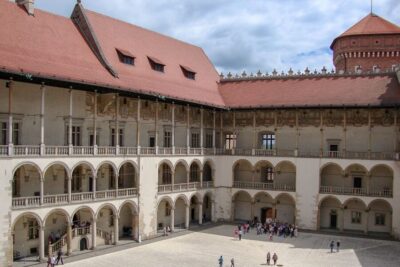 ★ 4.7Skip-the-Line Wawel Castle Chambers Private TourFrom $154262 reviews
 ★ 5.0Auschwitz Private TourFrom $387124 reviews
 ★ 4.9Old Town Highlights Private Walking TourFrom $12679 reviews
 ★ 4.5Auschwitz Birkenau: Complete Private TourFrom $11551 reviews
 ★ 5.0Krakow Private Walking TourFrom $17944 reviews
 ★ 5.0Krakow Jewish District Private Tour. Kazimierz and Jewish GhettoFrom $9634 reviews
 ★ 4.7Skip-the-line Oskar Schindler’s Museum Private TourFrom $12534 reviews
 ★ 4.5Zakopane & Tatra Mountains Private Full-Day Tour from KrakowFrom $16933 reviews
Browse the lists this tour appears in