
REVIEW · KAZIMIERZ & JEWISH HERITAGE TOURS
Krakow Jewish District Private Tour. Kazimierz and Jewish Ghetto
Jewish Krakow tells a story fast. This Kazimierz and Jewish Ghetto private walk ties synagogue streets and WWII memory sites into one clear route. It is history you can see at walking speed, with your guide handling the context.
I like the private pacing and how Christopher keeps the details organized, stop by stop. I also love that the tour pairs religious landmarks like Wolf Popper Synagogue with World War 2 history in a way that feels direct and moving.
One consideration: several synagogue highlights are shared from the outside. If you expect a tour full of inside access everywhere you go, this route is more about street views and guided explanations than nonstop interiors.
In This Review
- Key highlights worth your attention
- Why Kazimierz and Krakow’s ghetto belong together on one walk
- Price and time: what $96.11 buys you in 2 hours 30 minutes
- Getting ready: footwear, meeting points, and keeping the pace comfortable
- Wolf Popper Synagogue: starting with a living sense of place
- Szeroka Street and Plac Nowy: seeing the old quarter at walking speed
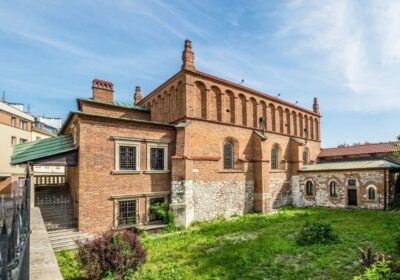
- Synagogues explained from outside: Remuh, Old Synagogue, and the century mix
- Schindler’s List: Mrs. Dresner courtyard and stairs in real space
- Ghetto Wall Fragment and Ghetto Heroes Square: memorial stops that don’t feel vague
- How a private guide like Christopher makes it click
- Who should book this Kazimierz and Jewish Ghetto private tour
- Should you book this tour?
- FAQ
- How long is the Krakow Jewish District Private Tour?
- What does the tour cost?
- Is this tour private?
- Does the tour include pickup?
- What language is the tour in?
- Are there admission fees at the stops?
- What stops are included in the walk?
- What is the cancellation policy?
Key highlights worth your attention
- Private guide, private group so you can ask questions and set the pace
- Kazimierz street-level walking across older quarter streets and landmarks
- Wolf Popper Synagogue and multiple synagogues along the way, including several century-labeled sites
- Schindler’s List movie site at the Mrs. Dresner courtyard and stairs
- Ghetto wall fragment and Ghetto Heroes Square for the memorial part of the story
Deeper into Kazimierz and its Jewish heritage
- Krakow: Schindler’s Factory & Ghetto Guided Tour
★ 4.7 · 1,694 reviews - Krakow: Jewish Quarter and Former Ghetto Tour
★ 4.9 · 1,441 reviews - Krakow: Bike Tour of Old Town, Jewish Quarter and the Ghetto
★ 4.9 · 1,155 reviews
Why Kazimierz and Krakow’s ghetto belong together on one walk
If you only see the main squares of Krakow, you can still miss the city’s most complicated layer. This tour stitches together the Jewish Quarter of Kazimierz and the Krakow ghetto area so you understand how these places relate, rather than treating them like separate chapters.
What I liked most is the rhythm: you start with a synagogue area, move through the feel of the neighborhood on streets like Szeroka Street, and then shift toward WWII-era memory sites. That change in tone is handled carefully, with enough time at each point for your mind to catch up. You do not rush past the heavy parts; you simply walk from place to place with a guide explaining what each spot represents.
Another smart choice is how much of the route is on foot. You get city-scale context fast. You see how narrow streets connect to open spaces and why people would have experienced this area as a walkable web, not as a set of isolated monuments.
Price and time: what $96.11 buys you in 2 hours 30 minutes
At $96.11 per person for about 2 hours 30 minutes, this is not a budget bus tour. You are paying for a licensed private local guide and the flexibility that comes with a private group format.
Here is the practical value equation: in 150 minutes, you can cover multiple landmarks that are otherwise easy to miss or misunderstand on your own. A good guide saves you from two common problems in history walking tours—wandering without direction, and reading labels that do not answer the bigger questions.
You also get support that makes the time feel smoother, like pickup offered (so you are not spending your short tour hunting for the start point) and a mobile ticket. If you are traveling with limited time in Krakow, this is the kind of tour that turns a half-day planning headache into a tidy plan.
One extra note: this is a popular experience. The average booking timing is about 75 days in advance, so if your dates are firm, booking earlier is wise.
Getting ready: footwear, meeting points, and keeping the pace comfortable
Plan for walking. Comfortable shoes are specifically part of the experience guidance, and the route includes multiple stops that likely require short stretches along uneven sidewalks and lanes.
Good news: it is designed to work for many people, with guidance that most travelers can participate. Service animals are allowed, and it is near public transportation, which helps if pickup is not your thing. The tour is also private, meaning only your group participates, so you are not squeezed into a crowd dynamic.
If you want the tour to feel relaxed rather than rushed, bring one small habit: ask your guide what you should look for at the next stop. On a private tour, this kind of back-and-forth makes a big difference, especially when you are walking through places tied to both community life and tragedy.
Just your group: more private Krakow days
- Skip-the-Line Wawel Castle Chambers Private Tour★ 4.7 · 262 reviews
- Krakow: Old Town Highlights Private Walking Tour★ 4.9 · 79 reviews
- Auschwitz Birkenau: Complete Private Tour★ 4.5 · 51 reviews
- Krakow Private Walking Tour★ 5.0 · 44 reviews
Wolf Popper Synagogue: starting with a living sense of place
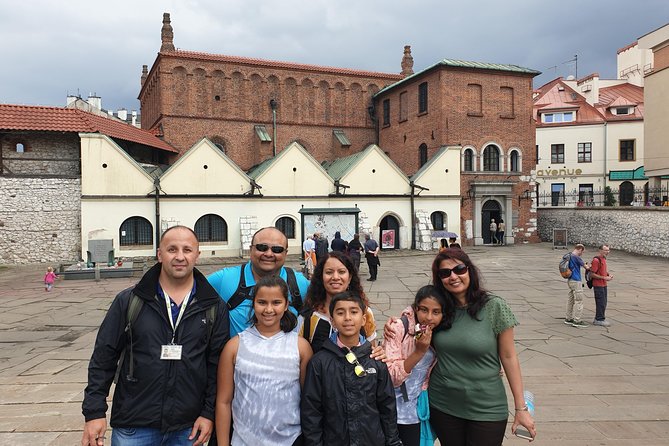
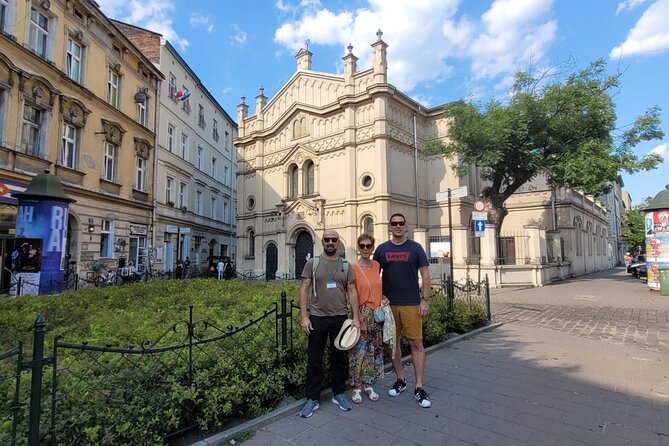
The tour kicks off at Wolf Popper Synagogue. You get a short explanation here—about 10 minutes—and the entry is listed as free.
This is a smart start point because it sets the tone. Rather than starting with the ghetto sites first, you begin with synagogue space and community context. That order matters. It helps you understand that this area was not only a WWII setting. It was a neighborhood with religious, social, and cultural purpose.
Even with a short stop, a guide can point out what to pay attention to: the significance of the synagogue as a community anchor and why the later sights will feel different once you have that baseline. If you tend to get lost on purely visual tours, this kind of “start with meaning” opening is especially helpful.
A minor trade-off: the explanation time is brief. If you want a long stop to linger, a private tour helps here—just ask your guide if you can spend a few extra minutes at the end of the introduction.
Szeroka Street and Plac Nowy: seeing the old quarter at walking speed
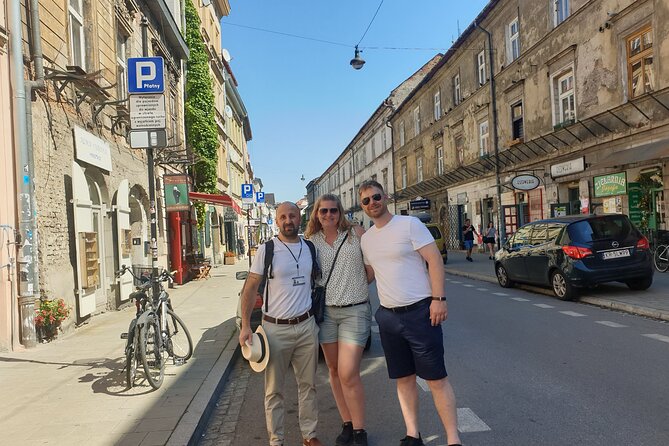
Next you walk along Szeroka Street, described as the oldest part of the Jewish Quarter. The stop time is 45 minutes with admission ticket free, which makes it one of the more time-rich segments.
This is where you start getting the feel of the neighborhood, not just the landmarks. Szeroka Street is useful because it gives you a sense of scale: how streets connect, where people would naturally gather, and how the “shape” of the quarter influences what you notice as you walk.
Then the route includes Plac Nowy. Even if your guide does not treat it as a long photo stop, it matters because it acts like a transition point. You go from synagogue-adjacent space into open-area energy, so your brain stops treating everything as a solemn hallway and starts treating it like a real lived-in district.
If you like breaks (and a little normalcy during heavy history), there is also room for a coffee stop in the area. In one case, a guide recommendation included Hera for coffee, which shows how the walk can still feel human-paced instead of museum-like all the way through.
Synagogues explained from outside: Remuh, Old Synagogue, and the century mix
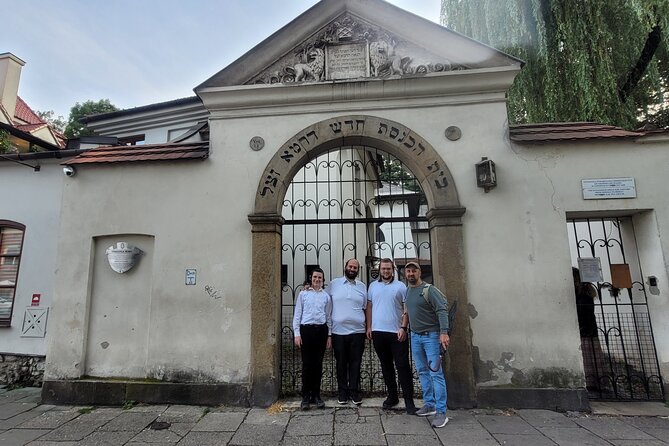
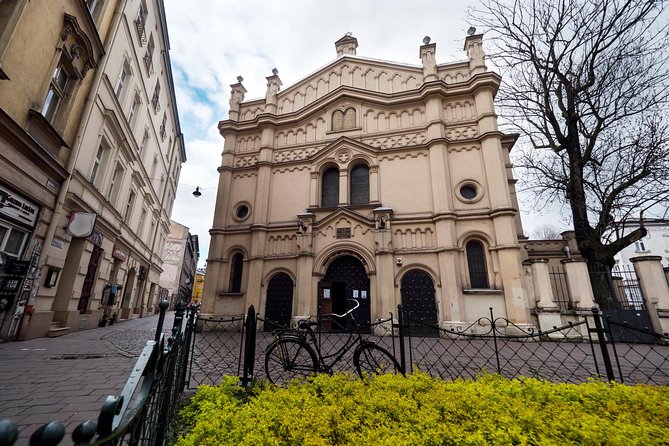
The route continues with several synagogue sites that are explained from the outside: Remuh Synagogue and the Old Synagogue. It also includes additional synagogue landmarks described by century, including stops like the 17th Century Synagogue, the Reformed Synagogue, the 17th Century Izaak Synagogue, and a 16th Century Synagogue.
From a visitor’s point of view, outside views can be both a strength and a limitation.
The strength: you get to see how these places line up across the neighborhood. You understand their relationships by walking, not by hopping from one distant attraction to another.
The limitation: you will not get the kind of deep interior access you might see on other tours. For history lovers who want architecture details inside, you may feel the time is more about context and overview than full-on sightseeing.
What I found useful about this setup is that it helps you avoid the common confusion of seeing multiple synagogues without a framework. A guide can connect names, community identity, and timeline—so that when you look at the outside, you can attach the right story to what you see.
The tour also includes a Jewish Community Center stop with an explanation (about 10 minutes). Even without long entry time, this is a key reminder that Jewish community life included more than worship spaces.
Schindler’s List: Mrs. Dresner courtyard and stairs in real space
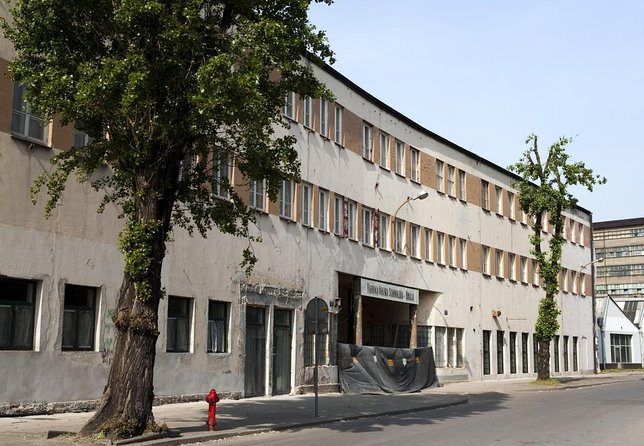
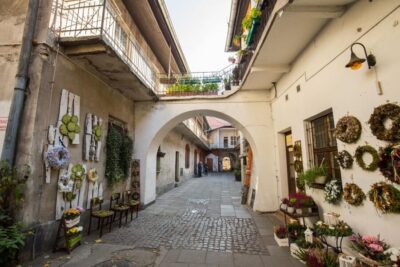
One of the most memorable stops is Mrs. Dresner courtyard and stairs, tied to the Schindler’s List movie site. You get about 10 minutes here, and admission is listed as free.
This is one of those moments where film has already set your expectations, but you still need the real location to finish the picture. What works on a private tour is that the guide can steer you away from passive movie trivia and toward the actual historical meaning of the place.
You also get a useful pacing reset here. Up to this point, you have been walking through a district story. This stop brings WWII-era memory into sharper focus. It does not feel like a random detour. It feels like a thematic hinge.
Because the stop is short, keep your expectations realistic. You are not there to spend the afternoon. You are there to see the space, hear the context, and keep walking with understanding.
Ghetto Wall Fragment and Ghetto Heroes Square: memorial stops that don’t feel vague
After the Schindler’s List location, the tour moves to two ghetto-area memorial points.
First is a Ghetto Wall Fragment stop (about 10 minutes). Then there is Ghetto Heroes Square (about 20 minutes). Admission is listed as free at these points.
These two stops matter because they shift the story from settings to memory.
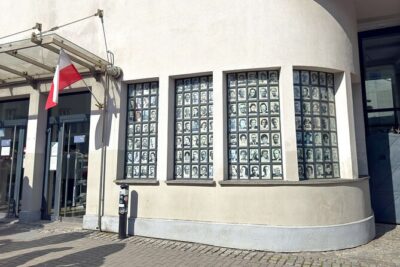
A wall fragment gives you something concrete: a physical reminder of confinement and forced separation. A square devoted to heroes pushes the emotional tone toward remembrance and endurance. Together, they prevent the history from floating in abstract statements. You see material evidence, then you see memorial intent.
If you need a little mental preparation, this is the segment to slow yourself down. Put your phone away, and give your guide room to explain without multitasking. On this kind of walk, your attention is part of your respect.
How a private guide like Christopher makes it click
A big part of why this tour earns such strong ratings is the way your guide can tailor the flow. The private format means you can ask follow-up questions without worrying that you are holding up a big group.
In one helpful example, the guide Christopher was praised for giving a lot of detail while still respecting pacing. That balance is rare. You want information, but you also do not want someone talking over your thoughts or trying to extend the day beyond what you want.
Another practical benefit: when your stop times are relatively tight, a good guide uses the time efficiently. You get just enough explanation at each stop to build a coherent route story. And if the walking is happening at the same speed as your attention, everything connects instead of becoming a list of places.
Also, during real-life conditions—like holidays when some places may have limited hours—your guide can adjust by focusing on what you can still see and understand from the street level. That flexibility keeps the tour from feeling like it failed because a door was closed.
Who should book this Kazimierz and Jewish Ghetto private tour
This is a great fit if:
- You want Jewish history in Krakow organized into a walking narrative
- You care about WWII context and prefer a guided framework over self-guided wandering
- You like asking questions in plain language rather than reading alone off a phone
- You want a private experience with only your group
It may not be ideal if:
- You expect long interior visits at every synagogue stop
- You want a tour that is mostly flexible sightseeing time rather than structured explanations
- You dislike walking and short stops in quick succession
If you are a first-timer in Krakow and you want one tour that gives you instant bearings for the Jewish Quarter, this is the kind of “right place, right time, right story” outing.
Should you book this tour?
I think you should book it if your goal is clarity, not just photos. For $96.11, you get a licensed private local guide, a 2.5-hour route that connects Kazimierz and ghetto memory sites, and a solid mix of synagogue context and WWII landmarks—plus the Schindler’s List location that many people come to Krakow hoping to place in real geography.
If you hate surprises, read this as a planning tip: several synagogue highlights are outside views with explanations rather than full interior tours. Still, the overall structure is strong, and the pacing is designed for people who want to understand the story without burning their day.
If your dates are fixed, book early since it is often reserved well in advance. And bring comfortable shoes. After that, let Christopher handle the path, and let your walking do the rest.
FAQ
How long is the Krakow Jewish District Private Tour?
It lasts about 2 hours 30 minutes.
What does the tour cost?
The price is $96.11 per person.
Is this tour private?
Yes. It is a private tour/activity, and only your group will participate.
Does the tour include pickup?
Pickup is offered, so you may be able to start without navigating to the meeting point on your own.
What language is the tour in?
The tour is offered in English.
Are there admission fees at the stops?
The provided details list admission ticket free for key stops like Wolf Popper Synagogue and Szeroka Street, and they’re also listed as free for several other sites.
What stops are included in the walk?
The stops include Wolf Popper Synagogue, Szeroka Street, Remuh Synagogue (outside), Old Synagogue (outside), Jewish Community Center, 17th Century Synagogue (outside), Plac Nowy, Reformed Synagogue (outside), 17th Century Izaak Synagogue (outside), 16th Century Synagogue, Mrs. Dresner courtyard and stairs (Schindler’s List), Ghetto Wall Fragment, and Ghetto Heroes Square.
What is the cancellation policy?
You can cancel for a full refund up to 24 hours before the experience starts. Free cancellation is available, and changes within 24 hours are not accepted.
More Tour Reviews in Krakow

Private Krakow: More Options

More of Jewish Kazimierz


Just added: fresh Krakow reviews
Kazimierz & Jewish Heritage Tours, compared.
 ★ 4.7Schindler’s Factory & Ghetto Guided TourFrom $571,694 reviews
 ★ 4.9Jewish Quarter and Former Ghetto TourFrom $191,441 reviews
 ★ 4.9Bike Tour of Old Town, Jewish Quarter and the GhettoFrom $371,155 reviews
 ★ 4.8Kazimierz Jewish Quarter Walking TourFrom $27571 reviews
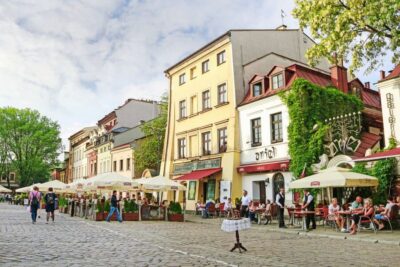 ★ 4.8Kazimierz, Schindler’s Factory & Ghetto Guided TourFrom $81460 reviews
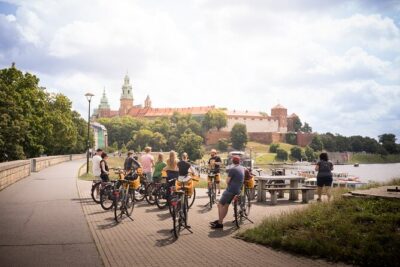 ★ 5.0Full Bike Tour – the Old Town, Jewish Qtr & the Ghetto NEW BIKESFrom $35437 reviews
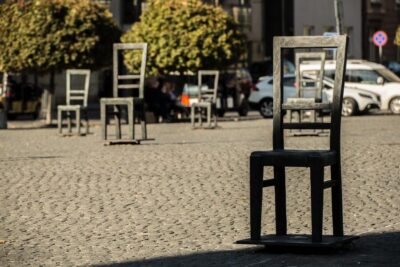 ★ 4.6Jewish Ghetto Walking TourFrom $11349 reviews
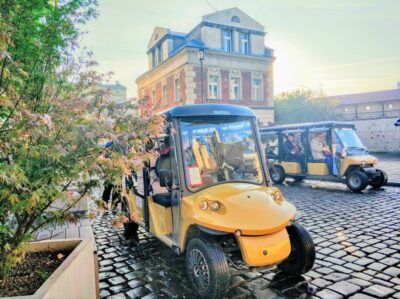 ★ 4.6Jewish Quarter and Ghetto Electric Golf Cart TourFrom $34348 reviews
Browse the lists this tour appears in