
REVIEW · OLD TOWN & MAIN SQUARE TOURS
Magic of Krakow: Guided Tour of the Old Town
Krakow’s legends start at a city gate. On this guided walk through the UNESCO-listed Old Town, you’ll follow the Royal Route from medieval walls right into the big stories that make Krakow feel like a movie.
What I love is how the tour hits both the iconic landmarks and the story behind them. You’ll stand in Main Market Square with the Cloth Hall in view, and you’ll also get the legend around St. Mary’s Basilica and its hourly trumpet call, the hejnał.
One thing to consider: it’s a 2-hour walking route, so plan for steady pace and time on your feet. Also, while the guide is included, additional drinks aren’t—so bring a bottle or plan a stop on your own.
In This Review
- Key highlights worth planning for
- St. Florian’s Gate to the Royal Route: where the story begins
- Main Market Square and the Cloth Hall: the medieval center in full view
- St. Mary’s Basilica and the hejnał: the trumpet call with a legend
- Collegium Maius and Jagiellonian University: where big ideas took root
- Wawel Hill viewpoint and the Dragon’s Cave legend
- What the guide experience is like (and why it matters)
- Price and value: what $34 buys in 2 hours
- Who this tour suits best
- Should you book Magic of Krakow?
- FAQ
- How long is the Magic of Krakow guided tour?
- Where does the tour start?
- What sights are included on the walk?
- What languages are available for the live guide?
- Is the cost per person and what does it include?
- Are drinks included?
- Is it cancellable, and can I pay later?
Key highlights worth planning for
- St. Florian’s Gate start with the fortified-city context that makes the walk click
- Royal Route pacing built for first-timers, without trying to do everything
- Main Market Square + Cloth Hall right in the center of medieval trade power
- St. Mary’s Basilica hejnał legend and the meaning behind the broken tune
- Collegium Maius and Copernicus’s academic roots in the Jagiellonian University complex
- Wawel Hill viewpoint + Dragon’s Cave legend tied to what you can actually see
Around the Rynek and the Cloth Hall, a few more
- Old Town Krakow & Wawel Castle Walking Tour
★ 5.0 · 1,508 reviews - Krakow: Bike Tour of Old Town, Jewish Quarter and the Ghetto
★ 4.9 · 1,155 reviews - Krakow: The Old Town Walking Tour
★ 4.8 · 794 reviews
St. Florian’s Gate to the Royal Route: where the story begins
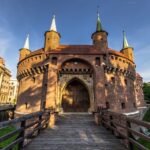
The tour kicks off at St. Florian’s Gate, one of the medieval entry points that helped protect the city. Even before you reach the famous squares, this start matters. It sets up a simple idea: Krakow wasn’t built as a sightseeing backdrop. It was built to defend itself, rule itself, and attract visitors—kings, envoys, merchants.
From there, you walk along the Royal Route, a street path once used for ceremonial journeys. Today it’s still a “look closely” corridor: historic church façades, older townhouses, and streets that feel lived-in rather than staged. You’re not rushing through it, either. The guide spaces the walk so you can actually notice details—stonework, street layout, and the way major buildings “frame” the route.
This is also where a good guide earns their keep. In the best moments, you stop thinking in terms of checkboxes and start thinking in terms of cause and effect: why this road mattered, why this gate mattered, why people gathered where they gathered. In the reviews, I saw praise for guides who can pull you toward lesser-seen corners of the Old Town instead of only tracking the most obvious photo stops. That kind of routing is exactly what you want on a first visit.
If you’re choosing this as your first Krakow activity, this opening section is a solid reason why. It helps you get your bearings fast before you start seeing crowds around the center.
Main Market Square and the Cloth Hall: the medieval center in full view
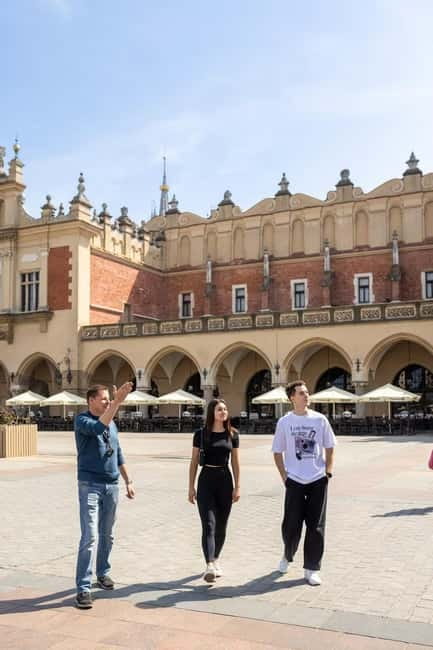
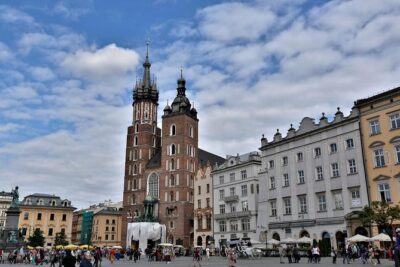
Eventually, you reach the heart of it all: Krakow’s Main Market Square, described by locals and guides alike as the largest medieval square in Europe. Standing there, you understand why it still works as a magnet. The scale feels right for real life—cafés around the edges, people moving through, and major buildings facing the square like they were designed for public drama.
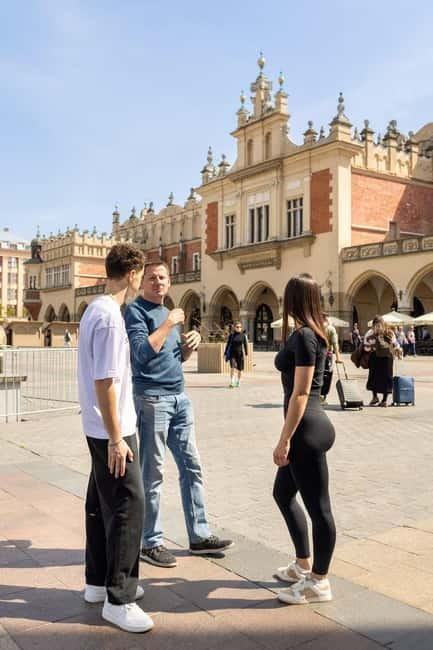
The tour points you toward the Cloth Hall (Sukiennice), which used to be the trading hub for goods moving through the city. You don’t need a business degree to appreciate what that means. Trade shapes architecture. Money shapes maintenance. Power shapes the kind of buildings you get in the middle of the city.
If you like history with a human voice, the guide’s storytelling style is key here. The square can turn into a blur if you walk it alone, but with a guide you get context for what you’re seeing: not only what the building is, but why it grew into what it became.
The visit also sets up the next stop at St. Mary’s Basilica, because the square is where Krakow’s religious and civic identities overlap. This matters because the tour doesn’t treat the legends as random fun. It ties them to the place you’re standing in.
St. Mary’s Basilica and the hejnał: the trumpet call with a legend
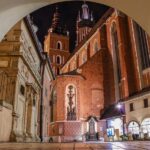
One of the headline moments is St. Mary’s Basilica, especially the hourly trumpet call known as the hejnał. The idea is simple but memorable: you can hear the city speak from the tower, not just admire a church from the ground.
More important than the sound is the story attached to it: the legend behind the broken tune—why the call doesn’t follow a perfect pattern. That detail turns the basilica from a pretty landmark into a symbol of Krakow’s identity.
Even if you’ve heard about the hejnał before, hearing it explained where it happens adds weight. You stop treating it like trivia and start treating it like a city ritual—something the community passed down, and something that still marks time for people today.
From a practical angle, this stop is one reason the 2-hour duration works. You get enough time to experience the square area properly without needing an entire day of ticketed museum time. And since the tour includes a local guide, the meaning lands faster than reading signs on your own.
A few more Krakow trips worth putting on the shortlist
- Krakow: Auschwitz-Birkenau Guided Tour with Pickup & Lunch★ 4.5 · 9,800 reviews
- Krakow: Auschwitz-Birkenau Guided Tour Pickup/Lunch Options★ 4.5 · 9,057 reviews
- Krakow: Auschwitz-Birkenau and Salt Mine Guided Tour★ 4.7 · 9,020 reviews
- Krakow to Auschwitz Birkenau Guided Tour with Transfer and Ticket★ 5.0 · 8,197 reviews
Collegium Maius and Jagiellonian University: where big ideas took root
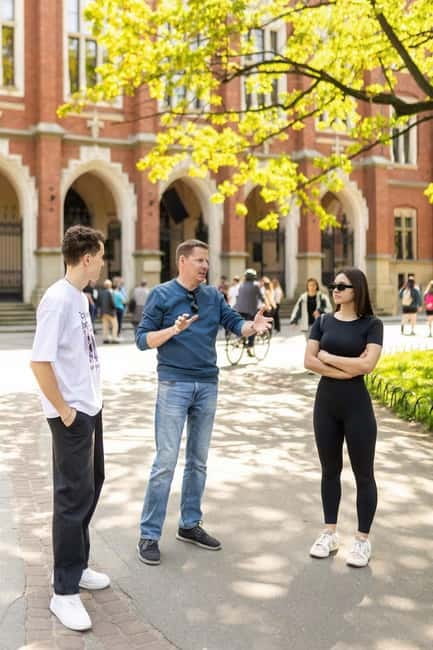
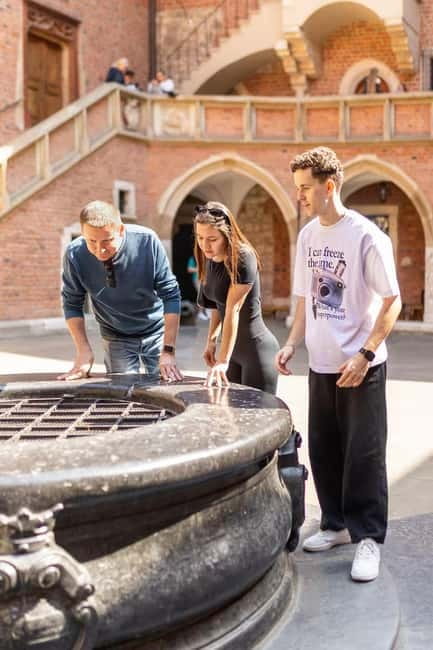
Next comes a tonal shift. You move from civic square energy to academic calm at Collegium Maius, the oldest part of the Jagiellonian University complex. The tour places you where important thinkers once studied—Nicolaus Copernicus is specifically tied to this university tradition.
This isn’t just name-dropping. You get to feel the vibe of an academic courtyard and imagine the rhythm of long study and debate. Even if you’re not a “campus tour” person, it helps you understand Krakow as more than medieval streets and royal castles. It’s a working city that keeps producing ideas.
The practical value here: it gives your walk variety. After a couple of heavy-history stops (gate, square, church tower), the university area gives you a slower pace and a different kind of atmosphere. It’s the part of the itinerary that makes the whole tour feel less like a sprint and more like a shaped route.
Wawel Hill viewpoint and the Dragon’s Cave legend

The tour wraps with Wawel Hill, home to the Wawel Royal Castle and Wawel Cathedral. Even if you don’t go inside on this specific walk, you still get the big payoff: you’re positioned for the kinds of views that make people point their cameras upward and say wow.
The guide also works in the Vistula River perspective—because Wawel isn’t just a royal complex plopped on top of a hill. It’s tied to the geography of the city and how Krakow developed along the river corridor.
Then comes the fun part that still feels culturally grounded: the Wawel Dragon legend, connected to the idea of the Dragon’s Cave. The story is one of those pieces of Krakow folklore that crosses age lines. Kids like it. Adults remember it. Everyone gets why it stuck around—because it’s dramatic, and because it’s tied to an actual place in the city.
This ending section is a strong choice if you want your last stop to feel memorable rather than just another landmark photo. It also gives you a natural next-step option. After this tour, many people find it easier to decide whether to keep exploring Wawel on their own.
What the guide experience is like (and why it matters)
The quality of a walking tour lives or dies on the guide. Here, the tour is built around a live local guide and supports multiple languages—English, French, German, Italian, Polish, and Russian—so you can match your comfort level pretty well.
In the reviews I saw, guides were praised for moving beyond the obvious route. One guide named Tom was specifically mentioned for an interesting walk and for helping the group reach even more tucked-away parts of the Old Town. Another review highlighted good humor and fun, and one also mentioned success in keeping things to a small group, which helps a lot when you want to hear stories clearly and ask quick questions.
One more practical point: this tour includes skip the ticket line. That can reduce waiting time at certain points on the route, and it also helps keep the group moving at a pace that works for a 2-hour format. Just remember: ticket line skipping doesn’t mean you’ll never wait at all anywhere in Krakow. It’s simply a built-in time-saver for the tour’s main stops.
If you’re the kind of traveler who likes your city tours to feel like a conversation, you’ll likely appreciate how the guide connects facts, myths, and local meaning as you walk.
Price and value: what $34 buys in 2 hours
At about $34 per person for a 2-hour guided walk, this tour sits in the “solid value” zone for Krakow’s Old Town. Here’s why it can be worth it even if you enjoy DIY exploring.
You’re paying for:
- a route that strings together the most meaningful parts of the center (gate → Royal Route → square → basilica → university → Wawel)
- live interpretation of legends like the hejnał story and the Wawel Dragon
- a guide who can keep the pacing comfortable for the time window
- a time-saver via skip the ticket line
- multilingual options depending on your language
Your alternative—walking on your own—can work, especially if you love reading signs and you don’t mind missing the deeper connections. But if you’d rather spend your time understanding why places matter, a guide is often the faster route to real satisfaction.
Two costs to keep in mind: drinks aren’t included, and the tour is walking-based. If you’re trying to minimize time on your feet, you might want to plan lighter activities later in the day.
Who this tour suits best
This is a great fit if:
- it’s your first time in Krakow and you want a high-impact introduction
- you like legends with a sense of place (not just generic ghost stories)
- you want a clear route through the UNESCO Old Town without overplanning
- you prefer guided context over solo guesswork
It may not be the best fit if:
- you want long museum-style stops or extended indoor time
- you’re trying to do a heavy schedule and need something very short
- you dislike walking in a steady pace for two hours
If you’re traveling as a couple or on your own, you’ll likely enjoy it most because the route is easy to follow. If you’re with family, the legends tend to land well, but everyone should still be comfortable with walking time.
Should you book Magic of Krakow?

I’d book it if you want a structured, story-driven walk that gives you Krakow’s biggest symbols without eating your whole day. The combo of Main Market Square, the hejnał trumpet-call tradition, and the Wawel ending hits the major emotional beats of the city in just 2 hours.
I’d skip it (or pair it differently) if your travel style is mostly “slow and independent,” or if you only want one type of experience—like castles only, churches only, or museums only. This tour blends civic life, religion, academia, and folklore. That’s a strength, but it won’t match every preference.
If you want a simple strategy: book this on day one or day two. It gives you context, names, and a mental map. Then you can return later for the parts that genuinely caught your attention.
FAQ
How long is the Magic of Krakow guided tour?
The tour lasts about 2 hours.
Where does the tour start?
It starts at St. Florian’s Gate.
What sights are included on the walk?
You’ll cover the Royal Route to Main Market Square, see highlights connected to St. Mary’s Basilica and the hejnał trumpet call, visit Collegium Maius linked to the Jagiellonian University, and finish with views of Wawel Hill and the Wawel Dragon’s legend.
What languages are available for the live guide?
The guide is available in English, French, German, Italian, Polish, and Russian.
Is the cost per person and what does it include?
The price is listed as $34 per person and includes a local guide. It also notes skip the ticket line.
Are drinks included?
No. Additional drinks are not included.
Is it cancellable, and can I pay later?
You can cancel up to 24 hours in advance for a full refund, and the listing offers a reserve now, pay later option.
More Tours in Krakow
More Tour Reviews in Krakow

More Around the Main Square


Just added: fresh Krakow reviews
Old Town & Main Square Tours, compared.
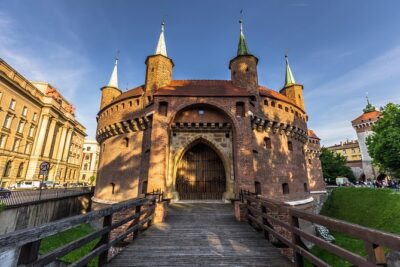 ★ 5.0Old Town Krakow & Wawel Castle Walking TourFrom $261,508 reviews
 ★ 4.9Bike Tour of Old Town, Jewish Quarter and the GhettoFrom $371,155 reviews
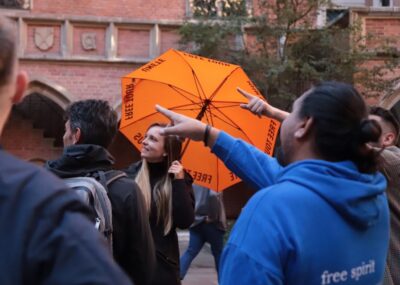 ★ 4.8The Old Town Walking TourFrom $19794 reviews
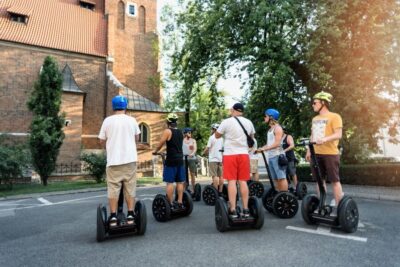 ★ 4.7Old Town Guided Segway TourFrom $55756 reviews
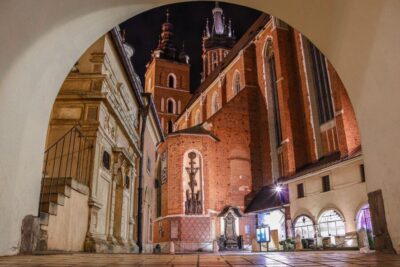 ★ 4.8Old Town & Wawel Castle Walking Tour in EnglishFrom $26532 reviews
 ★ 4.5Krakow Old Town Guided Walking TourFrom $33438 reviews
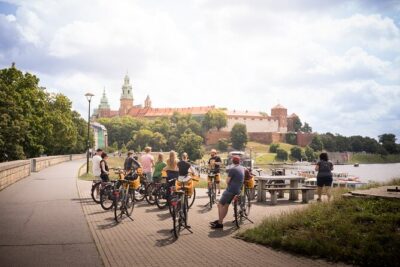 ★ 5.0Full Bike Tour – the Old Town, Jewish Qtr & the Ghetto NEW BIKESFrom $35437 reviews
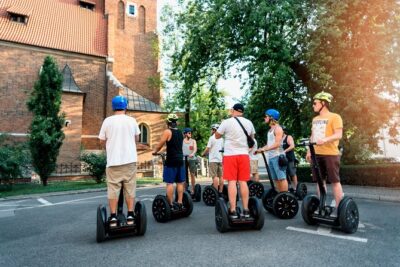 ★ 5.0Krakow Old Town Segway Tour 2hr with Training, Safety Gear, GuideFrom $57435 reviews
Browse the lists this tour appears in