
REVIEW · WAWEL CASTLE & CATHEDRAL TOURS
Krakow: Wawel Castle, St. Mary’s & Rynek Underground Tour
Kraków hides royal stories in plain sight, and this tour strings together major sights with expert, step-by-step context. I love how it turns buildings you can see from the outside into something you understand—monarchy, faith, art, and city life as a single story.
I also love the one-two punch of Veit Stoss’s altarpiece in St. Mary’s Basilica and the walk into medieval Kraków at Rynek Underground. One consideration: the Wawel Cathedral is still an active worship site, so access to places like royal tombs or the bell tower may shift on the day.
In This Review
- Key things that make this tour worth your time
- Starting at St. Mary Magdalene Square: where the story begins
- Wawel Castle Royal Rooms: Renaissance power and unusual Eastern art
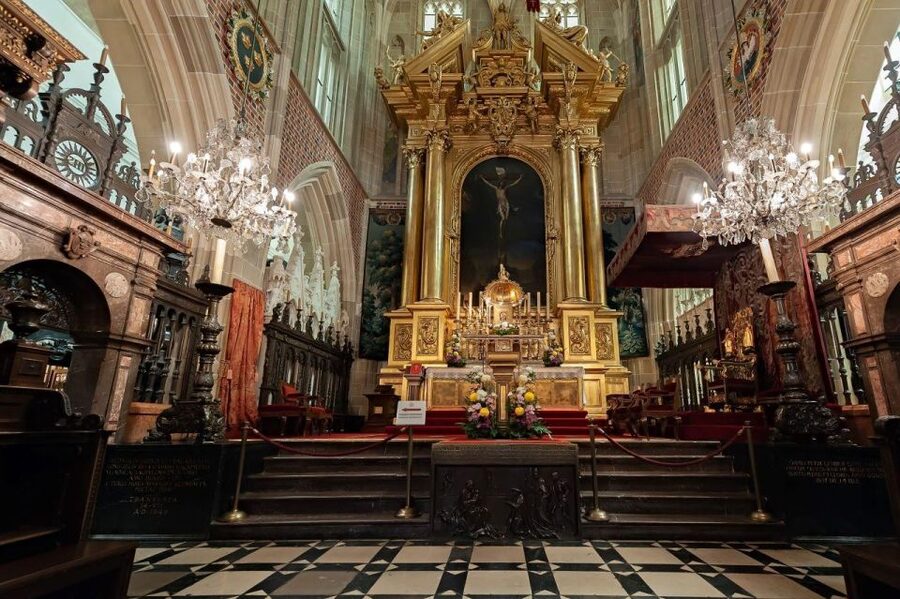
- Wawel Cathedral and the Sigismund Bell: coronations, tombs, and faith in stone
- Collegium Maius and Copernicus: Kraków beyond crowns and altarpieces
- Main Market Square and the Cloth Hall story: trade that shaped the city
- St. Mary’s Basilica and the Veit Stoss altarpiece: Gothic art you can actually read
- Rynek Underground Museum: medieval streets under the square
- Timing, group size, and what the 330 minutes really means
- Price and value: is $121 a good deal?
- Who should book this tour?
- Should you book this Kraków tour?
- FAQ
- Where is the meeting point?
- How long is the tour?
- What languages are available?
- Does the tour include skip-the-line tickets?
- What’s included at Wawel and the cathedral area?
- Are food and drinks included?
- Is there a dress code?
Key things that make this tour worth your time
- Skip-the-line tickets at Wawel and Rynek Underground reduce waiting in the busiest areas
- Royal Castle + coronation cathedral in one logical route, so you don’t bounce around town
- Sigismund Bell moment for good luck, done in the right setting inside the cathedral tower area
- Veit Stoss altarpiece is treated like a centerpiece, not a quick glance
- Collegium Maius + Copernicus connection adds science and scholarship to the usual royal-art focus
- Rynek Underground shows everyday traders and craftsmen beneath the Main Market Square
More of the castle on the hill: other Wawel visits
- Krakow: Wawel Castle & Cathedral Guided Tour
★ 4.7 · 2,111 reviews - Old Town Krakow & Wawel Castle Walking Tour
★ 5.0 · 1,508 reviews - Krakow: Wawel Royal Hill with Optional Castle and Cathedral
★ 4.2 · 1,220 reviews
Starting at St. Mary Magdalene Square: where the story begins
Your tour meets at St. Mary Magdalene Square, at the Piotr Skarga Monument, with your guide holding an excursions.city sign. Plan to arrive 10 minutes early, because once the group departs, latecomers can’t join and tickets aren’t refundable.
This matters more than it sounds. Kraków’s center can be crowded, and a tour like this moves through multiple sites with specific entry conditions and a set group size (up to 30). If you show up rushed, you’ll spend your first minutes trying to catch up instead of getting your bearings fast.
The guide’s job here is not just to point. They connect what you’re seeing to why it mattered in Polish monarchy, religion, and art—so each stop feels earned rather than checked off.
Wawel Castle Royal Rooms: Renaissance power and unusual Eastern art
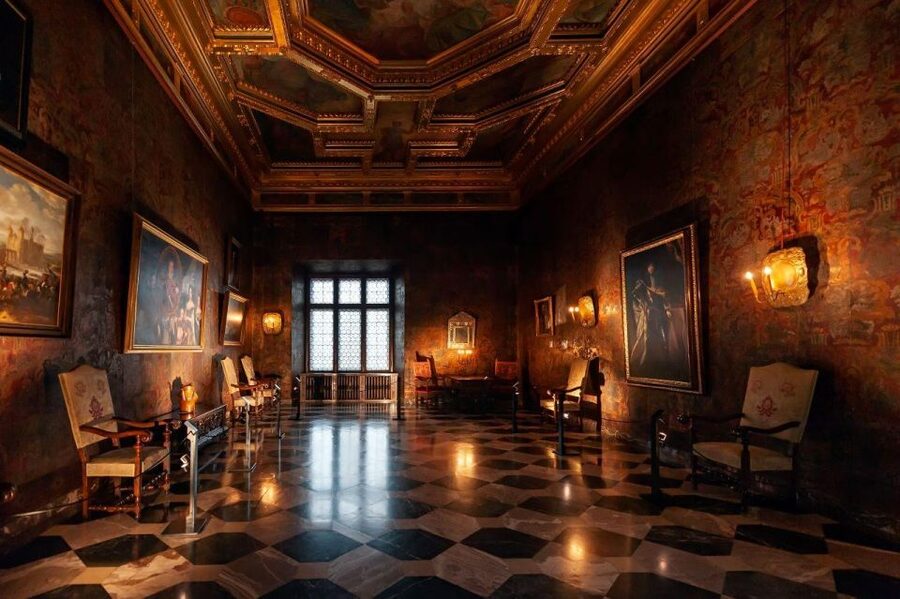
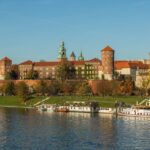
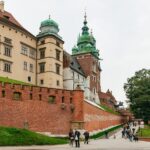
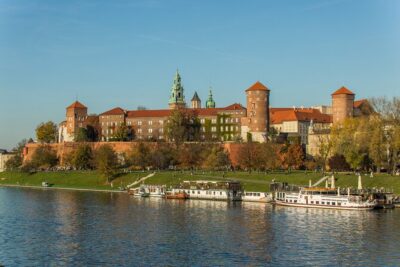
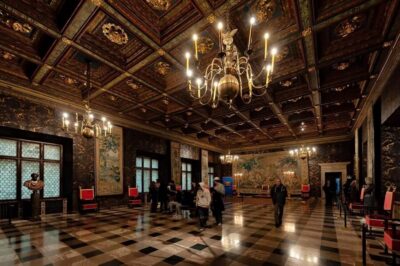
Wawel Castle is often described in a few broad strokes, but this visit treats it like a living museum of ideas. You start with the world of Polish royalty, faith, and art, then step into grand chambers with Renaissance and Baroque interiors.
You’ll also see the kinds of objects that make Wawel feel different from other European royal sites: Flemish tapestries, Italian masterpieces, and a distinctive Eastern art collection. One standout detail that really sticks is the largest set of Ottoman tents in Europe—this is the kind of fact that changes how you picture the castle’s historical reach.
The tour includes skip-the-line entry to one permanent exhibition in the castle complex (State Rooms or Royal Private Apartments, or the Crown Treasury, depending on availability). That’s a smart setup if your main goal is depth without getting stuck wandering. You get guided time in the best-fit exhibition space, rather than betting on what’s open that day.
A practical drawback to know: the tour order can change, and some access can shift around religious or state events. If something is temporarily restricted, the plan swaps to another site within the castle complex—so you still keep moving through the royal narrative.
Wawel Cathedral and the Sigismund Bell: coronations, tombs, and faith in stone
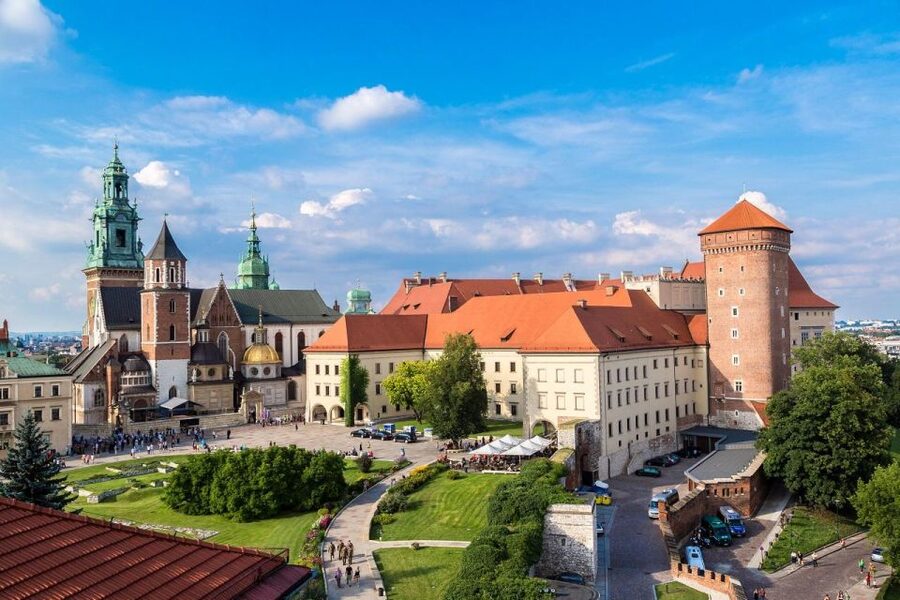
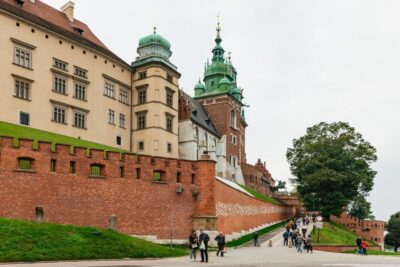
From royal rooms you move into the Wawel Cathedral, the site of coronations and major royal ceremonies. This shift is key: castles show political power, but cathedrals show how that power was justified, celebrated, and recorded.
In the cathedral, you visit richly decorated chapels and see the mighty Sigismund Bell. The tour includes a chance to touch the bell for good luck, done as part of the cathedral-tower experience—one of those small, memorable moments that feels perfectly tied to the place.
You’ll also walk through crypts where Polish kings, queens, poets, and national heroes are laid to rest. That’s not just impressive; it gives context for why this area mattered to everyday identity and not only court politics.
Keep in mind the cathedral is active worship space. During religious or state events, access to specific areas such as the royal tombs or the bell tower may be restricted without notice. When that happens, entry is replaced with another site within the castle complex. It’s still worth it, but the exact emphasis may vary by day.
Around the Rynek and the Cloth Hall, a few more
- Krakow: Bike Tour of Old Town, Jewish Quarter and the Ghetto★ 4.9 · 1,155 reviews
- Krakow: The Old Town Walking Tour★ 4.8 · 794 reviews
- Krakow: Old Town Guided Segway Tour★ 4.7 · 756 reviews
- Kraków: Old Town & Wawel Castle Walking Tour in English★ 4.8 · 532 reviews
Collegium Maius and Copernicus: Kraków beyond crowns and altarpieces
After the big royal-and-sacred sites, the route shifts to Kraków’s learning history at Collegium Maius, the oldest building of the Jagiellonian University. In a quiet courtyard, your guide shares stories of scholars who helped shape European science and knowledge.
This is where the tour feels balanced. Many classic city tours stay trapped in royalty and religion. Here, you get the sense that Kraków wasn’t only ruling and worshipping—it was also thinking, teaching, and experimenting.
The connection you’ll hear includes Nicolaus Copernicus, which helps you place the city in a broader European story. Even if you’re not a big science person, this stop helps you understand why the university mattered: it was a center where ideas could spread and last.
Main Market Square and the Cloth Hall story: trade that shaped the city
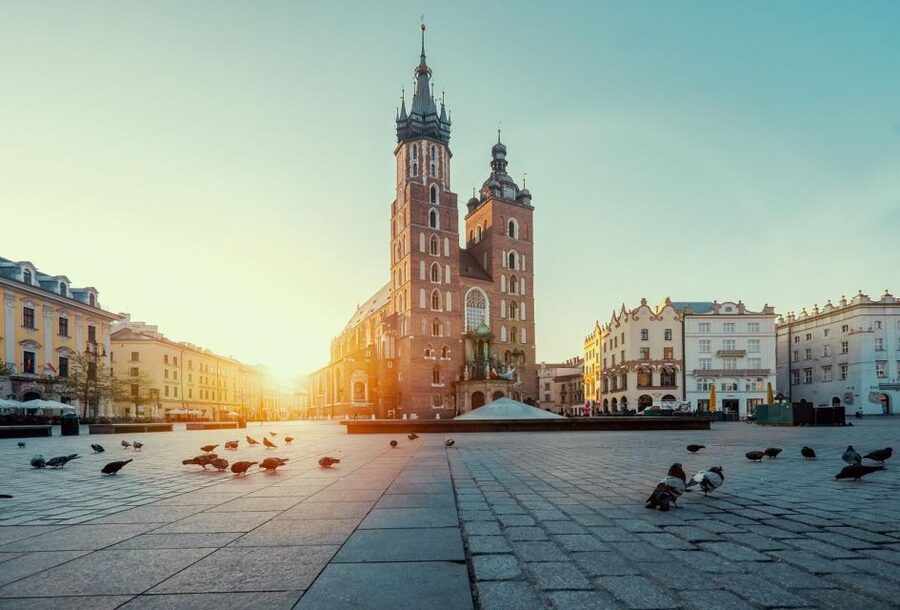
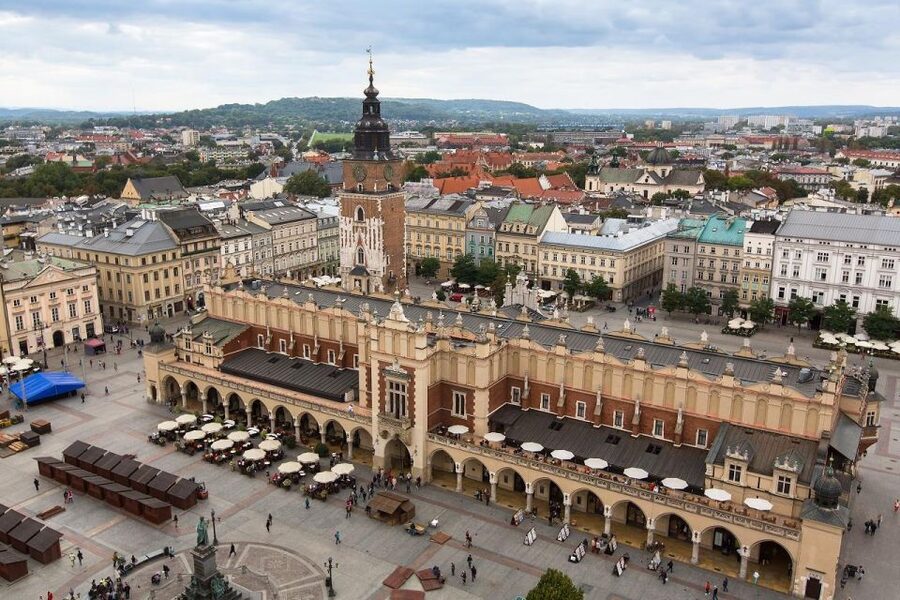
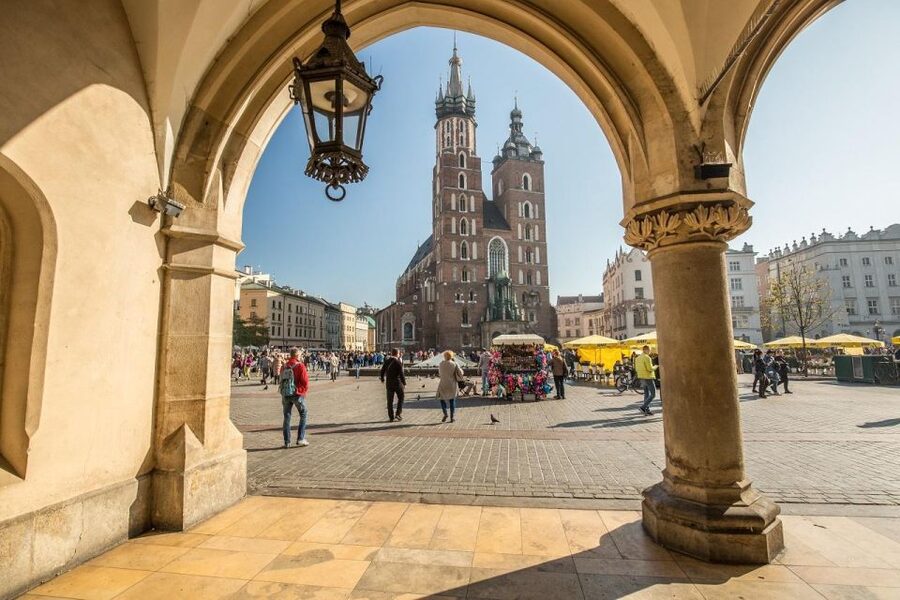
You return to the Main Market Square, Europe’s largest medieval square. Standing in a space like this, you can feel how public the city’s economy once was—people didn’t just visit markets; they used them as daily infrastructure.
Your guide explains the history of the iconic Cloth Hall, once the thriving center of international trade linking Kraków to markets across the continent. This is one of those moments where a guide earns their fee. Without context, you might see a beautiful medieval building and move on. With context, you start understanding why the whole area was built for business, not just tourism.
If you like architecture but also care about economics and everyday life, this is a high-value pause. It ties the underground museum later to what happened above ground: goods, buyers, workers, and money moving through the same square.
St. Mary’s Basilica and the Veit Stoss altarpiece: Gothic art you can actually read
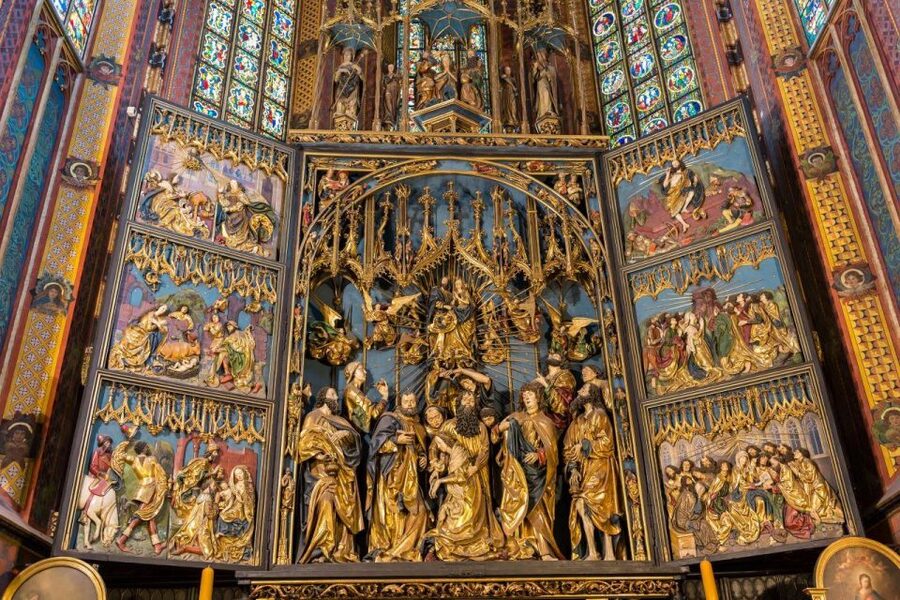
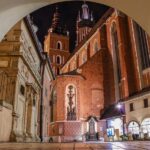
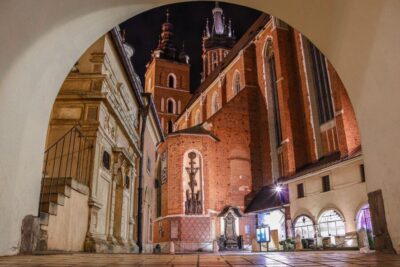
Next comes St. Mary’s Basilica, and the star of the show is the Veit Stoss altarpiece. This is one of the greatest Gothic artworks in Europe, and the tour doesn’t treat it like a quick photo stop. You’ll learn how the altarpiece survived centuries of conflict and why it remains a symbol of Kraków’s devotion and artistry.
What I like about this kind of guided art visit is that it gives you a way to look. Instead of staring at one spot, you get prompts about details, design choices, and the story the artwork tells. That turns the basilica from a place you visit into a place you understand.
Practical note: there’s a dress code for places of worship and selected museums. Shorts and sleeveless tops aren’t allowed, and both men and women must cover knees and shoulders. If you arrive unprepared, you might spend time trying to sort it out instead of enjoying the artwork.
Because it’s a religious site, access can also be affected by services or events. Even when access changes elsewhere in the complex, the tour’s intent is to keep you seeing major highlights rather than shutting you out entirely.
Rynek Underground Museum: medieval streets under the square
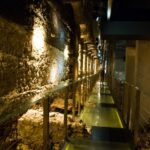
The final major stop is Rynek Underground Museum, which takes you below the Main Market Square. This is where the city turns from monuments to mechanics—how early traders and craftsmen actually lived and worked.
Inside the museum, you’ll see multimedia displays alongside archaeological remains and reconstructed medieval streets. The goal is not only to show you objects; it’s to show you layout, movement, and how daily life fit under the modern square.
This is one of the most satisfying parts of the day because it changes how you relate to what you’ve already seen. After Wawel and the basilica, you might still be thinking in terms of elites. Rynek Underground brings you back to people who made the city run—workers, merchants, and craftspeople.
When you come back up onto the square, Kraków’s historic core feels different. The same stones suddenly have a second layer: a whole life you can’t see unless someone guides you into it.
Timing, group size, and what the 330 minutes really means
The tour runs about 330 minutes (roughly 5.5 hours). That’s long enough to cover major indoor sites with time to look, but not so long that you’re trapped on a bus all day.
Group size is limited to 30 participants, and the tour is conducted in one language selected at booking. That’s good for focus, since you’re not hearing multiple languages competing with each other. If you prefer clarity over variety, that setup usually feels better.
Because you move between several buildings—castle complex, cathedral, university site, market square, basilica, and underground museum—wear comfortable shoes. Even when you’re not hiking, your day is about walking through different floors and corridors, plus time inside.
Food and drinks are not included. With a route like this, you’ll want water in your bag and maybe a light snack plan before you start (depending on where you’re able to stop during the day). The tour keeps you moving, so going hungry can turn a beautiful art day into a grumpy one.
Price and value: is $121 a good deal?
At $121 per person, you’re paying for a lot more than entry tickets. The value comes from the way the day is bundled and guided:
- You get licensed local guiding across multiple major sites, so context doesn’t stop when you switch buildings.
- You get skip-the-line admission at key places (one castle permanent exhibition and Rynek Underground, plus tickets for cathedral and St. Mary’s).
- You get a route that connects political power (Wawel), faith (cathedral and basilica), scholarship (Collegium Maius), commerce (Main Market Square and Cloth Hall), and everyday life (Rynek Underground).
If you were to visit these places separately, you’d likely spend more time waiting at entrances and more time figuring out what to prioritize. Here, someone else does the sequencing and pacing, and you spend your energy looking and learning.
This is the kind of tour that tends to pay off best when you care about meaning, not just photos.
Who should book this tour?
This is a strong fit if you want a guided day that covers both the famous sights and the less-obvious connections between them. It’s especially good for you if you like:
- art history that includes specific masterpieces like Veit Stoss’s altarpiece
- monarchy and national identity told through real places at Wawel Cathedral
- a city-under-a-city perspective at Rynek Underground
- learning history, including the university stop tied to Copernicus
It may be less ideal if you need accessibility accommodations. The tour notes that it isn’t suitable for people with disabilities, likely because of the nature of the walking and underground spaces.
Should you book this Kraków tour?
If your time in Kraków is limited and you want a structured route with strong explanations, I think it’s an easy yes. The highest praise in the experience comes from the guide’s clear, detailed explanations—exactly what you want when you’re standing in places that are beautiful but complicated.
Book it if you’re ready for a full half-day that combines Wawel, two major churches, a university stop, and an underground museum. Skip it only if you strongly prefer flexible, self-paced wandering or if strict dress code and possible worship-time access changes would make you uncomfortable.
If you’re aiming for maximum meaning per hour in Kraków’s historic center, this tour delivers.
FAQ
Where is the meeting point?
Meet your guide on St. Mary Magdalene Square at the Piotr Skarga Monument. The guide will hold an excursions.city sign.
How long is the tour?
The duration is 330 minutes.
What languages are available?
The tour is offered in German, Italian, English, Polish, Spanish, and French.
Does the tour include skip-the-line tickets?
Yes. The tour includes skip-the-line admission to the Rynek Underground Museum and skip-the-line entrance to one permanent exhibition at Wawel Castle (subject to availability).
What’s included at Wawel and the cathedral area?
You get skip-the-line entry to one Wawel Castle permanent exhibition (State Rooms, Royal Private Apartments, or Crown Treasury depending on availability). You also have ticket access for Wawel Cathedral and St. Mary’s Basilica.
Are food and drinks included?
No. Food and drinks are not included.
Is there a dress code?
Yes. Shorts and sleeveless tops are not allowed in places of worship and selected museums. Both men and women must cover knees and shoulders.
Under the Rynek: More to See


More Around the Main Square



Wawel, a Few More Ways In


Just added: fresh Krakow reviews

Wawel Castle & Cathedral Tours, compared.
 ★ 4.7Wawel Castle & Cathedral Guided TourFrom $572,111 reviews
 ★ 5.0Old Town Krakow & Wawel Castle Walking TourFrom $261,508 reviews
 ★ 4.2Wawel Royal Hill with Optional Castle and CathedralFrom $191,220 reviews
 ★ 4.6Wawel Castle and Cathedral Guided TourFrom $57595 reviews
 ★ 4.3Wawel Hill Audioguide TourFrom $7582 reviews
 ★ 4.8Old Town & Wawel Castle Walking Tour in EnglishFrom $26532 reviews
 ★ 4.4Wawel Castle Guided Tour with Entry TicketsFrom $35381 reviews
 ★ 5.0Krakow’s Essential Tour of the Old Town and Wawel CastleFrom $3340 reviews
Browse the lists this tour appears in