
REVIEW · WAWEL CASTLE & CATHEDRAL TOURS
Wawel Castle, Old Town with St. Mary’s Church Guided Tour
Royal Krakow starts with a bell. This guided trip strings together Wawel Castle, Wawel Cathedral, and Krakow Old Town in about three and a half hours, with the kind of storytelling that turns big landmarks into a real timeline. I especially love stepping into the royal museum rooms and then getting the moment with the Sigismund Bell tradition up close.
My second favorite part is the way St. Mary’s Basilica hits you with craftsmanship and drama, including the Veit Stoss altarpiece inside a church that’s still active. The one real drawback: you’ll cover a fair amount of ground in a single language group, and the dress code is strict for places of worship.
Price-wise, at $87 for 210 minutes, it’s not a budget add-on. I think it’s solid value if you want a licensed guide to connect the castle, cathedral, and Old Town without guessing what matters most.
Royal rooms plus real artifacts, not just photos: You’ll see the castle museum rooms and the collections that explain Poland’s monarchy and art.
Wawel Cathedral includes the coronation story and the bell ritual: The stop is designed around the Cathedral’s role in Polish royal life.
Old Town highlights include Jagiellonian University history: Collegium Maius and a Copernicus connection give you context fast.
Main Market Square and Cloth Hall details you can actually use: You get the trading story behind the buildings you’ll see.
St. Mary’s Basilica is timed for its biggest wow factor: The Veit Stoss altarpiece is the anchor, not a random church detour.
In This Review
- Entering Krakow’s Royal Core: meeting point and timing that matter
- Wawel Castle in the 1930 museum era: royal rooms and specific collections
- The licensed guide effect: how the story stays clear
- Wawel Cathedral and the Sigismund Bell: coronations, funerals, and a tower climb
- Old Town under a tight clock: Collegium Maius and Krakow’s learning legacy
- Main Market Square and Cloth Hall: what to notice besides the postcard views
- St. Mary’s Basilica: Veit Stoss and the art that still hits hard
- Price and value at $87: what you’re paying for
- Practical tips for a smooth 210-minute day
- Should you book this Wawel and Old Town tour?
- FAQ
- How long is the Wawel Castle and Old Town guided tour?
- Where do I meet the guide?
- Is the meeting point on Wawel Hill?
- Does the tour include skip-the-line entry?
- What’s included for Wawel Cathedral and St. Mary’s Basilica?
- What dress code should I follow?
- What if it rains or the weather changes?
Entering Krakow’s Royal Core: meeting point and timing that matter
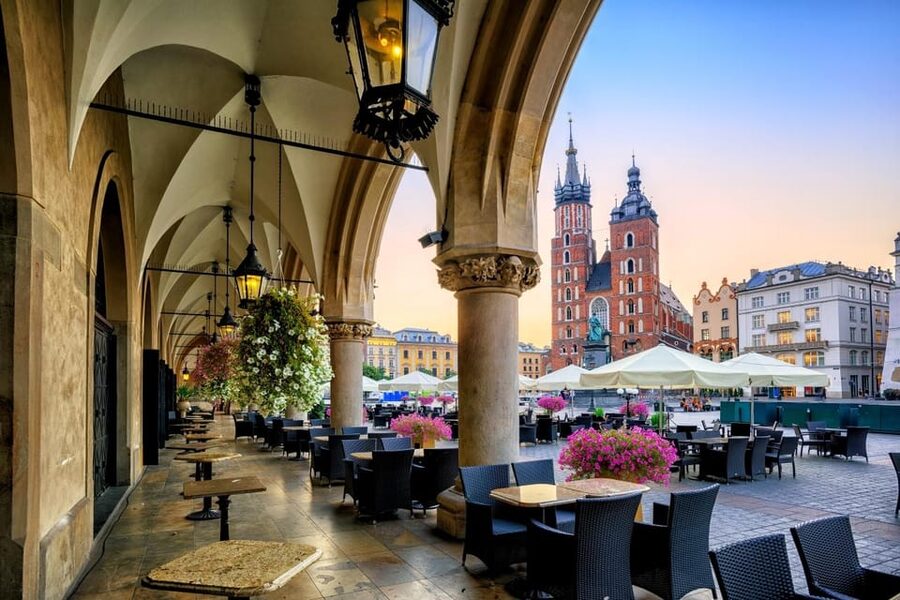
Wawel and Krakow Old Town are close enough that you can enjoy the day on foot, but they’re also busy. Your tour starts at St. Mary Magdalene Square, at the Piotr Skarga Monument, and the guide will be holding an excursions.city sign. Key detail: the meeting point is not on Wawel Hill, so don’t plan to roll in late because you assumed you’d be starting at the castle gates.
Arrive about 10 minutes early. Once the group departs, latecomers can’t join, and tickets can’t be refunded. In practice, that means you should give yourself a little buffer for finding the right corner of the square and getting settled with your group.
One more planning note: each tour runs in one language. If you book English, you’ll stay with the English group the whole time, which makes the pacing feel more coherent than a mixed-language wandering tour.
More of the castle on the hill: other Wawel visits
- Krakow: Wawel Castle & Cathedral Guided Tour
★ 4.7 · 2,111 reviews - Old Town Krakow & Wawel Castle Walking Tour
★ 5.0 · 1,508 reviews - Krakow: Wawel Royal Hill with Optional Castle and Cathedral
★ 4.2 · 1,220 reviews
Wawel Castle in the 1930 museum era: royal rooms and specific collections
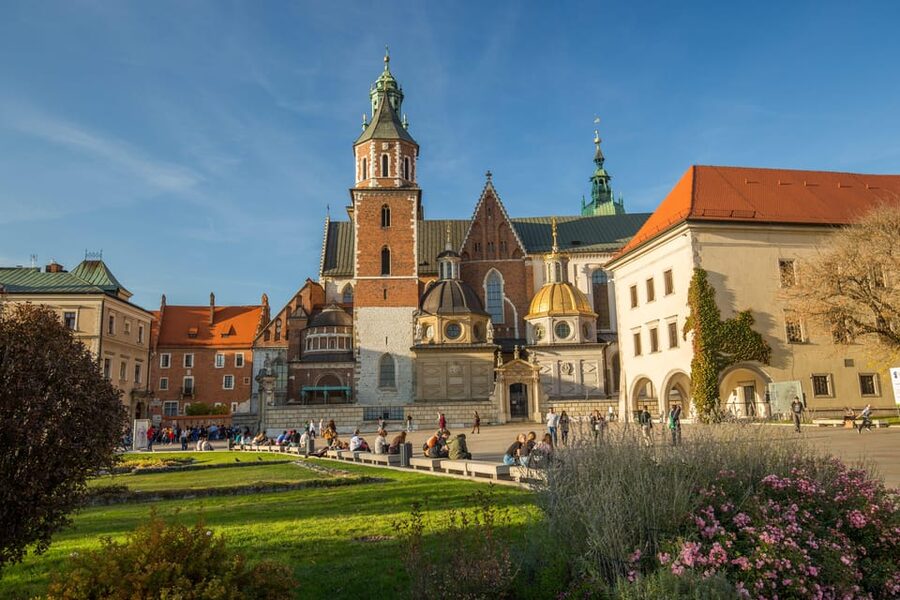
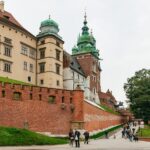
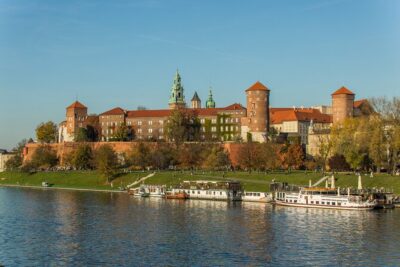
The first big shift on this tour is that Wawel Castle isn’t presented as ruins or a cold history lecture. It’s a working museum setting, and the castle was transformed in 1930 into one of Poland’s major museums. That matters because you walk through grand chambers filled with artworks and objects you can actually connect to royal life.
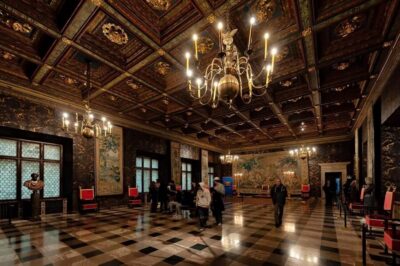
Inside the castle, you’ll focus on State Rooms / Royal Private Apartments / Crown Treasury depending on what’s available. Even without knowing the exact room choice ahead of time, you can expect the visual themes to be consistent: Renaissance and Baroque interiors, plus paintings, sculptures, porcelain, and military artifacts. This is where the tour earns its value—there’s a sense of moving through rooms built for power and ceremony, not just viewing a single exhibit.
Some collections are worth mentally earmarking because they come up again as you move to the cathedral. You’ll see Flemish tapestries commissioned by King Sigismund II Augustus, and you’ll also encounter Italian Renaissance masterpieces from the Lanckoroński collection. That blend of local monarchy and European art helps you understand why Wawel became a true political and cultural center.
One standout that I found genuinely unusual (in a good way): Wawel also has a major collection of Eastern art, including the largest set of Ottoman tents in Europe. If you like material culture—how rulers displayed identity through objects—this kind of detail turns the castle visit into more than just architecture appreciation.
The licensed guide effect: how the story stays clear
A guided tour can either be “look and listen” or it can be a map in human form. The better guides on this experience use names, dates, and cause-and-effect so you understand why each site is there. One guide named Jadwiga is called out for explaining Krakow history clearly, which matches what you want when you’re moving through three major stops in 210 minutes.
Your guide is licensed, and that makes a difference when it comes to flow and interpretation. Instead of random facts, you get the royal and religious thread carried from castle to cathedral to the surrounding Old Town context.
Also, the group size is capped at 30 participants. That’s small enough that you’re not stuck behind a human wall for every photo, but big enough that the tour still keeps a lively rhythm.
Wawel Cathedral and the Sigismund Bell: coronations, funerals, and a tower climb
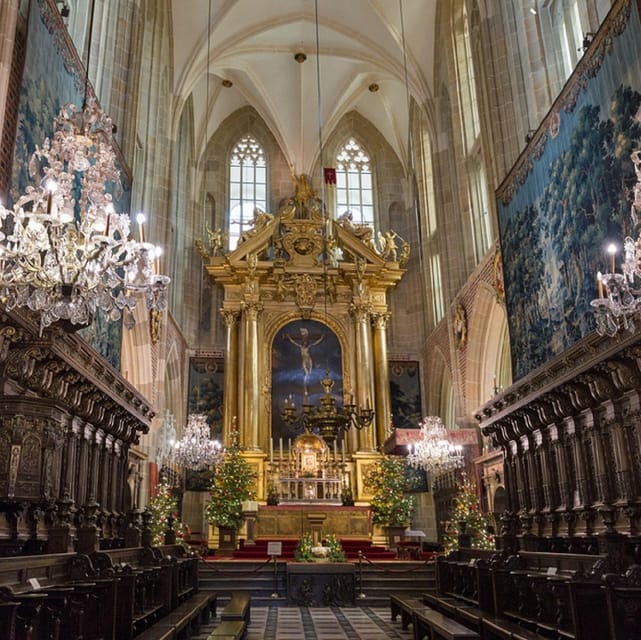
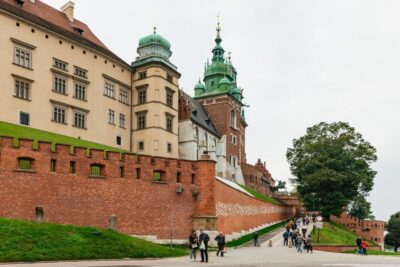
After the castle rooms, the tone sharpens quickly at Wawel Cathedral. This is Gothic architecture at its most important in Poland, and the stop is built around the Cathedral’s role as a coronation site. Your guide explains how it witnessed royal weddings and funerals too, so you’re not looking at the building as a museum object—you’re understanding it as the stage for national rituals.
You’ll enter chapels and altars, which is where Gothic churches can feel overwhelming if you’re only staring upward. With a guide, you get structure: what you’re seeing, why it matters, and how the pieces connect to Polish identity.
The signature moment is climbing to see the Sigismund Bell. There’s a tradition that touching the bell brings good luck, and this tour includes that highlight as a memorable, hands-on ritual inside a major heritage site. It’s one of those things you remember even if you forget half the dates.
If you’re wondering whether you’ll get “everything” in a single cathedral visit, the answer is no—because churches are deep. But you do get an overview with specific emphasis: coronations, chapels and altars, the bell tower moment, and then you go down to the crypts.
The crypts are an emotional payoff. You’ll descend to learn about the resting places of kings, queens, poets, and national heroes. That shift from ceremony above to memory below is exactly what makes this portion feel like more than sightseeing.
Around the Rynek and the Cloth Hall, a few more
- Krakow: Bike Tour of Old Town, Jewish Quarter and the Ghetto★ 4.9 · 1,155 reviews
- Krakow: The Old Town Walking Tour★ 4.8 · 794 reviews
- Krakow: Old Town Guided Segway Tour★ 4.7 · 756 reviews
- Kraków: Old Town & Wawel Castle Walking Tour in English★ 4.8 · 532 reviews
Old Town under a tight clock: Collegium Maius and Krakow’s learning legacy
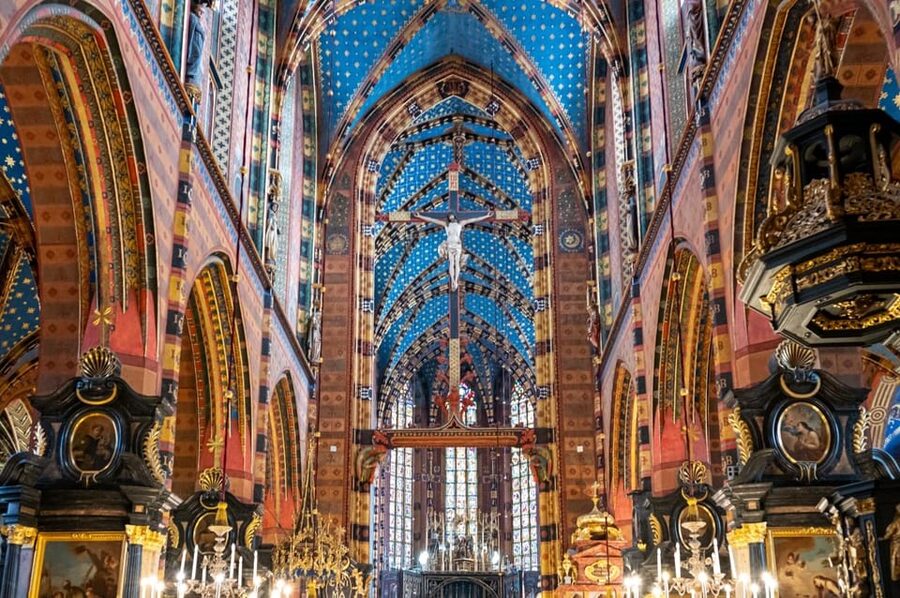
Once you step away from Wawel, the tour turns into a guided walk through UNESCO-listed Krakow Old Town. You’ll pause by Collegium Maius, the oldest building of the Jagiellonian University. The key date here is 1364, and your guide connects the university’s role to centuries of scholarship across Central Europe.
This matters because it breaks the day into more than just royalty and religion. You get learning and ideas as a second pillar of Krakow’s identity. The tour specifically links the university to Nicolaus Copernicus, which is a great way to make a famous name feel anchored to a real place.
You’ll stand in a quiet courtyard and get the explanation you need to see it as a living institution, not just an old stone backdrop. Even if you’re not a “university history” person, this short stop gives your walk meaning.
Main Market Square and Cloth Hall: what to notice besides the postcard views
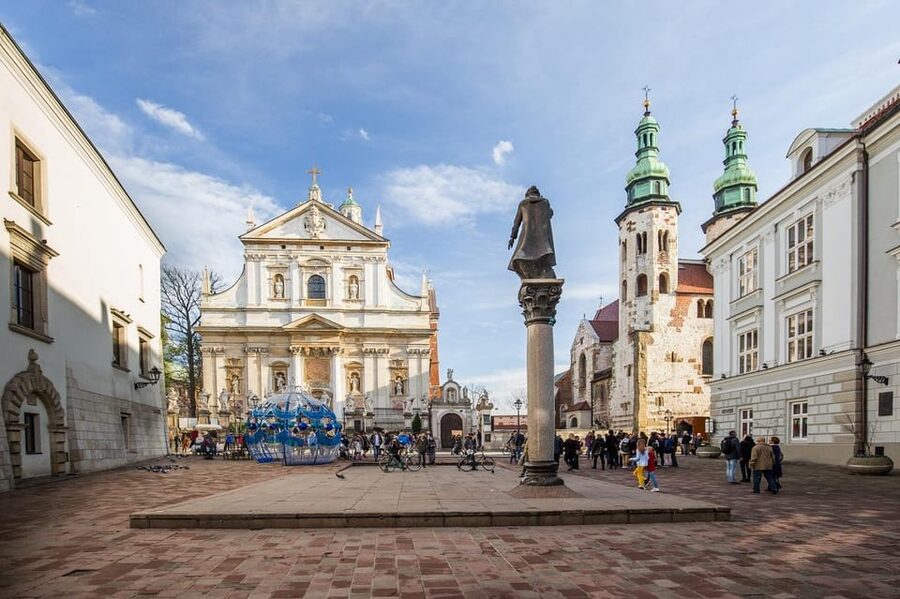
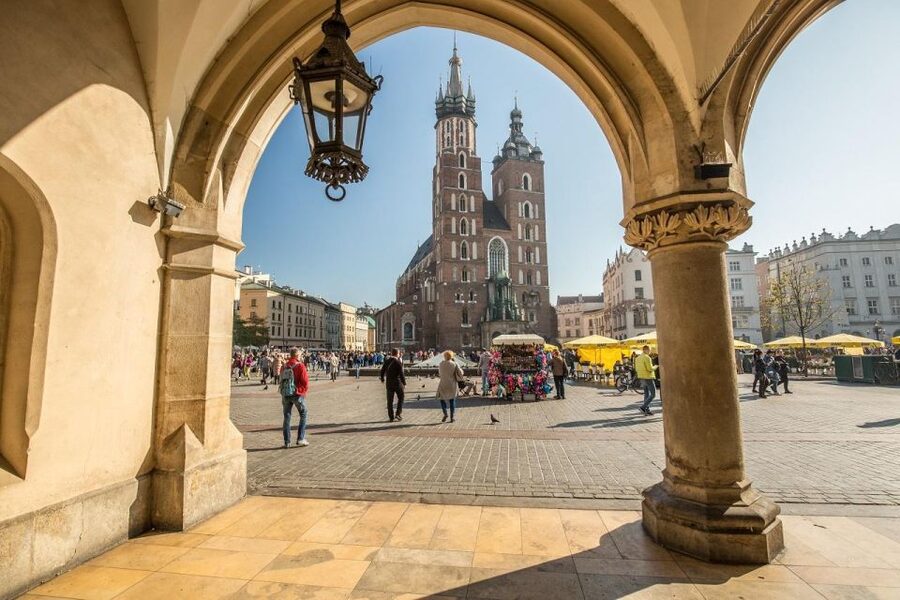
Next comes the Main Market Square, the largest medieval square in Europe. This is one of those places where time moves differently because there’s always activity—horse-drawn carriages passing elegant townhouses, street performers working the edges, and the Cloth Hall taking center stage.
The tour points out Sukiennice (the Cloth Hall) and explains why it mattered: it was once the hub of international trade connecting Krakow to faraway markets. Salt, textiles, furs, and amber weren’t just commodities in a textbook; they were the reasons people built and maintained a marketplace like this.
You’ll also hear about the Renaissance arcade and how the Cloth Hall stayed a marketplace across centuries. In other words, you’re not just getting a quick glance at a pretty facade. You learn what kind of economic engine shaped the square’s survival and design.
If you want to take photos without feeling rushed, keep your eyes up and scan for details your guide points out, then step into the open space only after you understand what you’re looking at.
St. Mary’s Basilica: Veit Stoss and the art that still hits hard
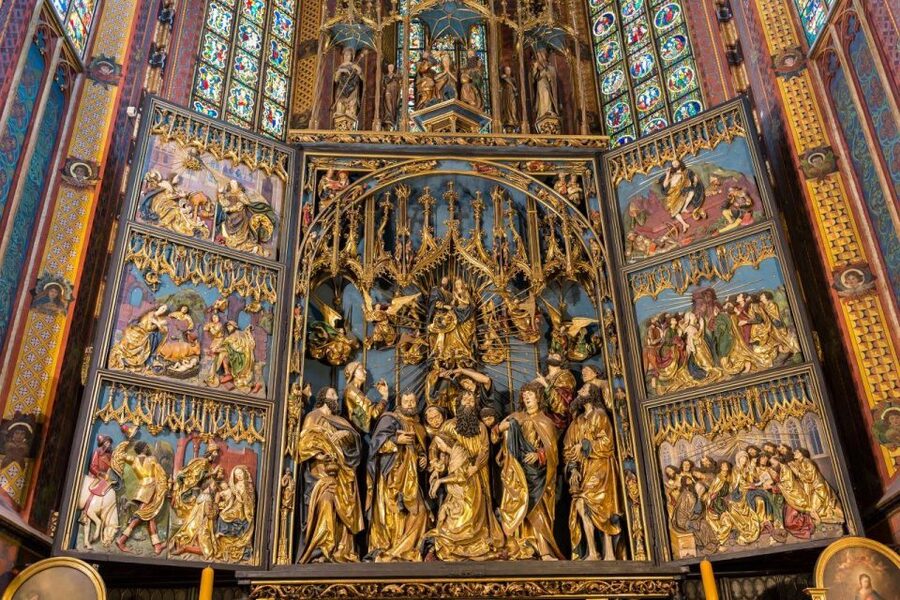
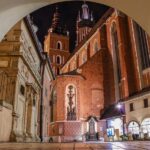
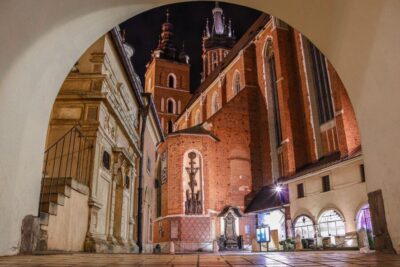
The last major anchor on the tour is entry to St. Mary’s Basilica, one of Krakow’s most recognizable church silhouettes thanks to its two asymmetrical towers. Inside, you get one of the big visual set pieces of Gothic Europe: the Veit Stoss altarpiece.
This altarpiece was carved in the 15th century, and the guide helps you see why it’s so famous: monumental figures and dramatic scenes with a level of detail and color that feels almost theatrical. Without guidance, it’s easy to get pulled toward one panel and miss the bigger storytelling structure. With a guide, you understand how the parts work together.
You’ll also learn how the altarpiece survived centuries of turmoil, including fires and war. That context changes your reaction. Suddenly the art isn’t just beautiful; it’s resilient, carried through conflict and still standing.
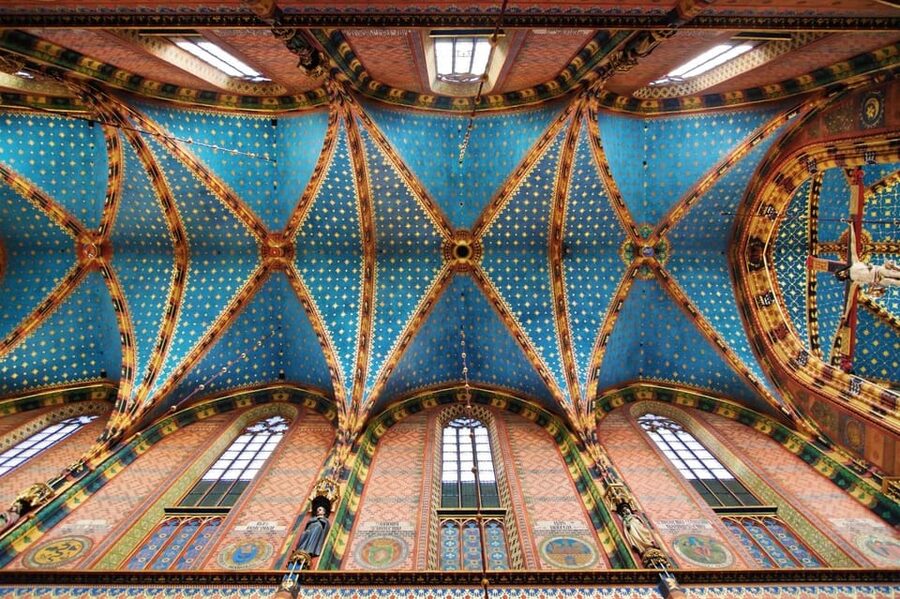
Expect painted vaults, stained glass windows, and chapels to round out the visit. This is the kind of indoor stop where you should slow down. Sit for a minute if you need to catch your breath; the tour is packed, but you’ll thank yourself later when you look back at photos and remember what you saw.
Price and value at $87: what you’re paying for
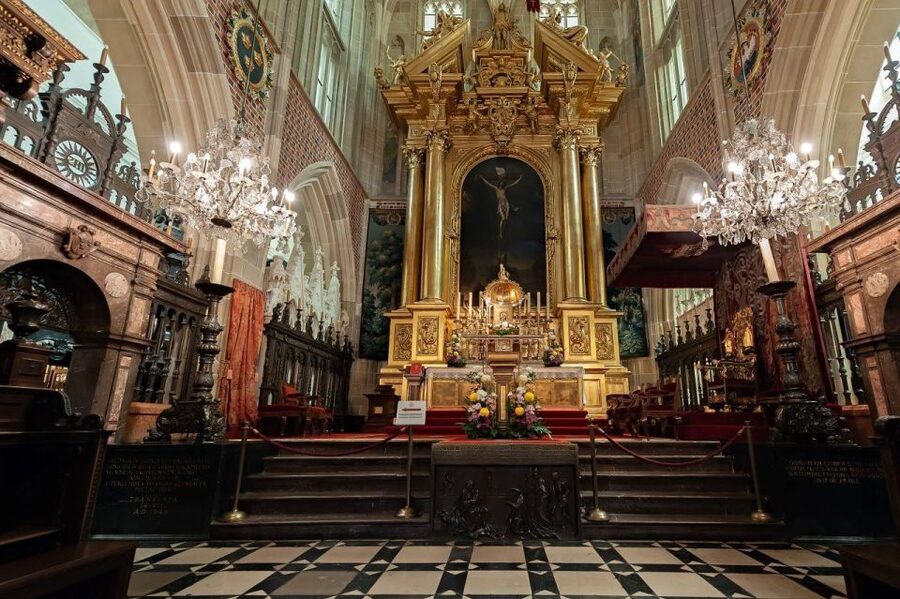
At $87 per person for 210 minutes, you’re paying for three kinds of value at once: a licensed local guide, museum and church access, and time-saving structure.
Here’s what’s included:
- Licensed local guide
- Skip-the-line entrance ticket to one permanent exhibition at Wawel Castle
- A ticket to Wawel Cathedral
- Entrance to St. Mary’s Basilica
Also, the castle exhibition selection is subject to availability, choosing from State Rooms, Royal Private Apartments, or the Crown Treasury. That variability can sound vague, but it also means you’re not locked into one narrow room that might be less interesting to you. The tour is still centered on the castle’s core storytelling.
What’s not included is also important: food and drinks, and any exhibitions beyond the listed entry. If you’re hungry, plan on buying something nearby before or after, because the tour itself doesn’t cover meals.
Is it worth it? For me, yes if you like guided interpretation and you want to hit the most iconic sites without figuring out all the connections on your own. If you prefer to wander independently and you’re comfortable reading on signage, you could do it cheaper. But you’d miss the quick clarity that makes these sites feel connected instead of separate.
Practical tips for a smooth 210-minute day
This is a high-effort, walking-focused tour, and the details you follow will make the difference between pleasant and stressful.
Wear walking shoes. The tour runs in all weather conditions, so pack for rain or wind if Krakow is doing its usual mood swings. Also, respect the dress code: no shorts or sleeveless tops. Both men and women must cover knees and shoulders in places of worship and in selected museums.
Bring a light layer even in warm weather because churches can feel cooler than you expect. And if you want photos, remember that cathedral and basilica interiors can limit movement; you’ll get the best shots by stepping when your guide suggests rather than forcing it.
Finally, keep expectations realistic. This is a “great highlights” tour, not a deep scholarly seminar. You’ll get the major story beats and the key artworks, and that’s exactly what makes the time feel well spent.
Should you book this Wawel and Old Town tour?
Book it if you want a guided path through Krakow’s biggest names—castle, cathedral, and St. Mary’s Basilica—without spending your day piecing history together. The structure is tight, the guide-led explanations help you notice what matters, and the standout moments (like the Sigismund Bell) turn famous places into personal memories.
Skip it if you want total freedom to linger in every chapel or you’re hoping to include lots of extra exhibitions beyond what’s listed. Also, if you know you’ll struggle with the dress code, it can slow you down when you’re trying to get in.
If you’re on a time crunch and you want a clean, iconic route with real local interpretation, this is the kind of tour that makes Krakow feel understandable fast.
FAQ
How long is the Wawel Castle and Old Town guided tour?
The tour duration is 210 minutes, so plan for about three and a half hours of sightseeing with guided stops.
Where do I meet the guide?
Meet on St. Mary Magdalene Square at the Piotr Skarga Monument. The guide will be holding an excursions.city sign.
Is the meeting point on Wawel Hill?
No. The meeting point is not located on Wawel Hill, even though the tour visits Wawel.
Does the tour include skip-the-line entry?
Yes. You get skip-the-line entrance ticket to one permanent exhibition at Wawel Castle.
What’s included for Wawel Cathedral and St. Mary’s Basilica?
You have a ticket to Wawel Cathedral and entrance ticket to St. Mary’s Basilica as part of the tour.
What dress code should I follow?
For places of worship and selected museums, shorts and sleeveless tops are not allowed. Both men and women must cover knees and shoulders.
What if it rains or the weather changes?
The tour operates in all weather conditions, so dress appropriately and wear comfortable walking shoes.
More Tour Reviews in Krakow

More Around the Main Square


Wawel, a Few More Ways In


Just added: fresh Krakow reviews

Wawel Castle & Cathedral Tours, compared.
 ★ 4.7Wawel Castle & Cathedral Guided TourFrom $572,111 reviews
 ★ 5.0Old Town Krakow & Wawel Castle Walking TourFrom $261,508 reviews
 ★ 4.2Wawel Royal Hill with Optional Castle and CathedralFrom $191,220 reviews
 ★ 4.6Wawel Castle and Cathedral Guided TourFrom $57595 reviews
 ★ 4.3Wawel Hill Audioguide TourFrom $7582 reviews
 ★ 4.8Old Town & Wawel Castle Walking Tour in EnglishFrom $26532 reviews
 ★ 4.4Wawel Castle Guided Tour with Entry TicketsFrom $35381 reviews
 ★ 5.0Krakow’s Essential Tour of the Old Town and Wawel CastleFrom $3340 reviews
Browse the lists this tour appears in