
REVIEW · SCHINDLER'S FACTORY & WWII TOURS
2-Hour Guided Tour in Kraków-Płaszów Concentration Camp
Plaszów can be quiet in a way that feels loud in your chest. This 2-hour guided walk connects the Kraków Ghetto memorial at Ghetto Heroes Square with the former Plaszów camp grounds, where the lack of buildings makes the silence do the work. I especially like how the tour doesn’t just name dates; it links places to human decisions, including the Oskar Schindler story of work permits and prisoner transfers.
The strongest part for me is the way you trace the camp’s layout through surviving touchpoints like the roll-call area and memorial spots, then you slow down at remembrance sites tied to the victims. One possible drawback: because Plaszów is mostly open air with minimal remains, it can feel long or physically tough in hot weather, and you should plan for limited visual distractions without the guide.
In This Review
- Key highlights to look for
- Price and time: what $29 gets you in Kraków
- Meet at Apteka Pod Orlem, then orient yourself in Podgórze
- Ghetto Heroes Square: the memorial that prepares your eyes
- The walk through Plaszów: why the open-air site hits harder
- The spots you’ll be guided to see (and what they mean)
- Where Oskar Schindler enters the story: work permits and saved lives
- What you’ll feel during the 2-hour pacing
- Guide quality: why the right narrative matters at Plaszów
- Accessibility and comfort: practical notes that save your day
- Value vs other Kraków history stops
- Who this tour is best for (and who should think twice)
- Should you book the 2-hour Plaszów guided tour?
- FAQ
- How long is the 2-Hour Guided Tour in Kraków-Płaszów Concentration Camp?
- How much does the tour cost?
- Where do I meet the guide?
- Does the tour include transport?
- What languages are offered for the guided tour?
- Can I join the tour with my stroller?
- What should I bring?
- Will the tour run in bad weather?
- What is the late-arrival policy?
- Is free cancellation available?
Key highlights to look for
- Ghetto Heroes Square sets the context fast with its metal-chair memorial meaning forced departures
- You walk the camp’s real footprint using surviving elements and markers of key areas
- Grey House and roll-call area anchor the story as the tour builds from imprisonment to survival
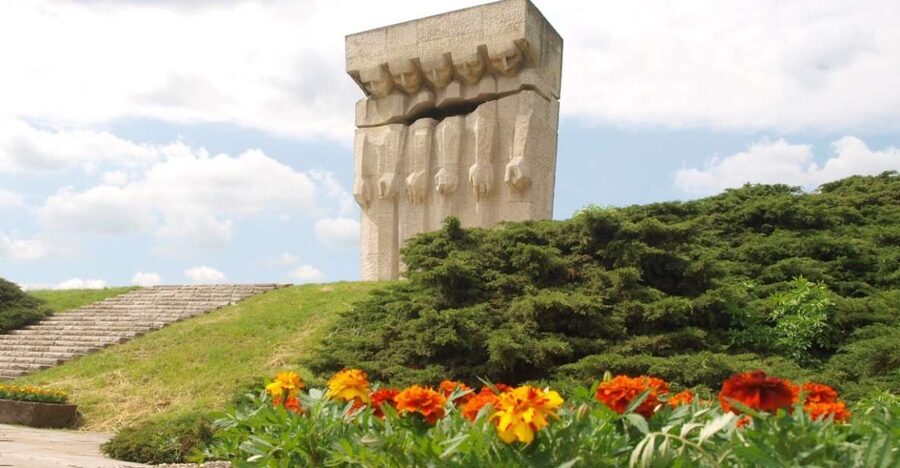
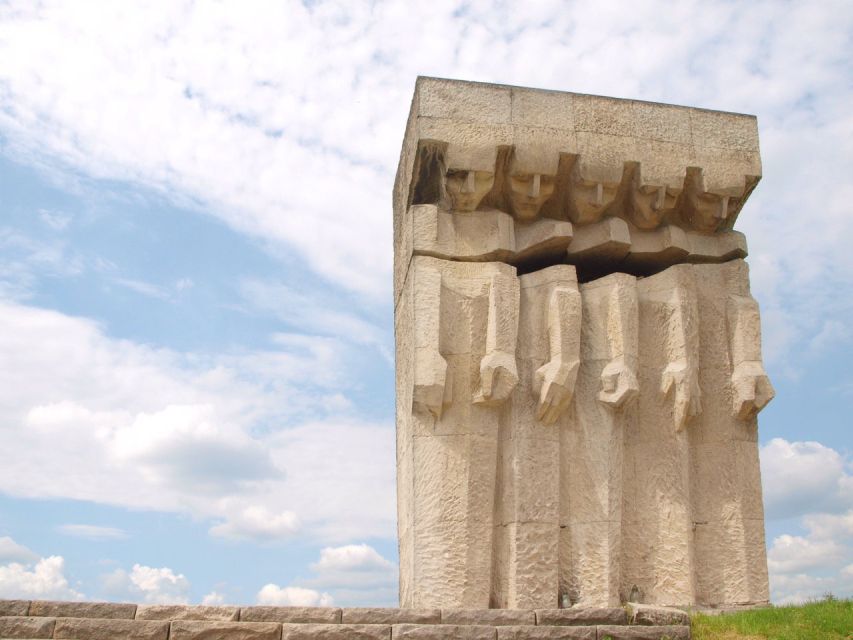
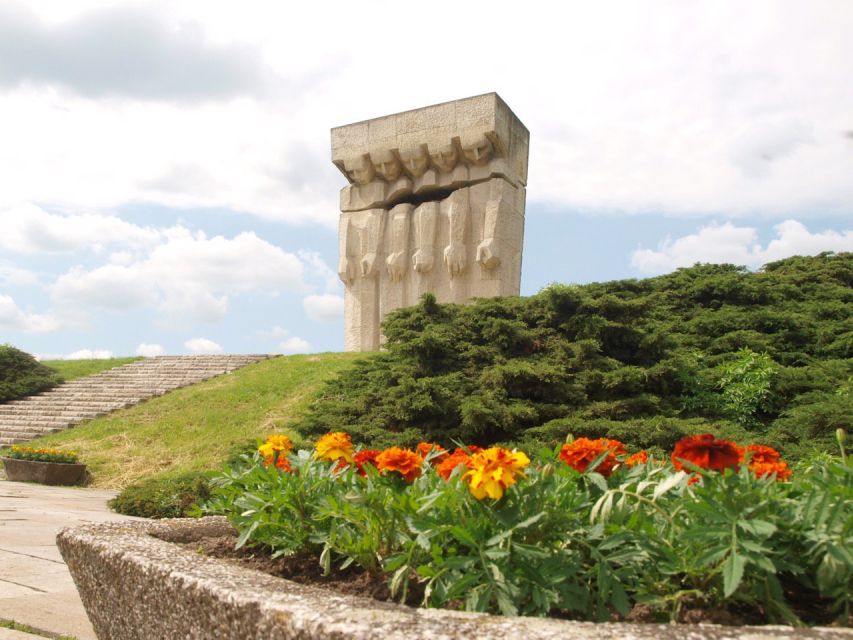
- Mass graves and the Monument of Torn-Out Hearts keep remembrance at the center
- Schindler’s work-permit angle is practical, not just dramatic and explains how lives were saved
- It’s a one-language group tour (so choose your language when booking)
More of Krakow under the wartime occupation
- Krakow: Schindler’s Factory Ticket and Guided Tour Option
★ 4.3 · 4,306 reviews - Krakow: Schindler’s Factory Tour with Entrance Ticket
★ 4.5 · 3,182 reviews - Krakow: Schindler’s Factory Skip-the-Line Ticket
★ 4.4 · 3,105 reviews
Price and time: what $29 gets you in Kraków
For $29 per person and about 2 hours, you’re buying more than walking time. You’re getting a licensed local guide who can explain what you’re looking at when the site offers fewer buildings than other famous Holocaust locations. Plaszów works differently: much of the meaning lives in open space and in what’s missing.
The tour also includes a one-way public tram ticket, which helps you keep things simple if you’re building the day around other Kraków stops. If you like history only when it has clear storytelling, this format usually fits well because your guide provides the missing connective tissue.
You’ll want to go in with realistic expectations about pacing. This isn’t a museum with constant indoor exhibits. It’s a guided walk through an outdoor memorial site, so you’ll spend more time thinking than staring.
Meet at Apteka Pod Orlem, then orient yourself in Podgórze
The meeting point is right by Apteka Pod Orlem, where you’ll look for the Former Concentration Camp Plaszow Guided Tour sign. Plan to arrive 10 minutes early. Once the group leaves, latecomers can’t join and tickets can’t be refunded, so it’s worth setting an easy buffer.
What I like about this tour’s start is that it doesn’t jump straight to the camp. It begins with a walk past Ghetto Heroes Square in the Podgórze district, a memorial space tied to Kraków’s former Jewish ghetto.
That orientation matters. After the war, the square had been overlooked, then in 2005 it was transformed into a memorial. The most striking element is the installation with large metal chairs. They symbolize forced departures and the pain of absence. You’ll feel the story shift from general tragedy to the specific machinery of what happened to people.
Ghetto Heroes Square: the memorial that prepares your eyes
You might think the camp will be the hardest part. For many people, it is—but the square sets the emotional temperature first.
The chairs are memorable because they’re simple. There’s no need for you to guess what they mean. The symbolism helps your brain connect the dots between ghetto life and the later camp system: displacement first, control next, then imprisonment.
A good guide will also help you understand why this kind of memorial works. It gives you a pause point before the tour enters Plaszów, which is important because the ground you’ll walk on later can feel abstract without a lead-in story.
If you’re short on time in Kraków, I still recommend the tour partly because this start gives you context that you often miss when you visit on your own.
A few more Krakow trips worth putting on the shortlist
- Krakow: Auschwitz-Birkenau Guided Tour with Pickup & Lunch★ 4.5 · 9,800 reviews
- Krakow: Auschwitz-Birkenau Guided Tour Pickup/Lunch Options★ 4.5 · 9,057 reviews
- Krakow: Auschwitz-Birkenau and Salt Mine Guided Tour★ 4.7 · 9,020 reviews
- Krakow to Auschwitz Birkenau Guided Tour with Transfer and Ticket★ 5.0 · 8,197 reviews
The walk through Plaszów: why the open-air site hits harder
Plaszów was established in 1942 on the grounds of Jewish cemeteries. It started as a forced-labour camp and later became a concentration camp. By the time the camp system was operating at full scale, more than 35,000 people were imprisoned and thousands died.
Here’s the big difference from other well-preserved Holocaust sites: at Plaszów, you won’t have a long chain of intact buildings to photograph. Instead, you navigate through the former camp layout using surviving elements and memorials.
I like that because it changes how you learn. You can’t rely on scenery to do the remembering. You have to follow your guide’s explanation and picture how the space functioned.
The spots you’ll be guided to see (and what they mean)
During the visit, you trace the camp layout through key points such as:
- the Grey House
- the roll-call area
- remnants of important buildings
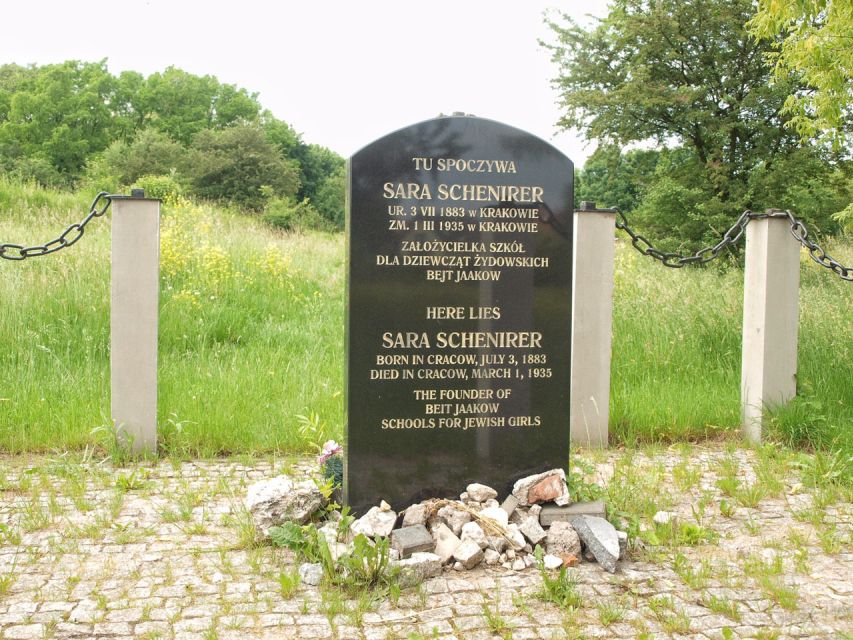
- mass graves
- the Monument of Torn-Out Hearts
Even without lots of structure, these markers create a map in your mind. The Grey House and roll-call area, for example, help you understand daily routines of control: where people were processed, counted, and judged. The mass graves and the Torn-Out Hearts monument keep the focus where it belongs—on victims, not on architecture.
If you’re someone who needs visuals to stay engaged, Plaszów can feel unusual at first. There just aren’t countless objects to look at. That’s exactly why the guide matters so much.
Where Oskar Schindler enters the story: work permits and saved lives
One of the highlights is hearing the story of Oskar Schindler and the way his actions linked directly to Plaszów.
The tour explains that Schindler arranged work permits for prisoners who were registered in Plaszów. Then, he transferred them to his factory, saving more than a thousand lives. This isn’t only a name-dropping moment. It’s part of the tour’s core narrative thread: how survival sometimes depended on paperwork, access, and narrow chances within a system designed to destroy.
I like this angle because it gives you a clearer cause-and-effect. It moves the story from horror alone to the moral weight of decisions. It also helps you understand that resistance didn’t always look like a battle scene. Sometimes it looked like leverage—used at the right moment.
Some guides also share personal family connections related to the period and the camp experience, which can make the storytelling feel painfully immediate rather than distant.
What you’ll feel during the 2-hour pacing
The tour lasts 2 hours, and that length is about right for Plaszów. You get enough time for context, orientation, and remembrance stops without turning the experience into a long slog.
Still, you should expect it to be emotionally heavy. One reason this tour earns such strong scores is that it’s educational without rushing. It also tends to be straightforward in how it explains things, with guides using language that’s easy to follow.
A realistic consideration: the site can be challenging and hot in summer, since a lot of the tour is outdoors. The tour goes ahead in all weather, rain or shine, so bring clothing that matches the forecast and footwear that won’t punish you on uneven ground.
Also, if you’re bringing kids: a stroller isn’t usable for this tour. One review noted it can be an issue, especially for families hoping for easier walking. If you have a baby or toddler, plan to carry or use an alternative approach that doesn’t rely on strollers.
Guide quality: why the right narrative matters at Plaszów
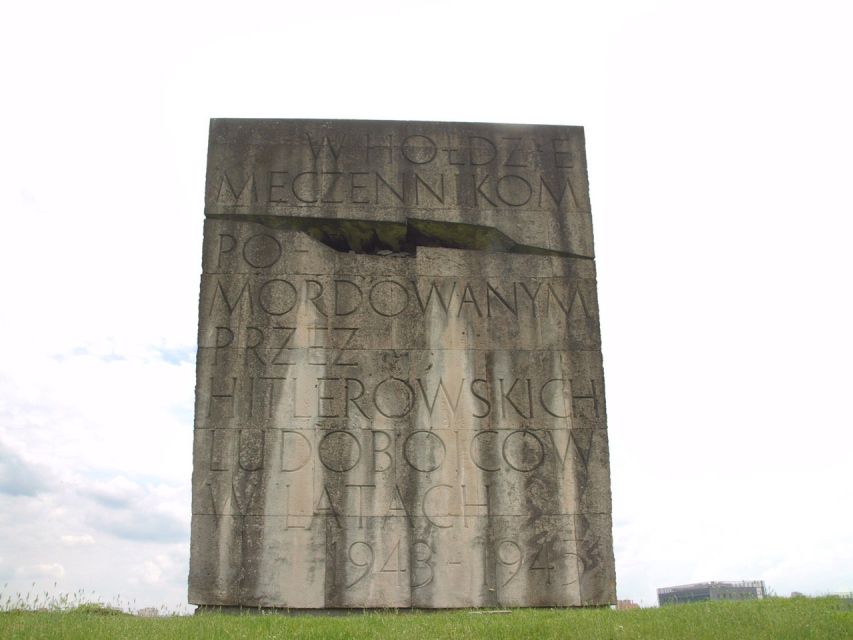
Plaszów’s strength is also its limitation. Because there aren’t many standing structures, the site can seem oddly empty. Without a guide, it’s easy to miss the significance of what you’re looking at.
That’s why the licensed local expert guide is one of the highest-value parts of the experience. A good guide does two things:
1) explains what each marker is
2) connects it to the larger story of imprisonment, survival, and remembrance
I’d also pay attention to the language choice before you book. The tour runs in one language per group, with live guides in French, Italian, Spanish, or English. If you want the guide’s simplest wording and best pacing, match the language you select to your comfort level.
Accessibility and comfort: practical notes that save your day
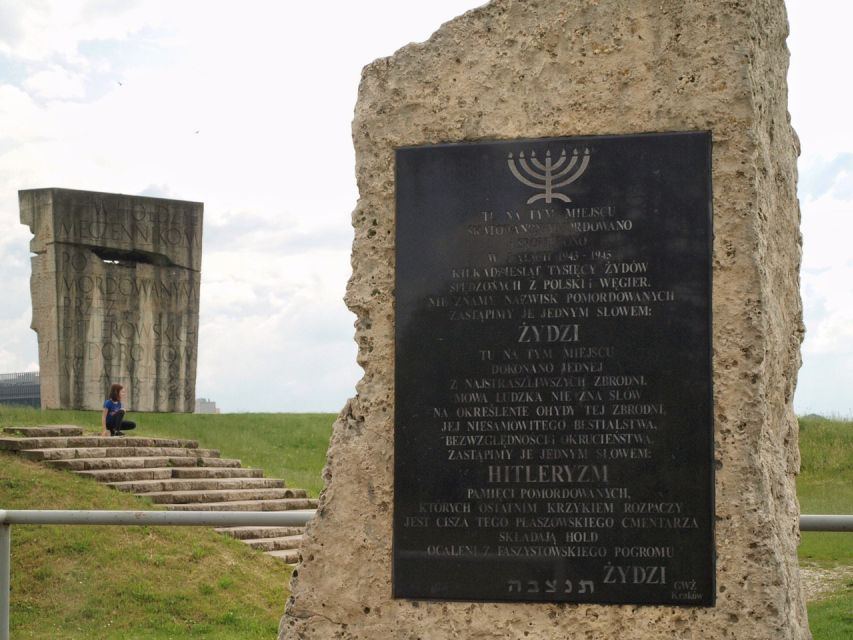
Plaszów is a walking experience through outdoor ground. Even when the pace is manageable, it can still feel like a lot when the emotional load is high.
Here’s what I’d plan for:
- Weather-ready clothing: rain or shine, because the tour doesn’t cancel for typical weather.
- Comfortable shoes: you’ll be spending the whole session on foot.
- No stroller: if you’re traveling with a stroller, assume it won’t work here.
- Heat strategy: if it’s sunny, bring water and consider a light layer you can remove.
If you’re prone to getting tired quickly, you can still do this. But don’t stack it back-to-back with another long outdoor activity unless you know you handle heat and walking well.
Value vs other Kraków history stops
This tour isn’t competing with the city’s biggest attractions by offering the most visual wow. Instead, it offers something more precise: an explanation of a place that doesn’t provide many built-in cues.
At $29 for 2 hours, you’re paying for:
- an expert local guide
- a structured route through key memorial elements
- context about the camp and the Schindler connection
- a simple transport add-on with the tram ticket included
If you want a fast, detailed history lesson in a short time, this fits the bill. If you prefer to wander and read quietly on your own, you might find you need extra effort to connect everything—because at Plaszów, your eyes benefit from a guide’s narrative.
Who this tour is best for (and who should think twice)
This is a strong choice if:
- you want a guided explanation in an outdoor memorial space
- you care about the link between Kraków’s ghetto history and the camp system
- you want the Schindler story told as a survival mechanism, not just a legend
It may be less ideal if:
- you struggle with outdoor walking in heat
- you’re expecting lots of buildings or museum-style displays
- you’re traveling with a stroller or need maximum accessibility for a very young child
It can also be heavy for teens, depending on what they can handle emotionally. One review suggested it might be too much for adolescents because the site is mostly open space with fewer things to actively see.
Should you book the 2-hour Plaszów guided tour?
Yes, if you’re visiting Kraków and you want one organized, well-led experience that connects memorial context to the camp’s layout and the Schindler connection. It’s short enough to fit into a busy day, and the price feels fair for the guide-led structure you get.
Skip it only if you know you dislike outdoor memorial walks, need stroller-friendly conditions, or you’re looking for lots of preserved buildings to look at. In that case, you might need a different format or a longer stop with more reading time built in.
If you do book, choose the language you’re most comfortable with, arrive a bit early, dress for the weather, and plan to go slowly—this place asks for your attention, not your speed.
FAQ
How long is the 2-Hour Guided Tour in Kraków-Płaszów Concentration Camp?
The tour lasts 2 hours.
How much does the tour cost?
The price is $29 per person.
Where do I meet the guide?
Meet in front of the entrance of Apteka Pod Orlem, and look for the guide with the Former Concentration Camp Plaszow Guided Tour sign.
Does the tour include transport?
Yes. A one-way public tram ticket is included.
What languages are offered for the guided tour?
The live guide is available in French, Italian, Spanish, and English.
Can I join the tour with my stroller?
Based on practical notes from experiences shared, you can’t use a stroller with a baby on this tour.
What should I bring?
Bring weather-appropriate clothing and plan for comfortable footwear, since it’s a walking tour.
Will the tour run in bad weather?
Yes. The tour goes ahead in all weather, rain or shine.
What is the late-arrival policy?
You should arrive 10 minutes before the tour begins. Once the group has departed, latecomers can’t join and tickets can’t be refunded.
Is free cancellation available?
Yes. You can cancel up to 24 hours in advance for a full refund.
More Tours in Krakow
More Tour Reviews in Krakow
Krakow in Wartime: More Reviews
Just added: fresh Krakow reviews
Schindler's Factory & WWII Tours, compared.
 ★ 4.3Schindler’s Factory Ticket and Guided Tour OptionFrom $254,306 reviews
 ★ 4.5Schindler’s Factory Tour with Entrance TicketFrom $493,182 reviews
 ★ 4.4Schindler’s Factory Skip-the-Line TicketFrom $253,105 reviews
★ 4.6Schindler’s Factory Tour with Entrance TicketFrom $401,737 reviews
★ 4.4Schindler’s Factory Skip-the-Line TicketFrom $253,105 reviews
★ 4.6Schindler’s Factory Tour with Entrance TicketFrom $401,737 reviews
 ★ 4.5Schindler’s Factory in Krakow: Guided Tour & Skip the Line TicketFrom $351,714 reviews
 ★ 4.7Schindler’s Factory & Ghetto Guided TourFrom $571,694 reviews
 ★ 4.3Schindler’s Factory Ticket with Guided Tour OptionFrom $421,485 reviews
 ★ 4.0Krakow Schindler’s Factory Guided Tour with Admission TicketFrom $351,156 reviews
Browse the lists this tour appears in