
REVIEW · SCHINDLER'S FACTORY & WWII TOURS
Schindler’s Factory in Krakow: Guided Tour & Skip the Line Ticket
One sentence hits hard: this factory is history with receipts. I like the skip-the-line entry that saves real time in a busy museum, and I like how a good guide adds clear context to rooms packed with photos, documents, and audio. My one real caution: the experience often focuses more on WWII in Krakow than on Oskar Schindler himself, so go with open expectations.
You’ll start at Oskar Schindler’s enamel factory site in central Krakow and head inside either on your own or with your guide meeting you outside first. The tour runs about 1 hour 30 minutes, but the material is heavy, and the pace can feel fast if you want to read every panel.
In This Review
- Key things I’d plan around before you go
- Schindler’s Factory in Krakow: what you’re really buying
- Skip-the-line and timed entry: the practical value
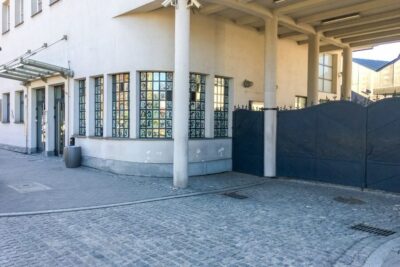
- Where the tour starts: Lipowa 4 and how to find your people
- Inside the museum: your route through Krakow under occupation
- Schindler’s office and the factory story: pots, pans, and survival
- Guided vs self-guided: what you gain and what you might miss
- Pacing, group size, and why your guide matters
- How long it takes: the 1 hour 30 minutes reality
- Ticket value: what $35.70 gets you (and what to watch for)
- Who this tour suits best
- Should you book Schindler’s Factory with a skip-the-line guided ticket?
- FAQ
- What’s the duration of the tour?
- Is the tour available in English?
- Does the ticket include admission?
- Where do I meet the guide?
- Is the experience guided or can I go self-guided?
- How far in advance should I book?
- Do I need to bring ID?
- Do the tickets require the full names of all participants?
- Is there a limit on group size?
- Can I change or cancel after booking?
Key things I’d plan around before you go
- Guaranteed entry via timed, skip-the-line ticket so you’re not stuck in long waits
- A guided option in English that helps you connect what you’re seeing to what was happening in Krakow
- Interactive rooms with film and radio recordings that bring fear, occupation, and uncertainty into the present tense
- Schindler’s office plus factory production story, including enamelware made for the German war effort
- A maximum group size of 25, which can help keep the experience workable, if guides manage the pace well
- Limited room time, since the scheduled tour is short and corridors can move quickly
More of Krakow under the wartime occupation
- Krakow: Schindler’s Factory Ticket and Guided Tour Option
★ 4.3 · 4,306 reviews - Krakow: Schindler’s Factory Tour with Entrance Ticket
★ 4.5 · 3,182 reviews - Krakow: Schindler’s Factory Skip-the-Line Ticket
★ 4.4 · 3,105 reviews
Schindler’s Factory in Krakow: what you’re really buying
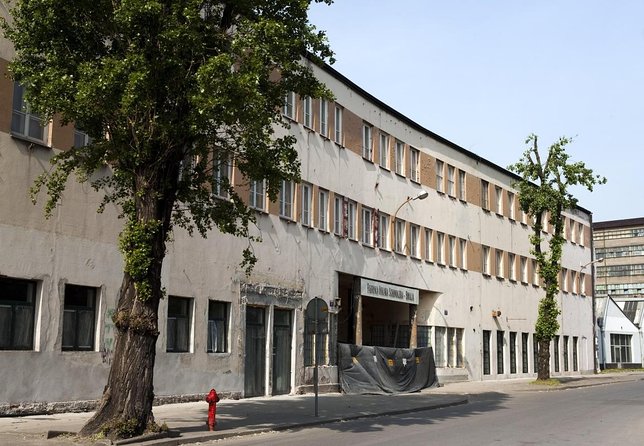
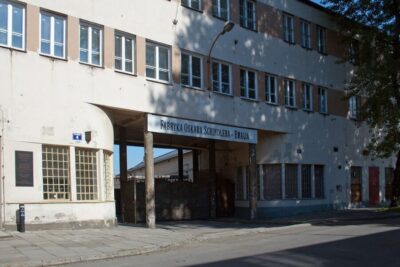
Schindler’s Factory is set in the actual enamelware factory tied to Oskar Schindler’s wartime operations. That alone makes it different from a normal museum stop: you’re walking the same walls that were part of the system of exploitation and survival during the German occupation.
When you book the guided version, you’re not just paying for access. You’re paying for a human thread through rooms that can otherwise feel like disconnected panels. The best guides I’ve heard about on this tour—like Natalia, Elizabeth, Barbara, and Marta—tend to pace information in a way that helps you keep up without turning the experience into a race.
The main tradeoff is focus. The museum’s storyline is very much about the course of WWII in Krakow, and Oskar Schindler is part of that larger map rather than the whole map.
Skip-the-line and timed entry: the practical value
This ticket comes with timed entry and is sold as a way to guarantee entry to the museum. In practice, that matters because the Schindler setting is popular, and queues can eat up your day.
You also avoid the classic problem of arriving in Krakow, feeling hungry and tired, and then spending an hour standing around while your schedule falls apart. Even when the museum is busy, timed entry lets you move on with your sightseeing plan.
One caution from real-world experiences: the biggest complaints tend to be about coordination—meeting up, finding the guide, or being left without the promised guidance. The skip-the-line part usually works, but you should still show up on time and double-check you’ve got the right start slot.
Where the tour starts: Lipowa 4 and how to find your people
Meet at Oskar Schindler’s Enamel Factory, Lipowa 4, 30-702 Kraków. The tour ends back at the same meeting point, and the guide can help with directions afterward (back toward the city center or your hotel, depending on what you need).
This is also one of those places where it helps to arrive a few minutes early and stay alert at the entrance area. Some visitors said it felt chaotic at the start, and visibility of guides wasn’t always easy—one person wished the operator were easier to spot at the meeting point.
Tip I’d use: stand near the actual museum entrance area, keep your phone handy for contact details, and confirm your group before walking too far.
A few more Krakow trips worth putting on the shortlist
- Krakow: Wieliczka Salt Mine Tour with Entry Ticket★ 4.6 · 10,927 reviews
- Krakow to Auschwitz Birkenau Guided Tour with Transfer and Ticket★ 5.0 · 8,197 reviews
- Krakow: Wieliczka Salt Mine Fast-Track Ticket & Guided Tour★ 4.5 · 5,872 reviews
- Auschwitz Birkenau Guided Tour with Ticket Hotel Pickup Small Van★ 5.0 · 4,769 reviews
Inside the museum: your route through Krakow under occupation
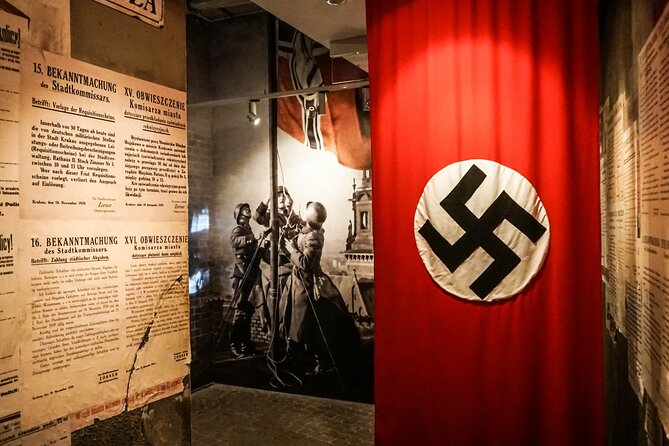
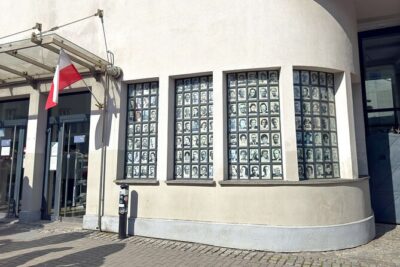
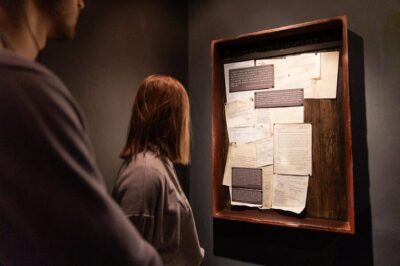
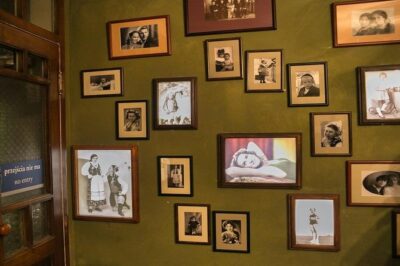
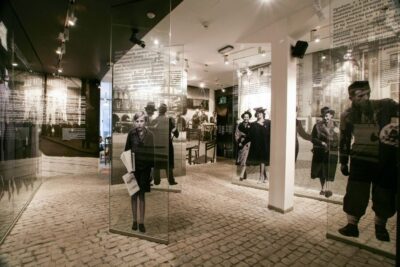
Once you’re inside, you’ll move through rooms that show how WWII affected Krakow—from the lead-up to occupation through the period of Nazi and Soviet control. Expect photographs of streets, resistance hideaways, prisons, and a lot of documentation that makes the danger feel immediate.
A strong guided experience typically works like this: you get short framing at the door of each room, then the guide links the visuals to what was happening outside. That’s where names like Wojtek come up in good feedback—people described his explanations as making the stop worthwhile.
The museum uses film and radio recordings too. Hearing that kind of material is one of the most unsettling parts, because it turns the museum from a display into something closer to testimony.
Reality check: with a schedule around 90 minutes, you might not have time to read everything slowly. One common comment is that it can be fast-paced, with limited time to absorb the full exhibition. If you love to linger with every panel, consider adding extra self-guided time after the guided portion ends.
Schindler’s office and the factory story: pots, pans, and survival
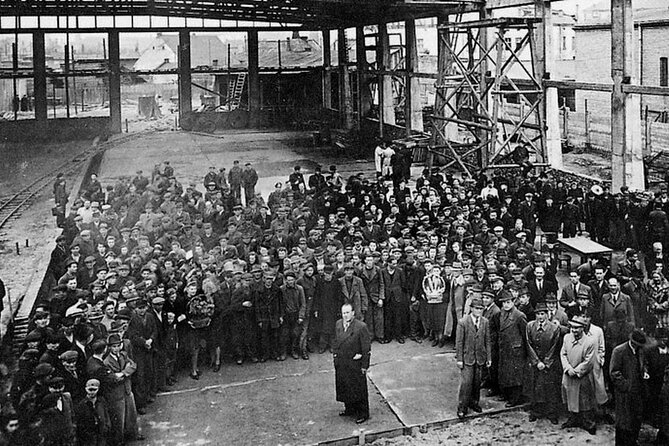
A big reason people book this specific tour is the factory narrative. You’ll see Schindler’s office, and you’ll learn how the factory’s Jewish workforce produced items like pots, pans, tins, and other enamelware for the German army.
This part of the story matters because it explains how industrial work became intertwined with survival. The tour framing emphasizes that this war production helped protect those workers from near-certain transportation to concentration camps.
It’s also where the term Schindler’s Jews comes up, tied to the fact that about 1,200 people worked in the factory under that system. Even if you know the film Schindler’s List, the museum context tends to land differently when you see how work and coercion were connected in this exact place.
If you’re expecting the tour to be mostly about Schindler as a character, temper that expectation. The museum’s bigger focus is Krakow under occupation, and Schindler is presented within that wider historical machinery.
Guided vs self-guided: what you gain and what you might miss
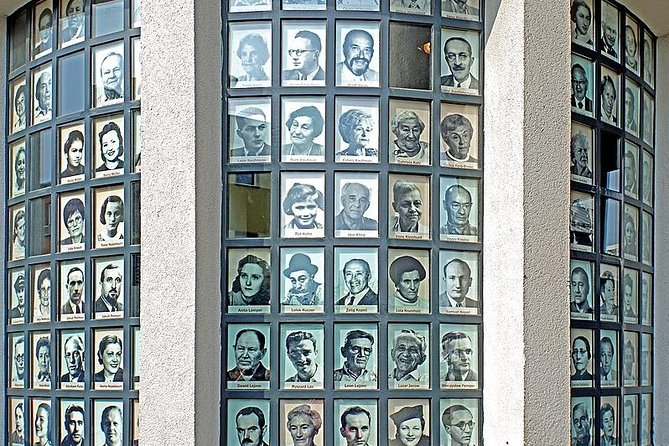
You can choose a guided option or go independently. If you go guided, you’ll start with a brief introduction about Schindler—also connected to how Spielberg’s Schindler’s List brought the story to a global audience.
What you gain with guidance is interpretation. In rooms that mix photographs, text, artifacts, and audio, a guide helps you spot what matters most and why. People also mention that a good guide can keep pacing fair and make you feel less lost in the chronology.
What can go wrong is what some visitors reported: if your guide is rushed, disorganized, or doesn’t wait for the group, you may miss parts while you’re trying to catch up. One person described leaving because the guide wasn’t engaging, and another mentioned that there were issues with equipment like headphones—so you might hear less clearly depending on the setup.
My practical advice: if you really want the spoken parts to land, show up early, ask about headsets/earphones before the tour begins, and don’t be afraid to move closer if you can’t hear.
Pacing, group size, and why your guide matters
This experience can involve up to 25 people. That’s workable only if your guide manages the movement and gives the group time to gather at each stop.
When the group stays tight and the guide uses clear timing, people describe it as smooth and well-paced. When it gets too crowded or too rushed, you can lose details quickly—especially in narrow corridors where it’s hard to read panels while walking.
Group size also came up in feedback. Some said their group felt small (around the teens), which made it easier to hear and follow. Others felt the size was too big for a place like this, where the subject matter deserves slow attention.
If you’re someone who hates being moved along, consider the self-guided option—or be ready to slow down on your own right after the guided segment ends.
How long it takes: the 1 hour 30 minutes reality

The scheduled duration is about 1 hour 30 minutes. In that time you’ll see the key parts of the exhibition and get the main story thread.
But a few visitors noted you might need 3 to 4 hours if you truly want to absorb the scale and read more carefully. That’s the honest math of this museum: it’s information-dense, and the topics aren’t light.
My suggestion: plan it as a core stop, not a quick “hit and run.” If your schedule is tight, do the timed guided tour first, then add time outside the scheduled window for anything you want to re-check.
Ticket value: what $35.70 gets you (and what to watch for)
At $35.70 per person, the value depends on what you need most.
If you’re mainly trying to avoid queue stress, the skip-the-line and timed entry can justify the price fast. If you’re trying to understand WWII Krakow without guessing your way through exhibits, a good guide adds real value—especially when the guide clearly connects Schindler’s story, the factory production, and the broader occupation timeline.
Where value can drop is when the guided component doesn’t deliver as promised. A few negative experiences described missing guides, poor organization, or getting inside without the actual tour portion they paid for. I can’t promise any operator will be perfect on any given day, but you can protect yourself by arriving early and being ready to verify you’ve got the right guide and start time.
Who this tour suits best
This is a strong fit if you want:
- A structured way to understand Krakow during WWII
- A guided interpretation that helps you make sense of photos, documents, and audio
- Timed entry that keeps your day from derailing
It may be less ideal if you:
- Want a mostly Schindler-focused biography. The museum storyline leans heavily toward Krakow’s WWII experience.
- Need lots of quiet reading time during the main visit. The guided slot can feel quick.
- Strongly depend on clear audio and headsets. Some people reported missing headphones, so ask in advance if that’s important for you.
Should you book Schindler’s Factory with a skip-the-line guided ticket?
I’d book it if you want the stress-reducing entry and you’re comfortable with a short guided walkthrough through very serious material. The best guided experiences—like tours led by Natalia, Elizabeth, Barbara, Marta, and Wojtek—sound like the kind of help that turns a busy museum visit into an organized, emotional, and memorable lesson.
If you’re the type who loves to read slowly and you don’t need spoken context, you might consider self-guided entry instead. But if you want an English guide to connect Schindler’s factory role, the enamelware production story, and what was happening to Krakow day by day, the guided skip-the-line setup is a smart buy.
FAQ
What’s the duration of the tour?
It runs about 1 hour 30 minutes (approx.).
Is the tour available in English?
Yes, the guided option is offered in English.
Does the ticket include admission?
Yes. Entrance is included, and the ticket is described as skip-the-line with guaranteed entry.
Where do I meet the guide?
You meet at Oskar Schindler’s Enamel Factory on Lipowa 4, in central Krakow.
Is the experience guided or can I go self-guided?
You can choose a self-guided option or a guided tour option.
How far in advance should I book?
On average, it’s booked about 32 days in advance.
Do I need to bring ID?
Yes. You should bring a valid passport or ID, since museum staff may request it.
Do the tickets require the full names of all participants?
Yes. Museum tickets are issued in individual names, so you need to provide the full names at booking.
Is there a limit on group size?
Yes. The maximum is listed as 25 travelers.
Can I change or cancel after booking?
No. It’s non-refundable and cannot be changed for any reason.
More Tours in Krakow


More Tour Reviews in Krakow

Krakow in Wartime: More Reviews



Just added: fresh Krakow reviews


Schindler's Factory & WWII Tours, compared.
 ★ 4.3Schindler’s Factory Ticket and Guided Tour OptionFrom $254,306 reviews
 ★ 4.5Schindler’s Factory Tour with Entrance TicketFrom $493,182 reviews
 ★ 4.4Schindler’s Factory Skip-the-Line TicketFrom $253,105 reviews
★ 4.6Schindler’s Factory Tour with Entrance TicketFrom $401,737 reviews
★ 4.4Schindler’s Factory Skip-the-Line TicketFrom $253,105 reviews
★ 4.6Schindler’s Factory Tour with Entrance TicketFrom $401,737 reviews
 ★ 4.7Schindler’s Factory & Ghetto Guided TourFrom $571,694 reviews
 ★ 4.3Schindler’s Factory Ticket with Guided Tour OptionFrom $421,485 reviews
 ★ 4.0Krakow Schindler’s Factory Guided Tour with Admission TicketFrom $351,156 reviews
 ★ 4.1Schindler’s Factory Guided Tour with Entry TicketFrom $25976 reviews
Browse the lists this tour appears in