
REVIEW · AUSCHWITZ-BIRKENAU MEMORIAL TOURS
Auschwitz-Birkenau – Skip the Line Tickets
Auschwitz-Birkenau hits fast, even on paper. This prebooked skip-the-line tour saves you time and pairs the sights with a licensed local guide, so you’re not left piecing together facts while emotions run high. I like the focus on both camps in one outing—Auschwitz I and Auschwitz II–Birkenau—because the comparison helps everything make more sense.
The second thing I really like is the headset, which matters here more than almost anywhere else. You’re in a small group (up to 30), moving through a large, emotionally heavy site, and clear audio keeps the story from turning into a blur. One possible drawback is that execution can vary: some people report rushing, headset problems, or even serious scheduling mix-ups—so it’s smart to plan for the real-world side of group tours, not just the museum’s rules.
In This Review
- Key Things I’d Bank On Before You Go
- Auschwitz I and Birkenau in One Guided Pass
- Where You Meet and How You Avoid the First-Morning Chaos
- Entering Auschwitz I: Why the 1.5–2 Hours Matters
- Birkenau’s 60–75 Minutes: Big Space, Hard Focus
- Headsets, Pace, and the Reality of Group Tours
- Price and Logistics: Is It Worth About $48?
- Who This Tour Fits Best (And Who Should Rethink)
- What to Do Before You Leave Your Hotel
- Should You Book This Skip-the-Line Auschwitz-Birkenau Tour?
- FAQ
- How long is the Auschwitz-Birkenau skip-the-line guided tour?
- How much time do you spend at Auschwitz I vs. Birkenau?
- Does the tour include skip-the-line entry?
- Is a headset included?
- What’s the group size limit?
- Is transportation included?
- Where do I meet the group?
- Can I cancel for a full refund?
Key Things I’d Bank On Before You Go
- Skip-the-line entry to reduce waiting at the memorial entrance.
- Headset included, so you can hear the guide clearly while walking through large areas.
- Two-camp route with set timing (about 1.5–2 hours at Auschwitz; 60–75 minutes at Birkenau).
- Small-group format with a maximum of 30 people, plus a local host meeting you first.
- Licensed local guide using official interpretation rather than you guessing your way through plaques.
Other guided visits to the Auschwitz-Birkenau Memorial
- Auschwitz-Birkenau: Skip-the-Line Entry Ticket & Guided Tour
★ 4.4 · 1,038 reviews - Auschwitz-Birkenau: Guided Tour and Skip-The-Line Ticket
★ 4.4 · 215 reviews - Auschwitz & Birkenau Live Guide Tour Entrance Ticket
★ 4.0 · 110 reviews
Auschwitz I and Birkenau in One Guided Pass
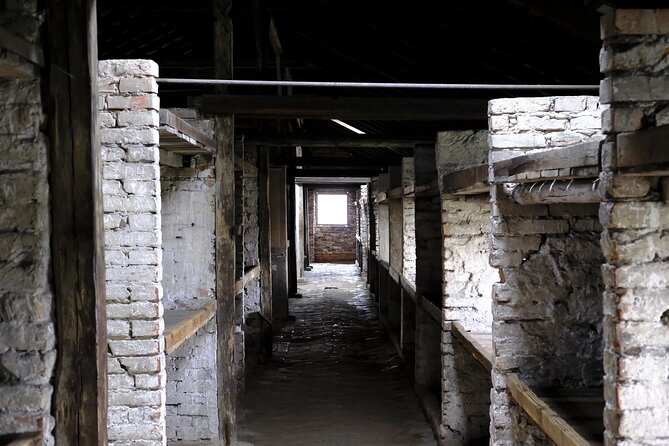
Auschwitz-Birkenau is not a “one stop and you’re done” kind of place. Even if you read everything you can at home, the physical layout does something to your understanding. That’s why I like the structure of this tour: it covers Auschwitz I and Auschwitz II–Birkenau in a single visit, rather than leaving you to choose one and wonder what you missed.
The timing is built around the reality that there’s a lot to see. Plan on about 3.5 hours guided time, with roughly 1.5–2 hours at Auschwitz and 60–75 minutes at Birkenau. That may sound like a lot, but it can also feel short once you’re standing in places that no longer behave like “tour stops.” You’ll move through key areas with explanation, not just a self-guided walk.
The value here is the guide’s job: to connect what you’re looking at to what it meant, who used it, and why the system worked the way it did. Without that, you can end up with a list of objects and names but not the logic of the machinery. With a guide, you get a framework that helps you absorb the site without turning it into a speed-run.
Where You Meet and How You Avoid the First-Morning Chaos
You start at Męczeństwa Narodów 14, 32-600 Brzezinka, Poland. From there, you’re met by a local host, who stays involved long enough to get you set up and directed to the correct guide. This is one of those details that sounds minor until you’re arriving at a memorial with crowds, signage everywhere, and your brain already in overload mode.
The tour also includes a specific ticket redemption point at the memorial: Więźniów Oświęcimia 55, 32-600 Oświęcim, Poland. Having that spelled out matters. It reduces the odds of wasting time with uncertainty—time you’ll want to spend inside the camps.
Another practical note: the experience ends back at the meeting point. That means you’re not left hunting for your own way back after the last stop. It’s a small reassurance when the day has already taken emotional stamina.
Also note what’s not included: transportation. If you’re coming from Kraków, you’ll need to handle your own ride or public transit. The good part is that the tour is described as near public transportation, so you’re not stuck with only private cars as an option.
Entering Auschwitz I: Why the 1.5–2 Hours Matters
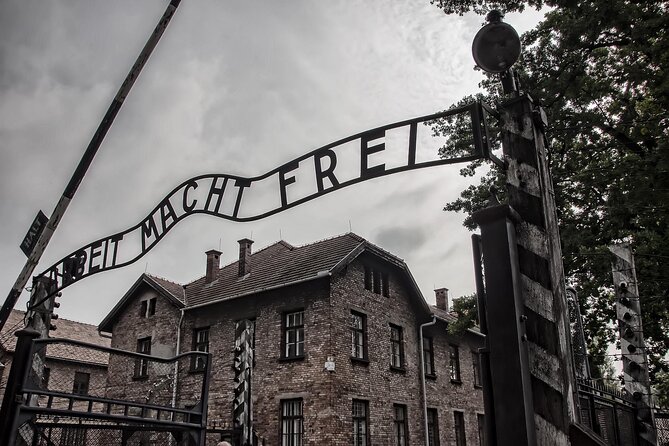
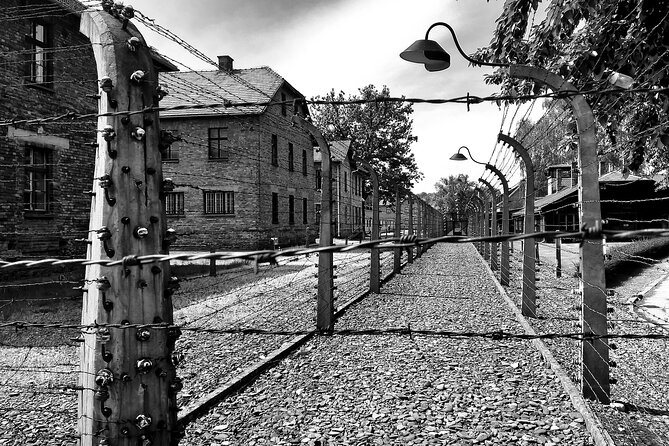
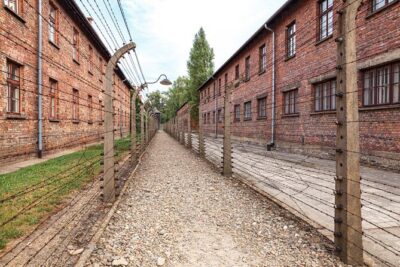
Auschwitz I is often where people feel the “weight of understanding” first. You’ll spend about 1.5 to 2 hours there on this guided route, following an authorized guide in a group (up to 30 people). That timeframe is a balancing act: long enough for context, short enough that you still reach Birkenau without the whole day collapsing into delays.
On a tour like this, the guide does the heavy lifting of interpretation. You’re not just looking at structures and displays—you’re hearing the story that explains how the place functioned and how the camp system was organized. People in the feedback also highlighted guides who spoke good English at a correct pace, and that pacing is key. If you rush, you miss the human details; if you stop too much, you miss the second camp. This tour is designed to move at a pace that keeps the full arc intact.
You should also expect it to be emotionally tough. There’s no safe way to “tour” a site like this, but a good guide can keep the information clear and the route understandable. One guest described the experience as moving, thought-provoking, and informative in a way that felt respectful. That matches what you’re paying for: not just access, but interpretation.
One consideration: group tours can feel crowded in a place that already feels exposed. A group size of 30 helps, but you’ll still be part of a moving stream at a memorial that draws huge daily numbers. The best move you can make is mental: commit to absorbing a little at a time rather than trying to process everything at once.
A few more Oswiecim trips worth putting on the shortlist
- Auschwitz-Birkenau: Entry Ticket with Guided Tour★ 4.5 · 105 reviews
- Auschwitz-Birkenau: Guided Tour – Ticket + Transportation★ 4.5 · 31 reviews
- Auschwitz-Birkenau – Skip the Line Tickets★ 3.5 · 29 reviews
- Auschwitz-Birkenau: Fast-Track Ticket & Guided Tour No Transfers★ 3.5 · 17 reviews
Birkenau’s 60–75 Minutes: Big Space, Hard Focus
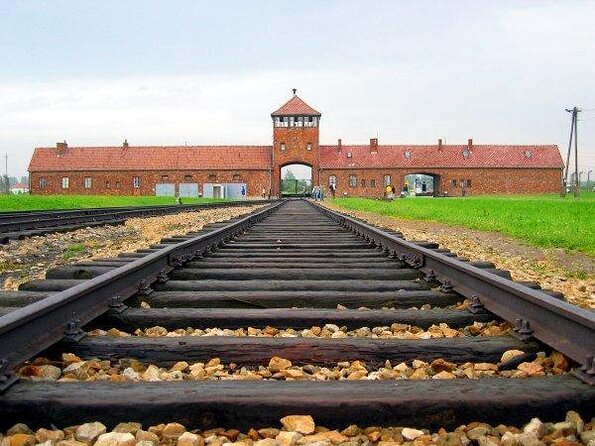
Birkenau is where the site can feel physically overwhelming. The grounds are larger, the sightlines are longer, and your brain needs help staying oriented. That’s why Birkenau has its own focused block: 60–75 minutes with the guide on the Auschwitz II–Birkenau part of the route.
If you’ve ever done a museum tour where the group keeps moving and the guide talks fast, you can imagine what that would mean here. A few people reported feeling rushed, and another issue that came up was headset audio not always being clear. When the audio is garbled, Birkenau can become even harder to follow because you’re walking across open space while trying to understand specific points.
This is also where context pays off. The guide’s explanations help you connect what you’re seeing—structures, layouts, and evidence—to what those features represented. In feedback, some people praised guides who stayed attentive and answered questions. That’s what turns the Birkenau stop from a “see it” moment into a “understand it” moment.
One more planning thought: the tour is group-based and guided, and the museum rules reportedly restrict using the memorial shuttle busses for these group visits. Translation: you may be walking more than you expect, inside a site that is already physically demanding. If you have mobility limitations, consider asking in advance whether the pace and walking distance will work for your situation.
Headsets, Pace, and the Reality of Group Tours
The tour includes headset gear. That’s one of the most practical inclusions you can ask for at Auschwitz-Birkenau. Clear audio helps you follow the guide’s explanations and keep up with the route. It also helps you avoid the frustrating situation where you’re staring at a sign while guessing what you missed.
That said, not every experience will be perfect. Some feedback specifically criticized headsets with static or difficulty hearing the guide. So here’s how you can reduce your chances of a bad audio experience: arrive a little early, make sure your device is working as soon as you receive it, and speak up quickly if the volume is off or you can’t hear properly. On a tour, the best time to fix a problem is at the start, not after you’ve walked a lot of ground.
Pace is another factor. Several comments pointed to tours that felt rushed, with not enough time to read photo captions or absorb what’s in front of you. This tour’s structure (about 3.5 hours guided time) means you’re on a schedule. That can be good—no one gets stranded, and you keep the two-camp arc. It can also feel limiting if you’re the type who needs extra minutes at specific displays.
Group size matters here too. With a maximum of 30 travelers, you’re not in a massive crush like some high-volume tours, but you’re still moving with others. If you’re someone who processes by stopping often, bring a strategy: pick a few key areas you want to linger on mentally, and accept that other spots will be “read-and-move.”
Price and Logistics: Is It Worth About $48?
At about $48.15 per person, you’re paying for several things: skip-the-line entry, a licensed local guide, and headsets. The itinerary length is about 4 hours total, with guided time around 3.5 hours. Transportation is not included, which is important for value math.
So is it worth it? For most independent travelers, I think yes—because the biggest risk on your own is not getting in. It’s getting lost in interpretation. Without a guide, you can absolutely walk the site and read signs, but you may miss the links that make the evidence cohere.
This tour reduces time lost to uncertainty. In a place like this, every minute counts, and skip-the-line access is one of the rare “money saves time” features that actually helps your experience rather than just your schedule.
Where the value can wobble is when execution is off. Feedback includes cases of delays or mix-ups around records or timing. I can’t promise how every departure runs, but I can tell you how to protect yourself: have your booking details ready, check that the provider you booked (listed as Time4Poland) matches the operator at the meeting, and keep your phone charged and accessible.
Also, since the tour doesn’t include transportation, your final cost depends on your method of getting there. If you’re using a shared transfer, you might pay more overall—but you’ll also reduce stress. If you’re a confident public-transit person, your “true spend” may stay close to the ticket price.
Who This Tour Fits Best (And Who Should Rethink)
This option works well if you want:
- A guided route through both Auschwitz and Birkenau.
- A setup that helps you hear explanations clearly (headsets).
- A structured visit that keeps you from spending the whole day in logistics mode.
It also says you should have moderate physical fitness. That’s a real factor at Auschwitz-Birkenau. The site involves walking and standing, and there’s limited room to “pause and recover.” One part of feedback even suggested the visit felt too fast for someone with mobility challenges. If someone in your group has a mobility or stamina limitation, don’t assume it will be comfortable just because a tour is marketed as a general option. Ask questions early, and set expectations with reality.
Families can make this work too. One person described bringing a 16-year-old and said the visit was emotional and unforgettable. If you’re bringing teens, you’ll want to be ready for heavy material—but guided explanation often helps older kids handle what they’re seeing.
Service animals are allowed, which is a helpful detail if you travel with one.
Language is not explicitly guaranteed in the tour data you provided, but feedback includes guides who spoke good English, plus named guides such as Halina and Magdalene in examples of very positive experiences. If language is a deal-breaker for you, confirm it before you go so you’re not relying on hope.
What to Do Before You Leave Your Hotel
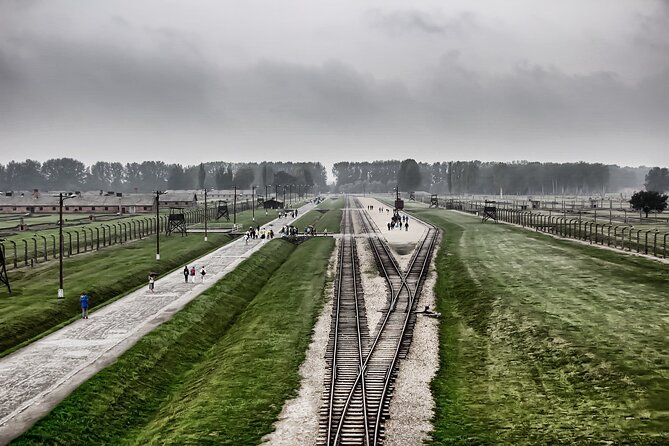
Auschwitz-Birkenau is one of those places where “just show up” can turn into friction. Do a quick prep checklist:
- Bring your passport or ID. People called this out as important.
- Plan for a heavy emotional day. This matters for decision-making like pacing and break-taking.
- Expect a strict schedule. This is not a self-guided wander. It’s guided time on a set route.
- Charge your phone. If you have to contact the operator or clarify where to meet, you’ll want power and signal.
Also, since the tour price includes guided entry and a headset but not meals, you may want to plan your own food and drink strategy around the visit length. Some feedback mentioned disappointment with a lunchbox not being provided, so don’t assume every extra food add-on will show up as expected for every departure.
Should You Book This Skip-the-Line Auschwitz-Birkenau Tour?
If you want a guided visit that covers both camps and you value time saved by skip-the-line entry, this looks like a strong fit. The inclusion of a licensed local guide and headsets is the core reason independent travelers choose this over solo tickets.
I would book it if you:
- Prefer a structured route with context.
- Want help hearing explanations while walking.
- Are okay with a group pace and limited flexibility at specific stops.
I’d think twice if you:
- Need a very slow pace or have mobility concerns and can’t change your plans.
- Rely on perfect headset audio (because not every device experience is flawless).
- Are anxious about day-of coordination, since there are accounts of serious scheduling issues in some cases.
If you’re on the fence, treat this like a decision about your mental comfort. For many people, the guide makes the difference between “seeing” and genuinely understanding. For others, the schedule and crowding can feel too tight. Choose the version that helps you stay present—because at Auschwitz-Birkenau, that’s the real luxury.
FAQ
How long is the Auschwitz-Birkenau skip-the-line guided tour?
It lasts about 4 hours total, with approximately 3.5 hours of guided time.
How much time do you spend at Auschwitz I vs. Birkenau?
You spend around 1.5–2 hours at Auschwitz I and about 60–75 minutes at Auschwitz II–Birkenau.
Does the tour include skip-the-line entry?
Yes. The tour includes skip-the-line tickets to help avoid long queues.
Is a headset included?
Yes. Headsets are included so you can hear the guide more clearly.
What’s the group size limit?
The group is capped at a maximum of 30 travelers.
Is transportation included?
No. Transportation is not included.
Where do I meet the group?
The start meeting point is Męczeństwa Narodów 14, 32-600 Brzezinka, Poland.
Can I cancel for a full refund?
Yes. You can cancel up to 24 hours in advance for a full refund.
More Tickets in Oswiecim





More Tour Reviews in Oswiecim
Visiting the Auschwitz-Birkenau Memorial
Just added: fresh Oswiecim reviews


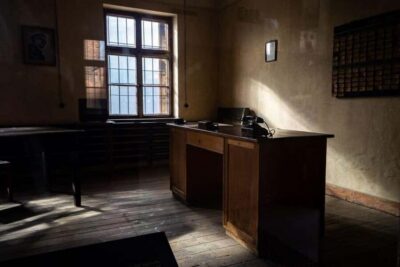
Auschwitz-Birkenau Memorial Tours, compared.
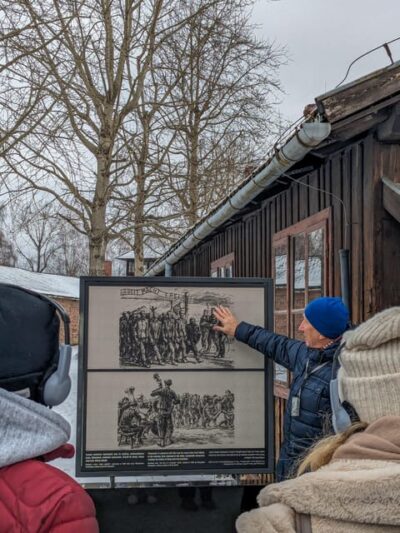 ★ 4.5Auschwitz-Birkenau Guided Tour & Hotel PickupFrom $2133,358 reviews
★ 4.5Auschwitz-Birkenau Guided Tour & Hotel PickupFrom $2129,340 reviews
★ 4.5Auschwitz-Birkenau Guided Tour & Hotel PickupFrom $2133,358 reviews
★ 4.5Auschwitz-Birkenau Guided Tour & Hotel PickupFrom $2129,340 reviews
 ★ 4.5Auschwitz Guided Tour with Optional Hotel PickupFrom $6915,280 reviews
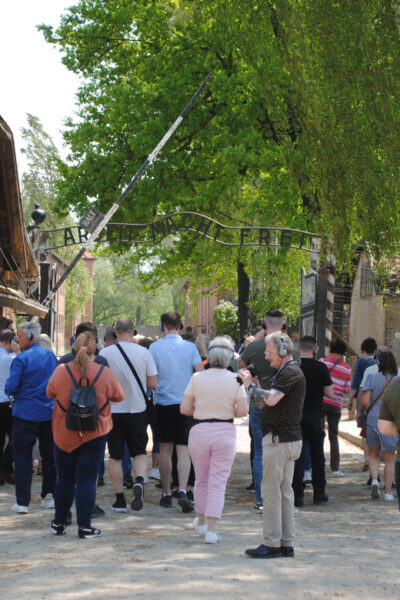 ★ 4.5Auschwitz-Birkenau Guided Tour with Pickup & LunchFrom $219,800 reviews
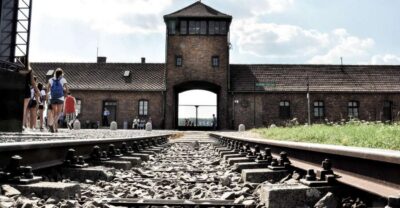 ★ 4.5Auschwitz-Birkenau Guided Tour Pickup/Lunch OptionsFrom $2009,057 reviews
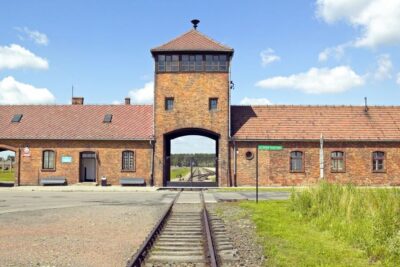 ★ 4.7Auschwitz-Birkenau and Salt Mine Guided TourFrom $549,020 reviews
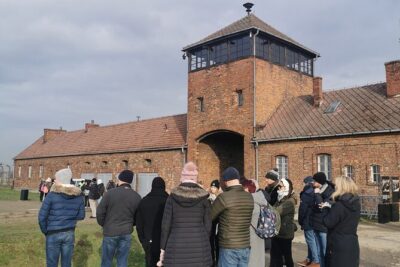 ★ 5.0Krakow to Auschwitz Birkenau Guided Tour with Transfer and TicketFrom $368,197 reviews
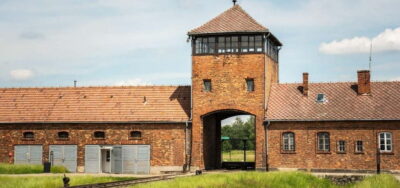 ★ 4.0Auschwitz Birkenau Tour with TransferFrom $216,134 reviews
Browse the lists this tour appears in