
REVIEW · KAZIMIERZ & JEWISH HERITAGE TOURS
Cracow – Guided Tour of the Jewish Ghetto
One hour, but it lingers. This Krakow Jewish Ghetto guided walk focuses on Podgórze, where the city’s WWII-era reality was lived block by block. I like that it doesn’t feel like a checklist; it’s a careful street-level way to understand what happened and why the place still matters.
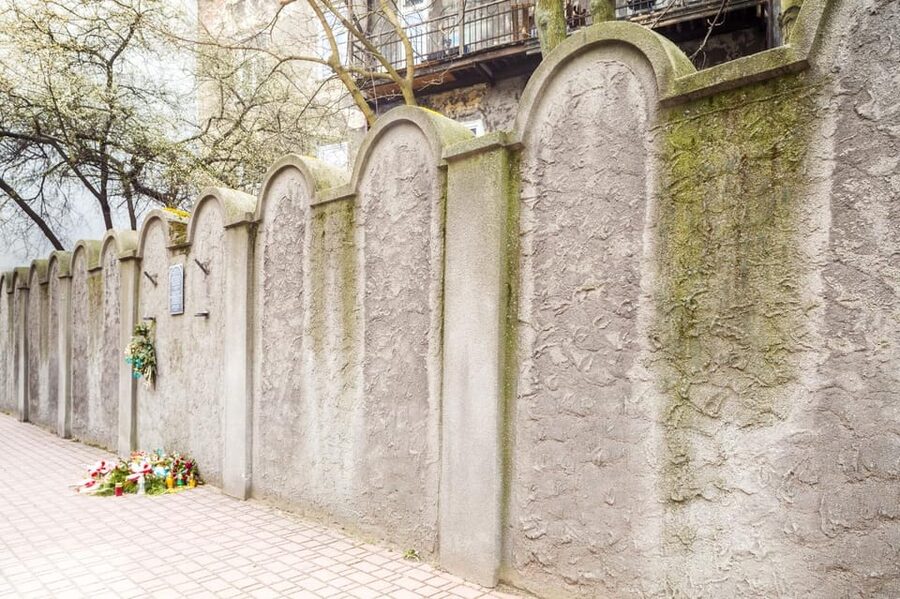
The tour hits two standout moments: Ghetto Heroes’ Square and the remaining pieces of the ghetto wall that you can actually see. I also really appreciate the ending at Under the Eagle pharmacy, because it adds a human note of survival to a heavy story.
One consideration: 1 hour is tight. You’ll get an essential overview, but if you want slower, more detailed context at each corner, this format may feel rushed.
In This Review
- Key Highlights You’ll Actually Feel on the Walk
- Podgórze’s Streets: How a Short Walk Becomes a Real Lesson
- Ghetto Heroes’ Square (Plac Bohaterów Getta): Names, Identification, and Deportation
- The Ghetto Wall Remnants: Small Pieces, Serious Impact
- Passing the Buildings Where Lives Were Cramped
- Under the Eagle Pharmacy: A Final Stop With a Different Kind of Meaning
- Price and Duration: Is $15 Worth It for One Hour?
- Meeting Point and Timing: Start Smooth, Stay Present
- How Good Guides Can Make or Break a Heavy Tour
- Who Should Book This Tour (and Who Might Skip It)
- Should You Book the Cracow Guided Tour of the Jewish Ghetto?
- FAQ
- How long is the Krakow Jewish Ghetto guided tour?
- What does it cost?
- Where does the tour meet?
- What is included in the price?
- Is food or drink included?
- What sites will the tour cover?
- Are there multiple language options?
- Can I cancel for a full refund?
- Can I reserve and pay later?
- Is the tour a guided walking experience?
Key Highlights You’ll Actually Feel on the Walk
- Podgórze street-by-street context: you pass the kinds of buildings where families lived under impossible conditions.
- Ghetto wall fragments you can point at: small remnants, big meaning, and a visible link to the past.
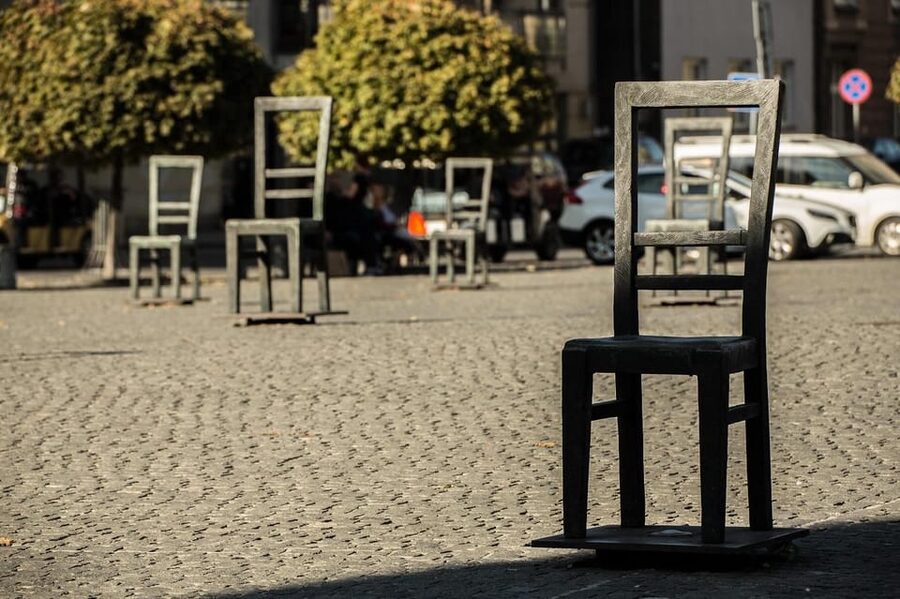
- Plac Bohaterów Getta (Ghetto Heroes’ Square): a stop centered on identification and deportation to concentration camps.
- Under the Eagle pharmacy: a symbolic finale tied to resilience and survival.
- Professional live guide (multiple languages): English, German, French, Spanish, and Italian keep the story clear, not murky.
- Strong value for $15: you pay for guided interpretation, not just time in the neighborhood.
Deeper into Kazimierz and its Jewish heritage
- Krakow: Schindler’s Factory & Ghetto Guided Tour
★ 4.7 · 1,694 reviews - Krakow: Jewish Quarter and Former Ghetto Tour
★ 4.9 · 1,441 reviews - Krakow: Bike Tour of Old Town, Jewish Quarter and the Ghetto
★ 4.9 · 1,155 reviews
Podgórze’s Streets: How a Short Walk Becomes a Real Lesson
Krakow’s WWII story is often told in big, dramatic ways. This tour takes the opposite approach. You follow your guide through the Podgórze district, the area that functioned as the Jewish ghetto, and you get to see how the geography of a neighborhood shapes daily life—especially when people are forced into cramped, controlled spaces.
What I like most is the way the route turns “history” into something you can mentally walk through. It helps you picture where families had to squeeze in, how boundaries changed life, and why even after the war, the built environment still carries emotional weight.
This isn’t a long excursion, but it’s built for focus. Your guide’s job is to connect what you’re seeing—streets, building fronts, squares, and wall fragments—to what they represent.
Ghetto Heroes’ Square (Plac Bohaterów Getta): Names, Identification, and Deportation
Plac Bohaterów Getta, also called Ghetto Heroes’ Square, is the emotional anchor of the walk. Here, you learn about how Jewish residents of Krakow were identified and deported to concentration camps.
Even if you already know the broad outlines of WWII history, this is where a good guide can make the events feel specific. The key value of this stop is that it shifts the story from general tragedy to what happened to people in this city, in this place, in a very particular sequence.
Practical tip: stand where your guide tells you to. Don’t drift for photos. With a site like this, the most respectful move is to listen first, look second.
The Ghetto Wall Remnants: Small Pieces, Serious Impact
You’ll also see remaining pieces of the ghetto wall—fragments that function as a monument and pilgrimage point for many Jewish visitors from around the world. These aren’t “full walls” you can walk around like a fortress. They’re what’s left, which makes them even more striking.
I like that your guide frames the wall as more than a physical barrier. It becomes a symbol of separation and control, and it helps you understand why life within the ghetto was not just hard—it was engineered to be hard.
If you’re the kind of traveler who hates reading plaques, don’t worry. The guided explanation is the point here, and the wall fragments are the visual cue that makes the explanation stick.
A few more Krakow trips worth putting on the shortlist
- Krakow: Auschwitz-Birkenau Guided Tour with Pickup & Lunch★ 4.5 · 9,800 reviews
- Krakow: Auschwitz-Birkenau Guided Tour Pickup/Lunch Options★ 4.5 · 9,057 reviews
- Krakow: Auschwitz-Birkenau and Salt Mine Guided Tour★ 4.7 · 9,020 reviews
- Krakow to Auschwitz Birkenau Guided Tour with Transfer and Ticket★ 5.0 · 8,197 reviews
Passing the Buildings Where Lives Were Cramped
One of the most powerful parts of this tour is what happens between the headline stops. You walk past buildings where thousands of displaced Jews used to live. This is where the story becomes “architecture with consequences.”
Your guide will typically explain how the ghetto’s rules affected everyday life—where people were forced to stay, what movement looked like, and how crowding changed what was possible. The buildings themselves are still part of the neighborhood, so you’re seeing history in an active, lived-in city.
A drawback to keep in mind: because you only have 1 hour, the tour won’t slow down enough to go deep on every building. It’s an overview at walking pace. If you want extra detail, plan to spend independent time afterward in the area with an audio guide or follow-up reading.
Under the Eagle Pharmacy: A Final Stop With a Different Kind of Meaning
The walk ends at the famous Under the Eagle pharmacy. It’s a memorable finale because it shifts the mood slightly without erasing the tragedy.
Your guide connects the pharmacy to resilience and survival—how people endured, how small anchors of normal life mattered, and how local institutions sometimes became part of the story of staying alive. Ending here works well psychologically. You leave with a more complete emotional arc: devastation, memory, and then survival.
Also, this stop is a good way to avoid the tour ending abruptly with only grief. Even if you’re feeling heavy afterward, it helps you process rather than just absorb.
Price and Duration: Is $15 Worth It for One Hour?
At $15 per person for a 1-hour guided walk, the value is mostly in the interpretation. You’re not paying for transport, food, or a multi-hour museum visit. You’re paying for a professional guide who can explain what you’re seeing and why it matters.
That’s the tradeoff. One hour means you’ll cover the essentials—Podgórze context, Ghetto Heroes’ Square, the ghetto wall fragments, the sense of daily life in the buildings, and a symbolic finish at Under the Eagle pharmacy. If you do this expecting an all-day course, you’ll feel shortchanged.
But if you want a focused orientation that you can build on later, this price-to-time ratio is hard to beat.
Meeting Point and Timing: Start Smooth, Stay Present
The tour’s meeting point is at the entrance to the Schindler Factory Museum. Look for your guide holding an excursions.city sign.
Because this is a walking tour, show up a few minutes early. You’ll get settled faster, and you won’t lose the best part of the experience by rushing in late. Also, wear shoes that can handle uneven sidewalks without drama. Krakow can be pretty walkable, but one-hour tours still demand comfort.
You’ll have a live guide speaking English, German, French, Spanish, or Italian (depending on the departure). If you’re choosing a language option, pick the one you’ll understand best under street noise—this is where clarity matters.
And yes, you can keep things flexible: you can reserve now and pay later, and you can cancel up to 24 hours in advance for a full refund.
How Good Guides Can Make or Break a Heavy Tour
This kind of tour lives or dies on delivery. The strongest feedback centers on guides who combine expertise with compassion—someone who treats the subject with care, and who can explain without rushing.
The flip side is also real: if a guide’s pacing is too minimal, you might feel like you’re standing in front of important places without enough context to connect the dots. With only 1 hour, there isn’t much time to “catch up” if you feel lost.
My practical advice: go in with one or two questions you genuinely want answered. For example, ask what you should notice at the wall fragments, or how Podgórze’s layout shaped daily life. A good guide will turn your question into a useful explanation.
Who Should Book This Tour (and Who Might Skip It)
You should book if:
- you want a guided, street-level overview of Krakow’s Jewish ghetto in a short time window
- you value seeing specific sites like Plac Bohaterów Getta and the ghetto wall remnants
- you want a professional guide in your language, without having to piece together multiple stops on your own
You might choose something else if:
- you’re looking for long, slow, deeply detailed coverage at each location
- you prefer self-guided visits where you can linger at every plaque or corner
This is a strong “orientation” tour. It works best when you treat it like a chapter—then give yourself time afterward to process what you learned.
Should You Book the Cracow Guided Tour of the Jewish Ghetto?
Yes, if you want an efficient, meaningful walk that points you to the right places and gives you the context to understand them. For $15 and 1 hour, you’re getting a guided connection between Podgórze’s WWII reality, Plac Bohaterów Getta, surviving wall fragments, and an ending at Under the Eagle pharmacy.
Book it with realistic expectations. This isn’t a marathon. It’s a focused route designed to help you remember what matters and notice what you’re looking at—even when the subject is difficult.
FAQ
How long is the Krakow Jewish Ghetto guided tour?
The tour lasts 1 hour.
What does it cost?
It costs $15 per person.
Where does the tour meet?
Meet at the entrance to the Schindler Factory Museum, and look for a guide with an excursions.city sign.
What is included in the price?
A professional live guide is included.
Is food or drink included?
No, food and drink are not included.
What sites will the tour cover?
You’ll explore the Podgórze district, see remaining pieces of the ghetto wall, visit Plac Bohaterów Getta, and finish at the Under the Eagle pharmacy.
Are there multiple language options?
Yes. The tour is offered in English, German, French, Spanish, and Italian.
Can I cancel for a full refund?
Yes. You can cancel up to 24 hours in advance for a full refund.
Can I reserve and pay later?
Yes. You can reserve your spot and pay later.
Is the tour a guided walking experience?
Yes. It is a guided tour that involves walking through the historic area.
More Tours in Krakow
More Tour Reviews in Krakow

More of Jewish Kazimierz


Just added: fresh Krakow reviews
Kazimierz & Jewish Heritage Tours, compared.
 ★ 4.7Schindler’s Factory & Ghetto Guided TourFrom $571,694 reviews
 ★ 4.9Jewish Quarter and Former Ghetto TourFrom $191,441 reviews
 ★ 4.9Bike Tour of Old Town, Jewish Quarter and the GhettoFrom $371,155 reviews
 ★ 4.8Kazimierz Jewish Quarter Walking TourFrom $27571 reviews
 ★ 4.8Kazimierz, Schindler’s Factory & Ghetto Guided TourFrom $81460 reviews
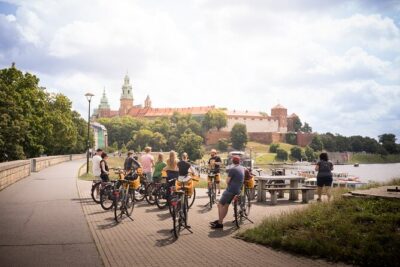 ★ 5.0Full Bike Tour – the Old Town, Jewish Qtr & the Ghetto NEW BIKESFrom $35437 reviews
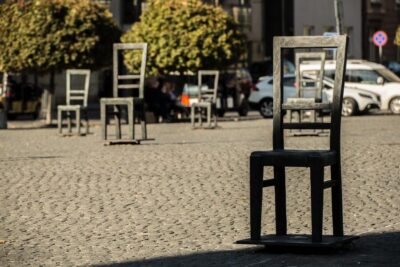 ★ 4.6Jewish Ghetto Walking TourFrom $11349 reviews
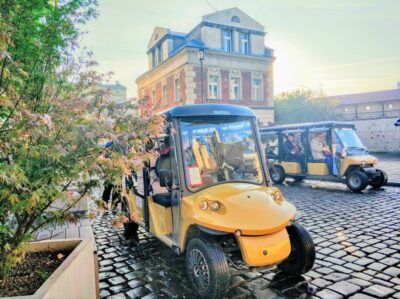 ★ 4.6Jewish Quarter and Ghetto Electric Golf Cart TourFrom $34348 reviews
Browse the lists this tour appears in