
REVIEW · SCHINDLER'S FACTORY & WWII TOURS
Guided Tour in Kraków-Płaszów Former Concentration Camp
Kraków has its own concentration camp. This guided tour focuses on Kraków-Płaszów and gives you the local Holocaust context people often miss when they only plan for Auschwitz. I especially like that you also stop at the Ghetto wall fragment in Podgórze, so the story isn’t just told with words.
You’ll walk through the area where the German Nazi camp Konzentrationslager Plaszow bei Krakau operated, and you’ll connect it to visible memorials in the neighborhood. The only real catch is comfort: this is an outdoor walk over uneven ground, so wear proper shoes and expect it to be bumpy at points.
In This Review
- Key things that make this Płaszów tour worth your time
- Why Płaszów belongs on your Kraków plan
- Meeting at Apteka pod Orłem and walking into Podgórze
- Ghetto Heroes Square: a memorial that carries controversy
- Kraków-Płaszów: what you’ll see in the main stop
- The 12-metre Ghetto wall fragment and the 1983 plaque
- Guide quality: context that makes the walk click
- Group size and how it affects your experience
- Price and value: what $30.01 buys you
- Practical tips before you go
- Who should book this Kraków-Płaszów tour
- Should you book this tour?
- FAQ
- FAQ
- How long is the Guided Tour in Kraków-Płaszów?
- Is the tour offered in English?
- Where do I meet the guide, and where does the tour end?
- Is the admission ticket included for the Płaszów concentration camp stop?
- What group size should I expect?
- Do I get a mobile ticket?
- Can I cancel for free?
Key things that make this Płaszów tour worth your time
- Płaszów in Kraków, not far away: you see a major WWII site in the city itself
- Ghetto Heroes Square before the camp: the memorial square’s controversial design adds extra weight to the walk
- A 12-metre original wall fragment: you’ll focus on the physical evidence and what it meant
- English guide with full context: you get the events explained and placed in Kraków’s wider Holocaust timeline
- Small group feel: it’s capped at 25, and smaller groups can happen
- Camp admission is free for the visit: that helps the overall value
More of Krakow under the wartime occupation
- Krakow: Schindler’s Factory Ticket and Guided Tour Option
★ 4.3 · 4,306 reviews - Krakow: Schindler’s Factory Tour with Entrance Ticket
★ 4.5 · 3,182 reviews - Krakow: Schindler’s Factory Skip-the-Line Ticket
★ 4.4 · 3,105 reviews
Why Płaszów belongs on your Kraków plan
If you’re doing Kraków for history, you’ll hear a lot about Auschwitz. That’s fair. Still, it’s also easy to accidentally skip the parts that happened right here in Kraków’s own neighborhoods.
Płaszów matters because it shows how the Holocaust unfolded locally, not just as a distant event. This tour keeps you in Kraków long enough to understand the geography: where people were, what changed over time, and how memory is handled in public spaces today. It’s the kind of experience that helps the city make sense, street by street.
And unlike museum-only tours, you’re walking through an outdoor site where the past isn’t neatly packaged. That makes the explanations more important—and more useful—because your guide has to translate what you see into what it meant.
Meeting at Apteka pod Orłem and walking into Podgórze
You start at Apteka pod Orłem, Plac Bohaterów Getta 18. From there, you head across the river area toward Podgórze, where the story unfolds.
What I like about this approach is the pacing. You’re not thrown immediately into the camp grounds with zero context. Instead, the route begins with a memorial location and a short story about how places get repurposed and remembered after the war.
The tour ends at Henryka Kamieńskiego 57, near a bus stop on Kamienskiego street. That matters if you’re connecting to other plans afterward. Build in a little buffer so you can grab a tram or bus without stress.
Ghetto Heroes Square: a memorial that carries controversy
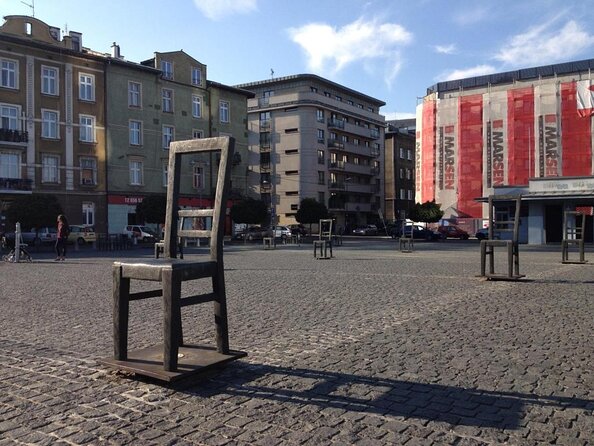
One of the first stops is Ghetto Heroes Square (Plac Bohaterów Getta). The square’s name changed after the war, and a small monument was added. But for decades, the space had a very un-memorial feel—used as a public toilet or a parking lot. That contrast is hard to ignore.
Then in 2005 the square was renovated, and that’s where things got complicated. The design was laid out with 70 large, well-spaced metal chairs. The concept was linked to departure and absence, but the design sparked controversy. On this tour, that’s not treated like trivia. Your guide uses it to show how even good intentions can collide with public emotion and public taste.
You’ll likely find yourself looking longer here than you planned. It’s not a quick photo stop. It’s a reminder that memory work is messy, and Kraków has been negotiating how to honor victims in real time.
A few more Krakow trips worth putting on the shortlist
- Krakow: Auschwitz-Birkenau Guided Tour with Pickup & Lunch★ 4.5 · 9,800 reviews
- Krakow: Auschwitz-Birkenau Guided Tour Pickup/Lunch Options★ 4.5 · 9,057 reviews
- Krakow: Auschwitz-Birkenau and Salt Mine Guided Tour★ 4.7 · 9,020 reviews
- Krakow to Auschwitz Birkenau Guided Tour with Transfer and Ticket★ 5.0 · 8,197 reviews
Kraków-Płaszów: what you’ll see in the main stop
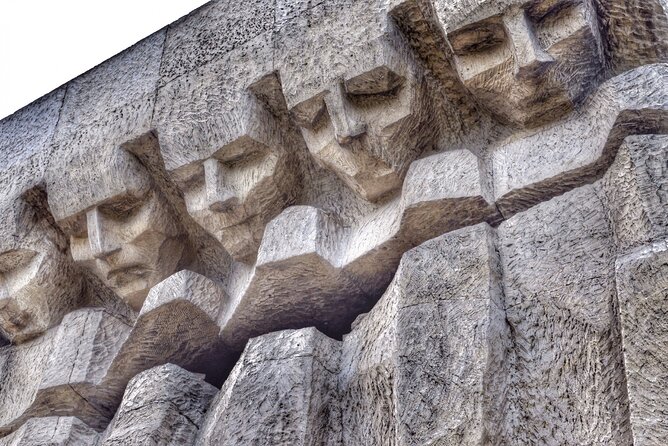
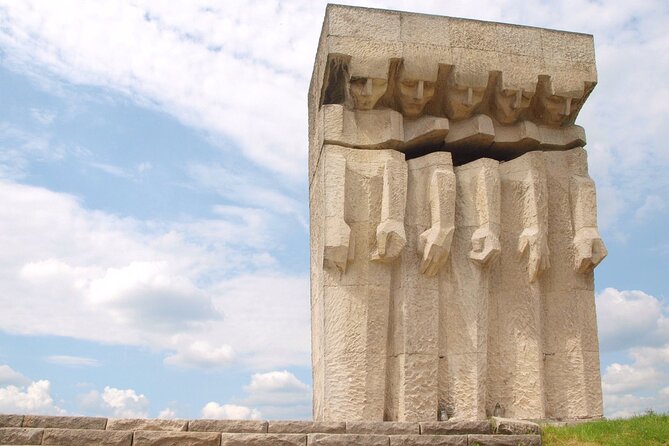
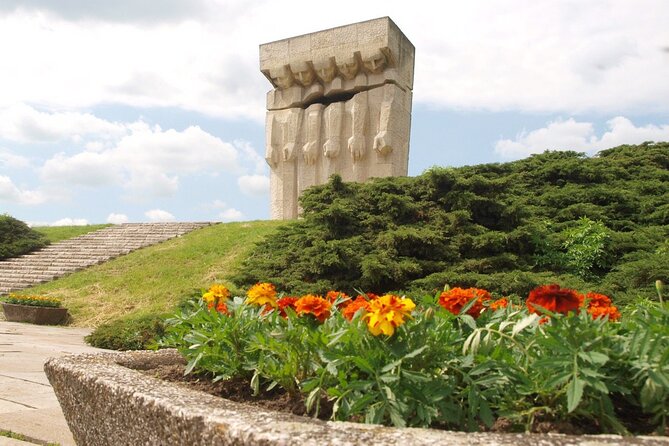
The core of the tour is the visit to the former Płaszów concentration camp area: Konzentrationslager Plaszow bei Krakau. Today, much of it reads as a wild, uneven outdoor space. Until recently, it didn’t clearly signal its wartime history.
That’s exactly why a guided visit is the right format. Without explanation, an open area can feel like just… land. With the right context, it becomes a map of suffering: the camp’s purpose, how it functioned, and how the surrounding area ties back to Kraków’s WWII reality.
This stop runs about an hour and includes the guided walk through the site. You don’t need to bring special gear beyond basics. Still, the ground can be irregular, so plan for slower steps. If you’re prone to knee or ankle issues, consider that before booking.
The 12-metre Ghetto wall fragment and the 1983 plaque
After the camp visit, you pass by one of Kraków’s most concrete reminders of the Kraków Ghetto: the fragment of the original ghetto wall. It’s a 12-metre stretch, and it’s one of those rare pieces of evidence you can stand next to while your guide explains what happened nearby.
In 1983, a commemorative plaque was raised on or near the wall fragment. The text is in Hebrew and Polish. The message honors those who lived, suffered, and died under German torturers and marks the beginning of the final journey toward death camps.
Even if you’ve read Holocaust accounts before, seeing a wall remnant like this in the city—then hearing the explanation tied back to Kraków—creates a different kind of understanding. It makes the history feel less like a chapter and more like a geography you can point to.
Guide quality: context that makes the walk click
A tour like this lives or dies on the guide. The good news here is that you’ll be with someone who can connect what you’re seeing to what it meant.
I like how this experience is set up around explanation, not just movement. Your guide is happy to show you around, give the information you need, and keep the story coherent from start to finish. If you want to understand how Kraków’s Holocaust story fits together—rather than memorizing dates—this format helps.
One detail I found especially useful is that some guides go beyond the history notes and help with practical city stuff too. For example, one guide named Olga has been described as very prepared and kind, including helping the group with tram tickets. That’s the kind of small support that makes it easier to stay focused during an emotionally heavy visit.
Group size and how it affects your experience
The group cap is 25 people. That’s an important number because it keeps things from turning into a loud, fast-moving herd.
In at least one recent experience, the group was extremely small—just three people. That kind of size can make questions easier and can keep the pace thoughtful. You’re more likely to get a clear explanation instead of a general overview.
Even if your group ends up larger, the tour’s duration is around two hours total, so you won’t be stuck for half a day. You’ll still get a structured walk, with time spent where it matters most.
Price and value: what $30.01 buys you
At $30.01 per person for about two hours, this isn’t a cheap add-on. It also isn’t overpriced for what you get—especially when you compare it to the cost of an audio guide plus your own research plus the time lost figuring out where to stand.
A big value point is that the main camp stop lists an admission ticket free component. So you’re paying primarily for guided context, not an entry fee.
You also get an English-language experience and a mobile ticket. That may sound small, but it matters on a day when you’re also managing transit. If you’re trying to stitch together a history day in Kraków with other stops, a mobile ticket reduces friction.
Also note the booking timing. On average, this tends to be booked about 29 days in advance. That’s a sign the itinerary is in demand—so plan ahead instead of waiting.
Practical tips before you go
A few things can help you enjoy this more and feel safer in the physical reality of the site.
First, pack for outdoor walking. This isn’t described as a paved, museum walkway. It’s an uneven area, and parts of the route are outside.
Second, consider how you’ll move after the tour. The meeting and ending points are different, and the end location is tied to a bus stop on Kamienskiego street. If you’re grabbing dinner or continuing to another attraction, plan your next step around public transit.
Third, bring your questions. This is one of those visits where names, places, and cause-and-effect details matter. If something feels confusing—like how a post-war site became a memorial space—this guide-led format is built to address that.
Who should book this Kraków-Płaszów tour
This works best if you want local history in Kraków, not just a day-trip mindset. If you’re curious about how the Holocaust played out across neighborhoods, and you like learning from a guide who explains more than the headline facts, you’ll probably appreciate the flow.
It’s also a good fit for people who want a manageable time commitment. At roughly two hours, it’s easier to place into a sightseeing schedule than longer, more complex tours.
If you have mobility limitations, take the uneven-ground note seriously. The tour states that most people can participate, but the physical conditions are still something you’ll feel underfoot.
Should you book this tour?
I’d recommend booking this one if you want Kraków’s Holocaust story grounded in real places. The combination of Ghetto Heroes Square, the camp visit area, and the 12-metre ghetto wall fragment gives you a chain of locations that makes the narrative easier to remember.
Book it especially if you care about seeing what’s right next to the city’s normal tourist routes. This tour pulls you toward the quieter parts of Kraków where history is still present, even when it doesn’t look obvious at first glance.
Skip it only if you know you can’t manage uneven outdoor walking or you’re looking for an all-indoor, sit-down format. For everyone else who wants an honest, guide-led local history experience, this is a strong choice.
FAQ
FAQ
How long is the Guided Tour in Kraków-Płaszów?
The tour lasts about 2 hours.
Is the tour offered in English?
Yes, it’s offered in English.
Where do I meet the guide, and where does the tour end?
You meet at Apteka pod Orłem, Plac Bohaterów Getta 18, and the tour ends at Henryka Kamieńskiego 57 near the bus stop on Kamienskiego street.
Is the admission ticket included for the Płaszów concentration camp stop?
The tour notes that the admission ticket for the main camp visit is free.
What group size should I expect?
The activity has a maximum of 25 travelers.
Do I get a mobile ticket?
Yes, the tour includes a mobile ticket.
Can I cancel for free?
Yes. You can cancel up to 24 hours in advance for a full refund.
More Tours in Krakow
More Tour Reviews in Krakow
Krakow in Wartime: More Reviews
Just added: fresh Krakow reviews
Schindler's Factory & WWII Tours, compared.
 ★ 4.3Schindler’s Factory Ticket and Guided Tour OptionFrom $254,306 reviews
 ★ 4.5Schindler’s Factory Tour with Entrance TicketFrom $493,182 reviews
 ★ 4.4Schindler’s Factory Skip-the-Line TicketFrom $253,105 reviews
★ 4.6Schindler’s Factory Tour with Entrance TicketFrom $401,737 reviews
★ 4.4Schindler’s Factory Skip-the-Line TicketFrom $253,105 reviews
★ 4.6Schindler’s Factory Tour with Entrance TicketFrom $401,737 reviews
 ★ 4.5Schindler’s Factory in Krakow: Guided Tour & Skip the Line TicketFrom $351,714 reviews
 ★ 4.7Schindler’s Factory & Ghetto Guided TourFrom $571,694 reviews
 ★ 4.3Schindler’s Factory Ticket with Guided Tour OptionFrom $421,485 reviews
 ★ 4.0Krakow Schindler’s Factory Guided Tour with Admission TicketFrom $351,156 reviews
Browse the lists this tour appears in