
REVIEW · SCHINDLER'S FACTORY & WWII TOURS
Guided Tour of Plaszow Concentration Camp, Kraków
Silence lands fast at Plaszow Concentration Camp. What makes this tour worth your time is the way a licensed guide turns scattered traces into a clear picture, and then builds in quiet moments at key memorials. I especially like the reflection-first pacing and the stop-by-stop focus on how Plaszow ties into Oskar Schindler and even Schindler’s List filming locations.
The grounds are open, and that changes the feeling. Without preserved buildings filling the frame, you get space to think and remember, not a museum-style show. One drawback: because there are few remaining structures, the emotional weight can feel more intense, so it helps if you’re ready for a serious, slow-minded experience.
In This Review
- Key Things to Know Before You Go
- Plaszow: Why This Tour Feels Different Than a “Museum Walk”
- Starting Point and the Simple Transport Plan
- Rebuilding the Camp from the Grey House and Pre-Burial Hall
- Following Traces of the Jewish Cemeteries
- Roll-Call Square: Where Organization Meets Human Loss
- Paths Paved with Gravestone Fragments
- Monument of Torn-Out Hearts: Remembering Beyond Facts
- Schindler, Work Permits, and Schindler’s List Connections
- Who This Tour Suits Best (and Who Should Consider Another Option)
- Price and Value: Why $29 Makes Sense for This Format
- Practical Tips to Get the Most Out of Your Visit
- Should You Book the Plaszow Guided Tour?
- FAQ
- How long is the Guided Tour of Plaszow Concentration Camp?
- What does the tour cost?
- Is the tour offered in English?
- What’s included with the ticket?
- Where do I meet the guide?
- Is the tour wheelchair accessible?
- How early should I arrive?
- What happens if I’m late?
- Can I cancel or change my plan?
Key Things to Know Before You Go
- Grey House and pre-burial hall ruins are used to rebuild the camp’s daily logic from what remains
- Memorial stops like the Monument of Torn-Out Hearts shift the focus from facts to remembrance
- Schindler’s Plaszow connection is explained in a way that makes his later rescue efforts make sense
- Roll-call square and paths with gravestone fragments help you grasp how prisoners were processed and controlled
- A route paced for reflection means you’ll walk, stop, and think more than you’ll rush
- Small-group style time can mean your guide has room for questions, not just a script
More of Krakow under the wartime occupation
- Krakow: Schindler’s Factory Ticket and Guided Tour Option
★ 4.3 · 4,306 reviews - Krakow: Schindler’s Factory Tour with Entrance Ticket
★ 4.5 · 3,182 reviews - Krakow: Schindler’s Factory Skip-the-Line Ticket
★ 4.4 · 3,105 reviews
Plaszow: Why This Tour Feels Different Than a “Museum Walk”
Plaszow Concentration Camp is one of those places where the details matter, because the site doesn’t give you easy shortcuts. You’re not wandering through intact barracks and polished exhibits. Instead, you’re walking through a memory landscape where meaning lives in mass graves, memorial markers, and the careful way your guide connects each location.
That’s why I like this format. A good guided visit here does two jobs at once. First, it gives you the timeline: Nazi German occupiers established the camp in October 1942 on the grounds of two Jewish cemeteries in Kraków. It began as a forced-labor camp for Jews from the liquidated Kraków Ghetto, and in July 1943 it added a penal-labor section for Poles. By January 1944 it was redesignated as a concentration camp, and it later functioned as a transit point for Hungarian Jews being sent to Auschwitz.
Second, the guide helps you understand how the camp was organized into living, hospital, administrative, and industrial sections. With so few preserved structures, the guide’s job becomes translation. You’re learning how the place worked, not just what it looked like once. And you’re doing it with a route paced for reflection, not speed.
If you want a tour that moves fast, this isn’t it. If you want a tour that helps you see what happened—and then honor the victims with time to think—this style fits well.
Starting Point and the Simple Transport Plan
This tour is built around a short, direct plan for getting you there. You’ll meet the guide by looking for the excursions.city sign. The experience includes a single tram ticket, which is handy because it removes one small piece of decision-making on the day.
Because the duration is 2 hours, you should treat this as a focused visit rather than an all-day sightseeing plan. You’ll likely leave with a clearer understanding of Plaszow’s role in the Holocaust, plus a sharper sense of why the site is remembered the way it is.
One practical thing to plan for: you should arrive 10 minutes early. Once the group has departed, latecomers can’t join and tickets can’t be refunded. It’s a short window, so build in a buffer.
Rebuilding the Camp from the Grey House and Pre-Burial Hall
The tour’s structure helps you get oriented fast. Your guide pieces together Plaszow from what remains, moving you through major areas one by one: the Grey House, the ruins of the pre-burial hall, traces of the Jewish cemeteries, the roll-call square, and paths once paved with fragments of gravestones.
The Grey House is one of the points where understanding “systems” becomes possible. Your guide uses it to explain the camp’s administrative and operational side—how a place of terror also functioned like an organized machine. Even when you can’t rely on intact buildings, you can still learn where decisions were made and how day-to-day routines were controlled.
Then you’ll encounter the ruins of the pre-burial hall. This is one of those stops where the lack of remaining structure doesn’t weaken the meaning. It strengthens it. You’re reminded that the camp’s violence wasn’t a one-time event; it was part of ongoing processes. The guide’s pacing matters here. You don’t just hear facts—you get time to let them settle.
If you’re the type of traveler who likes a clear narrative, you’ll appreciate how the guide threads these spots together. If you tend to find emotional sites hard, give yourself permission to slow down and take breaks when you need them.
A few more Krakow trips worth putting on the shortlist
- Krakow: Auschwitz-Birkenau Guided Tour with Pickup & Lunch★ 4.5 · 9,800 reviews
- Krakow: Auschwitz-Birkenau Guided Tour Pickup/Lunch Options★ 4.5 · 9,057 reviews
- Krakow: Auschwitz-Birkenau and Salt Mine Guided Tour★ 4.7 · 9,020 reviews
- Krakow to Auschwitz Birkenau Guided Tour with Transfer and Ticket★ 5.0 · 8,197 reviews
Following Traces of the Jewish Cemeteries
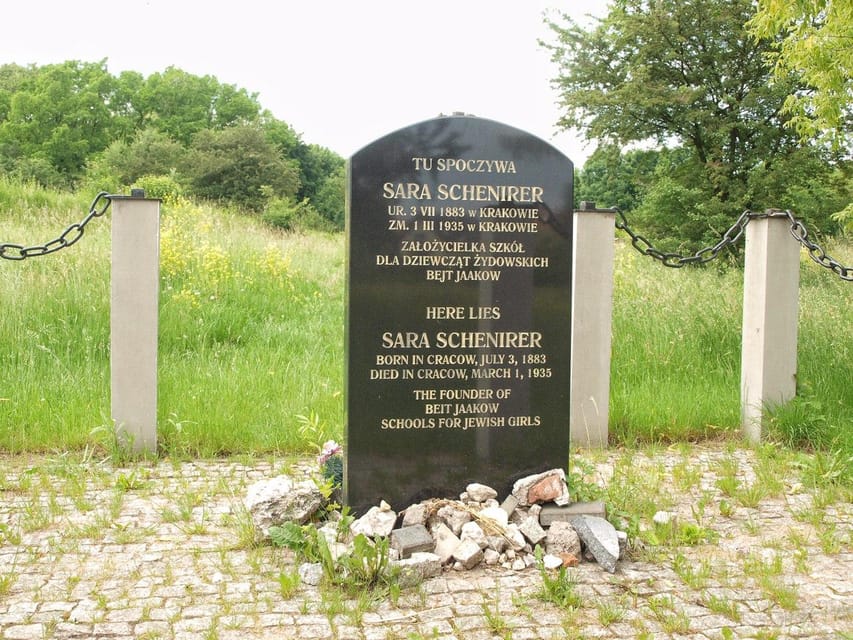
Plaszow was established on the grounds of two Jewish cemeteries. That alone is a detail that changes how you read the whole site. It means you’re not just seeing an empty plot of land after the war; you’re looking at places where burial, memory, and forced displacement collided.
On this walk, you’ll see traces connected to the cemeteries. Your guide helps you understand why those traces matter, not as spooky scenery, but as evidence of how the Nazis treated Jewish life and death as something they could erase and repurpose.
This is also where the tour’s reflection-first approach becomes more than a style choice. When the site is partly “missing,” your attention becomes the missing piece. Your guide encourages you to look carefully, then pause at memorial markers that carry the story forward.
Roll-Call Square: Where Organization Meets Human Loss
Every camp has a place where people were counted, processed, and controlled. Here, you’ll visit the roll-call square. Your guide explains how the camp’s routines worked, including the way prisoners were organized within different sections.
It’s hard to describe the experience without sounding dramatic, but the mechanics are what stay with you. You come away understanding that cruelty wasn’t only direct violence. It was routine: the repeated procedures, the enforced waiting, the structure of power.
What I appreciate about this tour is that it doesn’t treat the roll-call square as a generic symbol. It’s tied into the larger explanation of how Plaszow functioned as a labor camp, then shifted to concentration and transit roles.
Paths Paved with Gravestone Fragments
One of the most sobering details you’ll learn is that some paths in the camp area were once paved with fragments of gravestones. This is the kind of fact that lands differently when you’re physically on the ground where it happened.
Your guide connects these fragments to the broader story: what the Nazis did to Jewish cemeteries, how they used what they took, and how they erased identity while forcing people into forced labor and transit systems.
This stop is also a good moment to check your own pace. Because there’s no dense collection of exhibits, you might find yourself absorbing with your eyes rather than reading panels. If you like information you can hold onto, ask questions. The tour is paced so you can do that without derailing the flow.
Monument of Torn-Out Hearts: Remembering Beyond Facts
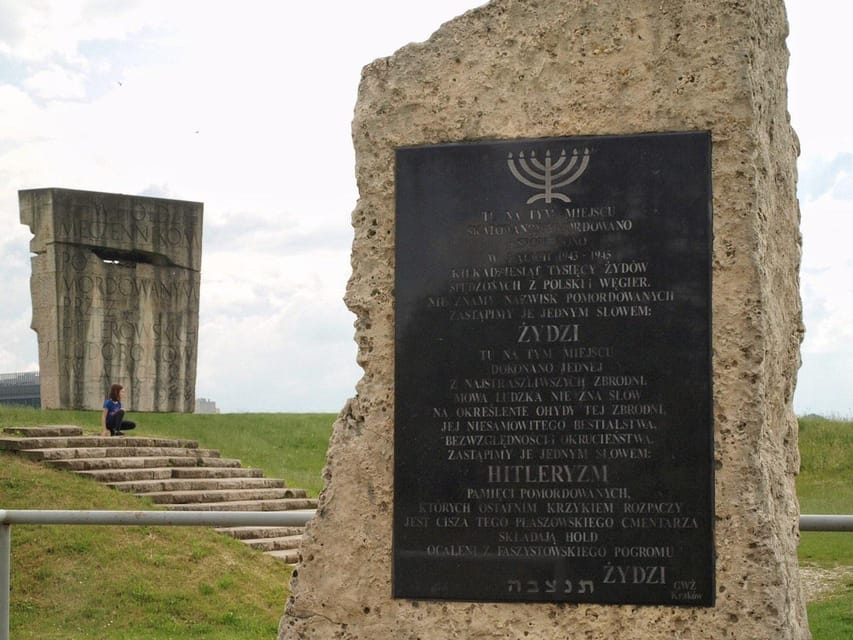
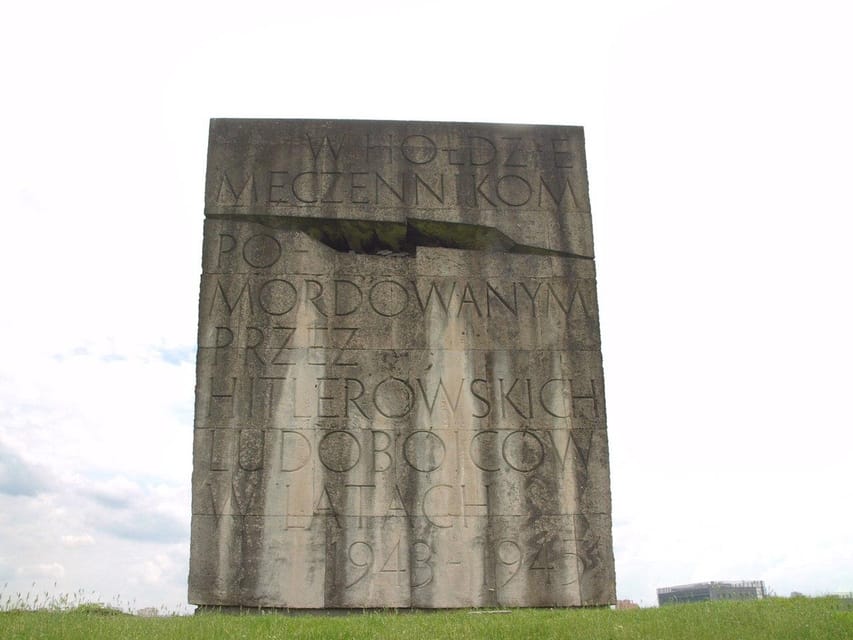
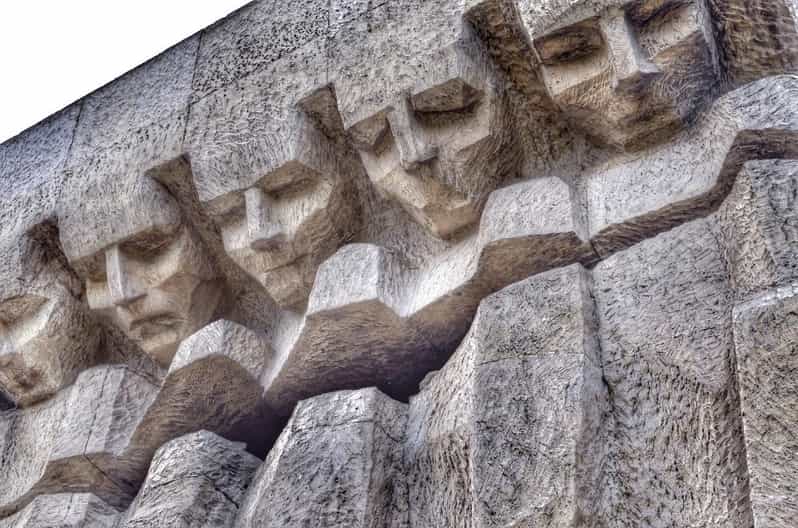
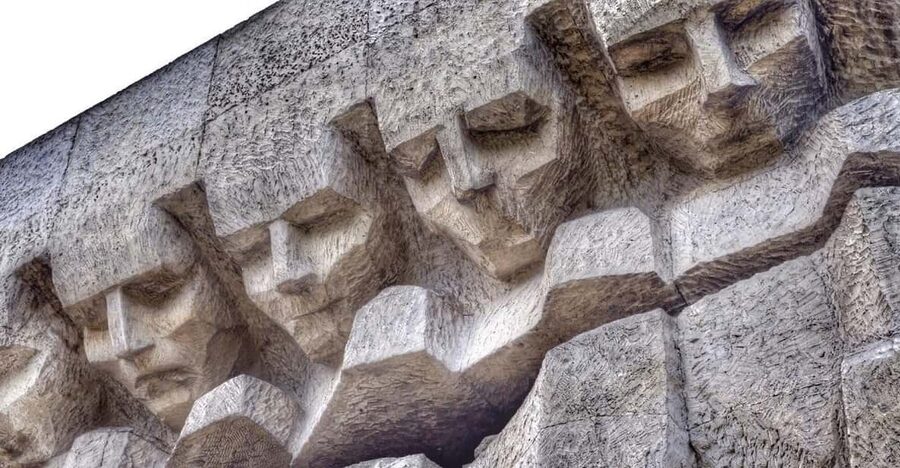
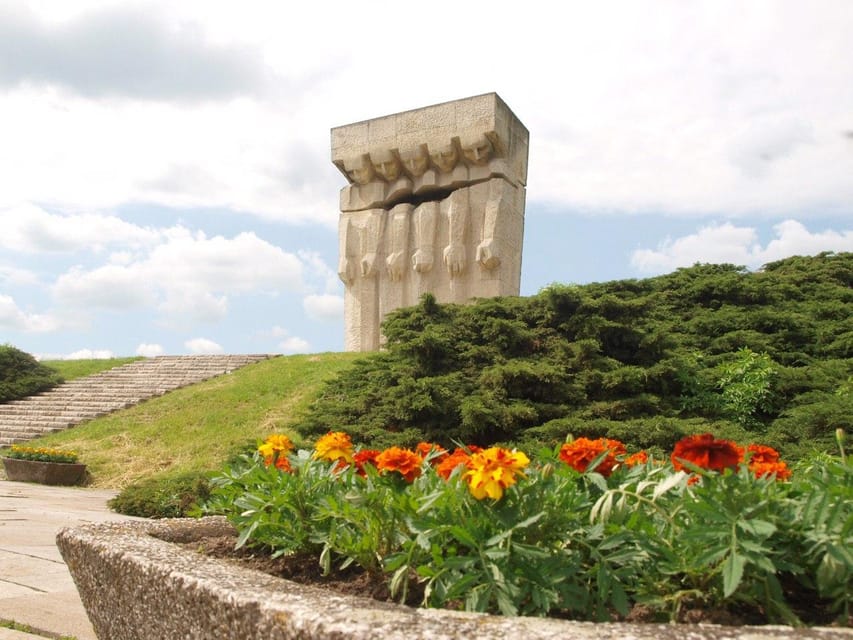
Plaszow offers fewer preserved structures than some other Holocaust sites, so memorials matter even more. The tour includes a stop at the Monument of Torn-Out Hearts, one of the major places where remembrance becomes central.
This isn’t a quick photo stop. Your guide builds in reflection at major memorials, and the goal is clear: you’re honoring victims, not collecting sights.
The tone here can help you process what you just learned about numbers and functions. More than 35,000 people were imprisoned at Plaszow over its existence, and around 6,000 were murdered. Executions took place at several sites within the camp, and today mass graves and memorials mark parts of what occurred.
Those figures can feel abstract on paper. At the monument, they start to connect back to human presence—people who were counted as units, robbed of agency, and then remembered through memorial design.
Schindler, Work Permits, and Schindler’s List Connections
If you’re coming to Kraków with an interest in Schindler’s List, this tour gives you more than name recognition. The camp story is inseparable from Oskar Schindler, and your guide makes that link clear and logical.
Here’s the key thread you’ll learn:
- Through Schindler’s enamelware enterprise, he obtained work permits for Jewish prisoners registered through Plaszow.
- Later, he organized their transfer to his wartime plant in Brünnlitz, saving over a thousand lives.
This matters because it connects “survival” to specific choices and systems. Schindler didn’t magically erase danger. He used the mechanisms available at the time to move people away from transports.
Your guide also covers filming locations from Schindler’s List. That can be surprisingly useful because it helps you separate movie memory from historical grounding. You’re not just thinking about actors and scenes. You’re standing where the story was shaped—and learning what parts of the narrative reflect real relationships between camps, paperwork, labor, and transport.
If you like tours where story and place overlap, this is the part you’ll likely talk about most on the tram back.
Who This Tour Suits Best (and Who Should Consider Another Option)
This is a strong match if you:
- Want a serious, guided explanation rather than a self-paced route
- Appreciate time for questions and answers
- Care about context that ties Plaszow to Kraków’s wartime history and Schindler’s role
- Prefer a paced walk designed for reflection
It may be less ideal if you:
- Need a lot of preserved architecture to feel “engaged”
- Struggle with emotional sites where there are few visual anchors
- Want a fast checklist of highlights
Also, the tour is English only. The group tours are only in one language, so plan accordingly.
Price and Value: Why $29 Makes Sense for This Format
At about $29 per person for a 2-hour guided visit, this falls in a reasonable range for a licensed guide at a site that requires careful interpretation. What you’re paying for isn’t just access to a place. You’re paying for explanation: the guide turns minimal physical remains into a coherent timeline and organization map.
Two inclusions improve the value for many people:
- A licensed guide doing the heavy lifting in context
- A single tram ticket included in the experience
When you factor in the time (2 hours), the focus (reflection and memorials), and the structure (Grey House, pre-burial hall ruins, roll-call square, cemeteries traces, gravestone fragments, Monument of Torn-Out Hearts, and Schindler’s connection), the price feels more like a fair exchange than a “tour tax.”
Practical Tips to Get the Most Out of Your Visit
Because Plaszow is a walking tour through open areas, your comfort matters.
- Dress for weather. You’ll be outside for the full experience.
- Wear shoes you can stand in for a while. The route includes several stops where you’ll pause and look.
- Bring your questions. A number of visitors were impressed by how much time the guide took to answer.
- Mentally switch modes. This isn’t about ticking off sights. It’s about understanding and honoring.
If you want to make your day flow, consider pairing it with quieter Kraków moments afterward. The contrast works: you’ll leave Plaszow with details in your head, and you’ll need calmer scenery to reset.
Should You Book the Plaszow Guided Tour?
Yes, you should book this tour if you want a respectful, clear guide through one of the most difficult Holocaust sites in Poland’s history. The biggest strengths are the guide’s ability to explain how the camp operated from the remains you can actually see, the memorial-focused stops that push remembrance to the front, and the way the tour ties Plaszow to Oskar Schindler and even Schindler’s List filming locations.
If you’re specifically looking for preserved buildings and a mostly visual experience, you might find the physical remains limited. But if you can handle a serious visit with space for reflection, this is the kind of tour that helps you understand what you’re witnessing.
FAQ
How long is the Guided Tour of Plaszow Concentration Camp?
The tour lasts 2 hours.
What does the tour cost?
The price is $29 per person.
Is the tour offered in English?
Yes. The live tour guide is English, and group tours are only in one language.
What’s included with the ticket?
You get a licensed guide and one tram ticket.
Where do I meet the guide?
Meet at the start point and look for the guide with the excursions.city sign.
Is the tour wheelchair accessible?
Yes, the tour is wheelchair accessible.
How early should I arrive?
Please arrive 10 minutes before the tour begins.
What happens if I’m late?
Once the group has departed, latecomers can’t join and tickets can’t be refunded.
Can I cancel or change my plan?
You can cancel up to 24 hours in advance for a full refund, and you can reserve now & pay later to keep plans flexible.
More Tours in Krakow
More Tour Reviews in Krakow
Krakow in Wartime: More Reviews
Just added: fresh Krakow reviews
Schindler's Factory & WWII Tours, compared.
 ★ 4.3Schindler’s Factory Ticket and Guided Tour OptionFrom $254,306 reviews
 ★ 4.5Schindler’s Factory Tour with Entrance TicketFrom $493,182 reviews
 ★ 4.4Schindler’s Factory Skip-the-Line TicketFrom $253,105 reviews
★ 4.6Schindler’s Factory Tour with Entrance TicketFrom $401,737 reviews
★ 4.4Schindler’s Factory Skip-the-Line TicketFrom $253,105 reviews
★ 4.6Schindler’s Factory Tour with Entrance TicketFrom $401,737 reviews
 ★ 4.5Schindler’s Factory in Krakow: Guided Tour & Skip the Line TicketFrom $351,714 reviews
 ★ 4.7Schindler’s Factory & Ghetto Guided TourFrom $571,694 reviews
 ★ 4.3Schindler’s Factory Ticket with Guided Tour OptionFrom $421,485 reviews
 ★ 4.0Krakow Schindler’s Factory Guided Tour with Admission TicketFrom $351,156 reviews
Browse the lists this tour appears in