
REVIEW · KAZIMIERZ & JEWISH HERITAGE TOURS
Kazimierz District, the Wawel Hill and Cracow Old Town
Krakow rewards the slow pace. This private 4-hour walk strings together the Jewish quarter of Kazimierz, the sights on Wawel Hill, and the big hits of Old Town, with a guide who keeps the story clear and the timing sane. I especially like the whisper system, which helps you catch details even when the streets get crowded.
The second big win is the route itself: you’re not just checking monuments. You’re walking the same streets that shaped Krakow’s religious life, royal power, and university learning, with context for what you’re seeing at each stop. The only real drawback is that it’s still a walking tour, and it’s not recommended for travelers with impaired mobility, plus some interiors cost extra.
You’ll meet at Szeroka 40 at 9:30 am and finish near the Barbican, so you can keep the day moving afterward. It’s also a good fit if you like groups kept small enough to actually ask questions, since it’s your group only.
In This Review
- Key highlights worth planning around
- Why this Krakow route works better than doing it piece by piece
- Kazimierz at the start: Remuh Synagogue and the cemetery option
- Kazimierz streets: Isaac’s Synagogue and the Schindler’s List courtyard
- Wawel Hill: Royal Castle patio views without the pressure
- Wawel Cathedral optional entry: coronations and royal burial
- Franciscan basilica and Wyspiański glass: old church meets modern art
- University quarter: Collegium Novum and Jagiellonian University on the same walk
- Rynek Main Market Square and the Cloth Hall: medieval trading logic
- St. Mary’s Basilica and the Hejnal: time it right
- Ending at the Kraków Barbican and Saint Florian’s Gate
- Price and value: $65 for a high-signal route
- Who should book this tour (and who might not)
- A quick practical plan for your day
- Should you book this Krakow Kazimierz and Old Town tour?
- FAQ
- How long is the tour?
- Where does the tour start and end?
- What time does the tour begin?
- What is included in the price?
- Are admission tickets included for places like Remuh Synagogue and Wawel Cathedral?
- Is the tour private?
- Is it good for people who have trouble with walking?
- Is bottled water or drinks included?
- When will I get confirmation after booking?
- Can I cancel for a full refund?
Key highlights worth planning around
- Whisper system means you don’t miss the small details on busy streets
- Kazimierz + Jewish cemetery option makes the Jewish history feel personal, not museum-y
- Schindler’s List courtyard is right on the route, explained in context
- Wawel Royal Castle patio and Renaissance craft are the type of visuals you remember
- Hejnal at St. Mary’s Tower is a clock-check moment you’ll want to time right
Deeper into Kazimierz and its Jewish heritage
- Krakow: Schindler’s Factory & Ghetto Guided Tour
★ 4.7 · 1,694 reviews - Krakow: Jewish Quarter and Former Ghetto Tour
★ 4.9 · 1,441 reviews - Krakow: Bike Tour of Old Town, Jewish Quarter and the Ghetto
★ 4.9 · 1,155 reviews
Why this Krakow route works better than doing it piece by piece
Krakow can feel like three cities stacked on top of each other: Kazimierz (the Jewish district), Wawel (royal Krakow), and the medieval core around Rynek (trader Krakow). This tour smartly links all three in about four hours, so the ideas start clicking as you walk.
The big value is that you’re not just looking at buildings. You’re learning what each place was for. Kazimierz explains community and belief. Wawel explains power and ceremony. The Old Town stops explain how ordinary life ran on a medieval grid.
Also, the guide setup helps. The whisper system is included, so even if you’re walking near groups, you’ll still hear the key points instead of constantly playing catch-up.
Kazimierz at the start: Remuh Synagogue and the cemetery option
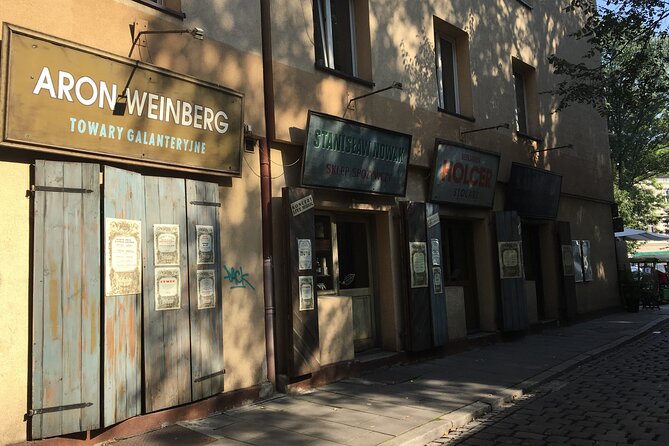
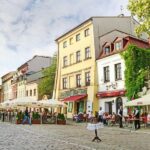
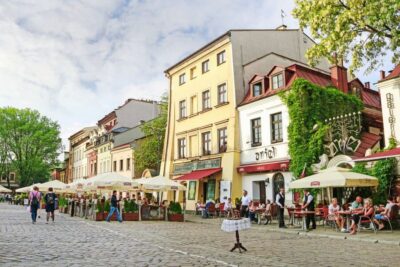
You begin in Kazimierz, on Szeroka Street, which has long been a center for Jewish cultural and religious life. This is where the day’s tone shifts from general sightseeing to something more reflective.
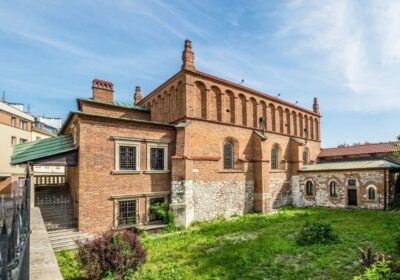
The optional stop is Remuh Synagogue (Synagoga Remuh) and its adjacent cemetery. You’re looking at a 16th-century synagogue and one of the oldest Jewish cemeteries in Europe. This isn’t a quick photo spot. The cemetery is tied to memory—specifically the resting place of notable Jewish sages, including Rabbi Moses and Natan Spira. If you’re interested in Jewish history in Krakow, this is the moment you’ll likely think about later that night.
Heads-up: the synagogue admission ticket is not included, so plan on paying separately if you choose to enter.
Kazimierz streets: Isaac’s Synagogue and the Schindler’s List courtyard
From there, you’ll walk through Kazimierz in a way that keeps famous landmarks connected to their neighborhood. You’ll pass near Isaac’s Synagogue, then cross Nowy Square.
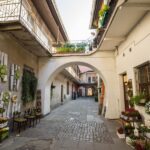
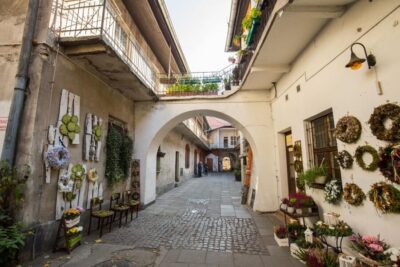
One stop that many people come to Krakow specifically for is the patio connected to the film Schindler’s List. The tour routes you past the famous courtyard between Józefa and Meiselsa streets, and you’ll see it as part of the district rather than as an isolated movie reference. That’s how it feels more real: the streets keep their identity even if your reason for stopping is pop culture.
Good detail: this section also helps you orient yourself before moving toward Wawel, so you’re not just jumping between distant points on a map.
More of the castle on the hill: other Wawel visits
- Krakow: Wawel Castle & Cathedral Guided Tour★ 4.7 · 2,111 reviews
- Old Town Krakow & Wawel Castle Walking Tour★ 5.0 · 1,508 reviews
- Krakow: Wawel Royal Hill with Optional Castle and Cathedral★ 4.2 · 1,220 reviews
- Krakow: Wawel Castle and Cathedral Guided Tour★ 4.6 · 595 reviews
Wawel Hill: Royal Castle patio views without the pressure
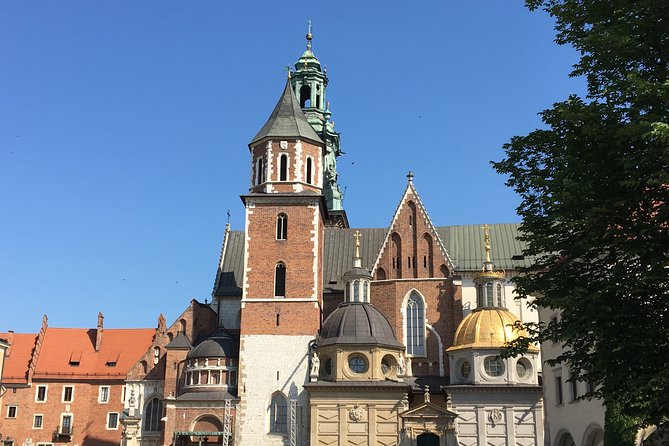
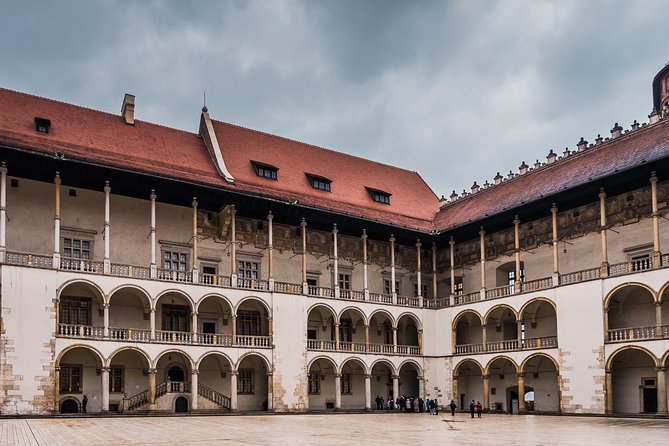
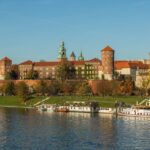
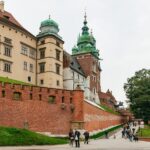
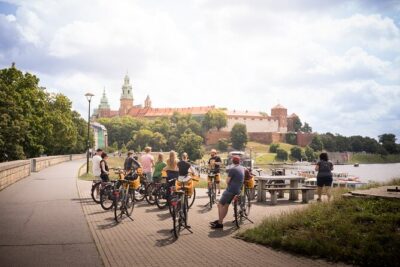
Then it’s uphill to Wawel Hill, where the mood changes quickly. You get to admire the Royal Castle’s patio from the 16th century. Even if you don’t step fully inside, the setting tells you what Wawel was built for.
The tour highlights the Renaissance work connected to craftsmen Francesco Fiorentino and Bartolomeo Berrecci. It’s the kind of architectural detail you’ll appreciate more when someone points out what you’re actually looking at—ornament, proportion, and how Renaissance design shows up in Krakow’s royal setting.
This stop is listed as short, about 15 minutes, and that makes sense. You’re catching the atmosphere and the key visual cues, not trying to solve the whole castle in one morning.
Wawel Cathedral optional entry: coronations and royal burial
Next comes Wawel Cathedral, where you can optionally enter. This is the place tied to Saint Stanislas and Saint Venceslas and it has over a thousand years of recorded importance.
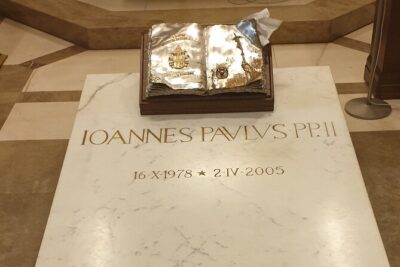
The big idea here is political and ceremonial: it was the coronation site for Polish kings and also served as their burial place. Even without going inside, you’ll understand why people treat Wawel like a symbol, not just a building.
If you choose to enter, remember the cathedral admission ticket is not included.
Franciscan basilica and Wyspiański glass: old church meets modern art
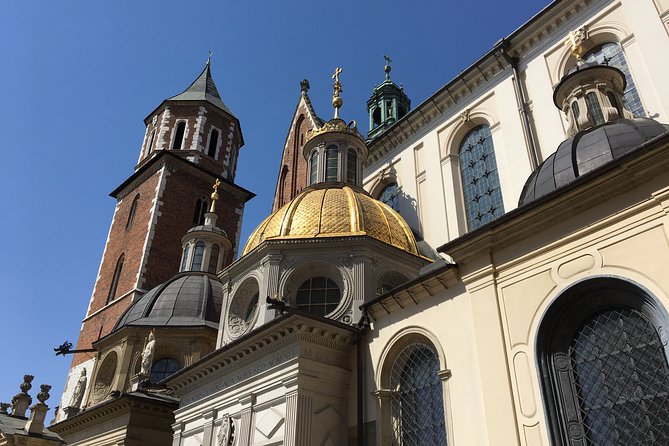
After Wawel, you walk down toward some of the oldest streets in Krakow—Kanonicza and Grodzka—and you reach the Franciscan basilica of the friars.
This part is worth it because it’s not just medieval stone. You’ll admire the polychromy and also modernist stained glass windows designed by Stanislas Wyspiański. That mix can feel surprising in a great way. It reminds you that Krakow isn’t only a set of old layers; it’s also a city that keeps producing artists and ideas.
The basilica stop is brief, around 15 minutes, and the tour is focused on the main visuals and what to notice. If stained glass and painted church interiors are your thing, you’ll probably wish it lasted longer, but it still gives you a solid introduction.
University quarter: Collegium Novum and Jagiellonian University on the same walk
Then you shift from sacred Krakow to academic Krakow. First is Collegium Novum, a major 19th-century university building and the seat of the rector of Jagiellonian University.
From there, you go to the medieval core of the school: the former Cracow Academy, funded in 1364 by King Casimir the Great, which later becomes Jagiellonian University. You’ll get to see Collegium Maius, described as the oldest university building from the 15th century.
One of the most practical reasons to include this: it connects Krakow to science. The tour notes that Nicolaus Copernicus studied here. That’s a quick fact in a sentence, but it lands harder once you’re standing on the kind of campus buildings where scholarship was physically housed.
Rynek Main Market Square and the Cloth Hall: medieval trading logic
By the time you hit Main Market Square (Rynek), you’re in the largest medieval square in Europe. It dates back to 1257 and was traced after a Mongolian invasion in 1241 that ravaged Krakow.
This isn’t trivia for trivia’s sake. It helps you read the space. A town square this big doesn’t exist for decoration. It exists because crowds, trading, announcements, and daily life were meant to happen here.
You’ll also enter the Cloth Hall, which is an old textile market dating back to the 13th century. The building was remodeled in the 16th century thanks to Santi Gucci, a Florentine artist. When you’re inside, you’ll feel the layers: medieval commerce plus Renaissance upgrades, all in one structure.
St. Mary’s Basilica and the Hejnal: time it right
The Old Town stretch includes St. Mary’s Basilica, and this part is optional, with admission not included. The tour gives you a clear reason to think about the basilica as bourgeois Krakow’s spiritual home.
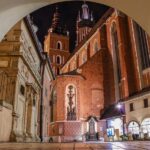
Inside, the highlight is the wooden High Altar from the 15th century, carved in linden wood by the German artist Veit Stoss. It’s a Gothic masterpiece with scenes from the lives of Virgin Mary and Jesus Christ.
Right next door is plac Mariacki 5, and you’ll listen to the famous Hejnał. The old melody is played each hour four times from the highest tower of the church. That’s a built-in rhythm-check for your visit. If you’re the type who likes small traditions with real timing, plan your posture around listening.
Ending at the Kraków Barbican and Saint Florian’s Gate
To close, you walk down Floriańska Street to the city walls area, finishing by Saint Florian’s Gate and the adjacent Barbican. These date back to the 14th century.
This ending works because it gives you a different kind of Krakow. You get religious spaces, royal power, and education earlier. Now you get defense and city boundaries. It’s a good last visual before you break off for lunch, a museum stop, or a slower stroll on your own.
Price and value: $65 for a high-signal route
At about $65 for roughly four hours, this tour is priced like a focused guided experience, not a long bus day. The key value comes from what’s included versus what costs extra.
Included:
- Whisper system for better hearing and clearer explanations
- A route that hits many major sights within walking distance
- Most stops are marked as admission ticket free
Not included:
- Tickets for the optional indoor entries (like Remuh Synagogue, Wawel Cathedral, and St. Mary’s Basilica)
- Simple extras like bottled water and coffee/tea or soda
So what should you do with that? If you care about Jewish history and Polish royal/cathedral interiors, budget extra for those optional tickets. If you only want exteriors and quick context, you can keep costs tight and still get plenty from the walk.
Who should book this tour (and who might not)
This fits best if you:
- Want Krakow essentials in one connected route
- Like story-driven sightseeing, especially around Jewish heritage and Krakow’s institutions
- Appreciate hearing details clearly (the whisper system is a big help)
It might not fit if you:
- Need lots of sitting or step-free walking (it’s not recommended for impaired mobility)
- Want a fully museum-style day with long indoor stays (the timing favors short, high-impact stops)
- Prefer total freedom to choose every single entry on the spot (a few interiors are optional, but the tour plan still drives the flow)
A quick practical plan for your day
- Bring something for your feet. Even if stops are short, the total walking adds up across Kazimierz, Wawel Hill, and the Old Town core.
- If you’re choosing optional entrances (especially Remuh and St. Mary’s), decide early. That keeps the day from feeling like a last-minute scramble.
- Start at 9:30 am. You’ll have a better chance to catch the Hejnal timing and avoid a late-day rush.
Should you book this Krakow Kazimierz and Old Town tour?
If you want a guided walk that connects Kazimierz, Wawel, and Krakow’s central square into one clear story, this is an easy yes. The biggest reasons are practical: the included whisper system, the short-and-sweet pacing that still hits the key places, and the fact that you see several top sights without paying entry fees for every stop.
If you’re the kind of traveler who likes to linger for hours in museums, you might prefer a longer-format day. But for a one-pass plan that hits the major landmarks and gives you the context to understand them, this tour is strong value.
FAQ
How long is the tour?
The tour lasts about 4 hours.
Where does the tour start and end?
It starts at Szeroka 40, 31-053 Kraków, Poland. It ends at Kraków Barbican, Basztowa 30-547 Kraków, Poland, close to the Barbican.
What time does the tour begin?
The start time is 9:30 am.
What is included in the price?
The tour includes a whisper system for a better experience during the visit. It also offers mobile ticket access and group discounts.
Are admission tickets included for places like Remuh Synagogue and Wawel Cathedral?
No. Admission ticket costs are listed as not included for Remuh Synagogue, Wawel Cathedral, and St. Mary’s Basilica. Other stops are marked as admission ticket free.
Is the tour private?
Yes. It is described as a private tour/activity, meaning only your group will participate.
Is it good for people who have trouble with walking?
It’s not recommended for travelers with impaired mobility.
Is bottled water or drinks included?
No. Bottled water and coffee/tea or soda/pop are listed as not included.
When will I get confirmation after booking?
Confirmation is received within 48 hours of booking, subject to availability.
Can I cancel for a full refund?
Yes, you can cancel for free. You must cancel at least 24 hours in advance for a full refund. If you cancel less than 24 hours before the experience start time, the amount paid will not be refunded.
More Around the Main Square


Wawel, a Few More Ways In
More of Jewish Kazimierz
Just added: fresh Krakow reviews
Kazimierz & Jewish Heritage Tours, compared.
 ★ 4.7Schindler’s Factory & Ghetto Guided TourFrom $571,694 reviews
 ★ 4.9Jewish Quarter and Former Ghetto TourFrom $191,441 reviews
 ★ 4.9Bike Tour of Old Town, Jewish Quarter and the GhettoFrom $371,155 reviews
 ★ 4.8Kazimierz Jewish Quarter Walking TourFrom $27571 reviews
 ★ 4.8Kazimierz, Schindler’s Factory & Ghetto Guided TourFrom $81460 reviews
 ★ 5.0Full Bike Tour – the Old Town, Jewish Qtr & the Ghetto NEW BIKESFrom $35437 reviews
 ★ 4.6Jewish Ghetto Walking TourFrom $11349 reviews
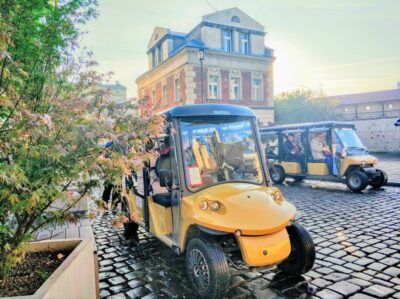 ★ 4.6Jewish Quarter and Ghetto Electric Golf Cart TourFrom $34348 reviews
Browse the lists this tour appears in