
REVIEW · KAZIMIERZ & JEWISH HERITAGE TOURS
Krakow: Jewish Ghetto Guided Tour
A single hour can feel like a whole chapter of history. This Krakow Jewish Ghetto Guided Tour walks through Podgórze with an expert guide who turns street corners into stories about families, survival, and moral courage. I especially love how you see the Chair Memorial and other ghetto landmarks while still hearing the human details, not just dates.
Two things consistently make this tour worth your time: a licensed guide who keeps the narration clear and grounded, and the route’s focus on everyday life under terror. You’ll also get that rare mix of facts plus context, with guides like Annetta and Chiara highlighted in past sessions for their careful explanations and willingness to answer questions. The main drawback is simple: it’s not an easy walk, and it may be emotionally heavy.
In This Review
- Key Things I’d Watch For (Before You Go)
- Walking Podgórze Like It’s Still Speaking
- Price and Value: Why $15 for 1 Hour Can Still Be a Big Deal
- The Route Start in Podgórze: Where the Ghetto Became a Trap
- Surviving Fragments of the Ghetto Wall: Small Pieces, Heavy Weight
- Ghetto Heroes Square and the Chair Memorial: The Stop That Stays With You
- Under the Eagle Pharmacy: When Rescue Looked Like Risk
- End Near Schindler’s Factory Site: Rescue Without the Ticket
- What the Guide Format Feels Like (And Why It Helps)
- Practical Tips: Make the Hour Work For You
- Who This Tour Is Best For
- Should You Book the Krakow Jewish Ghetto Guided Tour?
- FAQ
- How long is the Krakow Jewish Ghetto Guided Tour?
- Where does the tour start?
- What is included in the price?
- Do I get to enter Schindler’s Factory?
- What languages are available for the live guide?
- Is this tour accessible for wheelchair users?
- What should I bring?
- Are food and drinks included?
Key Things I’d Watch For (Before You Go)
- Podgórze streets, not a museum: you’re learning on the ground where the ghetto once stood.
- Ghetto Heroes Square and the Chair Memorial: a powerful stop tied to deportations.
- Surviving ghetto wall fragments: small physical remnants that change how the story lands.
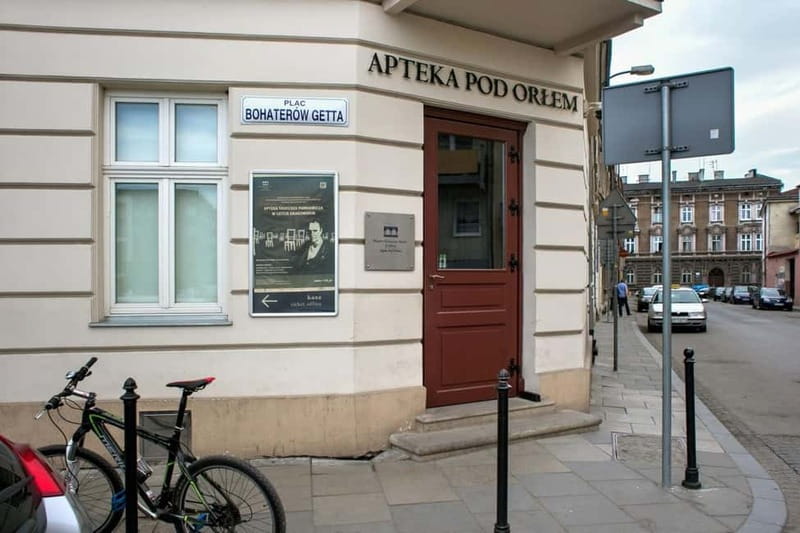
- Under the Eagle Pharmacy and rescue: the tour links terror to rare acts of help, including Tadeusz Pankiewicz.
- Finish near Schindler’s Factory (no entry): you end at an important rescue symbol without going inside.
- Single-language groups: plan around the language you booked for.
Deeper into Kazimierz and its Jewish heritage
- Krakow: Schindler’s Factory & Ghetto Guided Tour
★ 4.7 · 1,694 reviews - Krakow: Jewish Quarter and Former Ghetto Tour
★ 4.9 · 1,441 reviews - Krakow: Bike Tour of Old Town, Jewish Quarter and the Ghetto
★ 4.9 · 1,155 reviews
Walking Podgórze Like It’s Still Speaking
The tour centers on one of Krakow’s most painful wartime landscapes: the former Nazi German ghetto area in Podgórze. In practical terms, it’s a walking route that works best when you take your time, look up, and let the guide’s narration connect the dots between buildings, streets, and policy.
What makes this route especially effective is the way it treats the ghetto as a lived place, not just an outline on a map. You’ll hear about overcrowding, hunger, fear, and how violence sat behind daily routines. Then the stories widen to include solidarity, dignity, and people who tried to resist when resistance could cost everything.
One heads-up before you go: the subject matter is intense. Even with a good guide, you’ll be walking through real sites linked to persecution, deportation, and murder.
Price and Value: Why $15 for 1 Hour Can Still Be a Big Deal
At about $15 per person for a 1-hour walk with a licensed expert guide, the value is in the structure. This isn’t a long, drawn-out program where the cost only buys time. It’s a short route with concentrated stops, and it uses those stops to explain systems of oppression, not just individual anecdotes.
You’re paying for someone who can connect what you’re seeing (the square, the wall remnants, the pharmacy site) to the larger wartime story. And because the tour ends at the Schindler’s Factory site area without entering, you’re not paying for museum admission—you’re paying for interpretation where you can still feel the street-level scale.
If your priority is a deep, guided understanding in a limited time window, this fits well.
The Route Start in Podgórze: Where the Ghetto Became a Trap
The walk begins in Podgórze, the district that Nazi authorities transformed into the Krakow Ghetto. The tour’s first phase matters because it sets expectations: this wasn’t only about imprisonment—it was about making ordinary movement, housing, and food a form of control.
As you move through the streets, the guide reconstructs daily life under extreme repression. You’ll hear how residents faced overcrowding and hunger, and how fear wasn’t occasional; it was built into the rules of the place. That framing helps you understand why later landmarks hit harder. When you get to memorials, they won’t feel like separate “things to see.” They’ll feel like conclusions to the life you were just walking through.
Comfort-wise, plan for a steady pace. Comfortable shoes are non-negotiable here, because even a 60-minute tour can feel longer when you’re trying to follow the story carefully.
A few more Krakow trips worth putting on the shortlist
- Krakow: Auschwitz-Birkenau Guided Tour with Pickup & Lunch★ 4.5 · 9,800 reviews
- Krakow: Auschwitz-Birkenau Guided Tour Pickup/Lunch Options★ 4.5 · 9,057 reviews
- Krakow: Auschwitz-Birkenau and Salt Mine Guided Tour★ 4.7 · 9,020 reviews
- Krakow to Auschwitz Birkenau Guided Tour with Transfer and Ticket★ 5.0 · 8,197 reviews
Surviving Fragments of the Ghetto Wall: Small Pieces, Heavy Weight
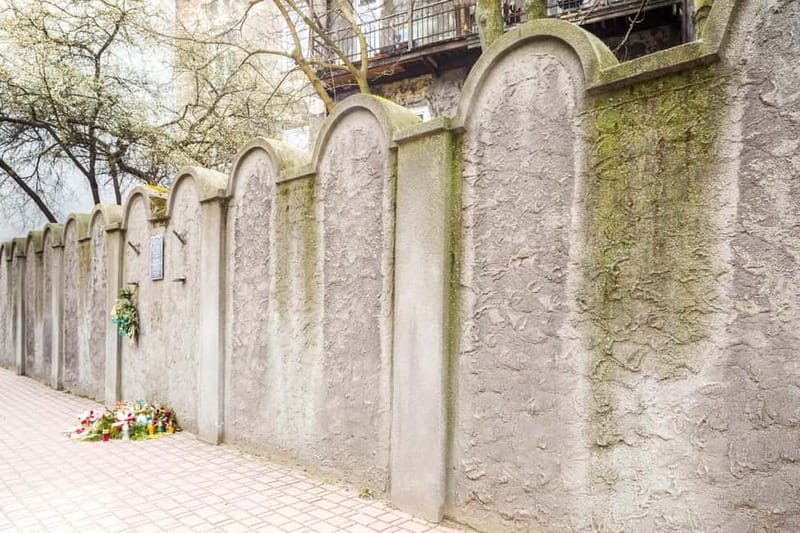
One of the most sobering stops is the viewing of surviving fragments of the original Krakow ghetto wall. These remnants are brief, physical, and stark. That combination is why they work.
On a typical walking tour, wall remnants might just be a “photo stop.” Here, they become evidence. You can see how the city’s landscape was turned into a cage, and you’ll get a sense of what it meant for more than 15,000 Jewish residents to be trapped behind controlled boundaries.
If you’re the type who likes to understand the “why” behind a place, pay attention at this moment. The tour uses these fragments to explain both physical imprisonment and the psychological effect of being surrounded by persecution.
Ghetto Heroes Square and the Chair Memorial: The Stop That Stays With You
Next comes Ghetto Heroes Square, once a central point tied to deportations to extermination camps. The tour treats the square with care because it’s one of those locations where the layout itself carries meaning.
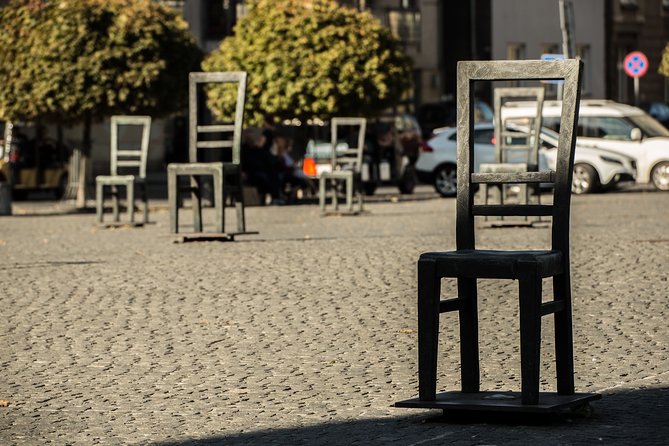
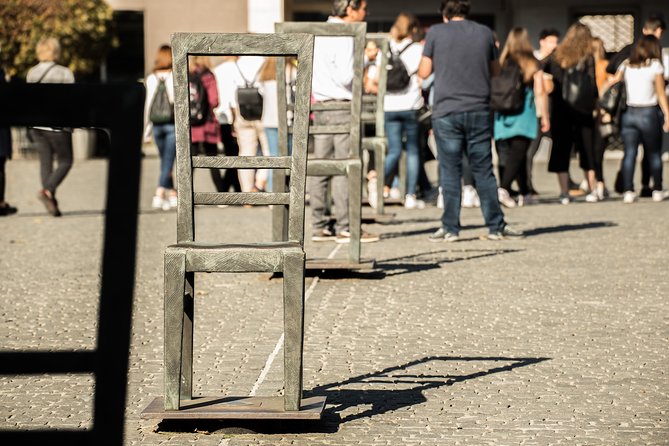
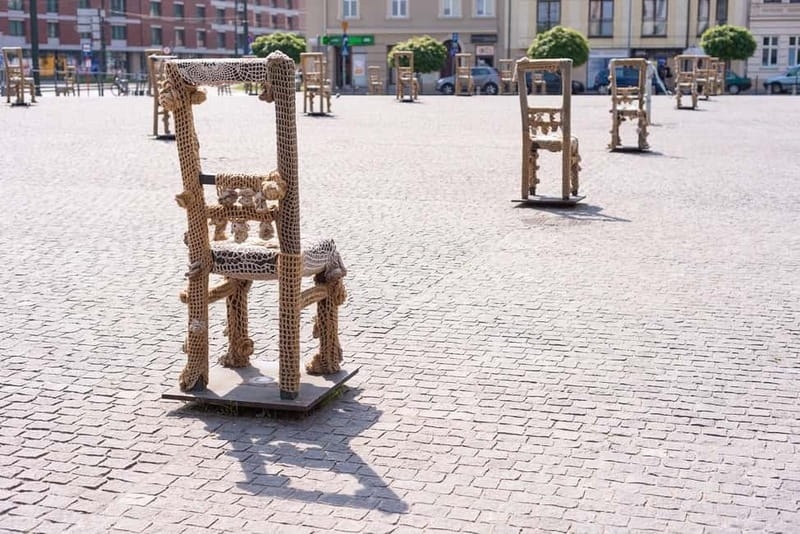
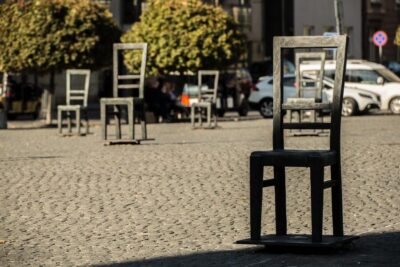
Today, the Chair Memorial—rows of empty metal chairs—does the work of remembrance without relying on spectacle. It’s not simply symbolic. It’s an uncomfortable reminder of people who were abruptly erased, and it turns the idea of absence into something you can stand inside.
This is often the most emotionally intense part of the tour. If you’re sensitive to heavy history, keep water nearby for yourself and take pauses when you need them. A good guide will allow breathing room; you just have to be ready for the stop to land.
Under the Eagle Pharmacy: When Rescue Looked Like Risk
A key highlight is the story tied to the Under the Eagle Pharmacy site. Here, the tour introduces how Tadeusz Pankiewicz and his staff helped ghetto prisoners in defiance of Nazi orders, providing medicine and assistance at great personal risk.
This stop adds an important balance to the tour’s arc. Yes, the walking route covers systematic persecution. But it doesn’t stop at helplessness. It shows that even under extreme terror, people sometimes chose compassion over compliance.
If you want the tour to help you think beyond “tragedy,” this is the part that nudges you there. The guide connects the pharmacy story to wider patterns of moral courage—rare, difficult, and costly.
End Near Schindler’s Factory Site: Rescue Without the Ticket
The tour ends at the Schindler’s Factory site, described as a symbol of rescue. You don’t get entry inside during this tour, so think of it as a conclusion point rather than a museum visit.
Why this matters: the tour’s ghetto focus means you’ll spend most of the hour seeing how persecution was executed at street level. Ending near Schindler’s Factory shifts your perspective toward survival and rescue in the broader wartime narrative.
This ending also helps you plan your next step after the tour. If you want more context, you’ll know where to look next. If you’d rather keep the day quiet, you can simply walk onward knowing the key storyline is complete.
What the Guide Format Feels Like (And Why It Helps)
The tour is led by a live guide, and it runs in one language chosen at booking. Available languages include Italian, English, French, Spanish, Russian, Swedish, Slovak, and German, plus private group options.
What you’ll feel during the walk is the guide’s ability to translate a hard subject into understandable segments. Past sessions have highlighted guides like Annetta and Chiara for clear, detailed explanations and for sticking around to answer questions. That matters because ghetto history brings up real confusion: how the policies worked, how everyday life changed, and why certain decisions were possible at all.
If you like asking questions, this tour tends to reward curiosity. If you prefer a quieter experience, you can simply listen and take in the spaces.
Practical Tips: Make the Hour Work For You
This tour is short, so your prep should be simple and effective.
Bring comfortable shoes and dress for the weather. You’ll be walking outdoors through a route that’s designed around real city streets. If you’re wearing shoes you wouldn’t mind standing in for a while, you’ll be happier.
Also note the tour does not allow alcohol and drugs. It’s a serious historical setting, so keep it respectful and keep yourself steady.
Finally, arrive early. The meeting point can vary depending on the option you choose, and you should get there at least 10 minutes before the scheduled start. Once the group leaves, joining late isn’t possible.
Who This Tour Is Best For
This is ideal if you want a focused, guided walk through the former ghetto area without spending half your day on logistics. It’s also a good fit if you like interpretation that connects locations to the human story.
You’ll likely enjoy it most if:
- you’re visiting Krakow for first-timer essentials but want real weight, not just sightseeing
- you appreciate walking tours that teach you how the past shaped the street grid
- you value a guide who can answer questions and explain context
One group should rethink it: it isn’t suitable for people with mobility impairments or wheelchair users.
Should You Book the Krakow Jewish Ghetto Guided Tour?
Yes, if you want a high-impact, time-efficient experience that focuses on the people forced into the ghetto, the mechanics of persecution, and the rare courage of helpers. At $15 for 1 hour, it’s a straightforward value play: you’re buying expert interpretation where the landmarks do the talking.
Book it especially if you’re planning your Krakow day with other WWII-related stops. This tour gives you a strong emotional and historical baseline before you move on to additional sites.
Skip it or pair it with a gentler plan if you know you’ll struggle with intense Holocaust-era history. The hour is compact, but it carries a lot of reality.
FAQ
How long is the Krakow Jewish Ghetto Guided Tour?
It lasts 1 hour.
Where does the tour start?
The meeting point may vary depending on the option booked.
What is included in the price?
The tour includes an expert licensed guide and a walking tour of the former Krakow ghetto.
Do I get to enter Schindler’s Factory?
No. The tour ends at the Schindler’s Factory site, but entry is not included.
What languages are available for the live guide?
The live guide is offered in Italian, English, French, Spanish, Russian, Swedish, Slovak, and German.
Is this tour accessible for wheelchair users?
No. It is not suitable for people with mobility impairments and not suitable for wheelchair users.
What should I bring?
Bring comfortable shoes and weather-appropriate clothing.
Are food and drinks included?
No. Food and drinks are not included.
More Tours in Krakow
More Tour Reviews in Krakow

More of Jewish Kazimierz


Just added: fresh Krakow reviews
Kazimierz & Jewish Heritage Tours, compared.
 ★ 4.7Schindler’s Factory & Ghetto Guided TourFrom $571,694 reviews
 ★ 4.9Jewish Quarter and Former Ghetto TourFrom $191,441 reviews
 ★ 4.9Bike Tour of Old Town, Jewish Quarter and the GhettoFrom $371,155 reviews
 ★ 4.8Kazimierz Jewish Quarter Walking TourFrom $27571 reviews
 ★ 4.8Kazimierz, Schindler’s Factory & Ghetto Guided TourFrom $81460 reviews
 ★ 5.0Full Bike Tour – the Old Town, Jewish Qtr & the Ghetto NEW BIKESFrom $35437 reviews
 ★ 4.6Jewish Ghetto Walking TourFrom $11349 reviews
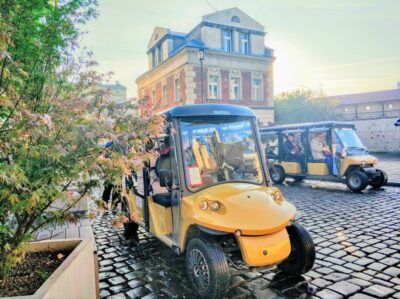 ★ 4.6Jewish Quarter and Ghetto Electric Golf Cart TourFrom $34348 reviews
Browse the lists this tour appears in