
REVIEW · KAZIMIERZ & JEWISH HERITAGE TOURS
Krakow: Jewish Ghetto Guided Walking Tour
These streets tell a hard story. This Kraków Jewish Ghetto guided walk focuses on how everyday places in Podgórze became part of Nazi control, using real street fragments—plus key memorial stops like Ghetto Heroes Square and the Under the Eagle Pharmacy. I especially like the remnants of the Ghetto Wall you can actually stand beside, and the way the guide ties details to what people faced day to day. One possible drawback: with only 1 hour, the route is focused but not long enough for deep museum-level context at every stop.
With a licensed expert guide, the tour uses perspective, context, and lived experience—not just dates. The meeting point is easy to find at the main entrance of Schindler’s Factory Museum (right-hand side), and the tour runs in English plus German, Italian, French, and Spanish. If you show up prepared to listen closely and walk respectfully, it’s excellent value for the price.
In This Review
- Key highlights worth your attention
- Starting at Schindler’s Factory: why the walk begins there
- Remnants of the Ghetto Wall: seeing boundaries in real scale
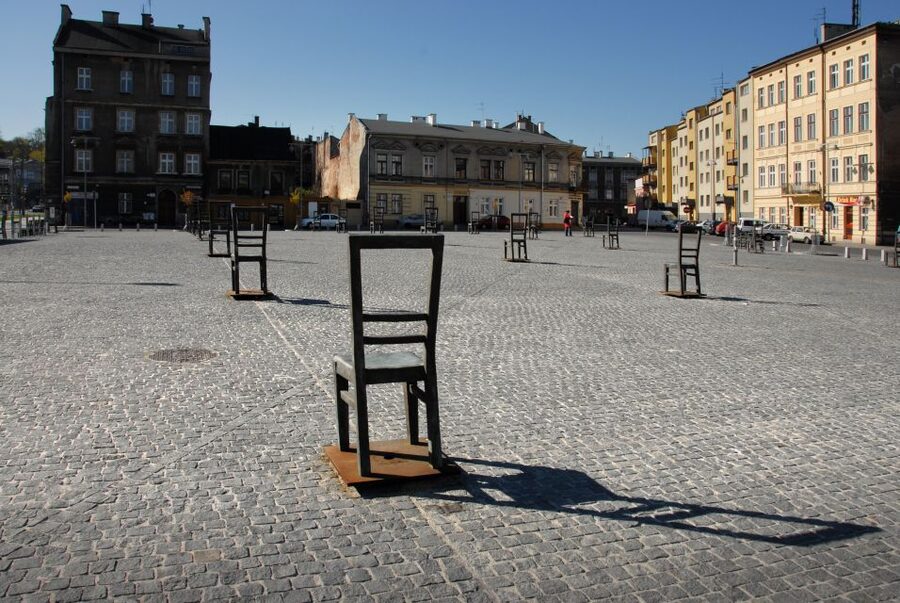
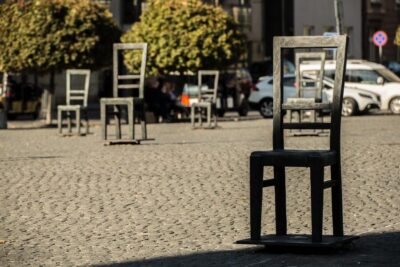
- Ghetto Heroes Square and its chair memorial
- Under the Eagle Pharmacy: resistance, aid, and moral choice
- Preserved wartime streets and buildings: how daily life was shaped
- The guide experience: licensed experts and clear storytelling
- Price and time: why $15 for a focused hour can be smart value
- Practical tips for a respectful, comfortable walk
- Should you book this Kraków Jewish Ghetto Guided Walking Tour?
- FAQ
- How long is the Kraków Jewish Ghetto Guided Walking Tour?
- Where do I meet the guide?
- How much does the tour cost?
- What will I see during the tour?
- Is there a licensed guide?
- Are there entrance fees included?
- What languages is the tour offered in?
- What should I do if I arrive late?
- Does the tour run in bad weather?
- Is free cancellation available?
Key highlights worth your attention
- Schindler’s Factory start point links occupation, forced labor, and daily survival in one short stretch
- Ghetto Wall fragments show boundaries at human scale, not just in textbook diagrams
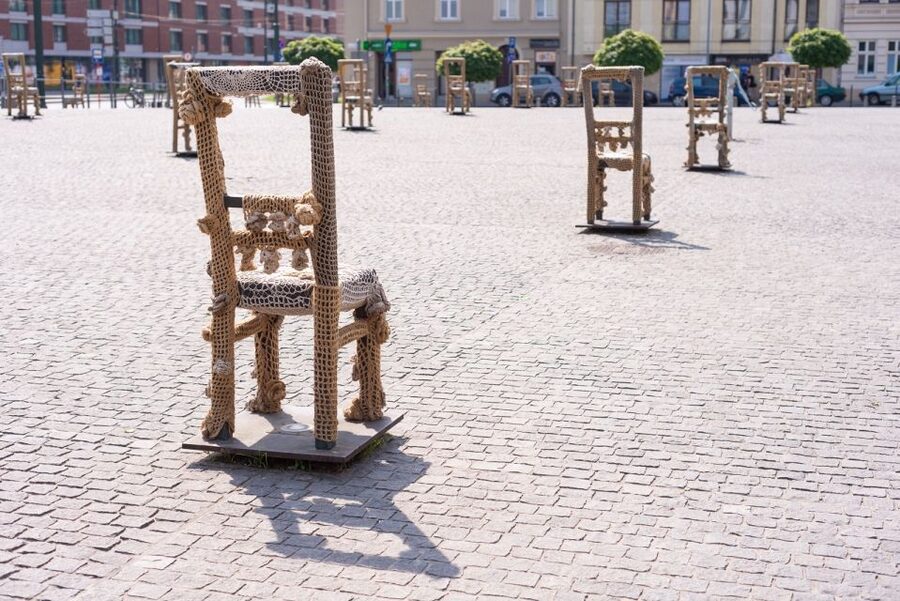
- Ghetto Heroes Square chair memorial gives deportation history a powerful visual cue
- Under the Eagle Pharmacy highlights resistance and compassion through Tadeusz Pankiewicz and his staff
- Preserved wartime streets and buildings help you picture how ordinary life turned dangerous
Deeper into Kazimierz and its Jewish heritage
- Krakow: Schindler’s Factory & Ghetto Guided Tour
★ 4.7 · 1,694 reviews - Krakow: Jewish Quarter and Former Ghetto Tour
★ 4.9 · 1,441 reviews - Krakow: Bike Tour of Old Town, Jewish Quarter and the Ghetto
★ 4.9 · 1,155 reviews
Starting at Schindler’s Factory: why the walk begins there
The tour gets you moving from the Schindler’s Factory area, which is a smart choice. It sets the historical frame fast: Nazi occupation didn’t just affect paperwork and borders. It reshaped industry, forced labor, and everyday routines, and this district reflects that transformation in the way the city evolved under control.
For you, this matters because it stops the story from feeling like a separate tragedy that happened somewhere else. Instead, you connect the big machinery of the occupation to the places you’re about to walk past. One practical note: the meeting point is the main entrance to Schindler’s Factory Museum on the right-hand side, with your guide holding an excursions.city sign. That helps you get oriented quickly before the first stop.
I also like the pacing of this start. You’re not thrown straight into heavy sites without context. The guide brings the occupation into focus first, then the walk tightens the lens step by step toward the ghetto’s boundaries.
Remnants of the Ghetto Wall: seeing boundaries in real scale
After the introduction, the walk heads toward surviving fragments of the former Ghetto Walls. This is where the tour becomes more than information. When you stand near the remnants, the idea of separation becomes physical. You’re not only thinking about a line on a map—you’re seeing what confinement looked like in architecture and space.
Your guide explains how these boundaries separated the Jewish population from the rest of the city. That includes what those borders meant for movement, safety, and the daily reality of living under occupation. It’s also the kind of stop that encourages quiet attention, not casual sightseeing.
A small consideration: because the wall fragments are remnants, you won’t get the full-size effect you might imagine. Still, that can be part of the lesson. The city endured, the buildings remained, and the past survived in pieces—so you’re trained to read the site rather than expecting a perfectly preserved “set.”
Ghetto Heroes Square and its chair memorial
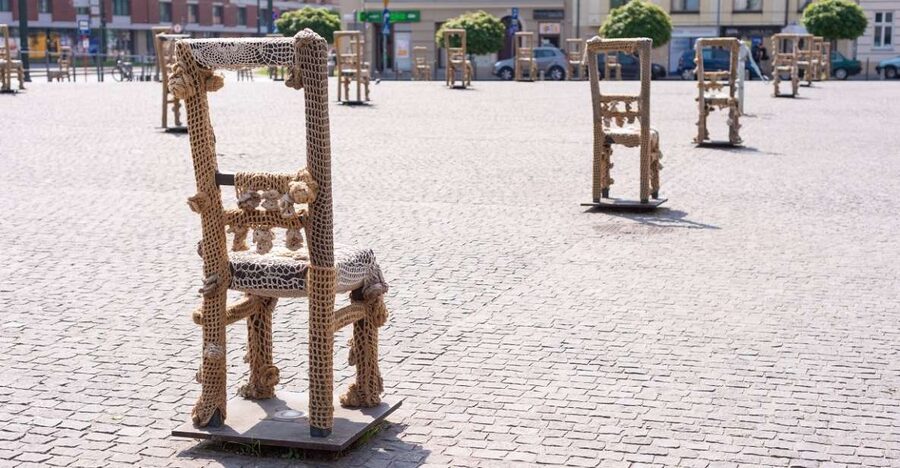
Next comes Ghetto Heroes Square, described as the former center of the Kraków Ghetto, and connected to deportations. This is a key shift in tone. The walk moves from “how control worked” to “what it cost.”
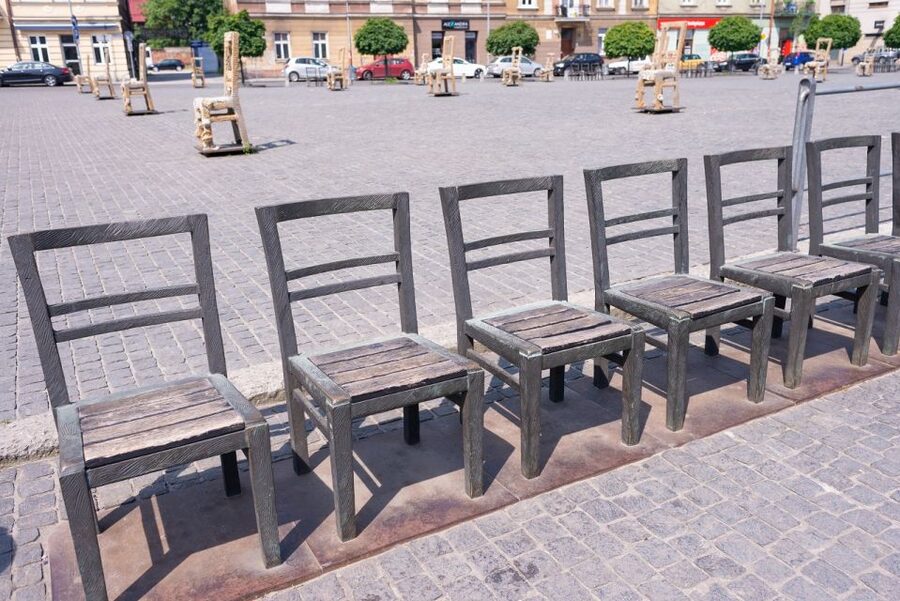
The memorial here uses empty metal chairs, designed to symbolize lives lost. You don’t need a lecture to understand the visual impact. It’s immediate, and that’s the point: the chair shapes make absence feel concrete. Even if you’ve read about deportations before, the square pushes the story beyond numbers.
When I think about why this stop is so well-suited to a guided walk, it’s because guides can connect symbolism to specific context. The square isn’t just a monument you pass through. It’s treated as a place of remembrance, and your guide’s narration helps you understand why it matters.
Also, if you’re the type who likes to take photos, keep your focus grounded. This is not a “pose and smile” square. Quick, respectful snapshots are fine, but spend more time looking than shooting.
On foot through the Old Town, more guided walks
- Old Town Krakow & Wawel Castle Walking Tour★ 5.0 · 1,508 reviews
- Creepy Krakow: 2-Hour City Walking Tour★ 4.7 · 1,131 reviews
- Krakow: The Old Town Walking Tour★ 4.8 · 794 reviews
- Krakow: Kazimierz Jewish Quarter Walking Tour★ 4.8 · 571 reviews
Under the Eagle Pharmacy: resistance, aid, and moral choice
Across the square, the tour points you to the historic Under the Eagle Pharmacy. This is where the story turns toward resistance and compassion, not only restriction.
You learn about Tadeusz Pankiewicz and his staff, who provided vital assistance to ghetto residents. The guide frames the location as a real place where moral choices took physical form—where help wasn’t an abstract idea, but something practiced while the danger around it grew worse.
For you, this stop is valuable because it balances the narrative. Yes, the tour covers boundaries and survival under Nazi rule. But it doesn’t end there. It also shows how courage could exist within ordinary settings: a pharmacy, a workplace, people doing what they could despite risk.
One practical tip: lean into the details your guide offers here. Resistance stories can get vague fast if a guide rushes. The best versions of this stop give you names, roles, and the logic behind the help. If you’re unsure during the narration, ask a question. A decent guide will gladly clarify, and the tour is only an hour—so questions can be your shortcut to better understanding.
Preserved wartime streets and buildings: how daily life was shaped
The route continues through preserved wartime streets and buildings in the area. This is where the tour earns its “context” label.
Instead of turning WWII into a distant historical event, the walk keeps pointing back to lived experience. You’re guided to think about daily survival: how people moved, where they could go, and how fear and coercion affected ordinary routines. The guide encourages you to reflect on how the ghetto was not only a physical enclosure, but a system that rewired the meaning of everyday places.
This part is also emotionally specific. It’s not just “tragic history.” It’s the texture of what life became under occupation. And because you’re walking real streets, you can mentally test the story: Where might someone have stood? What would it feel like to move along these buildings with restrictions around you?
A possible drawback here is also practical: street walks are weather-dependent, and comfort affects how well you can concentrate. Wear shoes you trust. If the weather is cold or wet, dress for it so your attention stays on the guide, not your discomfort.
The guide experience: licensed experts and clear storytelling
This tour depends heavily on narration quality, and the structure is designed to support it. You have a professional licensed guide who leads the group through the route and connects each stop to the broader occupation story. The focus is on lived experience, perspective, and context—so the guide is doing the translation work from “what happened” into “what it meant.”
Language options are broad: German, Italian, French, Spanish, and English. That’s a big plus if you’re traveling in a mixed group or you prefer to hear history in your strongest language. One recent English-speaking traveler specifically noted that the host spoke at a speed they could follow and answered questions clearly. That’s the kind of small detail that makes a big difference on a walking tour.
You might also encounter guides who are friendly and approachable. In past groups, the name Elena came up, with praise for being very kind and making the ghetto feel understandable rather than abstract. Another guide named Renata was described as clear and well-proportioned for the low price. Those are exactly the signals you want to look for: clarity, pacing, and a willingness to handle questions without steamrolling the group.
Price and time: why $15 for a focused hour can be smart value
At $15 per person for a 1-hour guided walk, this isn’t a “big day” tour. It’s a concentrated experience. That can be a strength if you’re visiting Kraków and want the ghetto story without turning your whole afternoon into logistics and museum lines.
Here’s what you’re actually paying for: a professional licensed guide, walking through the former Nazi Jewish Ghetto in Podgórze, and learning the connections between key places like the wall remnants, Ghetto Heroes Square, and Under the Eagle Pharmacy. Since entrance fees aren’t included, you’re not paying extra to access ticketed sites during the hour. Instead, you’re using the streets and landmarks as your “exhibits.”
One thing to consider: because it’s only one hour, the tour is best for first-time visitors or for anyone who wants a guided foundation. If you’re the type who likes to linger in every corner with lots of reading time, you’ll probably want to add extra self-guided time afterward.
Practical tips for a respectful, comfortable walk
A few details can make the experience smoother.
First, arrive about 10 minutes early. The tour leaves with the group, and if you’re late, you may not be able to join. When you’re dealing with a memorial-focused subject, being punctual also helps the guide keep the pacing respectful.
Second, dress for the weather. The tour runs in all weather conditions, so comfortable footwear matters. Plan for a walking experience, not a sit-and-watch history lesson. If you’re cold or slipping on wet pavement, it’s hard to concentrate on the narration.
Finally, bring a mindset shift. This tour isn’t about collecting facts. It’s about understanding how ordinary places became scenes of fear, courage, and survival. You’ll get the most out of it if you slow down mentally, listen fully, and let the sites do their job.
Should you book this Kraków Jewish Ghetto Guided Walking Tour?
Book it if you want a high-impact, low-cost introduction to Kraków’s WWII ghetto story, with a licensed guide walking you through the most meaningful landmarks in about an hour. It’s especially worth it if you care about context: how occupation, forced labor, and daily life intersected, and how resistance and moral choice showed up in real places like Under the Eagle Pharmacy.
Skip (or at least pair with more time) if you’re hoping for a long-form, museum-heavy experience with lots of lingering. This tour is focused. You’ll leave with understanding and direction, but not with the kind of deep reading time you might need for every detail.
If you’re visiting Schindler’s Factory anyway, this tour pairs nicely with that broader WWII landscape, since it starts in the same area. It’s a smart way to connect big themes to street-level places without spending extra hours on the same subject.
FAQ
How long is the Kraków Jewish Ghetto Guided Walking Tour?
The tour lasts 1 hour.
Where do I meet the guide?
Meet your guide in front of the main entrance to the Schindler’s Factory Museum, on the right-hand side. The guide will hold an excursions.city sign.
How much does the tour cost?
The price is $15 per person.
What will I see during the tour?
You’ll see remnants of the former Ghetto Wall, Ghetto Heroes Square and its memorial with empty metal chairs, the Under the Eagle Pharmacy, and preserved wartime streets and buildings related to daily life and survival during WWII.
Is there a licensed guide?
Yes. The tour includes a professional licensed guide.
Are there entrance fees included?
No. Entrance fees to attractions are not included.
What languages is the tour offered in?
The live guide is available in German, Italian, French, Spanish, and English.
What should I do if I arrive late?
Arrive about 10 minutes early. Once the group has departed, latecomers can’t join and tickets can’t be refunded.
Does the tour run in bad weather?
Yes. The tour takes place as planned in all weather conditions, so it’s best to dress for the forecast and wear suitable footwear.
Is free cancellation available?
Yes. You can cancel up to 24 hours in advance for a full refund.
More Tour Reviews in Krakow

More Guided Walks Through Town


More of Jewish Kazimierz

Just added: fresh Krakow reviews
Kazimierz & Jewish Heritage Tours, compared.
 ★ 4.7Schindler’s Factory & Ghetto Guided TourFrom $571,694 reviews
 ★ 4.9Jewish Quarter and Former Ghetto TourFrom $191,441 reviews
 ★ 4.9Bike Tour of Old Town, Jewish Quarter and the GhettoFrom $371,155 reviews
 ★ 4.8Kazimierz Jewish Quarter Walking TourFrom $27571 reviews
 ★ 4.8Kazimierz, Schindler’s Factory & Ghetto Guided TourFrom $81460 reviews
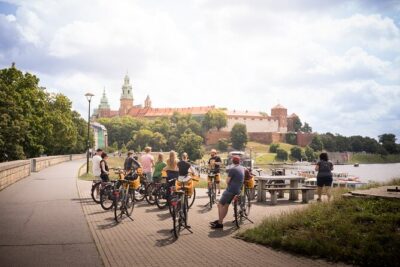 ★ 5.0Full Bike Tour – the Old Town, Jewish Qtr & the Ghetto NEW BIKESFrom $35437 reviews
 ★ 4.6Jewish Ghetto Walking TourFrom $11349 reviews
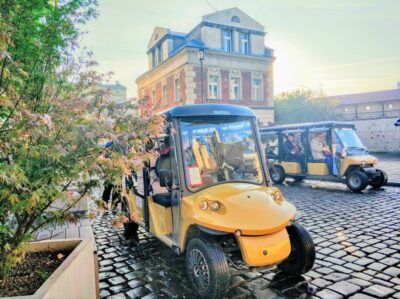 ★ 4.6Jewish Quarter and Ghetto Electric Golf Cart TourFrom $34348 reviews
Browse the lists this tour appears in