
REVIEW · KAZIMIERZ & JEWISH HERITAGE TOURS
Krakow Jewish Quarter and Ghetto Tour by Electric Golf Cart
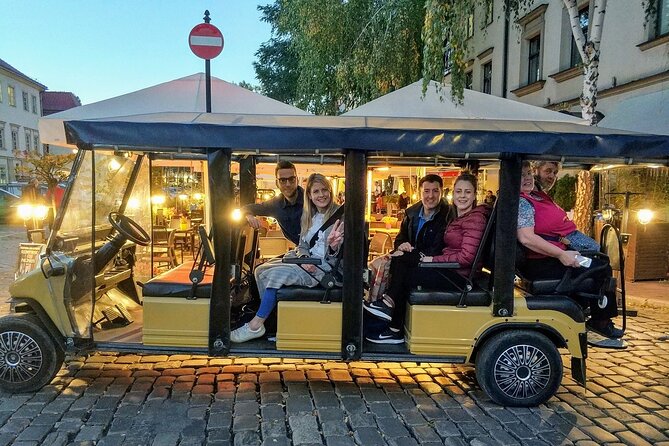
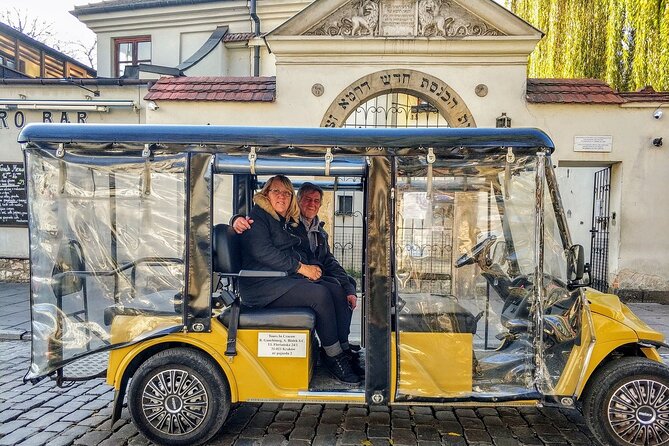
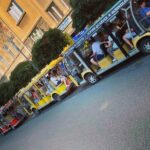
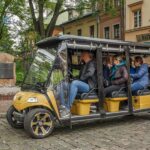
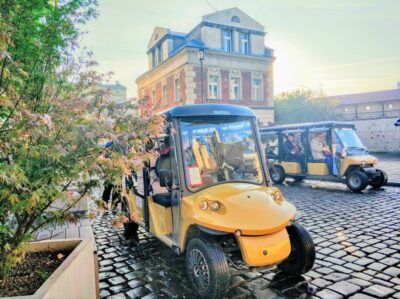
Jewish Krakow at golf-cart speed. This 90-minute tour uses an electric golf cart and English-speaking driver to cover Kazimierz and the ghetto area at a comfortable pace, without you needing to sprint between stops. You also get an audio guide, which helps you follow the story even when the streets get busy.
I especially like how the route connects everyday street life to the big turning points of WWII history. The tour makes time for key places like Szeroka Street, the remnants of the ghetto wall, and the deportation-linked area of Plac Zgody, so you’re not just looking at buildings—you’re learning what happened around them.
One thing to consider: the route includes some very prominent church interiors in the same neighborhoods where Jewish life unfolded. If you want a strictly Jewish-sites-only outing, plan your expectations for a mixed architectural look.
In This Review
- Key things I’d plan around
- Why the electric cart makes sense in Kazimierz and Podgórze
- How the 90 minutes are paced (and why timing matters)
- Szeroka Street: where Jewish life used to stack up
- Inside the synagogue legacy: old, preserved, and meaningful
- St Joseph Church and Podgórze Market Square: faith in the same neighborhood
- The preserved ghetto wall fragment: a small piece with big weight
- Plac Zgody to Umschlagplatz: where deportations were organized
- The pharmacy story and the idea of survival-by-help
- Guides, audio, and the art of respectful pacing
- Price and value: when $34.75 is worth it
- Who should book this tour (and who might not)
- Should you book this Krakow Jewish Quarter and Ghetto Tour?
- FAQ
- Is the tour offered in English?
- How long is the tour?
- What is the meeting point?
- Is the tour round-trip?
- What’s included in the price?
- Is hotel pickup or drop-off included?
- How many people are in a group?
- Can I participate if I’m not very mobile?
- What’s the cancellation policy?
- Is this good for a short stay in Krakow?
Key things I’d plan around
- Electric cart comfort: easier walking across uneven streets and long distances in a short time.
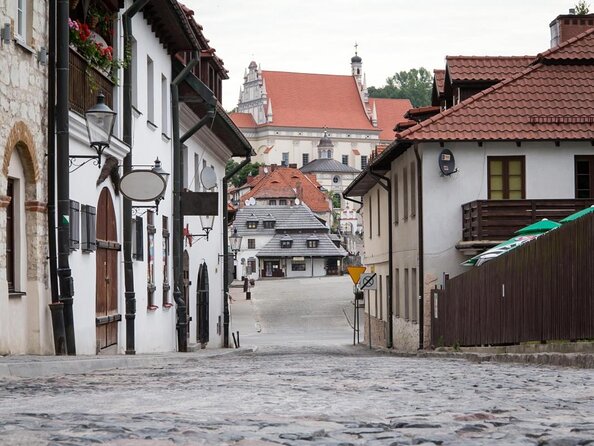
- Kazimierz through the streets: Szeroka Street’s synagogue cluster history is a central theme.
- WWII memory stops: a preserved ghetto wall fragment with a commemorating plaque, plus Plac Zgody/Umschlagplatz context.
- Audio guide support: helps you keep up with the storyline as you move between sites.
- Small-group feel: capped at 50 travelers, so it’s less chaotic than some big-city bus tours.
Deeper into Kazimierz and its Jewish heritage
- Krakow: Schindler’s Factory & Ghetto Guided Tour
★ 4.7 · 1,694 reviews - Krakow: Jewish Quarter and Former Ghetto Tour
★ 4.9 · 1,441 reviews - Krakow: Bike Tour of Old Town, Jewish Quarter and the Ghetto
★ 4.9 · 1,155 reviews
Why the electric cart makes sense in Kazimierz and Podgórze
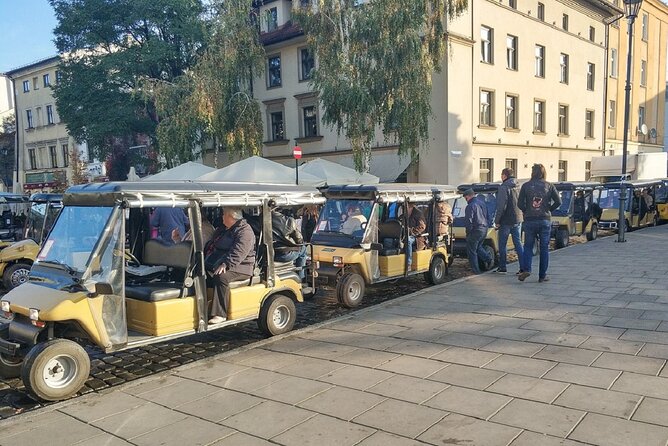
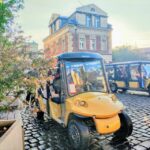
Kazimierz is scenic, historic, and often more spread out than people expect. Even if you like walking, you can lose time climbing between viewpoints and circling for the best angles. This tour solves that with an electric golf cart, so your legs stay fresh for the moments that matter: stopping, looking closely, and going inside when the route allows.
Another smart choice is the audio guide. When you’re learning Holocaust-era history in a real urban neighborhood, it’s easy to miss details if you only rely on a single voice in a group. The audio layer helps you catch names, meanings, and timelines without constantly asking questions.
There’s also a practical advantage: the tour is short enough to fit into a tight Krakow schedule. If you’re squeezing in multiple neighborhoods, this is a way to get a solid orientation fast—then come back later on your own for the deeper rabbit holes.
How the 90 minutes are paced (and why timing matters)
The tour runs about 1.5 hours and is built around moving between landmarks rather than lingering for long museum-style visits. That affects how you’ll experience the area: think “many meaningful stops” rather than “one site, deeply explored.”
You start at Mikołaja Zyblikiewicza 2 and end at Mikołaja Kopernika 3. That matters because you’re not doing a full backtrack. You finish in a different spot than you began, which can be a plus if you’re heading onward to other sights, cafes, or dinner.
Also, the tour is offered in English with an English-speaking driver, and it’s near public transportation. Translation: you can usually build it into your day without reorganizing your whole itinerary around it. Hotel pickup and drop-off aren’t included, so you’ll want to plan to arrive at the meeting point under your own steam.
Szeroka Street: where Jewish life used to stack up
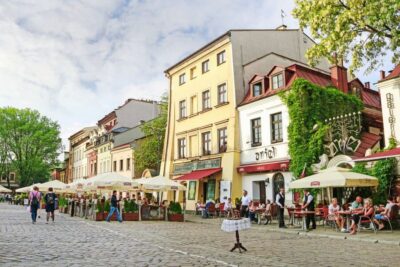
One of the best parts of this tour is how it centers Szeroka Street. The story isn’t vague. It explains that four synagogues once stood on this street—an unusual concentration in Europe. That detail is the kind of thing you won’t guess just by looking at today’s streetscape.
Szeroka Street is described as the heart of Jewish Kazimierz, and the tour uses that idea to ground everything that follows. When you stand here, you can imagine the density of community life: worship, learning, gatherings, celebrations, and the daily bustle of a neighborhood built around Jewish institutions.
What I like is that the tour doesn’t treat Kazimierz like a postcard set. It frames the street as a living hub, then sets you up to understand what came next—especially once you move toward the ghetto-related stops in Podgórze.
A possible drawback is simply depth vs speed. You’ll learn a lot in a short window, but you still might feel the urge to return and walk Szeroka Street slowly—at your own pace, with your own questions.
More of the Old Town at electric-cart pace
- Krakow: Electric Car Sightseeing Tour★ 4.4 · 450 reviews
- Krakow: Jewish Quarter and Ghetto Electric Golf Cart Tour★ 4.6 · 348 reviews
- Krakow Grand City Tour by golf cart – All 3 districts★ 5.0 · 311 reviews
- Krakow: City Sightseeing Tour Eco Electric Buggy Golf Cart★ 4.5 · 311 reviews
Inside the synagogue legacy: old, preserved, and meaningful
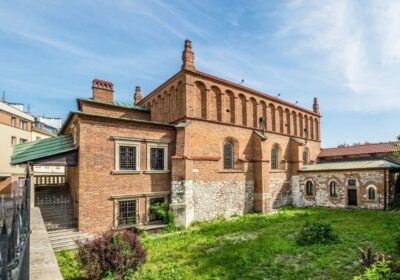
The tour includes an older synagogue stop connected to the area’s cultural calendar, including the final concert of the Jewish Culture Festival. The point here is not just architecture. It’s survival: this is described as one of the oldest synagogues in Poland preserved in excellent condition.
Why does that matter? Because many war-scarred places are remembered through absence—through what’s gone. Here, you get something more complicated and powerful: a physical reminder that Jewish culture and religious life did exist here in a durable way, and that some traces endured.
This stop is also a good chance to slow down mentally. The cart gets you to the right places quickly, but the buildings are the moment you’ll want to pause, look at details, and let the story land.
If your ideal tour is all about entering buildings, you’ll likely appreciate that the program includes time to visit interiors when possible. Just know that access can’t be controlled 100 percent by the tour operator, so expect “a chance to go in,” not a guaranteed full tour of every space.
St Joseph Church and Podgórze Market Square: faith in the same neighborhood
Not all the stops are Jewish sites. The route also takes you to the parish church of St Joseph, described as a distinctive landmark dominating Podgórze Market Square. Podgórze itself becomes part of Kraków only in the 20th century, which adds a layer of timeline complexity: the neighborhood isn’t frozen in one era.
If you’re doing this tour for Jewish history only, you might find the church stop shifts the focus. Still, it can be valuable. Why? Because it shows how the same urban landscape can carry multiple eras at once—different communities, different powers, different layers of memory.
When the tour pairs a church stop with nearby ghetto-era context, you’re forced to hold two realities together: the beauty of religious architecture and the reality of what happened around the same city blocks during WWII. That contrast is uncomfortable, but it’s also part of what makes the area historically important.
The preserved ghetto wall fragment: a small piece with big weight
One of the most direct remembrance stops is a fragment of the original ghetto wall, preserved with a plaque commemorating the fate of the inhabitants. This is exactly the kind of detail that changes a tour from educational to emotional—because you’re not learning only from photographs or dates.
I like that the tour doesn’t only mention deportation in general terms. It points you to a physical remnant and ties it to documented human loss. That helps you avoid the trap of treating history like trivia.
In practical terms, plan for a moment of silence. This isn’t a quick photo-op stop, even if you’ll probably take a picture. Look, read the plaque if it’s accessible, and then move on with the story still in your head. The cart makes it easy to roll forward—but you’ll benefit from resisting the urge to rush.
Plac Zgody to Umschlagplatz: where deportations were organized
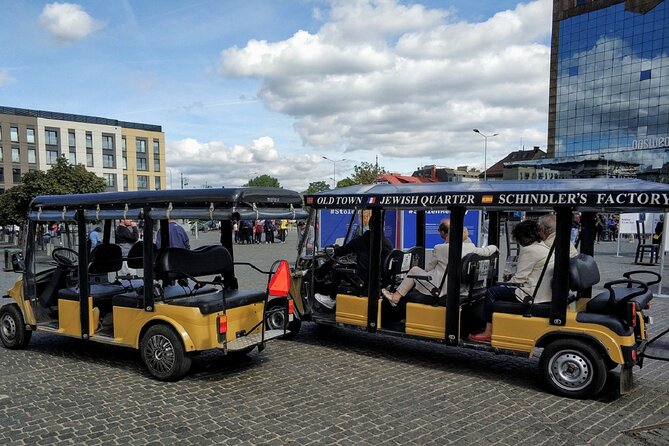
The tour then shifts to Podgórze, where in 1941 the area was turned into the Krakow Ghetto. The key stop is the former Plac Zgody, explained as being designated Umschlagplatz under Nazi occupation—the place where Jews were forced to congregate before deportation.
This is one of those stops where your brain wants to ask too many questions. What did people see from the windows? How long did they wait? How did families communicate? The tour can’t answer every question in 90 minutes, but it gives you the most important foundation: the function of the location and its purpose within the deportation process.
A good way to handle it is to treat it like a framework stop. Use it to anchor what you’ve been learning about Kazimierz and then connect it to the ghetto narrative that follows through the rest of the route.
The pharmacy story and the idea of survival-by-help
Another memorable element is the symbolic place connected to a Polish pharmacy. The tour describes it as acting like an asylum or embassy, providing shelter and enabling communication—delivering messages or packages inside and outside the ghetto.
This part of the story matters because it refuses to reduce everything to horror alone. Yes, the tour is about tragedy, but it also shows how human help sometimes worked in small, risky ways. That doesn’t erase what happened. It adds a layer of meaning: people still tried to save each other.
If you’re the type who likes to understand how communities function under pressure, this stop will land well. It also pairs nicely with the earlier synagogue and street-life stops, because it reminds you that individuals had daily needs, relationships, and hope—right up until they were violently disrupted.
Guides, audio, and the art of respectful pacing
The overall success of this tour often comes down to the driver’s storytelling tone. Multiple guide names show up in people’s experiences, including Matt, Natalie, Olivia, Martina, and Michael, with a consistent theme: friendly, engaging, and respectful delivery.
Here’s what you should take from that, even if your own guide differs: the tour works best when you let someone else do the navigation while you focus on understanding. The cart removes physical friction, and the guide plus audio fills the gaps between stops.
You’ll also notice the tour’s structure gives you brief moments to hop on and off for pictures and quick interior visits when available. That style works well for short-time visitors. It also means you may not see every corner of every site you pass. If you want slow museum-style time, pair this with independent walking after.
Price and value: when $34.75 is worth it
At $34.75 per person for about 1.5 hours, the value comes from two things: coverage and comfort. You’re paying for transportation by electric cart plus an audio guide plus an English-speaking driver. That combination can be hard to replicate cheaply if you’re trying to organize multiple neighborhood walks yourself.
It’s also a good value if you want an overview first. If you’ve never been to Kazimierz or Podgórze, this tour helps you spot what you’ll want to revisit. Several people see it as a way to get your bearings fast and return later with more targeted curiosity.
Is it expensive? Some people feel $34.75 is a stretch for only 90 minutes, especially if the interiors you hoped for aren’t fully emphasized. My take: if you want maximum learning per minute, the cart tour format can be a great deal. If you want deep time inside specific synagogues and cemeteries, you may feel rushed and would likely benefit from adding a walking tour afterward.
Who should book this tour (and who might not)
This tour suits you if:
- you’re short on time and want to cover Kazimierz and ghetto-era highlights in one go
- you’d rather spend energy on looking and listening, not trekking between far-apart points
- you want an English-led explanation plus audio support
It might be less ideal if:
- you’re only interested in Jewish buildings and you don’t want any church interiors on the itinerary
- you prefer long stops and deep interior time at each site rather than quick, structured stops
- you’re hoping for a loud, speaker-style narration throughout (this tour is built around an audio guide system)
If you’re unsure, a simple strategy works well: book this for orientation, then come back on foot to the spots that grab you most.
Should you book this Krakow Jewish Quarter and Ghetto Tour?
Yes, I think you should book it—especially if you want a respectful overview that balances moving through streets with meaningful WWII memory stops. The electric cart makes the route doable, the English driver plus audio guide helps you follow the story, and key moments like Szeroka Street, the preserved wall fragment, and the Umschlagplatz-linked stop give the tour real historical weight.
My one caution: decide what you want most. If your goal is broad understanding and efficient coverage, this tour fits nicely. If you want a strictly Jewish-sites-only itinerary with lots of slow interior time, you’ll likely want to add another, more focused walking option to complete the picture.
FAQ
Is the tour offered in English?
Yes. The tour is offered in English, with an English-speaking driver.
How long is the tour?
It lasts about 1 hour 30 minutes.
What is the meeting point?
The start meeting point is Mikołaja Zyblikiewicza 2, 31-029 Kraków, Poland. The tour ends at Mikołaja Kopernika 3, 31-034 Kraków, Poland.
Is the tour round-trip?
No. It starts at one location and ends at a different one.
What’s included in the price?
Included are an audio guide, transport by golf cart during the tour, and an English-speaking driver.
Is hotel pickup or drop-off included?
No. Hotel pickup and drop-off are not included.
How many people are in a group?
The tour has a maximum of 50 travelers.
Can I participate if I’m not very mobile?
The tour notes that most travelers can participate.
What’s the cancellation policy?
Free cancellation is available up to 24 hours in advance for a full refund. If you cancel within 24 hours, the amount paid is not refunded.
Is this good for a short stay in Krakow?
It’s designed for efficient coverage of Kazimierz and ghetto-related landmarks in a short time, so it’s a strong option for limited schedules.
More Tour Reviews in Krakow
The Old Town by Electric Cart
More of Jewish Kazimierz

Just added: fresh Krakow reviews
Kazimierz & Jewish Heritage Tours, compared.
 ★ 4.7Schindler’s Factory & Ghetto Guided TourFrom $571,694 reviews
 ★ 4.9Jewish Quarter and Former Ghetto TourFrom $191,441 reviews
 ★ 4.9Bike Tour of Old Town, Jewish Quarter and the GhettoFrom $371,155 reviews
 ★ 4.8Kazimierz Jewish Quarter Walking TourFrom $27571 reviews
 ★ 4.8Kazimierz, Schindler’s Factory & Ghetto Guided TourFrom $81460 reviews
 ★ 5.0Full Bike Tour – the Old Town, Jewish Qtr & the Ghetto NEW BIKESFrom $35437 reviews
 ★ 4.6Jewish Ghetto Walking TourFrom $11349 reviews
 ★ 4.6Jewish Quarter and Ghetto Electric Golf Cart TourFrom $34348 reviews
Browse the lists this tour appears in