
REVIEW · KAZIMIERZ & JEWISH HERITAGE TOURS
Krakow: Jewish Quarter Kazimierz Guided Walking Tour
Krakow’s Kazimierz hits different. This guided walk follows how Jewish life in the city shaped everyday streets, and how those same streets now carry memory, survival, and loss. I especially like the way the route connects specific places to real lived practices, not just big historical facts.
Two things I really value: the tour’s focus on major synagogues (including the Old Synagogue museum and the Remuh Synagogue area) and the emphasis on how different communities coexisted and changed over time. One possible drawback: the subject matter can feel heavy, and the route involves walking on uneven ground, so it’s not a fit if you need easy mobility.
In This Review
- Key Highlights at a Glance
- Why Kazimierz Feels Different the Moment You Step In
- Meeting at the Old Synagogue and Getting Your Bearings
- Szeroka Street: The Former Heart of Communal Life
- The Old Synagogue Museum: Poland’s Oldest Preserved Synagogue
- Remuh Synagogue and Cemetery: Where Memory Has Weight
- Kupa Synagogue: Understanding Community Through Social Reality
- Tempel Synagogue: Aspirations, Assimilation, and Change
- Plac Nowy and the Overlap of Eras
- Secluded Courtyards: The Stuff You Miss Without a Guide
- Price, Time, and What You’re Really Paying For
- Emotional Tone and Practical Tips Before You Go
- Who This Tour Best Serves (And Who Might Prefer Something Else)
- Pairing This Walk With Your Krakow Plans (Including Auschwitz)
- Should You Book the Krakow: Jewish Quarter Kazimierz Guided Walking Tour?
- FAQ
- How long is the Krakow Kazimierz Jewish Quarter walking tour?
- Where do I meet my guide?
- What’s included in the price?
- What languages are available for the live guide?
- Is the tour suitable for wheelchair users or people with mobility impairments?
- What should I bring?
- Is late arrival allowed?
Key Highlights at a Glance
- Old Synagogue start point: Meet right at the steps of the Old Synagogue, where the walk’s story begins.
- Szeroka Street, the former communal heart: Follow the threads of religious life through historic streets and buildings.
- Remuh Synagogue and Cemetery: Experience a place of deep spiritual significance and lasting memory.
- Kupa Synagogue and Tempel Synagogue contrasts: See how class and ideas shaped synagogue life.
- Plac Nowy’s layered crossroads: Notice how history and present-day life overlap in one small area.
- Secluded courtyards with an expert guide: Get glimpses you’d likely miss on your own.
Deeper into Kazimierz and its Jewish heritage
- Krakow: Schindler’s Factory & Ghetto Guided Tour
★ 4.7 · 1,694 reviews - Krakow: Jewish Quarter and Former Ghetto Tour
★ 4.9 · 1,441 reviews - Krakow: Bike Tour of Old Town, Jewish Quarter and the Ghetto
★ 4.9 · 1,155 reviews
Why Kazimierz Feels Different the Moment You Step In
Kazimierz is one of those city districts where the buildings don’t just look old. They hold impressions—of prayer rooms, conversations, community decisions, and, later, the silence left behind. Walking here is less about checking off monuments and more about learning how space can remember.
I like tours that don’t rush past meaning, and this one leans into the emotional weight without turning it into theater. The theme is clear from the start: Jewish life in Krakow was shaped by faith and everyday routine, then tested by historical events that changed everything.
If you come hoping for only light sightseeing, adjust your expectations. You’ll still get architecture, streets, and real geography—but the tone is reflective.
Meeting at the Old Synagogue and Getting Your Bearings
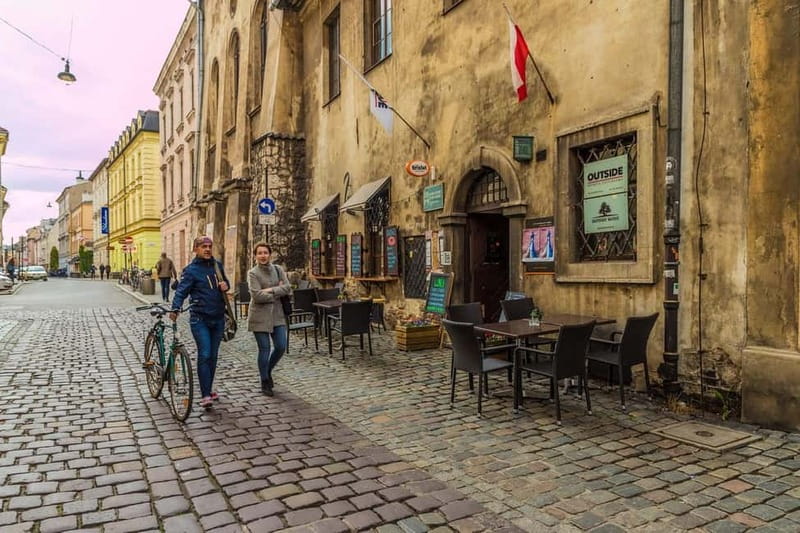
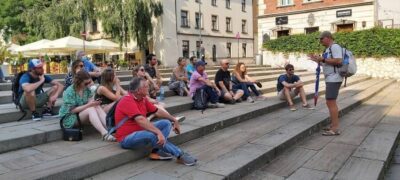
Your meeting point is the steps of the Old Synagogue, with your guide holding an excursions.city sign. That choice matters. It puts you at the beginning of the story, and it also helps you orient fast once the group starts moving.
The tour runs about 90 minutes to 2 hours, so it’s long enough for an actual walk with stops, but not so long you feel trapped in a group shuffle. You’ll want comfortable shoes, since this is a neighborhood walk and you’ll be on your feet through multiple streets.
One practical note: the group leaves and you can’t join late. Arrive at least 10 minutes early so you don’t miss the start.
Szeroka Street: The Former Heart of Communal Life
The walk begins on Szeroka Street, often described as the former center of Jewish communal life. Here, you see how faith and daily life were connected. The street is framed by historic townhouses and older synagogue buildings dating roughly to the 16th through 18th centuries.
This is where the tour’s real strength shows up: it doesn’t treat Kazimierz as a static museum set. Instead, it helps you notice how religious identity, community organization, and social roles shaped the streets around you.
Pay attention to the “quiet in plain sight” details. Courtyard entrances, building edges, and small spatial cues can explain far more than a big plaque ever will—especially when a local guide points them out.
On foot through the Old Town, more guided walks
- Old Town Krakow & Wawel Castle Walking Tour★ 5.0 · 1,508 reviews
- Creepy Krakow: 2-Hour City Walking Tour★ 4.7 · 1,131 reviews
- Krakow: The Old Town Walking Tour★ 4.8 · 794 reviews
- Krakow: Kazimierz Jewish Quarter Walking Tour★ 4.8 · 571 reviews
The Old Synagogue Museum: Poland’s Oldest Preserved Synagogue
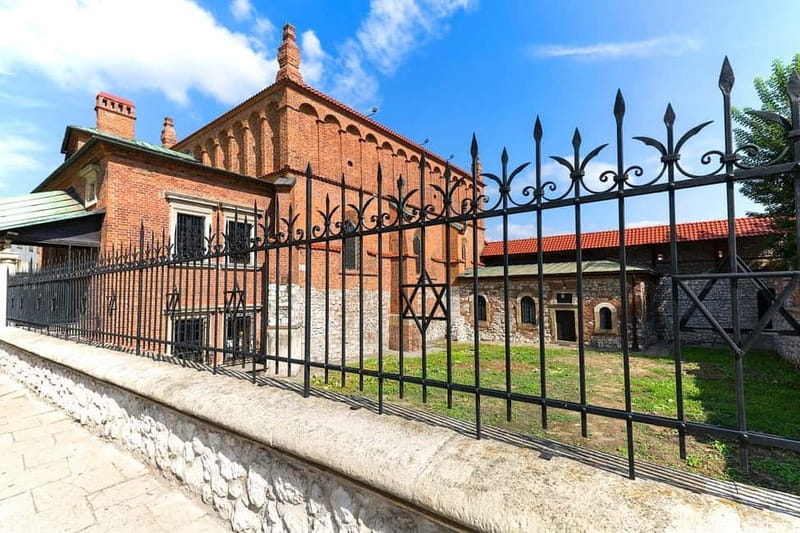
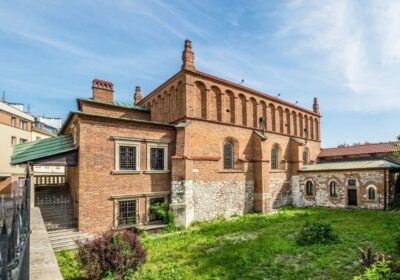
One of the core stops is the Old Synagogue, described as the oldest preserved synagogue in Poland. It’s now a museum documenting Jewish history and religious practice, and that museum framing is a big part of why this tour works.
You’re not just looking at a façade. You’re learning what the synagogue represented in community life, and how the religious practice ties to the objects and space you see. That combination—place plus explanation—helps you understand why this building matters beyond Krakow.
A good tour here also helps you slow down. When you’re in a religious space with deep historical meaning, it’s easy to rush. The guide’s job is to keep you focused on the “why” as much as the “what.”
Remuh Synagogue and Cemetery: Where Memory Has Weight
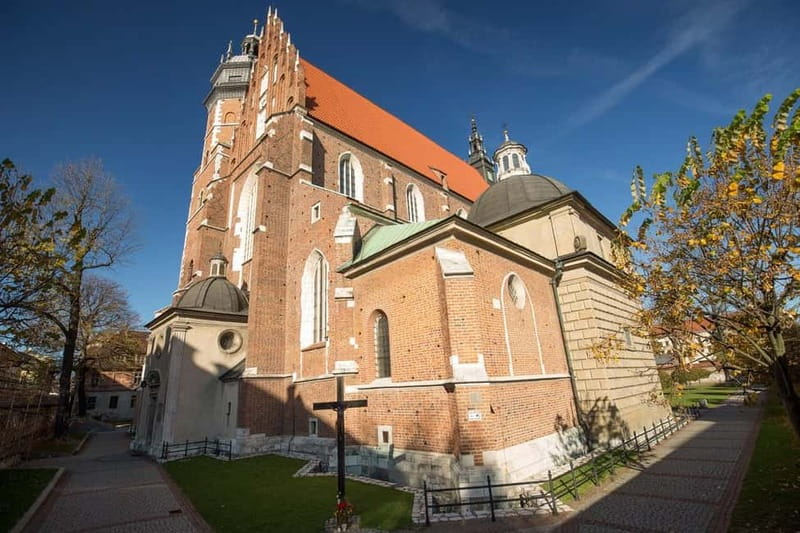
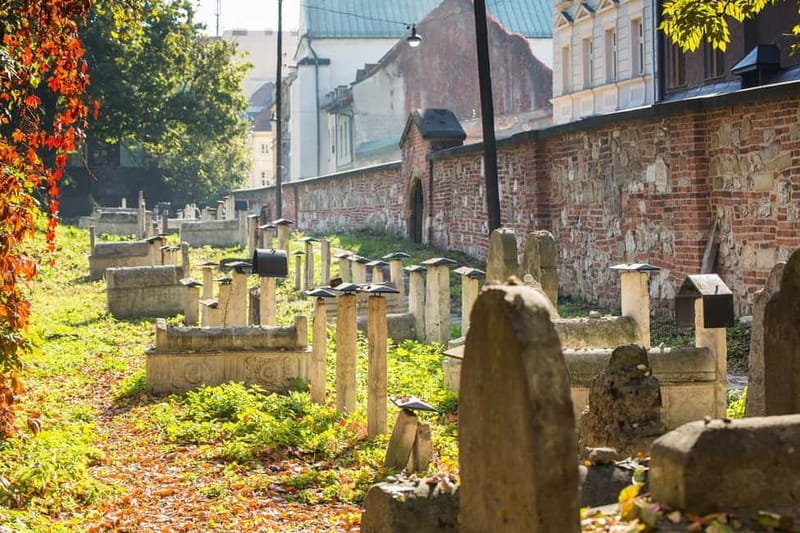
If you want one stop that changes your whole sense of the neighborhood, it’s the Remuh Synagogue and Cemetery area. The tour highlights it as having deep spiritual significance and lasting memory.
This part tends to feel different from typical sightseeing. Even if you don’t know the background beforehand, you can sense that the site is about respect, remembrance, and the continuity of memory through place.
I like that the tour doesn’t try to sensationalize this stop. It treats the cemetery and the synagogue area as what they are: a place where history is personal, not just academic.
Kupa Synagogue: Understanding Community Through Social Reality
Not every synagogue served the same social picture. The tour includes the Kupa Synagogue, connected to the poorer members of the community. That detail sounds small, but it’s a powerful teaching tool.
Instead of presenting Jewish history as one uniform story, this stop highlights differences in how people lived and how religious life reflected those realities. When you understand that, Kazimierz starts to read like a community ecosystem rather than a single chapter.
You may find yourself thinking differently about what you see: not just buildings, but people’s options, pressures, and the networks that kept the community functioning.
Tempel Synagogue: Aspirations, Assimilation, and Change
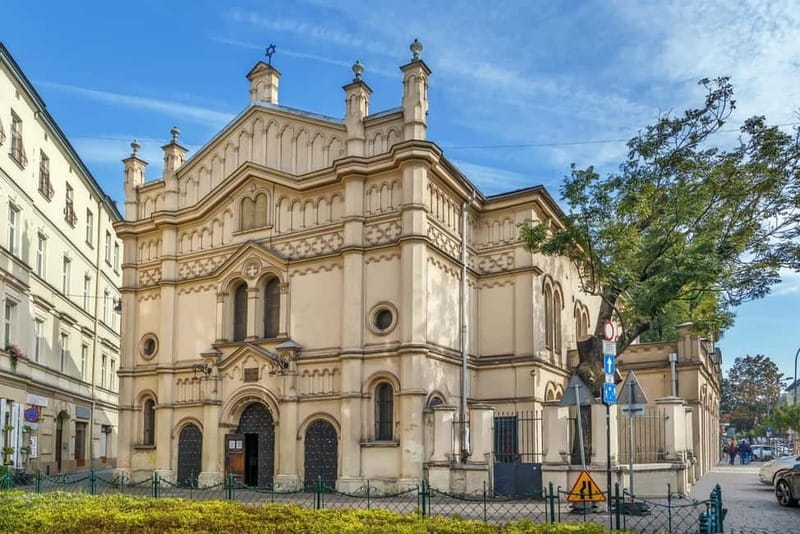
The route also passes by the Tempel Synagogue, described as reflecting the aspirations of a more modern, assimilated Jewish society. This is a key contrast stop after learning about Kupa.
The takeaway is not that one approach was right and another wrong. It’s that communities evolve. They adapt language, culture, and social goals—sometimes in visible ways in their religious institutions.
Seeing Kupa and Tempel as part of one walking narrative helps you understand coexistence on the ground. You’re not just reading history; you’re watching how ideas played out in institutions, and how that shaped the neighborhood.
Plac Nowy and the Overlap of Eras
The walk also includes Plac Nowy, an area where layers of history intersect with contemporary life. This stop helps you shift from “past on display” to “past in the present.”
It’s easy to get stuck in the memorial tone of Kazimierz. Plac Nowy brings you back to the reality that the district isn’t only about remembrance. It’s lived in, walked through, and used—today included.
That overlap is one of Kazimierz’s most honest features. The neighborhood doesn’t stop existing when history gets heavy.
Secluded Courtyards: The Stuff You Miss Without a Guide
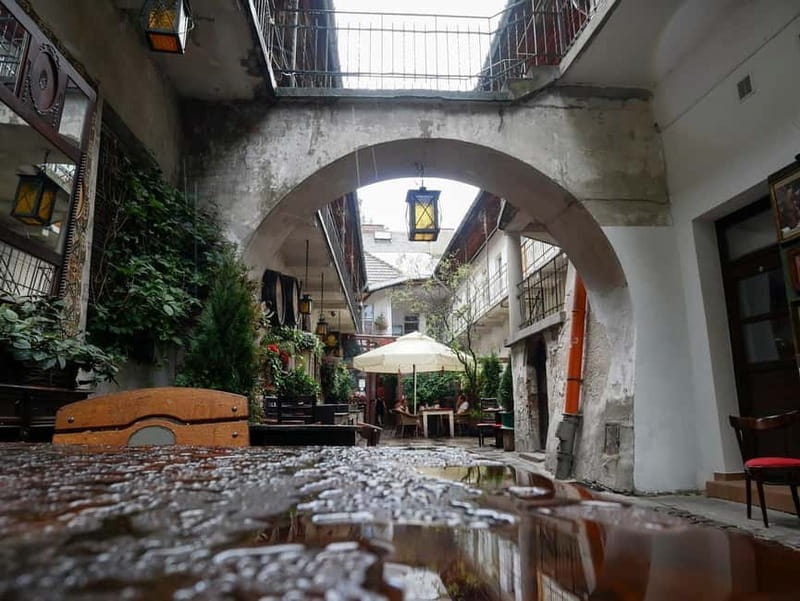
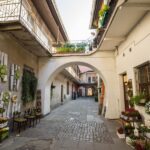
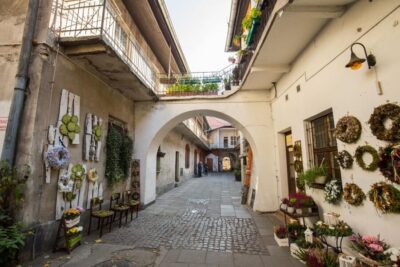
A highlight is the way the tour includes meaningful sites and secluded courtyards. These aren’t just pretty add-ons. Courtyards and tucked-away spaces often reflect how people organized daily life—how communities moved, gathered, and maintained separation or privacy where needed.
On your own, you might notice courtyards. But you might not understand their significance. With a guide, those spaces become part of the explanation of community life and the architectural logic behind it.
This is where the “local expert” factor matters. A good guide gives you interpretive keys—what to look for, why it mattered, and how one site connects to another.
Price, Time, and What You’re Really Paying For
This tour costs $27 per person and typically runs 90 minutes to 2 hours. That’s not a huge price tag for Krakow, especially for a walking tour that includes multiple important stops rather than just a street-level overview.
Here’s the value logic: you’re paying for licensed local guiding plus the structure of a route that connects religious sites, community differences, and historical context. Without that guidance, you could still walk Kazimierz—but you’d probably miss the meaning that turns the walk from pretty streets into a coherent story.
It’s also offered in many languages: Spanish, English, German, French, Italian, Swedish, Russian, Slovak, and Portuguese. If you need your preferred language, that’s a practical advantage.
If you’re the kind of traveler who likes your sightseeing to come with a clear framework (and not just random facts), this one fits.
Emotional Tone and Practical Tips Before You Go
The theme of the tour is memory, loss, and survival, shaped by faith and historical events. That’s not a problem. It’s just a heads-up: you should expect a reflective atmosphere.
You also need to be ready for a neighborhood walk. This isn’t marketed as suitable for people with mobility impairments or wheelchair users. Comfortable shoes are the simple fix, but it doesn’t change the fact that you’ll be moving through streets and tight spaces.
One small rule to note: alcohol and drugs aren’t allowed on the tour. Keep it simple and treat it like a respectful cultural visit.
Who This Tour Best Serves (And Who Might Prefer Something Else)
This Kazimierz tour is a strong match for you if you want:
- A guided walk that focuses on Jewish life and religious practice, not only broad history.
- A route that explains differences among community expressions, using stops like Kupa and Tempel.
- A structured way to see key places in a short time.
It may be less ideal if you:
- Need a fully accessible route for mobility reasons.
- Want a purely casual, lighthearted walk where every stop is upbeat.
If you’re aiming to understand Krakow beyond the main tourist highlights, Kazimierz is the logical place to spend your time, and a guided format helps you avoid wandering without direction.
Pairing This Walk With Your Krakow Plans (Including Auschwitz)
One reason this tour gets recommended so often is how well it connects with a larger itinerary. If you’re also visiting Auschwitz, this Kazimierz walk acts like an important emotional and cultural “prelude.” It gives you a sense of what life was, what community meant, and how places held memory before the most tragic events.
In other words, Auschwitz tells you what happened. Kazimierz helps you understand the people and culture that were interrupted. Doing both gives you context that feels more human and less abstract.
Should You Book the Krakow: Jewish Quarter Kazimierz Guided Walking Tour?
I think you should book if you want a guided, coherent way to experience Kazimierz’s synagogues, courtyards, and communal streets—and if you’re comfortable with a reflective tone.
Skip it or consider an alternative if accessibility is a major concern for you, or if you’d rather explore Kazimierz at your own pace without group timing and set-route stops.
Finally, choose the language you’ll understand best. This is the kind of tour where explanation matters, and you’ll get more out of the route when the guide’s words land clearly.
If that sounds like your style of travel—learning in the streets, not just reading later—this one is a solid use of your time in Krakow.
FAQ
How long is the Krakow Kazimierz Jewish Quarter walking tour?
It lasts about 90 minutes to 2 hours, depending on the specific starting time.
Where do I meet my guide?
Meet your guide on the steps of the Old Synagogue. The guide will hold an excursions.city sign.
What’s included in the price?
You get a licensed, professional local guide and a guided walking tour of the Kazimierz district.
What languages are available for the live guide?
The tour is available in Spanish, English, German, French, Italian, Swedish, Russian, Slovak, and Portuguese.
Is the tour suitable for wheelchair users or people with mobility impairments?
No. It’s not suitable for people with mobility impairments or wheelchair users.
What should I bring?
Bring comfortable shoes.
Is late arrival allowed?
No. After the group has set off, joining late is not possible, and refunds aren’t available for missed starts.
More Tour Reviews in Krakow
More Guided Walks Through Town

More of Jewish Kazimierz


Just added: fresh Krakow reviews
Kazimierz & Jewish Heritage Tours, compared.
 ★ 4.7Schindler’s Factory & Ghetto Guided TourFrom $571,694 reviews
 ★ 4.9Jewish Quarter and Former Ghetto TourFrom $191,441 reviews
 ★ 4.9Bike Tour of Old Town, Jewish Quarter and the GhettoFrom $371,155 reviews
 ★ 4.8Kazimierz Jewish Quarter Walking TourFrom $27571 reviews
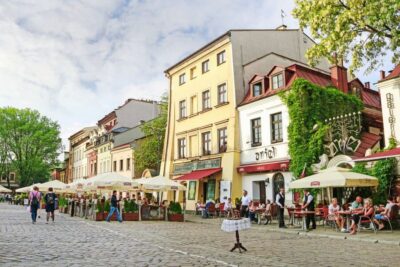 ★ 4.8Kazimierz, Schindler’s Factory & Ghetto Guided TourFrom $81460 reviews
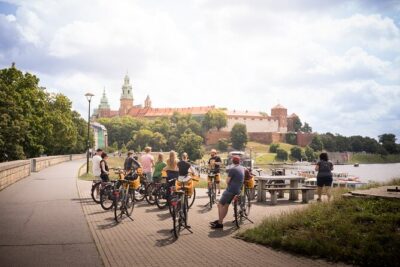 ★ 5.0Full Bike Tour – the Old Town, Jewish Qtr & the Ghetto NEW BIKESFrom $35437 reviews
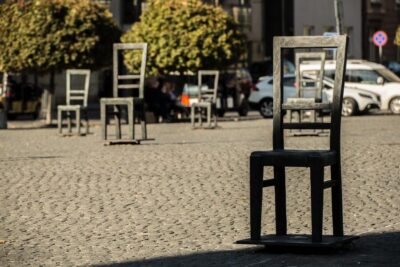 ★ 4.6Jewish Ghetto Walking TourFrom $11349 reviews
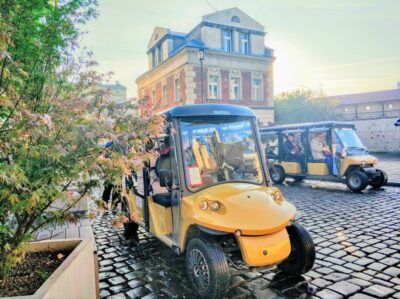 ★ 4.6Jewish Quarter and Ghetto Electric Golf Cart TourFrom $34348 reviews
Browse the lists this tour appears in