
REVIEW · KAZIMIERZ & JEWISH HERITAGE TOURS
Krakow Jewish Quarter Tour, Kazimierz and Ghetto
Kazimierz tells stories you can walk. This Krakow Jewish Quarter tour pairs the old streets of Kazimierz with the former WWII ghetto area, explained by a licensed English-speaking guide. It’s a 2-hour walk that connects everyday Jewish life, major synagogue buildings, and the hardest parts of Krakow’s history in one route.
I like two things most: the local guide keeps even heavy topics clear and easy to follow, and the stop list includes well-known synagogues such as Remuh and the Old Synagogue. One possible drawback: entrance fees for Remuh Synagogue and the Jewish cemetery are not included, so plan a little extra if you want to go inside.
In This Review
- Key things that make this tour worth your time
- Why Kazimierz and the Krakow ghetto walk belong on your map
- Meeting on Szeroka Street: what the walk sets up in the first 20 minutes
- Synagogues in Kazimierz: what you’ll actually see and why it matters
- The Jan Karski statue and the “people-first” storyline
- Schindler’s List sites: how to see the film connections without losing the truth
- From Kazimierz to the former ghetto: what changes as the walk turns
- Ghetto Heroes Square and Eagle Pharmacy: the ending stops that linger
- Private or small-group touring: why the guide’s style changes everything
- Timing and walking comfort for a 2-hour route
- Price and value: what $69 covers, and what costs extra
- Who should book this Kazimierz and ghetto tour
- Should you book? My practical call
- FAQ
- How long is the Krakow Jewish Quarter and Ghetto tour?
- Is this tour private or shared?
- What language is the tour guide?
- What does the tour cost and what’s included in the price?
- Do I need to pay entrance fees for synagogues?
- Are ticket lines skipped?
- Where do we meet for the tour?
- Is the tour wheelchair accessible?
- Can I cancel for a full refund?
- Is there a reserve-and-pay-later option?
Key things that make this tour worth your time
- Small-group feel (up to 10) or private option for more direct questions
- Major Kazimierz synagogue lineup: Old, Remuh, Tempel, Izaak, High Synagogue, and more
- Real street history in Szeroka Street—the social and religious center of the Jewish community
- WWII ghetto essentials: ghetto walls, Ghetto Heroes Square, and Eagle Pharmacy
- Film-linked locations with context like Mrs. Dresner courtyard and stairs from Schindler’s List
Deeper into Kazimierz and its Jewish heritage
- Krakow: Schindler’s Factory & Ghetto Guided Tour
★ 4.7 · 1,694 reviews - Krakow: Jewish Quarter and Former Ghetto Tour
★ 4.9 · 1,441 reviews - Krakow: Bike Tour of Old Town, Jewish Quarter and the Ghetto
★ 4.9 · 1,155 reviews
Why Kazimierz and the Krakow ghetto walk belong on your map
Kazimierz is the part of Krakow that makes you slow down. You’re moving through streets that were shaped by community life for centuries, not just sightseeing stops stacked for photos.
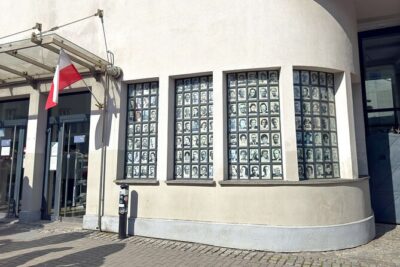
Then the tour shifts, with care, into the WWII-era ghetto story. You’ll see how the neighborhood’s everyday rhythm was interrupted by Nazi Germans during the Holocaust era, and you’ll visit key physical markers like the ghetto walls and Ghetto Heroes Square.
This is the kind of tour where a good guide matters. The strongest version of it is when someone can connect what you’re looking at—synagogues, courtyards, squares, walls—to what it meant for real people.
Meeting on Szeroka Street: what the walk sets up in the first 20 minutes
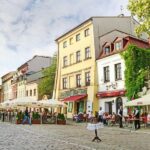
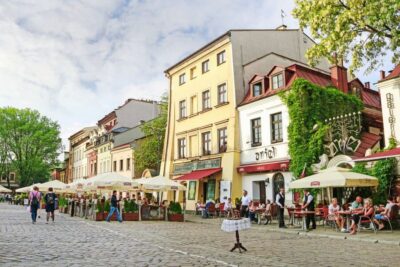
You start down Szeroka Street, described as the center of social and religious life for Krakow’s Jewish community over the centuries. That detail is more than background—it changes how you’ll read the area as you go.
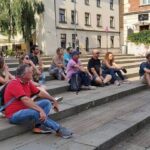
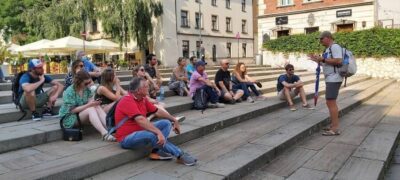
In the opening stretch, your guide sets expectations and frames what you’ll see next. I like tours that do this instead of launching straight into buildings, because it helps you notice small things: street shape, the feel of a courtyard, and why certain corners mattered.
If you’re the type who likes to ask questions, this is a good time to do it. The tour format leaves room for dialogue while still keeping you moving toward the synagogues and the ghetto segment.
Synagogues in Kazimierz: what you’ll actually see and why it matters
Kazimierz isn’t just one synagogue—it’s a whole cluster of Jewish life made visible through different houses of worship and community spaces. This tour hits multiple buildings, which helps you avoid the common mistake of treating Jewish Krakow as one uniform story.
Here are the synagogue stops you can expect to encounter during the Kazimierz portion:
- Remuh Synagogue: you’ll spend time sightseeing here before moving on
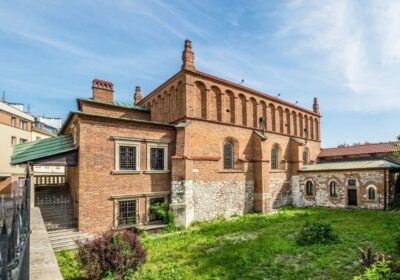
- Old Synagogue: a guided stop that helps you connect the building to the broader community timeline
- Izaak Synagogue: a shorter guided visit, but still part of the core synagogue set
- High Synagogue: a quick sightseeing stop, helpful if you want the full list of major names
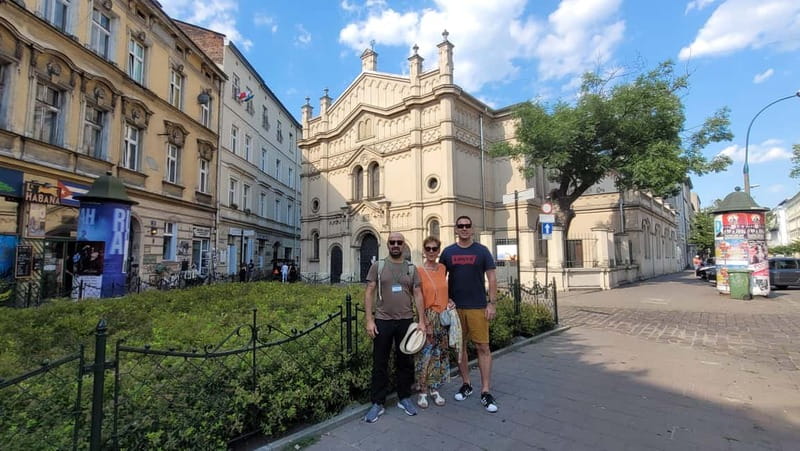
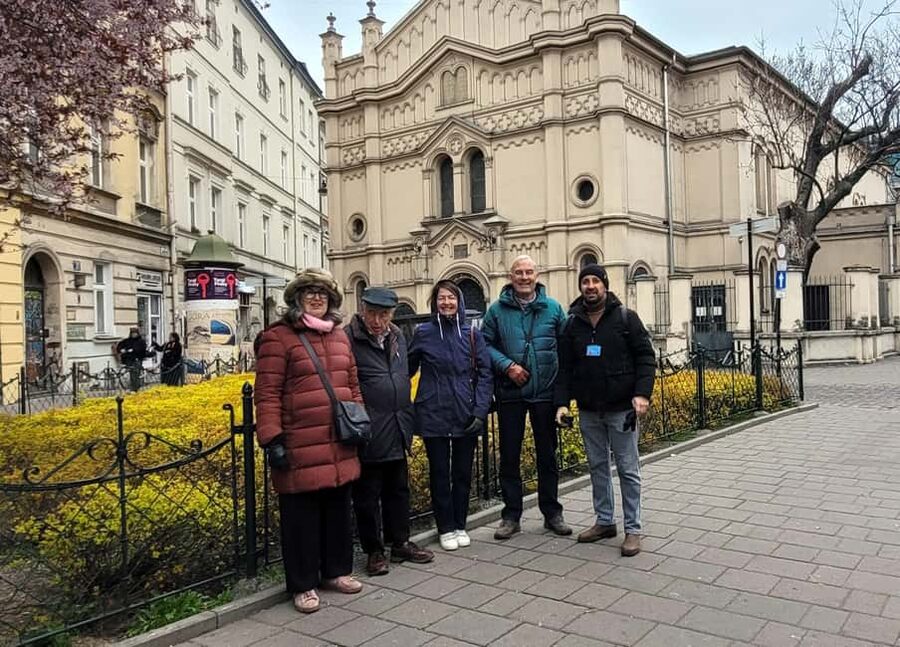
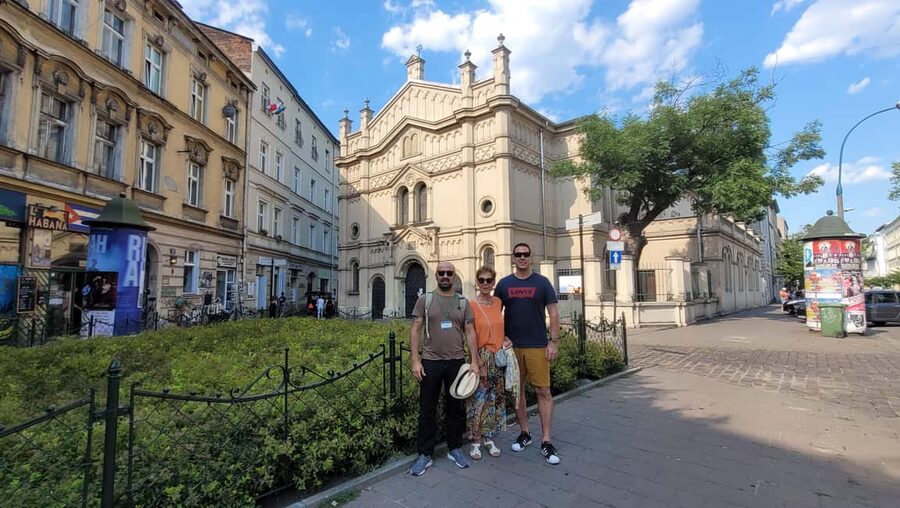
- Tempel Synagogue: guided time focused on its place in the neighborhood story
- Isaak/related synagogue context through the route’s overall set of stops
You’ll also hear about non-synagogue sites that were important in daily ritual and community life, like:
- the greater Mikveh building (a ritual Jewish bath)
- the Krakow J. C. C. Jewish Community Center
- Plac Nowy, described as a trade center for Jews in Krakow
- the Helena Rubinstein Family House and other notable courtyard/house stops along the way
Why this matters for your trip: synagogues and community buildings tell you how people lived—where they gathered, how they marked tradition, and how the neighborhood functioned day to day. Seeing several on one walk makes that logic easier than reading it later.
Practical note: Remuh Synagogue is flagged as having entrance fees and is specifically listed as not included. That means you might enjoy the exterior and guide commentary, but if you want to go inside, bring extra budget for the ticket.
- Krakow: Wieliczka Salt Mine Tour with Entry Ticket★ 4.6 · 10,927 reviews
- Krakow–Zakopane: Cable Car, Chocholow Baths, Cheese & Vodka★ 5.0 · 10,720 reviews
- Krakow: Auschwitz-Birkenau Guided Tour with Pickup & Lunch★ 4.5 · 9,800 reviews
- From Krakow: Wieliczka Salt Mine Tour★ 4.6 · 9,393 reviews
The Jan Karski statue and the “people-first” storyline
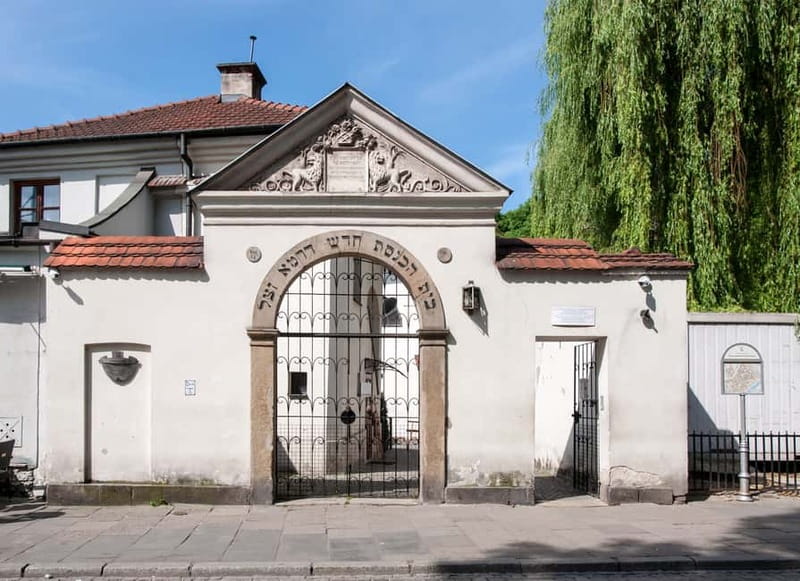
One of the more human moments on the route is the Jan Karski Statue—the man who tried to stop the Holocaust. That stop changes the vibe from place-based description to action-based history.
Karski isn’t just a name on a plaque here. With the guide explaining what you’re seeing, the tour ties the physical sites to the larger tragedy and the attempt to warn the world. It’s a reminder that history isn’t only architecture and dates—it’s people trying to act.
If you’re looking for a tour that doesn’t treat the Holocaust section like a checklist, this is a strong inclusion.
Schindler’s List sites: how to see the film connections without losing the truth
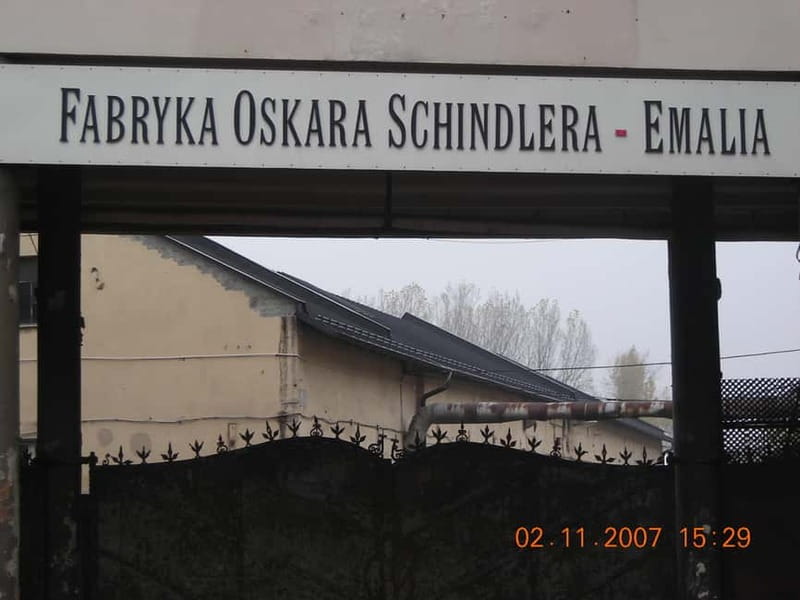
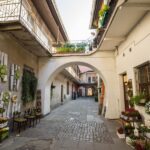
Some parts of this area have famous movie associations, and the tour doesn’t ignore that. You’ll visit Mrs. Dresner courtyard and stairs, explicitly noted as a Schindler’s List site.
Here’s the trick: film locations can get you thinking about lighting and camera angles, not history. A good guide helps you reframe it. You’ll get the broader context so the story doesn’t end at cinematic recognition.
If you’re a pop-culture fan, you’ll likely spot why the movie made people curious about Kazimierz in the first place. If you’re not, you’ll still be glad you’re walking the real streets instead of seeing a theme park version of them.
From Kazimierz to the former ghetto: what changes as the walk turns
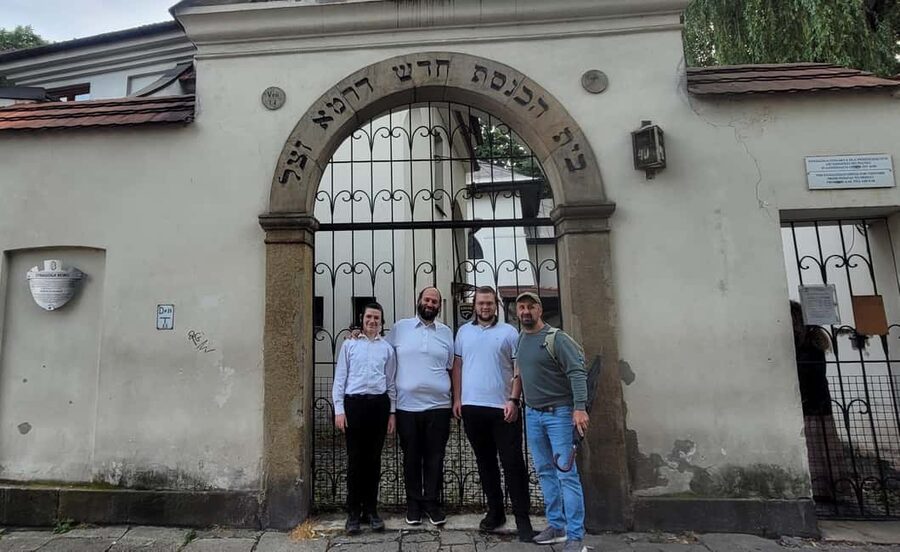
The second portion of the tour takes you into the former Jewish Ghetto area established during World War II by Nazi Germans. This is where the tone shifts, and it’s also where physical evidence becomes more obvious.
You’ll walk key stops such as:
- the Krakow Jewish Ghetto site
- the ghetto walls
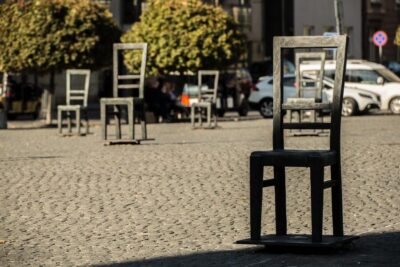
- Ghetto Heroes Square
- Eagle Pharmacy
Spending time at ghetto walls is one of those “your brain catches up” moments. Even without a long lecture, the structure forces you to think about separation—who was confined, how movement was restricted, and how that reality shaped everyday life.
A practical note: because this is a walking tour, pace matters. Plan comfortable shoes. Also, keep your phone battery ready for map-checking, because the area is layered and it can be easy to get turned around when you’re moving fast from point to point.
Ghetto Heroes Square and Eagle Pharmacy: the ending stops that linger
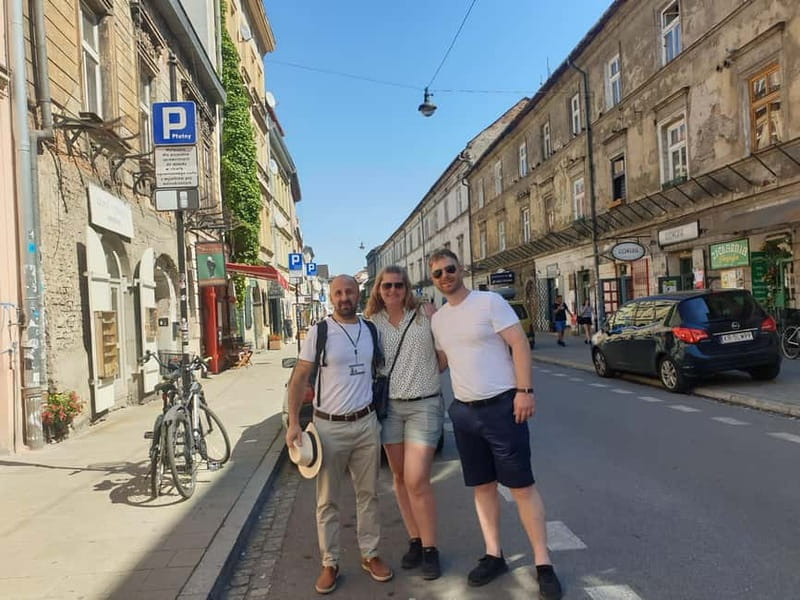
The tour wraps up with two of the most memorable story anchors.
First is Ghetto Heroes Square, where you’re given time to take it in. Moments like this matter because they shift you from seeing sites as individual objects to understanding the overall human impact.
Then there’s Eagle Pharmacy, known in the tour description as the one owned by the ghetto’s only non-Jewish resident. That detail sticks because it complicates the simple idea of “villain vs. victim” that some people carry in their heads. It introduces the uncomfortable reality that even under impossible conditions, individual roles and identities played out in specific ways.
I like tours that end with this kind of concrete, specific detail. It helps your memory hold onto what the places mean, not just what they look like.
Private or small-group touring: why the guide’s style changes everything
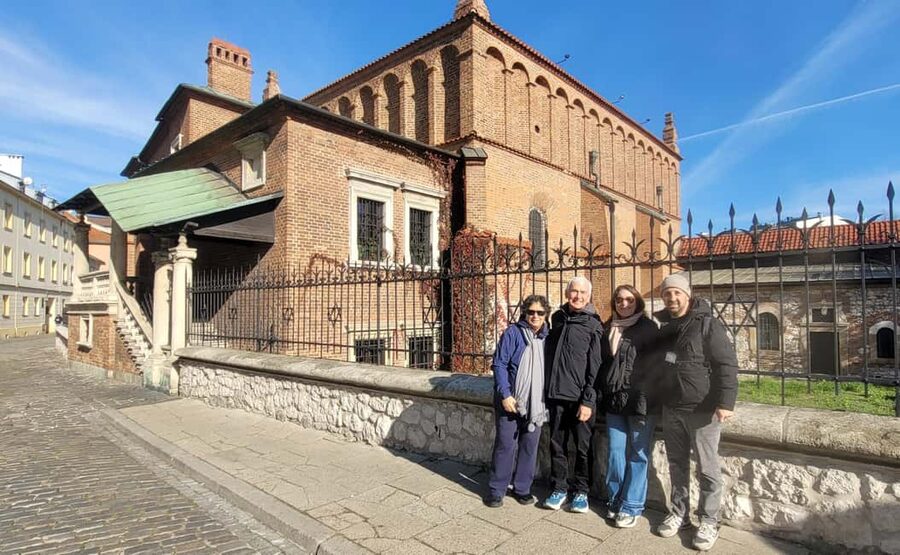
This is designed as either a private tour or a small group up to 10 persons. That matters in Kazimierz and the ghetto area because you’ll want to ask questions, especially when topics get complicated.
The tour is led by a licensed local guide in English. Based on the guide styles associated with this experience, the standout trait is how well they explain complex topics in accessible language and stick with your questions—patiently, without rushing you through.
If you’re traveling with teens, older family members, or a friend who hates vague tours, this format helps. You can tailor the pace a bit, and you’re less likely to feel like you’re being hurried past the emotional parts.
Timing and walking comfort for a 2-hour route
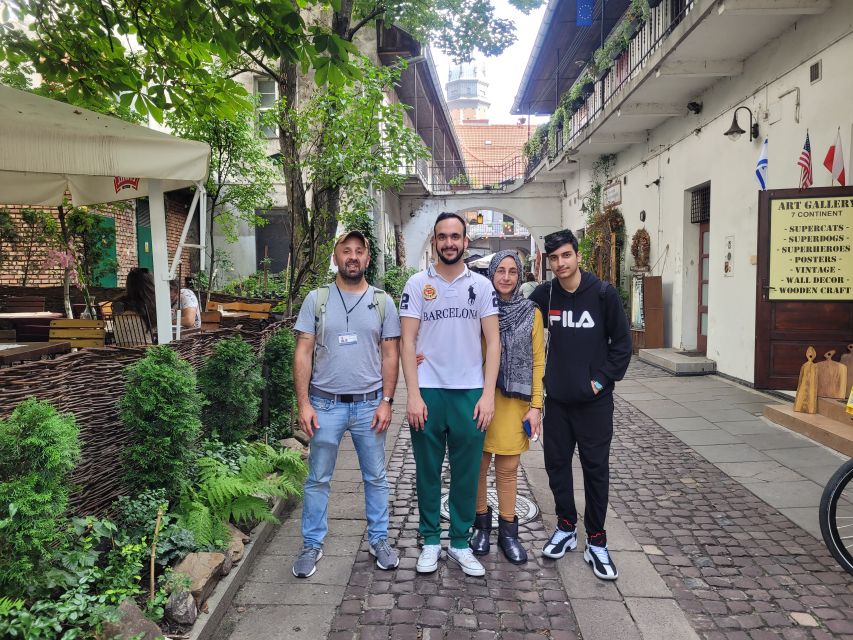
You’re signing up for a 2-hour walking experience, so you want to dress for movement. The route includes multiple guided segments plus sightseeing time at synagogues and squares, so expect several short stops rather than one long stop.
Because it’s a concentrated timeline, it’s not the best fit if you want to wander slowly on your own for long stretches. Think of it as a guided route that gives you structure—then you can explore deeper afterward on your own if you want.
The tour is also listed as wheelchair accessible, which is a helpful detail if mobility planning is part of your Krakow itinerary.
Price and value: what $69 covers, and what costs extra
At $69 per person for a 2-hour licensed guided walk, the value comes from what’s included. You’re not just buying a route—you’re buying interpretation, which is the difference between knowing the names of places and understanding why they matter.
Included:
- licensed guide service
Not included:
- entrance fee to Remuh Synagogue and the Jewish cemetery
So your total cost depends on whether you add those entrances. If you’re trying to keep expenses tight, you can still enjoy the guided context and exterior sightseeing where applicable. If you want to go inside the buildings that require tickets, budget for it up front.
Also, the experience notes skip the ticket line, which is a real time saver if tickets are busy.
Who should book this Kazimierz and ghetto tour
Book this if you want:
- a focused walk that combines Kazimierz synagogues with the former WWII ghetto sites
- an English-speaking licensed guide who can explain history clearly
- a route that includes both well-known locations (like Schindler’s List-connected sites) and more grounded markers like ghetto walls and Ghetto Heroes Square
Consider a different format if you want a slow, self-guided wander with no structure. This tour is short by design, and it moves from stop to stop with guided interpretation.
Should you book? My practical call
Yes—if you want a tight, meaningful way to understand Krakow’s Jewish Quarter and the ghetto area, this is an efficient choice. The biggest reason is the combination: you get the synagogue and community-life context in Kazimierz, then you get the ghetto history with the physical sites that make it real.
Just plan for one thing: entrance costs for Remuh Synagogue and the Jewish cemetery may add to your budget. If that won’t bother you, book it and use the guide’s explanations to “read” the streets instead of just passing through them.
FAQ
How long is the Krakow Jewish Quarter and Ghetto tour?
It lasts about 2 hours.
Is this tour private or shared?
You can choose either a private tour or a small group. The small group size is listed as up to 10 persons.
What language is the tour guide?
The live tour guide speaks English.
What does the tour cost and what’s included in the price?
The price is listed as $69 per person, and it includes a licensed tour guide service.
Do I need to pay entrance fees for synagogues?
Entrance fees to Remuh Synagogue and the Jewish cemetery are not included.
Are ticket lines skipped?
Yes, the tour notes skip the ticket line.
Where do we meet for the tour?
The meeting point may vary depending on the option booked, and Szeroka 6 is listed as a starting location option.
Is the tour wheelchair accessible?
Yes, the tour is listed as wheelchair accessible.
Can I cancel for a full refund?
You can cancel up to 24 hours in advance for a full refund.
Is there a reserve-and-pay-later option?
Yes, you can reserve now and pay later (pay nothing today).
More Tours in Krakow
More Tour Reviews in Krakow
More of Jewish Kazimierz

Just added: fresh Krakow reviews
Kazimierz & Jewish Heritage Tours, compared.
 ★ 4.7Schindler’s Factory & Ghetto Guided TourFrom $571,694 reviews
 ★ 4.9Jewish Quarter and Former Ghetto TourFrom $191,441 reviews
 ★ 4.9Bike Tour of Old Town, Jewish Quarter and the GhettoFrom $371,155 reviews
 ★ 4.8Kazimierz Jewish Quarter Walking TourFrom $27571 reviews
 ★ 4.8Kazimierz, Schindler’s Factory & Ghetto Guided TourFrom $81460 reviews
 ★ 5.0Full Bike Tour – the Old Town, Jewish Qtr & the Ghetto NEW BIKESFrom $35437 reviews
 ★ 4.6Jewish Ghetto Walking TourFrom $11349 reviews
 ★ 4.6Jewish Quarter and Ghetto Electric Golf Cart TourFrom $34348 reviews
Browse the lists this tour appears in