
REVIEW · KAZIMIERZ & JEWISH HERITAGE TOURS
Krakow: Old Town, Jewish Kazimierz and Ghetto Sightseeing by Electric Golf Cart
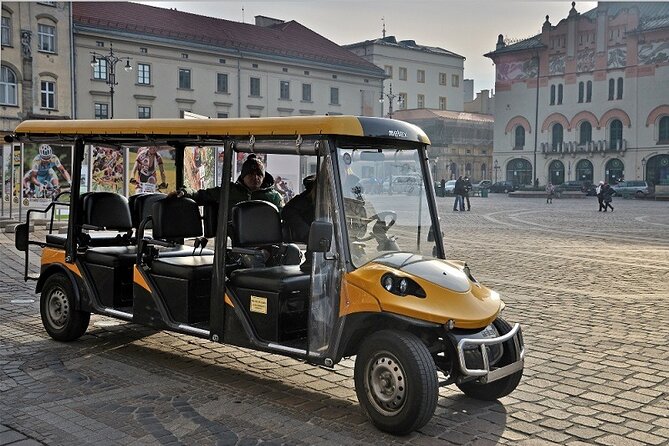
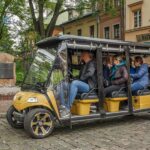
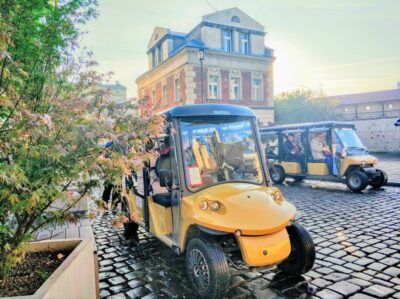
Kraków in 2.5 hours, without the leg workout. I like how this electric golf cart loop gets you to the big landmarks fast, and I also like the way the route strings Old Town and Jewish Kraków together with an audio setup that helps you follow along even when you’re squeezing in photos. The tradeoff is timing: stops can feel brief, and the Old Town can get crowded enough that parked carts can block your view at moments.
Small group also matters here. With a maximum of 8 travelers, you’re not fighting the crowd just to hear your guide, and the driver-guide combination (often praised in the feedback) keeps the stories clear and paced for a short visit. You also get a practical reminder that the vehicle has limited space, so plan for no large baggage.
If you’re the type who wants long cathedral pauses at every stop, you might find yourself wishing for extra minutes. For most people, though, it’s a strong way to get your bearings fast and leave Kraków knowing what you’ll want to return to on your own.
In This Review
- Key things I’d focus on
- Why a golf cart tour works in Kraków’s tight center
- Kraków’s Market Square and Cloth Hall: the city’s visual center
- Town Hall Tower and St. Mary’s Basilica: from civic power to superstar art
- Juliusz Słowacki Theatre and the Barbican’s legend of one shot
- Kazimierz: the Jewish quarter you can understand in one route
- Tempel Synagogue and Szeroka Street: stained glass and the street’s crowd history
- Remuh Synagogue after the April 2016 renovation
- Podgórze market square, ghetto wall fragment, and the Umschlagplatz stop
- Tadeusz Pankiewicz and the pharmacy chapter
- Price and value: is $56.47 a smart use of your time?
- Photo time, crowds, and the one thing to do right away
- Who should book this electric-cart loop?
- Should you book it?
- FAQ
- How long is the Kraków Old Town, Jewish Kazimierz and Ghetto sightseeing tour by electric golf cart?
- What language is the tour offered in?
- What is the group size limit?
- What should I bring regarding luggage?
- Where do I meet the tour and where does it end?
- Is a mobile ticket provided?
- Can I cancel for free?
Key things I’d focus on
- Electric golf buggy + audio system: easy transportation plus narration so the route makes sense.
- Small-group limit of 8: calmer experience than typical big-bus sightseeing.
- Old Town to Kazimierz to the ghetto corridor: one continuous story line, not separate tours.
- Iconic set pieces in short time: Market Square, Cloth Hall, Town Hall Tower, St. Mary’s Basilica.
- Jewish Kraków highlights: Tempel Synagogue stained glass, Szeroka Street’s synagogue history, Remuh’s renovation era.
- The emotional pivot point: preserved ghetto wall fragment and Umschlagplatz at Plac Zgody.
Deeper into Kazimierz and its Jewish heritage
- Krakow: Schindler’s Factory & Ghetto Guided Tour
★ 4.7 · 1,694 reviews - Krakow: Jewish Quarter and Former Ghetto Tour
★ 4.9 · 1,441 reviews - Krakow: Bike Tour of Old Town, Jewish Quarter and the Ghetto
★ 4.9 · 1,155 reviews
Why a golf cart tour works in Kraków’s tight center
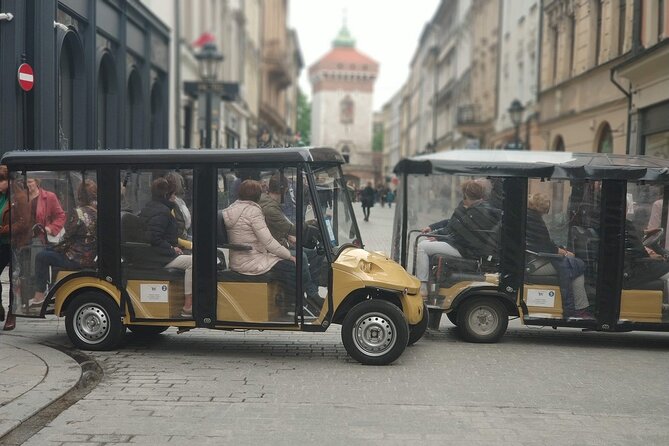
Kraków is one of those cities where the most important sights are close together, but the sidewalks still get jammed. A quiet electric golf buggy helps you cover distance without feeling like you’re sprinting between spots. For a time-tight itinerary, it’s a smart format: you get to see a lot, then decide later what deserves a slower, deeper visit.
This tour is built for that “overview first” mindset. You move around efficiently, and you get audio support through the route, so the history and place names don’t blur into one long list. The vibe stays practical rather than lecture-y, which is exactly what you want when you only have a few hours.
There’s also a comfort angle. One reason people rate this so high is that the cart makes it easier to keep up if walking farther feels tough. Just remember the vehicle is designed for passengers who can sit, so you should travel light.
Kraków’s Market Square and Cloth Hall: the city’s visual center
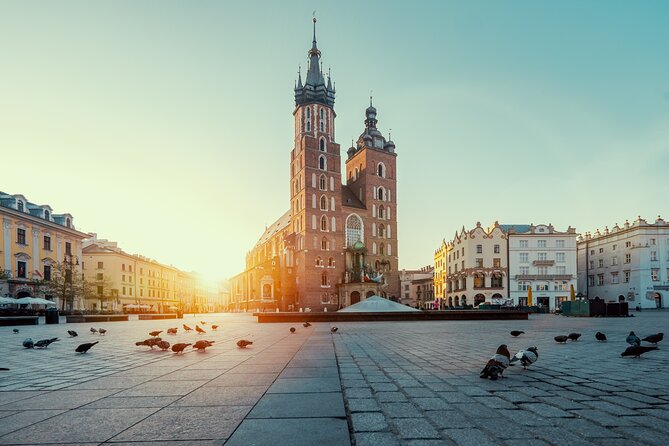
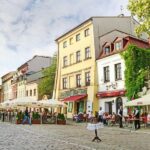
The tour typically starts by landing you in Kraków’s defining public space: the Main Market Square. It’s described as the most important public space in Kraków, and it really does feel like the city’s stage set. Even if you’ve seen photos before, standing here is different because the scale and the medieval rhythm hit immediately.
From there, you head to Sukiennice, the Cloth Hall. This building is called Kraków’s oldest commercial center, and that’s the key idea to keep in mind: it isn’t just an attractive facade. It’s an architectural anchor for how people traded, gathered, and did business for centuries.
What you’ll notice on the ground
- The Market Square gives you a “where am I?” reference point for the rest of the Old Town.
- Sukiennice’s renaissance character makes the square feel more than medieval postcard material.
A small practical note
If you want the perfect photo, aim for quick framing. Market Square can be busy, and cart positioning can affect your angle, especially during peak daytime.
Town Hall Tower and St. Mary’s Basilica: from civic power to superstar art
Next up is a stop that mixes height, authority, and a hint of darker medieval history: the Town Hall Tower. The description highlights 70 meters tall and 110 stone steps, plus the executioner’s dungeons as part of its older story. Even if you don’t climb, the building tells you how important city governance was, and how “public” power used to be.
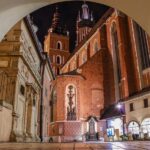
Then the tour brings you to the big art moment: St. Mary’s Basilica. This is one of those churches that people come for even if they’re not religious. The anchor is the high altar by Veit Stoss. The second big detail is the bugle call, tied to the basilica’s identity and daily rhythm.
The vaulting murals are the other reason this stop matters. You’ll hear about star-strewn paintings by Jan Matejko covering the vaulting. That’s a lot to take in quickly, but that’s exactly why the narrated format helps—you get the right names and the main features in time, rather than just staring at a beautiful ceiling with no context.
Potential drawback
Church stops can be brief, and some people want more time for close-up photos inside. If that’s you, ask the guide how much you can realistically see before the cart moves on, and plan to do deeper interior time later on your own.
Around the Rynek and the Cloth Hall, a few more
- Krakow: Bike Tour of Old Town, Jewish Quarter and the Ghetto★ 4.9 · 1,155 reviews
- Krakow: The Old Town Walking Tour★ 4.8 · 794 reviews
- Krakow: Old Town Guided Segway Tour★ 4.7 · 756 reviews
- Kraków: Old Town & Wawel Castle Walking Tour in English★ 4.8 · 532 reviews
Juliusz Słowacki Theatre and the Barbican’s legend of one shot
The route also includes the Juliusz Słowacki Theatre, a famous Kraków stage that has operated continuously since 1893. This isn’t only a “pretty building” stop. The idea here is to show you how Kraków’s cultural life grew and stayed central, even as the city’s politics and borders changed.
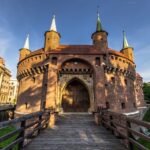
From there, you hit the Barbican, described as a pearl of Kraków fortifications and one of the best medieval military architecture examples in Europe. What makes it especially interesting is the legend tied to its defense: it says the defenders repulsed attackers with a single shot. Even if you take legends with a pinch of caution, the point is clear—this structure represents defense that didn’t buckle easily.
Why this combo makes sense
- A theatre building helps you see Kraków’s civic imagination.
- A fortification stop reminds you how seriously the city treated survival.
It’s an efficient mix of culture and defense, and it keeps the tour from feeling like only religious and museum stops.
Kazimierz: the Jewish quarter you can understand in one route
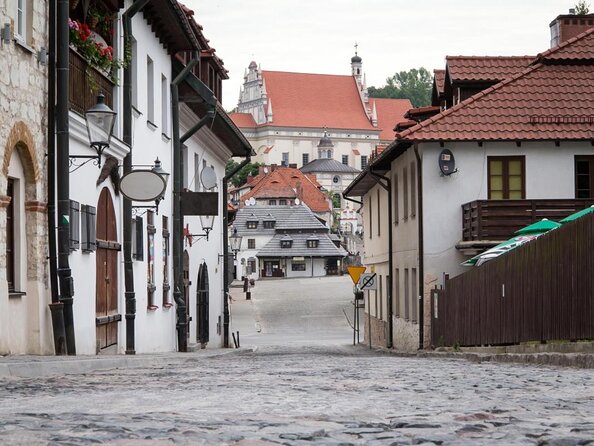
Now the tour pivots to Jewish Kraków through Kazimierz. The neighborhood is described as the hub of Jewish life for centuries, and today it’s one of Kraków’s major attractions. That matters because Kazimierz isn’t just a place to shop or pose for photos. It’s also where the city’s layered community story becomes visible street by street.
Electric cart touring is useful here too. Kazimierz has its own texture and smaller streets, and moving by vehicle helps you see the neighborhood shape without wearing yourself out. You get a sense of how the area connects back to the Old Town while still feeling like a different world.
If you’re hoping for an emotional but meaningful sequence, this part is where the tour starts to feel less like sightseeing and more like guided orientation.
Tempel Synagogue and Szeroka Street: stained glass and the street’s crowd history
One of the standout stops is the Tempel Synagogue. The description calls out stained glass windows as among the best preserved of their kind in Poland. That’s a concrete detail you can actually look for, even on a short visit.
Another key point is the synagogue’s non-orthodox character. That tells you you’re not only seeing buildings that share one uniform style. You’re seeing different currents within Jewish community life across time.
Then comes Szeroka Street, identified as the heart of Jewish Kazimierz. The story there is not abstract. It highlights that four synagogues used to stand on the street, something described as unheard of anywhere else in Europe. That detail changes how you picture the area: it’s not one famous synagogue that anchors everything. It’s a concentrated religious landscape.
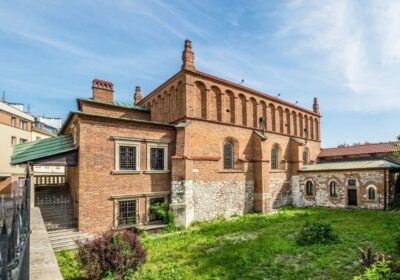
The tour also notes a synagogue on Szeroka Street as one of the oldest synagogues in Poland preserved in such good condition. Even without lingering for long, that’s the kind of fact that makes the place feel real instead of generic.
Tip for your photos
Szeroka Street can be active, and you won’t get endless time at every doorway. If photos matter most, pick what you want first: stained glass angles for Tempel, then doorway facades and street context on Szeroka.
Remuh Synagogue after the April 2016 renovation
The next synagogue stop shifts the mood. Remuh is described as the smallest of Kraków’s seven synagogues, and the decor is described as more modest compared to the others. The tour also notes that after renovation completed in April 2016, it became the main site of prayer for the Jewish community in Kraków.
This is one of those stops that rewards you for paying attention to scale. Big, dramatic monuments can steal the show, but a smaller synagogue can feel more intimate and human in the short time you have. The modest decor isn’t a downgrade. It’s a clue that religious life and community practice weren’t only built on grand showpieces.
If you like your sightseeing to include variety, Remuh provides that. It helps balance the big-name, high-art moments earlier in the tour.
Podgórze market square, ghetto wall fragment, and the Umschlagplatz stop
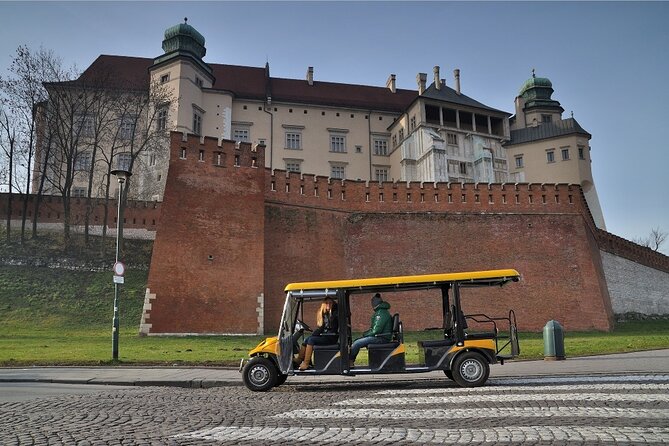
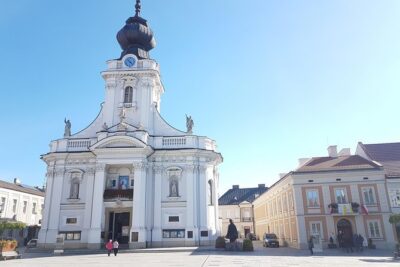
The tour then moves into Podgórze, where the story becomes harder and heavier. St Joseph Church is described as dominating the Podgórze Market Square, a central point that only got incorporated to Kraków in the 20th century. This is a reminder that cities don’t stay fixed. Places can be added, renamed, repurposed, and rebuilt over time.
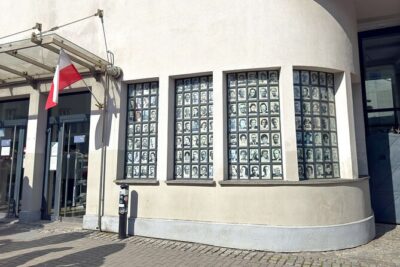
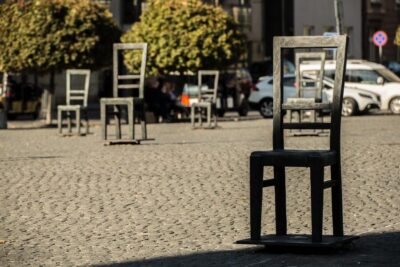
After that, you’ll see a small fragment of the original wall around the former ghetto, with a plaque commemorating the fate of the inhabitants. Even though it’s a small section, it carries a lot of weight because it’s a physical remainder of the space where people were trapped.
The tour’s most pivotal historical stop is Plac Zgody, formerly known as Concord Square, and described as the site designated as Umschlagplatz under Nazi occupation. This is where Jews were forced to congregate before deportation.
You’ll want to take this part seriously, even if the cart format means you’re moving on quickly. If you’re the type who likes to keep the emotional weight in the room, pause for a moment and absorb the plaque. Then continue with respect.
Practical note
This isn’t a “fun photo” section. Plan your phone use. Give yourself a little quiet headspace so the rest of your day doesn’t feel like it’s rushing past something important.
Tadeusz Pankiewicz and the pharmacy chapter
The final leg includes a story tied to Tadeusz Pankiewicz. The tour description says he took over his father’s pharmacy and could not have foreseen the history that would come from it.
Even if you don’t catch every detail from a brief stop, the point is that Kraków’s ghetto narrative isn’t only about what happened to people. It also connects to the human choices made by individuals in terrible circumstances.
If you want to learn more after the tour, this is the type of stop that naturally makes you want a second look. The cart tour can introduce the name and context; then you can follow up with a longer visit elsewhere in town.
Price and value: is $56.47 a smart use of your time?
At about $56.47 per person for roughly 2 hours 30 minutes, you’re paying for speed plus structure. You’re not paying for a slow, walking-only immersion. You’re paying for efficient routing that hits major landmarks: Market Square, Cloth Hall, Town Hall Tower, St. Mary’s Basilica, the theatre, the Barbican, plus multiple stops across Kazimierz and the ghetto zone.
Here’s how I think about value in a city like Kraków:
- If you only have one day and you want the “top hits” across very different neighborhoods, this kind of cart tour can save you hours of map-work and backtracking.
- If you already plan to spend a full day in Old Town and a separate full day in Kazimierz, you might decide the cart tour is extra.
- If walking long distances is a concern, the electric cart format is not a gimmick. It’s a practical way to see more without burning your energy.
The most common complaint pattern in the feedback is not that the tour lacks sights. It’s that time at each place can feel short, especially for photos and for people who want to step inside longer. So the value question depends on your style: overview-goal travelers usually get great mileage out of it.
Photo time, crowds, and the one thing to do right away
The tour’s biggest limitation is simple: you’re sharing space in a popular city center with other sightseeing groups and other carts. When it gets busy, views can be blocked and your window to photograph can shrink. That doesn’t mean the tour is bad. It means you should manage expectations.
If you want the best results:
- Consider earlier time slots, because later in the day it tends to get more congested.
- Ask the guide for the best photo pause at each stop, rather than assuming you’ll have time to wander freely.
- Keep your camera ready before you arrive. With short stops, you don’t want to be fumbling while the cart is waiting.
Also, pack light. The vehicles only have room for passengers to sit. Large baggage can be an issue.
Who should book this electric-cart loop?
This tour fits best if:
- You have limited time and want a coherent route across Old Town + Kazimierz + key ghetto sites.
- You want to learn the main names and landmarks without building an itinerary from scratch.
- You prefer a guided pacing system and an audio layer that keeps you oriented.
- You’d rather see more than risk skipping things because your feet are tired.
It might be less ideal if:
- You want long, unhurried time inside each church or synagogue.
- You’re picky about photography and want extended interior time at every stop.
- You hate crowds and won’t be able to tolerate busier Old Town moments.
The good news is that the tour format is flexible in small ways. People have noted that some guides are willing to help with short entry and photo moments when possible, which can make a short stop feel more worthwhile.
Should you book it?
If your goal is to get your bearings fast and cover the major sights that connect Kraków’s Old Town to Kazimierz and the ghetto corridor, I’d book this. The strongest reason is the layout: you’re not just seeing one neighborhood. You’re getting a guided line through the city’s biggest chapters in one trip.
I’d skip it only if you’re planning a slow, detailed deep-dive day with multiple long museum sessions, because a cart tour can’t replace the time you’d want for that. But if you’re the practical planner type, this is one of the easier ways to make a short Kraków visit feel complete.
FAQ
How long is the Kraków Old Town, Jewish Kazimierz and Ghetto sightseeing tour by electric golf cart?
It runs for about 2 hours 30 minutes.
What language is the tour offered in?
The tour is offered in English.
What is the group size limit?
This is a group tour with a maximum of 8 travelers.
What should I bring regarding luggage?
Please do not bring large baggage, since the vehicles only have enough room for passengers to sit.
Where do I meet the tour and where does it end?
The start is Mikołaja Zyblikiewicza 2, 31-029 Kraków, and the end is Mikołaja Kopernika 3, 31-034 Kraków.
Is a mobile ticket provided?
Yes, the tour includes a mobile ticket.
Can I cancel for free?
Free cancellation is available. You can cancel up to 24 hours in advance for a full refund.
The City in a Day, More Ways

More Around the Main Square


More of Jewish Kazimierz
Just added: fresh Krakow reviews
Kazimierz & Jewish Heritage Tours, compared.
 ★ 4.7Schindler’s Factory & Ghetto Guided TourFrom $571,694 reviews
 ★ 4.9Jewish Quarter and Former Ghetto TourFrom $191,441 reviews
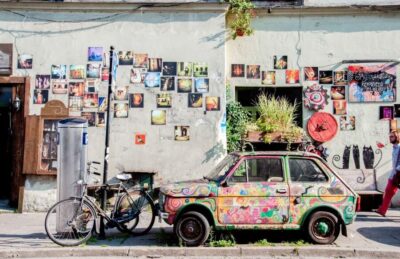 ★ 4.9Bike Tour of Old Town, Jewish Quarter and the GhettoFrom $371,155 reviews
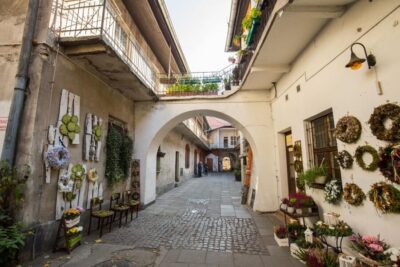 ★ 4.8Kazimierz Jewish Quarter Walking TourFrom $27571 reviews
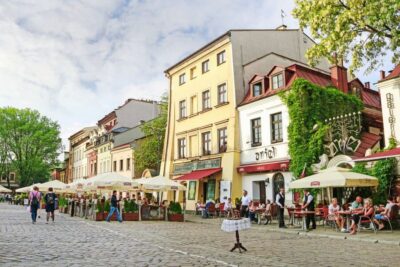 ★ 4.8Kazimierz, Schindler’s Factory & Ghetto Guided TourFrom $81460 reviews
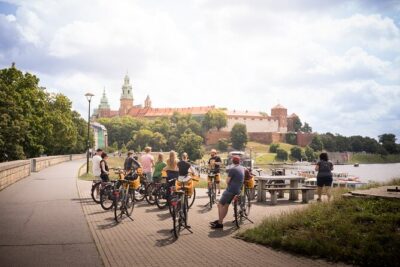 ★ 5.0Full Bike Tour – the Old Town, Jewish Qtr & the Ghetto NEW BIKESFrom $35437 reviews
 ★ 4.6Jewish Ghetto Walking TourFrom $11349 reviews
 ★ 4.6Jewish Quarter and Ghetto Electric Golf Cart TourFrom $34348 reviews
Browse the lists this tour appears in