
REVIEW · SCHINDLER'S FACTORY & WWII TOURS
Krakow: Plaszow Concentration Camp Guided Walking Tour
Płaszów hits hard, even before you reach it. I love how the tour links Ghetto Heroes Square to the camp’s remaining grounds, and I love how it keeps Schindler in the story instead of treating him like a side note. One possible drawback: you should be ready for emotional material and a fair amount of walking over an uneven memorial area.
This is also the kind of history tour that uses what’s still there—ruins, traces, and mapped-out sites—so the place stops feeling abstract. Guides (including Bartholomew, Barbara, and Phil) are praised for explaining what you’re looking at and answering questions as you go, often using photos from different eras to help you visualize what’s missing.
The tour runs in English in a group capped at 25 people, with a set starting point on Plac Bohaterów Getta 18. If you arrive late, you can’t join after the group departs, so plan to be there early with comfortable shoes.
In This Review
- Key highlights for a Płaszów walking tour in Krakow
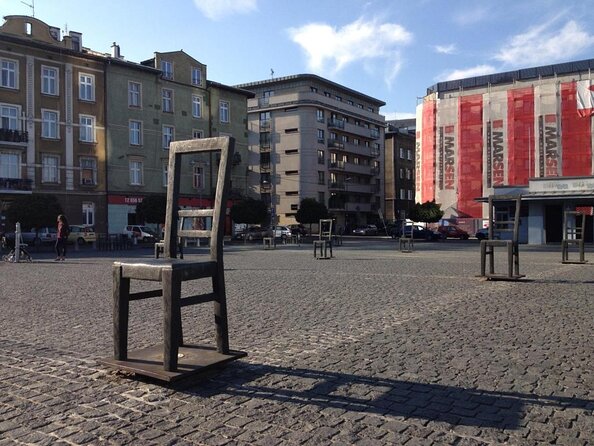
- Where the story begins: Ghetto Heroes Square (Plac Zgody)
- Entering Płaszów: a labor camp, then a concentration camp, then transit
- Following the camp layout: Grey House, roll-call ground, and cemetery traces
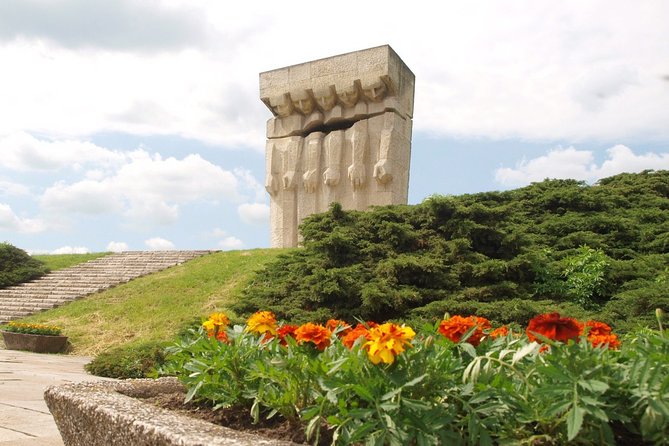
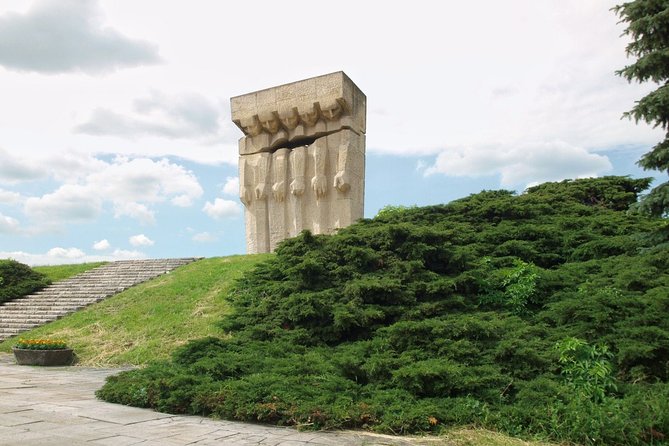
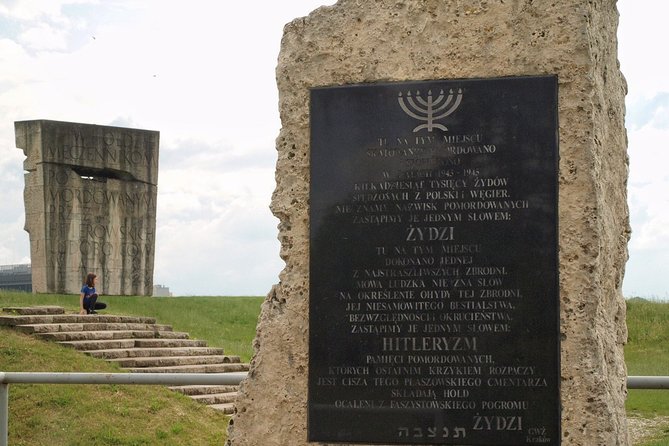
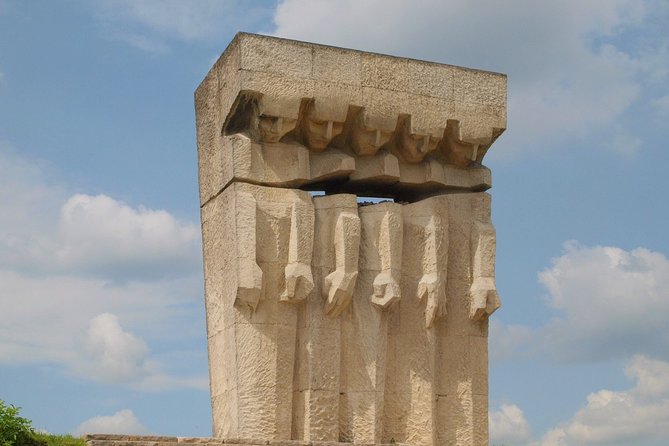
- Monument stops and reflection points: Monument of Torn-Out Hearts
- Schindler’s thread through Płaszów: work permits, registration, and Brunnlitz
- How the walk fits your day: timing, moving between stops, and shoe choice
- Price and value: what $30 gets you in Kraków
- Who this tour is best for (and who should pick something else)
- Quick practical tips to make your tour smoother
- Should you book the Kraków Płaszów guided walking tour?
- FAQ
- How long is the Krakow: Plaszow Concentration Camp Guided Walking Tour?
- What language is the tour offered in?
- Where do I meet and where does the tour end?
- Is the tour ticket available on a phone?
- Do I need to pay admission at the stops?
- How early should I arrive?
- What is the cancellation policy?
Key highlights for a Płaszów walking tour in Krakow
- Ghetto Heroes Square ties together control, registry, and the departure point for transports
- Płaszów’s camp changes over time, from forced labor to concentration camp to transit role
- What survives on the ground: the Grey House, roll-call space, and clues from former cemetery areas
- Memorials you’ll reflect at, including the Monument of Torn-Out Hearts
- Schindler’s practical impact on prisoner work permits and wartime transfers to Brunnlitz
- Small-group pace for a guided walk that’s roughly two hours total
More of Krakow under the wartime occupation
- Krakow: Schindler’s Factory Ticket and Guided Tour Option
★ 4.3 · 4,306 reviews - Krakow: Schindler’s Factory Tour with Entrance Ticket
★ 4.5 · 3,182 reviews - Krakow: Schindler’s Factory Skip-the-Line Ticket
★ 4.4 · 3,105 reviews
Where the story begins: Ghetto Heroes Square (Plac Zgody)
Your walk starts at Apteka pod Orłem on Plac Bohaterów Getta 18, right by the square now called Ghetto Heroes Square. It’s a short stop—about 15 minutes—but it matters because it explains the camp story isn’t isolated. It connects Kraków’s Jewish ghetto to the machinery that controlled people’s lives and decided who was sent where.
Before the war, this place was known as Plac Zgody. During the occupation it functioned as the logistical heart of the ghetto—think control, registration, and the departure point for transports. After the war, it was renamed to remember Ghetto Heroes Square, so you’re standing in a real “before and after” location, not just learning names.
I like this first stop because it sets your brain up for what follows. When you move on to Płaszów, you understand the logic behind the terror: records, movement, and forced compliance.
Entering Płaszów: a labor camp, then a concentration camp, then transit
The next phase takes you into Płaszów Concentration Camp, created by Nazi German occupiers in October 1942 on the grounds of two Jewish cemeteries in Kraków. This is one of those places where the official labels changed over time, but the harm did not.
At first, Płaszów operated as a forced-labor camp holding Jews from the liquidated Kraków ghetto. From July 1943, it also included a penal-labor section for Poles. Then in January 1944, it was redesignated as a concentration camp, and later that year it also worked as a transit camp for Hungarian Jews on the way onward to Auschwitz.
The tour presents these shifts so you don’t just memorize dates—you get a sense of how the camp system adapted. Over its existence, more than 35,000 people were imprisoned here, with around 6,000 murdered. The guide also points out how executions took place at several sites inside the camp, and how today the area is marked by mass graves and memorials.
A note for your expectations: you’re not looking for a single dramatic “set piece.” This is a guided route through a place of paperwork, confinement, and loss, where the surviving remnants do the work.
Following the camp layout: Grey House, roll-call ground, and cemetery traces
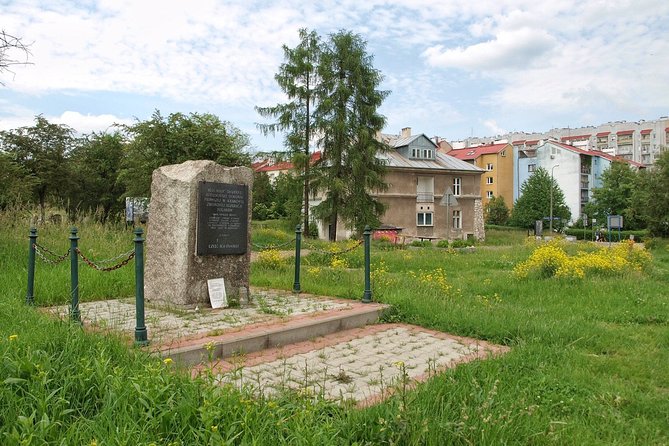
The guided walk focuses heavily on what remains—ruins, foundations, and mapped routes that help you “read” the site. You’ll see the Grey House, along with the ruins of a pre-burial hall, and traces connected to the Jewish cemeteries that were there before the camp.
One of the most useful parts is how the guide explains how the camp was organized. You’ll learn about sections tied to living areas, hospital space, administration, and industrial work. That structure can feel confusing in person if you only rely on your own guesswork, so the walk gives you a mental map before you’re standing in the middle of it.
You also walk past areas linked to the roll-call square, plus paths where fragments of gravestones were used for paving roads. This is where the tour’s “what you can still see” approach really lands. The guide connects details you might otherwise miss to the broader system of exploitation and erasure.
And yes, it’s heavy. But it’s also clarifying—especially for anyone who has seen Schindler’s List and wants to understand what’s real in the ground-level details and what’s story-shaped.
On foot through the Old Town, more guided walks
- Old Town Krakow & Wawel Castle Walking Tour★ 5.0 · 1,508 reviews
- Creepy Krakow: 2-Hour City Walking Tour★ 4.7 · 1,131 reviews
- Krakow: The Old Town Walking Tour★ 4.8 · 794 reviews
- Krakow: Kazimierz Jewish Quarter Walking Tour★ 4.8 · 571 reviews
Monument stops and reflection points: Monument of Torn-Out Hearts
A strong part of this experience is the built-in time for reflection at major memorials, including the Monument of Torn-Out Hearts. You’re not rushed through these stops. The pacing is designed so the place can sink in without being treated like a checklist.
I find that most helpful when guides slow down and explain what the memorial is meant to communicate. Even when the wording is familiar, the atmosphere of the site changes the meaning. This is not the kind of tour where you’re meant to skim past suffering.
If you prefer tours that move like a museum visit—quiet, thoughtful, and guided by pauses—this approach fits well. If you need distance from intense topics, you should know in advance that Płaszów is designed to confront.
Schindler’s thread through Płaszów: work permits, registration, and Brunnlitz
No matter what drew you to Kraków, you’ll run into Oskar Schindler sooner or later. This tour makes him part of the camp story in a grounded way, not as a separate legend.
The key idea is that Schindler used his enamelware enterprise to seek work permits for Jewish prisoners who were registered through Płaszów. In practice, this could shield people from further transports. Later, he helped organize their transfer to his wartime plant in Brunnlitz, saving over a thousand lives.
What I appreciate is that the guide presents Schindler’s role as tied to the same system the camp ran on—registration and permits—so his actions connect to the machinery of control rather than floating above it like a miracle.
This is also why the tour appeals to people who watched Schindler’s List. The setting you see on the walk doesn’t just reinforce a movie scene—it helps you understand the real-world leverage that existed, even inside a brutal system.
Guides are praised for making that connection clear. For example, Phil is noted for taking his time at the main sites and explaining in detail what happened there, and Barbara is described as staying friendly and focused while answering questions along the route.
How the walk fits your day: timing, moving between stops, and shoe choice
The total tour time is roughly two hours. In practice, you’ll spend:
- around 15 minutes at Ghetto Heroes Square
- about 1 hour on the main Płaszów segment
- roughly 45 minutes on the deeper Płaszów walk that ties together remaining features and memorials, including the Schindler-focused part
That breakdown matters because it shapes the rhythm. This isn’t a slow stroll where you barely learn anything, and it’s not a sprint where details disappear.
You should have moderate physical fitness. The memorial area involves walking on uneven ground, and the tour is long enough that comfortable shoes really matter. One of the clearest practical tips from past visitors is simple: wear shoes you can trust.
There’s also movement between points. Some versions of the experience use public transit (for example, a tram transfer between Heros square and Płaszów is described in feedback). Even if your exact route varies, plan for walking plus short transit segments, not just one continuous flat path.
Price and value: what $30 gets you in Kraków
At about $30.04 per person, this tour sits in a reasonable range for a guided, English-language experience that spends about two hours on site. The big value is that the stops you cover are admission-free for the guided visit portions noted in the itinerary—so you’re paying primarily for the guide’s interpretation and route planning.
And interpretation is the point here. Płaszów can be hard to “read” without help. The guide pieces together what survives: the Grey House, cemetery traces, roll-call areas, memorials, and the organization of camp life. Without that, you might walk the same path but miss the logic tying each location to the larger system.
Group size is capped at 25, which helps keep the experience from turning into a crowd shuffle. That scale is often the sweet spot for questions, too—especially at emotionally charged sites where you want calm, clear answers.
If you’re on a short Kraków schedule, this tour gives you a structured way to cover a lot of ground in a tight time window while still including memorial reflections.
Who this tour is best for (and who should pick something else)
This walking tour is a great match if:
- you want a guided route through Płaszów’s surviving evidence rather than a self-guided wander
- you care about the Schindler connection and want it tied to camp registration and permits
- you’re comfortable with difficult history and want context as you stand in place
It may be less ideal if you:
- need a very light, low-walking experience
- prefer history that avoids emotional reflection points
- are likely to arrive late—because once the group departs, latecomers can’t join and you won’t get a refund
Quick practical tips to make your tour smoother
A few small choices make a big difference:
- Arrive 10 minutes early at the start point on Plac Bohaterów Getta. After departure, you can’t join.
- Bring a jacket or layer. Kraków weather can shift, and memorial outdoor walks don’t care about your schedule.
- Use the time before the tour to get your bearings around the meeting area, so you start calm.
- Keep your questions for the guide. The better guided experiences tend to come from real back-and-forth, not silence.
Should you book the Kraków Płaszów guided walking tour?
I’d book it if your goal is clear: you want a structured, English-language walk that connects Ghetto Heroes Square to Płaszów, and connects the camp story to Schindler’s actions in a specific, practical way. The price is fair for a guided two-hour route with free entry stops, and the small group cap helps keep it manageable.
I’d pause and think twice if you’re extremely sensitive to concentration-camp content or you can’t handle outdoor walking on an uneven site. If that’s you, consider an option that’s shorter or more sheltered.
If you can handle the emotional weight and want real context in the places where it happened, this tour is one of the most direct ways to understand Płaszów in Kraków.
FAQ
How long is the Krakow: Plaszow Concentration Camp Guided Walking Tour?
It runs for approximately 2 hours.
What language is the tour offered in?
The tour is offered in English.
Where do I meet and where does the tour end?
Meet at Apteka pod Orłem, Plac Bohaterów Getta 18, Kraków. The tour ends at Henryka Kamieńskiego 57, near a bus stop on Kamienskiego street.
Is the tour ticket available on a phone?
Yes. You get a mobile ticket.
Do I need to pay admission at the stops?
The tour information lists admission ticket as free for the stops included in the itinerary.
How early should I arrive?
Please arrive 10 minutes before the tour begins. If the group has departed, latecomers cannot join and tickets cannot be refunded.
What is the cancellation policy?
Free cancellation is available up to 24 hours in advance for a full refund.
More Tour Reviews in Krakow
More Guided Walks Through Town

Krakow in Wartime: More Reviews
Just added: fresh Krakow reviews
Schindler's Factory & WWII Tours, compared.
 ★ 4.3Schindler’s Factory Ticket and Guided Tour OptionFrom $254,306 reviews
 ★ 4.5Schindler’s Factory Tour with Entrance TicketFrom $493,182 reviews
 ★ 4.4Schindler’s Factory Skip-the-Line TicketFrom $253,105 reviews
★ 4.6Schindler’s Factory Tour with Entrance TicketFrom $401,737 reviews
★ 4.4Schindler’s Factory Skip-the-Line TicketFrom $253,105 reviews
★ 4.6Schindler’s Factory Tour with Entrance TicketFrom $401,737 reviews
 ★ 4.5Schindler’s Factory in Krakow: Guided Tour & Skip the Line TicketFrom $351,714 reviews
 ★ 4.7Schindler’s Factory & Ghetto Guided TourFrom $571,694 reviews
 ★ 4.3Schindler’s Factory Ticket with Guided Tour OptionFrom $421,485 reviews
 ★ 4.0Krakow Schindler’s Factory Guided Tour with Admission TicketFrom $351,156 reviews
Browse the lists this tour appears in