
REVIEW · SCHINDLER'S FACTORY & WWII TOURS
Krakow: Plaszow Concentration Camp Guided Walking Tour
Krakow history hits differently here. This Plaszow Concentration Camp guided walk is one of the clearest ways to understand a site where much of the evidence is now gone, so the guide’s route and explanations do the heavy lifting. I like that the tour is built for reflection, not sprinting from one marker to the next.
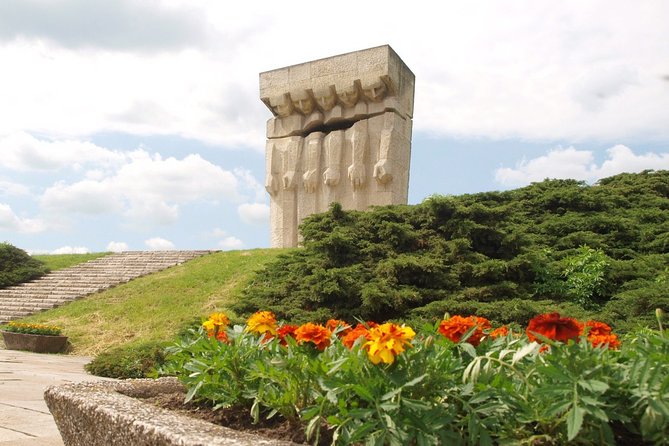
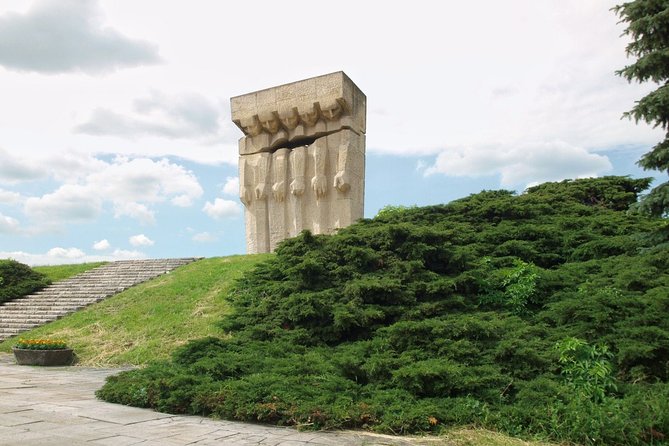
What I really like: first, you get a stop-by-stop route through the camp’s key remnants and memorial points—from the Grey House area to the roll-call square and the Monument of Torn-Out Hearts. Second, the guide ties the physical space to names and decisions, especially the Oskar Schindler story and how this place connects to the filming locations from Schindler’s List.
One thing to consider: Plaszow is mostly open-air ground with limited physical structures, so you’ll feel the weather and the quiet more than you would at Auschwitz-style sites with lots of surviving buildings.
In This Review
- Quick hits on Plaszów Camp in Krakow
- Plaszów Camp in Krakow: why this open-air walk matters
- The 2-hour route: what you’ll see along the way
- The meeting and the transition into the camp story
- The Grey House and the camp’s administrative pulse
- Ruins of the pre-burial hall: where memory meets absence
- Jewish cemetery traces and the heavy weight of location
- Roll-call square: the choreography of control
- Monument of Torn-Out Hearts: remembrance you can’t rush
- Oskar Schindler, Schindler’s List, and why the guide connects the dots
- Schindler’s List filming locations inside Plaszow’s story
- Understanding how the camp worked: living, hospital, admin, and industry
- Pacing and tone: a walk built for reflection, not rush
- Timing, weather, and how to plan your Krakow day
- Price and value: is $29 a fair deal?
- Language choice and group feel
- Who this tour is best for
- Should you book this Plaszów Camp guided walk?
- FAQ
- How long is the Plaszow Concentration Camp guided walking tour?
- Where do I meet the guide?
- What languages are available for the live guided tour?
- Is the tour wheelchair accessible?
- What’s included in the ticket price?
- What should I know about arriving late?
Quick hits on Plaszów Camp in Krakow
- A focused 2-hour route that’s paced for thought, with time at memorials
- Grey House, roll-call square, and major memorials laid out along an easy walking path
- Traces of the Jewish cemeteries and how gravestones were reused on camp roads
- Schindler’s List filming locations called out along the way
- The Oskar Schindler thread—work permits through Plaszow and transfers to Brunnlitz
- An on-the-ground look at how the camp was organized into living, hospital, administrative, and industrial areas
More of Krakow under the wartime occupation
- Krakow: Schindler’s Factory Ticket and Guided Tour Option
★ 4.3 · 4,306 reviews - Krakow: Schindler’s Factory Tour with Entrance Ticket
★ 4.5 · 3,182 reviews - Krakow: Schindler’s Factory Skip-the-Line Ticket
★ 4.4 · 3,105 reviews
Plaszów Camp in Krakow: why this open-air walk matters
Plaszow Concentration Camp isn’t a place built to entertain you. It’s a place that forces your brain to do work. When you visit, you quickly notice the strange contrast: there’s a lot of meaning on the ground, but not a lot of preserved structures to point at like a museum.
That’s exactly why I think this tour is so useful. The guide doesn’t just recite dates. They connect what remains—ruins, foundations, paths, memorials—to how the camp operated and how victims were processed. The result is a walk that feels quiet and deliberate, where you’re meant to pause.
Also, Plaszow’s story in Krakow is tangled in multiple layers: forced labor, penal labor for Poles, a later concentration-camp designation, and even a transit role for Hungarian Jews bound for Auschwitz. With numbers like more than 35,000 imprisoned and around 6,000 murdered, the scale is hard to grasp—so the guide helps you frame it in the space you’re standing in.
The 2-hour route: what you’ll see along the way
This tour is designed to cover the most important surviving features without turning it into a checklist. Expect a 2-hour walking circuit with stops that lean more toward explanation and remembrance than sightseeing.
The meeting and the transition into the camp story
You meet at the entrance of Apteka Pod Orlem, and you should look for the guide holding the excursions.city sign. Arrive about 10 minutes early, because once the group departs, latecomers can’t join and tickets can’t be refunded.
Right after the start, the guide sets the tone: this is an area where the layout matters, but many physical traces are faint. So you’ll be given mental handles—names of sections, how the camp functioned, and where things used to sit before they were erased.
On foot through the Old Town, more guided walks
- Old Town Krakow & Wawel Castle Walking Tour★ 5.0 · 1,508 reviews
- Creepy Krakow: 2-Hour City Walking Tour★ 4.7 · 1,131 reviews
- Krakow: The Old Town Walking Tour★ 4.8 · 794 reviews
- Krakow: Kazimierz Jewish Quarter Walking Tour★ 4.8 · 571 reviews
The Grey House and the camp’s administrative pulse
One early highlight is the Grey House. Even if you’ve seen photos online, it’s different in real life—because now you’re dealing with an uneven, open setting rather than a preserved building you can fully inspect. The guide uses this area to explain how Plaszow was organized, not just how it looked.
This matters because the Holocaust story isn’t only about one location of horror. It’s also about systems—who controlled what, where decisions were made, and how prisoners were processed through the camp.
Ruins of the pre-burial hall: where memory meets absence
Next, you may see the ruins of the pre-burial hall. This is one of those stops where the guide’s framing is everything. You’re walking through absence, and the goal isn’t to stare and guess. The guide points out how people were handled in death and what the camp’s machinery did before burial.
If you need a moment to steady your thoughts, this is a good place to take it. The tour route is paced for reflection, and stops like this give your emotions time to catch up.
Jewish cemetery traces and the heavy weight of location
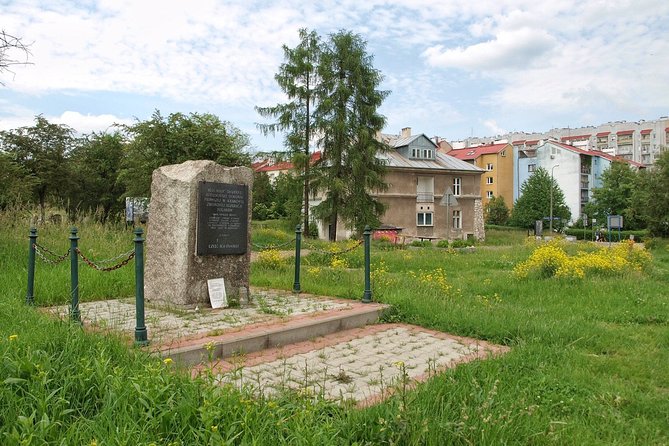
A key part of Plaszow’s origin is that it was built on the grounds of two Jewish cemeteries in Krakow. That’s not a background detail; it’s part of why this site feels so complicated and painful. During the walk, you’ll get guidance about traces of the Jewish cemeteries, so you understand the location wasn’t blank—it was a living community space before it became a prison machine.
You may also learn about paths where fragments of gravestones were once used to pave roads. That information lands hard, because it shows how the camp system didn’t only confine people—it tried to overwrite their presence.
Roll-call square: the choreography of control
The roll-call square is another central stop. Again, you’re not just looking at a place—you’re being guided through what roll-call meant as a daily ritual of domination.
This is one of the best stops on the tour for understanding how the camp worked day to day. The guide connects the layout to organization: prisoners, movement, supervision, and the brutal regularity of procedure.
Monument of Torn-Out Hearts: remembrance you can’t rush
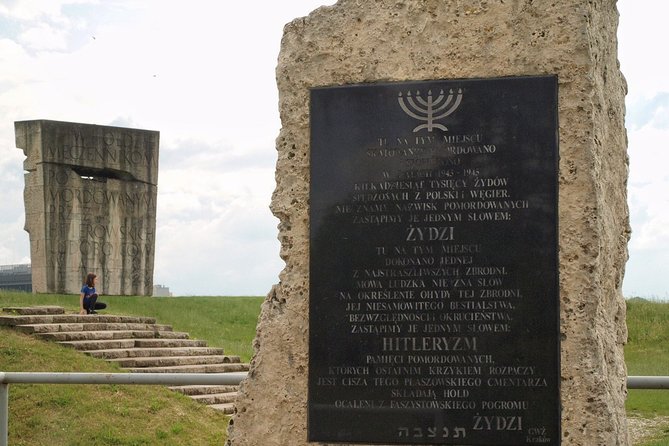
No matter how you feel going in, the Monument of Torn-Out Hearts has a way of slowing everyone down. This is where the tour shifts from explaining history to honoring victims in a more direct way.
I like that the guide keeps the route reflective here. You get time to stand, read, and absorb, rather than being whisked along for the next stop.
Oskar Schindler, Schindler’s List, and why the guide connects the dots
Plaszow and Oskar Schindler are inseparable in this story, and the tour doesn’t treat it like a sidebar. You’ll hear how Schindler’s enamelware business became a lifeline through bureaucracy.
Here’s the core thread you’ll be taught: Schindler sought work permits for Jewish prisoners who were registered through Plaszow. That helped shield people from further transports. Later, Schindler organized their transfer to his wartime plant in Brunnlitz, saving over a thousand lives.
That fact changes how you read the camp’s purpose on the ground. Plaszow wasn’t only about confinement—it was also a gate in a deadly system of deportation. Schindler’s actions show how survival sometimes depended on paperwork, connections, and timing, even inside a structure designed to crush hope.
Schindler’s List filming locations inside Plaszow’s story
You’ll also learn where Schindler’s List was filmed. The guide points out filming-related spots as part of helping you interpret what you see today—how the film’s imagery relates to the space’s real historical context.
This is valuable because it stops the movie from being the main event. The film becomes a tool for recognition, while the guide keeps the focus on victims and the historical reality.
Understanding how the camp worked: living, hospital, admin, and industry
One of the most useful parts of this walking tour is the way the guide explains organization. Plaszow wasn’t one simple area. It was an enforced system that split prisoners into zones and functions.
As you move around, expect the guide to lay out how the camp included living areas, a hospital, administrative sections, and industrial zones. When you understand those categories, the physical layout becomes clearer, and the story stops feeling like a single scene.
It also helps you grasp how the camp’s violence could be administrative and routine. Even when the tour is outdoors with few structures left, the guide paints the camp in sections so your brain can map it.
And because executions took place at several sites within the camp, the guide’s pacing matters. You’re not meant to rush past the most painful facts to reach the next landmark.
Pacing and tone: a walk built for reflection, not rush
The best thing about this experience—based on what the tour emphasizes and what guides deliver—is the rhythm. You’re given a route that favors thought. You’ll spend time at major memorials instead of treating them as photo stops.
I also appreciate the way the guide answers questions clearly and sensitively. In past bookings, guides named Anna, Dominika, Barbara, Krysztof, and Phil have been singled out for being friendly, attentive, and careful with the material. There’s also a mention of Bartolomiew for an engaging, well-paced explanation.
That matters because Plaszow can confuse first-time visitors. The terrain doesn’t come with a neat museum map. A strong guide gives you context so you can actually follow the story.
Timing, weather, and how to plan your Krakow day
This is a tight 2-hour tour. It pairs nicely with a morning or afternoon plan in Krakow, especially if you’re also seeing the Jewish quarter. The walk is mostly outdoors, and the memorial approach relies on open ground, so dress for Krakow weather. If it’s cold, you’ll feel it more than you would inside a building.
The route also benefits from mental planning. Since the whole point is remembrance, I suggest you don’t stack it with something requiring high energy right afterward. Let the day breathe a bit.
Price and value: is $29 a fair deal?
At $29 per person for a 2-hour guided walk with an expert local guide plus a single tram ticket, the value is mostly about what you’re buying: interpretation.
At places like Plaszow, self-guided can turn into confusion quickly. With limited physical remains, you might understand the basics from signs, but you’ll likely miss the connections between sections and the significance of what’s no longer there. This tour pays for a guide who can point out meaning where you’d otherwise see only open ground.
Could you spend less by going on your own? Sure. But if your goal is to leave with a real understanding of how Plaszow operated, the price-to-time ratio is reasonable—especially because the walk is short enough to fit into a normal travel day.
Language choice and group feel
Tours run in one language based on your booking, and the available languages listed include Spanish, Italian, French, English, German, and Russian. If you’re booking, pick the language that lets you follow details without straining.
The experience can feel intimate. In one verified booking, the tour ran essentially as a private-style session with just two people. That’s not guaranteed, but it’s a good sign that you may get a less crowded experience than you’d expect.
Who this tour is best for
This is best for you if:
- You want meaningful context for Plaszow rather than a rushed overview
- You care about how Schindler’s story links to this specific place
- You’d rather walk and reflect than focus on surviving buildings and artifacts
- You’re a WWII history fan who likes clear, sensitive explanations
It’s also a strong companion to the Auschwitz conversation because Plaszow is different in tone and structure. Here, the absence of buildings isn’t a weakness—it’s part of the memorial message.
Should you book this Plaszów Camp guided walk?
Yes, I’d book it if your priority is understanding and remembrance. For $29 and two hours, you get a focused route through the most significant remaining features—plus the Schindler thread and Schindler’s List filming context—explained in a way that helps you make sense of what’s hard to see.
Skip it only if you want a purely visual, building-heavy tour, or if you’re not ready for a sobering, open-air memorial experience. Plaszow isn’t about spectacle. It’s about attention.
If you book, do yourself a favor: show up early, pick your language carefully, and give yourself time afterward to absorb what you learned.
FAQ
How long is the Plaszow Concentration Camp guided walking tour?
The tour lasts 2 hours.
Where do I meet the guide?
Meet in front of the entrance of Apteka Pod Orlem. Look for the guide with the excursions.city sign.
What languages are available for the live guided tour?
Live guided tours are offered in Spanish, Italian, French, English, German, and Russian. Tours run in only one language.
Is the tour wheelchair accessible?
Yes, the tour is wheelchair accessible.
What’s included in the ticket price?
The tour includes an expert local guide, the 2-hour guided experience, and a single tram ticket.
What should I know about arriving late?
You’re asked to arrive about 10 minutes before the tour begins. Once the group departs, latecomers can’t join, and tickets cannot be refunded.
More Tour Reviews in Krakow
More Guided Walks Through Town

Krakow in Wartime: More Reviews
Just added: fresh Krakow reviews
Schindler's Factory & WWII Tours, compared.
 ★ 4.3Schindler’s Factory Ticket and Guided Tour OptionFrom $254,306 reviews
 ★ 4.5Schindler’s Factory Tour with Entrance TicketFrom $493,182 reviews
 ★ 4.4Schindler’s Factory Skip-the-Line TicketFrom $253,105 reviews
★ 4.6Schindler’s Factory Tour with Entrance TicketFrom $401,737 reviews
★ 4.4Schindler’s Factory Skip-the-Line TicketFrom $253,105 reviews
★ 4.6Schindler’s Factory Tour with Entrance TicketFrom $401,737 reviews
 ★ 4.5Schindler’s Factory in Krakow: Guided Tour & Skip the Line TicketFrom $351,714 reviews
 ★ 4.7Schindler’s Factory & Ghetto Guided TourFrom $571,694 reviews
 ★ 4.3Schindler’s Factory Ticket with Guided Tour OptionFrom $421,485 reviews
 ★ 4.0Krakow Schindler’s Factory Guided Tour with Admission TicketFrom $351,156 reviews
Browse the lists this tour appears in