
REVIEW · SCHINDLER'S FACTORY & WWII TOURS
Schindler’s Factory -Guided Tour
Schindler’s Factory hits hard, fast. This guided, skip-the-line museum visit gives you the story of occupied Krakow through exhibits focused on those who survived and those who didn’t. I also like the way the tour frames the factory within the wider Nazi system, not just as a single-name legend. One thing to keep in mind: the pacing and the crowding can make it feel a bit rushed in some rooms.
You’ll start at Lipowa 4 and spend about 1.5 hours inside the museum with an English-speaking guide and a small group (up to 25). I love that the experience includes professional interpretation, so the displays land with context instead of feeling like captions you skim while moving on. The main possible drawback is that audio headsets and room layout can affect how much you can read and linger.
In This Review
- Key highlights to know before you go
- Quick snapshot: what you get in 90 minutes
- Meeting at Lipowa 4 and the easiest way to start on time
- Entering Schindler’s Factory: the skip-the-line advantage
- The film and the tour rhythm inside the museum
- Fabryka Emalia Oskara Schindlera: what the exhibits emphasize
- What you’ll want to look for as you move room to room
- Guide quality, English delivery, and the headset reality
- Group size and tight museum spaces: where crowding shows up
- Is it worth $45.87? Value for this kind of museum
- Pair it with other WWII sites in Krakow for a stronger storyline
- Should you book Schindler’s Factory with a guided tour?
- FAQ
- How long is Schindler’s Factory guided tour?
- Is the entrance ticket included?
- Is the tour offered in English?
- Where do I meet the tour?
- How big are the groups?
- Is transportation included?
Key highlights to know before you go
- Skip-the-line ticket saves time for a museum that can have long queues
- 90 minutes guided in English keeps the story moving with an expert guide
- Fabryka Emalia Oskara Schindlera exhibits focus on life in WWII Krakow and the factory’s role
- Film orientation early on helps you place what you’re seeing in the right timeline
- Small group limit (25), though narrow rooms can still feel tight
- Expect variable guide styles and pacing depending on the guide and your group dynamic
More of Krakow under the wartime occupation
- Krakow: Schindler’s Factory Ticket and Guided Tour Option
★ 4.3 · 4,306 reviews - Krakow: Schindler’s Factory Tour with Entrance Ticket
★ 4.5 · 3,182 reviews - Krakow: Schindler’s Factory Skip-the-Line Ticket
★ 4.4 · 3,105 reviews
Quick snapshot: what you get in 90 minutes
This is a guided Schindler’s Factory tour in Krakow with a set time of about 1 hour 30 minutes. At $45.87 per person, you’re paying for three things: an official skip-the-line museum entry, a professional guide in English, and a structured path through the exhibits.
In practice, that structure matters. Schindler’s Factory is emotionally heavy, and the exhibits cover complicated history. A good guide helps you connect the dots quickly—who was targeted, how the Nazi machinery worked, and where Schindler’s decisions fit into that system.
Your “value check” is simple: if you want context and storytelling, the guided format makes sense. If you want to read every label slowly and sit with each object, the fixed 90-minute flow may feel like a sprint.
Meeting at Lipowa 4 and the easiest way to start on time
The tour meets at Lipowa 4, 32-051 Kraków, Poland, and it ends back at the meeting point. The location is described as near public transportation, which is helpful because this is one of those stops you want to reach without stress—especially when you’re going to a museum where missing the start time can throw off the whole rhythm.
Because it’s a mobile ticket experience, I’d plan to have your phone charged and ready. Also, the tour includes confirmation at booking time, so I’d still double-check the details in your confirmation message right before you leave your hotel.
One more practical point: arrive a little early. Even with skip-the-line entry, you want time to get organized and avoid last-minute scrambling that can make the experience start feeling tense.
Entering Schindler’s Factory: the skip-the-line advantage
The big practical win is the skip-the-line entrance. When a museum is popular and timelines are fixed, waiting can eat up the time you wanted for reading and thinking.
Once inside, the tour generally gets you oriented fast. Many people benefit from that early setup because the exhibits jump between people, policies, and the physical spaces connected to the war years. The guided structure also helps you avoid wandering into the wrong area or leaving key parts for later, when you might be running out of time.
A few more Krakow trips worth putting on the shortlist
- Krakow: Auschwitz-Birkenau Guided Tour with Pickup & Lunch★ 4.5 · 9,800 reviews
- Krakow: Auschwitz-Birkenau Guided Tour Pickup/Lunch Options★ 4.5 · 9,057 reviews
- Krakow: Auschwitz-Birkenau and Salt Mine Guided Tour★ 4.7 · 9,020 reviews
- Krakow to Auschwitz Birkenau Guided Tour with Transfer and Ticket★ 5.0 · 8,197 reviews
The film and the tour rhythm inside the museum
A common part of the experience is a short film shown in a cinema-like room. I like this format because it gives you a mental map: you understand the timeframe, you grasp the scale, and you know what questions to look for as you move through the exhibits.
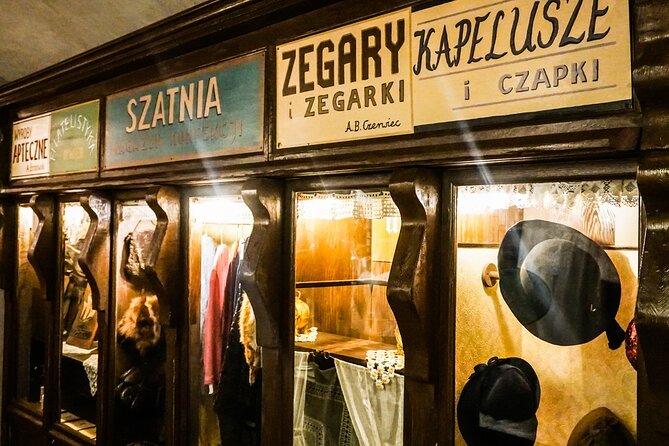
You’ll also notice the tour doesn’t just rely on screens and artifacts. Some rooms use changes in floor design and patterns, which can sound trivial, but it helps break up the space and guide your attention. Think of it as a pacing tool for a museum that can otherwise feel like a long hallway of information.
Timing matters here. Since the tour is about 90 minutes, you’ll be guided at a pace designed for a group—not for one person stopping for every small label.
Fabryka Emalia Oskara Schindlera: what the exhibits emphasize
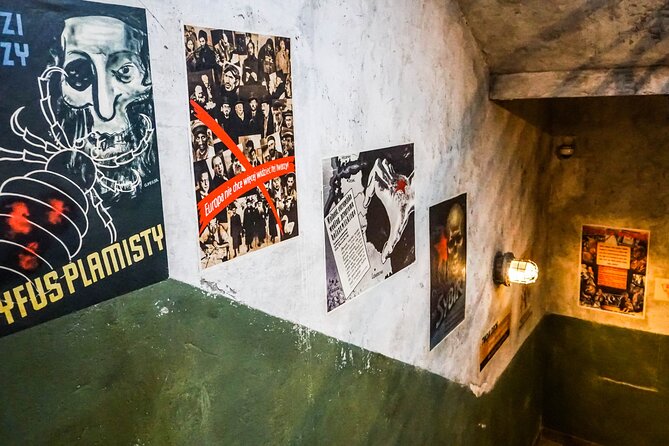
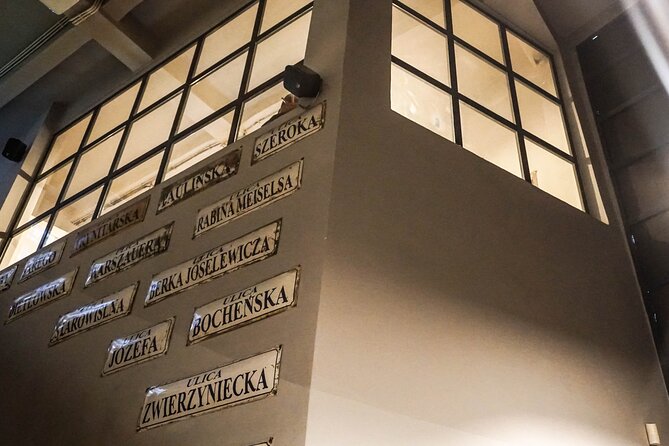
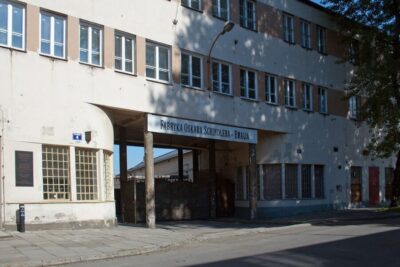
This is where the tour spends its time: Fabryka Emalia Oskara Schindlera, the museum that brings the factory’s wartime story to life.
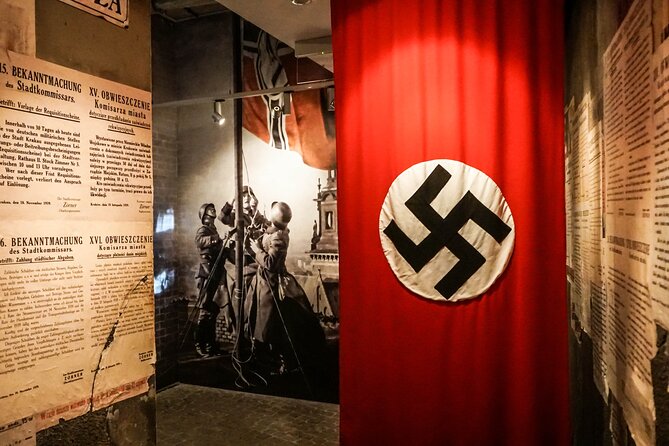
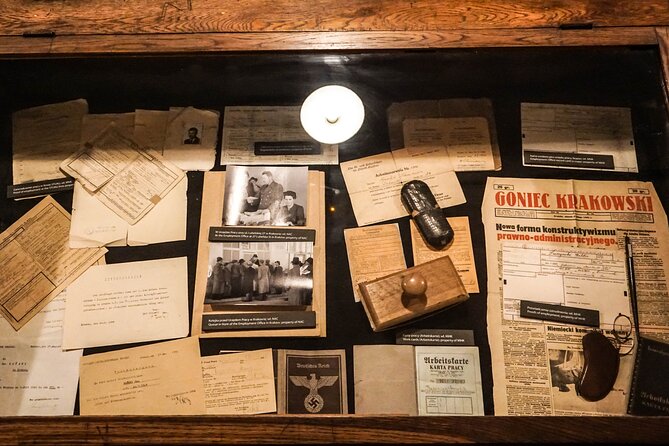
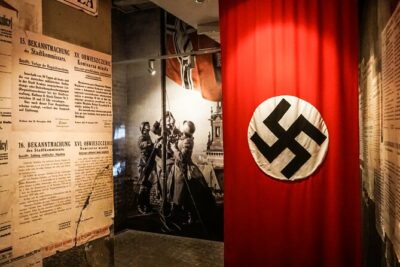
The exhibits are built to handle a painful subject with care. You’ll be shown how the factory intersected with WWII deportations and labor systems, and how that played out in the lives of people who were saved and those who perished. The museum also places strong emphasis on everyday life under occupation—how people lived, feared, planned, and endured—so you’re not only getting names and dates.
At the same time, it’s not a pure Schindler-only show. Several people report that the tour covers Krakow’s Jewish history and Nazi approach in a broader way, with Schindler as an important thread rather than the sole focus. One key point I’d take from that: if your main goal is a biography-style deep dive on Schindler, you may feel you get less of him than you expected.
A balanced takeaway: the tour tends to frame Schindler through the lens of how he used his business position and how his choices affected more than a few people. If you go in expecting the factory as a lens into a larger system, you’ll likely feel satisfied.
What you’ll want to look for as you move room to room
The museum experience works best when you treat it like a guided narrative, not just a list of exhibits. I’d watch for:
- How the story shifts between policy and individual lives
- How the factory is presented as both a workplace and a wartime mechanism
- How the exhibits connect the rescue story to the broader tragic context
If you’re the kind of person who likes to connect details into a big picture, this format will feel rewarding.
Guide quality, English delivery, and the headset reality
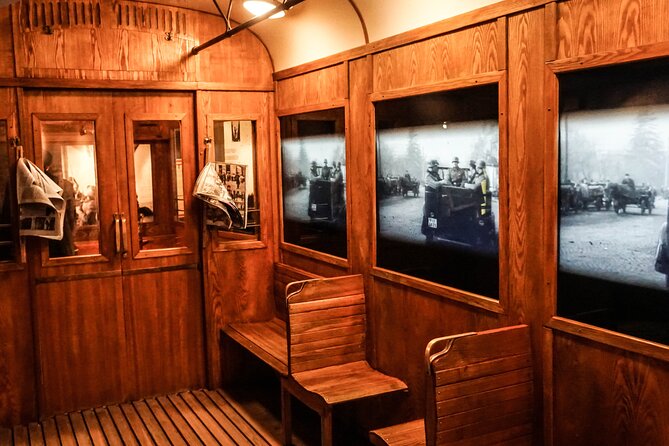
The tour includes a professional guide in your chosen language (English), plus headset support in the museum. This is one of the reasons the guided option can be worth it: you don’t just look at objects—you get help interpreting them.
Still, real-world comfort can vary. Some visitors found their guide’s pace too fast, which can make it hard to read the labels or fully absorb the displays. Others said the guide was excellent and gave time to check exhibits carefully.
Headsets are the other wildcard. There were complaints about headset problems, including issues that lasted through a big part of the tour. If you’re paying a premium for a guided experience, audio reliability is a big part of that value.
My practical advice: right when you arrive, make sure your headset works before the first key section begins. If something sounds off, raise it immediately so it doesn’t drag through the most important rooms.
Group size and tight museum spaces: where crowding shows up
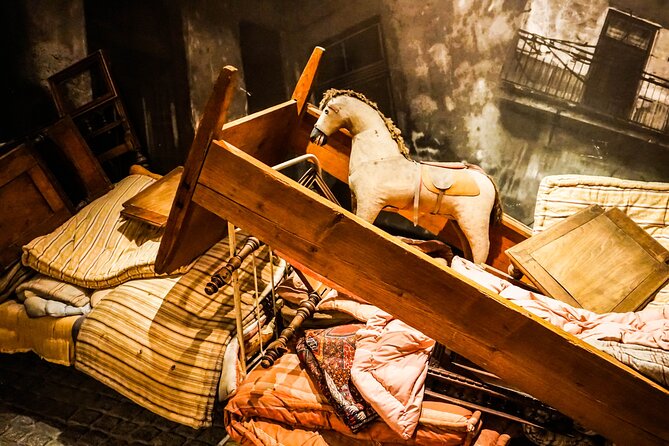
The group size is capped at 25 travelers, which is good on paper. But some rooms in the museum are narrow, and with a group in the low 20s it can feel crowded and even a bit claustrophobic at moments.
When a space is tight, the tour’s “guided flow” can squeeze your personal reading time. If you like slow museum pacing, it may help to focus on the guide’s story while using a few moments to read the most important placards.
Also, if you’re sensitive to tight spaces, plan your expectations. This isn’t a huge open-air site where you can spread out. It’s an indoor museum experience with limited breathing room.
Is it worth $45.87? Value for this kind of museum
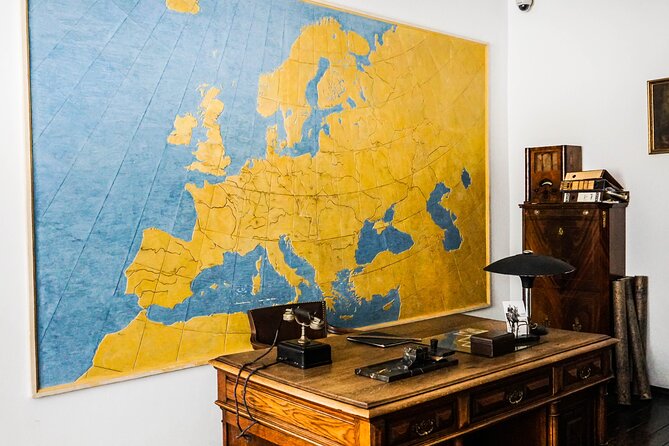
The price—$45.87 per person—isn’t just for a ticket. You’re paying for interpretation and structure. That can be worth it in a museum like this, because the history is complex and emotionally intense.
There’s also an extra layer of value if the guide is effective. People specifically highlighted guides who were organized, lively, and able to explain how life changed in Krakow during WWII. Others felt disappointed when the tour leaned more toward general WWII history in Poland than a Schindler-centered focus.
Here’s the honest value math I’d use if you’re deciding:
- If you want the story explained in a clear timeline, pay for the guide.
- If you’re mostly there to browse and read at your own pace, you might feel the premium is unnecessary.
- If audio or pacing goes wrong, the price starts to feel harder to justify.
One more reality check: one review referenced standard admission as being much cheaper (20 złoty). That doesn’t mean you shouldn’t book this tour—it just means the guided portion should be doing a lot of work for you.
Pair it with other WWII sites in Krakow for a stronger storyline
If you like stitching together a “memory trail,” Krakow makes it easy to plan in clusters. One review mentioned that the Eagle Pharmacy museum is about a five-minute walk away and that pairing it with other WWII museums helps complete the picture.
Another name that came up is the Gestapo museum, which people described as completing a set of three key WWII stops. I like this idea for you if you enjoy understanding how different pieces of occupation-era history fit together—because each museum tends to emphasize a different angle.
If you only have time for one major stop, Schindler’s Factory is a strong choice. If you have two afternoons, pairing it with nearby sites can make the entire story feel less fragmented.
Should you book Schindler’s Factory with a guided tour?
I think this tour is a good booking for you if:
- You want context fast and don’t want to piece together the WWII story on your own.
- You like guided explanation, especially when the subject is layered and heavy.
- You’re okay with the fact that the tour may focus on Krakow and the broader Nazi system, not only Schindler’s personal story.
I’d hesitate if:
- You’re expecting a tour that is strictly about Schindler and his actions, with minimal broader context.
- Crowded indoor spaces make you uncomfortable.
- You know audio issues would frustrate you, because the headset experience has had inconsistent reports.
If you book, go in with the right mindset: treat it as an interpretation-led museum walk through occupied Krakow, where the factory story is the anchor—not a stand-alone biography.
FAQ
How long is Schindler’s Factory guided tour?
It’s about 1 hour 30 minutes.
Is the entrance ticket included?
Yes. The tour includes a skip-the-line entrance ticket to the museum.
Is the tour offered in English?
Yes, the tour is offered in English.
Where do I meet the tour?
The meeting point is Lipowa 4, 32-051 Kraków, Poland, and the tour ends back at the meeting point.
How big are the groups?
The maximum group size is 25 travelers.
Is transportation included?
No. Transportation is not included.
More Tours in Krakow

More Tour Reviews in Krakow

Krakow in Wartime: More Reviews



Just added: fresh Krakow reviews

Schindler's Factory & WWII Tours, compared.
 ★ 4.3Schindler’s Factory Ticket and Guided Tour OptionFrom $254,306 reviews
 ★ 4.5Schindler’s Factory Tour with Entrance TicketFrom $493,182 reviews
 ★ 4.4Schindler’s Factory Skip-the-Line TicketFrom $253,105 reviews
★ 4.6Schindler’s Factory Tour with Entrance TicketFrom $401,737 reviews
★ 4.4Schindler’s Factory Skip-the-Line TicketFrom $253,105 reviews
★ 4.6Schindler’s Factory Tour with Entrance TicketFrom $401,737 reviews
 ★ 4.5Schindler’s Factory in Krakow: Guided Tour & Skip the Line TicketFrom $351,714 reviews
 ★ 4.7Schindler’s Factory & Ghetto Guided TourFrom $571,694 reviews
 ★ 4.3Schindler’s Factory Ticket with Guided Tour OptionFrom $421,485 reviews
 ★ 4.0Krakow Schindler’s Factory Guided Tour with Admission TicketFrom $351,156 reviews
Browse the lists this tour appears in