
REVIEW · SCHINDLER'S FACTORY & WWII TOURS
Schindler’s Factory Small-Group Guided Tour
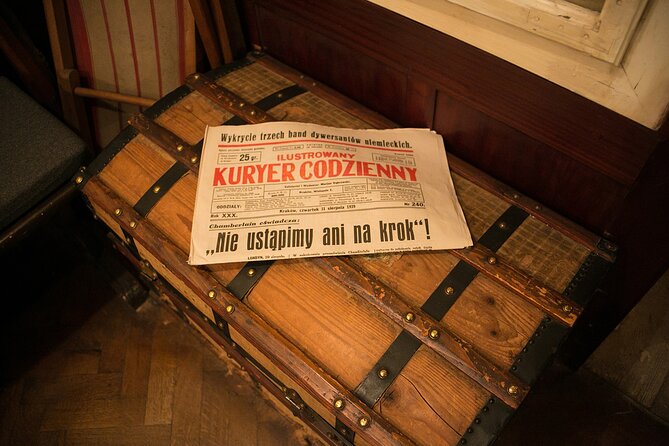
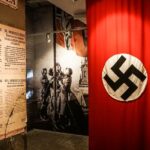
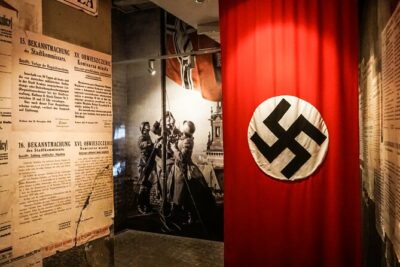
Krakow history hits hard, fast, and close. This small-group guided visit uses the former administrative building of Schindler’s Enamel Factory as a launchpad into Kraków under Nazi Occupation 1939–1945, with scenes and modern multimedia that explain what daily life was like under occupation. You also get a guide to connect the pieces, so it feels like a story instead of a list of rooms.
Two things I really liked: the way the exhibition turns history into walk-through experiences (hairdresser, photographer, photoplasticon, and even a tram-view film), and the fact that it stays focused on occupation and survival rather than turning everything into a single famous name. That makes it easier to understand the bigger system around Schindler.
One consideration: this is not a Schindler-life story museum. If you’re hoping for factory machinery, worker-by-worker details, or a plot-heavy guide to Schindler the man, you may feel the emphasis is more on Krakow and Nazi rule than on biography.
In This Review
- Key highlights you’ll care about
- Entering Schindler’s Enamel Factory Without the Wrong Expectations
- What the Exhibition Really Teaches About Occupied Krakow
- Hairdresser, Photographer, and Photoplasticon: Museum Rooms That Feel Like Streets
- The Tram Film Window: A Clever Way to Show a City Changing
- The Ghetto Labyrinth and the Jewish Apartment Scene
- Płaszów: From Apartment Life to the Camp Path
- The 90-Minute Shape of the Tour (and How to Pace Yourself)
- Price and Value: Is $45.38 Worth It?
- Practical Details That Affect Your Experience
- Who This Tour Fits Best (And Who Might Want Another Option)
- Should You Book This Small-Group Guided Tour?
- FAQ
- How long is Schindler’s Factory Small-Group Guided Tour?
- What does the tour cost?
- Is the museum ticket included?
- Where does the tour start?
- How big is the group?
- Is this tour biographical about Oskar Schindler?
- Are children allowed?
- What is the cancellation policy?
Key highlights you’ll care about
- Small group (max 25): more chance to ask questions and keep the pace human.
- Ticket included in the tour: you don’t have to juggle a separate admission plan.
- Occupation focus, not biography: the main thread is Krakow’s fate under the Nazis from 1939–1945.
- Multi-room “life under occupation” scenes: hairdresser, photographer, photoplasticon, and a tram film window.
- Ghetto route inside the exhibition: a narrow labyrinth with a Jewish apartment setup, then onward toward Płaszów.
- Modern multimedia guidance: you’re guided to connect emotion, context, and what you’re seeing.
More of Krakow under the wartime occupation
- Krakow: Schindler’s Factory Ticket and Guided Tour Option
★ 4.3 · 4,306 reviews - Krakow: Schindler’s Factory Tour with Entrance Ticket
★ 4.5 · 3,182 reviews - Krakow: Schindler’s Factory Skip-the-Line Ticket
★ 4.4 · 3,105 reviews
Entering Schindler’s Enamel Factory Without the Wrong Expectations
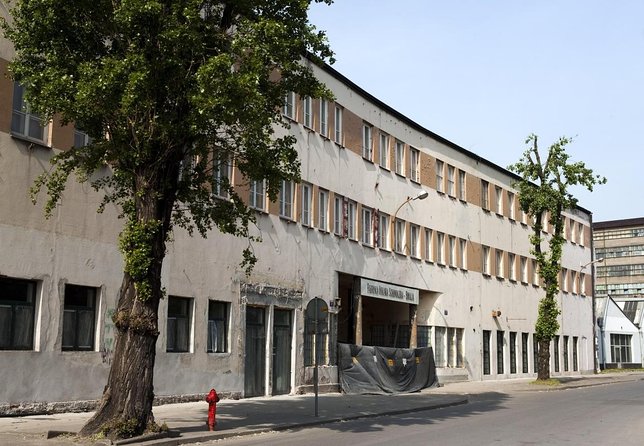
Schindler’s Factory can draw a lot of people for one reason: the Spielberg film. But the museum experience you’re booking is built around something broader and, frankly, more useful for understanding what happened in Krakow.
The main exhibition is titled Kraków under Nazi Occupation 1939–1945. That means your guide is steering you through occupied city life—what people saw, what institutions did, and how Jewish residents were forced through escalating danger. Schindler’s story is part of the larger picture, but it’s not the only story you’ll be taught.
I like this approach because it keeps your brain from getting stuck on one person. It also helps you notice the machinery of oppression: the rules, the locations, and the way ordinary life was reorganized under Nazi control.
What the Exhibition Really Teaches About Occupied Krakow
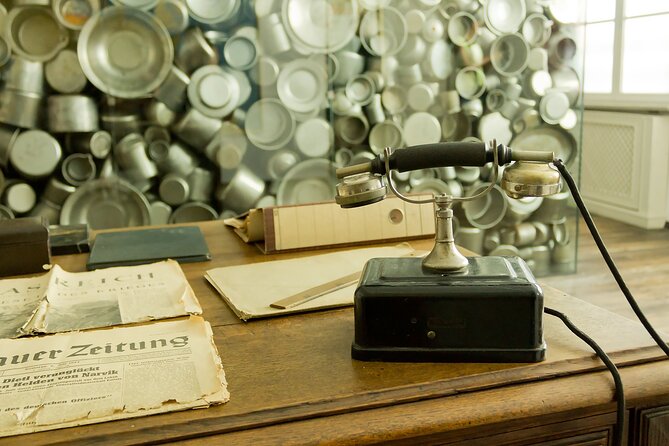
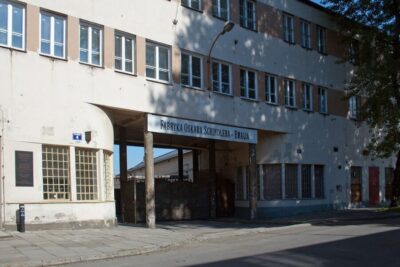
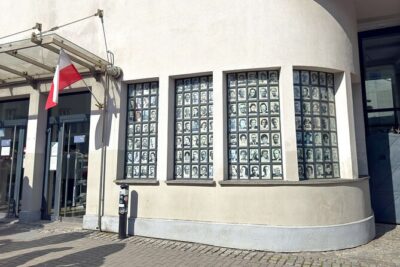
The exhibition’s base is the former administrative building of Schindler’s Enamel Factory, and it’s described as a story of Krakow and the fate of its Polish and Jewish inhabitants during World War II—along with the Germans as occupiers and Oskar Schindler as the factory owner whose fate was later recalled in the film.
Here’s what that means for you in practical terms:
- You’ll spend your time learning how the occupation shaped daily routines, not just the headline events.
- The guide’s role matters, because the exhibition is packed with scenes and technical-sounding setups. You’ll want someone to connect them into meaning.
- You’ll get a clearer sense of how Krakow moved from city life into confinement and deportation.
If you’re the type who reads museum labels and still feels lost, this format helps. If you’re the type who wants museum labels but also wants a story, this fits.
Hairdresser, Photographer, and Photoplasticon: Museum Rooms That Feel Like Streets
One of the strongest parts of the experience is that it doesn’t stop at flat displays. You’re guided into a sequence of rooms that simulate occupied Krakow’s world—starting in ways that sound ordinary, then turning increasingly unsettling.
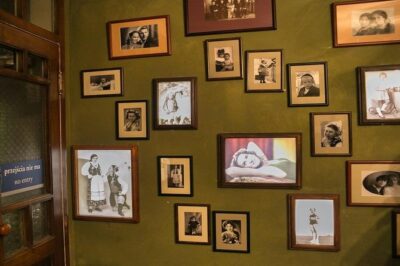
Inside the exhibition journey, you’ll enter a hairdresser and a photographer. That contrast—normal services on one hand, occupation on the other—works because it forces you to picture what daily life looked like right up until it didn’t.
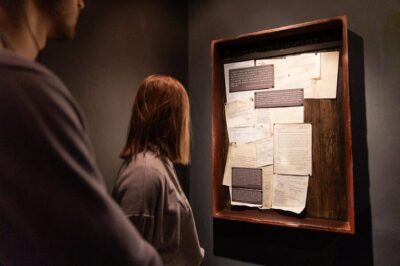
Then comes the authentic photoplasticon. You can think of it as a way to show how images, documentation, and propaganda-related viewing experiences were used to shape understanding. Even if you’re not an expert on museum technology, the point is human-scale: you’re meant to watch, think, and feel the weight of what’s shown.
I also like that the guide doesn’t treat these spaces like separate attractions. You’ll be taught how each one fits the larger occupation story.
A few more Krakow trips worth putting on the shortlist
- Krakow: Auschwitz-Birkenau Guided Tour with Pickup & Lunch★ 4.5 · 9,800 reviews
- Krakow: Auschwitz-Birkenau Guided Tour Pickup/Lunch Options★ 4.5 · 9,057 reviews
- Krakow: Auschwitz-Birkenau and Salt Mine Guided Tour★ 4.7 · 9,020 reviews
- Krakow to Auschwitz Birkenau Guided Tour with Transfer and Ticket★ 5.0 · 8,197 reviews
The Tram Film Window: A Clever Way to Show a City Changing
Another scene you’ll encounter is a tram moment. You’ll get onto the tram as part of the exhibition flow, then look out through windows where you can see a film about the life of the city.
This is smart design. It gives you motion and time in a museum setting. Instead of only seeing photos or reading panels, you experience a sense of how the city looked and functioned during that period.
You’ll also get to compare what you’re thinking the city is versus what the film tells you about the reality of occupation. It’s one of those experiences where the guide helps you interpret the visuals rather than just watch them.
The Ghetto Labyrinth and the Jewish Apartment Scene
The tone shifts as you move through the narrow labyrinth of the ghetto. The exhibition includes a Jewish apartment setup inside this ghetto experience, which matters because it moves the story away from abstract numbers and into a lived space.
This is where I’d suggest you slow down. The goal isn’t to rush for the next room. Let the guide’s explanation land, then look carefully at what’s staged. The apartment scene is meant to make you imagine real routines—what people might have owned, how rooms could be arranged, and how cramped safety could become.
Even if you’ve read about the ghetto before, seeing a space designed to resemble a home changes your understanding. It’s harder to reduce people to a timeline when the story gives you walls, objects, and layout.
Płaszów: From Apartment Life to the Camp Path
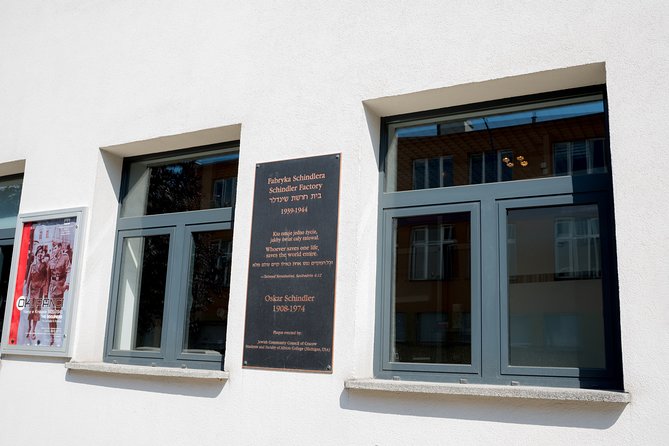
After the apartment and ghetto route, the exhibition continues the journey to the camp in Płaszów. This is presented as part of the path the inhabitants take.
You don’t have to be a WWII expert to get something out of this. What you should take away is that the exhibition is building a chain of cause and effect: city life becomes confinement, confinement becomes forced movement, and forced movement leads to camp reality.
Because this is emotionally heavy subject matter, I’d plan your day so you’re not immediately rushing into something upbeat afterward. Give yourself time to process, even if you’re just thinking in the street outside.
The 90-Minute Shape of the Tour (and How to Pace Yourself)
The tour runs about 1 hour 30 minutes. A real-life note: it can run closer to 2 hours depending on how questions and pace land.
For you, that means two things:
- Build your schedule with a small cushion before and after.
- Go in ready to listen, because the guide is doing the heavy lifting of connecting rooms and scenes.
This is also where group size becomes practical. With a maximum of 25 travelers, the guide can keep conversations from turning into chaos, and you should have room to ask questions when something isn’t clear.
Wear comfortable shoes too. Even though this is inside an exhibition, you’re still moving through multiple spaces in one continuous guided experience.
Price and Value: Is $45.38 Worth It?
At $45.38 per person, this isn’t a budget add-on. But it can feel like good value because several things are bundled together:
- The ticket is included.
- You get a professional guide to explain what you’re seeing.
- The experience includes multiple staged environments and modern multimedia elements, not just a single static gallery.
Where value really shows is if you care about interpretation. If you only want to read labels at your own pace, you could choose a self-guided museum approach. But if you want the story organized for you—especially through rooms like the photoplasticon, tram window film, and ghetto labyrinth—the guide time helps justify the price.
Also, the tour is often booked ahead (on average about 29 days in advance). If you’re traveling in a busy season, booking early can help you get a slot that fits your schedule.
Practical Details That Affect Your Experience
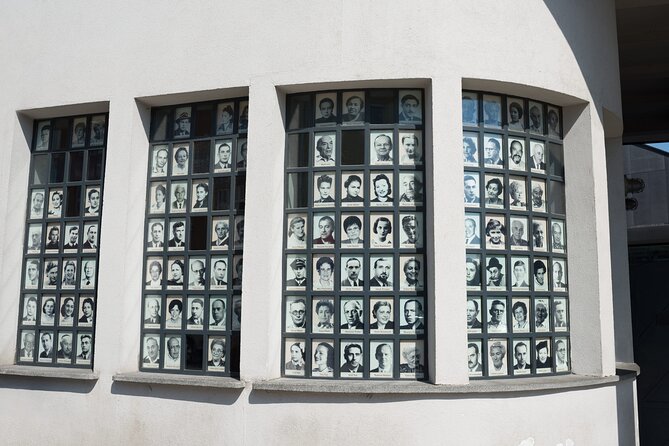
A few on-the-ground facts that matter when you’re planning:
- Meeting point: Lipowa 4, Kraków.
- Duration: about 1 hour 30 minutes.
- Near public transportation: easier for you to fit into a Krakow day plan.
- Confirmation at booking: you receive confirmation when you book.
- Children must be accompanied by an adult: good to know if you’re traveling as a family.
Most importantly, decide what you want from this experience. If you want Schindler the person, you may wish you were looking at a different type of visit. If you want Krakow under occupation—how people lived, how the city was controlled, and how the process escalated—this tour is built for that goal.
Who This Tour Fits Best (And Who Might Want Another Option)
This small-group guided experience is a great fit if:
- you want help connecting scenes inside a major WWII-era museum,
- you prefer a guided narrative to wandering alone,
- you care about how occupied Krakow affected Polish and Jewish residents, not only one character.
It may be a weaker fit if:
- you mainly want factory machinery or a worker-focused behind-the-scenes industrial tour,
- you expect a strong biography of Schindler as the center of gravity,
- you’ve already covered the occupation topics in depth and want a very different angle.
If you’re a fan of the film, you’ll still recognize the name Schindler, but plan to let the museum teach you the broader reality around him.
Should You Book This Small-Group Guided Tour?
I’d book this if you want your Krakow WWII visit organized by a guide and you’re ready for a serious, emotionally real museum experience. The combination of a focused occupation exhibition, staged environments, and multimedia storytelling is exactly what makes this kind of museum visit worth paying for—especially when the ticket is included.
Skip it (or pair it with something else) if you’re traveling mainly for factory machinery details or a strict Schindler biography. This tour’s strengths are the city-wide occupation story and the route through the ghetto experience toward Płaszów.
FAQ
How long is Schindler’s Factory Small-Group Guided Tour?
It’s listed at about 1 hour 30 minutes.
What does the tour cost?
The price is $45.38 per person.
Is the museum ticket included?
Yes, admission is included in the tour.
Where does the tour start?
The meeting point is Lipowa 4, Kraków, Poland (32-051).
How big is the group?
The tour has a maximum of 25 travelers.
Is this tour biographical about Oskar Schindler?
No. The exhibition is dedicated to occupied Krakow from 1939 to 1945 and covers many aspects of life under Nazi rule.
Are children allowed?
Children must be accompanied by an adult.
What is the cancellation policy?
You can cancel for a full refund up to 24 hours before the experience starts. If you cancel less than 24 hours before, the amount paid isn’t refunded.
More Tours in Krakow
More Tour Reviews in Krakow

Krakow in Wartime: More Reviews
Just added: fresh Krakow reviews

Schindler's Factory & WWII Tours, compared.
 ★ 4.3Schindler’s Factory Ticket and Guided Tour OptionFrom $254,306 reviews
 ★ 4.5Schindler’s Factory Tour with Entrance TicketFrom $493,182 reviews
 ★ 4.4Schindler’s Factory Skip-the-Line TicketFrom $253,105 reviews
★ 4.6Schindler’s Factory Tour with Entrance TicketFrom $401,737 reviews
★ 4.4Schindler’s Factory Skip-the-Line TicketFrom $253,105 reviews
★ 4.6Schindler’s Factory Tour with Entrance TicketFrom $401,737 reviews
 ★ 4.5Schindler’s Factory in Krakow: Guided Tour & Skip the Line TicketFrom $351,714 reviews
 ★ 4.7Schindler’s Factory & Ghetto Guided TourFrom $571,694 reviews
 ★ 4.3Schindler’s Factory Ticket with Guided Tour OptionFrom $421,485 reviews
 ★ 4.0Krakow Schindler’s Factory Guided Tour with Admission TicketFrom $351,156 reviews
Browse the lists this tour appears in