
REVIEW · SCHINDLER'S FACTORY & WWII TOURS
World War II in Krakow Walking Tour in English
Auschwitz isn’t the only place where Nazis left marks. This walking tour in Kraków follows the occupation through streets, buildings, and surviving inscriptions, and connects it to real resistance choices people had to make.
I really like how the experience is built like a story, not a list. You’ll see St. Michael’s prison and learn what happened there, then you’ll move on to the Gestapo headquarters and the physical evidence of terror. One drawback to plan for: it’s emotionally heavy, so if you want a lighter, mostly scenic walk, this won’t be your best fit.
In This Review
- Key things I’d prioritize before you go
- WWII in Krakow isn’t past tense
- Price and what you get for $26 in 150 minutes
- Meeting at the triangle square near Wawel Hill
- Katyń wooden cross: a memorial you can’t ignore
- St. Michael’s prison cells: reading terror in the details
- Gestapo headquarters: how repression becomes a system
- Park Krakowski bomb shelters: survival strategies for civilians
- The tour tone: hard questions, not just dates
- The guide makes or breaks the experience (and this tour has strong ones)
- How long is it and how to plan your day
- Who should book this WWII walking tour?
- Should you book World War II in Krakow?
- FAQ
- How long is the World War II in Krakow Walking Tour?
- What’s the price of the tour?
- Is the tour offered in English?
- Where is the meeting point?
- Is hotel pickup or drop-off included?
- Are snacks included?
- What does the tour include?
- What are some major stops on the route?
- Is the tour wheelchair accessible?
- When should I arrive at the meeting point?
Key things I’d prioritize before you go
- A narrative walk through visible scars: you connect WWII events to what you can still see today.
- Prison cells and victim wall inscriptions: you don’t just hear theory; you look at the marks left behind.
- Gestapo headquarters stop: the tour explains how the Nazi system worked on the ground.
- Courage and opposition stories: resistance actions by individuals and organized groups are part of the route.
- Bomb shelters at Park Krakowski: you get a civilian survival perspective, not only military history.
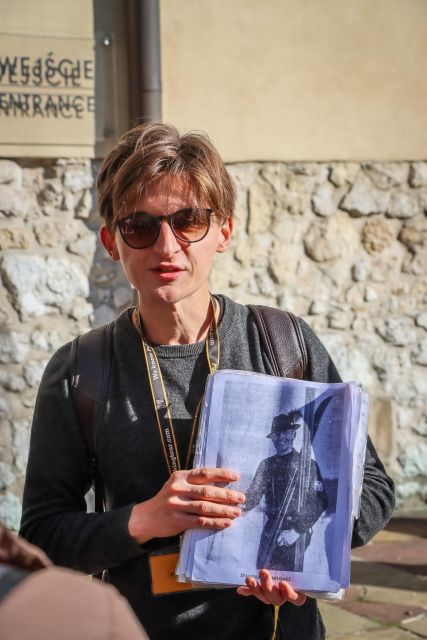
- English live guide: the route is paced to a spoken story you can follow for the full 150 minutes.
More of Krakow under the wartime occupation
- Krakow: Schindler’s Factory Ticket and Guided Tour Option
★ 4.3 · 4,306 reviews - Krakow: Schindler’s Factory Tour with Entrance Ticket
★ 4.5 · 3,182 reviews - Krakow: Schindler’s Factory Skip-the-Line Ticket
★ 4.4 · 3,105 reviews
WWII in Krakow isn’t past tense
Kraków is beautiful in a postcard way. I get it. But WWII didn’t vanish when the war ended. In this tour, you learn to read the city differently: not just as old stone and pretty streets, but as a place where occupation changed daily life.
What makes it interesting is the balance. You’re not only shown the brutal side. You also hear about people who resisted, people who made impossible decisions, and people who tried to survive inside a system designed to crush them. It’s history with moral friction. And it sticks.
Price and what you get for $26 in 150 minutes
The tour costs $26 per person for about 150 minutes. That’s not a tiny price, but it’s also not inflated for a city walking experience, especially when you factor in that you’re getting an expert local guide plus a carefully built narrative.
You’re basically paying for three things:
- A guide who can connect sites into a clear storyline
- Time spent at significant WWII locations, not just a quick drive-by
- English commentary that keeps the walk understandable and focused
Also, your payment is described as covering a reservation fee and the guide’s payment within the pay-what-you-wish setup. So you’re not just paying for the hour. You’re also participating in a model that’s meant to reward the person doing the teaching.
Meeting at the triangle square near Wawel Hill
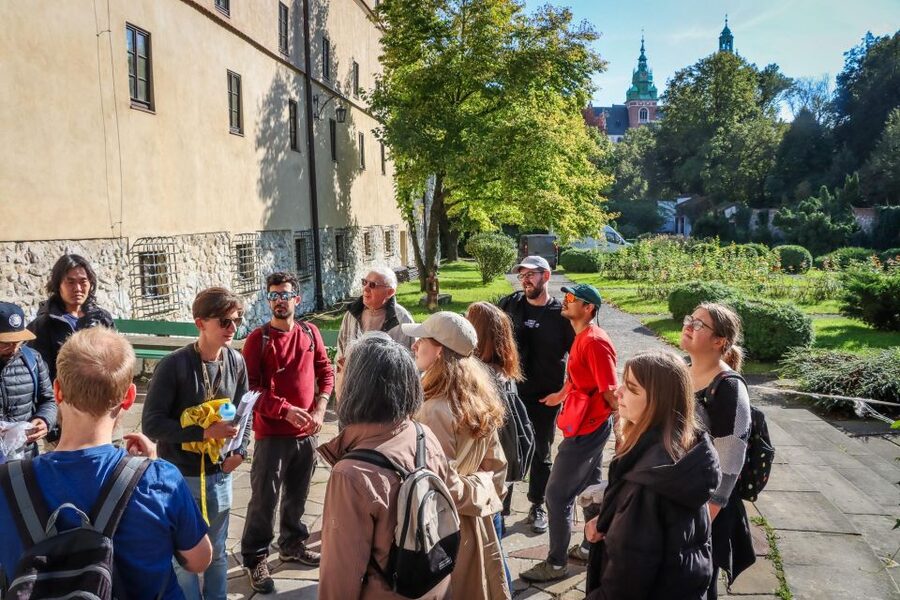
The meeting point is Triangle Square next to Wawel Hill, at the end of Grodzka Street. This matters more than it sounds. If you’re late, you’ll miss the opening context, and that’s where the story makes the most sense.
Arrive 10 minutes early. Wear shoes for a real walking route. It’s a city walk with stops at specific buildings and spaces, including places where you’ll likely spend a bit of time reading inscriptions.
This tour is listed as wheelchair accessible, which is a plus for mobility. Still, don’t assume a completely flat route. Plan for a slower pace if you use a wheelchair or need more time around stop points.
On foot through the Old Town, more guided walks
- Old Town Krakow & Wawel Castle Walking Tour★ 5.0 · 1,508 reviews
- Creepy Krakow: 2-Hour City Walking Tour★ 4.7 · 1,131 reviews
- Krakow: The Old Town Walking Tour★ 4.8 · 794 reviews
- Krakow: Kazimierz Jewish Quarter Walking Tour★ 4.8 · 571 reviews
Katyń wooden cross: a memorial you can’t ignore
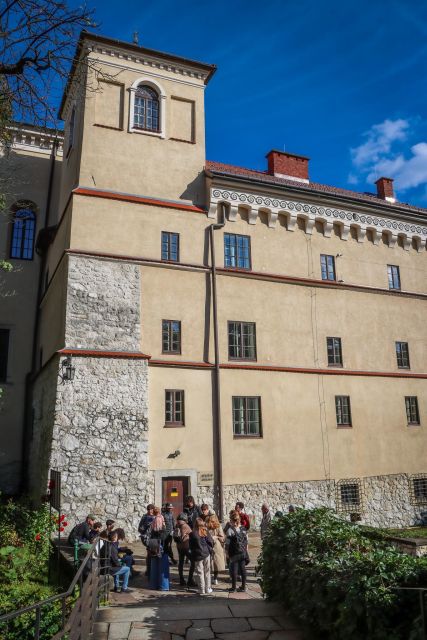
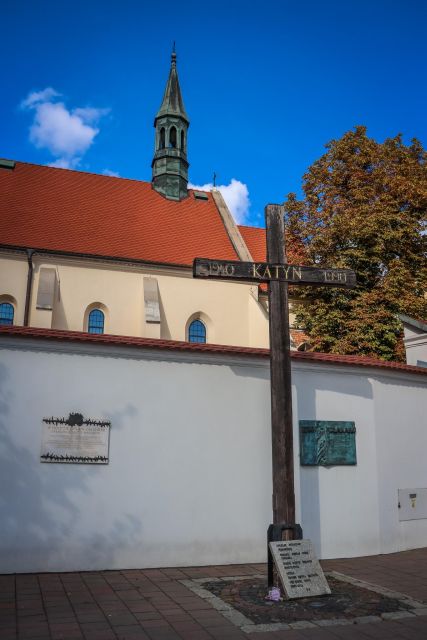
The first stop you’ll see is the Katyń wooden cross. It’s one of those locations that can look simple at a glance, but carries heavy meaning once the guide places it in the WWII-era story.
This kind of stop is valuable because it shifts the tour from buildings-as-sets to people-as-subjects. You’re not just walking through Nazi infrastructure. You’re moving through the wider damage the occupation created—losses that reached families and communities, not only victims inside prison walls.
A practical note: if you’re the type who likes to take photos, do that quickly and respectfully. This is a memorial-style moment, and you’ll get more out of it if you slow down just a little.
St. Michael’s prison cells: reading terror in the details
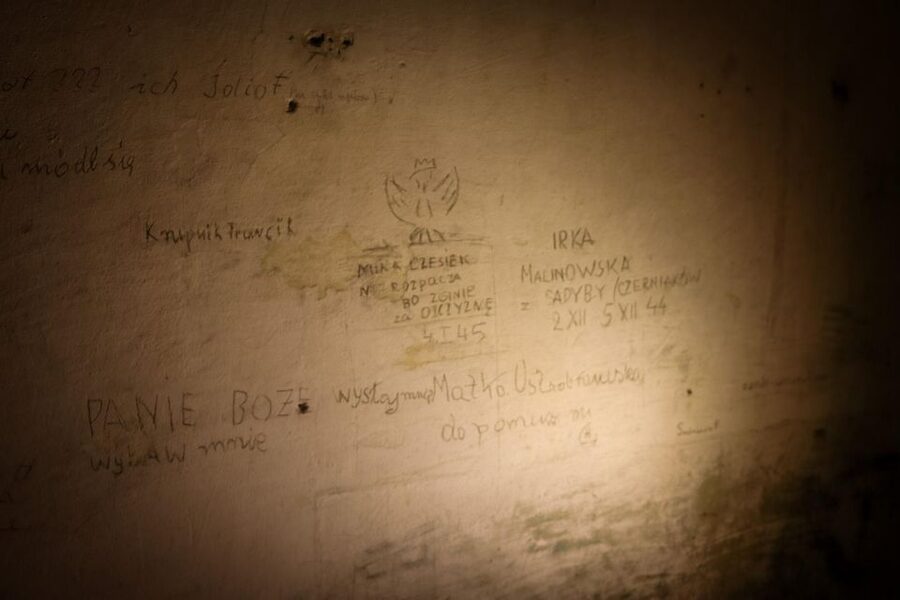
The most intense stop is St. Michael’s prison. The highlights specifically call out Nazi prison cells and inscriptions left on the walls by the victims.
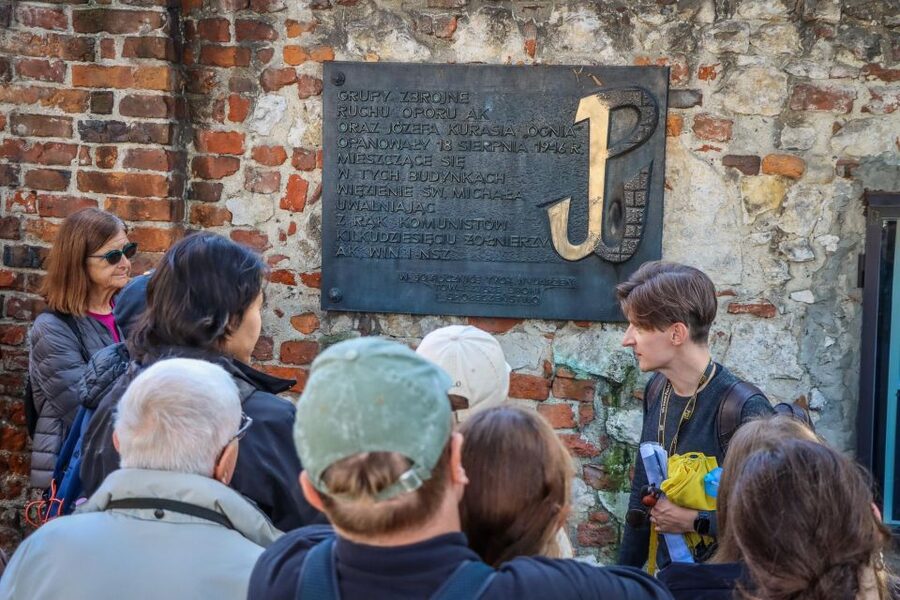
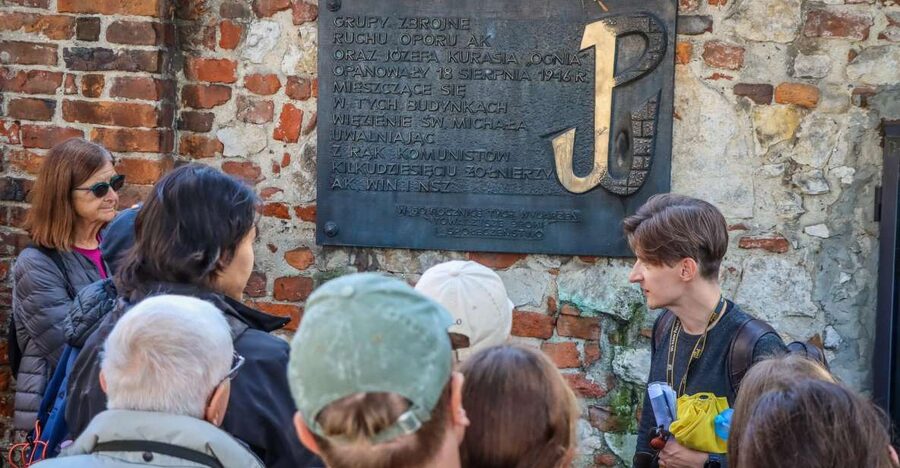
That word choice matters. You’re not only hearing what happened. You’re seeing evidence—physical marks created by people who were there, at the point when nothing felt safe. Wall inscriptions are powerful in a way that classroom history rarely matches. They force you to remember that victims weren’t abstract names. They were individuals trying to leave something behind.
The tour experience here tends to work best if you let it be uncomfortable. You don’t need to understand every historical detail to feel the point. The guide’s job is to connect these inscriptions to the larger occupation system, and that’s where the route earns its emotional weight.
If you’re visiting with someone sensitive to dark topics, this is where you should check in with each other. The rest of the walk won’t be graphic in the same way, but it stays serious.
Gestapo headquarters: how repression becomes a system
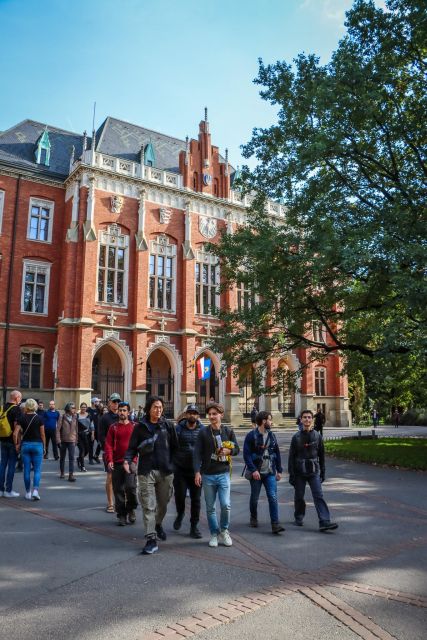
Next comes the Gestapo headquarters stop. This is one of those locations where history is not distant. The purpose is direct: you’ll hear about the Nazi officers of the occupation and how their tools were used to repress victims.
Why I think this stop is a key value for your money: it turns fear into a mechanism. Instead of thinking of persecution as one-off cruelty, the guide explains it as a daily system. That helps you understand why ordinary life under occupation could feel like it was constantly watched, judged, and punished.
You also get a clearer sense of the space between power and resistance. In the same tour, after prison cells and headquarters, you’ll hear stories of people opposing and fighting—sometimes through organized groups, sometimes through individual courage. The contrast makes the resistance part more meaningful, not less.
Park Krakowski bomb shelters: survival strategies for civilians
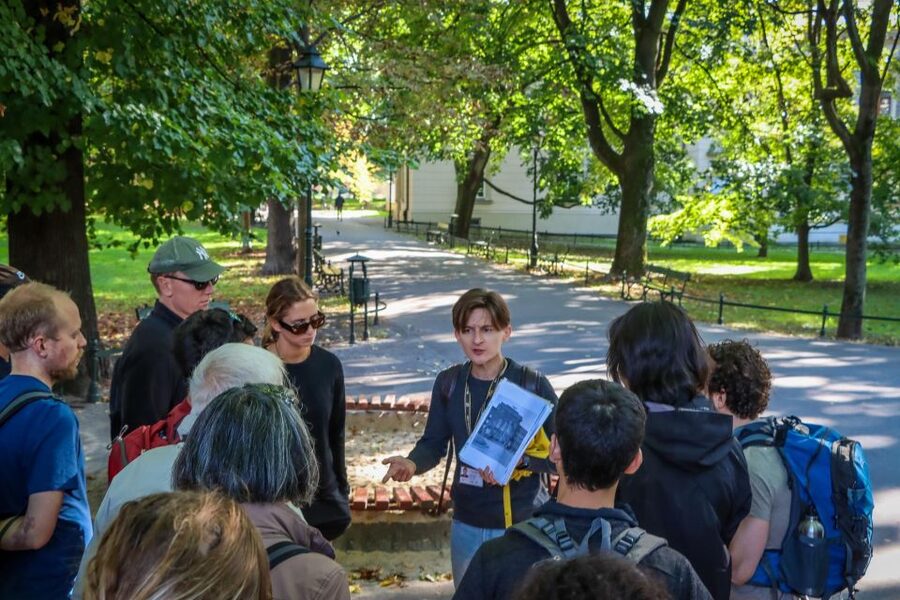
The walk also includes bomb shelters (Park Krakowski). This adds an important layer. WWII in Kraków wasn’t only about prisons and interrogations. It was also about living under constant threat—especially when bombings were part of the reality.
A shelter stop helps you picture how civilians tried to protect themselves in moments when the city could turn dangerous fast. You’ll likely talk about the logic behind sheltering and what it meant to wait out danger with limited control.
Even if you know WWII broadly, this part brings the story down to human scale. It’s the difference between studying a war and imagining what it felt like to manage your day around sudden danger.
The tour tone: hard questions, not just dates
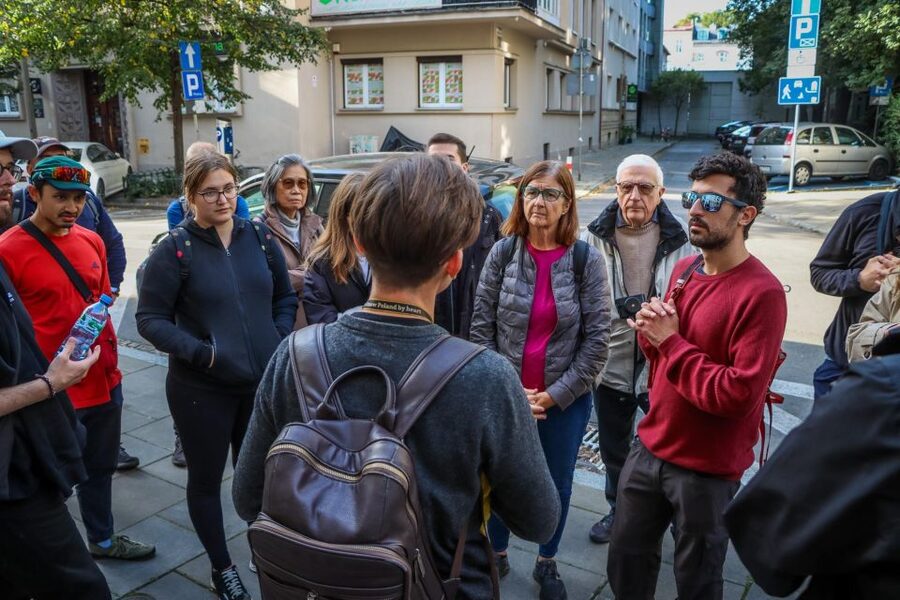
The tour is built around more than facts. It’s built around choices. The description frames WWII as a time when even small decisions could have grave consequences. That theme is the thread that makes the route feel like one connected story instead of disconnected stops.
You’ll hear about:
- The darkest side of the occupation, through the officers and tools used against victims
- Ordinary people facing the Nazi regime
- Rising up into “silent heroes,” plus resistance actions by individuals and organized groups
- Difficult decisions where the right path wasn’t always clear
This is where the English-language guiding makes a big difference. Good narration keeps you from getting lost in names and dates. It keeps the moral and human points in focus.
The guide makes or breaks the experience (and this tour has strong ones)
A lot of walking tours sink under dry talking. This one aims to avoid that through its story structure and the way the guide delivers it.
From the tour’s own guide reputation, one name comes up often: Big Tomasz. People describe him as fantastic, insightful, and able to mix excellent local knowledge with a bit of good humour. Another guide named Tomasz is described as warm, engaging, and passionate.
That matters because the content is heavy. When a guide adds humor in small, careful ways, it helps you keep moving without losing respect for the subject. It also helps you stay alert for the full 150 minutes.
How long is it and how to plan your day
The duration is 150 minutes. That’s long enough to do multiple significant stops but short enough to fit into a busy Kraków itinerary.
To make it work smoothly:
- Start on time at Triangle Square
- Keep buffer time between the tour and any train or appointment
- Bring water if you tend to get thirsty on walks (snacks are not included)
Because the tour includes prison-related locations and reading inscriptions, there will be moments where you’re standing still longer than you expect. Plan your schedule so you’re not watching the clock.
Who should book this WWII walking tour?
This is a great fit if you want:
- A serious walk that connects real WWII sites to how occupation reshaped Kraków
- An English narrative led by an expert local guide
- A route that includes both repression sites and resistance/courage stories
- Visible evidence, like the inscriptions connected to victims
It’s also a good match if you like your history with questions attached. The tour doesn’t just ask what happened. It asks what you would do. That’s the kind of framing that can change how you see the city even after the walk ends.
If you want only light sightseeing, skip it. This walk is meant to make you stop and think.
Should you book World War II in Krakow?
I’d book this tour if you’re visiting Kraków and you care about understanding WWII beyond a museum context. The combination of St. Michael’s prison, Gestapo headquarters, and Park Krakowski bomb shelters, plus a memorial stop, gives you multiple angles on how occupation worked and what people did in response.
I’d pass or at least reconsider if dark topics aren’t your thing or if you prefer a strictly chronological, date-heavy lecture with no moral framing. The tour’s strength is its storytelling and its focus on courage and consequences—so it won’t feel neutral in tone.
If you do book, show up early, wear comfortable shoes, and give yourself time after the tour to reflect. You’ll leave with a different mental map of Kraków, one where the past isn’t buried.
FAQ
How long is the World War II in Krakow Walking Tour?
It lasts 150 minutes.
What’s the price of the tour?
The price is $26 per person.
Is the tour offered in English?
Yes, it is a live tour guide in English.
Where is the meeting point?
Meet at Triangle Square, next to Wawel Hill, at the end of Grodzka Street.
Is hotel pickup or drop-off included?
No, hotel pickup and drop-off are not included.
Are snacks included?
No, snacks are not included.
What does the tour include?
You get an expert local tour guide and a thoroughly constructed-narrative.
What are some major stops on the route?
Stops include Katyń wooden cross, St. Michael’s prison, Gestapo headquarters, and bomb shelters (Park Krakowski).
Is the tour wheelchair accessible?
Yes, the tour is listed as wheelchair accessible.
When should I arrive at the meeting point?
Please arrive 10 minutes before the activity starts.
More Tour Reviews in Krakow
More Guided Walks Through Town

Krakow in Wartime: More Reviews

Just added: fresh Krakow reviews
Schindler's Factory & WWII Tours, compared.
 ★ 4.3Schindler’s Factory Ticket and Guided Tour OptionFrom $254,306 reviews
 ★ 4.5Schindler’s Factory Tour with Entrance TicketFrom $493,182 reviews
 ★ 4.4Schindler’s Factory Skip-the-Line TicketFrom $253,105 reviews
★ 4.6Schindler’s Factory Tour with Entrance TicketFrom $401,737 reviews
★ 4.4Schindler’s Factory Skip-the-Line TicketFrom $253,105 reviews
★ 4.6Schindler’s Factory Tour with Entrance TicketFrom $401,737 reviews
 ★ 4.5Schindler’s Factory in Krakow: Guided Tour & Skip the Line TicketFrom $351,714 reviews
 ★ 4.7Schindler’s Factory & Ghetto Guided TourFrom $571,694 reviews
 ★ 4.3Schindler’s Factory Ticket with Guided Tour OptionFrom $421,485 reviews
 ★ 4.0Krakow Schindler’s Factory Guided Tour with Admission TicketFrom $351,156 reviews
Browse the lists this tour appears in