
REVIEW · SCHINDLER'S FACTORY & WWII TOURS
Cracow: Guided Tour of Schindler’s Factory & Jewish Ghetto
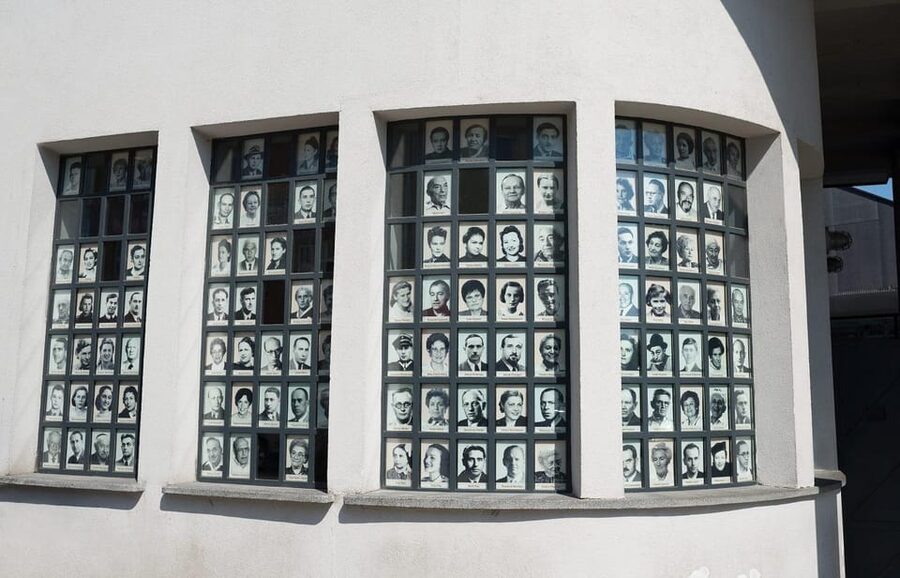
Walking these Krakow streets with a guide changes how you see the past. This tour pairs Schindler’s Factory with the surviving reminders in Podgórze, so you don’t just read history—you follow it block by block. I especially like the way the museum part is structured around the exhibition Krakow Under Nazi Occupation, and I also like the practical walking segment through the ghetto area that helps you orient fast. One thing to consider: it’s emotionally heavy, so if you prefer light sightseeing, this may feel like a lot in only three hours.
You’ll also get a close look at the Pod Orłem pharmacy and the Empty Chair Monument in Heroes’ Square with its symbolic 68 chairs. I like how the walk connects museum learning to outdoor landmarks, which makes the story easier to hold in your head. A possible drawback is that the overall timing can shift a little because Schindler’s Factory scheduling can affect exact entry times.
In This Review
- Key points to notice before you go
- Why this Krakow combo works so well
- Getting your entry right at Schindler’s Factory
- Schindler’s Factory Museum: more than names on a wall
- Podgórze streets: where the ghetto shape becomes clear
- Heroes’ Square and the Empty Chair Monument (68 chairs)
- Pod Orłem Under the Eagle pharmacy: a landmark you’ll recognize
- Pacing: what three hours actually feels like
- Price and value: is $58 worth it?
- Who this tour fits best (and who should think twice)
- Should you book this Krakow tour?
- FAQ
- FAQ
- Where do we meet for the tour?
- How long is the guided tour?
- What is included in the price?
- What is not included?
- Can I choose a start time?
- Do I need to bring my passport or ID?
- Which languages are available for the live guide?
- Do I skip the ticket line?
- How much does the tour cost?
- What is the cancellation policy?
Key points to notice before you go
- Skip the ticket line so your time goes to the tour, not waiting.
- Schindler’s Factory guide makes the exhibition easier to understand and remember.
- Podgórze ghetto wall and residential sites give you a real sense of space and separation.
- Pod Orłem Under the Eagle pharmacy is a major stop for the story people come for.
- Empty Chair Monument (68 chairs) gives the emotional message a visible form.
- Small, language-supported live tour options include English, Spanish, German, French, and Italian.
Deeper into Kazimierz and its Jewish heritage
- Krakow: Schindler’s Factory & Ghetto Guided Tour
★ 4.7 · 1,694 reviews - Krakow: Jewish Quarter and Former Ghetto Tour
★ 4.9 · 1,441 reviews - Krakow: Bike Tour of Old Town, Jewish Quarter and the Ghetto
★ 4.9 · 1,155 reviews
Why this Krakow combo works so well
This is one of those tours where the pieces actually fit together. You start at Schindler’s Factory, where the story is explained inside a museum setting. Then you move into Podgórze, where you can look around and place what you just learned into the geography of Krakow. That two-part structure matters. Museums can stay abstract if you don’t connect them to the streets outside. A guided walk helps you do that connection fast.
You’ll also get a clear, human-scale flow. The stops aren’t random. They’re the kinds of landmarks that show how daily life changed under Nazi occupation, and how the ghetto reshaped neighborhoods into fenced-in living space. The goal is understanding, not just photos.
And yes, it can be intense. You’re learning about persecution, forced displacement, and what survival looked like day after day. If you come in ready for that, the experience tends to land hard in the best way.
Getting your entry right at Schindler’s Factory
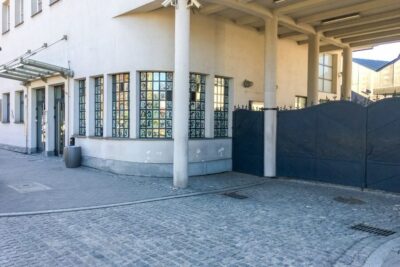
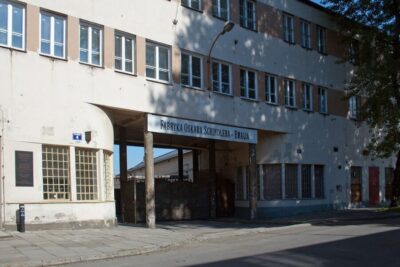
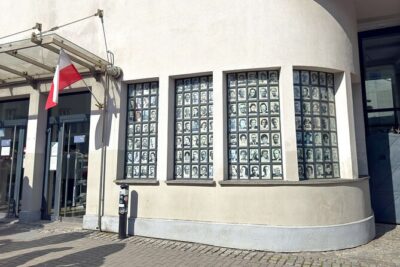
Schindler’s Factory is the heart of this tour. You’ll meet your guide in front of the main entrance to the museum, with the excursions.city sign. From there, the plan is straightforward: you get through entry smoothly and move into the exhibition.
Here’s what can trip people up. The museum uses personalized tickets. When you reserve, you must provide the full names of all participants exactly as they appear on your passport or ID. You also need to bring that ID or passport for entry. Without it, you may not get in.
If you’re traveling with a friend group, this is worth double-checking right away. It’s not a big hassle, but it does require accuracy. A small typo can become a real problem at the entrance.
Timing is another point to know. The total tour duration is listed as three hours, but the exact schedule can be approximate. Schindler’s Factory can affect timing, and the exact entry time isn’t guaranteed even if you choose a preferred start. The good news is you’re still getting a guided, paced route rather than a self-guided scramble.
Schindler’s Factory Museum: more than names on a wall
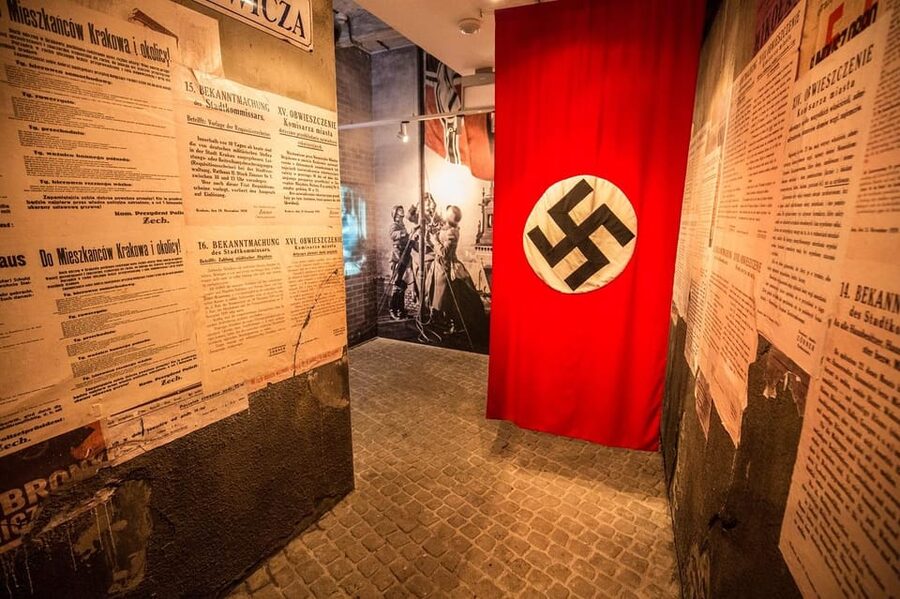
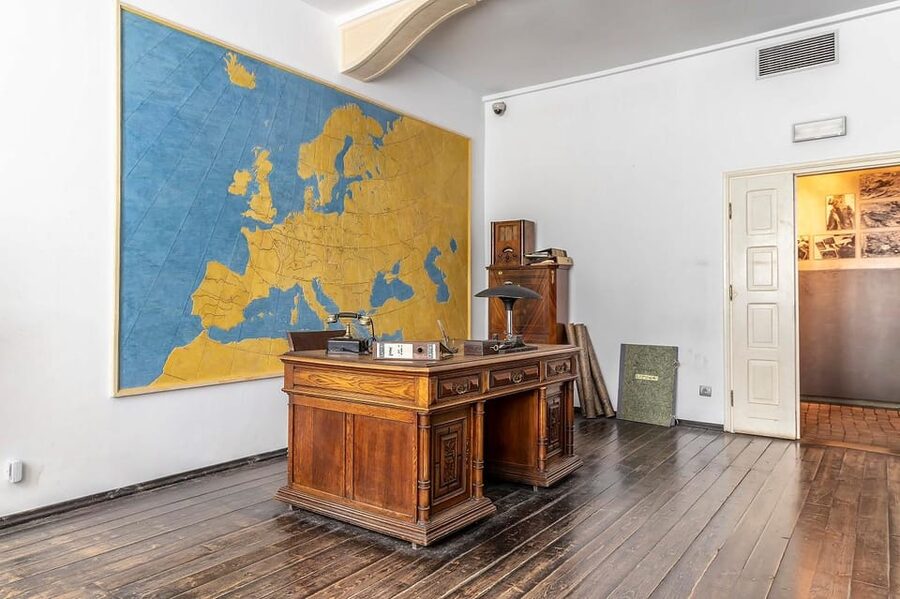
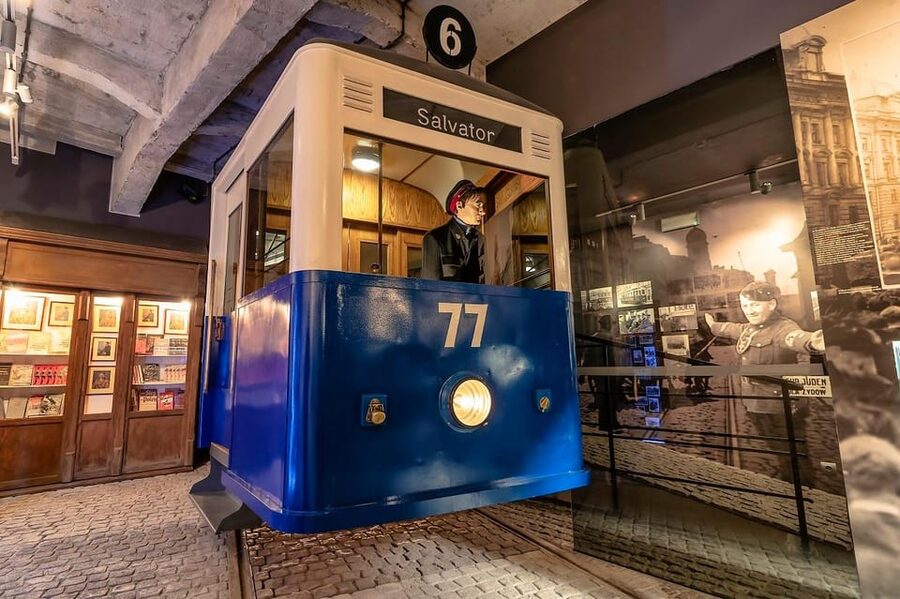
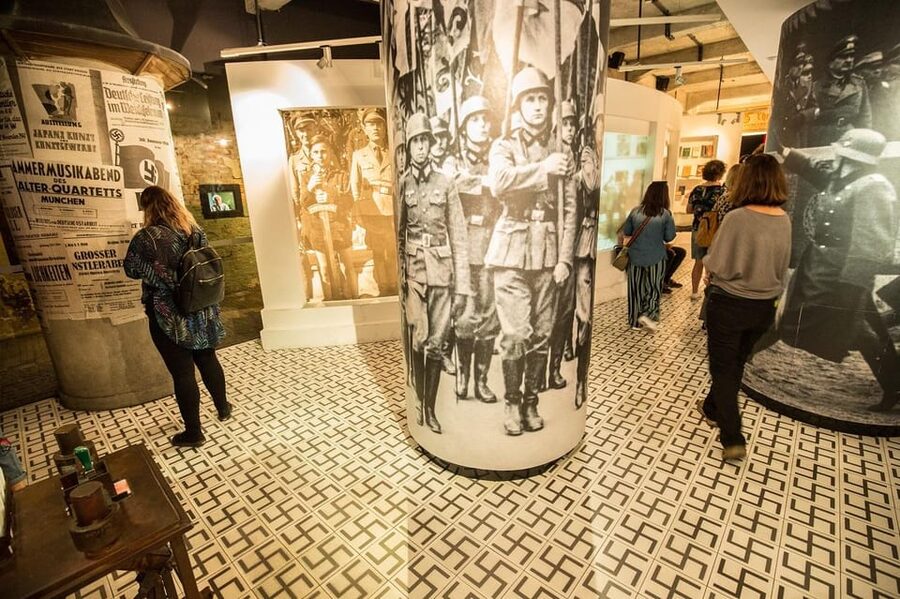
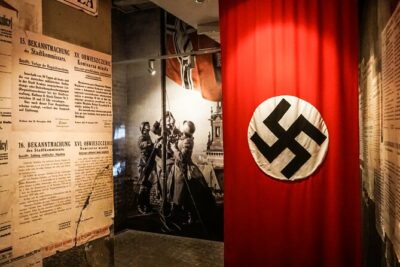
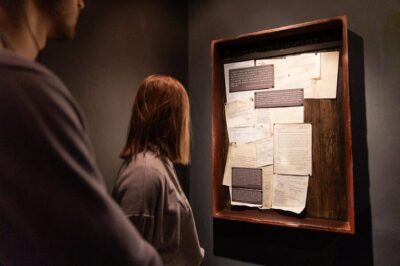
The museum visit is built around a specific exhibition theme: Krakow Under Nazi Occupation. The focus is on daily life in Nazi-occupied Krakow and on the courageous actions of Oskar Schindler, the German entrepreneur who helped numerous Jews during the war.
What I like about this museum component is how it turns a huge historical subject into something you can track. Instead of only hearing dramatic events, you learn how occupation worked on an everyday level—how people lived, how systems tightened, and how survival depended on both circumstance and help from others.
The guide matters here. A good guide doesn’t just summarize display text. They explain what you’re looking at and connect details so you can follow the logic. Past participants have praised guides for being exceptionally engaging and well-prepared. One review specifically highlighted Margherita as very involved, gentle, prepared, and easy to recommend. Another named Phill as the best, with an enthusiasm that turned the museum into a story you could actually follow. Even though you won’t know your guide in advance, those names are a good hint that the tour company puts real effort into the person leading you.
Also, this is one of the stops where skipping the ticket line can genuinely save your energy. If you’ve ever done popular museums in peak times, you know the waiting adds stress you don’t need. Here, your time stays focused on the guided portion.
More of Krakow under the wartime occupation
- Krakow: Schindler’s Factory Ticket and Guided Tour Option★ 4.3 · 4,306 reviews
- Krakow: Schindler’s Factory Tour with Entrance Ticket★ 4.5 · 3,182 reviews
- Krakow: Schindler’s Factory Skip-the-Line Ticket★ 4.4 · 3,105 reviews
- Krakow: Schindler’s Factory Tour with Entrance Ticket★ 4.6 · 1,737 reviews
Podgórze streets: where the ghetto shape becomes clear
After Schindler’s Factory, you head into Podgórze, one of Krakow’s districts tied directly to the ghetto story. This part is the “walk it, feel it” element.
You’ll walk through the streets of Podgórze and see preserved reminders of World War II events. A big highlight is a segment of the preserved ghetto wall. That wall is important for understanding because walls are more than physical barriers. They represent control. They represent separation that wasn’t temporary or symbolic—it was enforced.
You’ll also pass by residences where thousands of displaced Jews once lived. This is where the scale becomes real. In a museum, it’s easy for numbers to float around in your head. Outside, you start to understand how crowded and constrained daily life could be, and how the ghetto’s boundaries shaped what people could reach and when.
Your guide’s job here is to interpret what you’re seeing. Look for their cues about which parts were preserved, what the landmarks represent, and how the geography connects back to what you just learned indoors. If you pay attention to their explanations, the walking segment becomes more than sightseeing. It becomes a map for remembering.
Heroes’ Square and the Empty Chair Monument (68 chairs)
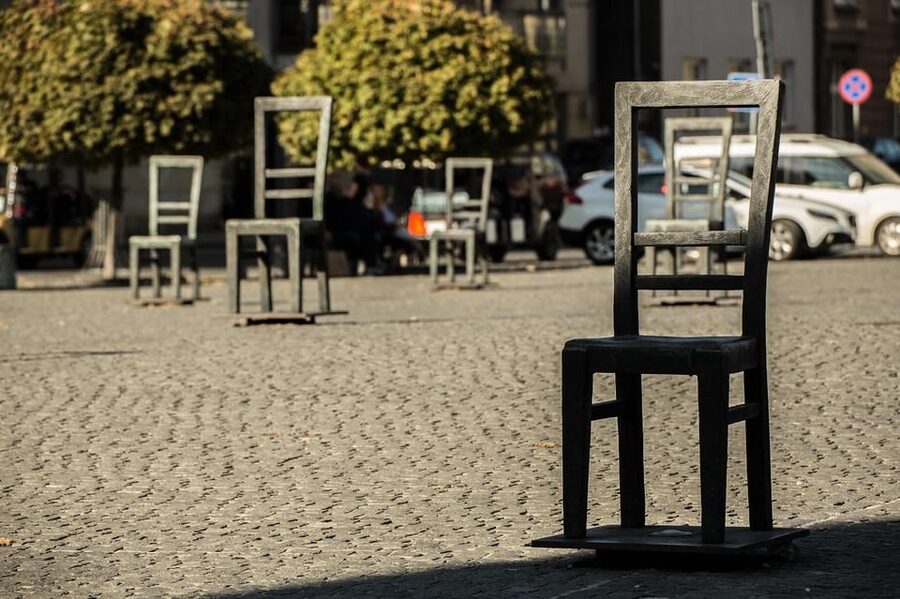
One of the most striking stops is in Heroes’ Square. You’ll visit the Empty Chair Monument. The detail that makes it hit harder is the symbolism: it’s marked with 68 chairs.
That number isn’t just decoration. It’s designed to represent loss and absence in a way you can’t ignore. Even if you’ve read about memorials before, a monument like this works differently in person. You’re physically looking at an arrangement meant to carry memory. Your brain fills in the missing people, and that’s the point.
If you’re visiting during busier hours, you might want to give yourself a minute to step back and take it in without rushing. This is a stop that rewards quiet attention, not quick phone photos.
Pod Orłem Under the Eagle pharmacy: a landmark you’ll recognize
Another standout is the visit to the famous Under the Eagle pharmacy, known as Pod Orłem. It’s one of those places that people often recognize from stories about the ghetto area, and it makes the tour feel anchored to a real, named location rather than a generic “historical district” label.
I like this stop because it’s specific. It gives the tour a concrete reference point: a place with a name, with an identity in Krakow’s city life. Even when you’re learning about enormous tragedy, it helps to see how ordinary settings existed next to extraordinary danger and restriction.
This is also a good moment to catch your breath. After the museum’s heavier content and the wall-and-residence context, a clearly defined landmark gives your brain a handle. You can remember the tour by attaching it to that recognizable place.
Pacing: what three hours actually feels like
Three hours sounds short, and it is. But it’s enough time to do something meaningful without turning the day into a full-day commitment. The tour is built around two main parts: museum + walking route.
In the museum, you’re not just looking at rooms; you’re following a guided narrative. That helps the time feel justified. If you rush through museums on your own, Schindler’s Factory can become a “read fast, forget later” experience. With a guide, you have checkpoints.
Then you move outdoors for Podgórze and the memorial stops. Expect a walking pace that supports a group. You’ll spend time stopping at key landmarks rather than treating it like a quick transit route.
A possible drawback from a real-world perspective: one review noted the overall experience could have been a bit more condensed, with the tour running closer to about 3.5 hours. That suggests you might end up with slightly more time than the three-hour headline, especially if the museum schedule or your group’s pace shifts.
Price and value: is $58 worth it?
At $58 per person for a tour lasting about three hours, the value comes down to what’s included: museum tickets, a professional guide, and a walking tour. It’s not just a stroll; you’re paying for interpretation in two different settings.
If you tried to do this alone, you’d likely pay museum entry on your own and then spend time figuring out what to look at and how to connect it. The guide reduces that planning load and adds context. The skip-the-ticket-line detail also helps you avoid a time sink that can happen at popular museums.
Another subtle value point: languages. You can join with a live guide in Italian, French, English, Spanish, or German. That matters if you don’t want to rely on a text-heavy self-guided approach.
So, is it worth $58? For most visitors who want a guided story tied to specific landmarks in Krakow, I think it’s fair. You’re not paying for transportation or meals, but you are paying for access, interpretation, and focus.
Who this tour fits best (and who should think twice)
This tour is best for people who want serious context, not just a scenic walk. You’ll get a strong look at Schindler’s Factory plus the ghetto-area remnants in Podgórze, and you’ll also see major landmarks like Pod Orłem and the Empty Chair Monument.
It’s a great fit if:
- You want to understand Krakow under Nazi occupation in a structured way.
- You like guided explanation that connects museum facts to real-world geography.
- You’re comfortable with emotionally heavy subject matter.
It may feel like a lot if:
- You prefer lighter, purely recreational sightseeing.
- You’re very sensitive to difficult history and memorial spaces.
Should you book this Krakow tour?
If you’re coming to Krakow and you care about seeing the key places tied to the Schindler story and the Krakow ghetto narrative, I’d book it. The best part is the pairing: museum learning plus a guided route through Podgórze. That combination helps your understanding stick.
One more practical check: make sure your reservation details match your passport or ID exactly, because Schindler’s Factory entry depends on personalized tickets. Also, come with expectations of a guided walk that includes memorial space and a major landmark like Under the Eagle pharmacy.
If you want a tour where the time is used well, the stops are specific, and the guiding is clearly a focus (with past guides like Margherita and Phill praised for being engaging), this one fits.
FAQ
FAQ
Where do we meet for the tour?
You meet the guide in front of the main entrance to Schindler’s Factory Museum, with the excursions.city sign.
How long is the guided tour?
The duration is 3 hours.
What is included in the price?
The tour includes tickets to the Schindler’s Factory Museum, a professional tour guide, and a walking tour.
What is not included?
Hotel pickup and drop-off, plus food and drinks, are not included.
Can I choose a start time?
Yes. You can choose a preferred time, but the exact time is not guaranteed due to Schindler’s Factory Museum scheduling.
Do I need to bring my passport or ID?
Yes. Because the museum uses personalized tickets, you must bring a passport or ID for entry, and provide full names when reserving.
Which languages are available for the live guide?
The tour offers live guide languages in Italian, French, English, Spanish, and German.
Do I skip the ticket line?
Yes, you skip the ticket line.
How much does the tour cost?
The price is $58 per person.
What is the cancellation policy?
Free cancellation is available up to 24 hours in advance for a full refund.
More Tour Reviews in Krakow

Krakow in Wartime: More Reviews


More of Jewish Kazimierz

Just added: fresh Krakow reviews
Schindler's Factory & WWII Tours, compared.
 ★ 4.3Schindler’s Factory Ticket and Guided Tour OptionFrom $254,306 reviews
 ★ 4.5Schindler’s Factory Tour with Entrance TicketFrom $493,182 reviews
 ★ 4.4Schindler’s Factory Skip-the-Line TicketFrom $253,105 reviews
★ 4.6Schindler’s Factory Tour with Entrance TicketFrom $401,737 reviews
★ 4.4Schindler’s Factory Skip-the-Line TicketFrom $253,105 reviews
★ 4.6Schindler’s Factory Tour with Entrance TicketFrom $401,737 reviews
 ★ 4.5Schindler’s Factory in Krakow: Guided Tour & Skip the Line TicketFrom $351,714 reviews
 ★ 4.7Schindler’s Factory & Ghetto Guided TourFrom $571,694 reviews
 ★ 4.3Schindler’s Factory Ticket with Guided Tour OptionFrom $421,485 reviews
 ★ 4.0Krakow Schindler’s Factory Guided Tour with Admission TicketFrom $351,156 reviews
Browse the lists this tour appears in