
REVIEW · SCHINDLER'S FACTORY & WWII TOURS
Jewish Quarter and Schindler’s Factory Guided Tour in Krakow
Synagogues, street names, and one haunting museum. This 3.5-hour Krakow tour strings together Kazimierz sights like Szeroka Street and several synagogues, then finishes with a ticketed visit to Schindler’s Factory. It’s the kind of route that turns a neighborhood into a story, one stop at a time.
I especially like the way the guide connects what you see with what happened there. Expect clear, human stories and enough pacing to take in the details without feeling rushed. You’ll also get a structured walk with short, focused stops that keep things moving.
One thing to plan around: not every synagogue stop has admission included, and Schindler’s Factory uses personalized tickets. Bring your passport or ID and be ready for extra entries if you want to go inside at the stops marked ticketed.
In This Review
- Key highlights that make this tour worth your time
- Jewish Quarter walking tour that connects buildings to real life
- Szeroka Street: your first clue that Kazimierz is the center of it all
- Old Synagogue (Stara Synagoga): the oldest preserved thread in Poland
- Remuh Synagogue and the adjacent cemetery: sacred space that keeps its gravity
- Kupa Synagogue: the story of a community’s last building
- Market Square and Nowy Świat: Krakow’s changing district lines
- Tempel Synagogue: active Jewish life, not just a museum mood
- Corpus Christi Church: a different architectural language in the same walk
- Father Bernatek Footbridge: a modern link on an older crossing site
- Plac Bohaterów Getta (Ghetto Heroes Square): chair memorials and the meaning of “left behind”
- Schindler’s Factory Museum: the 90-minute WWII centerpiece
- Price and value: what $71.35 buys you (and what it doesn’t)
- Who this tour suits best in Krakow
- Should you book this Jewish Quarter and Schindler’s Factory tour?
- FAQ
- How long is the Jewish Quarter and Schindler’s Factory guided tour?
- Is the tour offered in English?
- What is included in the price?
- Are the synagogue admissions included?
- Do I need to bring a passport or ID for Schindler’s Factory?
- Where does the tour start and end?
- How big are the groups?
- What if the Schindler’s Factory time changes?
- Is tipping included?
- Can I cancel for free?
Key highlights that make this tour worth your time
- Szeroka Street and multiple synagogue stops in one compact walk
- Old Synagogue, Remuh, Kupa, and Tempel explained with clear context (some entrances require separate admission)
- Father Bernatek Footbridge linking Kazimierz to Podgórze on foot
- Ghetto Heroes Square memorial with the chair monument for the liquidation of the ghetto
- Schindler’s Factory museum ticket included, with a focused 1.5-hour visit
Deeper into Kazimierz and its Jewish heritage
- Krakow: Schindler’s Factory & Ghetto Guided Tour
★ 4.7 · 1,694 reviews - Krakow: Jewish Quarter and Former Ghetto Tour
★ 4.9 · 1,441 reviews - Krakow: Bike Tour of Old Town, Jewish Quarter and the Ghetto
★ 4.9 · 1,155 reviews
Jewish Quarter walking tour that connects buildings to real life
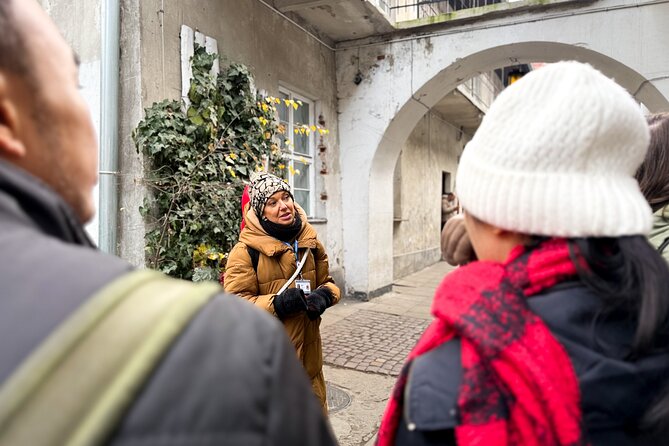
This is not a “check the box” sightseeing loop. You’re walking through Kazimierz and Podgórze with a guide who helps you read the streets like a map of community life, loss, and survival.
The format is practical: a series of short stops across the Jewish Quarter, plus a longer, more serious block at Schindler’s Factory (about 90 minutes). That rhythm matters, because several of the places here are heavy with meaning, and you want time to stay present without fatigue.
Also, the group is capped at 25 people. That size tends to keep things conversational, not chaotic.
Szeroka Street: your first clue that Kazimierz is the center of it all
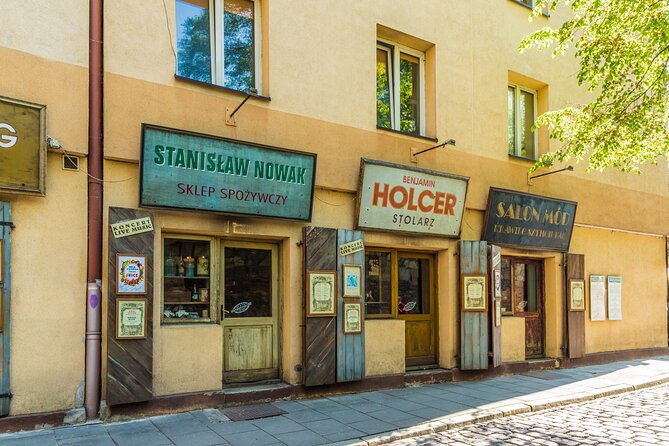
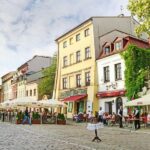
Your tour kicks off at Szeroka 24, and the first stop is Szeroka Street, the heart of old Jewish culture. This is where you’ll see the street’s long memory in the architecture—houses and grand buildings tied to the 16th, 17th, and 18th centuries.
What I like here for orientation: Szeroka Street gives you a frame for everything that follows. Before you hit the synagogues, you start noticing scale, style, and the feeling of a neighborhood that once functioned as a self-contained world.
Admission is listed as free for this stop, so you can concentrate on the guide’s explanation and your own “look-and-spot” instincts.
Old Synagogue (Stara Synagoga): the oldest preserved thread in Poland
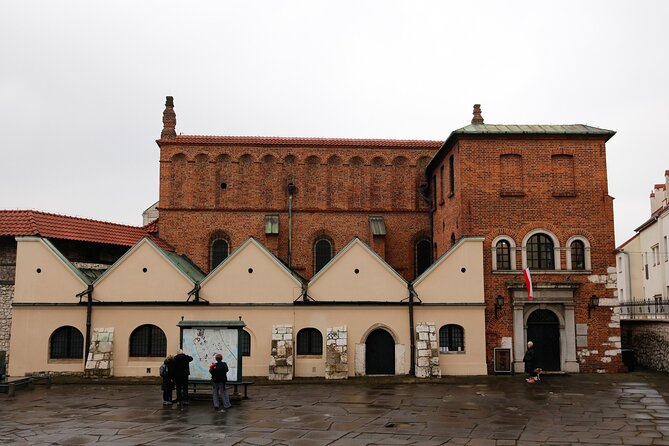
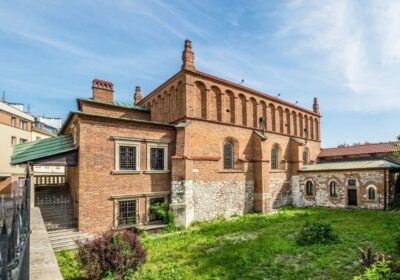
Next comes Muzeum Krakowa – Stara Synagoga (Old Synagogue). This stop is built around a simple big idea: it’s described as the oldest preserved synagogue in Poland and one of the most valuable monuments of Jewish religious architecture in Europe.
If you take nothing else from this section, take this: architecture here isn’t just style. It’s evidence of religious life, community priorities, and how the past survived when so much didn’t.
One practical catch: admission to the Old Synagogue is not included. You can still appreciate the exterior and context, but if you want the full interior experience, plan on buying that ticket separately.
More of Krakow under the wartime occupation
- Krakow: Schindler’s Factory Ticket and Guided Tour Option★ 4.3 · 4,306 reviews
- Krakow: Schindler’s Factory Tour with Entrance Ticket★ 4.5 · 3,182 reviews
- Krakow: Schindler’s Factory Skip-the-Line Ticket★ 4.4 · 3,105 reviews
- Krakow: Schindler’s Factory Tour with Entrance Ticket★ 4.6 · 1,737 reviews
Remuh Synagogue and the adjacent cemetery: sacred space that keeps its gravity
Remuh Synagogue (Synagoga Remuh) is the next stop. It’s described as the second oldest Jewish prayer house in Kraków, and the complex includes an adjacent cemetery—presented as a unique, priceless combination of Jewish architecture and sacred art.
This is often the point in the tour where people slow down. The guide’s role matters here: without context, you can walk past sacred symbolism. With context, you start to understand why silence and careful attention feel appropriate.
Again, admission isn’t included for Remuh. So if you’re trying to manage your budget tightly, keep an eye on which synagogue entrances require extra payment.
Kupa Synagogue: the story of a community’s last building
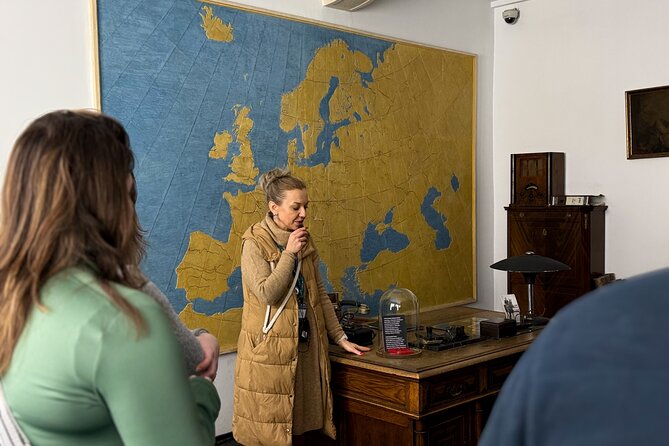
At Kupa Synagogue (Synagoga Kupa), the tour shifts to what the information calls the last synagogue built during the existence of the Jewish town. You also learn the nickname Szpitalna, linked to its proximity to the former Jewish hospital, plus another descriptor: because of that setting, it was associated with the poorest members of the community.
This stop stands out because it connects a building to social history. It’s not only about ritual space; it’s about who used it and why.
Admission is listed as not included, so you’ll want to decide whether you want to spend your money here too. If you do, it’s worth it for the social angle the guide provides, not just the bricks.
Market Square and Nowy Świat: Krakow’s changing district lines

Then you swing back toward the broader city with a stop at Market Square (Nowy Świat part of the Old Town District I). This part of Krakow’s old-town structure has layers: in the years 1859–1951, it was a separate district, and in 1994 it was recognized as a historical monument.
This section can feel like a breather after synagogue-focused stops. But it still matters, because it shows how borders and administrative labels change around communities—even when culture and memory remain.
Admission is listed as free here, which makes it an easy pause point for photos and fresh air.
Tempel Synagogue: active Jewish life, not just a museum mood
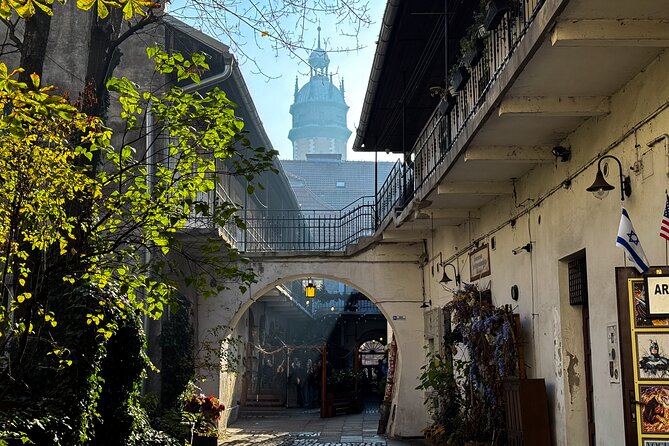
At Tempel Synagogue, you’re back in living Jewish culture. The tour describes it as one of the four active synagogues in Kraków, with services held sporadically. It also functions as a center for Jewish culture and hosts concerts and meetings, especially during the Jewish Culture Festival.
I like that this stop refuses the “everything froze in time” feeling. You’re not only learning about the past—you’re seeing how Jewish life continues, even if it looks different today.
Admission is not included at this stop. If you’re visiting around concert or festival season, you might find a special program schedule, but the tour details here don’t guarantee that timing.
Corpus Christi Church: a different architectural language in the same walk
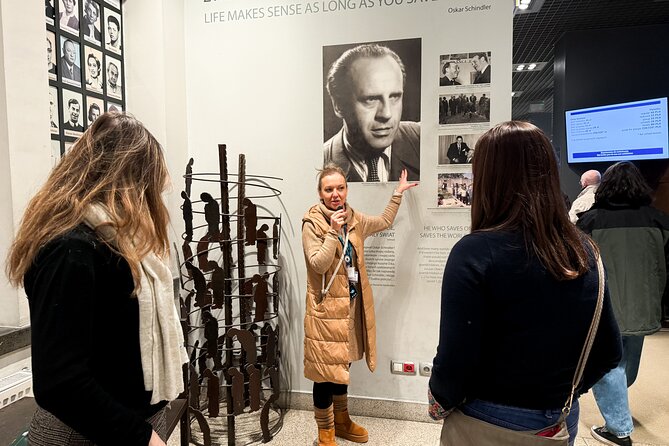
Next is Corpus Christi Church (Kosciol Bozego Ciala). It’s described as important in size and architecture, with the interior highlighted as where you’ll notice the blend: gothic stone walls harmonized with gold of the baroque.
This is a good reminder that Kraków isn’t one storyline. Walking past churches while you’re learning Jewish history can feel like a tonal shift, but it also gives context for the city’s bigger religious and architectural landscape.
Admission is listed as free here, so you can decide how long to linger without committing extra money.
Father Bernatek Footbridge: a modern link on an older crossing site
The route then heads to Father Bernatek Footbridge, built in 2010 on the site of the former Podgórze bridge. The practical point is simple: it connects Kazimierz with Podgórze, and it does so in a way that makes moving between districts feel straightforward.
I like this moment because it breaks the pattern of “stop, read, move on.” You get a crossing, views, and a physical sense of how neighborhoods relate across a river.
Admission is listed as free for this stop.
Plac Bohaterów Getta (Ghetto Heroes Square): chair memorials and the meaning of “left behind”
In Plac Bohaterow Getta (Ghetto Heroes Square), you’re in Podgórze, a square that was within the ghetto from 1941–1943. The tour highlights an unusual memorial: several dozen cast-iron chairs, each standing individually to symbolize items left over from the liquidation of the ghetto.
This stop is the emotional center of the walk section. It’s also where you should slow down and let the imagery do its work. The chairs are powerful because they’re specific. Not abstract. Not distant.
Admission is free here. You’ll likely want a few minutes longer than the “10 minutes” listed, just to take in what the memorial is asking you to imagine.
Schindler’s Factory Museum: the 90-minute WWII centerpiece
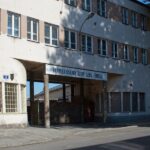
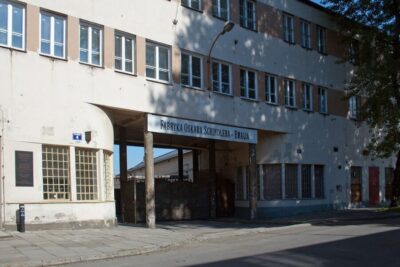
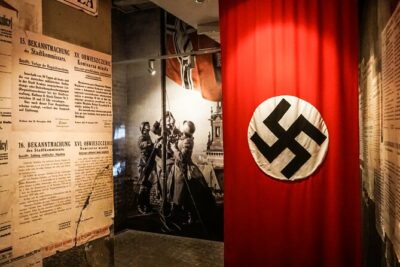
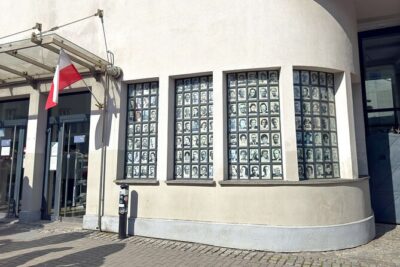
Finally, the tour lands at Fabryka Emalia Oskara Schindlera (Schindler’s Factory). This museum presents the tragic events in Krakow during World War II, and it’s explicitly tied to Stephen Spielberg’s Oscar-winning film Schindler’s List.
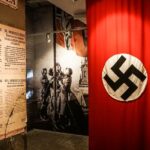
What I appreciate about the museum experience, based on how it’s described, is that the exhibition is said to be unusual and modern. That matters because WWII can easily become a slideshow of dates. A modern presentation can help your brain stay engaged without treating suffering like entertainment.
The museum time is listed at about 1 hour 30 minutes, and admission is included. That inclusion is a big part of the tour value: you’re paying for a guided route plus guaranteed museum access tied to the museum’s scheduling.
Price and value: what $71.35 buys you (and what it doesn’t)
At $71.35 per person, you’re paying for a guided Kazimierz walking tour plus tickets to Schindler’s Factory and a professional guide. The schedule is compact at about 3 hours 30 minutes, so you’re not spending most of the time traveling or waiting around.
The value trade-off is this: several synagogue sites are marked as admission not included (Old Synagogue, Remuh, Kupa, and Tempel). Some other stops are free (Szeroka Street, Market Square, Corpus Christi Church, Father Bernatek Footbridge, and Ghetto Heroes Square), but if you want interiors at every synagogue stop, plan extra costs.
So, to decide if this feels like good value for you, ask one question: do you want the museum experience at Schindler’s Factory more than the optional synagogue interiors? If yes, the package pricing makes sense.
Who this tour suits best in Krakow
This tour fits you if you want a guided route that covers both cultural context and WWII history without forcing you to stitch together multiple independent tickets. The structured walk and included museum visit are ideal when you only have a few hours and want everything done with a clear plan.
It also fits you if you like story-driven guides. One of the strongest praised elements here is the guide’s ability to tell stories that bring history to life, plus their considerate pacing and breaks. That’s not a small thing on tours with emotional subject matter and lots of short stops.
You might consider a different option if you’re trying to minimize extra admissions, since multiple synagogue entrances are not included.
Should you book this Jewish Quarter and Schindler’s Factory tour?
If your goal is a focused Krakow experience—Jewish Quarter architecture, ghetto memorial meaning, and the Schindler’s Factory museum in one go—then yes, it’s a strong choice. The mix of included museum access and a guided Kazimierz walking route makes it hard to beat for a half-day plan.
Just go in prepared: bring your passport or ID, list full names exactly as required, and expect some stops to cost extra if you want interior access. If that lines up with how you travel, this is the kind of tour that helps Kraków stick in your memory for the right reasons.
FAQ
How long is the Jewish Quarter and Schindler’s Factory guided tour?
The tour runs for about 3 hours 30 minutes.
Is the tour offered in English?
Yes, it is offered in English.
What is included in the price?
The price includes tickets to the Schindler’s Factory Museum, a professional tour guide, and a Kazimierz walking tour.
Are the synagogue admissions included?
No. Admission tickets are not included for the Old Synagogue (Stara Synagoga), Remuh Synagogue, Kupa Synagogue, and Tempel Synagogue. Some stops are free (like Szeroka Street and Ghetto Heroes Square), and Schindler’s Factory admission is included.
Do I need to bring a passport or ID for Schindler’s Factory?
Yes. You must provide full names for participants when reserving and bring a passport or ID for entry to Schindler’s Factory.
Where does the tour start and end?
It starts at Szeroka 24, Kraków, and ends at Lipowa 4, in front of Oskar Schindler’s Factory.
How big are the groups?
The tour has a maximum of 25 travelers.
What if the Schindler’s Factory time changes?
Times are approximate, and may change due to Schindler’s Factory Museum scheduling. From January 1, 2026, you can choose a preferred time but the exact time is not guaranteed.
Is tipping included?
No. Tips are not included.
Can I cancel for free?
Yes. Free cancellation is available if you cancel at least 24 hours before the experience start time.
More Tour Reviews in Krakow
Krakow in Wartime: More Reviews
More of Jewish Kazimierz

Just added: fresh Krakow reviews
Schindler's Factory & WWII Tours, compared.
 ★ 4.3Schindler’s Factory Ticket and Guided Tour OptionFrom $254,306 reviews
 ★ 4.5Schindler’s Factory Tour with Entrance TicketFrom $493,182 reviews
 ★ 4.4Schindler’s Factory Skip-the-Line TicketFrom $253,105 reviews
★ 4.6Schindler’s Factory Tour with Entrance TicketFrom $401,737 reviews
★ 4.4Schindler’s Factory Skip-the-Line TicketFrom $253,105 reviews
★ 4.6Schindler’s Factory Tour with Entrance TicketFrom $401,737 reviews
 ★ 4.5Schindler’s Factory in Krakow: Guided Tour & Skip the Line TicketFrom $351,714 reviews
 ★ 4.7Schindler’s Factory & Ghetto Guided TourFrom $571,694 reviews
 ★ 4.3Schindler’s Factory Ticket with Guided Tour OptionFrom $421,485 reviews
 ★ 4.0Krakow Schindler’s Factory Guided Tour with Admission TicketFrom $351,156 reviews
Browse the lists this tour appears in