
REVIEW · KAZIMIERZ & JEWISH HERITAGE TOURS
Krakow: Galicia Jewish Museum Entry Ticket
Photography and memory meet in Krakow. The Galicia Jewish Museum entry ticket is a strong, self-paced way to understand Jewish life in Poland, then face what was lost in the Holocaust. It’s built around one standout permanent show and a set of related displays that keep the story human and specific.
I especially like the permanent exhibition Traces of Memory, which pairs more than 140 photos with a big idea: the traces of Jews in Poland and what comes next for Galicia. I also like that the museum doesn’t stop at exhibits; you can recharge with the on-site coffee shop, browse the bookstore, and catch temporary exhibitions and cultural events when they’re running.
One consideration: this ticket does not include a guided tour, so you’ll be relying on the exhibition text and your own pace. If you prefer a narrator’s structure—especially for heavy topics—plan to spend extra time reading, or pair your visit with further background before you go.
In This Review
- Key things that make this ticket worth your time
- What you get with the Galicia Jewish Museum entry ticket in Krakow
- Entering Traces of Memory: 140+ photos and a 12-year creative effort
- Holocaust context and Jewish heritage in a self-guided format
- The WWII culture destruction exhibition: why it matters beyond dates
- Temporary exhibitions, coffee breaks, and cultural events on-site
- Chris Schwarz and the photography thread that connects everything
- Price, value, and how to get the most from a $6 entry
- Planning your visit: timing, ticket printing, and last entry
- Who should book this museum ticket?
- Should you book the Galicia Jewish Museum entry ticket?
- FAQ
- How much is the Galicia Jewish Museum entry ticket in Krakow?
- How long is the ticket valid?
- Is a guided tour included?
- What are the main things included with the ticket?
- What is the permanent exhibition called, and what does it include?
- Do I need a printed ticket?
- When is the last time I can enter?
- Is it free with the Krakow City Card?
- Is there free cancellation?
Key things that make this ticket worth your time

- Traces of Memory: a permanent exhibition centered on 140+ photos
- Galicia + 800 years of Jewish culture: the themes are broad, but the visuals keep it grounded
- WWII culture destruction display: a separate exhibition tied to what the Second World War erased
- More than galleries: coffee shop, bookstore, temporary exhibitions, and on-site events
- Founder-focused storytelling: the museum links its vision to Chris Schwarz and his photography work
Deeper into Kazimierz and its Jewish heritage
- Krakow: Schindler’s Factory & Ghetto Guided Tour
★ 4.7 · 1,694 reviews - Krakow: Jewish Quarter and Former Ghetto Tour
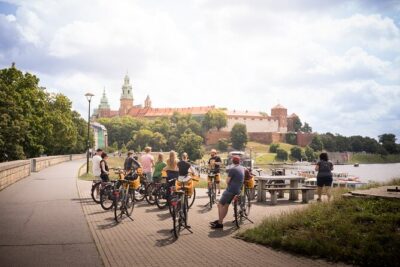
★ 4.9 · 1,441 reviews - Krakow: Bike Tour of Old Town, Jewish Quarter and the Ghetto
★ 4.9 · 1,155 reviews
What you get with the Galicia Jewish Museum entry ticket in Krakow
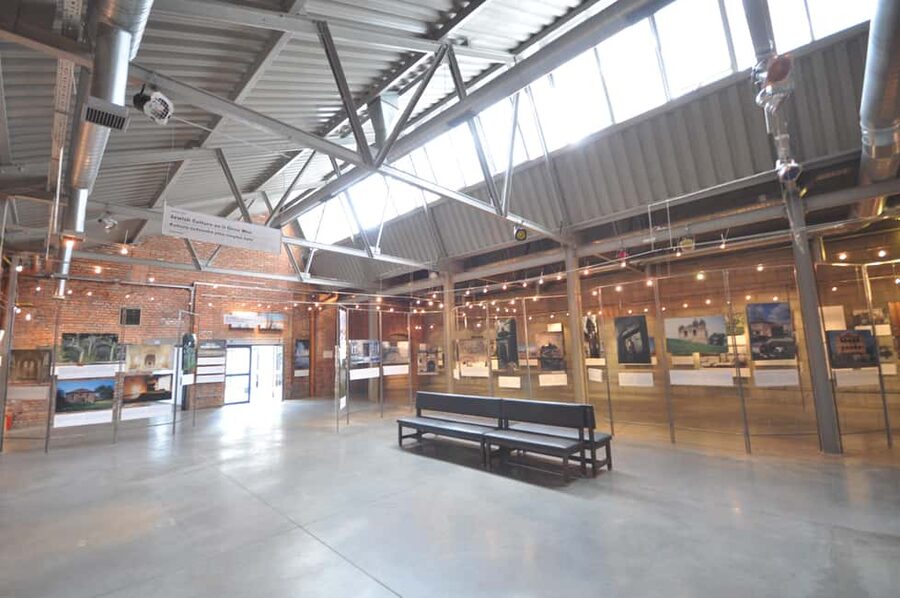
For about $6 per person, this ticket gives you entry to the core museum program for a full day. You’re not just paying for one room—you get access to the permanent exhibition and other exhibit spaces, plus extra on-site options like the bookstore and coffee shop. There’s also a skip the ticket line perk, which matters in Krakow when you’re trying to fit museums into a tight day.
You’ll see the permanent exhibition Traces of Memory, plus a sales exhibition focused on the destruction of culture during the Second World War. Temporary exhibitions are included too, so your visit can feel a little different depending on when you go. If you like museums that feel alive, it’s also set up for concerts, meetings with authors, lectures, and workshops—so check what’s happening on your dates.
If you’re using the Krakow City Card, this ticket becomes free of charge for you. That turns a small expense into a high-value add-on, especially if you’re already paying for attractions.
Entering Traces of Memory: 140+ photos and a 12-year creative effort
The heart of the visit is Traces of Memory, the museum’s permanent exhibition. It’s described as the result of twelve years of artistic work, and it’s anchored by over 140 photos preserved by the museum’s founder. That matters because photography here isn’t filler—it’s the main language the museum uses to tell its story.
The exhibition is built to commemorate 800 years of Jewish culture in Poland, while also highlighting the traces of Jewish communities across the region of Galicia. The idea is bigger than one era. You’re encouraged to notice the continuity (life, identity, community), then watch history break that continuity through violence and destruction.
As you move through the photos, try to slow down at the moments where the captions connect people to place. The visuals are strong on their own, but the real payoff is how the exhibit frames them as evidence of a presence that still matters.
A practical note: this museum is structured as a self-guided visit. That means your experience depends on how you use your time—if you read the labels and give the photos a few extra seconds, the exhibition lands differently.
Holocaust context and Jewish heritage in a self-guided format
The museum’s purpose is clear: you’re expected to honor the victims of the Holocaust while learning about Jewish heritage in Galicia. Without a guided tour, the key thing you bring is patience with the written material. This is not a museum you should speed through with headphones on and your eyes scanning. The emotional weight needs space.
The upside of self-guided access is control. You can stop at the photos that hit hardest, or the captions that add the missing piece. You can also decide how much time you want to give to the Holocaust sections versus the broader heritage story. For many visitors, that flexibility is part of the value.
Another small but important benefit: you can shift your thinking while you’re still in the building. For example, after you absorb the heavier sections, you can walk straight to the bookstore. When you’re ready, you can pick up books on Jewish life, culture, the Holocaust, Jewish philosophy, identity, and literature. That’s a smart way to turn one visit into a longer learning path.
A few more Krakow trips worth putting on the shortlist
- Krakow: Wieliczka Salt Mine Tour with Entry Ticket★ 4.6 · 10,927 reviews
- Krakow to Auschwitz Birkenau Guided Tour with Transfer and Ticket★ 5.0 · 8,197 reviews
- Krakow: Wieliczka Salt Mine Fast-Track Ticket & Guided Tour★ 4.5 · 5,872 reviews
- Auschwitz Birkenau Guided Tour with Ticket Hotel Pickup Small Van★ 5.0 · 4,769 reviews
The WWII culture destruction exhibition: why it matters beyond dates
Alongside Traces of Memory, you’ll find an exhibition focused on the destruction of culture during the Second World War. This is easy to overlook in bigger museums where everything is lumped together. Here, it’s given its own space, which helps you understand how cultural loss isn’t just a background detail—it’s part of the harm.
For your visit, treat this exhibition as a bridge. If Traces of Memory helps you see what existed, the WWII-focused exhibit helps you understand what was targeted and why the aftermath lasted so long. Even if you already know the broad historical facts, the museum’s framing can sharpen what you remember, because it points at cultural life as something worth preserving, not something automatic.
If you want a smoother flow through the museum, consider this sequence: begin with the photo-centered storytelling, then switch into the WWII-focused material. It helps your brain connect the personal and cultural evidence to the violent rupture.
Temporary exhibitions, coffee breaks, and cultural events on-site
One reason I like this ticket concept is that it supports a full day of museum time without demanding you keep moving. There’s a coffee shop on-site, so you can take a breather without hunting for food outside. That’s not just convenience; it helps you pace an emotionally serious visit.
Temporary exhibitions are also included, meaning your visit can include extra themes beyond the permanent centerpiece. And if your travel schedule lines up, the museum hosts concerts, meetings with authors, lectures, and workshops. These aren’t guaranteed in every moment of every day, but the fact that they’re part of the museum’s rhythm is a strong signal: this is not just a memorial space. It’s also a place for learning and community conversation.
My practical advice: check whether any events are happening on your chosen day. If there’s a lecture or author meeting, it can turn a standard museum visit into something more focused and time-efficient.
Chris Schwarz and the photography thread that connects everything
A museum can claim an important mission and still feel disconnected from real people. This one doesn’t. It specifically credits its founder, Chris Schwarz, whose British photos are linked to Jewish photography in Poland. The museum also notes that Schwarz served as director until his death in 2007.
That founder connection matters because it explains why the collection has a particular texture. You’re not just looking at generic historical images—you’re seeing traces preserved through a specific photographic perspective and long-term effort.
If you like museums that have a clear point of view, pay attention to this section of the exhibit experience. Even without a guide, the museum’s text gives you enough orientation to understand why photos were treated as lasting evidence of presence and identity.
And if you’re a photography lover, this is also a useful moment to reflect on how images can carry both memory and meaning—especially when communities and cultures were forcibly disrupted.
Price, value, and how to get the most from a $6 entry
At $6, it’s hard to argue with the value. Many museum tickets either focus on one exhibit, require pricey add-ons, or only make sense if you also book a guided tour. Here, your ticket covers the permanent exhibition plus the WWII-focused exhibition and temporary exhibitions, along with access to the coffee shop and bookstore.
The skip the ticket line benefit also adds real value. In Krakow, saving time can mean seeing one extra room, or giving yourself the chance to sit and read rather than rushing.
If you’re comparing options, think about what you’re actually buying: you’re not paying for a tour narration. You’re paying for access to a museum designed around photo-based storytelling, with built-in support from reading material and a way to extend your learning afterward through books.
For city card users, the value is even better since entrance is free with the Krakow City Card.
Planning your visit: timing, ticket printing, and last entry
Plan your day around closing time. The last entrance is 90 minutes before closing, so don’t treat this like a drop-in you can postpone until late.
Ticket printing is a detail that can cause headaches if you ignore it. You’ll receive a separate ticket by email after booking, and only a printed version is accepted. If you can’t print, you can print your ticket at Plac Szczepański 8. That’s the kind of contingency you’ll thank yourself for knowing ahead of time.
Also keep in mind that opening hours might differ from what you see online due to circumstances. Before you set your schedule, verify the museum hours and the starting times available for your day.
Who should book this museum ticket?
This ticket fits best if you want a self-paced visit that balances Holocaust remembrance with learning about Jewish heritage in Galicia. I think it’s a great match for:
- people who like photography and want to see history through images
- travelers who prefer reading at their own pace
- anyone using Krakow as a base for deeper cultural learning, not just sightseeing
It may be less ideal if you rely heavily on guided interpretation. Because there is no guided tour included, you’ll need to do some of the work yourself—reading labels, sitting with sections longer than you might in a typical museum.
Should you book the Galicia Jewish Museum entry ticket?
Yes, I’d book it if you want a meaningful museum visit that costs very little and gives you a lot of content. The permanent exhibition Traces of Memory—over 140 photos tied to 800 years of Jewish culture—makes this feel focused rather than scattered. Add in the WWII culture destruction exhibition, temporary exhibitions, a coffee shop to pace yourself, and a bookstore to deepen what you learned, and the overall value is strong.
If you’re the type who likes a guide walking you through the meaning step by step, then you should consider whether you want extra context from other sources. But if you’re comfortable reading and setting your own pace, this is a smart, low-cost way to experience a core piece of Jewish history in Krakow.
FAQ
How much is the Galicia Jewish Museum entry ticket in Krakow?
It’s priced at $6 per person.
How long is the ticket valid?
The ticket is valid for 1 day. You’ll want to check availability to see starting times.
Is a guided tour included?
No. This ticket covers museum entry, but it does not include a guided tour.
What are the main things included with the ticket?
Included access covers the permanent exhibition Traces of Memory, the WWII-focused culture destruction exhibition, temporary exhibitions, and also access to the museum’s coffee shop and bookstore. The museum may also host concerts, author meetings, lectures, and workshops.
What is the permanent exhibition called, and what does it include?
The permanent exhibition is Traces of Memory, and it features over 140 photos.
Do I need a printed ticket?
Yes. You’ll receive a separate ticket by email, and only a printed version is accepted. If you can’t print, you can print your ticket at Plac Szczepański 8.
When is the last time I can enter?
The last entrance is 90 minutes before closing.
Is it free with the Krakow City Card?
Yes. If you have a Krakow City Card holder, entrance is free of charge.
Is there free cancellation?
Yes. You can cancel up to 24 hours in advance for a full refund.
More Tickets in Krakow



More Tour Reviews in Krakow

More of Jewish Kazimierz



Just added: fresh Krakow reviews

Kazimierz & Jewish Heritage Tours, compared.
 ★ 4.7Schindler’s Factory & Ghetto Guided TourFrom $571,694 reviews
 ★ 4.9Jewish Quarter and Former Ghetto TourFrom $191,441 reviews
 ★ 4.9Bike Tour of Old Town, Jewish Quarter and the GhettoFrom $371,155 reviews
 ★ 4.8Kazimierz Jewish Quarter Walking TourFrom $27571 reviews
 ★ 4.8Kazimierz, Schindler’s Factory & Ghetto Guided TourFrom $81460 reviews
 ★ 5.0Full Bike Tour – the Old Town, Jewish Qtr & the Ghetto NEW BIKESFrom $35437 reviews
 ★ 4.6Jewish Ghetto Walking TourFrom $11349 reviews
 ★ 4.6Jewish Quarter and Ghetto Electric Golf Cart TourFrom $34348 reviews
Browse the lists this tour appears in