
REVIEW · SCHINDLER'S FACTORY & WWII TOURS
Krakow: Schindler’s Factory & Ghetto Guided Tour
Krakow has a way of hitting hard. This Schindler’s Factory + Podgórze ghetto tour pairs one of the city’s most important museums with a focused streetside walk through the places where the Nazi occupation played out day by day.
Two things I really like are the museum-to-streets flow and the way the tour uses a live guide plus a headphone system, so you can actually hear the story without straining in a busy building. You also get a clear set of stops, not a random wandering route: parts of the ghetto wall, surviving buildings, and major memorials all tied together.
One possible drawback: you’ll be walking in an area tied to trauma and remembrance, and the tone is serious. Plan for a heavier experience than a typical sightseeing loop, and wear comfortable shoes.
In This Review
- Quick hits you’ll feel on the ground
- Schindler’s Factory Museum: Where the Story Gets Its Backbone
- The Exhibition: Krakow Under Nazi Occupation, Explained Step-by-Step
- Podgórze After the Museum: Seeing the Ghetto From the Street Level
- The Ghetto Wall, Former Homes, and What You’re Standing Next To
- Pod Orłem Pharmacy: A Neighborhood Detail That Makes History Feel Real
- Heroes’ Square Empty Chair Monument: The Meaning Behind the 68 Chairs
- Price and Timing: Why 58 USD Often Feels Like Good Value
- Meeting Point, Languages, and What to Bring for a Smooth Entry
- Who This Tour Is Best For (and Who Might Want to Skip It)
- Should You Book This Schindler’s Factory and Podgórze Tour?
- FAQ
- How long is the Krakow Schindler’s Factory and Ghetto guided tour?
- Where do I meet the guide?
- What is included in the price?
- Do I need to buy museum tickets separately?
- What ID do I need for Schindler’s Factory Museum entry?
- What languages are the tours offered in?
Quick hits you’ll feel on the ground
- Oskar Schindler’s Factory Museum ticket included, with guided context for what you’re seeing
- Headphone-style listening helps you catch every detail during the tour
- Podgórze streets walk focused on the former ghetto area and what people faced daily
- Still-standing ghetto wall sections you can see and stand beside
- Pod Orłem pharmacy stop adds a real-world neighborhood feel to history
- Empty Chair Monument at Heroes’ Square includes its symbolic set of 68 chairs
Deeper into Kazimierz and its Jewish heritage
- Krakow: Schindler’s Factory & Ghetto Guided Tour
★ 4.7 · 1,694 reviews - Krakow: Jewish Quarter and Former Ghetto Tour
★ 4.9 · 1,441 reviews - Krakow: Bike Tour of Old Town, Jewish Quarter and the Ghetto
★ 4.9 · 1,155 reviews
Schindler’s Factory Museum: Where the Story Gets Its Backbone
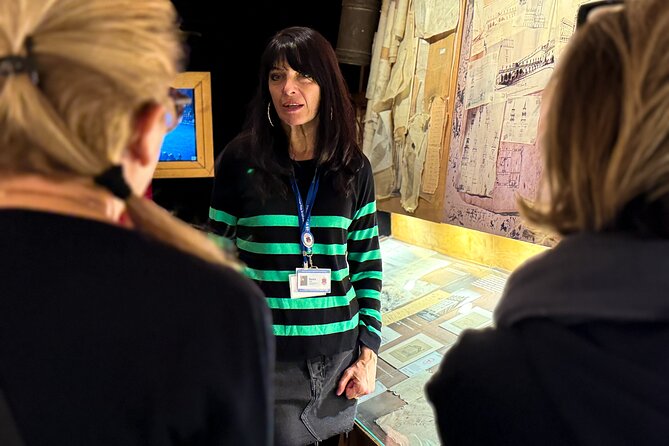
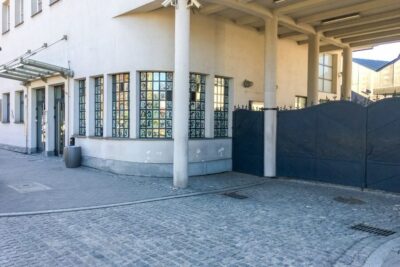
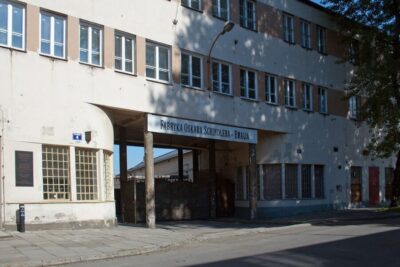
Most people come to Krakow for the old town postcard stuff. This tour starts in a different key: Oskar Schindler’s Factory Museum. It’s the kind of place where you stop thinking of history as a chapter in a book. You start thinking of it as decisions, bureaucracy, and lives caught inside a system.
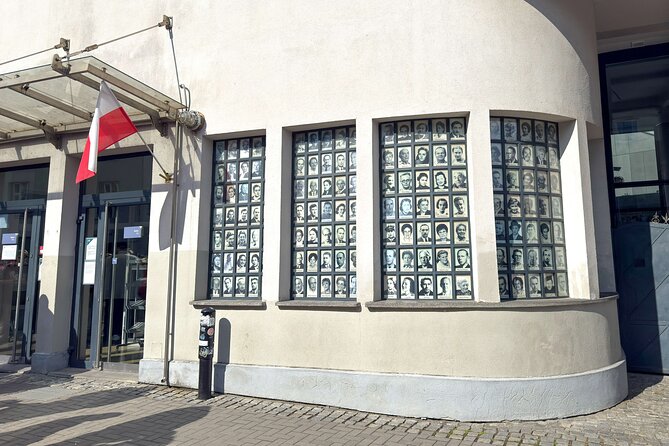
You meet your guide at the main entrance to the museum, in front, with the excursions.city sign. That matters because Schindler’s Factory can be busy, and starting together keeps the timing clean.
The ticket part is also practical. You skip the ticket line, and the museum visit is built into the tour. That means less time juggling paperwork and more time understanding what you came for. The tour lasts about 3 hours, so it’s not a half-day commitment—but it still covers a lot of ground.
The Exhibition: Krakow Under Nazi Occupation, Explained Step-by-Step
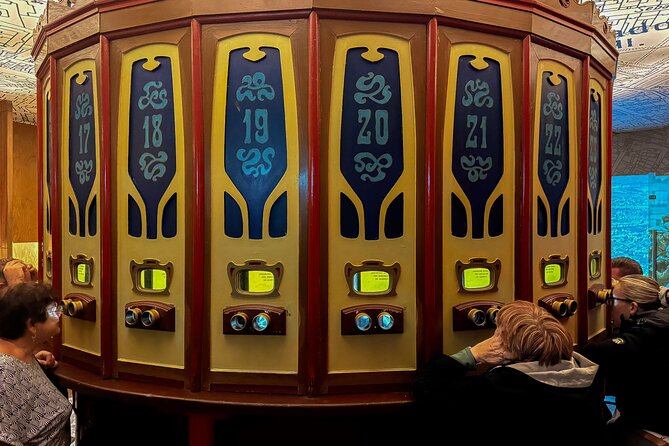
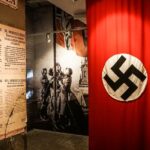
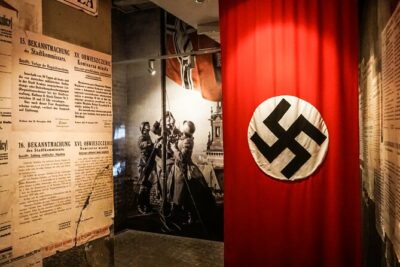
Inside, you’ll follow the exhibition Krakow Under Nazi Occupation. The big idea is to help you connect events in a straight line, so the chaos of wartime doesn’t feel like a pile of separate facts.
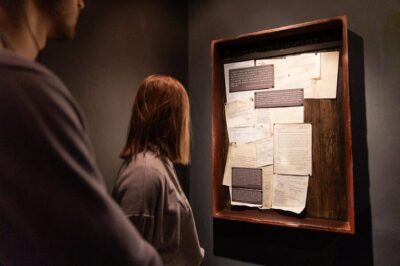
What makes this setup valuable is the way it frames the story around daily life under Nazi rule. You’re not only looking at artifacts. You’re being guided through what occupation did to ordinary routines—work, movement, safety, and survival—then how those pressures shaped who lived and who didn’t.
The tour specifically ties the museum’s story to the figure of Oskar Schindler, a German entrepreneur who helped many Jews during the war. Your guide’s job is to keep it grounded: how a businessman operated in that environment, why choices mattered, and what the consequences were for people caught up in the system.
And yes, the sound quality matters here. The headphones system mentioned in guide feedback is a big deal. In a museum, you’re often standing still while other people shuffle around. Hearing the commentary clearly makes the difference between visiting and truly understanding.
Podgórze After the Museum: Seeing the Ghetto From the Street Level
Once you leave the museum, the experience shifts from indoor exhibition to outdoor geography. You head into Podgórze, and that’s a smart move. Podgórze is where a large part of Krakow’s ghetto story played out, and walking there changes how you picture the war.
In the museum, the story comes in layers. On the street, you get scale. The buildings still have their shape. The streets still connect. Even when details are gone, you can sense the original constraints—where people were allowed to go, how close everything was, and how daily life would’ve been crowded and controlled.
This is where the guided approach pays off. Without a guide, it’s easy to see the area and treat it like a location. With the tour structure, you see it as a sequence of places tied to real wartime functions.
More of Krakow under the wartime occupation
- Krakow: Schindler’s Factory Ticket and Guided Tour Option★ 4.3 · 4,306 reviews
- Krakow: Schindler’s Factory Tour with Entrance Ticket★ 4.5 · 3,182 reviews
- Krakow: Schindler’s Factory Skip-the-Line Ticket★ 4.4 · 3,105 reviews
- Krakow: Schindler’s Factory Tour with Entrance Ticket★ 4.6 · 1,737 reviews
The Ghetto Wall, Former Homes, and What You’re Standing Next To
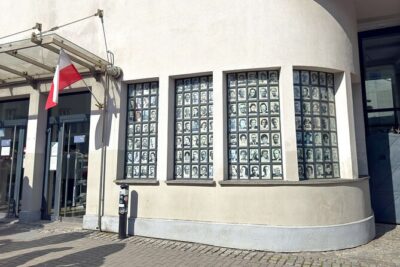
One of the most powerful parts is visiting areas with sections of the ghetto wall that are still standing. It’s not theoretical. You can literally stand near the kind of boundary that separated lives.
The walk also includes dwellings where thousands of displaced Jews once lived. That stop matters because it pushes you past the big-name facts and into the lived reality. You’re encouraged to notice what survival would’ve meant in close quarters—how limited space and constant danger shaped everyday behavior.
A good guide will help you slow down here. Don’t rush the stops. Pause long enough to take in what’s physically present now versus what the neighborhood meant then. It helps the story stay human, not abstract.
Pod Orłem Pharmacy: A Neighborhood Detail That Makes History Feel Real
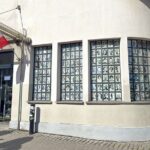
After the heavier wall-and-homes segment, the tour includes a stop at the historic Pod Orłem pharmacy. This type of location is valuable because it gives the area texture. It shows you that occupation wasn’t only about camps and deportations in far-off places. It was also about how city services worked—or failed—for people trying to get through each day.
Even if you don’t know the name before the tour, the stop becomes a reference point. It’s easier to remember a place when it has a specific identity, not only a tragic one. That’s why this kind of stop is a clever balance inside a serious itinerary.
Heroes’ Square Empty Chair Monument: The Meaning Behind the 68 Chairs
The tour ends with a memorial stop at Heroes’ Square, featuring the Empty Chair Monument with an array of 68 chairs. This is one of those moments where the guide’s framing really matters.
Memorials can turn into background noise if you treat them like a photo spot. Here, the monument’s design elements are part of the message. The chairs are symbolic, and that symbolism is the point: remembrance made visible and specific.
This final stop also gives you a clean emotional landing. After seeing remnants of the ghetto in real space, the monument helps convert what you’ve learned into a direct act of recognition—something you carry with you as you move on from Krakow’s wartime geography.
Price and Timing: Why 58 USD Often Feels Like Good Value
At $58 per person for about 3 hours, you’re paying for more than just access. What you get is:
- Schindler’s Factory Museum tickets
- A walking tour component across Podgórze
- A professional guide
- The practical benefit of skipping the ticket line
For me, the value calculation comes down to time and clarity. If you try to cobble this together yourself—museum ticket timing, finding the right ghetto-wall areas, and then figuring out what to notice while you’re there—you’ll burn hours and still miss context.
This tour is built to reduce that friction. You show up, get guided commentary in the museum, then transition into the street walk with a coherent explanation. The headphone system and expert storytelling are part of why a 3-hour format works instead of feeling rushed.
One more practical note: the tour times are described as approximate due to museum scheduling from January 1, 2026, so don’t plan an ultra-tight connection right after the tour ends.
Meeting Point, Languages, and What to Bring for a Smooth Entry
You’ll meet the guide at Schindler’s Factory Museum main entrance with the excursions.city sign. Since this starts at the museum itself, you don’t need hotel pickup.
Language coverage is solid: German, Italian, French, Spanish, and English. From what’s been experienced on past departures, guides like Hannah and Helena/Helen have been especially engaging, and one guide named Frau Weßling has been noted for very clear English. That suggests you’re likely to get commentary that stays understandable, not watered down.
Now the part that matters most for entry: your museum entry is tied to personalized tickets, so you’ll need the full names of all participants when reserving. You must bring a passport or ID for entry to Schindler’s Factory. If you forget, entry can be denied. It’s rare that an ID issue derails a trip—but this is one where it’s explicitly a risk, so treat your ID like a non-negotiable item.
Who This Tour Is Best For (and Who Might Want to Skip It)
This is a great fit if you:
- Want context, not just a list of landmarks
- Prefer guided interpretation in a museum setting
- Like walking through real neighborhoods to understand how history shaped everyday life
- Are ready for a serious subject handled with structure
It may not be ideal if you:
- Want a light, “just sightseeing” Krakow day
- Struggle with longer outdoor walking in a focused route
- Get easily overwhelmed by remembrance spaces and wartime themes
If you’re visiting Krakow for the first time and only have a short window, this tour can be one of your most meaningful choices. If you’re already planning other Holocaust-related sites, this one is still worth it because the pairing—museum story first, then Podgórze geography—helps the pieces lock into place.
Should You Book This Schindler’s Factory and Podgórze Tour?
I’d book it if you want a guided, coherent experience that connects Schindler’s Factory to the streets of Podgórze. The value is in the combination: tickets handled for you, a professional guide, and a route that doesn’t leave you guessing what to look for.
I’d also book it if the idea of an audio-assisted tour helps you concentrate. Hearing the commentary clearly inside the museum makes the whole visit easier to follow.
The only real “hold on” is tone. This isn’t a casual stroll through history. It’s a respectful, serious walk through places linked to suffering. If you can handle that—and you want understanding—this tour is a strong pick in Krakow.
FAQ
How long is the Krakow Schindler’s Factory and Ghetto guided tour?
It lasts about 3 hours.
Where do I meet the guide?
The guide meets you in front of the main entrance to the Schindler’s Factory Museum with the excursions.city sign.
What is included in the price?
The tour price includes tickets to the Schindler’s Factory Museum, a walking tour, and a professional tour guide.
Do I need to buy museum tickets separately?
The tour includes museum tickets, and you skip the ticket line.
What ID do I need for Schindler’s Factory Museum entry?
You must bring a passport or ID for entry, and you need to provide full names of all participants when reserving.
What languages are the tours offered in?
The live tour guide is available in German, Italian, French, Spanish, and English.
More Tour Reviews in Krakow

Krakow in Wartime: More Reviews

More of Jewish Kazimierz

Just added: fresh Krakow reviews
Schindler's Factory & WWII Tours, compared.
 ★ 4.3Schindler’s Factory Ticket and Guided Tour OptionFrom $254,306 reviews
 ★ 4.5Schindler’s Factory Tour with Entrance TicketFrom $493,182 reviews
 ★ 4.4Schindler’s Factory Skip-the-Line TicketFrom $253,105 reviews
★ 4.6Schindler’s Factory Tour with Entrance TicketFrom $401,737 reviews
★ 4.4Schindler’s Factory Skip-the-Line TicketFrom $253,105 reviews
★ 4.6Schindler’s Factory Tour with Entrance TicketFrom $401,737 reviews
 ★ 4.5Schindler’s Factory in Krakow: Guided Tour & Skip the Line TicketFrom $351,714 reviews
 ★ 4.7Schindler’s Factory & Ghetto Guided TourFrom $571,694 reviews
 ★ 4.3Schindler’s Factory Ticket with Guided Tour OptionFrom $421,485 reviews
 ★ 4.0Krakow Schindler’s Factory Guided Tour with Admission TicketFrom $351,156 reviews
Browse the lists this tour appears in